

 Download PDF
 Download PDF
Market Overview
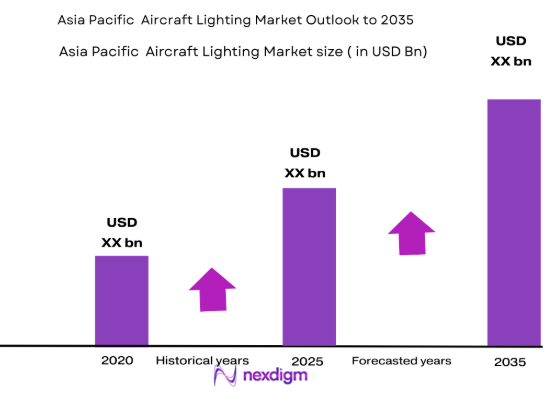
Based on a recent historical assessment, the Asia Pacific aircraft lighting market is valued in billions ~ USD. The market is primarily driven by the increasing demand for enhanced aviation safety, improved passenger experience, and regulatory compliance in the region. Technological advancements in LED lighting systems and energy-efficient solutions are also playing a significant role in the market’s expansion. The increasing fleet size and rising passenger air traffic are contributing factors to the growth of this sector.
The dominant countries in the Asia Pacific aircraft lighting market include China, Japan, and India. These nations have large aviation sectors, supported by robust infrastructure, government investments, and increasing airline operations. The growth is further driven by the modernization of aircraft fleets and the demand for improved in-flight lighting systems. These countries benefit from the ongoing expansion of airports, airline fleet enhancements, and adoption of advanced lighting technologies in aviation.
Market Segmentation
By Product Type
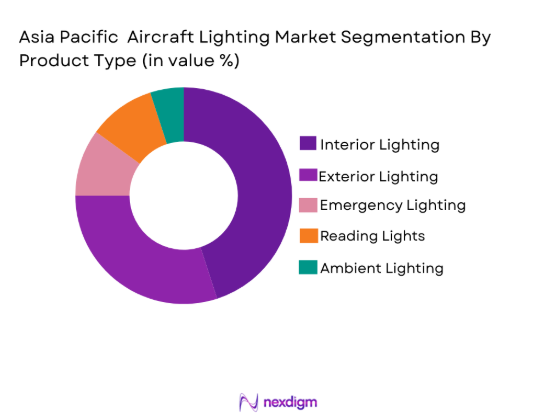
The Asia Pacific aircraft lighting market is segmented by product type into interior lighting, exterior lighting, emergency lighting, reading lights, and ambient lighting. The interior lighting sub-segment holds the largest market share due to the growing demand for improved cabin aesthetics and passenger experience. The adoption of energy-efficient LED lights and customizable lighting solutions, which allow for enhanced mood and ambiance, is fueling the demand for interior lighting in commercial aircraft.
By Platform Type
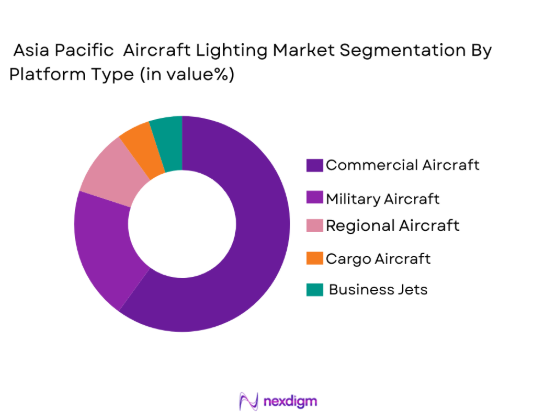
The Asia Pacific aircraft lighting market is segmented by platform type into commercial aircraft, military aircraft, regional aircraft, cargo aircraft, and business jets. The commercial aircraft sub-segment holds the dominant share due to the rapid expansion of passenger air travel across the region. This growth is driven by rising disposable incomes, increased air traffic, and the expansion of low-cost carriers. Airlines are investing in modernizing their fleets, demanding advanced lighting solutions for improved passenger comfort and safety.
Competitive Landscape
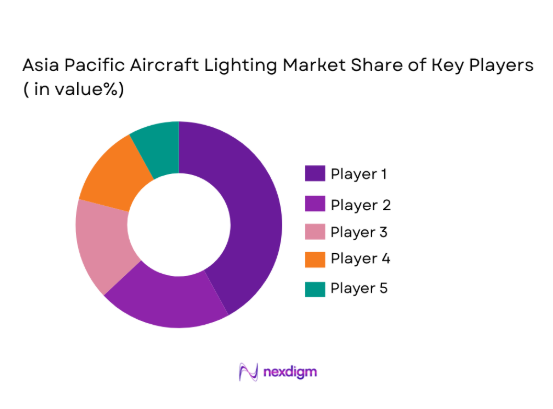
The Asia Pacific aircraft lighting market is highly competitive, with several major players striving for innovation and market share. The market is characterized by the presence of both established players and emerging companies. Leading companies focus on product differentiation through advanced technology, energy-efficient lighting solutions, and strategic collaborations. The competitive dynamics are also influenced by factors like cost-efficiency, technological advancements, and customer-centric solutions.
|
Company Name |
Establishment Year | Headquarters | Technology Focus | Market Reach | Key Products | Revenue | Market Share (%) |
| Honeywell | 1906 | USA | ~ | ~ | ~ | ~ | ~ |
| Collins Aerospace | 2018 | USA | ~ | ~ | ~ | ~ | ~ |
| Astronics | 1968 | USA | ~ | ~ | ~ | ~ | ~ |
| Zodiac Aerospace | 1896 | France | ~ | ~ | ~ | ~ | ~ |
| STG Aerospace | 2000 | UK | ~ | ~ | ~ | ~ | ~ |
Asia Pacific Aircraft Lighting Market Analysis
Growth Drivers
Technological Advancements
The Asia Pacific aircraft lighting market is witnessing significant growth driven by advancements in LED lighting technology. The adoption of LED lights is primarily due to their energy efficiency, longer lifespan, and reduced maintenance costs. Additionally, LED lights provide a more flexible lighting design, which allows for better control of lighting ambiance in both commercial and military aircraft. These advantages make LED lighting solutions increasingly popular among aircraft manufacturers, airlines, and fleet operators. Furthermore, the growing adoption of smart lighting systems integrated with in-flight entertainment systems is also propelling the demand for advanced lighting solutions. The regulatory push for energy-efficient and environmentally friendly technologies is further accelerating the demand for LED-based lighting systems in the aviation industry.
Rising Air Travel Demand
The increase in air travel across the Asia Pacific region is another crucial driver of the aircraft lighting market. As more people opt for air travel due to improving economic conditions, the aviation industry is experiencing a surge in the number of flights and passengers. This, in turn, boosts the demand for new aircraft equipped with advanced lighting systems. Airlines are investing heavily in fleet modernization, replacing older aircraft with newer models featuring enhanced lighting features to improve passenger experience and meet regulatory standards. Additionally, the growing number of low-cost carriers in emerging economies like India and China is increasing the number of aircraft in operation, further driving the need for lighting systems in these aircraft.
Market Challenges
High Initial Cost of Installation
One of the significant challenges hindering the growth of the aircraft lighting market in the Asia Pacific region is the high initial cost of installing advanced lighting systems, particularly in older aircraft. Retrofit projects to replace conventional lighting with more energy-efficient solutions like LED systems require significant investments. This cost can be a barrier for smaller airlines, particularly those operating on tight budgets or in emerging markets. While the long-term savings from reduced energy consumption and lower maintenance costs can offset the initial investment, the upfront cost remains a critical challenge for widespread adoption of advanced lighting solutions in the region.
Technological Integration and Compatibility
Another challenge faced by the Asia Pacific aircraft lighting market is the integration of new lighting technologies with existing aircraft systems. As airlines and aircraft manufacturers increasingly adopt advanced lighting solutions, there is a need to ensure compatibility with legacy systems. This requires additional investments in infrastructure, design modifications, and training, which can be time-consuming and costly. Furthermore, ensuring that lighting systems comply with regional and international aviation safety standards is a complex and challenging process, adding to the overall cost and time involved in implementing new technologies across fleets.
Opportunities
Expansion of Aircraft Fleet in Emerging Economies
One of the most promising opportunities for growth in the Asia Pacific aircraft lighting market is the expansion of the aircraft fleet in emerging economies such as India, China, and Southeast Asia. These countries are experiencing rapid growth in air traffic due to increasing middle-class populations, rising disposable incomes, and government initiatives to improve transportation infrastructure. As a result, airlines in these regions are investing in the purchase of new aircraft, which will require state-of-the-art lighting systems. Additionally, the growing adoption of low-cost carriers is increasing the demand for cost-effective, energy-efficient lighting solutions. This presents a significant opportunity for lighting manufacturers to supply innovative solutions for these expanding fleets.
Technological Innovations in Smart Lighting
Another opportunity lies in the development of smart aircraft lighting systems that can be integrated with other in-flight systems such as entertainment, climate control, and safety features. These systems can be programmed to adjust lighting intensity based on time of day, flight phase, or even passenger preferences. The integration of smart lighting with other advanced technologies, such as in-flight Wi-Fi and entertainment systems, is gaining traction in the industry. This opens up opportunities for lighting manufacturers to collaborate with technology firms and airlines to develop customized solutions that enhance the passenger experience while also improving operational efficiency and energy consumption.
Future Outlook
The Asia Pacific aircraft lighting market is expected to grow steadily over the next five years, driven by advancements in lighting technologies, increasing demand for air travel, and growing regulatory support for energy-efficient solutions. The shift towards LED lighting and smart lighting systems will continue to dominate the market, with airlines focusing on improving passenger comfort and reducing operational costs. Technological developments in lighting integration with other aircraft systems, as well as the increasing fleet size in emerging economies, will further fuel market growth.
Major Players
- Honeywell
- Collins Aerospace
- Astronics
- Zodiac Aerospace
- STG Aerospace
- Safran
- Diehl Aerosystems
- LuminatorTechnology
- B/E Aerospace
- FACC
- Luxaviation Group
- Panasonic Avionics
- Thales Group
- United Technologies Corporation
- Hella
Key Target Audience
- Investments and venture capitalist firms
- Government and regulatory bodies
- Airlines and aviation companies
- Aircraftmanufacturers
- Aviation technology suppliers
- Airport operators
- Lighting system integrators
- Fleet management companies
Research Methodology
Step 1: Identification of Key Variables
This step involves identifying the critical variables impacting the market, including product types, technology trends, regulatory changes, and regional growth factors.
Step 2: Market Analysis and Construction
Detailed market analysis is conducted to understand current market dynamics, segment growth, competitive landscape, and emerging trends. Data is collected from both primary and secondary sources.
Step 3: Hypothesis Validation and Expert Consultation
The hypotheses derived from the market analysis are validated through consultations with industry experts, key stakeholders, and primary market participants to refine the findings.
Step 4: Research Synthesis and Final Output
The final output is synthesized into a comprehensive market report that includes actionable insights, forecasts, and strategic recommendations based on validated data and expert input.

- Executive Summary
- Research Methodology (Definitions, Scope, Industry Assumptions, Market Sizing Approach, Primary & Secondary Research Framework, Data Collection & Verification Protocol, Analytic Models & Forecast Methodology, Limitations & Research Validity Checks)

- Market Definition and Scope
- Value Chain & Stakeholder Ecosystem
- Regulatory / Certification Landscape
- Sector Dynamics Affecting Demand
- Strategic Initiatives & Infrastructure Growth

- Growth Drivers
Increasing Air Traffic
Technological Advancements in LED Lighting
Rising Demand for Passenger Comfort
Fleet Modernization by Airlines
Regulatory Pressure for Energy-Efficient Solutions - Market Challenges
High Initial Cost of Lighting Systems
Integration with Existing Aircraft Systems
Compliance with Regional and International Standards
Lack of Standardization in Aircraft Lighting
Supply Chain Constraints - Market Opportunities
Expansion in Emerging Economies
Adoption of Smart Aircraft Lighting Solutions
Partnerships for Technological Advancements - Trends
Shift Toward Smart and Adaptive Lighting
Rise in LED and Energy-Efficient Lighting
Integration of Lighting with In-Flight Entertainment Systems
Increased Demand for Customizable Cabin Ambiance
Growing Focus on Sustainable Aviation Technologies - Government Regulations & Defense Policy
Regulations on Aircraft Safety Standards
Environmental and Energy Efficiency Regulations
Export Control and Compliance Policies - SWOT Analysis
- Stakeholder and Ecosystem Analysis
- Porter’s Five Forces Analysis
- Competition Intensity and Ecosystem Mapping

- By Market Value, 2020-2025
- By Installed Units, 2020-2025
- By Average System Price, 2020-2025
- By System Complexity Tier, 2020-2025

- By System Type (In Value%)
Interior Lighting
Exterior Lighting
Emergency Lighting
Reading Lights
Ambient Lighting - By Platform Type (In Value%)
Commercial Aircraft
Military Aircraft
Regional Aircraft
Cargo Aircraft
Business Jets - By Fitment Type (In Value%)
Retrofit
OEM (Original Equipment Manufacturer)
In-line Fitment
Modular Fitment
Hybrid Fitment - By End User Segment (In Value%)
Airlines
Aircraft Manufacturers
Aerospace Defense Contractors
Maintenance Repair Overhaul (MRO) Providers
Fleet Operators - By Procurement Channel (In Value%)
Direct Procurement
OEM Procurement
Third-party Distributors
Online Bidding Platforms
Government Tenders - By Material / Technology (In Value%)
LED Technology
OLED Technology
Fiber Optic Technology
Halogen Technology
Incandescent Technology

- Market share snapshot of major players
- Cross Comparison Parameters (Product Type, Platform Type, Procurement Channel, End User Segment, Fitment Type)
- SWOT Analysis of Key Competitors
- Pricing & Procurement Analysis
- Key Players
Honeywell
Collins Aerospace
Astronics
Zodiac Aerospace
STG Aerospace
Safran
Diehl Aerosystems
Luminator Technology
B/E Aerospace
FACC
Luxaviation Group
Panasonic Avionics
Thales Group
United Technologies Corporation
Hella

- Growing Demand for Energy-Efficient Lighting Solutions
- Increasing Focus on Cabin Passenger Experience
- Investment in Aircraft Fleet Modernization
- Rising Demand for Retrofit Lighting Systems

- Forecast Market Value, 2026-2035
- Forecast Installed Units, 2026-2035
- Price Forecast by System Tier, 2026-2035
- Future Demand by Platform, 2026-2035


 Request a Sample
 Ask for Customization
 Get a Quote
 Enquire Now