

 Download PDF
 Download PDF
Market Overview
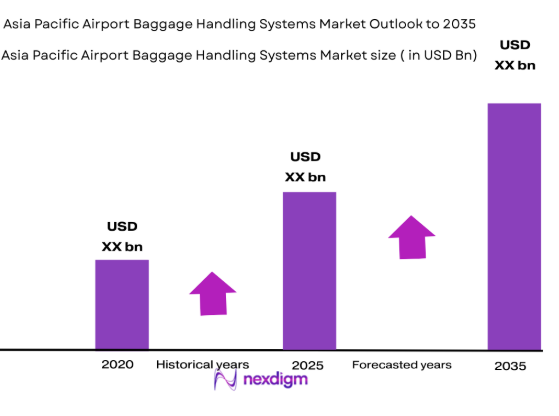
The Asia Pacific Airport Baggage Handling Systems market is valued at USD ~ billion based on a recent historical assessment, driven by an increasing number of passengers and airport expansion projects. Major drivers include the growing need for automation to enhance baggage handling efficiency, improve security measures, and reduce operational costs. The continuous advancements in robotics, automation, and smart sensor technologies also fuel this market’s growth, alongside government investments aimed at modernizing airport infrastructure. Technological adoption across airports further propels the market, positioning it for continued expansion.
Dominant cities in the Asia Pacific region include major hubs such as Singapore, Hong Kong, and Tokyo, where significant investments in smart infrastructure and automation are driving market growth. The prominence of these cities is attributed to their large airport infrastructures, high passenger volumes, and a strong push for modernization. These cities are leading the way with extensive baggage handling systems that integrate advanced technologies like RFID and automated sorting to reduce baggage mishandling and improve operational efficiency.
Market Segmentation
By Product Type
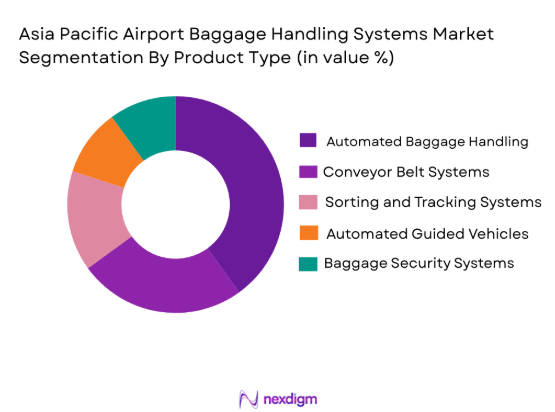
Asia Pacific Airport Baggage Handling Systems market is segmented by product type into Automated Baggage Handling Systems, Conveyor Belt Systems, Sorting and Tracking Systems, Automated Guided Vehicles (AGVs), and Baggage Security Systems. Recently, Automated Baggage Handling Systems have a dominant market share due to factors such as increasing demand for efficiency, technological advancements, and airports’ focus on improving passenger experience. Automation reduces human error, enhances operational speed, and provides superior tracking and security capabilities. Airports are increasingly opting for fully automated systems to handle rising passenger volumes and streamline baggage handling processes, contributing to the market’s rapid expansion.
By Platform Type
Asia Pacific Airport Baggage Handling Systems market is segmented by platform type into Airport Terminals, Cargo Handling Facilities, Customs and Security Screening Areas, Airline Hubs, and Airport Logistics Centers. Recently, Airport Terminals have a dominant market share due to factors such as increasing passenger numbers, the need for improved efficiency in baggage handling, and infrastructure investments in major airports. As passenger traffic continues to rise, airports are investing in state-of-the-art baggage systems to handle higher volumes, reduce turnaround time, and enhance customer experience. The demand for automated solutions in these high-traffic areas is particularly strong, contributing to the growth of baggage handling systems in airport terminals
. 
Competitive Landscape
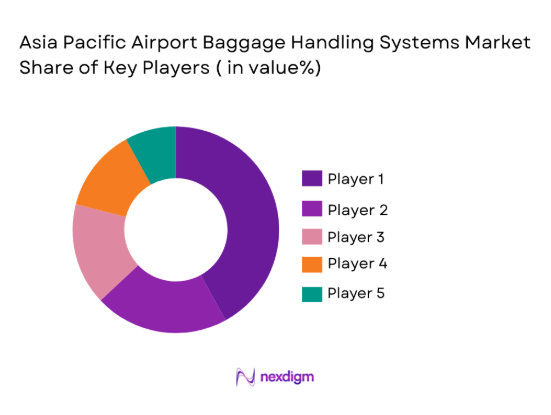
The competitive landscape of the Asia Pacific Airport Baggage Handling Systems market is dominated by major players leveraging advanced technology and global presence to provide tailored solutions for airports of varying sizes. The market is experiencing consolidation, with a few large players acquiring smaller companies to expand their technological capabilities and geographic reach. These players are leading the charge in automating baggage handling processes, aiming to improve efficiency, reduce operational costs, and enhance security.
|
Company Name |
Establishment Year | Headquarters | Technology Focus | Market Reach | Key Products | Revenue (USD) | Custom Parameter |
| Siemens AG | 1847 | Germany | ~ | ~ | ~ | ~ | ~ |
| Vanderlande Industries | 1949 | Netherlands | ~ | ~ | ~ | ~ | ~ |
| BEUMER Group | 1935 | Germany | ~ | ~ | ~ | ~ | ~ |
| Daifuku Co., Ltd. | 1937 | Japan | ~ | ~ | ~ | ~ | ~ |
| Fives Group | 2005 | France | ~ | ~ | ~ | ~ | ~ |
Asia Pacific Airport Baggage Handling Systems Market Analysis
Growth Drivers
Expansion of Airport Infrastructure
The rapid expansion of airport infrastructure across the Asia Pacific region is a major growth driver for the market. As the region continues to experience an increase in air passenger traffic, airports are investing in state-of-the-art baggage handling systems to streamline operations, enhance efficiency, and ensure timely baggage delivery. The rise in tourism and business travel across key countries such as China, India, and Japan has prompted governments and private investors to heavily fund airport modernization projects. These investments have led to an increased demand for advanced baggage handling systems that can accommodate the growing number of passengers and ensure faster processing times. Additionally, the need to upgrade aging infrastructure in major airports is contributing to the market’s expansion. With several mega-projects underway, the demand for efficient and scalable baggage handling systems is expected to rise significantly, driving market growth in the coming years.
Technological Advancements in Automation and Robotics
The Asia Pacific Airport Baggage Handling Systems market is witnessing significant growth due to technological advancements in automation and robotics. Airports are increasingly adopting automated systems to improve operational efficiency, reduce the potential for human error, and lower labor costs. Automated baggage handling systems, which incorporate robotics and AI, can handle high volumes of luggage quickly and accurately, leading to enhanced productivity and improved passenger satisfaction. The integration of advanced technologies such as RFID, AI-driven baggage tracking, and machine learning is transforming traditional baggage handling processes. These innovations not only reduce the time taken to handle baggage but also provide enhanced security by minimizing the chances of lost or mishandled luggage. Furthermore, advancements in robotics are helping airports minimize maintenance costs, while automated guided vehicles (AGVs) are facilitating smoother logistics within airports. These technological improvements are anticipated to continue driving growth in the market.
Market Challenges
High Initial Capital Investment
One of the key challenges faced by the Asia Pacific Airport Baggage Handling Systems market is the high initial capital investment required for installing advanced baggage handling systems. While automation offers long-term cost savings and efficiency improvements, the upfront costs of acquiring and implementing these systems can be prohibitive for some airports, especially those in developing regions. This challenge is compounded by the complexity of integrating new systems with existing infrastructure, which often requires substantial investments in both technology and human resources. Furthermore, ongoing maintenance and the need for regular updates to keep up with technological advancements add to the financial burden. Smaller airports or those with lower passenger traffic may find it difficult to justify such significant capital expenditures, which could limit the widespread adoption of automated systems. Despite these challenges, however, the long-term benefits of enhanced operational efficiency and reduced labor costs continue to encourage investment in baggage handling systems.
System Integration Complexity
The complexity of integrating new baggage handling systems with existing airport infrastructure is another major challenge facing the market. Many airports have legacy systems in place that may not be compatible with modern automated baggage handling technologies. This creates a significant hurdle in terms of both cost and time required for integration. Upgrading older systems to accommodate new technologies can result in operational disruptions and increased downtime, which in turn affects the overall passenger experience. Moreover, the lack of skilled labor and technical expertise to manage the integration process further exacerbates the challenge. Airports need to ensure that the new systems can seamlessly interact with other airport technologies, such as security, check-in, and customs systems, to provide a smooth and efficient process. Given the high stakes involved in baggage handling—especially in terms of security—ensuring successful integration is essential for maintaining operational continuity and meeting passenger expectations.
Opportunities
Increasing Demand for Smart Airports
The growing trend towards smart airports presents a significant opportunity for the Asia Pacific Airport Baggage Handling Systems market. As more airports embrace automation and digitalization, the demand for advanced baggage handling systems that can integrate with other smart technologies is on the rise. Smart airports leverage technologies like IoT, AI, and big data to improve passenger experience, reduce operational inefficiencies, and enhance security. Baggage handling systems, which are critical to the airport operation, are at the core of these advancements. By adopting automated baggage systems with real-time tracking, intelligent routing, and predictive maintenance capabilities, airports can streamline their operations and enhance baggage handling performance. With several governments and airport operators in the Asia Pacific region committed to building smart infrastructure, this trend is expected to continue to drive the growth of the baggage handling systems market. Additionally, the development of fully automated baggage processing systems capable of offering personalized services, such as luggage tracking via mobile apps, will create new growth opportunities for the industry.
Focus on Eco-friendly Solutions
There is an increasing emphasis on eco-friendly and sustainable solutions within the Asia Pacific Airport Baggage Handling Systems market. Airports are striving to reduce their carbon footprint, and as such, there is a growing demand for energy-efficient, low-emission baggage handling systems. Companies are investing in the development of environmentally friendly technologies, such as energy-efficient conveyor systems and the use of recyclable materials in baggage handling equipment. Additionally, automation technologies that reduce the need for human labor are helping to minimize waste and energy consumption. Governments in the region are also encouraging sustainable infrastructure development, offering incentives and funding to support the adoption of green technologies in airport operations. With sustainability becoming a priority for many countries and corporations, the focus on eco-friendly baggage handling solutions presents a significant growth opportunity for the market.
Future Outlook
The future outlook for the Asia Pacific Airport Baggage Handling Systems market is promising, with continued growth expected over the next five years. The market will benefit from ongoing airport modernization projects, with several countries focusing on enhancing infrastructure and improving efficiency. Technological innovations such as automation, artificial intelligence, and IoT integration will drive demand for more sophisticated baggage handling solutions. Additionally, strong regulatory support for infrastructure development and sustainability will further fuel growth. The increasing focus on smart airports and the adoption of energy-efficient solutions are likely to shape the market, with enhanced security and efficiency being central to future advancements.
Major Players
- Siemens AG
- Vanderlande Industries
- BEUMER Group
- Daifuku Co., Ltd.
- Fives Group
- Pteris Global
- SITA
- O&K Kuehn GmbH
- Honeywell International
- Swisslog
- Lagardère Travel Retail
- JBT Corporation
- Belt Technologies, Inc.
- Necon Systems Pvt. Ltd.
- Schoonover Inc.
Key Target Audience
- Investments and venture capitalist firms
- Government and regulatory bodies
- Airport operators
- Airlines
- Ground handling service providers
- Baggage handling equipment manufacturers
- System integrators
- Technology providers
Research Methodology
Step 1: Identification of Key Variables
Identify and define the core market variables influencing the Asia Pacific Airport Baggage Handling Systems market, such as demand, technology trends, and regulatory factors.
Step 2: Market Analysis and Construction
Construct a comprehensive market framework based on historical data and current market conditions, focusing on product types, technologies, and geographical regions.
Step 3: Hypothesis Validation and Expert Consultation
Validate hypotheses and assumptions through consultations with industry experts, technology providers, and stakeholders to ensure accurate market predictions.
Step 4: Research Synthesis and Final Output
Synthesize all data gathered, analyze findings, and compile final market insights and forecasts for inclusion in the report.

- Executive Summary
- Research Methodology (Definitions, Scope, Industry Assumptions, Market Sizing Approach, Primary & Secondary Research Framework, Data Collection & Verification Protocol, Analytic Models & Forecast Methodology, Limitations & Research Validity Checks)

- Market Definition and Scope
- Value Chain & Stakeholder Ecosystem
- Regulatory / Certification Landscape
- Sector Dynamics Affecting Demand
- Strategic Initiatives & Infrastructure Growth

- Growth Drivers
Increase in Passenger Traffic at Major Airports
Rising Investment in Airport Infrastructure
Technological Advancements in Automation and Robotics
Demand for Enhanced Security Systems in Airports
Government Initiatives to Modernize Airport Operations - Market Challenges
High Capital Expenditure for System Installation
Complexity in Integration with Existing Airport Systems
Operational Downtime During System Upgrades
Lack of Skilled Workforce for System Maintenance
Cybersecurity Risks in Automated Baggage Handling System - Market Opportunities
Expansion of Smart Airports with Fully Automated Systems
Growing Demand for Sustainable and Eco-friendly Solutions
Partnerships with AI and IoT Companies for Enhanced Efficiency - Trends
Integration of AI for Baggage Tracking and Management
Increase in Touchless and Contactless Baggage Handling Solutions
Adoption of Green Technologies in Baggage Handling Systems
Growth of Airport Automation in Emerging Markets
Development of Real-Time Data Analytics for Operational Efficienc - Government Regulations & Defense Policy
Stringent Security Regulations in Baggage Handling
Airport Modernization Funding and Initiatives
International Standards for Automated Baggage Systems - SWOT Analysis
- Stakeholder and Ecosystem Analysis
- Porter’s Five Forces Analysis
- Competition Intensity and Ecosystem Mapping

- By Market Value, 2020-2025
- By Installed Units, 2020-2025
- By Average System Price, 2020-2025
- By System Complexity Tier, 2020-2025

- By System Type (In Value%)
Automated Baggage Handling Systems
Conveyor Belt Systems
Sorting and Tracking Systems
Automated Guided Vehicles (AGVs)
Baggage Security Systems - By Platform Type (In Value%)
Airport Terminals
Cargo Handling Facilities
Customs and Security Screening Areas
Airline Hubs
Airport Logistics Centers - By Fitment Type (In Value%)
New Installations
Retrofits and Upgrades
Modular Systems
Scalable Systems
Custom-Built Systems - By End User Segment (In Value%)
Airports
Airlines
Ground Handling Operators
Cargo Services Providers
Security and Regulatory Authorities
- By Procurement Channel (In Value%)
Direct Procurement
Tenders and Bids
Online Bidding Platforms
Third-party Integrators
Public-Private Partnerships - By Material / Technology (in Value%)
Conveyor Belt Materials
Robotic Automation
IT and Software Solutions
Smart Sensors and RFID Technologies
Security Screening Technologies

- Market share snapshot of major players
- Cross Comparison Parameters (System Type, Platform Type, Procurement Channel, End User Segment, Fitment Type)
- SWOT Analysis of Key Competitors
- Pricing & Procurement Analysis
- Key Players
Siemens AG
Vanderlande Industries
BEUMER Group
Fives Group
Daifuku Co., Ltd.
Honeywell International
SITA
Pteris Global
O&K Kuehn GmbH
Belt Technologies, Inc.
Lagardère Travel Retail
Necon Systems Pvt. Ltd.
Swisslog
JBT Corporation
Schoonover Inc.

- Airports Investing in Modernization and Automation
- Airlines Seeking Cost Efficiency and Faster Turnaround Times
- Ground Handling Services Expanding Capabilities for Large Airports
- Security Authorities Pushing for Safer and More Efficient Systems

- Forecast Market Value, 2026-2035
- Forecast Installed Units, 2026-2035
- Price Forecast by System Tier, 2026-2035
- Future Demand by Platform, 2026-2035


 Request a Sample
 Ask for Customization
 Get a Quote
 Enquire Now