
 Download PDF
 Download PDF
Market Overview
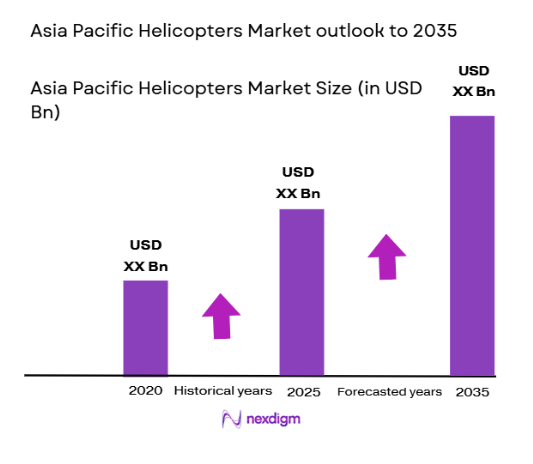
The Asia Pacific Helicopters market is expected to reach USD ~ billion based on a recent historical assessment. The market growth is primarily driven by increasing demand for both military and civilian helicopters across the region. Helicopters are increasingly utilized for defense, search and rescue, medical transport, and commercial purposes, especially in emerging economies. The need for advanced rotary-wing aircraft equipped with cutting-edge technology further supports the expansion of the market.
Countries like China, India, Japan, and Australia are dominant players in the Asia Pacific Helicopters market. These nations boast significant defense budgets, which contribute to the increased demand for military helicopters. Additionally, commercial sectors in these countries are experiencing growth due to the demand for air travel, cargo transport, and emergency services. The growing infrastructure and aviation sectors in these regions, coupled with favorable government regulations, further bolster the market’s prominence.
Market Segmentation
By System Type
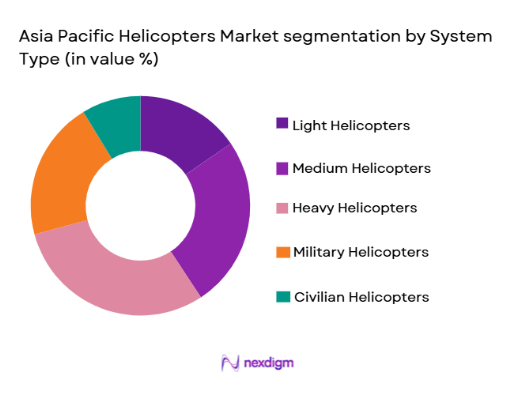
The Asia Pacific Helicopters market is segmented by system type into light helicopters, medium helicopters, heavy helicopters, military helicopters, and civilian helicopters. Recently, military helicopters have the dominant market share, driven by substantial defense expenditures and the rising need for advanced, multi-role aircraft for various military operations. The increasing geopolitical tensions in the region, combined with ongoing military modernization programs, have contributed to the growing demand for versatile military helicopters in the Asia Pacific region.
By Platform Type
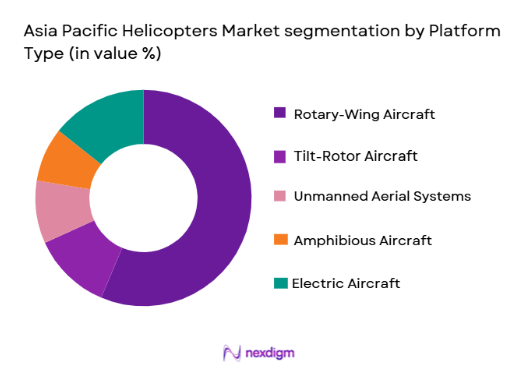
The market is segmented by platform type into rotary-wing aircraft, tilt-rotor aircraft, unmanned aerial vehicles (UAVs), amphibious helicopters, and electric helicopters. Rotary-wing aircraft dominate the market share due to their versatility and long-established presence in both military and civilian sectors. The strong demand for helicopters for missions such as search and rescue, transportation, and surveillance further enhances the growth of rotary-wing aircraft, especially in defense and emergency response sectors.
Competitive Landscape
The Asia Pacific Helicopters market is highly competitive, with several major players consolidating their positions through technological advancements and strategic collaborations. Leading manufacturers like Airbus Helicopters, Sikorsky Aircraft, and Bell Helicopter dominate the market, focusing on the development of versatile and advanced rotary-wing systems. These companies continue to expand their market reach, backed by robust research and development efforts, creating cutting-edge helicopters for military, commercial, and civil operations.
| Company Name | Establishment Year | Headquarters | Technology Focus | Market Reach | Key Products | Revenue | Additional Parameter |
| Airbus Helicopters | 1990 | Marignane, France | ~ | ~ | ~ | ~ | ~ |
| Sikorsky Aircraft | 1923 | Stratford, USA | ~ | ~ | ~ | ~ | ~ |
| Bell Helicopter | 1935 | Fort Worth, USA | ~ | ~ | ~ | ~ | ~ |
| Leonardo Helicopters | 1948 | Rome, Italy | ~ | ~ | ~ | ~ | ~ |
| Russian Helicopters | 2007 | Moscow, Russia | ~ | ~ | ~ | ~ | ~ |
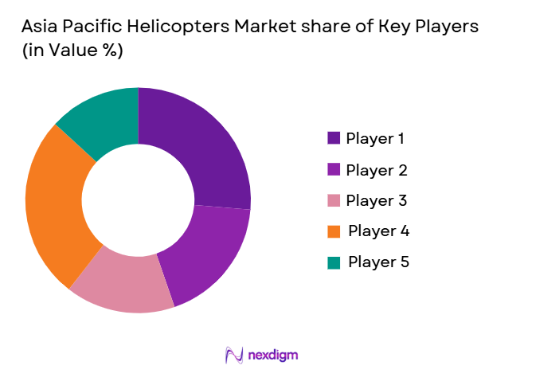
Asia Pacific Helicopters Market Analysis
Growth Drivers
Increased Military Investments
One of the primary growth drivers for the Asia Pacific Helicopters market is the significant rise in military investments in countries like China, India, and Japan. As regional security concerns grow and geopolitical tensions rise, governments are allocating more resources to modernize their military fleets, including rotary-wing aircraft. The Asia Pacific region has witnessed a surge in defense spending, leading to a higher demand for military helicopters designed for reconnaissance, surveillance, and combat operations. This trend is expected to continue, further accelerating the market’s growth. Helicopters provide strategic advantages in terms of mobility and operational flexibility, making them an essential component of military forces across the region. The increasing need for rapid deployment in various terrains contributes to the expansion of military helicopter fleets in Asia Pacific nations, especially those with extensive border and maritime security concerns.
Expansion of Emergency Medical Services
The expansion of emergency medical services (EMS) is another major growth driver for the Asia Pacific Helicopters market. As healthcare infrastructure improves and demand for faster medical responses rises, helicopters are increasingly being utilized for air ambulance services, particularly in countries with difficult geographical conditions, such as mountainous regions. The ability to quickly transport patients from remote or hard-to-reach locations to medical facilities is boosting the demand for helicopters equipped with advanced medical equipment. Countries like Japan and Australia have already integrated helicopters into their EMS networks, and other nations in the region are following suit. The rising focus on improving healthcare services, particularly in underserved areas, is creating a favorable environment for the continued growth of EMS helicopters. Moreover, advancements in technology, such as lightweight medical equipment and improved helicopter avionics, further support the growth of this segment.
Market Challenges
High Operational and Maintenance Costs
A significant challenge facing the Asia Pacific Helicopters market is the high operational and maintenance costs associated with helicopters. These costs include fuel, parts replacement, servicing, and repairs, which can be a significant financial burden, especially for smaller operators or new market entrants. While the demand for helicopters, particularly in the military and commercial sectors, is rising, the cost of ownership and upkeep often limits access to these aircraft. As helicopter fleets age, maintenance becomes more frequent, which increases operational expenditures. This challenge is particularly pronounced in emerging economies where budgets for defense or commercial aviation may be constrained. Therefore, addressing the high maintenance costs through more efficient systems, better materials, and technological advancements will be key to sustaining long-term growth in the Asia Pacific Helicopters market.
Stringent Regulatory and Certification Requirements
Another major challenge for the Asia Pacific Helicopters market is the stringent regulatory and certification requirements imposed by aviation authorities. Helicopter manufacturers and operators must comply with complex safety standards, environmental regulations, and airworthiness requirements, which can delay the development and deployment of new aircraft. Additionally, varying regulations across different countries create barriers to entry for operators looking to expand across multiple markets. These regulations also require significant investment in compliance, which can slow innovation and increase the time to market for new helicopter models. Despite the regulatory challenges, the ongoing efforts by governments and international organizations to streamline certification processes and ensure aviation safety are expected to support market growth over time.
Opportunities
Growing Demand for Electric Helicopters
The demand for electric helicopters represents a significant opportunity for growth in the Asia Pacific Helicopters market. As the global aviation industry moves toward more sustainable technologies, electric propulsion systems are gaining traction. Electric helicopters offer significant environmental benefits, including reduced carbon emissions and lower noise pollution compared to traditional helicopters. Governments in the region are increasingly prioritizing green technologies, offering incentives and funding for the development of electric and hybrid-electric aircraft. Several companies in the Asia Pacific region are already exploring electric helicopters, with prototypes and research projects underway. As battery technology advances and electric propulsion systems become more efficient, the demand for electric helicopters is expected to rise, creating new opportunities for manufacturers and operators focused on sustainability.
Adoption of Autonomous Helicopters
Another opportunity in the Asia Pacific Helicopters market is the adoption of autonomous helicopter technology. The development of unmanned aerial systems (UAS) and autonomous flight capabilities is set to revolutionize the helicopter industry. Autonomous helicopters can reduce the need for skilled pilots and lower operational costs, while increasing safety by minimizing human error. The demand for autonomous helicopters is especially strong in military, surveillance, and rescue operations, where the ability to perform complex tasks without direct human control offers significant advantages. As autonomous flight technology advances and regulatory frameworks evolve, the market for unmanned helicopters is expected to expand rapidly in the coming years. This trend presents a key opportunity for companies focused on automation and AI-driven aviation systems to capitalize on the growing demand for unmanned rotary-wing aircraft.
Future Outlook
Over the next five years, the Asia Pacific Helicopters market is poised for continued growth, driven by technological innovations, military investments, and the expansion of commercial and EMS operations. The market will likely see increased adoption of electric and autonomous helicopter technologies, supported by government incentives and advancements in battery and propulsion systems. Additionally, the growing demand for military helicopters, coupled with the rising need for advanced rotary-wing aircraft for commercial and civil applications, will continue to fuel market expansion. The region’s strong defense and healthcare sectors, combined with evolving regulations, will also contribute to the sustained growth of the helicopter industry.
Major Players
- Airbus Helicopters
- Sikorsky Aircraft
- Bell Helicopter
- Leonardo Helicopters
- Russian Helicopters
- Lockheed Martin
- Boeing
- MD Helicopters
- Kawasaki Heavy Industries
- AgustaWestland
- NHIndustries
- China Aerospace
- Thales Group
- General Electric
- Honeywell Aerospace
Key Target Audience
- Investments and venture capitalist firms
- Government and regulatory bodies
- Aviation infrastructure developers
- Helicopter manufacturers
- Private and business helicopter owners
- Helicopter maintenance service providers
- Commercial operators
- Emergency medical services (EMS)
Research Methodology
Step 1: Identification of Key Variables
The initial step involves identifying critical variables such as market size, growth trends, and technological developments impacting the Asia Pacific Helicopters market.
Step 2: Market Analysis and Construction
This step involves constructing the market framework, analyzing the competitive landscape, and understanding the segmentation of the helicopter market across different regions.
Step 3: Hypothesis Validation and Expert Consultation
Expert consultations are conducted to validate initial hypotheses, with interviews and discussions held with industry stakeholders to refine market insights.
Step 4: Research Synthesis and Final Output
The final step is to synthesize all research data and insights into a comprehensive report that outlines trends, challenges, and strategic recommendations for stakeholders.

- Executive Summary
- Research Methodology (Definitions, Scope, Industry Assumptions, Market Sizing Approach, Primary & Secondary Research Framework, Data Collection & Verification Protocol, Analytic Models & Forecast Methodology, Limitations & Research Validity Checks)

- Market Definition and Scope
- Value Chain & Stakeholder Ecosystem
- Regulatory / Certification Landscape
- Sector Dynamics Affecting Demand
- Strategic Initiatives & Infrastructure Growth

- Growth Drivers
Increased Military Investments
Expansion of Emergency Medical Services
Growth in Commercial Helicopter Services - Market Challenges
High Operational and Maintenance Costs
Stringent Regulatory Frameworks
Challenges in Technology Integration - Market Opportunities
Growing Demand for Electric Helicopters
Expansion of Helicopter Services in Remote Regions
Adoption of Unmanned Helicopter Systems - Trends
Increased Use of Hybrid and Electric Helicopters
Integration of AI in Flight Control Systems
Rising Demand for Helicopter Leasing Models - Government Regulations & Defense Policy
Helicopter Safety and Emissions Standards
Government Investments in Military Helicopter Fleets
Regulations for Unmanned Aircraft Systems - SWOT Analysis
- Stakeholder and Ecosystem Analysis
- Porter’s Five Forces Analysis
- Competition Intensity and Ecosystem Mapping

- By Market Value, 2020-2025
- By Installed Units, 2020-2025
- By Average System Price, 2020-2025
- By System Complexity Tier, 2020-2025

- By System Type (In Value%)
Light Helicopters
Medium Helicopters
Heavy Helicopters
Military Helicopters
Civilian Helicopters - By Platform Type (In Value%)
Rotary-Wing Aircraft
Tilt-Rotor Aircraft
Unmanned Aerial Vehicles (UAVs)
Amphibious Helicopters
Electric Helicopters - By Fitment Type (In Value%)
OEM Helicopter Systems
Aftermarket Helicopter Parts
Retrofit Systems
Upgraded Avionics
Helicopter Maintenance Services - By EndUser Segment (In Value%)
Defense & Military Forces
Search & Rescue Services
Air Ambulance Services
Commercial Operators
Private Operators - By Procurement Channel (In Value%)
Direct Procurement
Government Tenders
Private Sector Procurement
Online Procurement Platforms
Third-party Distributors - By Material / Technology (in Value%)
Composite Materials
Advanced Avionics Systems
Electric Propulsion
Turboshaft Engines
Autonomous Flight Technology

- Market share snapshot of major players
- Cross Comparison Parameters (System Type, Platform Type, Procurement Channel, End User Segment, Fitment Type, Material/Technology, Geographic Presence, Pricing Strategy, Aircraft Size, Production Capacity)
- SWOT Analysis of Key Players
- Pricing & Procurement Analysis
- Key Players
Airbus Helicopters
Sikorsky Aircraft
Bell Helicopter
Leonardo Helicopters
Russian Helicopters
Lockheed Martin
Boeing
MD Helicopters
Kawasaki Heavy Industries
AgustaWestland
NHIndustries
China Aerospace
Thales Group
General Electric
Honeywell Aerospace

- Growing Demand for Helicopter Leasing
- Increased Use of Helicopters in Remote Areas
- Integration of Unmanned Aerial Systems in Military
- Growing Air Ambulance Services in Urban Areas

- Forecast Market Value, 2026-2035
- Forecast Installed Units, 2026-2035
- Price Forecast by System Tier, 2026-2035
- Future Demand by Platform, 2026-2035


 Request a Sample
 Ask for Customization
 Get a Quote
 Enquire Now