
 Download PDF
 Download PDF
Market Overview
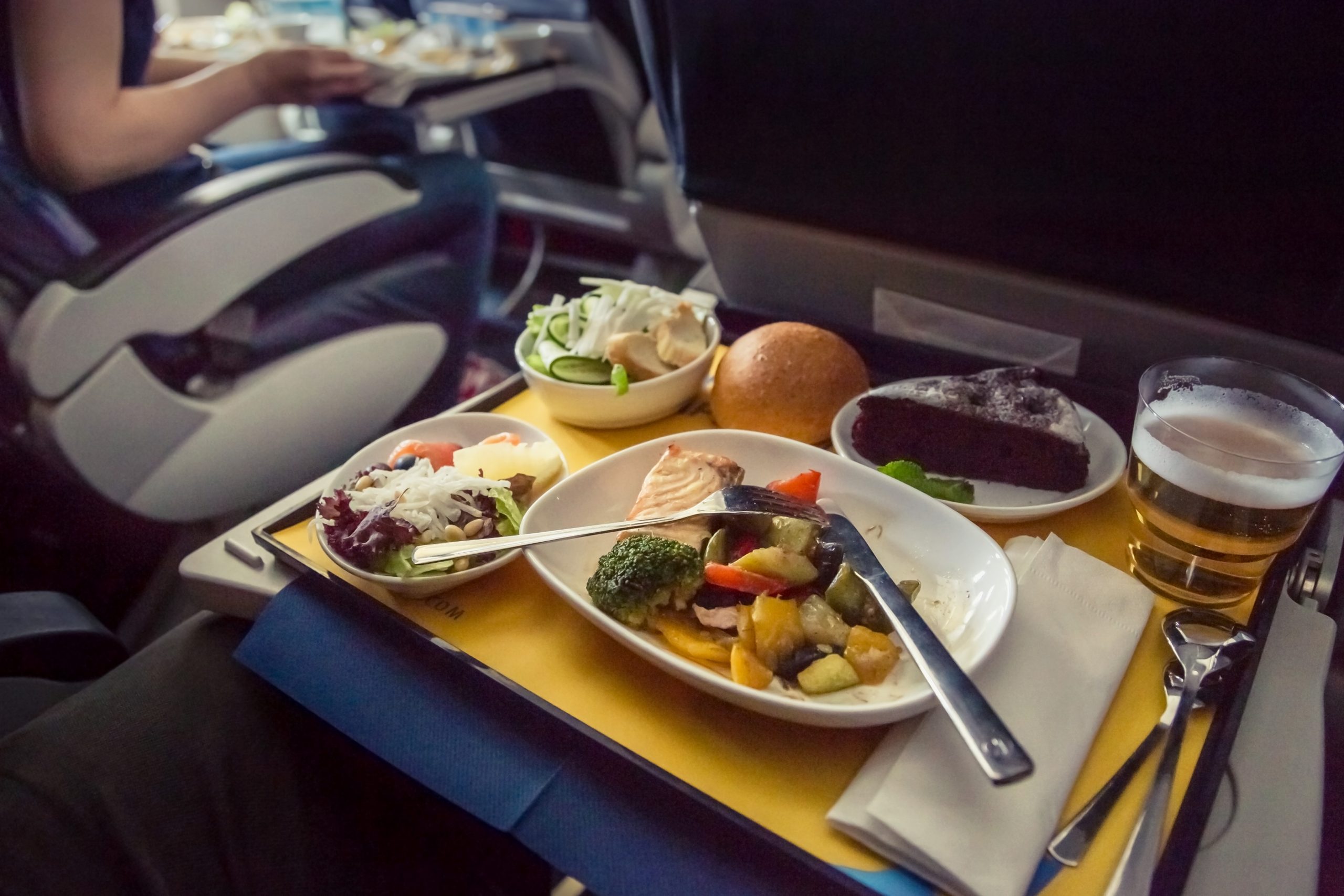
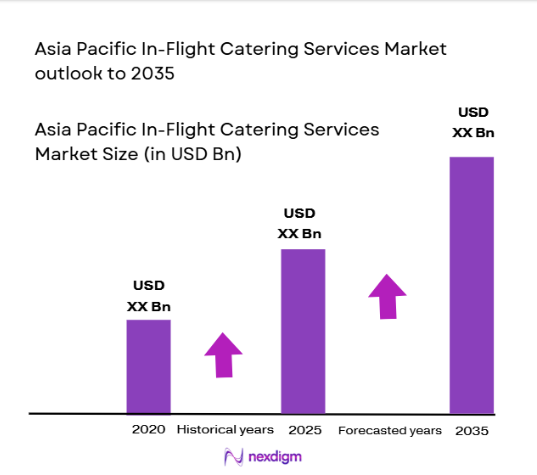
The Asia Pacific in-flight catering services market is valued at approximately USD ~ billion, driven by rising passenger traffic, particularly in emerging economies. The expansion of both full-service carriers and low-cost airlines has increased demand for high-quality in-flight dining experiences. The market growth is also supported by a shift towards more sustainable, health-conscious food options and advancements in food preservation and delivery technologies. As passenger expectations evolve, airlines are focusing on enhancing in-flight service offerings, which further fuels market demand.
The market is predominantly driven by key players in cities like Singapore, Hong Kong, and Tokyo. These hubs have developed robust infrastructure, including state-of-the-art catering facilities, ensuring high-quality service standards. In particular, Singapore’s strategic position as a global aviation hub has facilitated the growth of local catering providers who supply meals to airlines across Asia Pacific. Furthermore, Hong Kong and Tokyo’s dense flight networks make them critical players in supplying both regional and international carriers.
Market Segmentation
By Product Type
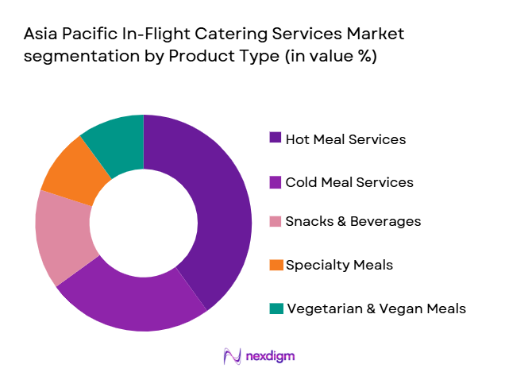
Asia Pacific in-flight catering services market is segmented by product type into hot meals, cold meals, snacks & beverages, specialty meals, and vegetarian & vegan meals. Recently, hot meal services have a dominant market share due to factors such as increased passenger preference for full-service in-flight offerings, the availability of high-quality food choices, and the infrastructure to support large-scale catering operations. Airlines, especially full-service carriers, continue to prioritize hot meals, which often cater to a broader range of consumer tastes and ensure customer satisfaction.
By Platform Type
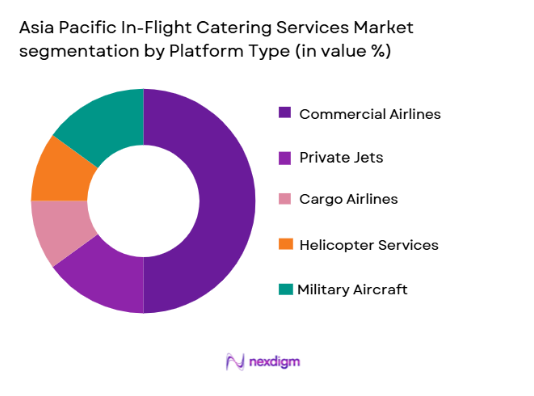
Asia Pacific in-flight catering services market is segmented by platform type into commercial airlines, private jets, cargo airlines, helicopter services, and military aircraft. Recently, commercial airlines have a dominant market share due to the rapid growth in air travel within Asia Pacific, particularly within short-haul and long-haul routes. Commercial carriers also benefit from greater budgets allocated to in-flight catering, further fueling their substantial share in the market as passengers continue to demand diverse and high-quality meal options during flights.
Competitive Landscape
The competitive landscape of the Asia Pacific in-flight catering services market is characterized by consolidation among the major players, with a few large catering companies holding significant market shares. These players continue to dominate due to strong brand recognition, expansive networks, and the ability to cater to multiple airlines. The competition is intense, with companies investing in technological advancements, sustainability practices, and strategic partnerships with airlines. The role of consolidation in driving growth and improving service offerings is critical, as larger players can scale operations to meet the growing demand for in-flight catering services.
| Company Name | Establishment Year | Headquarters | Technology Focus | Market Reach | Key Products | Revenue (USD Billion) | Additional Market-Specific Parameter |
| SATS Ltd | 1945 | Singapore | ~ | ~ | ~ | ~ | ~ |
| dnata Catering | 1959 | Dubai, UAE | ~ | ~ | ~ | ~ | ~ |
| Gate Gourmet | 1992 | Zurich, Switzerland | ~ | ~ | ~ | ~ | ~ |
| LSG Sky Chefs | 1970 | Frankfurt, Germany | ~ | ~ | ~ | ~ | ~ |
| Flying Food Group | 1983 | Chicago, USA | ~ | ~ | ~ | ~ | ~ |
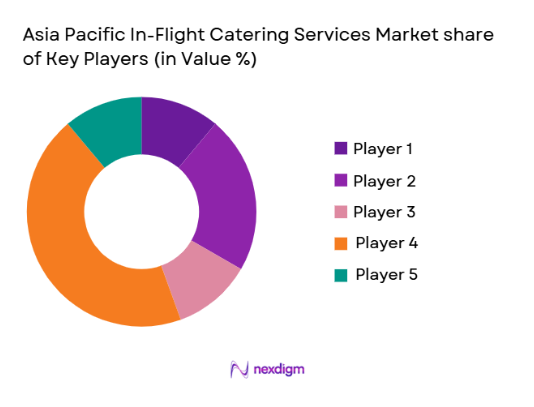
Asia Pacific In-Flight Catering Services Market Analysis
Growth Drivers
Rising Demand for Sustainable and Healthy Food Options
The increasing emphasis on sustainability and health-conscious food choices has been a significant driver in the Asia Pacific in-flight catering services market. As more passengers seek healthier meal options, catering services have shifted towards organic, vegetarian, and vegan meals. Airlines are increasingly catering to the demand for high-quality, nutritious options by collaborating with catering services that prioritize locally sourced and eco-friendly ingredients. Furthermore, the growing preference for low-calorie, low-fat meals, and food with less environmental impact is becoming a key selling point. This demand for healthier food is also complemented by rising awareness around environmental concerns, as more consumers seek airlines and catering companies that are actively reducing waste, sourcing ingredients responsibly, and cutting down on single-use plastics. Airlines are adapting to these demands by integrating healthier menu options, which has driven the growth of the market.
Technological Advancements in In-Flight Catering Logistics
Another growth driver for the Asia Pacific in-flight catering services market is the increased use of technology to enhance operational efficiency and service quality. Advancements in food preservation, meal customization technology, and real-time tracking systems for food delivery have helped optimize the in-flight catering process. Automation in food preparation and meal delivery systems has streamlined operations, reduced costs, and minimized human errors. Additionally, airlines and catering companies are investing in digital platforms that allow passengers to pre-order meals, enhancing their in-flight experience and further driving the demand for diverse menu options. The integration of these technologies has improved food safety standards, reduced waste, and allowed for better inventory management, which supports continued growth in the sector.
Market Challenges
Rising Costs of Ingredients and Logistics
The Asia Pacific in-flight catering services market faces significant challenges related to rising costs of ingredients and logistics. Airlines and catering companies are dealing with higher food prices due to inflation, supply chain disruptions, and fluctuations in commodity prices. The increased costs of key ingredients, such as premium meats, dairy, and organic produce, have forced catering services to re-evaluate pricing strategies. Additionally, the complex logistics involved in meal preparation and delivery for airlines operating long-haul flights add significant operational costs. Catering providers must invest in efficient storage, transportation, and temperature control solutions to ensure the food stays fresh during transit, which further escalates expenses. These rising costs are impacting the profit margins of in-flight catering services and challenging the sustainability of pricing strategies that remain competitive in the market.
Regulatory and Compliance Barriers in Food Safety
The Asia Pacific in-flight catering services market is also challenged by strict regulatory requirements and compliance barriers related to food safety. Airlines and catering providers must adhere to varying food safety standards set by local and international authorities, which often include stringent rules about meal preparation, packaging, and transportation. This variation in regulations across different countries can make it difficult for catering companies to standardize their processes across the region. Non-compliance can result in penalties, reputational damage, and a loss of trust among consumers. Ensuring that all meals meet the required standards while also adhering to the specific dietary needs and preferences of passengers is a complex task. Moreover, maintaining transparency in food sourcing, preparation, and waste management practices adds another layer of regulatory compliance that needs to be addressed by catering companies.
Opportunities
Expansion of Premium and Luxury In-Flight Dining Services
As disposable income rises in Asia Pacific, particularly in countries like China, India, and Japan, there is an increasing demand for premium and luxury in-flight dining experiences. Airlines are offering more exclusive, fine-dining options for their high-paying customers, especially in business and first-class cabins. Catering services are capitalizing on this trend by providing gourmet meals, curated menus, and exclusive partnerships with high-end chefs and food brands. This expansion of premium in-flight dining is expected to drive growth in the in-flight catering services market as airlines aim to differentiate themselves with unique dining experiences that appeal to affluent travelers. Catering companies are investing in the development of specialized meal offerings that meet the evolving tastes of high-end customers, which has contributed to the expansion of the premium segment within the market.
Increasing Demand for Halal and Kosher Meals
Another opportunity for growth in the Asia Pacific in-flight catering services market lies in the rising demand for halal and kosher meals. With the increasing number of travelers from Muslim-majority countries in the region and beyond, airlines are now offering more halal meal options to cater to this specific dietary requirement. Similarly, kosher meals are gaining traction due to the rising Jewish population traveling internationally. Catering services that specialize in preparing and delivering these meals are positioning themselves as key players in the growing halal and kosher segment. This trend is expected to continue as airlines seek to provide a more diverse range of in-flight meal options to meet the needs of their multicultural passengers. Catering companies are expanding their offerings to include these dietary-specific meals, creating new growth avenues within the market.
Future Outlook
The Asia Pacific in-flight catering services market is poised for continued growth, driven by technological advancements, sustainability trends, and the expansion of premium services. The market will benefit from the increasing adoption of digital platforms for meal customization and pre-ordering, improving passenger experience. Additionally, the demand for healthier, sustainable food options is likely to fuel innovation in meal offerings. As airlines continue to compete on service quality, the focus on differentiated catering services will likely intensify, creating opportunities for market expansion over the next few years.
Major Players
- SATS Ltd
- dnata Catering
- Gate Gourmet
- LSG Sky Chefs
- Flying Food Group
- China Eastern Catering
- Do & Co
- Aviapartner
- Air India Catering
- Swissport International Ltd
- Emirates Flight Catering
- Air France-KLM Catering
- Global Inflight Products
- Royal Catering
- Cathay Pacific Catering Services
Key Target Audience
- Airlines
- Catering companies
- Food service providers
- Travel agencies
- Private jet operators
- Government and regulatory bodies
- Investment firms
- Hospitality groups
Research Methodology
Step 1: Identification of Key Variables
Key market drivers, challenges, and segmentation factors are identified through secondary research, expert consultations, and historical market data.
Step 2: Market Analysis and Construction
Data on market size, growth trends, and competitive landscape are gathered through market research reports, databases, and customer surveys.
Step 3: Hypothesis Validation and Expert Consultation
Expert consultations and interviews with industry stakeholders validate hypotheses and assumptions drawn from initial research.
Step 4: Research Synthesis and Final Output
Research findings are synthesized, analyzed, and compiled into the final report, ensuring it meets the client’s requirements.

- Executive Summary
- Research Methodology (Definitions, Scope, Industry Assumptions, Market Sizing Approach, Primary & Secondary Research Framework, Data Collection & Verification Protocol, Analytic Models & Forecast Methodology, Limitations & Research Validity Checks)

- Market Definition and Scope
- Value Chain & Stakeholder Ecosystem
- Regulatory / Certification Landscape
- Sector Dynamics Affecting Demand
- Strategic Initiatives & Infrastructure Growth

- Growth Drivers
Rising Demand for Personalized Meal Options
Expansion of Low-Cost Carriers in Asia Pacific
Technological Advancements in In-Flight Catering
Increased Focus on Sustainability and Eco-Friendly Practices
Growth of Air Travel and Tourism in Emerging Markets - Market Challenges
Cost Pressures on Airlines and Catering Companies
Logistical Challenges in Meal Delivery
Fluctuating Raw Material Prices
Regulatory Barriers to Global Operations
Ensuring Food Safety and Hygiene Standards - Market Opportunities
Emerging Demand for Halal and Kosher Meals
Increase in Premium and Luxury Catering Services
Collaborations with Technology Providers for Efficiency - Trends
Adoption of Digital Ordering Systems
Growth in Health-conscious and Organic Food Offerings
Increased Focus on Waste Reduction in Catering Services
Integration of Artificial Intelligence in Meal Management
Expansion of In-Flight Entertainment with Food Pairings - Government Regulations & Defense Policy
Food Safety Regulations for In-Flight Catering
Environmental Impact and Waste Reduction Policies
Standardization of Air Travel Meal Guidelines - SWOT Analysis
- Stakeholder and Ecosystem Analysis
- Porter’s Five Forces Analysis
- Competition Intensity and Ecosystem Mapping

- By Market Value, 2020-2025
- By Installed Units, 2020-2025
- By Average System Price, 2020-2025
- By System Complexity Tier, 2020-2025

- By System Type (In Value%)
Hot Meal Services
Cold Meal Services
Snacks & Beverages
Specialty Meals
Vegetarian & Vegan Meals - By Platform Type (In Value%)
Commercial Airlines
Private Jets
Cargo Airlines
Helicopter Services
Military Aircraft - By Fitment Type (In Value%)
Onboard Catering
Offboard Catering
In-flight Meal Kits
Meal Delivery Solutions
Specialized Meal Providers - By EndUser Segment (In Value%)
Airlines
Catering Companies
Food Service Providers
Travel Agencies
Private Jet Operators - By Procurement Channel (In Value%)
Direct Procurement
Third-Party Suppliers
Online Procurement Platforms
Corporate Bidding
Tender-based Procurement - By Material / Technology (in Value%)
Eco-friendly Packaging
Preservative-free Ingredients
Sustainable Sourcing Technologies
Meal Preparation Innovations
Advanced Refrigeration Systems

- Market share snapshot of major players
- Cross Comparison Parameters (System Type, Platform Type, Procurement Channel, End User Segment, Fitment Type, Material / Technology, Pricing, Service Flexibility, Consumer Trends, Geographic Coverage)
- SWOT Analysis of Key Players
- Pricing & Procurement Analysis
- Key Players
SATS Ltd
dnata Catering
Gate Gourmet
LSG Sky Chefs
Singapore Airlines Catering
Flying Food Group
China Eastern Catering
Do & Co
Aviapartner
Air India Catering
Saudi Catering
Swissport International Ltd
Emirates Flight Catering
Air France-KLM Catering
Global Inflight Products

- Airlines’ Focus on Improving In-Flight Experience
- Catering Companies Adapting to Consumer Preferences
- Private Jet Operators Seeking High-End Meal Solutions
- Food Service Providers Adapting to Sustainability Trends

- Forecast Market Value, 2026-2035
- Forecast Installed Units, 2026-2035
- Price Forecast by System Tier, 2026-2035
- Future Demand by Platform, 2026-2035


 Request a Sample
 Ask for Customization
 Get a Quote
 Enquire Now