

 Download PDF
 Download PDF
Market Overview
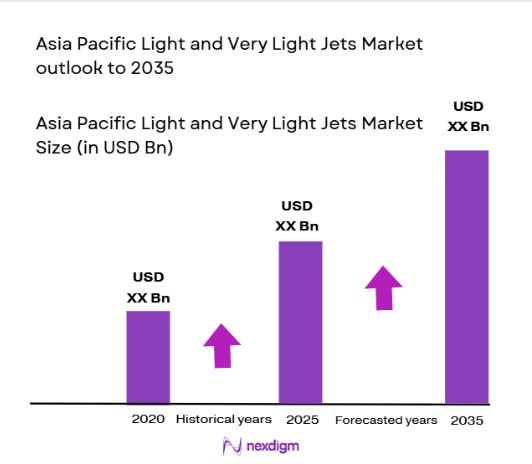
The Asia Pacific Light and Very Light Jets market is valued at approximately USD ~ billion, driven by an increase in demand for private aviation and corporate jets. This market has been propelled by a growing middle-class population with rising disposable income, particularly in emerging markets like China and India. Technological advancements, such as more fuel-efficient and affordable jets, are also playing a key role in driving market growth. Increased demand for luxury travel and the need for faster, private transportation further contribute to this growth.
Several countries in the Asia Pacific region are dominating the market due to high demand for private and business aviation services. Countries such as Japan, China, and India are major contributors, driven by the increasing need for private travel options among business executives and high-net-worth individuals. The region also benefits from improving aviation infrastructure, expanding airspace liberalization, and government incentives supporting the aviation industry, fostering a conducive environment for market growth.
Market Segmentation
By Product Type
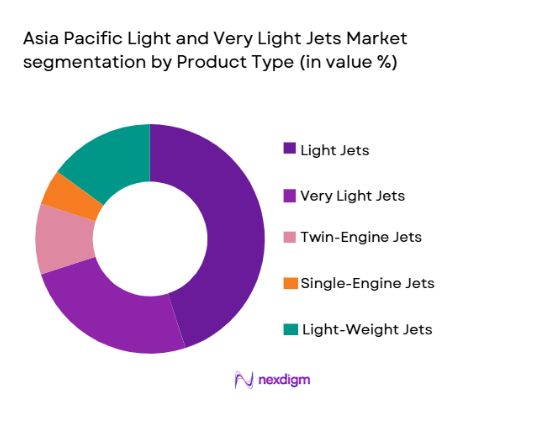
Asia Pacific Light and Very Light Jets market is segmented by product type into Light Jets, Very Light Jets, Twin-Engine Jets, Single-Engine Jets, and Light-Weight Jets. Recently, Light Jets have dominated the market share due to their ability to offer a balance of affordability, speed, and comfort for mid-range flights. The growing demand for business aviation in corporate sectors across the region has significantly contributed to the growth of Light Jets. Moreover, as infrastructure for business jets becomes more accessible and the middle-class population grows, the demand for this sub-segment continues to rise. The availability of various models suited for different customer needs, coupled with more efficient fuel consumption, has cemented the dominance of Light Jets in this market.
By Platform Type
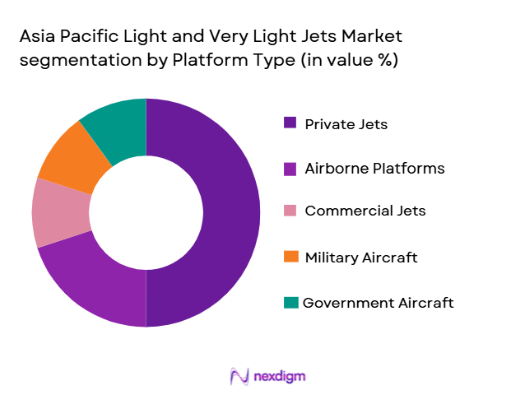
Asia Pacific Light and Very Light Jets market is segmented by platform type into Airborne Platforms, Private Jets, Commercial Jets, Military Aircraft, and Government Aircraft. Recently, Private Jets have had a dominant market share due to the increasing number of high-net-worth individuals and executives seeking personalized travel options. The increasing trend of private jet ownership is spurred by the growing wealth of individuals in the region, as well as a preference for flexibility, security, and time savings. The higher customization and luxury features offered by private jets make them an attractive option, ensuring they maintain a significant share in the market.
Competitive Landscape
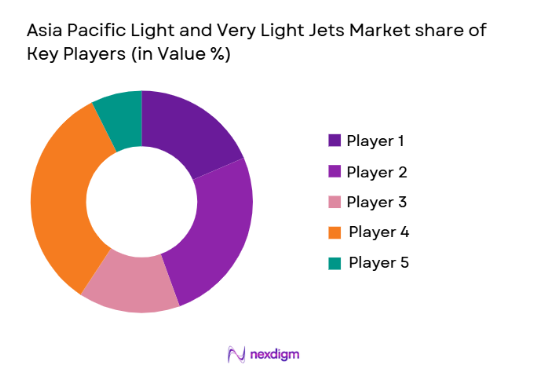
The competitive landscape of the Asia Pacific Light and Very Light Jets market is shaped by the presence of a few major players with significant brand recognition and market share. These companies have been consolidating the market by offering a wide range of aircraft with advanced technologies and maintaining strong relationships with high-net-worth clients. As the market for private aviation in the Asia Pacific continues to expand, leading players are focusing on enhancing their product offerings and after-sales services to meet the growing demand for efficient, eco-friendly, and luxurious aircraft.
| Company Name | Establishment Year | Headquarters | Technology Focus | Market Reach | Key Products | Revenue (USD) | Fleet Range |
| Embraer | 1969 | Brazil | ~ | ~ | ~ | ~ | ~ |
| Bombardier | 1942 | Canada | ~ | ~ | ~ | ~ | ~ |
| Cessna Aircraft | 1927 | USA | ~ | ~ | ~ | ~ | ~ |
| Gulfstream Aerospace | 1958 | USA | ~ | ~ | ~ | ~ | ~ |
| Honda Aircraft Company | 2006 | USA | ~ | ~ | ~ | ~ | ~ |
Asia Pacific Light and Very Light Jets Market Analysis
Growth Drivers
Increased Disposable Income in Emerging Economies:
Increased disposable income in emerging markets such as China, India, and Southeast Asia is a major growth driver for the Asia Pacific Light and Very Light Jets market. These countries have witnessed a rapid expansion of their affluent middle class, leading to a growing demand for luxury and business aviation services. High-net-worth individuals (HNWIs) are increasingly opting for private jets for both personal and business travel, as they seek convenience, comfort, and flexibility. The affordability of light and very light jets, compared to traditional large jets, has made private aviation more accessible to this growing demographic. Furthermore, as disposable income continues to rise, demand for more sophisticated and customized travel options is expected to drive the adoption of light and very light jets in the region.
Technological Advancements in Aircraft Design
Technological advancements in aircraft design and fuel efficiency are contributing to the market growth of light and very light jets. Manufacturers are developing lighter, more fuel-efficient jets that are more affordable to operate and maintain, addressing one of the major concerns of business aviation users. Innovations in engine technology and the use of composite materials have made it possible to reduce operating costs while improving performance, driving demand for these aircraft. Additionally, improvements in avionics and cabin features have increased the appeal of light and very light jets to a broader range of consumers, including corporate executives and high-net-worth individuals looking for faster and more convenient travel options.
Market Challenges
High Operational and Maintenance Costs
Despite the relatively lower acquisition costs of light and very light jets compared to larger aircraft, the operational and maintenance costs remain a significant challenge for owners and operators. Fuel consumption, maintenance schedules, and the availability of spare parts all contribute to the high ongoing costs of these aircraft. Additionally, the availability of trained pilots and technicians capable of handling advanced aircraft further adds to the operational expenses. While smaller jets are designed to be more cost-efficient, these hidden costs often deter some potential buyers and operators, limiting the broader adoption of light and very light jets, especially in cost-sensitive markets.
Regulatory and Certification Challenges
The regulatory and certification processes for new aircraft are highly complex, and light and very light jets must comply with stringent aviation regulations in various countries. This often results in delays and additional costs for manufacturers, especially when launching new models in multiple markets. In some regions, the certification process can be particularly challenging, with aviation authorities imposing strict safety standards that manufacturers must meet. Moreover, international trade restrictions and airspace limitations in certain countries add another layer of complexity for operators. These challenges can slow down the market’s growth and create barriers to entry for new manufacturers and operators in the Asia Pacific region.
Opportunities
Expanding Air Charter Services
As the demand for private travel grows, there is a significant opportunity in the expanding air charter services market. Air charter operators are increasingly providing on-demand services to high-net-worth individuals, business executives, and tourists seeking personalized travel experiences. This trend is particularly strong in regions like China and India, where air charter services are becoming more popular as they offer convenience, flexibility, and access to destinations not easily reachable by commercial airlines. This growth in air charter services offers an opportunity for manufacturers of light and very light jets to expand their presence in the market, as more operators seek cost-effective and efficient aircraft options to meet demand.
Emerging Demand for Sustainable Aviation
There is a growing demand for eco-friendly aircraft, driven by increasing awareness about environmental issues and sustainability. As governments and private companies invest in green technologies, the aviation industry is moving towards more sustainable solutions. This trend creates an opportunity for the development and adoption of electric or hybrid-electric light and very light jets. Manufacturers that focus on incorporating sustainable practices into their designs, such as reducing fuel consumption or minimizing emissions, will likely capture a larger share of the market. Furthermore, government incentives and subsidies for green aviation technologies are expected to further accelerate the adoption of these eco-friendly aircraft.
Future Outlook
The Asia Pacific Light and Very Light Jets market is expected to continue its growth trajectory, with increasing demand for private aviation services driven by a rising affluent population and advancements in aircraft technology. Technological developments, particularly in fuel efficiency and sustainability, will play a key role in shaping the future of this market. Governments in the region are likely to introduce policies that support aviation infrastructure and promote the adoption of greener technologies, fostering a favorable environment for the market. Rising disposable income and the increasing popularity of air charter services are expected to drive further demand in the coming years.
Major Players
- Embraer
- Bombardier
- Cessna Aircraft
- Gulfstream Aerospace
- Honda Aircraft Company
- Textron Aviation
- Pilatus Aircraft
- Diamond Aircraft
- Beechcraft
- Piper Aircraft
- Cirrus Aircraft
- AeroVironment
- Sukhoi Civil Aircraft
- Raytheon Technologies
- IAI (Israel Aerospace Industries)
Key Target Audience
- Investments and venture capitalist firms
- Government and regulatory bodies
- Airlines and aviation operators
- Aircraft leasing companies
- Aerospace manufacturers
- Private equity firms
- Aircraft maintenance and service providers
- Aviation equipment suppliers
Research Methodology
Step 1: Identification of Key Variables
The first step involves identifying the key variables that influence the market dynamics, including product types, customer segments, technological advancements, and regional trends.
Step 2: Market Analysis and Construction
Data is collected from primary and secondary sources to analyze the current market structure, trends, and growth potential across different regions.
Step 3: Hypothesis Validation and Expert Consultation
Hypotheses regarding market trends, growth drivers, and challenges are validated through expert consultations, interviews with industry leaders, and data from market participants.
Step 4: Research Synthesis and Final Output
Finally, the research findings are synthesized into a comprehensive report, providing actionable insights into market trends, forecasts, and competitive analysis.

- Executive Summary
- Research Methodology (Definitions, Scope, Industry Assumptions, Market Sizing Approach, Primary & Secondary Research Framework, Data Collection & Verification Protocol, Analytic Models & Forecast Methodology, Limitations & Research Validity Checks)

- Market Definition and Scope
- Value Chain & Stakeholder Ecosystem
- Regulatory / Certification Landscape
- Sector Dynamics Affecting Demand
- Strategic Initiatives & Infrastructure Growth

- Growth Drivers
Increased Demand for Business Aviation
Technological Advancements in Aviation Materials
Rising Affluence in Emerging Economies
Increasing Government Investments in Aviation Infrastructure
Rising Interest in Private Aircraft Ownership - Market Challenges
High Operational and Maintenance Costs
Regulatory Barriers for Aircraft Certification
Lack of Standardized Infrastructure in Emerging Markets
Environmental Concerns Regarding Aircraft Emissions
Limited Availability of Skilled Pilots and Technicians - Market Opportunities
Growth in Air Charter Services
Adoption of Electric and Hybrid Aircraft
Expansion of Light Jet Infrastructure in Developing Regions - Trends
Adoption of Autonomous Flight Systems
Integration of Advanced Cockpit Technologies
Rising Popularity of Shared Private Jet Services
Use of Big Data for Aircraft Maintenance
Increased Focus on Sustainability in Aviation - Government Regulations & Defense Policy
Aviation Safety Regulations
Environmental Standards for Aircraft Emissions
Government Support for Business Aviation - SWOT Analysis
- Stakeholder and Ecosystem Analysis
- Porter’s Five Forces Analysis
- Competition Intensity and Ecosystem Mapping

- By Market Value, 2020-2025
- By Installed Units, 2020-2025
- By Average System Price, 2020-2025
- By System Complexity Tier, 2020-2025

- By System Type (In Value%)
Light Jets
Very Light Jets
Twin-Engine Jets
Single-Engine Jets
Light-Weight Jets - By Platform Type (In Value%)
Airborne Platforms
Private Jets
Commercial Jets
Military Aircraft
Government Aircraft - By Fitment Type (In Value%)
OEM Solutions
Retrofit Solutions
Upgraded Systems
Custom Fitments
Pre-owned Jets - By EndUser Segment (In Value%)
Private Corporations
Government Agencies
Private Individuals
Air Charter Operators
Aviation Firms - By Procurement Channel (In Value%)
Direct Procurement
Aviation Dealers
Auction Platforms
Online Retailers
Private Sales - By Material / Technology (in Value%)
Carbon Fiber
Lightweight Alloy Materials
Composite Materials
Aero-engine Technology
Fuel-efficient Technology

- Market share snapshot of major players
- Cross Comparison Parameters (System Type, Platform Type, Procurement Channel, EndUser Segment, Fitment Type, Material/Technology, Market Value, Installed Units, Average System Price, System Complexity Tier)
- SWOT Analysis of Key Players
- Pricing & Procurement Analysis
- Key Players
Honda Aircraft Company
Embraer
Textron Aviation
Bombardier
Cessna Aircraft
Cirrus Aircraft
Piper Aircraft
Gulfstream Aerospace
Dassault Aviation
Pilatus Aircraft
Jet Aviation
Diamond Aircraft
Beechcraft
Sukhoi Civil Aircraft
IAI (Israel Aerospace Industries)

- Growing Demand for Private Aviation
- Government Agencies Focusing on Security and Efficiency
- Expanding Market for Air Charter Operators
- Increased Focus on Luxury Air Travel by Individuals

- Forecast Market Value, 2026-2035
- Forecast Installed Units, 2026-2035
- Price Forecast by System Tier, 2026-2035
- Future Demand by Platform, 2026-2035


 Request a Sample
 Ask for Customization
 Get a Quote
 Enquire Now