

 Download PDF
 Download PDF
Market Overview
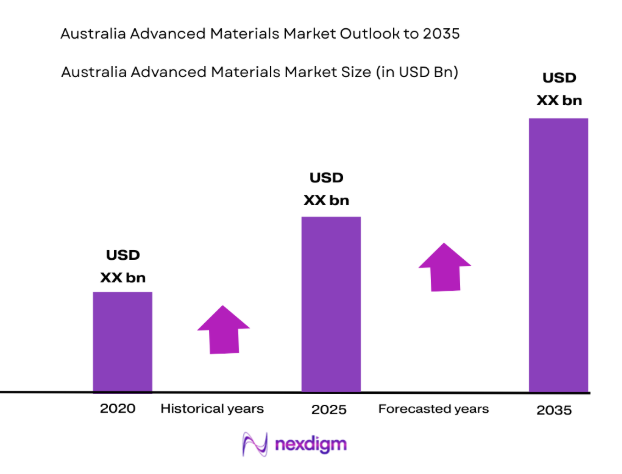
The Australia Advanced Materials Market is currently valued at approximately USD ~ billion, driven by the demand for innovative materials across multiple sectors. A significant portion of the market growth is attributed to the increasing demand for lightweight and high-performance materials in automotive, aerospace, and construction industries. The sector is experiencing an upsurge in investment, particularly in nanomaterials and composites, as industries seek to improve energy efficiency, durability, and sustainability of their products. The market’s growth is largely fueled by technological advancements and governmental support for sustainable practices, with increasing adoption of eco-friendly materials by manufacturers.
Australia, particularly cities like Sydney and Melbourne, is at the forefront of advanced materials innovation, driven by a strong industrial base and R&D activities. Sydney serves as a hub for cutting-edge research in materials science, with significant investment from both private companies and government bodies in sectors such as automotive and aerospace. Melbourne’s manufacturing industry is also a key player, focusing on integrating advanced materials in sectors like construction and electronics. The combination of governmental support, availability of raw materials, and technological expertise in these regions positions Australia as a leader in the advanced materials market in the Asia-Pacific region.
Market Segmentation
By Product Type
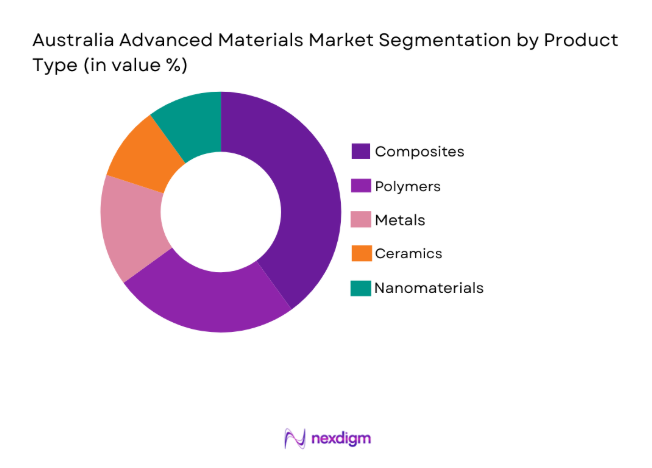
Australia’s Advanced Materials Market is segmented by product type into composites, polymers, metals, ceramics, and nanomaterials. Recently, composites have dominated the market share due to their increasing application in lightweight automotive and aerospace components. As industries like automotive and aerospace focus on reducing weight and increasing energy efficiency, composites offer the desired properties of high strength, low weight, and versatility in design. This has made composites particularly popular in manufacturing for electric vehicles and aircraft, where every gram saved contributes significantly to overall performance and energy consumption. The demand for composites has been further supported by advancements in resin systems, fiber technologies, and recycling capabilities, ensuring that the material remains a key player in various manufacturing sectors.
By Platform Type
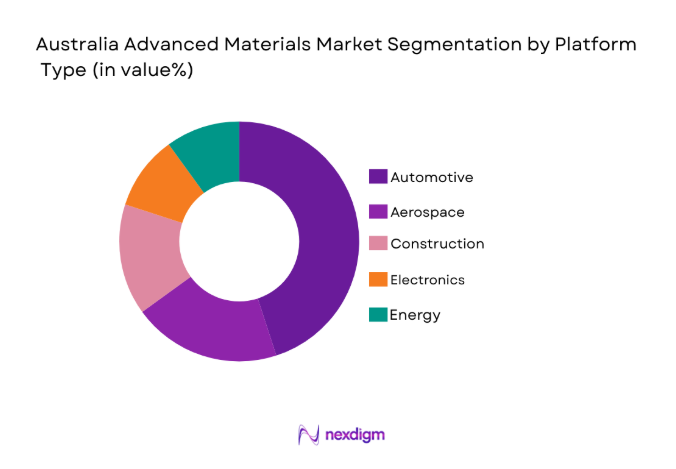
Australia’s Advanced Materials Market is segmented by platform type into automotive, aerospace, construction, electronics, and energy. The automotive sector has recently seen a dominant market share due to the growing demand for electric vehicles (EVs) and lightweight components. As manufacturers focus on reducing vehicle weight to improve energy efficiency and range, advanced materials such as composites and lightweight alloys are being integrated into vehicle design. This demand is driven by both consumer preferences for greener technologies and government regulations pushing for lower emissions, which have heightened the need for advanced materials in vehicle production. Automotive manufacturers, in collaboration with material science companies, are actively investing in new material solutions to achieve these goals.
Competitive Landscape
The competitive landscape in the Australia Advanced Materials Market is highly consolidated, with several major players leading the charge in innovation and market development. Companies are focusing on R&D to enhance material properties and introduce new solutions tailored to the growing demand across automotive, aerospace, and construction industries. Consolidation has also been seen through strategic partnerships and acquisitions as companies aim to bolster their portfolios in advanced materials, nanotechnology, and composite solutions. This trend is further propelled by the need to meet rising consumer and regulatory demands for sustainable, energy-efficient materials.
| Company Name | Establishment Year | Headquarters | Technology Focus | Market Reach | Key Products | Revenue (USD) | Additional Parameter |
| BASF Australia | 1960 | Melbourne | ~ | ~ | ~ | ~ | ~ |
| BlueScope Steel | 1988 | Port Kembla | ~ | ~ | ~ | ~ | ~ |
| Dow Chemical | 1897 | Melbourne | ~ | ~ | ~ | ~ | ~ |
| RMIT University | 1887 | Melbourne | ~ | ~ | ~ | ~ | ~ |
| Orica Limited | 1948 | Melbourne | ~ | ~ | ~ | ~ | ~ |

Australia Advanced Materials Market Analysis
Growth Drivers
The increasing demand for lightweight materials in the automotive sector
The automotive industry is witnessing a paradigm shift toward the adoption of lightweight materials, primarily driven by the growing need for fuel efficiency and reduced emissions. With the global focus on sustainability, electric vehicles (EVs) have become a major driver of this change, as reducing vehicle weight directly impacts energy consumption and driving range. Materials such as carbon fiber composites, advanced aluminum alloys, and high-strength steel are gaining traction in vehicle production, particularly in EVs. As manufacturers seek to meet stringent emission standards, these advanced materials provide the strength and durability required without adding significant weight to the vehicle. In addition, government incentives, both in Australia and globally, encourage the use of energy-efficient materials in automotive manufacturing, driving further demand for advanced materials. The growing environmental awareness among consumers, combined with regulatory pressures, ensures that the demand for lightweight materials will continue to grow in the automotive sector, positioning the market for long-term expansion.
The growing demand for advanced materials in the aerospace sector
The aerospace sector has been one of the most prominent drivers for advanced materials in recent years. With the focus on fuel efficiency and performance, lightweight yet durable materials such as composites, titanium alloys, and advanced polymers are increasingly used in aircraft manufacturing. These materials contribute significantly to reducing the weight of aircraft, thereby improving fuel efficiency and reducing carbon emissions. Furthermore, aerospace manufacturers are exploring the integration of new materials to meet the growing demand for sustainable aviation technologies. Australia, with its advanced manufacturing capabilities and research in aerospace technologies, is seeing a growing adoption of these materials in both commercial and defense aerospace sectors. As the aerospace industry continues to innovate with new aircraft designs and fuel-efficient models, the demand for advanced materials is expected to grow, ensuring that the market in Australia will remain a key player in the global aerospace supply chain. Moreover, government support for the aerospace industry, including research and development funding, is helping to drive material innovations, positioning the Australian market for continued growth.
Market Challenges
High production costs of advanced materials
One of the primary challenges facing the Australia Advanced Materials Market is the high production cost of advanced materials. While these materials offer significant benefits such as improved performance, energy efficiency, and sustainability, they are often more expensive to produce than traditional materials. The production of advanced materials requires specialized manufacturing processes, including high-temperature processing, precise material formulations, and the use of expensive raw materials. For industries like automotive, construction, and electronics, which are typically sensitive to cost pressures, this can act as a barrier to widespread adoption. In particular, the high initial investment required for advanced material production facilities and R&D efforts compounds this issue, limiting the ability of smaller companies to access these materials. Overcoming the high cost of production is crucial for fostering broader adoption and ensuring that advanced materials become more mainstream across various sectors.
Complexity in integrating advanced materials into existing manufacturing processes
Integrating advanced materials into established manufacturing processes presents a significant challenge for many industries. Traditional sectors, such as automotive and construction, are heavily reliant on legacy materials and established production methods. The shift to advanced materials often requires modifications to existing infrastructure, which can be costly and time-consuming. Manufacturers must invest in new production lines, equipment, and training to handle the unique properties of advanced materials, such as their different thermal and mechanical properties. Additionally, not all existing manufacturing systems are compatible with advanced materials, creating integration challenges that may lead to inefficiencies or higher production costs. Small and medium-sized enterprises (SMEs) are particularly affected by these challenges, as they may lack the resources to adopt advanced materials fully. Thus, overcoming the hurdles associated with the integration of these materials is essential for ensuring their widespread adoption across industries.
Opportunities
Expansion of the electric vehicle (EV) market
The electric vehicle (EV) market represents a significant opportunity for the Australian advanced materials market. As the global automotive industry shifts toward sustainable transportation, the demand for materials that can reduce vehicle weight and improve energy efficiency is on the rise. Advanced materials such as lightweight composites, high-strength steels, and aluminum alloys are being increasingly incorporated into EVs to enhance their performance. Australia’s automotive sector is poised to benefit from this trend, as the government continues to support EV manufacturing through grants and incentives aimed at reducing emissions. The growth of the EV market will drive the demand for advanced materials used in battery enclosures, structural components, and lightweight body parts. As EV adoption accelerates globally and in Australia, advanced material manufacturers have an opportunity to capitalize on the growing need for innovative, high-performance materials that improve vehicle efficiency and reduce environmental impact.
Increasing demand for sustainable and energy-efficient building materials
The construction industry’s growing focus on sustainability presents a unique opportunity for the Australian advanced materials market. With rising urbanization and a push for energy-efficient buildings, the demand for advanced materials such as eco-friendly composites, high-performance polymers, and energy-efficient insulation materials is increasing. These materials offer superior durability, reduced environmental impact, and enhanced energy efficiency compared to traditional building materials. Additionally, as construction companies are increasingly required to meet stringent sustainability standards, the adoption of advanced materials will play a key role in reducing the carbon footprint of buildings. In Australia, the emphasis on sustainable construction practices, fueled by government policies and consumer demand, is expected to drive the growth of advanced materials used in building and infrastructure projects. As demand for green building materials continues to rise, there will be ample opportunities for companies involved in the development and manufacturing of advanced construction materials to expand their presence in the market.
Future Outlook
The future of Australia’s advanced materials market appears promising, with strong growth expected in the coming years. Technological developments in nanomaterials, composites, and polymers are expected to drive innovation, enabling industries like automotive, aerospace, and construction to achieve greater efficiency and sustainability. Government initiatives and regulations supporting environmental sustainability will further fuel the adoption of advanced materials. Additionally, demand for lightweight materials in electric vehicles and energy-efficient buildings is anticipated to rise, positioning the market for long-term growth. As technological advancements continue and costs decrease, Australia’s advanced materials market is set for a prosperous future.
Major Players
- BASF Australia
- BlueScope Steel
- Dow Chemical
- RMIT University
- Orica Limited
- BHP Group
- CSR Limited
- AkzoNobel
- James Hardie Industries
- GFG Alliance
- Holcim Australia
- Amcor Limited
- Lendlease Group
- Rio Tinto
- Sibelco
Key Target Audience
- Investments and venture capitalist firms
- Government and regulatory bodies
- Automotive manufacturers
- Aerospace companies
- Construction firms
- Energy sector companies
- Manufacturers of consumer electronics
Research Methodology
Step 1: Identification of Key Variables
This step involves identifying the key market variables that will impact the research, including product types, platform types, and economic drivers.
Step 2: Market Analysis and Construction
The market is analyzed by examining industry trends, consumer preferences, and emerging technologies to form the foundation of the market sizing and segmentation.
Step 3: Hypothesis Validation and Expert Consultation
Consultation with industry experts and stakeholders helps validate the initial hypotheses and adjust them based on market realities.
Step 4: Research Synthesis and Final Output
All collected data, insights, and findings are synthesized to provide a comprehensive market report with actionable insights and projections.

- Executive Summary
- Research Methodology (Definitions, Scope, Industry Assumptions, Market Sizing Approach, Primary & Secondary Research Framework, Data Collection & Verification Protocol, Analytic Models & Forecast Methodology, Limitations & Research Validity Checks)

- Market Definition and Scope
- Value Chain & Stakeholder Ecosystem
- Regulatory / Certification Landscape
- Sector Dynamics Affecting Demand
- Strategic Initiatives & Infrastructure Growth

- Growth Drivers
Demand for Lightweight Materials in Automotive
Growing Demand for Energy-Efficient Building Materials
Technological Advancements in Nanomaterials
Government Support for Sustainable Manufacturing
Growing Demand in Aerospace for Advanced Materials - Market Challenges
High Production Costs of Advanced Materials
Complexity in Integrating Advanced Materials into Traditional Industries
Limited Recycling Capabilities of Certain Advanced Materials
Market Sensitivity to Economic Cycles
Regulatory Compliance and Sustainability Issues - Market Opportunities
Expansion in Electric Vehicle Manufacturing
Increased Demand for High-Performance Construction Materials
Adoption of Advanced Polymers in Electronics and Packaging - Trends
Development of Smart Materials for Building
Growth in Renewable Energy Applications Using Advanced Materials - Government Regulations
Environmental Impact Standards
Sustainability Requirements for Construction
Manufacturing and Recycling Regulations - SWOT Analysis
- Porter’s Five Forces

- By Market Value, 2020-2025
- By Installed Units, 2020-2025
- By Average System Price, 2020-2025
- By System Complexity Tier, 2020-2025

- By System Type (In Value%)
Composites
Polymers
Metals
Ceramics
Nanomaterials - By Platform Type (In Value%)
Automotive
Aerospace
Construction
Electronics
Energy - By Fitment Type (In Value%)
On-premise Solutions
Cloud-based Solutions
Hybrid Solutions
Integrated Solutions - By End User Segment (In Value%)
Automotive Industry
Electronics & Semiconductors
Aerospace & Defense
Construction Industry

- Market Share Analysis
Cross Comparison Parameters (System Type, Platform Type, Procurement Channel, End User Segment, Fitment Type, Material Type, Technology)
SWOT Analysis of Key Competitors
Pricing & Procurement Analysis - Key Players
BASF Australia
BlueScope Steel
Dow Chemical Australia
Orica Limited
Amcor Limited
Visy Industries
Alcoa Australia
Incitec Pivot Limited
Cochlear Limited
Swinburne University of Technology
Orora Packaging Australia
Simona Australia
Tata Steel Australia
GFG Alliance
Holcim Australia

- Growing Demand from Automotive Sector for Lightweight Materials
- Increased Use of Polymers and Composites in Electronics Manufacturing
- Advancements in Aerospace Materials for Performance Efficiency
- Shift Towards Green Construction Materials in the Building Industry

- Forecast Market Value, 2026-2035
- Forecast Installed Units, 2026-2035
- Price Forecast by System Tier, 2026-2035
- Future Demand by Platform, 2026-2035


 Request a Sample
 Ask for Customization
 Get a Quote
 Enquire Now