
 Download PDF
 Download PDF
Market Overview
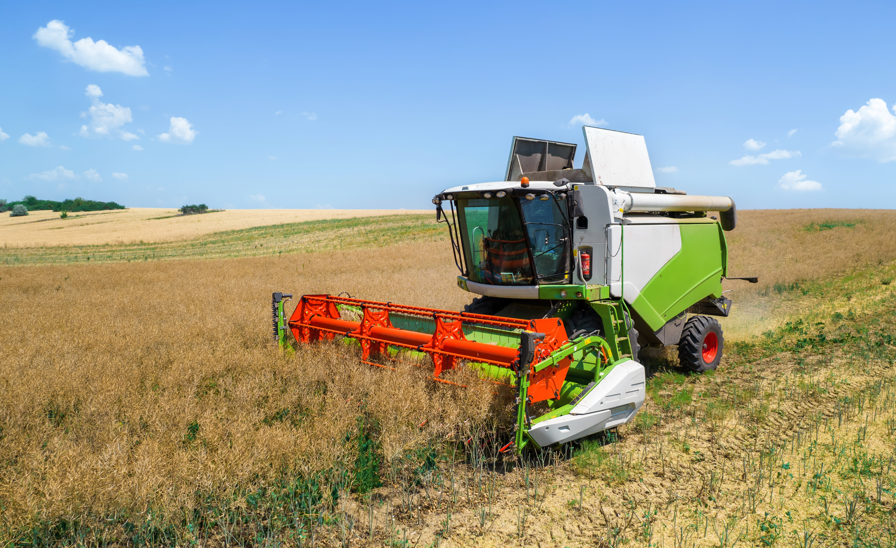
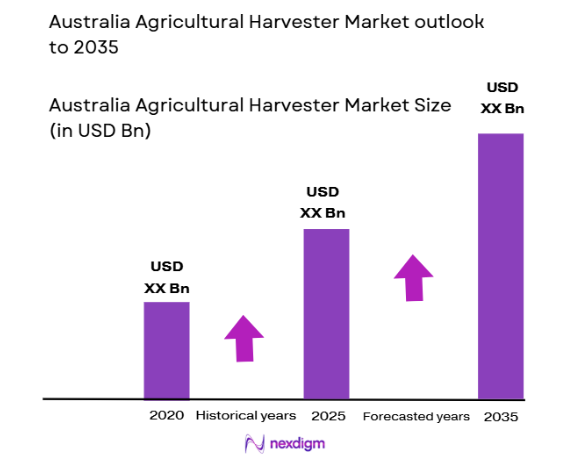
Based on a recent historical assessment, the Australia Agricultural Harvester Market was valued at USD ~ billion, supported by data published by industry associations and national agricultural machinery registration records. The market is driven by large-scale grain production across Western Australia and New South Wales, rising mechanization rates, and sustained investment in precision farming technologies. Strong export-oriented wheat and barley output has accelerated demand for high-capacity combine harvesters and technologically advanced harvesting systems.
Dominant regions include Western Australia, New South Wales, and Victoria due to expansive broadacre farming operations and established grain supply chains. Western Australia alone produces grain output valued at over USD ~ billion, reinforcing strong machinery utilization. These states benefit from developed dealer networks, robust rural financing access, and advanced logistics infrastructure, enabling faster technology adoption and large-scale equipment deployment across extensive agricultural landscapes.
Market Segmentation
By Product Type
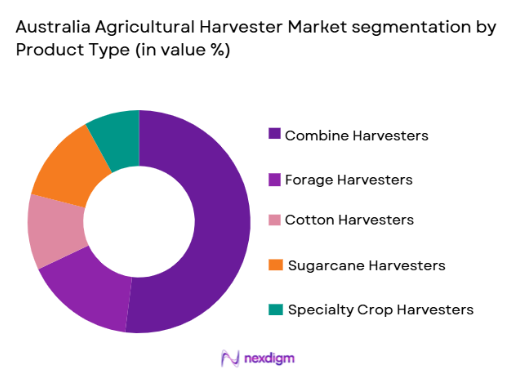
Australia Agricultural Harvester Market market is segmented by product type into combine harvesters, forage harvesters, cotton harvesters, sugarcane harvesters, and specialty crop harvesters. Recently, combine harvesters have a dominant market share due to extensive wheat and barley cultivation across Western Australia and New South Wales, strong export demand, and preference for high-capacity multi-crop machines. Their adaptability across grains and oilseeds, integration with GPS-enabled precision systems, and superior operational efficiency make them the preferred choice for large commercial farms. Strong dealer networks and availability of financing further reinforce their dominance.
By Application
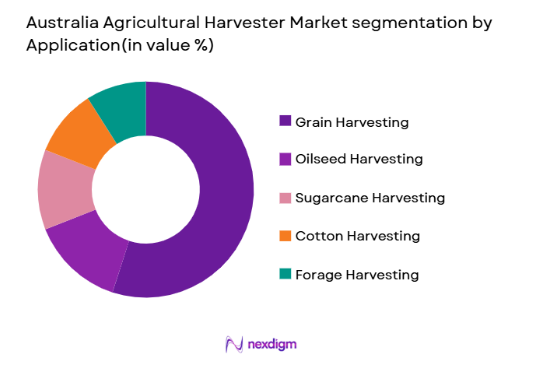
Australia Agricultural Harvester Market market is segmented by application into grain harvesting, oilseed harvesting, sugarcane harvesting, cotton harvesting, and forage harvesting. Recently, grain harvesting has a dominant market share due to Australia’s large-scale wheat and barley production valued at over USD 10.00 billion in export revenue. Grain farms require high-capacity mechanized systems to manage vast landholdings efficiently. Broadacre farming practices, labor shortages, and export-focused supply chains strengthen grain harvesting equipment demand, ensuring sustained leadership of this segment across key agricultural states.
Competitive Landscape
The Australia Agricultural Harvester Market is moderately consolidated, dominated by multinational agricultural machinery manufacturers with established dealer networks and strong aftersales support systems. Market leadership is influenced by technological innovation, financing availability, and crop-specific customization capabilities. Global brands maintain strong brand loyalty among large commercial farms, while regional distributors play a key role in servicing remote agricultural regions.
| Company Name | Establishment Year | Headquarters | Technology Focus | Market Reach | Key Products | Revenue (USD Billion) | Dealer Network Strength |
| John Deere | 1837 | United States | ~ | ~ | ~ | ~ | ~ |
| CNH Industrial | 2013 | United Kingdom | ~ | ~ | ~ | ~ | ~ |
| AGCO Corporation | 1990 | United States | ~ | ~ | ~ | ~ | ~ |
| CLAAS Group | 1913 | Germany | ~ | ~ | ~ | ~ | ~ |
| Kubota Corporation | 1890 | Japan | ~ | ~ | ~ | ~ | ~ |
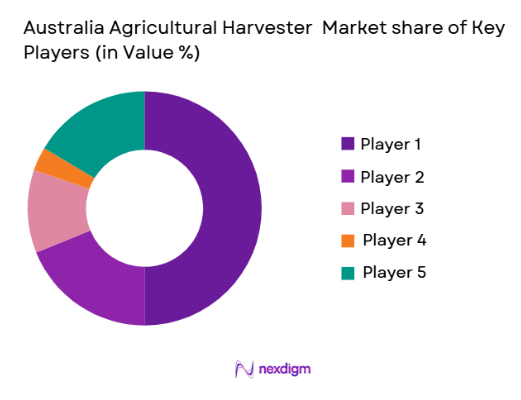
Australia Agricultural Harvester Market Analysis
Growth Drivers
Expansion of Broadacre Grain Farming Operations:
Australia’s agricultural landscape is characterized by extensive broadacre farms particularly across Western Australia and New South Wales, where individual holdings span thousands of hectares. These farms require high-capacity harvesting equipment capable of operating efficiently across large tracts of land within narrow harvest windows. Growing global demand for wheat and barley strengthens export revenues, encouraging reinvestment into modern harvesting systems. Farmers are prioritizing productivity enhancement through mechanization to offset rising operational costs. Advanced combine harvesters with larger header widths and automated controls are increasingly adopted. The need to minimize crop loss and improve turnaround time further supports technology upgrades. Access to agricultural financing and equipment leasing programs enhances purchasing power among large producers. As consolidation in farming continues, demand for technologically advanced harvesters is expected to strengthen further.
Acceleration of Precision Agriculture Adoption:
The integration of GPS guidance systems, yield monitoring sensors, and telematics has transformed harvesting efficiency across Australian farms. Precision agriculture enables operators to optimize fuel usage, reduce overlap, and enhance grain recovery rates. Increasing digital literacy among farm managers has encouraged investment in smart harvesting solutions. Real-time data analytics supports informed decision-making during harvesting cycles. Equipment manufacturers are embedding artificial intelligence-based systems to improve operational control. This transition reduces labor dependency while enhancing productivity consistency. Government-backed digital farming initiatives support modernization. Rising environmental sustainability concerns also promote efficient machinery utilization. Together, these factors significantly stimulate demand for technologically advanced harvesters across the country.
Market Challenges
High Capital Intensity of Advanced Harvesters:
Modern combine harvesters equipped with precision guidance and digital monitoring systems involve substantial upfront investment costs. Smaller and mid-sized farms often face financing constraints when upgrading machinery fleets. Equipment prices have risen due to imported component costs and technological integration. Maintenance and spare part expenses add to lifecycle ownership costs. Seasonal revenue fluctuations in agriculture further complicate investment decisions. Farmers may delay purchases during periods of commodity price volatility. Limited second-hand machinery availability reduces affordability alternatives. High capital requirements therefore remain a significant constraint across certain farming segments.
Seasonal Utilization and Demand Cyclicality:
Harvesting equipment is utilized intensively during limited seasonal windows, resulting in underutilization during off-peak periods. This cyclical usage pattern affects return on investment calculations. Weather variability including droughts or excessive rainfall influences harvest volumes and machinery demand. Climatic risks can delay or reduce harvesting cycles, affecting replacement purchasing decisions. Contractors often face fluctuating workloads. Financing institutions factor seasonal risks into lending structures. Import dependency exposes the market to supply chain disruptions. These cyclical characteristics present structural challenges to sustained sales growth.
Opportunities
Adoption of Autonomous Harvesting Technologies:
Rapid advancements in automation and artificial intelligence present strong growth potential within Australia’s large-scale farming systems. Autonomous combine harvesters can operate with minimal human intervention, reducing labor dependency. Labor shortages in rural regions create strong incentives for automation investment. Sensor-based navigation systems enhance harvesting accuracy and reduce crop wastage. Integration with farm management software allows synchronized operations across multiple machines. Pilot projects demonstrate improved operational efficiency. Government support for smart farming initiatives further accelerates experimentation. As technology costs gradually stabilize, autonomous harvesting systems may become commercially scalable across broadacre farms.
Expansion of Contract Harvesting Services:
Increasing machinery costs encourage small and medium farms to outsource harvesting activities to professional contractors. Contract harvesting firms invest in high-capacity, multi-crop machines to serve diverse clients. This model spreads capital expenditure across larger service areas. Demand for timely harvesting within optimal crop windows supports contractor growth. Contractors adopt advanced technology to maintain competitiveness. Regional agricultural clusters provide concentrated client bases. Financing institutions show growing interest in supporting contractor-led models. This structural shift may expand equipment utilization rates and stimulate steady machinery procurement over time.
Future Outlook
Over the next five years, the Australia Agricultural Harvester Market is expected to witness steady modernization driven by technological innovation and farm consolidation trends. Increasing integration of autonomous and data-driven harvesting systems will enhance operational productivity. Regulatory emphasis on fuel efficiency and emissions compliance will influence machinery upgrades. Strong export-oriented grain production and infrastructure improvements will continue supporting equipment demand. Investment in precision agriculture and digital farm management platforms is likely to shape future competitive dynamics.
Major Players
- John Deere
- CNH Industrial
- AGCO Corporation
- CLAAS Group
- Kubota Corporation
- Yanmar Holdings
- SDF Group
- Mahindra & Mahindra Farm Equipment
- ISEKI & Co
- Kuhn Group
- Rostselmash
- Bourgault Industries
- Honey Bee Manufacturing
- MacDon Industries
- Seed Hawk
Key Target Audience
- Agricultural Machinery Manufacturers
- Grain Exporting Companies
- Large Commercial Farming Enterprises
- Contract Harvesting Service Providers
- Agricultural Equipment Dealers
- Investments and venture capitalist firms
- Government and regulatory bodies
- Rural Financing Institutions
Research Methodology
Step 1: Identification of Key Variables
Comprehensive variables including production volume, equipment sales, pricing patterns, technology penetration, and regional distribution were identified. Demand-side and supply-side indicators were mapped to construct the analytical framework.
Step 2: Market Analysis and Construction
Primary interviews with equipment dealers and farm operators were combined with secondary data from agricultural associations and trade statistics. Quantitative modeling techniques were applied to validate market size.
Step 3: Hypothesis Validation and Expert Consultation
Industry experts, machinery distributors, and agribusiness analysts were consulted to validate assumptions. Divergent viewpoints were reconciled through triangulation methods.
Step 4: Research Synthesis and Final Output
Validated data points were consolidated into structured analytical insights. Cross-verification ensured consistency across segments and competitive assessments.

- Executive Summary
- Research Methodology (Definitions, Scope, Industry Assumptions, Market Sizing Approach, Primary & Secondary Research Framework, Data Collection & Verification Protocol, Analytic Models & Forecast Methodology, Limitations & Research Validity Checks)

- Market Definition and Scope
- Value Chain & Stakeholder Ecosystem
- Regulatory / Certification Landscape
- Sector Dynamics Affecting Demand
- Strategic Initiatives & Infrastructure Growth

- Growth Drivers
Expansion of large scale grain and oilseed farming operations in Australia
Labor shortages accelerating mechanized harvesting adoption
Government incentives for precision agriculture equipment investment
Rising export demand for cereals and pulses boosting harvesting capacity needs
Technological advancements improving harvesting efficiency and yield optimization - Market Challenges
High capital cost of advanced harvesting machinery for small and medium farms
Seasonal utilization leading to underused equipment capacity
Limited rural technical service infrastructure in remote farming regions
Volatile agricultural commodity prices affecting farmer investment decisions
Complex maintenance requirements of precision harvesting systems - Market Opportunities
Adoption of autonomous and semi autonomous harvesting systems in broadacre farming
Growth of contract harvesting services in remote agricultural zones
Integration of digital farm management platforms with harvesting machinery - Trends
Shift toward large capacity combine harvesters for broadacre farming
Increasing integration of telematics and real time crop analytics
Demand for fuel efficient and low emission harvesting equipment
Growth of precision header and crop specific harvesting attachments
Adoption of data driven harvesting optimization technologies - Government Regulations & Defense Policy
Agricultural machinery safety and operator certification standards
Emission and fuel efficiency regulations for off road machinery
Government grants supporting precision agriculture equipment adoption - SWOT Analysis
- Stakeholder and Ecosystem Analysis
- Porter’s Five Forces Analysis
- Competition Intensity and Ecosystem Mapping

- By Market Value, 2020-2025
- By Installed Units, 2020-2025
- By Average System Price, 2020-2025
- By System Complexity Tier, 2020-2025

- By System Type (In Value%)
Combine Harvesters
Forage Harvesters
Sugarcane Harvesters
Cotton Harvesters
Root Crop Harvesters - By Platform Type (In Value%)
Self Propelled Harvesters
Tractor Mounted Harvesters
Trailed Harvesters
Autonomous Robotic Harvesters
Compact Harvesting Platforms - By Fitment Type (In Value%)
OEM Factory Integrated Units
Aftermarket Retrofit Kits
Modular Attachment Systems
Precision Farming Integrated Units
Custom Engineered Fitments - By EndUser Segment (In Value%)
Large Commercial Grain Farms
Mixed Crop Livestock Farms
Contract Harvesting Service Providers
Agricultural Cooperatives
Research and Demonstration Farms - By Procurement Channel (In Value%)
Direct OEM Sales
Authorized Agricultural Machinery Dealers
Rural Equipment Distributors
Leasing and Financing Providers
Government Supported Procurement Programs - By Material / Technology (in Value %)
Precision GPS Guidance Systems
AI Based Yield Monitoring Sensors
Telematics and Fleet Management Systems
Lightweight High Strength Steel Structures
Hybrid Electric Drive Harvesting Systems

- Market structure and competitive positioning
- Market share snapshot of major players
- CrossComparison Parameters (Harvester Capacity, Engine Power Range, Crop Compatibility, Automation Level, Precision Technology Integration, Header Width Options, Fuel Efficiency, Aftermarket Support Network, Terrain Adaptability, Price Tier Positioning)
- SWOT Analysis of Key Players
- Pricing & Procurement Analysis
- Key Players
John Deere
CNH Industrial
AGCO Corporation
CLAAS Group
Kubota Corporation
Yanmar Holdings
SDF Group
Mahindra & Mahindra Farm Equipment
ISEKI & Co
Kuhn Group
Rostselmash
Bourgault Industries
Honey Bee Manufacturing
MacDon Industries
Seed Hawk

- Large grain producers prioritizing high capacity and automation enabled harvesters
- Contract harvesting firms investing in multi crop adaptable equipment fleets
- Cooperatives sharing harvesting machinery to reduce capital burden
- Mixed farms adopting modular harvesting attachments for crop diversification

- Forecast Market Value, 2026-2035
- Forecast Installed Units, 2026-2035
- Price Forecast by System Tier, 2026-2035
- Future Demand by Platform, 2026-2035


 Request a Sample
 Ask for Customization
 Get a Quote
 Enquire Now