
 Download PDF
 Download PDF
Market Overview
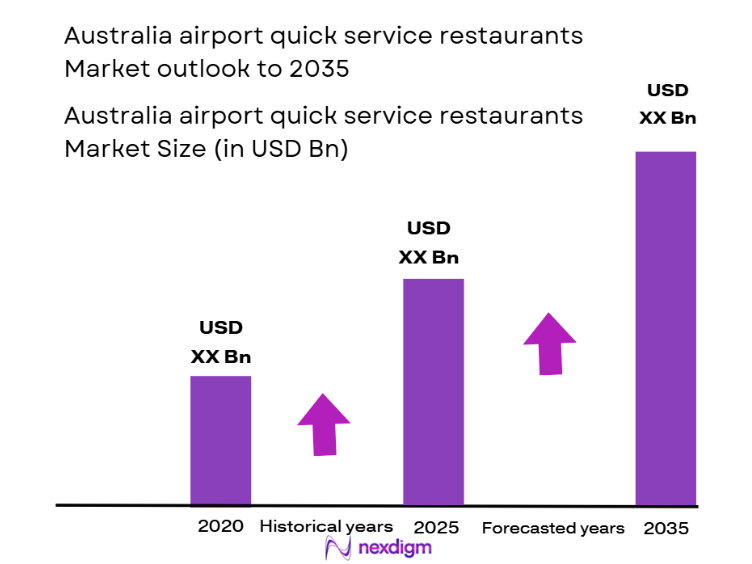
The Australia Airport Quick Service Restaurants market is valued at USD ~ billion, supported by growing passenger traffic and the increasing demand for fast, convenient meal options. This market is driven by factors such as the rise in domestic and international travel, airport infrastructure expansion, and changing consumer dining preferences. The demand for quick and efficient food service is further amplified by the busy lifestyles of travelers, with airport authorities focusing on enhancing food options to cater to these needs. The market is also influenced by technological advancements, such as the integration of digital ordering systems and mobile apps, which streamline the dining experience.
Sydney, Melbourne, and Brisbane are the dominant cities in Australia for quick service restaurants at airports. Sydney Airport, being one of the busiest airports in the country, plays a crucial role in the market. Melbourne’s international and domestic terminals cater to a large volume of travelers, thus bolstering the demand for fast food outlets. Brisbane also stands out due to its growing role as a hub for international flights. These airports’ dominance can be attributed to their significant passenger footfall, high international connections, and the continuous efforts to upgrade food services, making them central locations for quick service restaurants in Australia.
Market Segmentation
By System Type
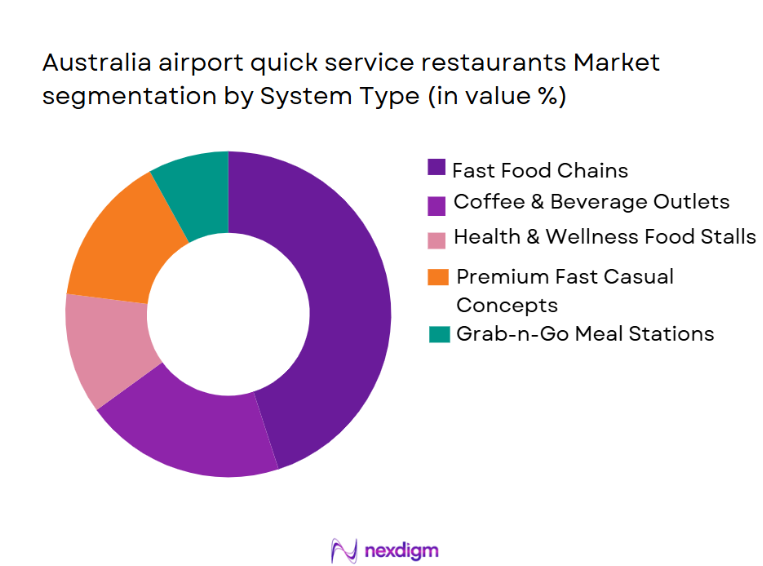
The Australia Airport Quick Service Restaurants market is segmented by system type into fast food chains, coffee & beverage outlets, health & wellness food stalls, premium fast casual concepts, and grab-and-go meal stations. Fast food chains, such as McDonald’s and KFC, have a dominant market share in the system type segmentation due to their established global presence and their ability to cater to high volumes of customers quickly and efficiently. These chains offer a wide variety of meals, catering to diverse passenger needs, and are located in major airports across the country. The familiarity of these brands and their convenience make them popular choices for travelers seeking fast, affordable meals in busy airport environments.
By Platform Type
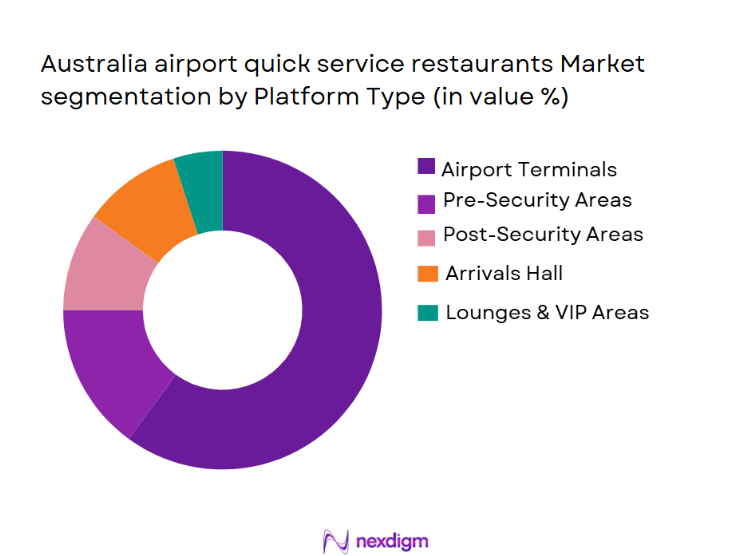
The Australia Airport Quick Service Restaurants market is also segmented by platform type into airport terminals, pre-security areas, post-security areas, arrivals hall, and lounges & VIP areas. Airport terminals dominate the platform type segment as they host a large proportion of foot traffic and offer prime locations for quick service restaurants. The accessibility of these areas to all passengers, whether international or domestic, boosts demand for fast and convenient food options. With high footfall and limited time for meal breaks, airport terminals are the ideal space for restaurants offering fast service and a variety of meal choices to meet the needs of diverse travelers.
Competitive Landscape
The Australia Airport Quick Service Restaurants market is dominated by a few major players, including global and regional foodservice companies. These players, such as SSP Group, Compass Group, and Autogrill, leverage their extensive experience and established networks in the travel sector. They have the infrastructure, resources, and expertise to manage large-scale airport operations and offer a wide variety of food and beverage options. The competitive landscape also includes local food service providers who specialize in Australian cuisine and cater to specific regional tastes and preferences. These key players are continually innovating to meet the changing demands of passengers, incorporating technology for smoother operations and enhancing the customer experience.
| Company Name | Establishment Year | Headquarters | System Types | Platform Reach | Revenue (2024) | Key Focus Area |
| SSP Group | 1961 | United Kingdom | ~ | ~ | ~ | ~ |
| Compass Group | 1941 | United Kingdom | ~ | ~ | ~ | ~ |
| Autogrill | 1977 | Italy | ~ | ~ | ~ | ~ |
| Dufry Group | 1997 | Switzerland | ~ | ~ | ~ | ~ |
| Royal Airport Services | 1990 | Australia | ~ | ~ | ~ | ~ |
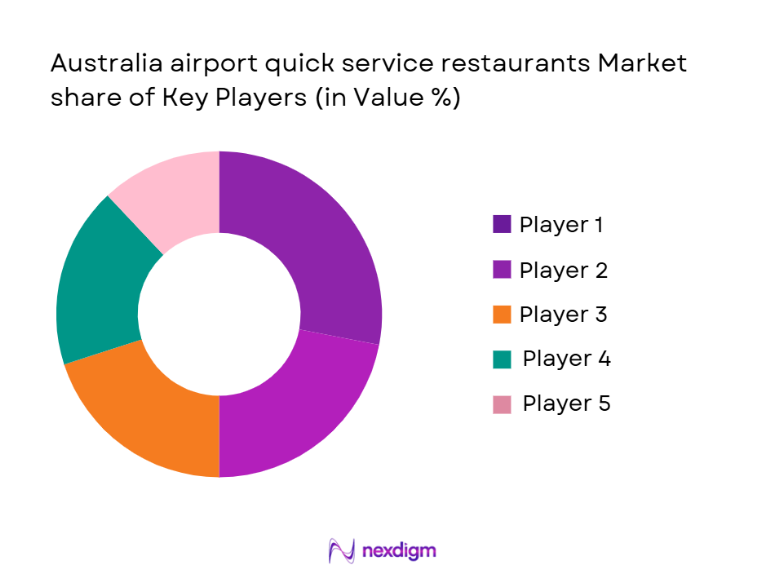
Australia Airport Quick Service Restaurants Market Analysis
Growth Drivers
Increasing Air Travel
The growing number of international and domestic flights, coupled with a rise in tourism and business travel, is significantly boosting demand for quick service restaurants at airports. More passengers translate into more foot traffic, driving the need for fast, convenient dining options.
Technological Advancements
The adoption of self-service kiosks, mobile ordering apps, and digital payment systems is enhancing customer experience and operational efficiency. This encourages passengers to opt for quick dining options, as they can order and pay seamlessly, saving time.
Market Challenges
High Operational Costs
Running quick service restaurants in airports entails high rent, staffing, and logistics costs, especially in prime airport locations. These elevated expenses can put pressure on profitability, limiting growth potential for some players.
Regulatory and Compliance Hurdles
Airport authorities impose stringent regulations on food safety, quality, and service standards, which can increase the operational complexity and cost for quick service restaurant operators, hindering their ability to adapt quickly to market changes.
Opportunities
Health-Conscious Consumer Trends
With passengers becoming more health-conscious, there is an opportunity for quick service restaurants to expand their menu offerings to include more nutritious, organic, and plant-based options, catering to this growing demand.
Expansion of Digital and Delivery Solutions
Leveraging technology to offer delivery services within airports, or integrating food delivery apps, creates a new revenue stream and enhances customer convenience, especially in larger terminals with heavy foot traffic.
Future Outlook
Over the next 5-6 years, the Australia Airport Quick Service Restaurants market is expected to experience significant growth driven by continued increases in air travel, expansion of airport terminals, and consumer demand for faster and healthier meal options. The ongoing focus on enhancing the passenger experience through more convenient, technology-driven solutions will also contribute to the market’s expansion. With the evolving travel habits, passengers are increasingly seeking quality food offerings that cater to their diverse dietary preferences and schedules, providing opportunities for growth in this segment.
Major Players
- SSP Group
- Compass Group
- Autogrill
- Dufry Group
- Royal Airport Services
- Lagardère Travel Retail
- Servair
- Eurest Services
- Sodexo
- The Restaurant Group
- Paris Airport Restaurants
- Plaza Premium Group
- Xpresspa
- The AHL Group
- Fraport
Key Target Audience
- Investments and venture capitalist firms
- Government and regulatory bodies
- Airport authorities and management
- Airport retailers and service operators
- Foodservice providers for airports
- Franchise owners in the QSR industry
- Airlines and airline service providers
- International and domestic airlines’ catering departments
Research Methodology
Step 1: Identification of Key Variables
The first step involves identifying all key variables that impact the Australia Airport Quick Service Restaurants market. This includes passenger traffic data, airport development plans, foodservice trends, and consumer dining preferences. Information is gathered from secondary sources, including industry reports and databases, followed by expert consultations to gain a deeper understanding of the relevant market drivers and challenges.
Step 2: Market Analysis and Construction
In this phase, historical data and current market trends are analyzed to construct a detailed view of the market. This includes understanding revenue generation, system types, platform types, and demographic factors influencing the demand for quick service restaurants at airports. This step also involves assessing the competitive landscape to identify market share distribution.
Step 3: Hypothesis Validation and Expert Consultation
Market hypotheses related to growth, challenges, and opportunities are validated through expert consultations. Interviews and discussions are conducted with industry professionals, airport authorities, and food service managers, who provide insights into real-time market conditions and consumer behavior at airports.
Step 4: Research Synthesis and Final Output
The final phase synthesizes all collected data and expert insights into a comprehensive analysis of the market. This involves refining hypotheses, validating findings through additional consultations, and ensuring the accuracy and reliability of the market size, trends, and forecast data.

- Executive Summary
- Research Methodology (Definitions, Scope, Industry Assumptions, Market Sizing Approach, Primary & Secondary Research Framework, Data Collection & Verification Protocol, Analytic Models & Forecast Methodology, Limitations & Research Validity Checks)

- Market Definition and Scope
- Value Chain & Stakeholder Ecosystem
- Regulatory / Certification Landscape
- Sector Dynamics Affecting Demand
- Strategic Initiatives & Infrastructure Growth

- Growth Drivers
Increased Air Travel & Passenger Traffic
Rise in Demand for Quick, Convenient Meal Options
Growth of Airport Infrastructure and Terminal Expansion - Market Challenges
High Operational Costs for Quick Service Restaurants
Competition from Traditional Full-Service Restaurants
Stringent Regulations and Compliance Requirements - Market Opportunities
Expansion of Airport Food Delivery Services
Adoption of Sustainable & Health-Conscious Menu Offerings
Collaborations with Local and International Food Brands - Trends
Integration of Digital Ordering & Payment Systems
Rising Popularity of Plant-Based & Vegan Menus
Development of High-Tech Airport Dining Experiences

- By Market Value 2020-2025
- By Installed Units 2020-2025
- By Average System Price 2020-2025
- By System Complexity Tier 2020-2025

- By System Type (In Value%)
Fast Food Chains
Coffee & Beverage Outlets
Health & Wellness Food Stalls
Premium Fast Casual Concepts
Grab-and-Go Meal Stations - By Platform Type (In Value%)
Airport Terminals
Pre-Security Areas
Post-Security Areas
Arrivals Hall
Lounges & VIP Areas - By Fitment Type (In Value%)
Counter Service
Self-Order Kiosks
Drive-Thru Windows
Mobile Ordering Apps
Seated Dining Areas - By EndUser Segment (In Value%)
Business Travelers
Leisure Travelers
Tourists & International Passengers
Airport Staff & Crew
Frequent Flyers - By Procurement Channel (In Value%)
Direct Procurement from Franchises
Airport Food Service Operators
Contracted Airport Concessions
Online Food Delivery Platforms
In-Airport Retailers

- Market Share Analysis
- CrossComparison Parameters (Market Penetration, Revenue Growth, Customer Satisfaction, Geographic Reach, Service Innovation)
- SWOT Analysis of Key Competitors
- Pricing & Procurement Analysis
- Porter’s Five Forces
- Key Players
Compass Group
Lagardère Travel Retail
Servair
Dufry Group
Royal Airport Services
Autogrill S.p.A
Eurest Services
Sodexo
Air Catering International
Xpresspa
The Restaurant Group
Paris Airport Restaurants
Plaza Premium Group
SSP Group
The AHL Group

- Increasing Preference for Grab-and-Go Meals Among Business Travelers
- Growth of Family-Friendly Dining Options for Leisure Passengers
- Demand for Premium Quick Dining Options in International Terminals
- Customization of Meal Choices Through Digital Platforms

- Forecast Market Value 2026-2035
- Forecast Installed Units 2026-2035
- Price Forecast by System Tier 2026-2035
- Future Demand by Platform 2026-2035


 Request a Sample
 Ask for Customization
 Get a Quote
 Enquire Now