
 Download PDF
 Download PDF
Market Overview
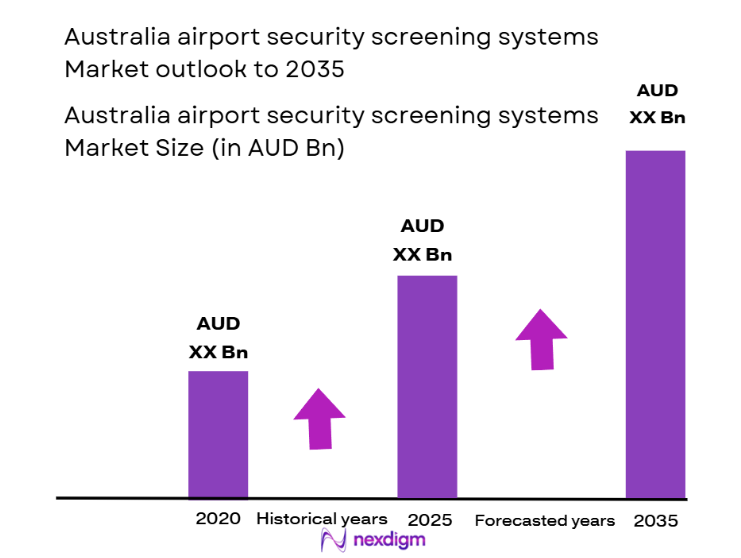
The Australia Airport Security Screening Systems market is valued at approximately AUD ~ billion based on a recent historical assessment. The market growth is driven by increased investments in airport infrastructure, rising passenger traffic, and stringent security regulations. Technological advancements in screening systems such as CT scanners and automated screening lanes are further fueling the market expansion. The sector’s growth is also supported by government initiatives to modernize airport security measures, ensuring passenger safety and facilitating smoother airport operations.
The dominant players in the Australia Airport Security Screening Systems market are located primarily in major metropolitan areas, including Sydney, Melbourne, and Brisbane. These cities benefit from high passenger volumes, global connectivity, and well-established transportation infrastructure, contributing significantly to market dominance. Additionally, these cities are key hubs for both international and domestic air travel, with airports constantly upgrading their security systems to meet evolving regulations and growing security concerns.
Market Segmentation
By Product Type
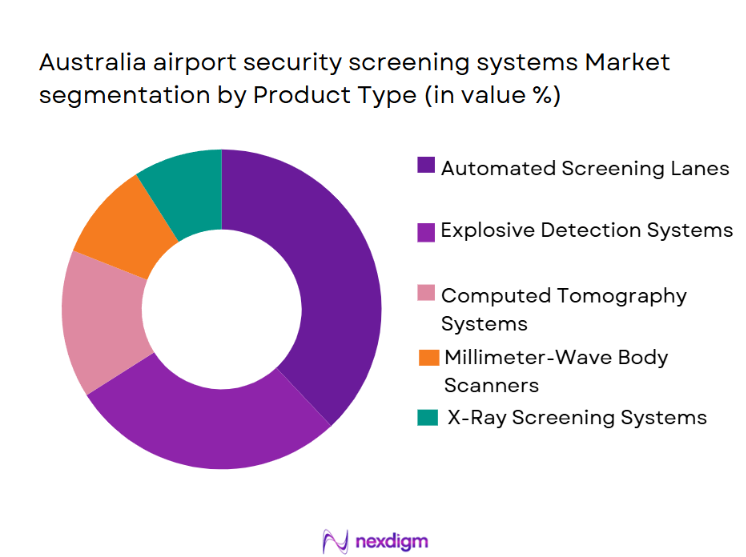
Australia Airport Security Screening Systems market is segmented by product type into automated screening lanes, explosive detection systems, computed tomography systems, millimeter-wave body scanners, and x-ray screening systems. Recently, automated screening lanes have dominated the market due to their efficiency in improving passenger flow and minimizing delays at checkpoints. The growing adoption of AI and machine learning for enhanced security, coupled with government initiatives to streamline airport operations, have further boosted the demand for automated systems.
By End-User Segment
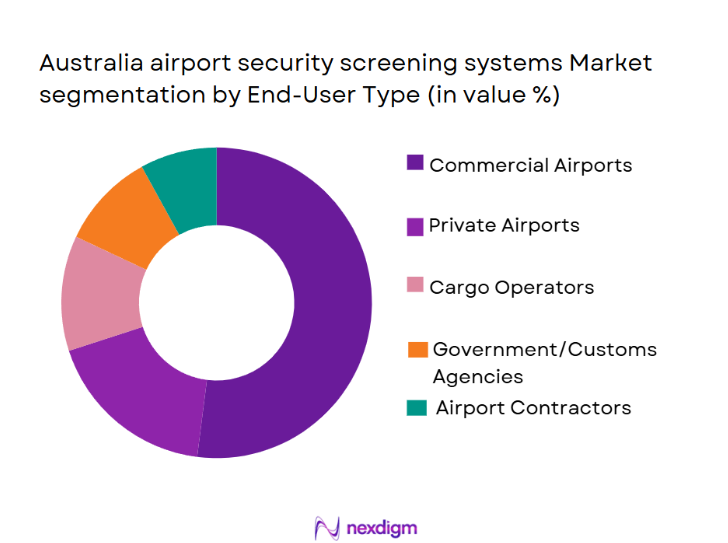
The market is segmented by end-user segment into commercial airports, private airports, cargo operators, government/customs agencies, and airport contractors. Commercial airports dominate the market, driven by increasing passenger traffic, stringent security requirements, and the need for continuous infrastructure upgrades. The need to manage large volumes of passengers efficiently has led to the adoption of high-tech security screening systems, ensuring enhanced safety and faster processing times.
Competitive Landscape
The Australia Airport Security Screening Systems market is highly competitive, with major players constantly innovating to gain a competitive edge. The industry is characterized by a few dominant companies and growing consolidation. These companies focus on technological advancements, strategic collaborations, and acquisitions to expand their product offerings and improve customer service. Additionally, with increasing security concerns and stricter government regulations, companies are striving to meet the evolving needs of airports.
| Company Name | Establishment Year | Headquarters | Technology Focus | Market Reach | Key Products | Revenue (USD) | Market-Specific Parameter |
| Smiths Detection | 1981 | UK | ~ | ~ | ~ | ~ | ~ |
| Rapiscan Systems | 1993 | USA | ~ | ~ | ~ | ~ | ~ |
| L3 Technologies | 1997 | USA | ~ | ~ | ~ | ~ | ~ |
| Identiv | 1990 | USA | ~ | ~ | ~ | ~ | ~ |
| CEIA | 1969 | Italy | ~ | ~ | ~ | ~ | ~ |
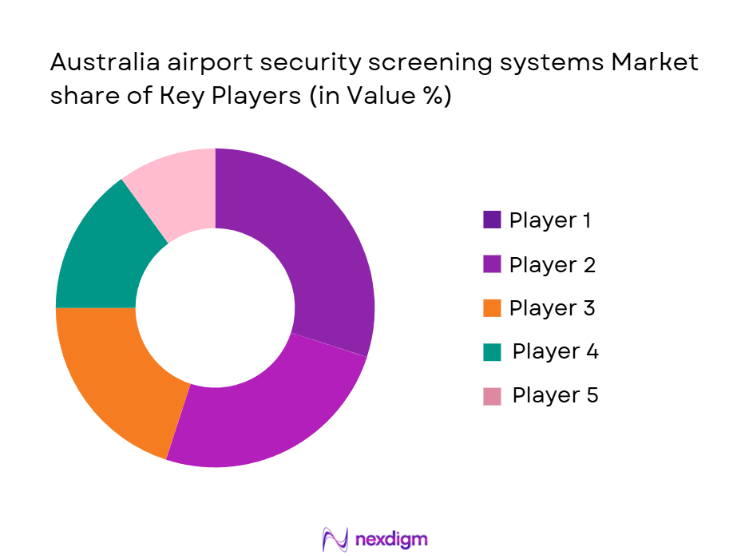
Australia Airport Security Screening Systems Market Analysis
Growth Drivers
Rising Air Travel Demand
The substantial increase in passenger traffic at Australian airports, particularly in Sydney and Melbourne, is a key driver for the growth of the airport security screening systems market. With rising international and domestic flights, there is a growing need for faster, more efficient security measures. Airports are investing in state-of-the-art security technologies such as AI-assisted X-ray and automated baggage scanning systems to keep up with growing demand while ensuring security and compliance with international safety standards.
Technological Advancements
The integration of AI, biometrics, and machine learning into airport security systems is significantly contributing to the market’s growth. These advanced technologies enhance threat detection capabilities, automate screening processes, and improve passenger flow. AI-powered X-ray machines, for instance, can detect potentially dangerous objects with a higher degree of accuracy and speed, helping airports reduce wait times and improve the overall passenger experience. As technology continues to evolve, it will drive further demand for upgraded systems.
Market Challenges
High Initial Costs
One of the major challenges facing the market is the high cost of implementing advanced security screening systems. Technologies like AI-assisted baggage scanners, biometric systems, and automated body scanners require significant initial investment, which may be a barrier for smaller or budget-constrained airports. Additionally, the ongoing maintenance and upgrades required to keep up with technological advancements can strain financial resources, especially for regional or smaller airports with limited budgets.
Regulatory Compliance
Meeting the evolving regulatory requirements set by both local and international authorities for airport security presents a challenge for airport operators and security solution providers. Airports in Australia must continually upgrade their security infrastructure to comply with the latest standards set by bodies such as the International Civil Aviation Organization (ICAO) and the Australian Government. This continuous need for upgrades can increase operational costs and create barriers to the swift adoption of the latest security technologies.
Opportunities
Development of Smart Airports
The Australian government’s initiatives to transform airports into smart hubs present a significant opportunity for the security screening systems market. As airports integrate more digital and automated solutions, including biometric identification and AI-driven security systems, the demand for advanced security solutions will increase. These technologies will not only improve security but also enhance operational efficiency and passenger satisfaction, providing ample growth opportunities for security solution providers.
International Events and Security Concerns
With Australia set to host major international events, such as the 2025 World Expo and other global conferences, there is a rising demand for enhanced airport security. Large-scale events require heightened security measures, which will drive the adoption of advanced screening technologies at airports. The need for reliable, efficient, and high-security solutions during such events offers significant growth potential for the market.
Future Outlook
The future of the Australia Airport Security Screening Systems market looks promising, with significant growth expected in the coming years. Technological advancements such as the adoption of AI and automation will streamline security processes and enhance passenger experience. Government initiatives focused on upgrading airport infrastructure and increasing security standards will also support market growth. The shift toward biometrics and more sophisticated screening solutions is expected to drive demand, with airports investing heavily in these technologies to meet evolving security needs.
Major Players
- Smiths Detection
- Rapiscan Systems
- L3 Technologies
- Identiv
- CEIA
- S2 Global
- Vandenlande
- OT-Morpho
- Adani Airports
- Pax Technology
- Kaspersky
- Nuctech
- Garrett Metal Detectors
- TSA Security Systems
- Honeywell
Key Target Audience
- Investments and venture capitalist firms
- Government and regulatory bodies
- Airport operators
- Airlines
- System integrators
- Technology providers
- Airport contractors
- International security agencies
Research Methodology
Step 1: Identification of Key Variables
The initial step involves identifying key market variables, including product types, end-user segments, and technological innovations, which are critical for understanding the market landscape.
Step 2: Market Analysis and Construction
Comprehensive market analysis is conducted by gathering data from industry reports, company financials, and government publications to create a detailed overview of the market trends and drivers.
Step 3: Hypothesis Validation and Expert Consultation
Expert consultations and hypothesis testing are performed to validate the findings and ensure the accuracy of the market analysis, incorporating feedback from stakeholders and industry professionals.
Step 4: Research Synthesis and Final Output
The final step involves synthesizing all research findings into a coherent and comprehensive report, ensuring clarity, accuracy, and relevance for decision-makers.

- Executive Summary
- Research Methodology (Definitions, Scope, Industry Assumptions, Market Sizing Approach, Primary & Secondary Research Framework, Data Collection & Verification Protocol, Analytic Models & Forecast Methodology, Limitations & Research Validity Checks)

- Market Definition and Scope
- Value Chain & Stakeholder Ecosystem
- Regulatory / Certification Landscape
- Sector Dynamics Affecting Demand
- Strategic Initiatives & Infrastructure Growth

- Growth Drivers
Increasing Demand for Security Post-9/11
Technological Advancements in Screening Solutions
Government Funding and Investment in Airport Security Infrastructure - Market Challenges
High Initial Investment Costs
Integration and Interoperability Issues
Regulatory Compliance and Standards Adherence - Market Opportunities
Expansion of International Travel and Aviation
Increased Demand for Advanced Screening Technologies
Growing Threats of Terrorism and Smuggling - Trends
Automation and Artificial Intelligence Integration
Adoption of Biometric Screening Systems
Integration of Cloud-Based Systems for Real-time Monitoring - Government Regulations
ICAO Security Standards
National Airport Security Guidelines
Environmental and Sustainability Regulations

- By Market Value 2020-2025
- By Installed Units 2020-2025
- By Average System Price 2020-2025
- By System Complexity Tier 2020-2025

- By System Type (In Value%)
Automated Screening Lanes
Explosive Detection Systems (EDS)
Computed Tomography (CT) Systems
Millimeter-Wave Body Scanners
X-Ray Screening Systems - By Platform Type (In Value%)
Airport Terminals
Baggage Screening Systems
Passenger Screening Systems
Cargo Screening Systems
Check-in Counters - By Fitment Type (In Value%)
New Installations
Upgrades & Replacements
Retrofit Systems
Integrated Systems
Modular Systems - By EndUser Segment (In Value%)
Commercial Airports
Private Airports
Cargo Operators
Government/Customs Agencies
Airport Contractors - By Procurement Channel (In Value%)
Direct Procurement
Distributor Channels
OEM Partnerships
Public Procurement Tenders
Private Procurement Solutions

- Market Share Analysis
- CrossComparison Parameters (Market Value, Installed Units, System Price, Market Trends, End-User Preferences)
- SWOT Analysis of Key Competitors
- Pricing & Procurement Analysis
- Porter’s Five Forces
- Key Players
Smiths Detection
Rapiscan Systems
L3 Technologies
Identiv
AeroVision
CEIA
S2 Global
Vanderlande
OT-Morpho
Adani Airports
Pax Technology
Kaspersky
Nuctech
Garrett Metal Detectors
TSA Security Systems

- Commercial Airports Market Demand
- Private Airport Growth
- Security Needs of Cargo Operators
- Government and Customs Agencies’ Role

- Forecast Market Value 2026-2035
- Forecast Installed Units 2026-2035
- Price Forecast by System Tier 2026-2035
- Future Demand by Platform 2026-2035


 Request a Sample
 Ask for Customization
 Get a Quote
 Enquire Now