

 Download PDF
 Download PDF
Market Overview
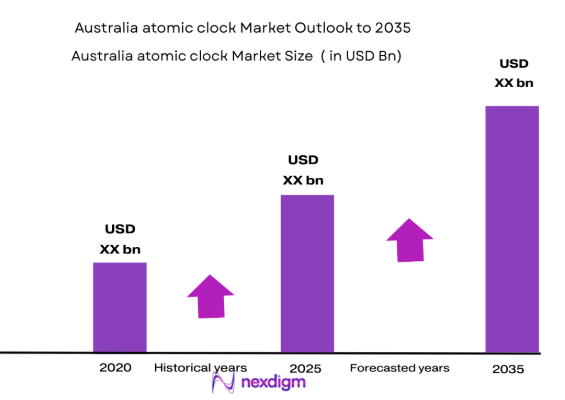
The Australia atomic clock market is driven by increasing demand for precise timekeeping across sectors such as telecommunications, defense, and space applications. The market size is valued at approximately USD ~ million, supported by advancements in quantum and optical technologies. Growing adoption in satellite navigation and telecommunication networks is contributing to this demand, with technological innovations continuing to improve the accuracy and miniaturization of atomic clocks. Government investments and regulatory frameworks are also playing a key role in expanding the market.
Dominant countries in the Australia atomic clock market include Australia and several key players in the Asia-Pacific region, such as Japan. Australia’s investment in space exploration, advanced telecommunications, and quantum technologies are key drivers for market growth. The demand for precision timekeeping in these sectors has bolstered Australia’s position, with government agencies and defense contractors being primary contributors to market dominance. Additionally, the global trend toward expanding space missions and defense spending further supports Australia’s leading role in atomic clock technology.
By Product Type
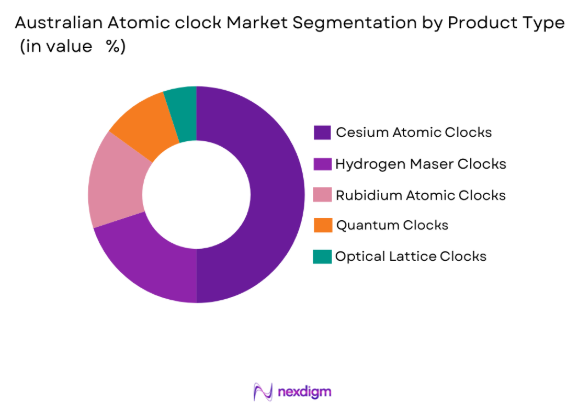
The Australian atomic clock market is segmented by product type into cesium atomic clocks, hydrogen maser clocks, rubidium atomic clocks, quantum clocks, and optical lattice clocks. Cesium atomic clocks hold the largest share in the market due to their precision and reliability in applications such as GPS synchronization and satellite-based communications. Their widespread use in military and scientific research applications continues to drive demand, particularly in sectors that require extremely high precision and stability. The development of quantum clocks is also creating new opportunities in the market, offering advancements in timekeeping accuracy.
By Platform Type
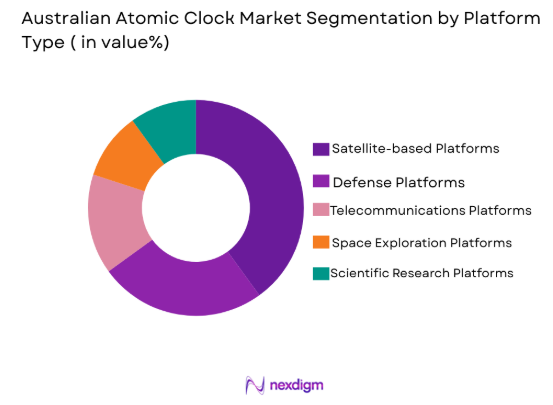
The Australian atomic clock market is segmented by platform type into satellite-based platforms, defense platforms, telecommunications platforms, space exploration platforms, and scientific research platforms. Satellite-based platforms dominate the market due to the increasing demand for highly accurate time synchronization for GPS and communication satellites. As the global reliance on satellite technology grows, so does the need for atomic clocks to maintain precision in satellite navigation, weather forecasting, and communication systems. The expansion of satellite infrastructure continues to fuel the dominance of this platform type in the atomic clock market.
Competitive Landscape
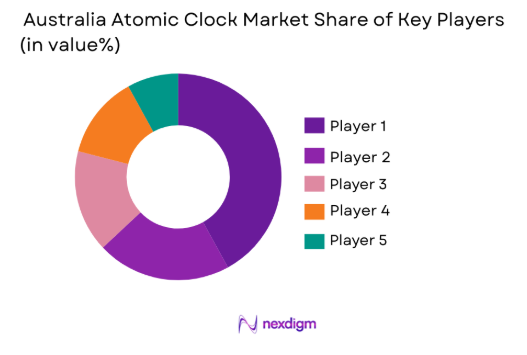
The competitive landscape of the Australia atomic clock market is characterized by high consolidation, with several leading players focusing on developing cutting-edge technology. Key players are investing heavily in research and development to advance atomic clock technology, while also forming strategic partnerships with government and defense organizations to enhance their market position. The market’s key players are also involved in significant collaborations with universities and research institutions to drive innovation and increase their product offerings.
| Company Name | Establishment Year | Headquarters | Technology Focus | Market Reach | Key Products | Revenue (USD) | Technology Collaboration |
| Australian National University | 1946 | Canberra | ~ | ~ | ~ | ~ | ~ |
| Q-CTRL | 2017 | Sydney | ~ | ~ | ~ | ~ | ~ |
| Microsemi Corporation | 1984 | USA | ~ | ~ | ~ | ~ | |
| Thales Group | 2000 | Paris | ~ | ~ | ~ | ~ | ~ |
| Honeywell | 1885 | USA | ~ | ~ | ~ | ~ | ~ |
Australia Atomic Clock Market Analysis
Growth Drivers
Increasing Demand for High-Precision Timekeeping
The need for precise time synchronization is growing across multiple sectors such as telecommunications, space, and defense. Advancements in atomic clock technology have enabled industries to meet their requirements for highly accurate timekeeping. In telecommunications, precise time synchronization is crucial for maintaining network operations, especially with the rollout of 5G technology. The aerospace sector relies on precise timing for satellite navigation, which has led to increased demand for atomic clocks with higher accuracy and reliability. Additionally, the defense sector requires these clocks for secure communication systems and GPS-based navigation. As these industries continue to grow, the demand for high-precision timekeeping technologies is expected to rise, driving market expansion. Furthermore, government initiatives supporting research and technological development in this area provide a conducive environment for innovation and market growth. The increasing adoption of quantum computing and optical technologies is also enhancing clock performance, making atomic clocks more efficient and widespread in various applications. These factors are expected to fuel the growth of the Australia atomic clock market.
Technological Advancements in Quantum and Optical Technologies
The development of quantum clocks and optical lattice clocks has significantly contributed to the growth of the Australia atomic clock market. Quantum clocks, which utilize the quantum properties of atoms to measure time with unparalleled accuracy, are anticipated to be a gamechanger in the market. These advancements allow for greater precision, which is critical for scientific applications, including satellite-based navigation systems and advanced communication networks. The growing capabilities of optical lattice clocks, which offer better miniaturization and portability, are also driving the market forward. These technologies are well-suited for high-end applications in space, defense, and telecommunications, where high accuracy is essential. As a result, the market is seeing a shift towards more compact, cost-effective, and higher-performing atomic clocks, which will expand the potential for widespread adoption. The continuous improvement in optical and quantum clock technologies is expected to open new avenues for applications in diverse industries, further accelerating market growth.
Market Challenges
High Initial Investment Costs
The primary challenge facing the Australia atomic clock market is the high initial investment required for developing and deploying advanced atomic clock systems. These technologies require significant research and development resources, leading to high production costs. Additionally, specialized equipment and infrastructure for maintaining atomic clocks can be expensive, making it difficult for some organizations, particularly small and medium-sized enterprises, to adopt these technologies. Although the demand for atomic clocks is growing, the high upfront costs can act as a barrier to entry for new players in the market. As a result, many companies opt for alternatives such as GPS-based time synchronization systems, which are more cost-effective but offer lower precision. Furthermore, the need for specialized expertise to install, calibrate, and maintain atomic clocks adds an additional layer of expense. While technological advancements are expected to reduce costs over time, the high initial investment remains a key challenge for widespread adoption.
Regulatory and Certification Barriers
Another significant challenge is the complex regulatory landscape surrounding atomic clock technology. As atomic clocks are used in sensitive sectors such as defense, telecommunications, and space, they must adhere to strict regulatory standards. Compliance with these regulations requires significant effort and investment, as companies must ensure that their products meet the necessary certifications and safety requirements. The lengthy certification process can delay product development and market entry, slowing down the adoption of new technologies. Moreover, varying regulations across regions can complicate global expansion for companies in the market, making it difficult to navigate international markets. These regulatory hurdles can hinder the growth of the market, especially for smaller companies that lack the resources to manage complex certification processes. Therefore, the regulatory and certification landscape presents a significant challenge for the Australia atomic clock market.
Opportunities
Adoption in Emerging Technologies and Industries
One of the key opportunities for the Australia atomic clock market lies in the increasing adoption of atomic clock technology in emerging fields such as quantum computing, space exploration, and 5G networks. As quantum computing progresses, precise timekeeping becomes more essential for maintaining synchronization across complex systems. Atomic clocks are fundamental for supporting the required precision in quantum systems, which will drive demand in the coming years. Similarly, with the expansion of space missions and satellite-based navigation systems, there is a growing need for highly accurate timekeeping devices. In addition, the roll-out of 5G networks is generating demand for precise time synchronization to ensure seamless connectivity and communication. As these industries continue to grow, the need for reliable and accurate atomic clocks will increase, creating substantial opportunities for market players to expand their product offerings and capture a larger share of the market.
Government Support and Defense Sector Investment
Another opportunity lies in government initiatives and defense sector investments in atomic clock technology. Governments around the world are recognizing the importance of high-precision timekeeping for national security, navigation, and communication. As a result, there is increasing investment in the development of advanced atomic clocks to support these critical infrastructure projects. The defense sector is a key driver of market growth, as atomic clocks are essential for secure communication systems and GPS-based navigation. Governments are also investing in space exploration and satellite technology, further increasing the demand for atomic clocks in these applications. Additionally, government research grants and funding programs aimed at advancing atomic clock technology provide financial support to companies operating in the market, encouraging innovation and facilitating market growth. This trend is expected to continue, offering significant opportunities for companies involved in the development of advanced atomic clock systems.
Future Outlook
The future outlook for the Australia atomic clock market indicates continued growth, driven by advancements in quantum and optical clock technologies. As demand increases across telecommunications, space, and defense applications, technological innovations will enhance the performance and accessibility of atomic clocks. Government support and investments in scientific research will further propel market growth, particularly in sectors such as space exploration and national security. The increasing miniaturization of atomic clocks and their integration into emerging technologies, such as 5G and quantum computing, will also contribute to market expansion in the coming years.
Major Players
- Australian National University
- University of Sydney
- Q-CTRL
- Microsemi Corporation
- Thales Group
- Honeywell
- Fujitsu Australia
- NIST
- Siemens
- Microchip Technology
- L3Harris Technologies
- Raytheon Technologies
- Harris Corporation
- Texas Instruments
- MIT Lincoln Laboratory
Key Target Audience
- Investments and venture capitalist firms
- Government and regulatory bodies
- Defense contractors
- Telecommunications providers
- Space agencies
- Research institutions
- Aerospace manufacturers
- Technology development firms
Research Methodology
Step 1: Identification of Key Variables
This step involves identifying the key market drivers, challenges, and opportunities specific to atomic clock technology, including technological advancements and regulatory factors.
Step 2: Market Analysis and Construction
The market analysis involves gathering data from industry reports, expert interviews, and market trends to construct an accurate model of the atomic clock market.
Step 3: Hypothesis Validation and Expert Consultation
The hypotheses developed during the market analysis are validated through consultations with industry experts and stakeholders to ensure the accuracy of the findings
Step 4: Research Synthesis and Final Output
In the final step, the research findings are synthesized into a comprehensive report, offering valuable insights for industry stakeholders and decision-makers.

- Executive Summary
- Research Methodology (Definitions, Scope, Industry Assumptions, Market Sizing Approach, Primary & Secondary Research Framework, Data Collection & Verification Protocol, Analytic Models & Forecast Methodology, Limitations & Research Validity Checks)

- Market Definition and Scope
- Value Chain & Stakeholder Ecosystem
- Regulatory / Certification Landscape
- Sector Dynamics Affecting Demand
- Strategic Initiatives & Infrastructure Growth

- Growth Drivers
Increased Demand for High-Precision Timekeeping
Advancements in Telecommunications Networks
Rising Defense Spending
Technological Innovation in Quantum Technologies
Expansion of Satellite-Based Systems - Market Challenges
High Initial Investment Costs
Complexity in Technology Integration
Regulatory Barriers in Space and Military Applications
Competition from GPS and Alternative Systems
Limited Local Manufacturing Capabilities - Market Opportunities
Emerging Demand in Space and Defense Sectors
Integration with Quantum Computing Advancements
Growing Adoption in Telecommunications Networks - Trends
Development of Portable Atomic Clocks
Shift Towards Quantum and Optical Clocks
Miniaturization of Atomic Clock Systems
Integration with 5G and IoT Technologies
Enhanced Precision in Scientific Research - Government Regulations & Defense Policy
Regulatory Guidelines for Space Applications
Government Initiatives for Research and Development
Defense Policy Focus on Secure Communications

- By Market Value, 2020-2025
- By Installed Units, 2020-2025
- By Average System Price, 2020-2025
- By System Complexity Tier, 2020-2025

- By System Type (In Value%)
Standard Atomic Clocks
Optical Lattice Clocks
Hydrogen Masers
Cesium Clocks
Quantum Clocks - By Platform Type (In Value%)
Laboratory Applications
Commercial Applications
Military and Defense Applications
Space Applications
Telecommunications - By Fitment Type (In Value%)
Standalone Units
Integrated Systems
Embedded Systems
Portable Devices
Field-Tested Systems - By End User Segment (In Value%)
Research Institutions
Government and Defense Agencies
Telecommunications Providers
Space Agencies
Private Sector Applications - By Procurement Channel (In Value%)
Direct Sales
Distributors
Online Sales
Government Procurement
Research Institutions Procurement - By Material / Technology (In Value%)
Quartz
Cesium
Hydrogen
Laser Cooling Technology
Cryogenic Technologies

- Market structure and competitive positioning
- Market share snapshot of major players
- Cross Comparison Parameters (Market Value, Installed Units, System Complexity, Price, End-User Segments, Regional Presence, Technology Adoption, R&D Investment, Supply Chain Strength)
- SWOT Analysis of Key Players
- Pricing & Procurement Analysis
- Porter’s Five Forces
- By Key Players
Australian National University
University of Sydney
Q-CTRL
Fujitsu Australia
NIST
Siemens
Toshiba
Honeywell
Thales Group
Accu Time Systems
Microsemi Corporation
Endeavour Energy
Bradford Engineering
MIT Lincoln Laboratory
Swinburne University of Technology

- Research Institutions Increasing Investment in Timekeeping Technology
- Government Agencies Seeking Enhanced Precision
- Telecommunications Providers Enhancing Network Synchronization
- Space Agencies Leveraging Atomic Clocks for Navigation

- Forecast Market Value, 2026-2035
- Forecast Installed Units, 2026-2035
- Price Forecast by System Tier, 2026-2035
- Future Demand by Platform, 2026-2035


 Request a Sample
 Ask for Customization
 Get a Quote
 Enquire Now