

 Download PDF
 Download PDF
Market Overview
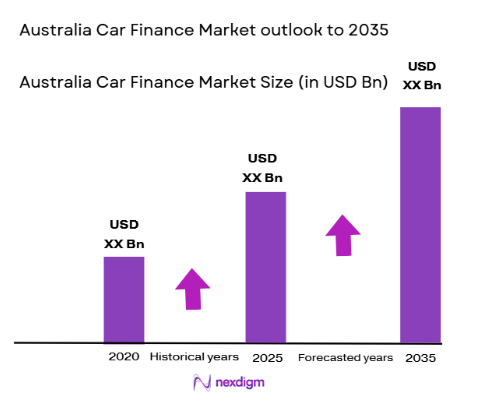
The Australia Car Finance market, valued at approximately USD ~ billion, is primarily driven by a robust demand for car ownership, favorable financing conditions, and increasing consumer interest in both new and used vehicles. The availability of flexible financing options such as personal loans, leasing, and dealer financing is pushing the market’s growth. This growth is supported by the rise in consumer spending, enhanced by government policies that promote financial inclusion and the growth of digital platforms facilitating car finance processes.
Key markets in Australia include cities such as Sydney, Melbourne, and Brisbane, which dominate due to their strong economic activities, high vehicle ownership rates, and well-established automotive infrastructure. These cities benefit from access to both traditional and digital financing services, alongside a growing interest in environmentally friendly vehicles, further expanding the scope for car finance. The trend toward digitization and streamlined loan approval processes has solidified their positions as the central hubs for car finance activities across the country.
Market Segmentation
By Product Type:
Australia Car Finance market is segmented by product type into direct finance, leasing, personal loans, dealer finance, and refinancing. Recently, dealer finance has a dominant market share due to factors such as its convenience, accessibility at the point of sale, and attractive interest rates offered by dealerships. Additionally, the availability of tailored loan packages and easier loan approval processes has made dealer finance an attractive option for both first-time and repeat car buyers, driving its dominance in the market.

By Platform Type:
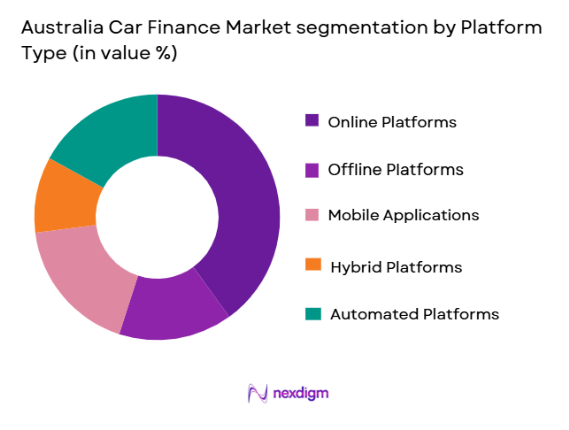
Australia Car Finance market is segmented by platform type into online platforms, offline platforms, mobile applications, hybrid platforms, and automated platforms. Recently, online platforms have a dominant market share due to the rapid adoption of digital solutions, greater accessibility, and the ability to compare various financing options conveniently. The growth in e-commerce and the shift towards contactless transactions have also made online platforms the go-to choice for consumers seeking financing, contributing to their increased dominance in the market.
Competitive Landscape
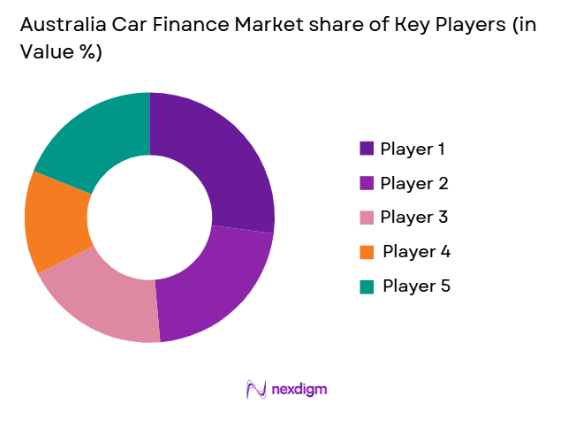
The competitive landscape of the Australia Car Finance market is highly consolidated, with several major players competing for market share. These players influence the market by offering innovative financing solutions, digital platforms for easy access to loans, and providing personalized services tailored to consumers’ needs. Market players often partner with automotive dealerships and fintech companies to increase their reach and improve loan approval processes, contributing to their market strength.
| Company Name | Establishment Year | Headquarters | Technology Focus | Market Reach | Key Products | Revenue (USD Billion) | Loan Approval Speed (days) |
| Commonwealth Bank of Australia | 1911 | Sydney, Australia | ~ | ~ | ~ | ~ | ~ |
| Westpac Banking Corporation | 1817 | Sydney, Australia | ~ | ~ | ~ | ~ | ~ |
| ANZ Bank | 1835 | Melbourne, Australia | ~ | ~ | ~ | ~ | ~ |
| Toyota Finance Australia | 1982 | Sydney, Australia | ~ | ~ | ~ | ~ | ~ |
| NAB | 1982 | Melbourne, Australia | ~ | ~ | ~ | ~ | ~ |
Australia Car Finance Market Analysis
Growth Drivers
Increasing Demand for Vehicle Ownership:
The increasing demand for vehicle ownership is a significant growth driver in the Australia Car Finance market. As the Australian economy has grown, so has the purchasing power of its citizens, making car ownership more accessible. This has led to a surge in car sales and, by extension, a greater need for financing options. Additionally, the growing preference for private transportation, especially in suburban and regional areas, has contributed to this rising demand. With more consumers opting for vehicles over public transport due to convenience and flexibility, the demand for car finance has increased. Financial institutions have recognized this trend and have tailored their loan offerings to cater to diverse consumer needs, including lower down payments, flexible interest rates, and long-term repayment plans. This has further bolstered the market for car finance in Australia, with more individuals seeking financing solutions that fit their financial capacity.
Digital Transformation and Fintech Adoption:
The digital transformation in the Australian financial sector has also significantly driven growth in the car finance market. The rise of fintech companies and online car finance platforms has made accessing loans easier and faster. With the increasing adoption of mobile applications and digital tools for loan approval, consumers now have more flexibility in managing their financing options. These digital platforms streamline the application process, provide immediate loan approvals, and offer more personalized finance products, making them more appealing to tech-savvy consumers. The convenience of managing car loans through smartphones and other digital interfaces has contributed to a shift from traditional methods of financing to digital solutions. Additionally, digital lending platforms have reduced the operational costs for lenders, allowing them to offer competitive interest rates and attract a broader customer base. This growth driver has been crucial in making car finance more accessible to a younger and more digitally native demographic, further expanding the market.
Market Challenges
High Interest Rates and Loan Default Risks:
A primary challenge faced by the Australian car finance market is the high interest rates and the associated risks of loan defaults. Rising interest rates have made car loans more expensive for consumers, reducing their ability to take on large loans. The risk of loan defaults has also increased, with many borrowers struggling to meet repayment schedules due to economic uncertainties and personal financial pressures. Financial institutions are cautious about lending, especially to borrowers with lower credit scores, leading to a more stringent loan approval process. These factors can result in a slowdown in car finance growth, as higher financing costs deter potential buyers and increase the financial burden on existing customers. This challenge requires lenders to carefully assess risk and adapt their financing strategies to mitigate defaults, all while remaining competitive in a saturated market.
Regulatory Compliance and Consumer Protection Laws:
The Australian car finance market is also impacted by stringent regulatory frameworks and evolving consumer protection laws. Compliance with these regulations can be burdensome for both lenders and consumers, as they add layers of complexity to the financing process. In particular, regulations related to interest rate caps, disclosure requirements, and loan terms are constantly changing, which can lead to confusion among consumers and delays in loan approvals. While these regulations are designed to protect consumers, they can also limit the flexibility of lenders to offer customized financing solutions that cater to diverse consumer needs. The challenge of staying updated with the evolving regulatory landscape is a critical factor for market players, as non-compliance can lead to financial penalties and reputational damage.
Opportunities
Emergence of Green Vehicle Financing:
The growing demand for eco-friendly vehicles presents a significant opportunity for the Australian car finance market. As more consumers shift towards electric vehicles (EVs) and hybrid models, the market for financing these vehicles is expected to grow. With government incentives and subsidies encouraging the purchase of green vehicles, financial institutions have an opportunity to tailor financing solutions to support the purchase of these environmentally friendly options. Car finance providers can also collaborate with automakers to offer attractive financing packages for EV buyers, which would help lower the cost barrier for consumers. This opportunity aligns with the global push towards sustainability and is a trend that is likely to continue gaining traction in Australia.
Increased Demand for Flexible Financing Options:
As consumer preferences shift, there is a growing demand for more flexible car financing options. Leasing, car subscription services, and buy-now-pay-later models are gaining popularity, especially among younger consumers. These consumers seek financing solutions that offer flexibility in terms of payment schedules, duration, and the ability to switch cars more frequently. Financial institutions can leverage this shift by developing tailored products that cater to these demands, potentially capturing a larger share of the market. Additionally, partnerships with automakers and dealerships to provide flexible terms for vehicles can drive market growth by addressing the needs of a diverse consumer base.
Future Outlook
Over the next five years, the Australian car finance market is expected to experience steady growth, driven by technological advancements, increasing consumer demand, and a shift towards green vehicles. With digital lending platforms becoming more prevalent, financing options will become more accessible and efficient for consumers. Technological developments such as AI and machine learning will further streamline loan approvals, reducing the time and cost involved. Additionally, as the Australian government continues to support sustainable automotive solutions, the demand for electric vehicle financing will likely accelerate. Consumer behavior trends will also influence market dynamics, with a preference for more flexible and personalized financing solutions.
Major Players
- Commonwealth Bank of Australia
- Westpac Banking Corporation
- ANZ Bank
- Toyota Finance Australia
- NAB
- Macquarie Bank
- Honda Financial Services
- Volkswagen Financial Services
- BMW Financial Services
- Suncorp
- Mazda Finance
- Kia Finance
- Lexus Financial Services
- Pepper Money
- Plenti
Key Target Audience
- Automotive Dealerships
- Banks and Financial Institutions
- Vehicle Leasing Companies
- Government Bodies and Regulators
- Fintech Companies
- Investment and Venture Capital Firms
- Automotive Manufacturers
- Insurance Companies
Research Methodology
Step 1: Identification of Key Variables
The first step involves identifying the key variables that influence the car finance market, including consumer demand, loan approval rates, interest rates, and regulatory influences.
Step 2: Market Analysis and Construction
In this step, a comprehensive analysis of the market size, trends, and drivers is conducted to construct an accurate market framework for understanding growth patterns.
Step 3: Hypothesis Validation and Expert Consultation
Expert consultations and interviews with key stakeholders, including lenders and automakers, are conducted to validate the findings and assumptions in the market model.
Step 4: Research Synthesis and Final Output
The final output is synthesized by integrating all data and insights into a cohesive report that outlines key trends, challenges, opportunities, and forecasts for the market.

- Executive Summary
- Research Methodology (Definitions, Scope, Industry Assumptions, Market Sizing Approach, Primary & Secondary Research Framework, Data Collection & Verification Protocol, Analytic Models & Forecast Methodology, Limitations & Research Validity Checks)

- Market Definition and Scope
- Value Chain & Stakeholder Ecosystem
- Regulatory / Certification Landscape
- Sector Dynamics Affecting Demand
- Strategic Initiatives & Infrastructure Growth

- Growth Drivers
Rising Demand for Vehicle Ownership
Advancements in Online Financing Solutions
Growing Affordability and Accessibility of Car Loans
Increasing Government Support for Automotive Financing
Technological Advancements in Payment and Loan Management - Market Challenges
High Interest Rates and Loan Default Risks
Complexity in Loan Approval Processes
Economic Downturns Impacting Vehicle Sales
Lack of Consumer Awareness about Financing Options
Stricter Regulatory Policies on Financing - Market Opportunities
Integration of AI and Big Data for Personalized Financing
Emerging Demand for Green Vehicle Financing
Increased Demand for Flexible Financing Options - Trends
Shift Towards Digital and Online Financing Platforms
Growth of Peer-to-Peer Car Loan Market
Integration of Artificial Intelligence in Loan Approvals
Rising Popularity of Subscription-based Financing Models
Expansion of Used Car Financing - Government Regulations & Defense Policy
Lending Rate Caps
Consumer Protection Laws
Automotive Industry Support Programs - SWOT Analysis
- Stakeholder and Ecosystem Analysis
- Porter’s Five Forces Analysis
- Competition Intensity and Ecosystem Mapping

- By Market Value, 2020-2025
- By Installed Units, 2020-2025
- By Average System Price, 2020-2025
- By System Complexity Tier, 2020-2025

- By System Type (In Value%)
Direct Finance
Leasing
Personal Loans
Dealer Finance
Refinancing - By Platform Type (In Value%)
Online Platforms
Offline Platforms
Mobile Applications
Hybrid Platforms
Automated Platforms - By Fitment Type (In Value%)
Personal Vehicles
Commercial Vehicles
New Cars
Used Cars
Fleet Financing - By EndUser Segment (In Value%)
Individual Consumers
Corporate Buyers
Fleet Operators
Car Dealerships
Financing Institutions - By Procurement Channel (In Value%)
Direct Procurement
Third-party Brokers
Bank Loans
Peer-to-peer Lending
Dealership Financing - By Material / Technology (in Value%)
Software Solutions
Data Analytics
Mobile Apps
Payment Processing Technologies
Artificial Intelligence

- Market structure and competitive positioning
- Market share snapshot of major players
- CrossComparison Parameters (System Type, Platform Type, Procurement Channel, EndUser Segment, Fitment Type, Material/Technology, Financing Terms, Consumer Credit Score, Loan Processing Speed, Customer Satisfaction)
- SWOT Analysis of Key Players
- Pricing & Procurement Analysis
- Key Players
Commonwealth Bank of Australia
Westpac Banking Corporation
ANZ Bank
Macquarie Bank
NAB
Toyota Finance Australia
Volkswagen Financial Services
Honda Financial Services
BMW Financial Services
Mazda Finance
Kia Finance
Lexus Financial Services
Suncorp
Pepper Money
Plenti

- Increasing Popularity of Personal Vehicle Financing
- Corporates Expanding Vehicle Fleets through Financing
- Rise of Digital Financing Platforms for Consumers
- Traditional Financial Institutions Increasing Their Offerings

- Forecast Market Value, 2026-2035
- Forecast Installed Units, 2026-2035
- Price Forecast by System Tier, 2026-2035
- Future Demand by Platform, 2026-2035


 Request a Sample
 Ask for Customization
 Get a Quote
 Enquire Now