

 Download PDF
 Download PDF
Market Overview
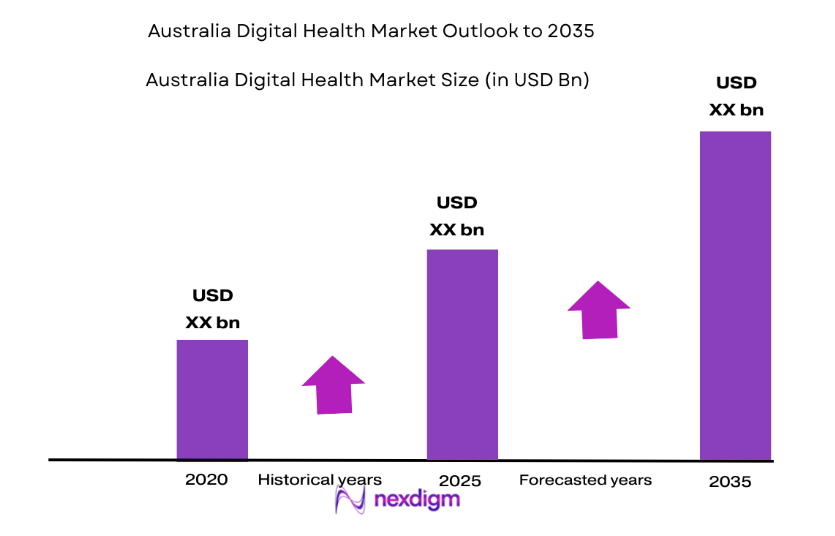
The Australia Digital Health market is experiencing significant growth, driven by technological advancements and government initiatives promoting digital healthcare solutions. Market size has been fueled by the increased adoption of telemedicine, electronic health records (EHR), and health monitoring systems, with strong demand from both private and public healthcare sectors. The digital health market in Australia has been valued at approximately USD ~ billion, backed by investments in telemedicine infrastructure, EHR systems, and health tech innovation. This surge is further propelled by the pandemic’s lasting impact on the digital transformation of the healthcare sector.
Dominant regions in Australia driving the digital health market include major cities such as Sydney, Melbourne, and Brisbane. These cities benefit from the highest healthcare demand, technology adoption rates, and access to skilled professionals. Sydney, as a hub for technological startups, and Melbourne with its strong healthcare infrastructure, have led the digital health transformation. Additionally, government policies in these regions have been crucial in fostering growth through funding and promoting telehealth services across urban and rural areas, making them the primary drivers of market dominance.
Market Segmentation
By Product Type
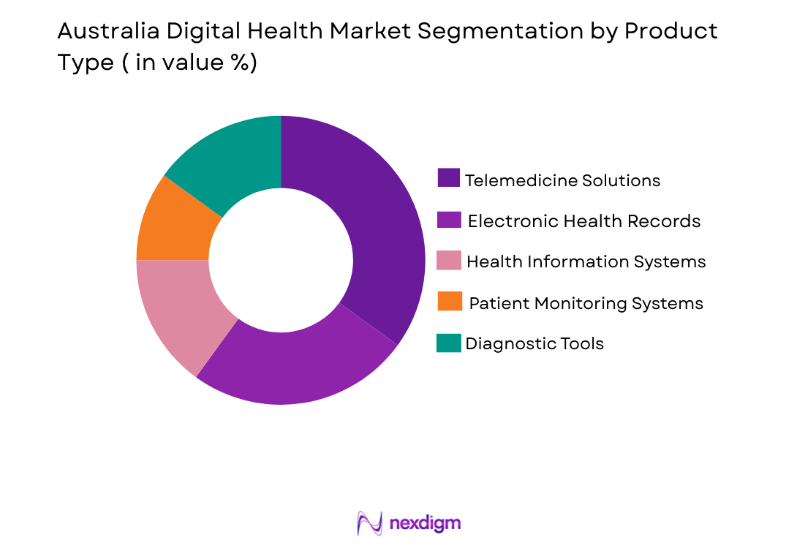
Australia’s digital health market is segmented by product type into telemedicine systems, electronic health records (EHR), health information systems, patient monitoring systems, and diagnostic tools. Among these, telemedicine systems have gained the largest market share due to growing patient demand for remote consultations, enhanced by the expansion of broadband infrastructure and government incentives. Telemedicine offers convenience and cost-effectiveness, making it the preferred choice for both rural and urban populations. Increased healthcare spending, the rise of chronic diseases, and the COVID-19 pandemic’s legacy in fostering virtual consultations further support the dominance of this segment.
By Platform Type
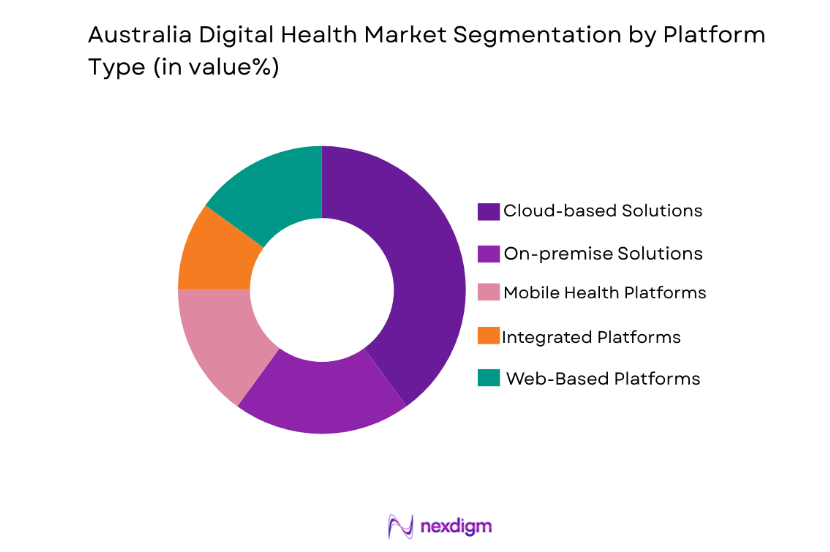
Australia’s digital health market is also segmented by platform type into cloud-based solutions, on-premise solutions, mobile health platforms, integrated platforms, and web-based platforms. Cloud-based solutions lead the market due to their scalability, flexibility, and cost-efficiency. The increasing preference for cloud computing in healthcare, driven by the need for secure data storage and accessibility, has made cloud-based platforms the go-to solution for healthcare providers. Additionally, the integration of artificial intelligence (AI) and machine learning into cloud platforms enhances data analysis capabilities, driving the adoption rate in the market.
Competitive Landscape
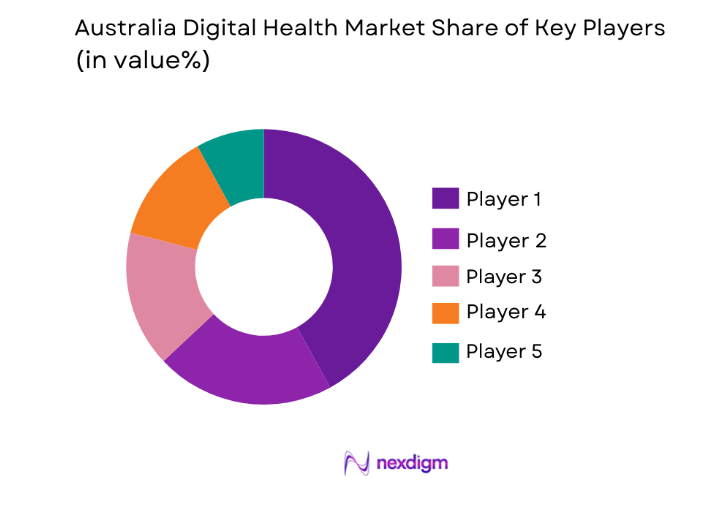
The competitive landscape of Australia’s digital health market is characterized by a mix of established global players and regional innovators. Key players in the market continue to focus on mergers, acquisitions, and collaborations to expand their reach. Major players dominate through their technological expertise and strong brand presence. The entry of smaller startups further intensifies competition, driving innovations in telemedicine, AI-powered healthcare tools, and digital health platforms. Market consolidation is evident as companies look to integrate cutting-edge technologies like cloud computing and AI to deliver advanced healthcare solutions.
| Company Name | Establishment Year | Headquarters | Technology Focus | Market Reach | Key Products | Revenue (USD) | Additional Parameter |
| Telstra Health | 2016 | Australia | ~ | ~ | ~ | ~ | ~ |
| Cerner Corporation | 1979 | USA | ~ | ~ | ~ | ~ | ~ |
| Medtronic | 1949 | Ireland | ~ | ~ | ~ | ~ | ~ |
| GE Healthcare | 1892 | USA | ~ | ~ | ~ | ~ | ~ |
| IBM Watson Health | 2015 | USA | ~ | ~ | ~ | ~ | ~ |
Australia Digital Health Market Analysis
Growth Drivers
Technological Advancements
The rapid evolution of healthcare technologies, such as artificial intelligence (AI), machine learning, and telemedicine, is significantly boosting the Australia Digital Health market. AI integration enables healthcare providers to enhance diagnostic accuracy, making healthcare delivery more efficient and precise. Additionally, machine learning algorithms support the prediction of patient outcomes, helping to optimize treatment plans and reduce human error. Furthermore, the continued development of telemedicine platforms has made healthcare more accessible, offering convenience and reducing barriers to care for patients in remote or underserved regions. These advancements not only improve patient care but also contribute to lowering healthcare costs by optimizing the efficiency of medical processes and reducing hospital visits. As healthcare becomes more digital, the continuous integration of these technologies will play a key role in shaping the future of the industry, expanding market opportunities for digital health solutions.
Government Initiatives
The Australian government plays a vital role in advancing digital health by providing financial incentives, establishing supportive regulatory frameworks, and fostering technological innovation. Programs such as subsidies for telemedicine adoption and electronic health record (EHR) system implementation have significantly driven the growth of the market. Additionally, government policies that support the development of digital infrastructure, including high-speed broadband access and data security, create a favorable environment for healthcare providers to adopt digital health solutions. These initiatives help streamline the integration of digital tools into the healthcare system, reduce costs, and increase accessibility to quality healthcare services. Moreover, regulatory support for privacy standards and secure data handling strengthens market confidence, further accelerating the growth of digital health technologies in Australia.
Market Challenges
Data Privacy and Security Concerns
One of the biggest challenges in the Australian Digital Health market is ensuring the security and privacy of sensitive patient data. With the increase in telemedicine usage and the digital storage of healthcare data, the risk of cyberattacks and data breaches becomes a significant concern. Maintaining compliance with data protection regulations such as the Australian Privacy Principles (APPs) requires healthcare providers to implement secure data handling practices and invest heavily in cybersecurity infrastructure. Despite these efforts, there are still gaps in ensuring the complete security of digital health platforms, which could lead to a loss of trust among patients and hinder the wider adoption of digital solutions. As digital health technologies evolve, ensuring robust data privacy and security measures will be paramount for sustaining growth and meeting regulatory requirements.
Regulatory Compliance
Regulatory compliance is another significant challenge facing the Australia Digital Health market. Although digital health solutions offer numerous benefits, navigating the complex and often fragmented regulatory landscape remains difficult for healthcare providers. Variations in state-level regulations, differences in telemedicine and EHR policies, and evolving guidelines for data privacy create compliance challenges that can delay the adoption of digital health solutions. The lack of standardized regulations across the healthcare sector makes it harder for healthcare providers to adopt consistent solutions. This complexity is particularly difficult for smaller healthcare providers who may lack the resources to ensure compliance with various regulatory requirements. Addressing these regulatory challenges will be essential for market participants to successfully scale their digital health solutions.
Opportunities
Integration of AI and Machine Learning
The integration of artificial intelligence (AI) and machine learning (ML) technologies in healthcare platforms presents vast opportunities for the Australian Digital Health market. AI can process large amounts of patient data, identifying patterns and trends that humans may miss, allowing for more accurate diagnoses and personalized treatment plans. Furthermore, ML algorithms can predict patient outcomes and assist healthcare providers in making more informed decisions. The growing demand for data-driven healthcare solutions means that AI and ML will continue to be at the forefront of technological innovation in the market. These technologies not only enhance patient care but also drive operational efficiency by automating tasks, reducing manual labor, and optimizing healthcare workflows. As the adoption of AI and ML continues to expand, the potential for transforming healthcare delivery is enormous, offering significant growth opportunities for digital health companies.
Telemedicine Expansion
The expansion of telemedicine services in Australia offers considerable opportunities within the digital health market. The growing demand for remote healthcare services, especially in rural and remote areas, has led to a greater reliance on telemedicine as a primary healthcare delivery method. Virtual consultations allow patients to access medical care without needing to travel long distances, improving healthcare accessibility and reducing healthcare costs. The Australian government has supported this expansion through funding for telehealth infrastructure and policies that encourage telemedicine adoption. As healthcare providers integrate telemedicine with other digital health tools such as EHR systems and patient monitoring devices, the overall demand for telemedicine services will continue to rise. This presents a valuable opportunity for companies in the digital health space to innovate and offer new telehealth solutions, driving market growth and improving healthcare access for underserved populations.
Future Outlook
The Australia Digital Health market is poised for significant growth over the next five years, with continued advancements in telemedicine, AI, and cloud-based solutions. Government initiatives and technological innovations are expected to drive the market’s expansion, as healthcare providers increasingly adopt digital health solutions to improve patient outcomes. Regulatory support for telemedicine and data security will further fuel this growth. Additionally, the growing demand for personalized healthcare and remote monitoring will shape the future of the market, creating opportunities for new solutions and market entrants.
Major Players
- Telstra Health
- Cerner Corporation
- Medtronic
- GE Healthcare
- IBM Watson Health
- Allscripts Healthcare Solutions
- Siemens Healthineers
- Oracle Health Sciences
- GE Digital
- Ramsay Health Care
- Stryker Corporation
- Becton Dickinson
- Philips Healthcare
- McKesson Corporation
- Healthscope
Key Target Audience
- Investments and venture capitalist firms
- Government and regulatory bodies
- Healthcare providers
- Digital health technology companies
- Pharmaceutical companies
- Medical device manufacturers
- Insurance providers
Research Methodology
Step 1: Identification of Key Variables
The initial step involves identifying key market variables, including technology trends, regulatory frameworks, and market demands, to define the scope and size of the digital health market in Australia.
Step 2: Market Analysis and Construction
The next step involves analyzing historical data and constructing market models to estimate current and future market sizes, growth rates, and sector-specific insights.
Step 3: Hypothesis Validation and Expert Consultation
Experts and industry stakeholders are consulted to validate hypotheses, refine models, and gain insights into emerging trends and challenges within the digital health market.
Step 4: Research Synthesis and Final Output
Finally, all gathered data is synthesized to create a comprehensive report, outlining market trends, opportunities, and challenges in the Australian digital health market.

- Executive Summary
- Research Methodology (Definitions, Scope, Industry Assumptions, Market Sizing Approach, Primary & Secondary Research Framework, Data Collection & Verification Protocol, Analytic Models & Forecast Methodology, Limitations & Research Validity Checks)

- Market Definition and Scope
- Value Chain & Stakeholder Ecosystem
- Regulatory / Certification Landscape
- Sector Dynamics Affecting Demand

- Growth Drivers
Government Initiatives to Promote Digital Health
Technological Advancements in Health IT Systems
Increased Adoption of Telemedicine Solutions
Rising Demand for Personalized Healthcare Services
Expansion of Mobile Health Solutions - Market Challenges
Data Privacy and Security Concerns
High Initial Investment for Digital Health Solutions
Lack of Standardization Across Platforms
Integration Challenges with Legacy Systems
Regulatory and Compliance Issues - Market Opportunities
Rising Demand for AI and Machine Learning Solutions
Expansion of Digital Health Infrastructure in Rural Areas
Partnerships Between Healthcare Providers and Tech Firms - Trends
Shift Towards Cloud-based Health Solutions
Growing Demand for Remote Patient Monitoring Solutions - Government Regulations
Data Protection and Privacy Regulations
Healthcare Compliance and Accreditation Policies
Funding for Digital Health Initiatives - SWOT Analysis
- Porter’s Five Forces

- By Market Value, 2020-2025
- By Installed Units, 2020-2025
- By Average System Price, 2020-2025
- By System Complexity Tier, 2020-2025

- By System Type (In Value%)
Telemedicine Systems
EHR/EMR Systems
Health Information Systems
Diagnostic Tools and Software
Patient Monitoring Systems - By Platform Type (In Value%)
Cloud-Based Solutions
On-premise Solutions
Mobile Health Platforms
Integrated Platforms
Web-based Platforms - By Fitment Type (In Value%)
Cloud-based Solutions
On-premise Solutions
Hybrid Solutions
Integrated Solutions - By End User Segment (In Value%)
Healthcare Providers
Patients
Pharmaceutical Companies
Government Agencies

- Market Share Analysis
- Cross Comparison Parameters (System Type, Platform Type, Procurement Channel, End User Segment, Fitment Type, Technology Integration, Pricing)
- SWOT Analysis of Key Competitors
- Pricing & Procurement Analysis
- Key Players
Telstra Health
Healthscope
Cerner Corporation
Medtronic
Philips Healthcare
GE Healthcare
McKesson Corporation
IBM Watson Health
Allscripts Healthcare Solutions
Siemens Healthineers
Oracle Health Sciences
GE Digital
Ramsay Health Care
Stryker Corporation
Becton Dickinson

- Healthcare Providers’ Shift Towards Digital Solutions
- Government’s Role in Regulating Digital Health Systems
- Increased Focus on Patient-Centered Care
- Rise in Technological Adoption by Private Sector Players

- Forecast Market Value, 2026-2035
- Forecast Installed Units, 2026-2035
- Price Forecast by System Tier, 2026-2035
- Future Demand by Platform, 2026-2035


 Request a Sample
 Ask for Customization
 Get a Quote
 Enquire Now