
 Download PDF
Market Overview
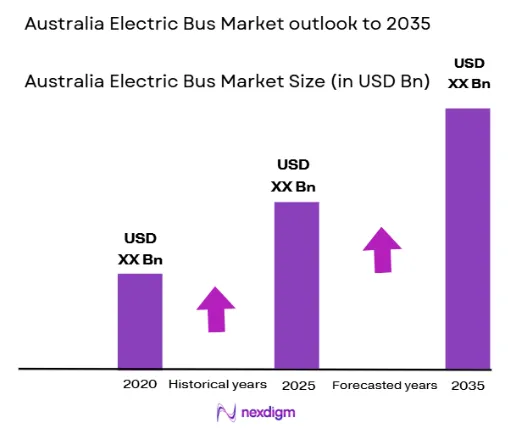
The Australia Electric Bus Market is experiencing significant growth, with the market size driven by increasing governmental initiatives towards clean energy solutions and sustainable urban transportation. In a recent historical assessment, the market is estimated to reach a value of USD ~ billion, supported by ongoing investments in infrastructure, electric vehicle (EV) technology, and government incentives for zero-emission buses. The demand is further bolstered by rising environmental concerns and the shift towards electrification in public transport systems.
The market dominance in Australia is largely concentrated in key metropolitan areas such as Sydney, Melbourne, and Brisbane. These cities are leading the charge due to their large public transit networks, government policies supporting green mobility, and well-established infrastructure for electric buses. These regions also benefit from significant investments in electrification as part of state and federal initiatives aimed at reducing carbon emissions. The implementation of smart transportation systems and incentives for fleet operators are also enhancing the adoption of electric buses in these urban centers.
Market Segmentation
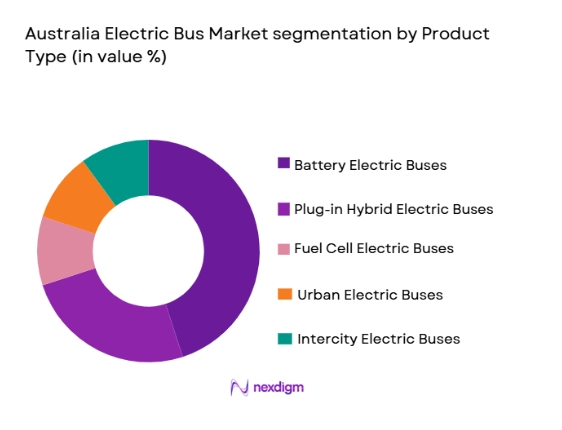
By Product Type:
The Australia Electric Bus Market is segmented by product type into battery electric buses, plug-in hybrid electric buses, fuel cell electric buses, urban electric buses, and intercity electric buses. Recently, battery electric buses have dominated the market share due to factors such as consumer preference for fully electric solutions, the increasing availability of charging infrastructure, and growing government support. These buses offer greater energy efficiency and lower operating costs compared to other electric alternatives. The expansion of public transportation networks in major cities has also led to the dominance of battery electric buses as the preferred choice for mass transit systems. The increased focus on sustainability and the reduction of carbon emissions further adds to the growth of battery electric buses in Australia.
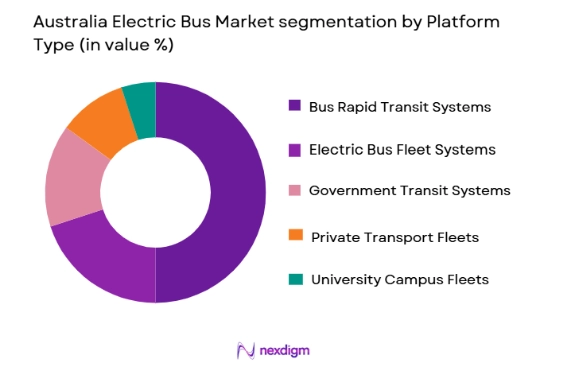
By Platform Type:
The Australia Electric Bus Market is segmented by platform type into bus rapid transit systems, electric bus fleet systems, government transit systems, private transport fleets, and university campus fleets. Recently, bus rapid transit systems have held a dominant market share due to the growing demand for efficient and cost-effective public transportation in cities. The development of dedicated bus lanes and the ability to transport large volumes of passengers quickly and reliably have made bus rapid transit systems an attractive option for cities looking to reduce traffic congestion. With dedicated infrastructure, these systems are well-suited for the adoption of electric buses, contributing significantly to the market share in the platform type segment.
Competitive Landscape
The Australia Electric Bus Market is characterized by a competitive landscape with several established players involved in manufacturing and supplying electric buses. Major global players, along with local manufacturers, are competing to capture the market by offering innovative electric mobility solutions. The market is witnessing significant consolidation, with industry leaders acquiring smaller firms to expand their technology and market presence. Furthermore, strategic collaborations between electric bus manufacturers and government bodies are strengthening their position in the market.
| Company Name | Establishment Year | Headquarters | Technology Focus | Market Reach | Key Products | Revenue (USD) | Market-Specific Parameter |
| Volgren | 1984 | Australia | ~ | ~ | ~ | ~ | ~ |
| BYD | 1995 | China | ~ | ~ | ~ | ~ | ~ |
| NFI Group | 1995 | USA | ~ | ~ | ~ | ~ | ~ |
| New Flyer Industries | 1930 | Canada | ~ | ~ | ~ | ~ | ~ |
| Scania | 1891 | Sweden | ~ | ~ | ~ | ~ | ~ |
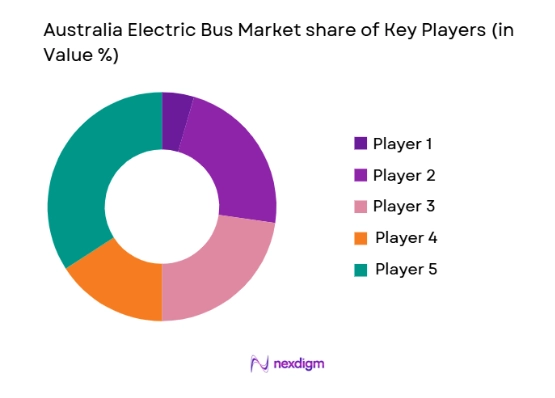
Australia Electric Bus Market Analysis
Growth Drivers
Government Support for Clean Transportation:
Government incentives and subsidies for the electric vehicle (EV) sector have been a key driver for the growth of the electric bus market in Australia. The Australian government has committed to reducing carbon emissions and promoting sustainable transportation solutions. Initiatives such as funding for the electrification of public transport fleets and providing tax incentives for manufacturers have accelerated the adoption of electric buses. State-level policies, including fleet electrification targets and investment in charging infrastructure, further support the sector’s growth. As a result, public and private transit operators are increasingly moving towards electric buses to comply with emissions regulations and contribute to national environmental goals.
Technological Advancements in Battery Systems:
Another important growth driver for the Australian electric bus market is the continuous improvement in battery technology. Enhanced battery performance, with higher energy density and longer lifespans, has made electric buses more efficient and cost-effective. Advances in fast-charging technologies are reducing downtime for buses, improving their operational efficiency. Additionally, the growing infrastructure to support electric buses, including charging stations and maintenance facilities, further supports the transition from traditional fuel-powered buses to electric ones. These developments are making electric buses more viable for long-distance travel and frequent use, driving their growth in Australian cities and beyond.
Market Challenges
High Initial Investment Costs:
One of the main challenges faced by the Australia Electric Bus Market is the high initial investment required for purchasing electric buses and the related charging infrastructure. The upfront cost of electric buses remains significantly higher compared to traditional diesel buses, which is a key barrier to widespread adoption. While operating costs over time are lower, the initial financial burden can be a deterrent for transit authorities and private fleet operators, especially in the face of limited budgets. Moreover, the cost of installing charging infrastructure adds another layer of expense. This challenge requires continued government subsidies and financial incentives to make electric buses a more attractive option for operators in Australia.
Limited Charging Infrastructure:
The lack of widespread and reliable charging infrastructure is another major challenge for the electric bus market. Although electric buses are being deployed in key cities, the development of a robust charging network is still in its early stages. The availability of charging stations, particularly fast-charging options, is a critical factor that can influence the adoption of electric buses. The limited number of charging points in some regions can result in operational inefficiencies, such as longer downtimes for recharging, which negatively affects the overall performance of electric bus fleets. Further investment in charging infrastructure, particularly in underserved regions, is essential to overcoming this challenge.
Opportunities
Expansion of Charging Infrastructure:
The growing demand for electric buses presents an opportunity for significant expansion in the charging infrastructure market in Australia. As more electric buses are deployed in cities across the country, the need for charging stations will increase. Government policies aimed at increasing the number of charging points, combined with investments from private sector players, will support the growth of a comprehensive charging network. This expansion is essential for enabling the efficient operation of electric buses and encouraging further adoption of electric mobility in public transportation systems.
Partnerships with Private Sector Firms for Charging Solutions:
Another opportunity in the Australian electric bus market lies in forming partnerships with private sector firms to develop charging solutions tailored for electric bus fleets. These collaborations can lead to innovative charging technologies, such as wireless charging and ultra-fast charging stations, that can enhance the efficiency of bus operations. By working together, public transit authorities and private companies can share the costs and risks associated with infrastructure development, accelerating the adoption of electric buses. Such partnerships are vital for addressing the current limitations in charging infrastructure and ensuring that electric buses can operate seamlessly across all regions.
Future Outlook
The future outlook for the Australia Electric Bus Market is promising, with substantial growth expected over the next five years. As government policies continue to favor green transportation, the market will see increasing investments in electric bus fleets and infrastructure. Technological developments in battery storage, coupled with improvements in charging solutions, will further boost the efficiency and affordability of electric buses. Additionally, increasing awareness of the environmental benefits of electric buses, combined with supportive regulatory frameworks, will continue to drive demand. The expansion of electric bus adoption across Australia’s metropolitan and regional cities will be supported by a concerted effort from both government and industry stakeholders.
Major Players
- Volgren
- BYD
- NFI Group
- New Flyer Industries
- Scania
- Daimler AG
- Alexander Dennis
- Yutong
- Proterra
- Cummins
- Higer Bus
- Mitsubishi Heavy Industries
- VOSSLOH
- Zhengzhou Yutong Bus
- Higer Bus
Key Target Audience
- Investments and venture capitalist firms
- Government and regulatory bodies
- Public transportation authorities
- Private transportation fleet operators
- Electric vehicle manufacturers
- Charging infrastructure developers
- Automotive OEMs
- Sustainability-focused organizations
Research Methodology
Step 1: Identification of Key Variables
Identification of key factors that influence the electric bus market, including technological advancements, regulatory policies, and customer preferences.
Step 2: Market Analysis and Construction
Comprehensive analysis of the market, including market size, growth trends, and key players in the electric bus sector, followed by segmentation analysis.
Step 3: Hypothesis Validation and Expert Consultation
Validation of assumptions and data through consultations with industry experts, government bodies, and corporate stakeholders.
Step 4: Research Synthesis and Final Output
Collation of research findings into a structured report with actionable insights, market forecasts, and strategic recommendations.

- Executive Summary
- Research Methodology (Definitions, Scope, Industry Assumptions, Market Sizing Approach, Primary & Secondary Research Framework, Data Collection & Verification Protocol, Analytic Models & Forecast Methodology, Limitations & Research Validity Checks)

- Market Definition and Scope
- Value Chain & Stakeholder Ecosystem
- Regulatory / Certification Landscape
- Sector Dynamics Affecting Demand
- Strategic Initiatives & Infrastructure Growth

- Growth Drivers
Government Support for Green Transportation
Rising Fuel Prices Encouraging EV Adoption
Technological Advancements in Electric Bus Batteries
Growing Demand for Clean Urban Mobility
Increasing Awareness of Environmental Impact - Market Challenges
High Initial Investment Costs
Limited Charging Infrastructure
Battery Lifespan and Efficiency Concerns
Integration with Existing Transport Systems
Regulatory and Compliance Barriers - Market Opportunities
Expansion of Charging Infrastructure
Partnerships Between Public and Private Sectors
Government Incentives for Zero-Emission Fleets - Trends
Shift Towards Autonomous Electric Buses
Technological Innovations in Charging Systems
Rise of Electrification in Regional Transit Systems
Focus on Reducing Carbon Emissions
Adoption of Smart Mobility Solutions - Government Regulations & Defense Policy
Emission Reduction Policies for Public Transport
Government Funding for EV Infrastructure
Regulatory Standards for Bus Safety and Emissions - SWOT Analysis
- Stakeholder and Ecosystem Analysis
- Porter’s Five Forces Analysis
- Competition Intensity and Ecosystem Mapping

- By Market Value, 2020-2025
- By Installed Units, 2020-2025
- By Average System Price, 2020-2025
- By System Complexity Tier, 2020-2025

- By System Type (In Value%)
Battery Electric Buses
Plug-in Hybrid Electric Buses
Fuel Cell Electric Buses
Urban Electric Buses
Intercity Electric Buses - By Platform Type (In Value%)
Bus Rapid Transit Systems
Electric Bus Fleet Systems
Government Transit Systems
Private Transport Fleets
University Campus Fleets - By Fitment Type (In Value%)
Standard Bus Systems
High-Capacity Bus Systems
Double-Decker Bus Systems
Low-Floor Bus Systems
Wheelchair Accessible Bus Systems - By EndUser Segment (In Value%)
Public Transportation Authorities
Private Transit Operators
Fleet Management Companies
Government Agencies
Educational Institutions - By Procurement Channel (In Value%)
Direct Procurement
Government Tenders
Private Sector Procurement
Online Bidding Platforms
Third-Party Distributors - By Material / Technology (in Value%)
Lithium-Ion Batteries
Solid-State Batteries
Fuel Cells
Energy Recovery Systems
Hybrid Powertrains

- Market structure and competitive positioning
- Market share snapshot of major players
- CrossComparison Parameters (System Type, Platform Type, Fitment Type, EndUser Segment, Procurement Channel, Material/Technology, Region, Price Range, Innovation Level, Service Support)
- SWOT Analysis of Key Players
- Pricing & Procurement Analysis
- Key Players
Volgren
BYD
Vancouver Electric Bus Company
NFI Group
Alexander Dennis
Yutong
Proterra
Scania
Cummins
Daimler AG
New Flyer Industries
Mitsubishi Heavy Industries
VOSSLOH
Zhengzhou Yutong Bus
Higer Bus

- Public Transit Agencies Investing in Clean Fleets
- Private Operators Moving to Electric Solutions
- Educational Institutions Adopting Electric Bus Fleets
- Local Governments Implementing Green Transit Solutions

- Forecast Market Value, 2026-2035
- Forecast Installed Units, 2026-2035
- Price Forecast by System Tier, 2026-2035
- Future Demand by Platform, 2026-2035


 Request a Sample
 Ask for Customization
 Get a Quote
 Enquire Now