
 Download PDF
 Download PDF
Market Overview
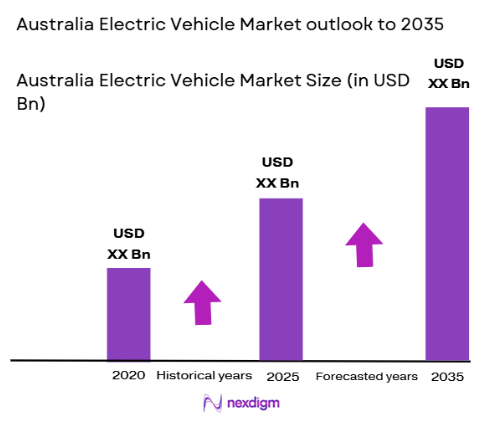
The Australia Electric Vehicle Market is experiencing significant growth, with a market size valued at approximately USD ~ billion. This growth is primarily driven by the increased adoption of electric vehicles (EVs) due to rising environmental concerns, governmental incentives, and improvements in EV technology. Factors such as lower battery costs, better charging infrastructure, and a shift toward sustainable energy solutions are contributing to the expansion of the market. The market is also supported by substantial investments in research and development from major players and a growing number of consumers opting for EVs as a viable alternative to traditional gasoline-powered vehicles.
Cities like Sydney and Melbourne lead the market due to their robust infrastructure, strong government backing, and progressive environmental policies. Sydney, with its large population and commitment to reducing carbon emissions, has become a focal point for EV adoption. The government of New South Wales has been particularly supportive, providing rebates and incentives for electric vehicle owners. Melbourne also stands out, benefiting from an extensive charging infrastructure and policies aimed at reducing urban air pollution, thus driving the demand for electric vehicles. These cities are expected to continue leading the market as infrastructure development accelerates and consumer awareness of EVs increases.
Market Segmentation
By Product Type:
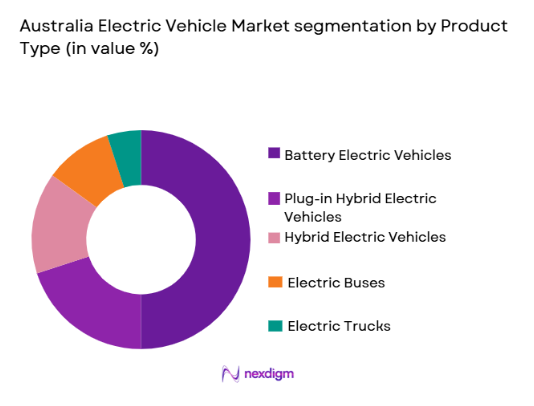
The Australia Electric Vehicle market is segmented by product type into Battery Electric Vehicles (BEVs), Plug-in Hybrid Electric Vehicles (PHEVs), Hybrid Electric Vehicles (HEVs), Electric Buses, and Electric Trucks. Recently, BEVs have dominated the market due to advancements in battery technology, an expanding charging infrastructure, and consumer preference for vehicles that offer zero-emission performance. BEVs benefit from incentives such as tax credits and government subsidies, which make them an attractive option for buyers seeking environmental sustainability.
By Platform Type:
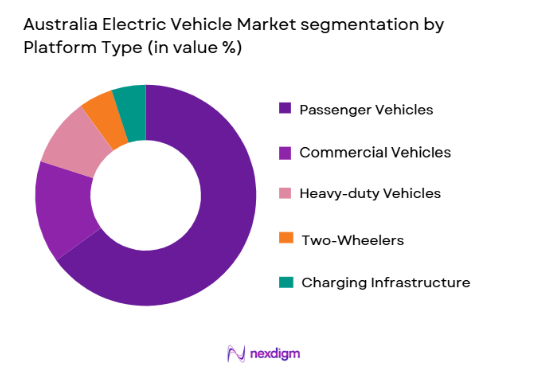
The Australia Electric Vehicle market is segmented by platform type into Passenger Vehicles, Commercial Vehicles, Heavy-duty Vehicles, Two-Wheelers, and Charging Infrastructure. Recently, Passenger Vehicles have dominated the market due to increased consumer adoption, improved range, and expanded EV offerings from key automakers. With a surge in government support for electric vehicles, consumers are increasingly choosing passenger electric vehicles for their daily commute, contributing to the dominance of this sub-segment.
Competitive Landscape
The Australia Electric Vehicle market is witnessing consolidation, with major players expanding their product portfolios and investing in electric vehicle infrastructure. Companies are leveraging technological advancements, strategic partnerships, and acquisitions to strengthen their position in the market. The influence of dominant players like Tesla, BMW, and Hyundai is significant, as they continue to drive the market forward by introducing innovative EV models and expanding their charging networks.
| Company Name | Establishment Year | Headquarters | Technology Focus | Market Reach | Key Products | Revenue (USD Billion) | Additional Parameter |
| Tesla | 2003 | Palo Alto, USA | ~ | ~ | ~ | ~ | ~ |
| BMW | 1916 | Munich, Germany | ~ | ~ | ~ | ~ | ~ |
| Hyundai | 1967 | Seoul, South Korea | ~ | ~ | ~ | ~ | ~ |
| Nissan | 1933 | Yokohama, Japan | ~ | ~ | ~ | ~ | ~ |
| Ford | 1903 | Dearborn, USA | ~ | ~ | ~ | ~ | ~ |
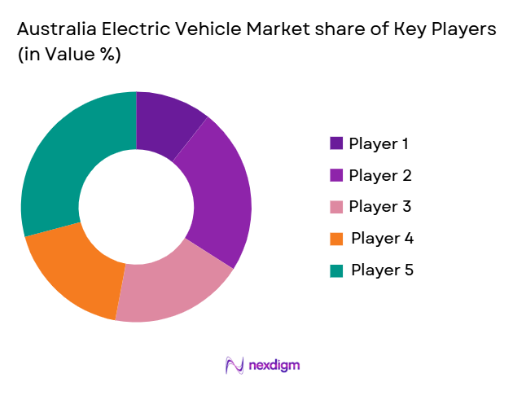
Australia Electric Vehicle Market Analysis
Growth Drivers
Government Incentives for EV Adoption:
Government incentives play a crucial role in the growth of the Australia Electric Vehicle market. Various programs, including tax credits, rebates, and subsidies, are being offered to encourage the adoption of EVs. These incentives reduce the initial purchase price of electric vehicles, making them more accessible to a larger pool of consumers. Additionally, local governments are committing to expanding the EV infrastructure, including charging stations, which is further stimulating market demand. These incentives have helped make EVs an attractive option compared to traditional gasoline-powered vehicles, thereby accelerating the growth of the market. The government’s strong commitment to reducing carbon emissions aligns with the adoption of electric vehicles, creating a positive feedback loop of investment, infrastructure, and increased consumer uptake.
Technological Advancements in Battery Technology:
Technological advancements in battery technology have been a key driver for the growth of the electric vehicle market. As battery technology continues to improve, EVs are offering better driving ranges, faster charging times, and more efficient energy storage solutions. These advancements are making electric vehicles more competitive with traditional internal combustion engine vehicles, overcoming initial consumer skepticism regarding battery life and charging time. Moreover, the continuous reduction in the cost of battery production has contributed to the declining prices of electric vehicles, making them more affordable for consumers. This has resulted in a significant rise in demand for electric vehicles, especially in regions like Australia where sustainability and environmental concerns are high.
Market Challenges
High Initial Costs of Electric Vehicles:
Despite the growth in the electric vehicle market, one of the key challenges faced by consumers is the high initial purchase cost. Even with government incentives, electric vehicles remain more expensive than traditional gasoline-powered vehicles. The high upfront costs can deter potential buyers, especially in a price-sensitive market like Australia. Though the cost of EVs has been decreasing over time due to advancements in battery technology and production efficiency, the price gap remains significant. This challenge is compounded by concerns about the resale value of electric vehicles, as many consumers are still uncertain about their long-term durability and the availability of replacement parts. Until prices become comparable to traditional vehicles, market growth may be constrained by this financial barrier.
Limited Charging Infrastructure:
The limited availability of EV charging stations is another major challenge for the Australia Electric Vehicle market. While charging infrastructure is growing, it still lags behind the demand for electric vehicles, particularly in regional and rural areas. Consumers may hesitate to switch to EVs due to concerns about the availability and convenience of charging stations. Long wait times at public charging stations and limited charging points in residential areas can also create significant barriers to EV adoption. As EV ownership increases, there will be greater pressure on local governments and private companies to expand the charging network to ensure that drivers have easy access to charging stations.
Opportunities
Growth in Electric Fleet Adoption:
One of the key opportunities in the Australia Electric Vehicle market lies in the adoption of electric vehicles for commercial fleets. Many businesses and public transport systems are looking to electrify their fleets to reduce operational costs, minimize emissions, and improve their sustainability credentials. Government policies and incentives aimed at fleet electrification are expected to drive significant growth in this segment. Moreover, as EVs become more cost-competitive with traditional fleet vehicles, companies are likely to invest in electric vehicles for their fleets, driving volume sales and expanding the EV market. Fleet adoption also offers opportunities for ancillary services, including fleet management software and vehicle-to-grid technology.
Advancements in Autonomous Electric Vehicles:
Another significant opportunity in the market is the development of autonomous electric vehicles (AEVs). Advances in autonomous driving technologies are expected to integrate seamlessly with electric vehicles, creating a new wave of consumer interest and industry growth. As autonomous driving systems continue to mature, it is expected that EVs will become the preferred choice for autonomous vehicles due to their clean energy benefits, lower operating costs, and integration with smart city infrastructure. Governments and private companies are already exploring opportunities to develop and test autonomous EVs, and this trend is expected to expand as technology improves and consumer demand for both EVs and autonomous vehicles grows.
Future Outlook
The future of the Australia Electric Vehicle Market is promising, with significant growth anticipated over the next five years. Technological advancements, government support, and the growing environmental consciousness among consumers are expected to drive the market’s expansion. Battery improvements, along with increased investment in charging infrastructure, will address some of the current challenges and enhance the accessibility of EVs across Australia. Furthermore, the market is likely to witness a rise in the adoption of electric commercial fleets and autonomous EVs, paving the way for a new era of electric mobility.
Major Players
- Tesla
- BMW
- Hyundai
- Ford
- Nissan
- Audi
- Mercedes-Benz
- Kia
- Jaguar Land Rover
- Volvo
- Polestar
- Toyota
- General Motors
- BYD
- Rivian
Key Target Audience
- Investments and venture capitalist firms
- Government and regulatory bodies
- Automotive manufacturers
- EV infrastructure developers
- Environmental NGOs
- Commercial fleet operators
- Charging network providers
- Public transport authorities
Research Methodology
Step 1: Identification of Key Variables
The key variables for the market, such as market size, growth drivers, and challenges, are identified based on industry reports and expert consultations.
Step 2: Market Analysis and Construction
A detailed analysis is conducted using both primary and secondary data sources to construct the market model, including the segmentation and trend analysis.
Step 3: Hypothesis Validation and Expert Consultation
Hypotheses are validated through expert consultations, including interviews with industry leaders, and further refined based on feedback.
Step 4: Research Synthesis and Final Output
All collected data and insights are synthesized into a comprehensive market report, focusing on key trends, growth drivers, and challenges.

- Executive Summary
- Research Methodology (Definitions, Scope, Industry Assumptions, Market Sizing Approach, Primary & Secondary Research Framework, Data Collection & Verification Protocol, Analytic Models & Forecast Methodology, Limitations & Research Validity Checks)

- Market Definition and Scope
- Value Chain & Stakeholder Ecosystem
- Regulatory / Certification Landscape
- Sector Dynamics Affecting Demand
- Strategic Initiatives & Infrastructure Growth

- Growth Drivers
Government incentives for EV adoption
Technological advancements in battery efficiency
Rising environmental awareness
Expanding EV infrastructure
Declining battery costs - Market Challenges
High upfront costs of electric vehicles
Limited range and charging infrastructure
Consumer awareness and education
Battery disposal and recycling concerns
Regulatory hurdles and standards compliance - Market Opportunities
Partnerships for expanding charging networks
Development of second-life battery applications
Growth in fleet electrification - Trends
Increased investment in EV technology
Adoption of autonomous electric vehicles
Integration of renewable energy in charging infrastructure
EV integration with smart grids
Rise of EV as a service models - Government Regulations & Defense Policy
Government subsidies for EV purchases
Emissions reduction targets
EV infrastructure development grants - SWOT Analysis
- Stakeholder and Ecosystem Analysis
- Porter’s Five Forces Analysis
- Competition Intensity and Ecosystem Mapping

- By Market Value, 2020-2025
- By Installed Units, 2020-2025
- By Average System Price, 2020-2025
- By System Complexity Tier, 2020-2025

- By System Type (In Value%)
Battery Electric Vehicles
Plug-in Hybrid Electric Vehicles
Hybrid Electric Vehicles
Electric Buses
Electric Trucks - By Platform Type (In Value%)
Passenger Vehicles
Commercial Vehicles
Heavy-duty Vehicles
Two-Wheelers
Charging Infrastructure - By Fitment Type (In Value%)
Original Equipment Manufacturer (OEM)
Aftermarket
Integrated Solutions
Battery Swapping Systems
Charging Stations - By EndUser Segment (In Value%)
Private Consumers
Fleet Operators
Government and Public Transport
Corporate Buyers
Ride-sharing Services - By Procurement Channel (In Value%)
Direct Sales
Dealerships
Online Platforms
B2B Partnerships
Government Tenders - By Material / Technology (In Value%)
Lithium-ion Batteries
Solid-State Batteries
Charging Infrastructure
Electric Drivetrains
Energy Management Systems

- Market structure and competitive positioning
- Market share snapshot of major players
- CrossComparison Parameters (Price, Technology, Market Reach, Consumer Adoption, Regulatory Compliance, Product Portfolio, Sales Channel, Sustainability Initiatives, R&D Investment, Distribution Network)
- SWOT Analysis of Key Players
- Pricing & Procurement Analysis
- Key Players
Tesla
BYD
Nissan
BMW Group
Volkswagen
Audi
Hyundai
Kia
Mercedes-Benz
Jaguar Land Rover
Mitsubishi Motors
Volvo
Ford
General Motors
Polestar

- Growth in consumer adoption of EVs
- Government role in fleet electrification
- Private sector investment in EVs
- Increase in corporate sustainability efforts

- By Market Value, 2020-2025
- By Installed Units, 2020-2025
- By Average System Price, 2020-2025
- By System Complexity Tier, 2020-2025


 Request a Sample
 Ask for Customization
 Get a Quote
 Enquire Now