
 Download PDF
 Download PDF
Market Overview
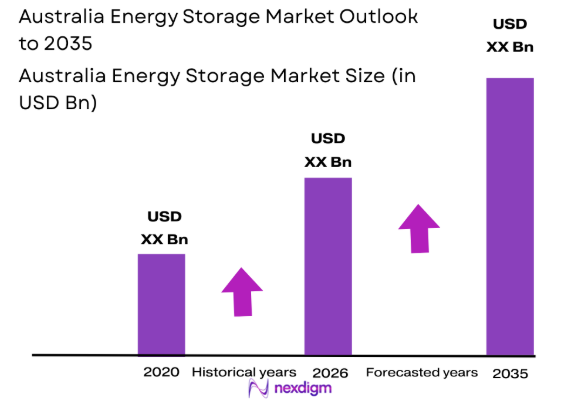
The Australia Energy Storage market is valued at approximately USD ~ billion in recent assessments. Driven by growing energy demand and the shift towards renewable energy sources, the market is propelled by government incentives and advancements in storage technologies, such as lithium-ion and solid-state batteries. Additionally, developments in energy management solutions, and an increasing focus on grid stability and energy efficiency, have been crucial factors supporting this market’s growth. These trends, backed by private sector investments, indicate a strong market trajectory.
Australia dominates the energy storage market, with significant investment from the government in large-scale battery storage projects. The country’s growing integration of renewable energy, particularly solar and wind, along with its focus on decarbonization, fuels this dominance. Cities like Sydney and Melbourne are pivotal in driving demand due to their advanced infrastructure and sustainability efforts. Regulatory support and favorable policies further enhance the adoption of energy storage technologies in these regions.
Market Segmentation
By Product Type
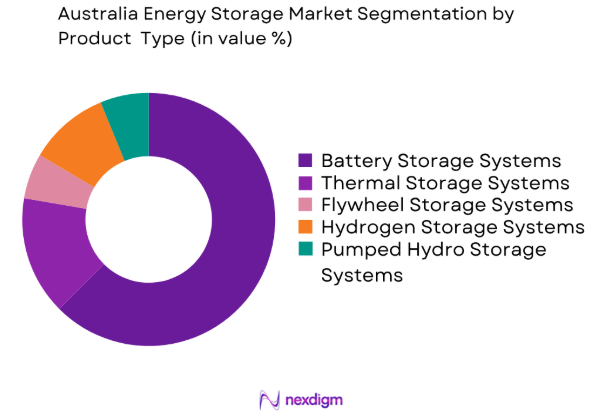
The Australia Energy Storage market is segmented by product type into various sub-segments. Recently, battery storage systems have dominated the market due to their growing demand for residential, commercial, and utility-scale applications. Their popularity is driven by decreasing costs, advancements in technology, and the scalability of lithium-ion batteries, which provide a reliable solution for energy storage and balancing grid demand. The shift towards renewable energy adoption has further catalyzed battery storage systems’ market leadership.
By Platform Type
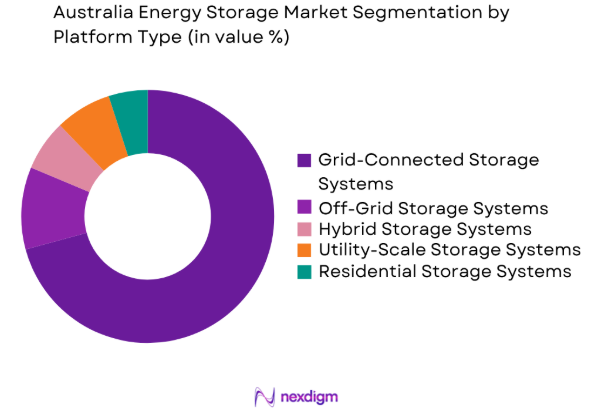
The Australia Energy Storage market is segmented by platform type, with grid-connected storage systems being the dominant sub-segment. These systems offer the best scalability and efficiency for both utility-scale and residential energy storage, with significant investments from utility companies. Their ability to store excess renewable energy during off-peak hours and release it during peak demand periods has become crucial for grid stability, especially with the rise of intermittent renewable energy sources. As the grid integration of renewable energy increases, grid-connected storage platforms will continue to dominate.
Competitive Landscape
The competitive landscape of the energy storage market reflects consolidation and increasing influence of major players. Companies are focusing on scaling their operations to meet increasing energy demands, with technological advancements playing a key role. Global energy and utility companies are entering strategic partnerships to strengthen their positions. The competitive environment is dynamic, with established firms continuously innovating to improve storage efficiency, battery lifespan, and integration with renewable energy systems.
| Company Name | Establishment Year | Headquarters | Technology Focus | Market Reach | Key Products | Revenue (USD) | Additional Parameter |
| Tesla Energy | 2003 | Palo Alto, USA | ~ | ~ | ~ | ~ | ~ |
| LG Chem | 1947 | Seoul, South Korea | ~ | ~ | ~ | ~ | ~ |
| Fluence Energy | 2018 | Arlington, USA | ~ | ~ | ~ | ~ | ~ |
| BYD Company | 1995 | Shenzhen, China | ~ | ~ | ~ | ~ | ~ |
| Enphase Energy | 2006 | Fremont, USA | ~ | ~ | ~ | ~ | ~ |
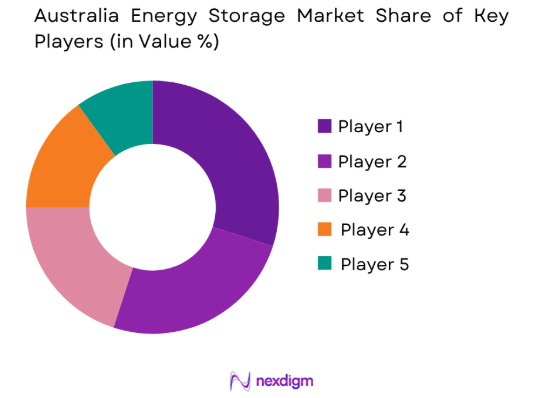
Australia Energy Storage Market Analysis
Growth Drivers
Government Support for Renewable Energy Transition
Government policies supporting renewable energy have significantly driven the energy storage market. Incentives like subsidies, tax breaks, and renewable energy targets have spurred the adoption of energy storage solutions. As countries work towards meeting carbon reduction goals, storage technologies become vital in balancing the intermittent nature of renewable energy generation with consumption. These policies not only foster the growth of energy storage systems but also encourage their integration in both residential and industrial sectors. Continued government investment in renewable energy infrastructure ensures the market’s sustained expansion, providing a solid foundation for further advancements and adoption of energy storage technologies across various applications.
Technological Advancements in Battery Storage
Technological advancements in energy storage systems, especially batteries, have played a crucial role in driving market growth. Innovations in lithium-ion and solid-state batteries have led to improvements in energy density, cycle life, and cost efficiency. These advancements make energy storage systems more viable for various applications, including grid storage, residential energy solutions, and electric vehicles. As battery technologies become increasingly efficient and affordable, they help integrate renewable energy more effectively and stabilize the grid. This progress has created significant demand for energy storage systems, as they provide crucial solutions for energy management, enabling the continued expansion of renewable energy adoption and overall market growth.
Market Challenges
High Capital Costs for Installation and Infrastructure
A major challenge facing the energy storage market is the high upfront cost of installing storage systems. Although the price of batteries has reduced over time, the overall installation cost remains significant, particularly for large-scale utility storage systems. The additional infrastructure required, such as grid upgrades and energy management systems, further increases the initial investment burden. This challenge is intensified by the lengthy payback periods associated with energy storage solutions, making it harder for smaller utilities and businesses to justify such investments. These financial hurdles can slow the adoption of energy storage technologies, particularly in regions where capital availability and regulatory support are limited.
Regulatory and Compliance Barriers
Energy storage technologies encounter significant regulatory and compliance challenges. Despite market growth, inconsistent regulations—particularly around grid connections, safety standards, and energy storage capacity limits—pose barriers. These variations across regions complicate the efforts of energy storage providers, hindering market expansion. Additionally, energy storage systems must comply with specific local and national standards, which introduces further complexity and delays the regulatory approval process. The time and effort required to navigate these regulations slow down the deployment of energy storage technologies, preventing faster adoption and integration, especially in markets with evolving or unclear regulatory frameworks. This inconsistency continues to limit the overall growth and scaling of energy storage systems.
Opportunities
Integration with Renewable Energy Systems
A key opportunity in the energy storage market lies in integrating storage systems with renewable energy sources like solar and wind. Energy storage systems can capture excess energy produced during peak generation and release it during high-demand periods or when renewable generation is low. This improves the reliability and stability of renewable energy, making it more viable for large-scale adoption. As the transition to renewable energy accelerates, energy storage will play a crucial role in ensuring consistent power supply and grid stability. This integration not only enhances the efficiency of renewable energy but also presents a significant growth opportunity for the energy storage market.
Expansion of Energy Storage in the Residential Sector
The residential energy storage market is experiencing significant growth, fueled by rising consumer demand for energy independence and sustainable living. As more homeowners adopt rooftop solar panels, the need for energy storage systems to store excess solar energy is increasing. With the continued reduction in battery costs, residential storage solutions are becoming more affordable and accessible, further driving market expansion. This trend presents a strong growth opportunity, especially in regions with high solar adoption and a focus on sustainability. As consumers seek more control over their energy usage, the demand for residential energy storage solutions will continue to rise, bolstering the market’s development.
Future Outlook
Over the next five years, the energy storage market is expected to experience robust growth. Technological advancements, particularly in battery storage systems, will drive the market forward, making energy storage solutions more cost-effective and efficient. Additionally, increasing regulatory support for renewable energy integration will further accelerate demand. As energy storage systems become more affordable and scalable, widespread adoption across residential, commercial, and industrial sectors is expected, providing substantial growth potential.
Major Players
- Tesla Energy
- LG Chem
- Fluence Energy
- BYD Company
- Enphase Energy
- Vestas Wind Systems
- Siemens Energy
- ABB
- GE Renewable Energy
- Schneider Electric
- Samsung SDI
- Panasonic Energy
- Honeywell International
- AES Energy Storage
- Dynapower
Key Target Audience
- Investments and venture capitalist firms
- Government and regulatory bodies
- Utility companies
- Renewable energy firms
- Energy storage manufacturers
- Large-scale consumers of energy
- Engineering and infrastructure firms
- Private sector firms interested in energy efficiency
Research Methodology
Step 1: Identification of Key Variables
The key market variables are identified, focusing on the type of energy storage systems, regional trends, and technological advancements in storage solutions.
Step 2: Market Analysis and Construction
Market trends are analyzed to understand the historical context and the evolution of energy storage technologies, focusing on product types and platforms.
Step 3: Hypothesis Validation and Expert Consultation
Expert consultations and interviews are conducted with industry leaders to validate the hypotheses developed from the market data.
Step 4: Research Synthesis and Final Output
The collected data is synthesized into comprehensive market insights, ensuring the final output reflects accurate and up-to-date market conditions.

- Executive Summary
- Research Methodology (Definitions, Scope, Industry Assumptions, Market Sizing Approach, Primary & Secondary Research Framework, Data Collection & Verification Protocol, Analytic Models & Forecast Methodology, Limitations & Research Validity Checks)

- Market Definition and Scope
- Value Chain & Stakeholder Ecosystem
- Regulatory / Certification Landscape
- Sector Dynamics Affecting Demand
- Strategic Initiatives & Infrastructure Growth

- Growth Drivers
Increased Demand for Renewable Energy Integration
Government Incentives for Clean Energy Solutions
Technological Advancements in Storage Solutions - Market Challenges
High Initial Investment Costs
Regulatory Barriers and Compliance Issues
Storage Technology Limitations - Market Opportunities
Emerging Demand for Smart Grid Systems
Growing Focus on Energy Resilience
Technological Innovation in Storage Solutions - Trends
Integration of Energy Storage with Renewables
Growing Interest in Lithium-Ion Batteries
Expansion of Energy Storage in Residential Sector - Government Regulations
- SWOT Analysis of Key Competitors
- Porter’s Five Forces

- By Market Value, 2020-2025
- By Installed Units, 2020-2025
- By Average System Price, 2020-2025
- By System Complexity Tie, ,2020-2025

- By System Type (In Value%)
Battery Storage Systems
Thermal Storage Systems
Flywheel Storage Systems
Hydrogen Storage Systems
Pumped Hydro Storage Systems - By Platform Type (In Value%)
Grid-Connected Storage Systems
Off-Grid Storage Systems
Hybrid Storage Systems
Utility-Scale Storage Systems
Residential Storage Systems - By Fitment Type (In Value%)
On-site Storage Solutions
Distributed Storage Solutions
Centralized Storage Solutions
Modular Storage Solutions
Portable Storage Solutions - By End User Segment (In Value%)
Commercial and Industrial
Residential
Utilities
Government Agencies
Agricultural Sector - By Procurement Channel (In Value%)
Direct Procurement
Government Tenders
Private Sector Procurement
Online Bidding Platforms
Third-party Distributors

- Market Share Analysis
- Cross Comparison Parameters (System Type, Platform Type, Procurement Channel, End User Segment, Fitment Type, Storage Technology, Region, Application Type, Power Capacity, Installation Complexity)
- SWOT Analysis of Key Competitors
- Pricing & Procurement Analysis
- Key Players
Tesla Energy
Sungrow Power Supply
Fluence Energy
LG Chem
Samsung SDI
Vestas Wind Systems
Siemens Energy
ABB
GE Renewable Energy
BYD Company
Enphase Energy
First Solar
TotalEnergies
Redflow
E.ON

- Increased Residential Adoption of Storage Systems
- Utility Companies Expanding Storage Capacity
- Government Initiatives in Storage Solutions
- Commercial Sector Demands for Energy Efficiency

- Forecast Market Value, 2026-2035
- Forecast Installed Units, 2026-2035
- Price Forecast by System Tier, 2026-2035
- Future Demand by Platform, 2026-2035


 Request a Sample
 Ask for Customization
 Get a Quote
 Enquire Now