
 Download PDF
 Download PDF
Market Overview
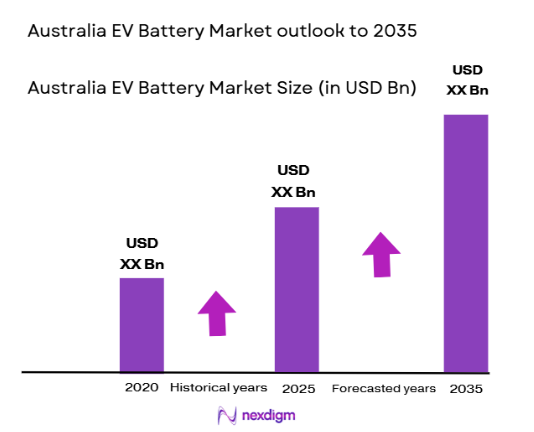
The Australia EV battery market is expected to reach USD ~ billion by the end of the year, driven by increased demand for electric vehicles (EVs) and the ongoing transition to sustainable transportation. The government has also provided strong support for the electric vehicle industry, with initiatives such as subsidies and grants to encourage adoption. The market has seen substantial investments in EV infrastructure and battery production capabilities, helping to support both local manufacturing and the growing demand for EV batteries.
Key regions such as New South Wales, Victoria, and Queensland have emerged as key drivers in the adoption of electric vehicles due to their progressive environmental policies and commitment to reducing carbon emissions. Additionally, Australia’s vast and growing charging infrastructure is playing a crucial role in making electric vehicles more accessible. The large number of mining companies in Australia, which are crucial for sourcing key raw materials, further supports the growth of the market.
Market Segmentation
By Product Type:
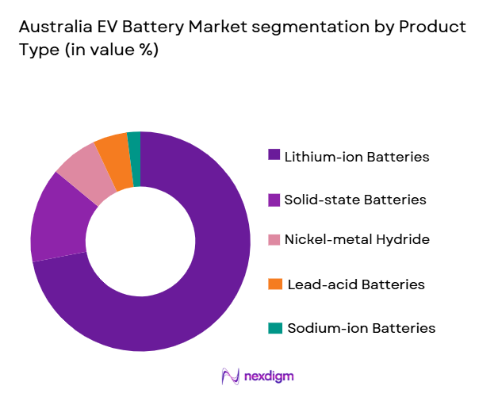
Australia EV battery market is segmented by product type into lithium-ion batteries, solid-state batteries, nickel-metal hydride batteries, lead-acid batteries, and sodium-ion batteries. Recently, lithium-ion batteries have gained a dominant market share due to their high energy density, long cycle life, and rapid charging capabilities. Their extensive use in electric vehicles, renewable energy storage, and other consumer electronics further strengthens their market dominance. The growing push for sustainable energy solutions and high performance from electric vehicles continues to drive the demand for lithium-ion batteries in Australia.
By Platform Type:
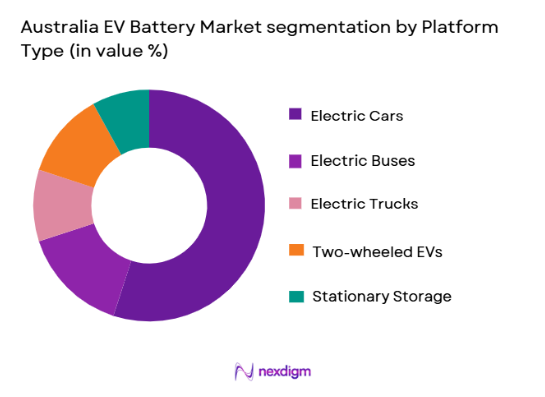
Australia EV battery market is segmented by platform type into electric cars, electric buses, electric trucks, two-wheeled EVs, and stationary storage systems. Among these, electric cars have the largest market share, with increasing demand driven by rising fuel prices, government incentives, and environmental awareness. Electric cars are the most popular EV segment, offering a lower total cost of ownership and reducing dependence on fossil fuels. With major automakers increasing their electric vehicle offerings and new players entering the market, the demand for EV batteries in electric cars continues to grow.
Competitive Landscape
The competitive landscape of the Australia EV battery market is highly influenced by both global and local players that dominate the industry. The consolidation of the market is driven by key partnerships and collaborations between automakers, battery manufacturers, and energy providers to meet the growing demand for electric vehicles. Major players like Tesla, CATL, and LG Chem continue to drive innovation and lead the charge in terms of technological advancements and battery supply. However, local companies are also increasingly making their presence felt, focusing on sustainable practices and leveraging Australia’s rich resources in lithium and other minerals essential for EV batteries.
| Company Name | Establishment Year | Headquarters | Technology Focus | Market Reach | Key Products | Revenue (USD) | Key Market Parameter |
| Tesla | 2003 | United States | ~ | ~ | ~ | ~ | ~ |
| CATL | 2011 | China | ~ | ~ | ~ | ~ | ~ |
| LG Chem | 1947 | South Korea | ~ | ~ | ~ | ~ | ~ |
| BYD | 1995 | China | ~ | ~ | ~ | ~ | ~ |
| Panasonic | 1918 | Japan | ~ | ~ | ~ | ~ | ~ |
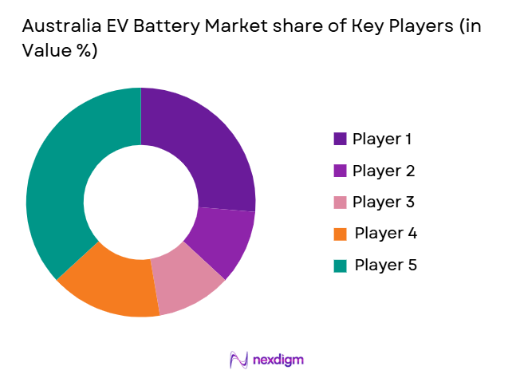
Australia EV Battery Market Analysis
Growth Drivers
Government Support for EV Adoption:
The Australian government has been actively promoting the adoption of electric vehicles through various incentives, grants, and subsidies, which play a crucial role in driving the demand for electric vehicle batteries. With the commitment to reduce greenhouse gas emissions and enhance energy efficiency, the government’s initiatives provide strong support for the growth of the EV battery market. These measures, including rebates for electric vehicles and investments in charging infrastructure, are expected to significantly boost the market over the coming years. Furthermore, the growing awareness of environmental sustainability among consumers is driving the adoption of electric vehicles, directly fueling demand for EV batteries. These efforts contribute to the long-term expansion of the electric vehicle market and, consequently, the EV battery sector in Australia.
Technological Advancements in Battery Efficiency:
One of the main drivers for the EV battery market is the continuous advancements in battery technology, especially with the development of high-efficiency batteries that provide longer driving ranges and faster charging times. The increasing efficiency of lithium-ion batteries, alongside improvements in energy density, directly supports the growth of the market as it aligns with consumer preferences for longer-lasting and faster-charging EVs. Innovations in battery technology, such as solid-state batteries and the integration of artificial intelligence to optimize battery performance, also contribute to the overall progress of the industry. With battery life and charging speed being key considerations for EV buyers, continuous research and development to improve these aspects will lead to greater market penetration and increased demand for EV batteries in Australia.
Market Challenges
High Battery Costs:
The cost of EV batteries remains a significant challenge for the market. Despite advances in battery technology and manufacturing processes, the high cost of materials and production continues to keep the overall price of EV batteries relatively high. This cost burden is passed onto consumers, leading to higher vehicle prices, which can deter potential buyers from transitioning to electric vehicles. The continued reliance on critical raw materials such as lithium, cobalt, and nickel further escalates production costs, making it challenging for the market to scale. While efforts are being made to reduce battery costs through technological advancements and economies of scale, high upfront costs remain a major roadblock in the widespread adoption of electric vehicles and the growth of the battery market.
Supply Chain and Resource Availability:
A major challenge faced by the Australia EV battery market is the supply chain and availability of critical resources required for battery production. Key materials such as lithium, cobalt, and nickel are essential for the manufacturing of EV batteries, but the global supply of these materials is constrained by geopolitical issues, mining restrictions, and environmental concerns. Additionally, the extraction of these materials is concentrated in a few regions, making the supply chain vulnerable to disruptions. In Australia, where the mining industry plays a significant role, the availability of these materials directly influences the growth of the EV battery market. The fluctuation in raw material prices and supply chain interruptions can slow down production rates, leading to delays and increased costs for both manufacturers and consumers.
Opportunities
Integration of Renewable Energy Sources:
One of the key opportunities in the Australia EV battery market lies in the integration of renewable energy sources with electric vehicle charging infrastructure. As the push for clean and sustainable energy intensifies, the combination of solar, wind, and other renewable energy sources with EV charging stations can significantly reduce the carbon footprint of electric vehicle operations. This integration not only supports the transition to a greener economy but also reduces the overall operational costs for consumers. Furthermore, the development of energy storage solutions that allow excess renewable energy to be stored for later use further enhances the viability of electric vehicles. This opportunity is expected to encourage both consumers and businesses to adopt electric vehicles, thereby driving demand for EV batteries in the long term.
Emerging EV Infrastructure Development in Rural Areas:
As Australia focuses on expanding its electric vehicle infrastructure beyond urban areas, there is a significant opportunity to tap into the growing demand for EVs in rural and regional areas. The expansion of charging infrastructure into these areas will alleviate range anxiety and encourage consumers to adopt electric vehicles. By improving accessibility to charging stations and reducing the logistical challenges of charging an electric vehicle in remote regions, this market segment is poised for rapid growth. The development of a comprehensive network of charging stations across Australia is expected to have a significant impact on the EV battery market, with demand for batteries increasing as more consumers in rural areas transition to electric vehicles.
Future Outlook
Over the next five years, the Australia EV battery market is expected to see significant growth driven by continued technological advancements, increased government support, and the expansion of electric vehicle infrastructure. With stricter emission regulations and environmental policies, the shift to electric vehicles will accelerate, resulting in higher demand for EV batteries. The focus on improving battery efficiency and reducing costs will also contribute to greater affordability and adoption of electric vehicles. In addition, the expansion of renewable energy sources and integration with electric vehicle charging stations will provide a sustainable foundation for the market’s growth. Australia’s growing commitment to clean energy will serve as a key driver, with significant investments in research, development, and infrastructure to support the growth of the electric vehicle ecosystem.
Major Players
- Tesla
- CATL
- LG Chem
- BYD
- Panasonic
- SK Innovation
- Samsung SDI
- AESC
- Northvolt
- Contemporary Amperex Technology Co.
- Varta AG
- EVE Energy Co.
- Toshiba Corporation
- Sanyo Electric Co.
- Clarios
Key Target Audience
- Investments and venture capitalist firms
- Government and regulatory bodies
- Automotive manufacturers
- Battery manufacturers
- Charging infrastructure providers
- Energy companies
- Electric vehicle fleet operators
- OEMs
Research Methodology
Step 1: Identification of Key Variables
The key variables such as market size, growth rate, product types, and industry trends are identified based on historical data and expert consultations.
Step 2: Market Analysis and Construction
The market is analyzed by segmenting it into relevant categories and identifying growth patterns, key drivers, and challenges.
Step 3: Hypothesis Validation and Expert Consultation
Consultation with industry experts and stakeholders helps to validate assumptions and refine the market model.
Step 4: Research Synthesis and Final Output
The final output synthesizes data from various sources, forming a comprehensive market report.

- Executive Summary
- Research Methodology (Definitions, Scope, Industry Assumptions, Market Sizing Approach, Primary & Secondary Research Framework, Data Collection & Verification Protocol, Analytic Models & Forecast Methodology, Limitations & Research Validity Checks)

- Market Definition and Scope
- Value Chain & Stakeholder Ecosystem
- Regulatory / Certification Landscape
- Sector Dynamics Affecting Demand
- Strategic Initiatives & Infrastructure Growth

- Growth Drivers
Government incentives for electric vehicles
Increase in electric vehicle adoption
Growing demand for sustainable transportation solutions
Technological advancements in battery efficiency
Improvement in battery recycling technologies - Market Challenges
High upfront costs of electric vehicles
Lack of widespread EV charging infrastructure
Supply chain constraints in raw material sourcing
Battery degradation over time
Regulatory uncertainties regarding battery disposal - Market Opportunities
Expansion in the use of solid-state batteries
Emerging markets in rural and regional areas
Partnerships between automakers and battery manufacturers - Trends
Growing interest in electric vehicle fleet adoption
Rising investment in battery production and research
Integration of renewable energy sources with EVs
Increase in demand for high-performance batteries
Focus on reducing charging times for EVs - Government Regulations & Defense Policy
Government initiatives to promote clean energy vehicles
Battery recycling regulations and policies
Government support for EV infrastructure development - SWOT Analysis
- Stakeholder and Ecosystem Analysis
- Porter’s Five Forces Analysis
- Competition Intensity and Ecosystem Mapping

- By Market Value, 2020-2025
- By Installed Units, 2020-2025
- By Average System Price, 2020-2025
- By System Complexity Tier, 2020-2025

- By System Type (In Value%)
Lithium-ion Batteries
Solid-state Batteries
Nickel-metal Hydride Batteries
Lead-acid Batteries
Zinc-air Batteries - By Platform Type (In Value%)
Electric Cars
Electric Buses
Electric Trucks
Two-wheeled EVs
Stationary Storage Systems - By Fitment Type (In Value%)
OEM Fitment
Aftermarket Fitment
Custom Fitment
Integrated Systems
Modular Fitment - By EndUser Segment (In Value%)
Automotive Manufacturers
Battery Manufacturers
EV Charging Providers
Public Transport Authorities
Battery Recycling Companies - By Procurement Channel (In Value%)
Direct Procurement
Government Tenders
Private Sector Procurement
Online Bidding Platforms
Third-party Distributors - By Material / Technology (in Value%)
Lithium
Nickel
Cobalt
Graphene
Solid-state Technology

- Market structure and competitive positioning
- Market share snapshot of major players
- CrossComparison Parameters (System Type, Platform Type, Procurement Channel, EndUser Segment, Fitment Type, Material/Technology, Average Price, Installed Units, Charging Infrastructure, Battery Lifespan)
- SWOT Analysis of Key Players
- Pricing & Procurement Analysis
- Key Players
Tesla
CATL
LG Chem
Samsung SDI
Panasonic
BYD
SK Innovation
CALB
A123 Systems
Sanyo Electric
BMW Group
Ford Motor Company
General Motors
Nissan Motor Corporation
Toshiba

- Automotive manufacturers’ increasing focus on battery efficiency
- Battery manufacturers investing in large-scale production
- Public transport authorities exploring electric buses
- Battery recycling companies seeking innovative solutions

- Forecast Market Value, 2026-2035
- Forecast Installed Units, 2026-2035
- Price Forecast by System Tier, 2026-2035
- Future Demand by Platform, 2026-2035


 Request a Sample
 Ask for Customization
 Get a Quote
 Enquire Now