
 Download PDF
 Download PDF
Market Overview
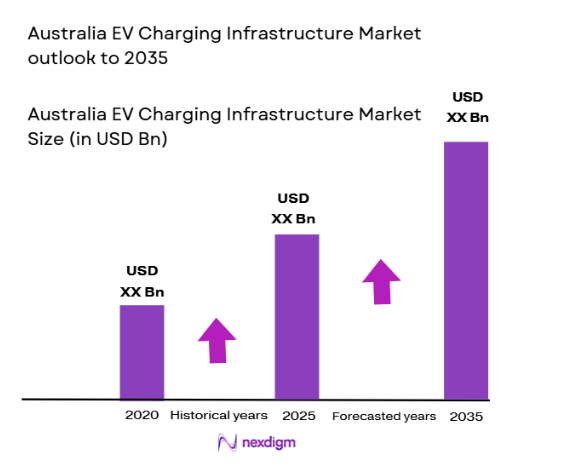
The Australian EV charging infrastructure market is poised for significant growth, valued at USD ~ billion in recent assessments. This market is driven by a surge in electric vehicle (EV) adoption, supported by government incentives, private investments, and increasing consumer demand for sustainable mobility solutions. Expansion of the charging network is essential to accommodate the growing number of EVs, boosting demand for reliable and fast-charging solutions. Technological advancements, particularly in ultra-fast charging, further contribute to market growth, making EV adoption more convenient and widespread.
Dominant cities like Sydney, Melbourne, and Brisbane are leading the adoption of EV charging infrastructure. These cities benefit from advanced urban planning, robust government policies, and a growing focus on sustainability. Furthermore, these locations have established high-density networks of charging stations, providing seamless access to EV owners. Their dominance is reinforced by an expanding charging infrastructure that reduces range anxiety and supports the wider integration of electric vehicles into daily transportation systems, fostering broader consumer adoption.
Market Segmentation
By Product Type:
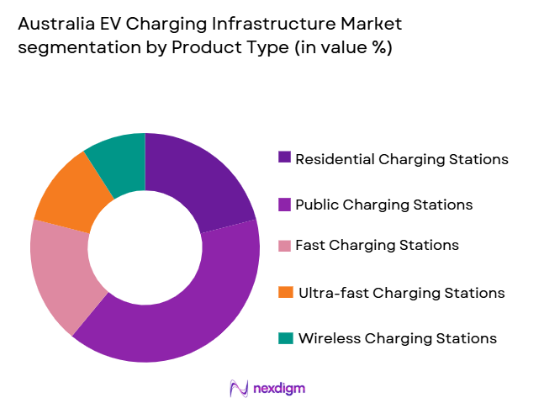
Australia EV Charging Infrastructure market is segmented by product type into residential charging stations, public charging stations, fast charging stations, ultra-fast charging stations, and wireless charging stations. Recently, public charging stations have taken a dominant market share due to the increasing number of electric vehicles in urban areas and the widespread demand for accessible public infrastructure. Government incentives, alongside public-private partnerships, have significantly enhanced the availability and reliability of public stations. The integration of fast charging technology has bolstered consumer confidence, particularly in high-traffic areas, making these stations highly sought after.
By Platform Type:
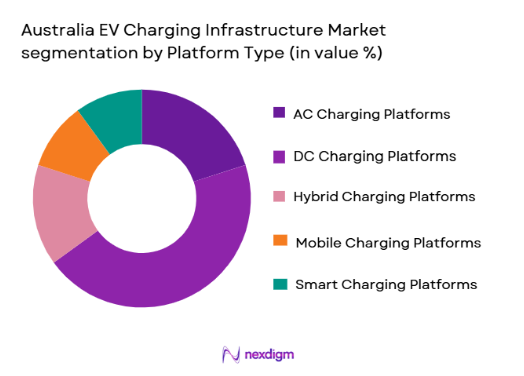
Australia EV Charging Infrastructure market is segmented by platform type into AC charging platforms, DC charging platforms, hybrid charging platforms, mobile charging platforms, and smart charging platforms. Recently, DC charging platforms have become dominant due to their high-speed charging capabilities, offering quick solutions to users who require rapid recharging during short stops. The ability to recharge EVs in less time has been a critical factor in enhancing customer experience and expanding the adoption of electric vehicles. Additionally, the implementation of mobile and smart charging platforms has gained traction, further elevating DC platforms to the forefront.
Competitive Landscape
The Australian EV charging infrastructure market is characterized by high competition, with several global and local players vying for market share. Key players in the sector include Tesla, ChargePoint, and ABB, who lead in providing comprehensive charging solutions and technologies. Consolidation is a significant trend, as companies focus on strategic partnerships and acquisitions to expand their network of charging stations and to ensure compatibility across regions. These major players influence market direction through technological innovations and increased infrastructure development, especially in key urban areas.
| Company Name | Establishment Year | Headquarters | Technology Focus | Market Reach | Key Products | Revenue | Expansion Plans |
| Tesla | 2003 | California, USA | ~ | ~ | ~ | ~ | ~ |
| ChargePoint | 2007 | California, USA | ~ | ~ | ~ | ~ | ~ |
| ABB | 1988 | Zurich, Switzerland | ~ | ~ | ~ | ~ | ~ |
| Siemens | 1847 | Munich, Germany | ~ | ~ | ~ | ~ | ~ |
| BP Pulse | 2020 | London, UK | ~ | ~ | ~ | ~ | ~ |
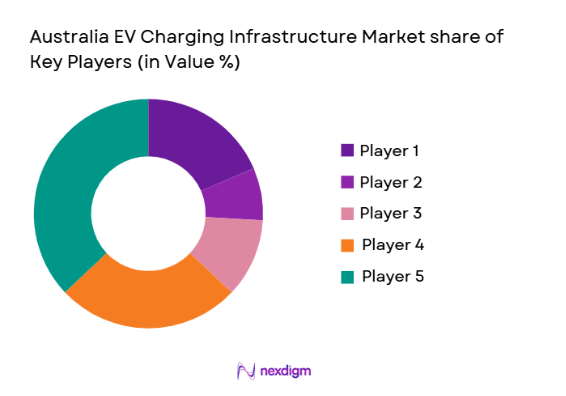
Australia EV Charging Infrastructure Market Analysis
Growth Drivers
Government Incentives and Subsidies:
The Australian government has introduced several initiatives to accelerate the adoption of electric vehicles and expand the EV charging infrastructure. These incentives, which include tax breaks and subsidies for both consumers and infrastructure developers, significantly reduce the cost of installing and using EV chargers. With a goal of reducing greenhouse gas emissions and supporting sustainable transportation, these policies have incentivized both individuals and companies to invest in electric vehicles and the required charging infrastructure. These incentives have encouraged widespread installation of EV charging stations across urban areas, boosting the market demand.
Technological Advancements in Charging Solutions:
One of the primary growth drivers for the Australian EV charging infrastructure market is the ongoing advancements in charging technology, such as ultra-fast and wireless charging. These innovations allow electric vehicle owners to reduce charging time drastically, making EVs more convenient and practical for daily use. With the push toward integrating renewable energy sources into the grid, the development of efficient charging systems is essential for increasing EV adoption. Improved battery management systems and the development of smart charging solutions that integrate with grid systems are expected to further reduce energy costs, making electric vehicles more appealing to consumers.
Market Challenges
High Infrastructure Costs:
The installation of EV charging stations, especially ultra-fast chargers, requires substantial upfront investment, which is a significant barrier to market expansion. While the government provides some incentives, the remaining costs are often borne by private companies and municipalities, leading to slow deployment in rural areas. Additionally, the operation and maintenance costs of charging infrastructure remain high due to the need for continuous technological upgrades and support for a growing number of users. Without further cost reductions and more widespread financial support, the market may struggle to keep pace with increasing EV adoption rates.
Limited Range of Charging Networks:
Despite growing efforts to expand the charging infrastructure, a fragmented network of EV charging stations remains a significant challenge. In many regions, charging stations are sparse or unavailable, especially in rural or remote areas, making it difficult for EV owners to find convenient locations to recharge. Furthermore, inconsistent payment systems and varying standards for charging connectors further complicate the user experience. Standardization across networks and payment systems is essential to make charging stations more accessible and user-friendly.
Opportunities
Integration with Renewable Energy Sources
: A major opportunity for the Australian EV charging infrastructure market lies in the integration of renewable energy sources, such as solar and wind, with EV charging stations. This approach would help reduce the reliance on traditional grid electricity, which is often sourced from fossil fuels. By incorporating renewable energy, charging stations can contribute to the reduction of carbon emissions, making the entire EV ecosystem more sustainable. This integration is particularly relevant as Australia continues to focus on clean energy solutions, with several states already investing in large-scale renewable energy projects.
Expansion of Charging Infrastructure in Rural Areas:
While urban areas are seeing rapid growth in EV charging infrastructure, rural areas remain underserved. Expanding infrastructure to these regions presents a significant growth opportunity for companies in the EV charging market. As more people in rural areas adopt electric vehicles, the demand for accessible charging stations will rise. Additionally, establishing charging networks in remote areas will ensure greater nationwide adoption of EVs, contributing to overall market growth. Strategic partnerships with local governments and utility providers will be essential to overcome financial and logistical barriers in these regions.
Future Outlook
The future of the Australian EV charging infrastructure market looks promising, with significant growth expected in the next few years. Advancements in charging technology, coupled with continued government support, will drive the expansion of charging networks across the country. The rising adoption of electric vehicles, particularly in urban areas, combined with increasing concerns about climate change, will further boost market growth. As the infrastructure expands, demand for faster, more efficient charging solutions will continue to rise, spurring innovation in the sector.
Major Players
- Tesla
- ChargePoint
- ABB
- Siemens
- BP Pulse
- Shell Recharge
- Enel X
- Evie Networks
- Greenway
- Jolt
- Schneider Electric
- General Electric
- Hitachi ABB Power Grids
- Engie
- Fastned
Key Target Audience
- Electric vehicle manufacturers
- Electric utility companies
- Government bodies and agencies
- Real estate developers
- Fleet operators
- Renewable energy companies
- Commercial property owners
- Investors in sustainable infrastructure
Research Methodology
Step 1: Identification of Key Variables
Market variables including technological advancements, regulatory policies, and economic factors are identified for an accurate market assessment.
Step 2: Market Analysis and Construction
Data from various sources such as government reports, industry surveys, and financial statements are analyzed to construct a comprehensive market model.
Step 3: Hypothesis Validation and Expert Consultation
Expert opinions are gathered to validate assumptions and refine market forecasts, ensuring that the research aligns with real-world trends.
Step 4: Research Synthesis and Final Output
All findings are synthesized into a final report, ensuring a clear and structured presentation of the market insights and forecasts.

- Executive Summary
- Research Methodology (Definitions, Scope, Industry Assumptions, Market Sizing Approach, Primary & Secondary Research Framework, Data Collection & Verification Protocol, Analytic Models & Forecast Methodology, Limitations & Research Validity Checks)

- Market Definition and Scope
- Value Chain & Stakeholder Ecosystem
- Regulatory / Certification Landscape
- Sector Dynamics Affecting Demand
- Strategic Initiatives & Infrastructure Growth

- Growth Drivers
Government Incentives and Subsidies for EV Adoption
Growing Demand for EVs and Infrastructure Expansion
Technological Advancements in Fast and Wireless Charging
Reduction in Charging Costs and Increased Availability
Sustainability Initiatives and Emission Reduction Policies - Market Challenges
High Initial Installation Costs of Charging Stations
Lack of Standardization Across Charging Networks
Limited Availability of Fast Charging Infrastructure
Grid Capacity and Energy Supply Concerns
Consumer Perception of Charging Accessibility - Market Opportunities
Growth of Commercial EV Fleets and Infrastructure Demand
Development of Ultra-Fast Charging Networks
Integration with Renewable Energy Sources - Trends
Increased Deployment of Fast and Ultra-Fast Charging Stations
Integration of AI and IoT for Smart Charging Solutions
Expansion of Charging Infrastructure in Rural Areas
Collaborations Between Automakers and Charging Providers
Emerging EV Charging Solutions for Autonomous Vehicles - Government Regulations & Defense Policy
Incentives for EV Infrastructure Development
National and State-Level Emission Reduction Goals
Policies on Renewable Energy Integration in Charging Networks - SWOT Analysis
- Stakeholder and Ecosystem Analysis
- Porter’s Five Forces Analysis
- Competition Intensity and Ecosystem Mapping

- By Market Value, 2020-2025
- By Installed Units, 2020-2025
- By Average System Price, 2020-2025
- By System Complexity Tier, 2020-2025

- By System Type (In Value%)
Residential Charging Solutions
Public Charging Solutions
Fast Charging Solutions
Ultra-Fast Charging Solutions
Wireless Charging Solutions - By Platform Type (In Value%)
AC Charging Platforms
DC Charging Platforms
Hybrid Charging Platforms
Mobile Charging Platforms
Smart Charging Platforms - By Fitment Type (In Value%)
Wall-mounted Solutions
Standalone Charging Stations
Portable Charging Solutions
Fleet Charging Stations
Integrated Charging Solutions - By EndUser Segment (In Value%)
Private EV Owners
Commercial EV Fleets
Fleet Operators
Public Transport Operators
Municipalities & Local Governments - By Procurement Channel (In Value%)
Direct Procurement
Private Sector Procurement
Government Tenders
Online Procurement Platforms
Third-party Distributors - By Material / Technology (In Value%)
Lithium-ion Battery Technologies
Solid-state Battery Technologies
Fast-charging Technology
Battery Management Systems
Smart Grid Technologies

- Market structure and competitive positioning
- Market share snapshot of major players
- CrossComparison Parameters (System Type, Platform Type, Procurement Channel, EndUser Segment, Fitment Type, Material/Technology, Region, Service Quality, Charging Speed, and User Accessibility)
- SWOT Analysis of Key Players
- Pricing & Procurement Analysis
- Key Players
Tesla
ChargePoint
ABB
Shell Recharge
BP Pulse
Electrify Australia
E.ON
Evie Networks
Enel X
Schiessl
Delta Electronics
Siemens
Jolt
Greenway
Hertz Australia

- Rising EV Adoption Among Private Consumers
- Increased Adoption of EVs by Public Transport Operators
- Growing Need for Commercial Charging Solutions
- Government’s Role in Infrastructure Deployment

- Forecast Market Value, 2026-2035
- Forecast Installed Units, 2026-2035
- Price Forecast by System Tier, 2026-2035
- Future Demand by Platform, 2026-2035


 Request a Sample
 Ask for Customization
 Get a Quote
 Enquire Now