
 Download PDF
 Download PDF
Market Overview
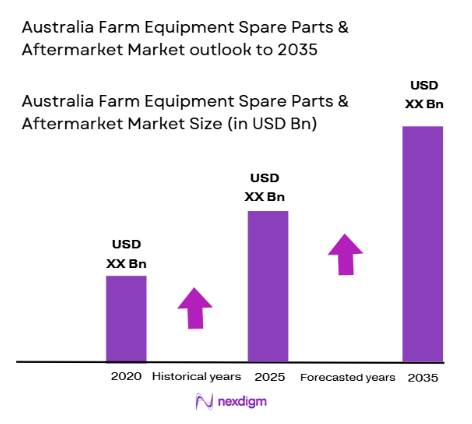
Based on a recent historical assessment, the Australia Farm Equipment Spare Parts & Aftermarket market was valued at USD ~ billion, supported by sustained agricultural output and a large installed base of tractors, harvesters, and seeding equipment across broadacre and mixed farming regions. The market is driven by replacement demand for wear components, hydraulic assemblies, and engine parts, alongside rising mechanization levels and increased reliance on precision farming technologies requiring regular maintenance and component upgrades.
Dominant activity is concentrated in states such as New South Wales, Victoria, and Western Australia, where extensive grain and livestock farming operations generate continuous demand for spare parts and servicing. Regional hubs including Melbourne, Sydney, and Perth host major dealer networks and distribution centers due to strong logistics connectivity and proximity to farming clusters. These locations benefit from established agricultural supply chains, advanced service infrastructure, and higher machinery density compared with remote territories.
Market Segmentation
By Product Type
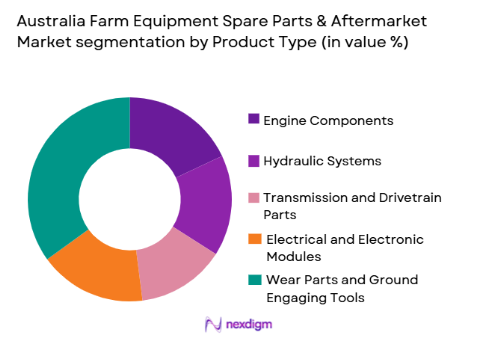
Australia Farm Equipment Spare Parts & Aftermarket market is segmented by product type into engine components, hydraulic systems, transmission and drivetrain parts, electrical and electronic modules, and wear parts and ground engaging tools. Recently, wear parts and ground engaging tools has a dominant market share due to high replacement frequency driven by soil contact, heavy operational loads, and seasonal harvesting cycles. Australian broadacre farming exposes ploughs, blades, discs, and tines to abrasive conditions, accelerating wear rates compared with enclosed mechanical systems. Farmers prioritize immediate availability of these components to avoid downtime during planting and harvesting windows. Dealer inventories are therefore heavily stocked with consumable parts, increasing sales turnover relative to high value but less frequently replaced assemblies such as engines or transmissions.
By End-User Segment
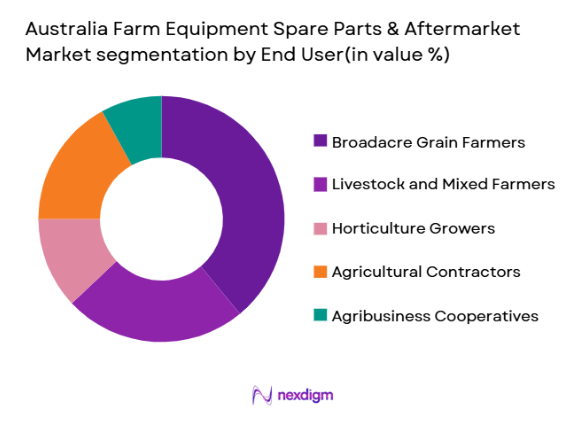
Australia Farm Equipment Spare Parts & Aftermarket market is segmented by end-user segment into broadacre grain farmers, livestock and mixed farmers, horticulture growers, agricultural contractors, and agribusiness cooperatives. Recently, broadacre grain farmers has a dominant market share due to the extensive land under cultivation and high machinery utilization intensity across wheat, barley, and canola production belts. Large scale operations operate multiple tractors and harvesters, resulting in continuous demand for preventive maintenance and component replacement. Seasonal time sensitivity compels these farmers to invest in high quality genuine or compatible spare parts to ensure operational continuity. The scale of mechanization in grain farming exceeds that of smaller horticulture units, thereby contributing to higher aggregate aftermarket expenditure.
Competitive Landscape
The Australia Farm Equipment Spare Parts & Aftermarket market demonstrates moderate consolidation, with established dealership groups and multinational machinery manufacturers exerting significant influence over distribution and pricing structures. Major players benefit from integrated supply chains, localized warehousing, and branded genuine parts portfolios. Independent retailers and aftermarket specialists compete on price and availability, particularly in regional areas. Strategic partnerships with global OEMs, remanufacturing capabilities, and digital inventory platforms shape competitive positioning.
| Company Name | Establishment Year | Headquarters | Technology Focus | Market Reach | Key Products | Revenue | Distribution Network Strength |
| CNH Industrial Australia | 1996 | Melbourne, Australia | ~ | ~ | ~ | ~ | ~ |
| Kubota Australia | 1979 | Sydney, Australia | ~ | ~ | ~ | ~ | ~ |
| RDO Equipment Australia | 1968 | Toowoomba, Australia | ~ | ~ | ~ | ~ | ~ |
| Clark Equipment Australia | 1948 | Hornsby, Australia | ~ | ~ | ~ | ~ | ~ |
| AFGRI Equipment Australia | 2004 | Perth, Australia | ~ | ~ | ~ | ~ | ~ |
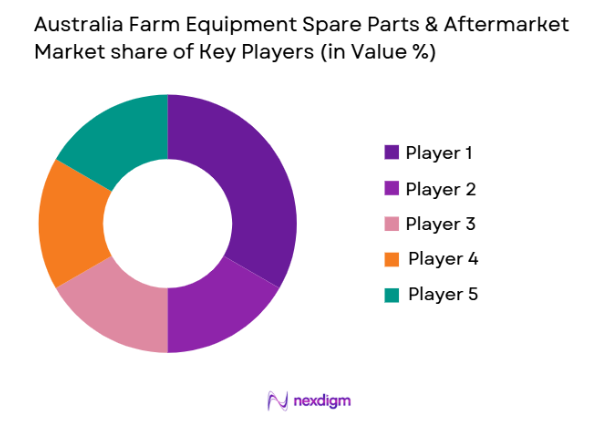
Australia Farm Equipment Spare Parts & Aftermarket Market Analysis
Growth Drivers
Expansion of Mechanized Broadacre Farming Operations:
The increasing scale of grain and oilseed cultivation across Australian states has intensified machinery utilization rates, directly driving demand for replacement parts and maintenance components. Large farms operate fleets of tractors, combines, and seeding equipment that accumulate high annual operating hours, accelerating wear and component fatigue. Continuous cropping cycles reduce idle periods, necessitating preventive servicing and scheduled part replacement to avoid costly downtime. Farmers are investing in higher capacity machinery, which incorporates complex hydraulic and electronic systems requiring specialized aftermarket support. Seasonal pressures during planting and harvesting create urgency in spare part procurement, strengthening dealer revenues. Expansion of export oriented agricultural production further supports equipment usage intensity. Regional consolidation of farms into larger operational units has increased average machinery size and complexity. These factors collectively sustain consistent aftermarket demand irrespective of new equipment sales cycles.
Rising Adoption of Precision Agriculture and Smart Components:
The integration of GPS guidance, telematics, and sensor based systems into farm machinery has created additional aftermarket demand for electronic modules and calibration services. Farmers increasingly rely on real time data analytics to optimize seeding rates, fertilizer application, and harvesting efficiency. Such technologies require periodic upgrades, firmware updates, and hardware replacements, expanding revenue streams beyond traditional mechanical parts. As machinery becomes digitally integrated, component compatibility and technical servicing gain strategic importance. Dealers are offering bundled maintenance contracts covering both mechanical and electronic systems. Data driven farm management encourages predictive maintenance, increasing planned part replacement volumes. Precision agriculture adoption also stimulates demand for higher quality branded components to ensure system reliability. The technological shift therefore broadens the scope of the aftermarket beyond consumables toward advanced system integration support.
Market Challenges
Volatility in Agricultural Commodity Prices Affecting Farmer Spending:
The financial capacity of farmers to invest in spare parts is closely tied to commodity price cycles for wheat, barley, and livestock products. Sudden declines in global prices reduce farm profitability and constrain discretionary expenditure on non urgent component replacements. During periods of reduced income, farmers may defer maintenance or opt for lower cost compatible parts, affecting premium segment sales. Climatic variability and drought conditions further amplify income instability, impacting purchasing decisions. Regional disparities in rainfall patterns influence equipment usage intensity and replacement cycles. Financing constraints may limit large scale overhauls of engines or transmissions. Price sensitivity increases competition among independent retailers offering discounted alternatives. These factors introduce revenue fluctuations and reduce predictability in aftermarket demand patterns.
Supply Chain Dependence on Imported Components:
A significant proportion of advanced machinery parts used in Australia originates from global manufacturing hubs, creating exposure to shipping delays and currency fluctuations. Extended lead times can disrupt seasonal maintenance schedules and reduce equipment availability during critical farming periods. Exchange rate movements impact procurement costs for distributors, influencing retail pricing structures. Port congestion and international logistics disruptions have historically constrained spare part inventories. Limited domestic manufacturing capacity for specialized electronic modules restricts local substitution options. Dealers must maintain higher safety stock levels to mitigate supply risk, increasing working capital requirements. Smaller independent retailers face challenges in negotiating favorable import terms. Dependence on foreign supply chains therefore represents a structural vulnerability within the market ecosystem.
Opportunities
Development of Local Remanufacturing and Refurbishment Facilities:
Establishing domestic remanufacturing centers for engines, transmissions, and hydraulic assemblies presents a substantial growth opportunity for the aftermarket. Remanufactured components offer cost effective alternatives while maintaining acceptable performance standards for farmers. Local facilities reduce reliance on imported replacements and shorten turnaround times for major overhauls. Environmental sustainability considerations favor refurbishment over complete component replacement. Government initiatives supporting circular economy practices further strengthen the business case for remanufacturing investments. Dealers can enhance profitability through value added refurbishment services. Skilled technical workforce development would support quality assurance and reliability benchmarks. The strategy can also improve supply chain resilience across regional agricultural hubs.
Digitalization of Spare Parts Distribution Platforms:
adoption of online inventory management and ordering systems can significantly improve market efficiency and transparency. Digital catalogs enable farmers to identify compatible components quickly using machine model and serial number data. Real time stock visibility across dealer networks reduces procurement delays and enhances customer satisfaction. Integration of telematics data with ordering platforms allows predictive part recommendations. E commerce channels expand reach into remote rural areas where physical outlets are limited. Data analytics can support demand forecasting and optimized warehousing strategies. Digital payment solutions simplify transaction processes for agricultural contractors. This technological transformation is expected to strengthen competitive differentiation and operational scalability in the aftermarket landscape.
Future Outlook
Over the next five years, the Australia Farm Equipment Spare Parts & Aftermarket market is expected to experience stable expansion supported by sustained agricultural exports and continued mechanization. Increasing penetration of smart farming technologies will elevate demand for advanced electronic modules and predictive maintenance services. Regulatory emphasis on sustainability may encourage remanufacturing and environmentally compliant component development. Improved digital distribution networks and localized inventory strategies are likely to enhance supply reliability across remote farming regions.
Major Players
- CNH Industrial Australia
- Kubota Australia
- RDO Equipment Australia
- Clark Equipment Australia
- AFGRI Equipment Australia
- Emmetts Group
- Wideland Group
- Brown and Hurley
- Bare Co Australia
- Agriparts Australia
- Intersales
- Agrison
- Gason
- MacDon Australia
- John Deere Australia
Key Target Audience
- Agricultural machinery manufacturers
- Farm equipment dealers and distributors
- Broadacre farming enterprises
- Livestock farming companies
- Agribusiness cooperatives
- Investments and venture capitalist firms
- Government and regulatory bodies
- Logistics and warehousing operators
Research Methodology
Step 1: Identification of Key Variables
Key variables such as installed machinery base, replacement cycles, dealer density, and agricultural output were identified through secondary sources and industry databases. These variables formed the foundation for market estimation models.
Step 2: Market Analysis and Construction
Quantitative and qualitative data were consolidated to construct a structured market framework covering product categories, end users, and regional demand clusters. Cross validation was performed using trade statistics and company disclosures.
Step 3: Hypothesis Validation and Expert Consultation
Preliminary findings were validated through consultations with industry experts, dealership managers, and supply chain professionals. Feedback was incorporated to refine demand assumptions and segmentation accuracy.
Step 4: Research Synthesis and Final Output
All validated insights were synthesized into a comprehensive analytical framework. Data triangulation ensured consistency across segments, leading to the final structured report output.

- Executive Summary
- Research Methodology (Definitions, Scope, Industry Assumptions, Market Sizing Approach, Primary & Secondary Research Framework, Data Collection & Verification Protocol, Analytic Models & Forecast Methodology, Limitations & Research Validity Checks)

- Market Definition and Scope
- Value Chain & Stakeholder Ecosystem
- Regulatory / Certification Landscape
- Sector Dynamics Affecting Demand
- Strategic Initiatives & Infrastructure Growth

- Growth Drivers
Aging agricultural machinery fleet requiring regular part replacement
Expansion of large scale farming operations across Australia
Rising mechanization in grain and livestock farming
Increased adoption of precision agriculture technologies
Growing focus on equipment uptime and operational efficiency - Market Challenges
Volatility in agricultural commodity prices impacting farmer spending
Supply chain disruptions affecting part availability
Counterfeit and low quality aftermarket components
High logistics costs across remote farming regions
Dependence on imported machinery brands and components - Market Opportunities
Development of localized remanufacturing facilities
Digital platforms for spare parts sourcing and inventory management
Integration of IoT enabled smart replacement components - Trends
Growth of online spare parts marketplaces
Shift toward predictive maintenance solutions
Increasing demand for remanufactured components
Expansion of dealer service and maintenance contracts
Adoption of telematics driven diagnostics - Government Regulations & Defense Policy
Biosecurity and quarantine regulations affecting imported parts
Australian Design Rules compliance for machinery components
Environmental standards on emissions related replacement systems - SWOT Analysis
- Stakeholder and Ecosystem Analysis
- Porter’s Five Forces Analysis
- Competition Intensity and Ecosystem Mapping

- By Market Value, 2020-2025
- By Installed Units, 2020-2025
- By Average System Price, 2020-2025
- By System Complexity Tier, 2020-2025

- By System Type (In Value%)
Engine Components and Overhaul Kits
Hydraulic Systems and Pumps
Transmission and Drivetrain Parts
Electrical and Electronic Modules
Wear Parts and Ground Engaging Tools - By Platform Type (In Value%)
Tractors
Combine Harvesters
Sprayers and Spreaders
Balers and Forage Equipment
Planting and Seeding Equipment - By Fitment Type (In Value%)
OEM Replacement Parts
Genuine Branded Parts
Aftermarket Compatible Parts
Remanufactured Components
Upgraded Performance Parts - By EndUser Segment (In Value%)
Broadacre Grain Farmers
Livestock and Mixed Farmers
Horticulture Growers
Agricultural Contractors
Agribusiness Cooperatives - By Procurement Channel (In Value%)
Authorized Dealer Networks
Independent Spare Parts Retailers
Online E commerce Platforms
Direct From Manufacturer
Agricultural Machinery Workshops - By Material / Technology (in Value %)
High Strength Alloy Steel Components
Precision Cast Iron Parts
Advanced Polymer and Composite Parts
Sensor Integrated Smart Components
Additive Manufactured Replacement Parts

- Market structure and competitive positioning
- Market share snapshot of major players
- CrossComparison Parameters (Product Portfolio Breadth, Distribution Network Strength, Pricing Strategy, Local Inventory Availability, Remanufacturing Capability, Technology Integration Level, After Sales Service Support, Brand Recognition, Supply Chain Resilience, Digital Platform Integration)
- SWOT Analysis of Key Players
- Pricing & Procurement Analysis
- Key Players
AFGRI Equipment Australia
Emmetts Group
Wideland Group
RDO Equipment Australia
Clark Equipment Australia
Brown and Hurley
Intersales
Agriparts Australia
Bare Co Australia
Agrison
Gason
Tutt Bryant Equipment
MacDon Australia
Kubota Australia
CNH Industrial Australia

- Broadacre farmers prioritize durability and rapid availability of wear parts
- Livestock operators demand reliable engine and hydraulic replacements
- Contractors focus on minimizing downtime during peak seasons
- Horticulture growers prefer precision compatible electronic modules

- Forecast Market Value, 2026-2035
- Forecast Installed Units, 2026-2035
- Price Forecast by System Tier, 2026-2035
- Future Demand by Platform, 2026-2035


 Request a Sample
 Ask for Customization
 Get a Quote
 Enquire Now