

 Download PDF
 Download PDF
Market Overview
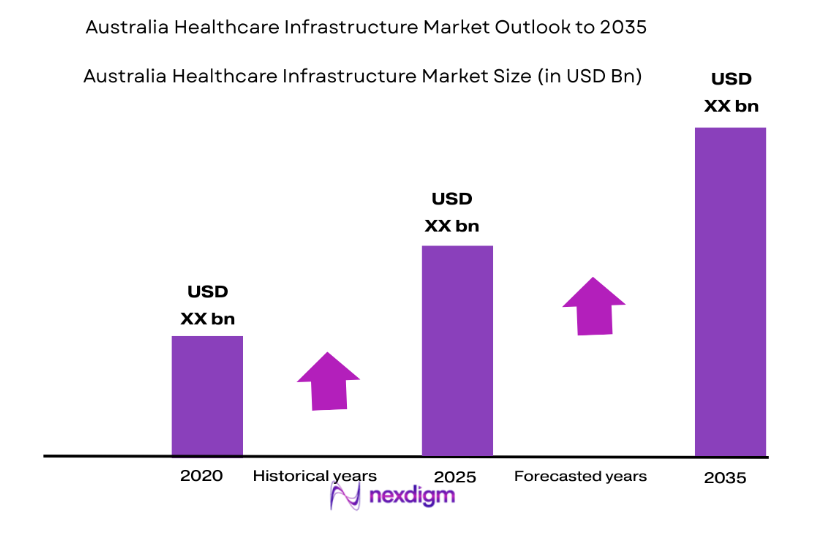
The Australian healthcare infrastructure market has experienced significant growth driven by government investments, technological advancements, and the rising demand for healthcare services. The market is valued at approximately USD ~ billion, reflecting the ongoing expansion of healthcare facilities and the adoption of cutting-edge technologies. The increasing population and aging demographic are contributing factors that are fostering the demand for improved healthcare infrastructure, while advancements in medical devices and healthcare IT infrastructure are pushing the market’s boundaries.
Australia’s healthcare infrastructure dominance is largely concentrated in key metropolitan areas such as Sydney, Melbourne, and Brisbane. These cities are hubs for healthcare facilities, with high-quality medical centers and technological innovations leading the way. Sydney, in particular, has a robust healthcare system with extensive government funding supporting healthcare initiatives, whereas Melbourne continues to attract medical research and development. These regions benefit from favorable government policies, a highly skilled workforce, and superior healthcare technologies that enhance their competitive position within the sector.
Market Segmentation
By Product Type
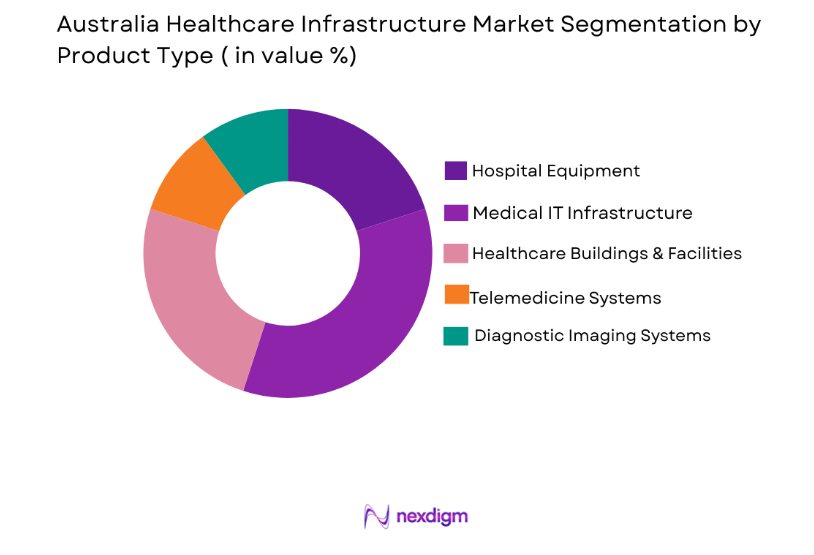
Australia’s healthcare infrastructure market is segmented by product type into hospital equipment, medical IT infrastructure, healthcare buildings & facilities, telemedicine systems, and diagnostic imaging systems. Recently, medical IT infrastructure has dominated the market share due to the increasing need for digital solutions to manage patient data, streamline hospital operations, and improve healthcare accessibility. The rise of electronic health records (EHRs), telehealth services, and AI-driven diagnostic tools has made IT infrastructure essential in modernizing the healthcare system, leading to a surge in demand. As more healthcare providers adopt digital solutions, medical IT infrastructure has become the cornerstone of Australia’s healthcare transformation.
By Platform Type
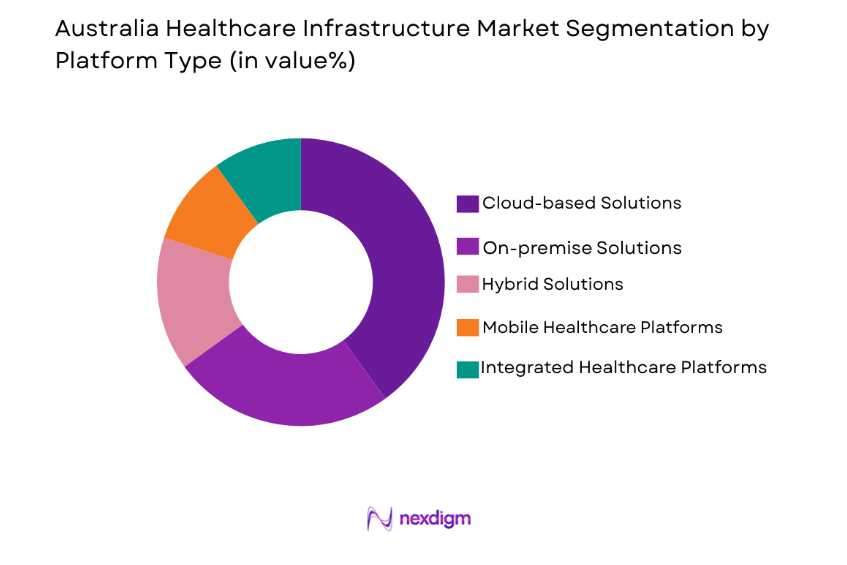
Australia’s healthcare infrastructure market is segmented by platform type into cloud-based solutions, on-premise systems, hybrid systems, mobile healthcare platforms, and integrated healthcare platforms. Cloud-based solutions have recently led the market share due to their scalability, flexibility, and cost-efficiency. Healthcare providers prefer cloud-based systems as they allow for seamless data storage, sharing, and real-time access, which is crucial for patient care management. The Australian government’s increasing support for digital health initiatives has also played a key role in driving the adoption of cloud technologies, making them the preferred choice for healthcare organizations looking to modernize their operations and improve patient outcomes.
Competitive Landscape
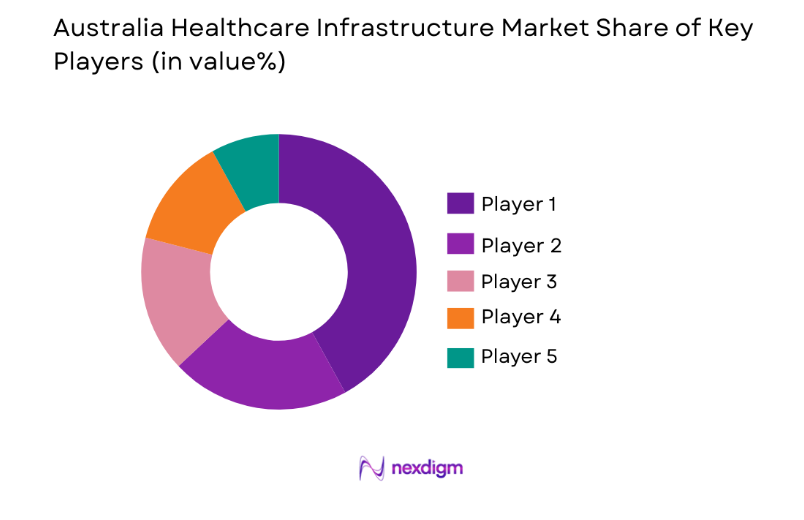
The Australian healthcare infrastructure market is highly competitive, with significant consolidation taking place as major players look to expand their presence. The influence of large corporations is increasing as they invest in technological advancements and infrastructure development. Companies are continuously innovating to meet the growing demands of the healthcare sector, particularly in areas such as medical IT infrastructure, telemedicine, and diagnostic systems. The presence of both local and international players has heightened competition, driving further advancements in healthcare technologies and infrastructure.
|
Company Name |
Establishment Year | Headquarters | Technology Focus | Market Reach | Key Products | Revenue | Additional Parameter |
| Siemens Healthineers | 1847 | Germany | ~ | ~ | ~ | ~ | ~ |
| Philips Healthcare | 1891 | Netherlands | ~ | ~ | ~ | ~ | ~ |
| GE Healthcare | 1892 | USA | ~ | ~ | ~ | ~ | ~ |
| Cerner Corporation | 1979 | USA | ~ | ~ | ~ | ~ | ~ |
| Medtronic | 1949 | Ireland | ~ | ~ | ~ | ~ | ~ |
Australia Healthcare Infrastructure Market Analysis
Growth Drivers
Government Investments in Healthcare Infrastructure
Australia’s government has been heavily investing in the healthcare sector to enhance medical facilities, infrastructure, and technological advancements. This ongoing investment significantly contributes to the market’s growth by allowing healthcare providers to modernize services, build new facilities, and expand existing ones. In response to the increasing healthcare demands driven by an aging population and the expansion of chronic disease management programs, the government has funded large-scale infrastructure projects. These investments not only improve healthcare outcomes but also encourage the development and adoption of advanced medical technologies, enhancing treatment options and making healthcare more accessible. With the continuous support of the government, healthcare infrastructure is rapidly evolving to meet the needs of a growing population, ensuring steady growth in the market.
Technological Advancements in Medical Equipment
As the demand for higher quality healthcare services increases, the adoption of advanced medical equipment has become a crucial growth driver for the Australian healthcare infrastructure market. Hospitals and healthcare facilities are modernizing their infrastructure to incorporate cutting-edge technologies such as AI-driven diagnostic tools, robotic surgery systems, and telemedicine platforms. These advancements improve the quality of diagnosis and treatment, enabling healthcare providers to deliver more accurate results and efficient care. Additionally, the integration of advanced technologies allows healthcare providers to manage patient data more effectively, streamline operational processes, and reduce overall costs. The shift towards adopting these technologies supports the expansion of the healthcare infrastructure market, improving service delivery, and enhancing patient care outcomes.
Market Challenges
High Costs of Healthcare Infrastructure Projects
One of the most significant challenges facing the Australian healthcare infrastructure market is the high cost associated with large-scale healthcare projects. Constructing, upgrading, and maintaining healthcare facilities requires significant capital, which can strain budgets and delay the completion of projects. The implementation of advanced technologies, such as digital health platforms, diagnostic systems, and robotic surgery units, further increases costs due to the need for specialized equipment and skilled personnel. Smaller healthcare providers, particularly those in rural areas, often face difficulties securing the necessary funding to modernize their infrastructure, creating a financial barrier that slows the overall growth of the market. High upfront costs, coupled with ongoing maintenance expenses, remain a significant challenge for expanding healthcare infrastructure in Australia.
Regulatory Compliance and Standards
Regulatory compliance and the adherence to national and international standards are key challenges impacting the healthcare infrastructure market in Australia. Healthcare providers must meet numerous regulations related to patient safety, data protection, and healthcare delivery, often requiring substantial investments of time and money to implement the necessary systems and procedures. The approval process for new medical technologies and equipment is also highly regulated, which can delay the introduction of innovative solutions to the market. As healthcare organizations must continuously adapt to evolving regulations, the cost and complexity of compliance can hinder the rapid development and modernization of healthcare infrastructure, posing a significant barrier to market growth.
Opportunities
Expansion of Telemedicine Services
The rise of telemedicine presents significant growth opportunities for the Australian healthcare infrastructure market. With increasing demand for remote healthcare services, especially in rural and underserved areas, telemedicine has become integral to modern healthcare delivery. The Australian government has been actively supporting telehealth initiatives to improve healthcare access, reduce costs, and provide a more convenient method for patients to consult healthcare providers. This growing shift toward telemedicine is driving demand for robust digital infrastructure and communication platforms. As healthcare providers continue to adopt telemedicine solutions, the market for telemedicine services is expected to expand rapidly, creating a lucrative opportunity for technology firms and healthcare providers to innovate and meet the demand for virtual healthcare solutions.
Partnerships with Private Sector
Public-private partnerships (PPP) offer a significant opportunity for growth in the Australian healthcare infrastructure market. The Australian government has been increasingly focusing on collaborating with private players, including hospitals, technology firms, and construction companies, to drive healthcare infrastructure investment. These partnerships accelerate the development of modern healthcare facilities and enable the adoption of advanced technologies, such as AI and digital health solutions. By combining public sector resources with the expertise and innovation of the private sector, healthcare providers can improve service delivery and expand access to healthcare services, particularly in remote and rural areas. This trend of increasing public-private collaboration holds strong potential for market expansion and growth in the coming years.
Future Outlook
The Australian healthcare infrastructure market is poised for continued growth over the next five years, driven by the increasing demand for healthcare services and technological advancements. As the population continues to age and the prevalence of chronic diseases rises, the need for modern healthcare facilities and advanced medical equipment will increase. The Australian government is expected to maintain its focus on healthcare infrastructure, providing significant funding for new projects and technological innovations. Furthermore, the adoption of digital health solutions, including telemedicine and AI-driven diagnostics, will continue to reshape the healthcare landscape, offering new opportunities for market expansion.
Major Players
- Siemens Healthineers
- Philips Healthcare
- GE Healthcare
- Cerner Corporation
- Medtronic
- Johnson & Johnson Medical Devices
- 3M Health Information Systems
- Allscripts Healthcare Solutions
- McKesson Corporation
- Roche Diagnostics
- Baxter International
- Honeywell Healthcare
- Fujifilm Healthcare
- Mindray
- Agfa Healthcare
Key Target Audience
- Investments and venture capitalist firms
- Government and regulatory bodies
- Healthcare providers
- Medical device manufacturers
- Technology solution providers
- Hospitals and healthcare systems
- Pharmaceutical companies
Research Methodology
Step 1: Identification of Key Variables
The key variables affecting the healthcare infrastructure market were identified through an in-depth analysis of historical data, industry trends, and expert opinions.
Step 2: Market Analysis and Construction
Market sizing and growth potential were determined using a combination of primary and secondary research, along with market models to ensure accurate predictions.
Step 3: Hypothesis Validation and Expert Consultation
Expert consultations were conducted to validate hypotheses and assumptions, ensuring that findings were grounded in practical insights and real-world data.
Step 4: Research Synthesis and Final Output
The findings from all research phases were synthesized into a comprehensive report, ensuring that all insights were aligned with the market’s key dynamics and future outlook.

- Executive Summary
- Research Methodology (Definitions, Scope, Industry Assumptions, Market Sizing Approach, Primary & Secondary Research Framework, Data Collection & Verification Protocol, Analytic Models & Forecast Methodology, Limitations & Research Validity Checks)

- Market Definition and Scope
- Value Chain & Stakeholder Ecosystem
- Regulatory / Certification Landscape
- Sector Dynamics Affecting Demand

- Growth Drivers
Increase in Government Healthcare Spending
Technological Advancements in Medical Equipment
Rising Demand for Healthcare Access in Rural Areas - Market Challenges
High Capital Investment Requirements
Regulatory and Compliance Barriers
Integration of New Technologies into Legacy Systems - Market Opportunities
Expansion in Telemedicine Infrastructure
Partnerships between Private and Public Healthcare Sectors
Growing Demand for AI and Machine Learning Integration - Trends
Adoption of Digital Health Solutions
Integration of Robotics in Healthcare Systems - Government Regulations
- SWOT Analysis
- Porter’s Five Forces

- By Market Value, 2020-2025
- By Installed Units, 2020-2025
- By Average System Price, 2020-2025
- By System Complexity Tier, 2020-2025

- By System Type (In Value%)
Hospital Equipment
Medical IT Infrastructure
Healthcare Buildings & Facilities
Telemedicine Systems
Diagnostic Imaging Systems - By Platform Type (In Value%)
Cloud-based Solutions
On-premise Systems
Hybrid Systems
Mobile Healthcare Platforms
Integrated Healthcare Platforms - By Fitment Type (In Value%)
On-site Solutions
Remote Solutions
Modular Solutions
Hybrid Solutions - By End User Segment (In Value%)
Public Hospitals
Private Healthcare Providers
Government Healthcare Agencies
Specialized Healthcare Clinics

- Market Share Analysis
- Cross Comparison Parameters (System Type, Platform Type, Procurement Channel, End User Segment, Fitment Type, Technology Adoption, Market Geography)
- SWOT Analysis of Key Competitors
- Pricing & Procurement Analysis
- Key Players
Johnson & Johnson Medical Devices
Siemens Healthineers
GE Healthcare
Philips Healthcare
Medtronic
Cerner Corporation
Allscripts Healthcare Solutions
McKesson Corporation
Roche Diagnostics
Baxter International
Honeywell Healthcare
3M Health Information Systems
Agfa Healthcare
Mindray
Fujifilm Healthcare

- Public Hospitals Increasing Demand for Modernization
- Private Healthcare Providers Enhancing Technological Capabilities
- Government Healthcare Agencies Pushing for Infrastructure Development
- Specialized Healthcare Clinics Expanding with New Technologies

- Forecast Market Value, 2026-2035
- Forecast Installed Units, 2026-2035
- Price Forecast by System Tier, 2026-2035
- Future Demand by Platform, 2026-2035


 Request a Sample
 Ask for Customization
 Get a Quote
 Enquire Now