

 Download PDF
 Download PDF
Market Overview
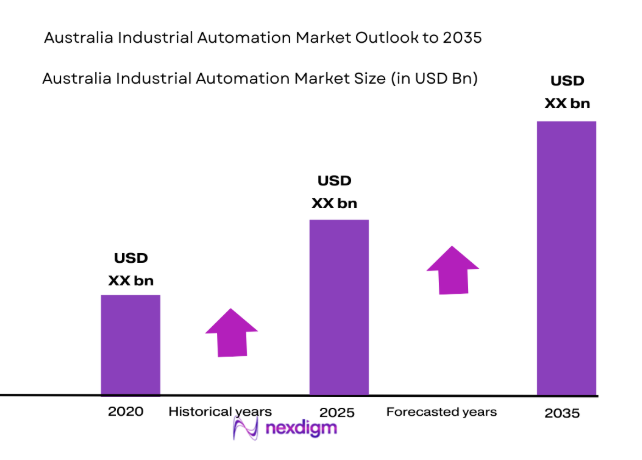
The industrial automation market is valued at approximately USD ~ billion, based on a recent historical assessment, driven by the growing demand for automation in manufacturing industries to enhance operational efficiency and reduce costs. Technological advancements in robotics, AI, and IoT are pivotal in accelerating this market’s growth. Increased adoption of advanced automation solutions, including industrial robots and AI-driven analytics, is expected to significantly contribute to the market’s expansion, supported by governments and businesses prioritizing automation for productivity gains.
Countries like Australia are witnessing a surge in industrial automation, particularly in cities such as Melbourne and Sydney, where manufacturing facilities are increasingly integrating automation technologies. The dominance of these regions is largely attributed to strong infrastructure development, government incentives, and the focus on transforming traditional industries through advanced automation solutions. Australia’s manufacturing sectors, including automotive and pharmaceuticals, continue to drive demand for automation technologies, solidifying the country’s role as a leader in this field.
Market Segmentation
By Product Type
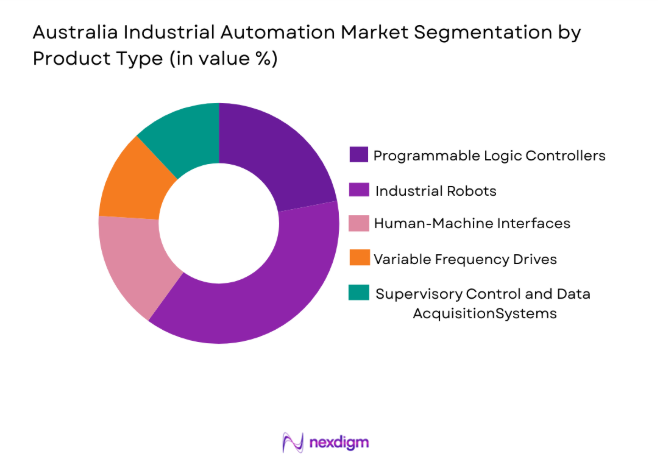
The industrial automation market is segmented by product type into programmable logic controllers (PLCs), industrial robots, human-machine interfaces (HMIs), variable frequency drives (VFDs), and supervisory control and data acquisition (SCADA) systems. Recently, industrial robots have dominated the market due to increased demand across manufacturing sectors for precision, efficiency, and flexibility in operations. The surge in automation adoption for repetitive and hazardous tasks, coupled with technological advancements in robotics, has made industrial robots the most sought-after automation solution in various industries.
By Platform Type
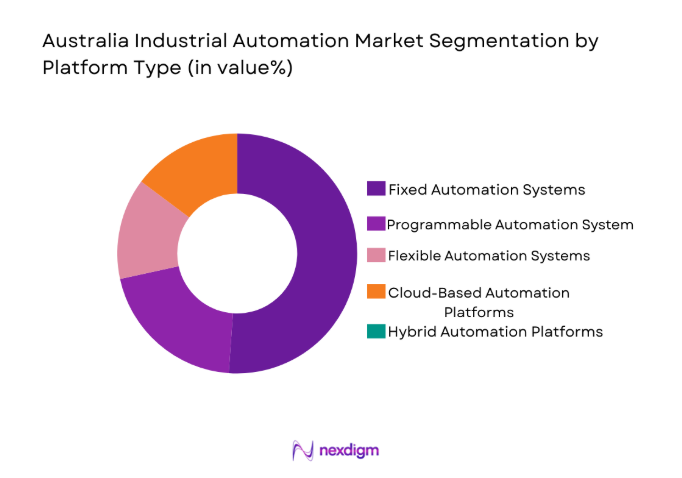
The market is segmented by platform type into fixed automation systems, programmable automation systems, flexible automation systems, cloud-based automation platforms, and hybrid automation platforms. Recently, fixed automation systems have been dominant due to their ability to efficiently perform high-volume production tasks without the need for frequent changes in the setup. The demand for these systems has surged as manufacturers seek reliable and cost-effective solutions for large-scale, repetitive processes, which has established fixed automation systems as a cornerstone in the industrial automation landscape.
Competitive Landscape
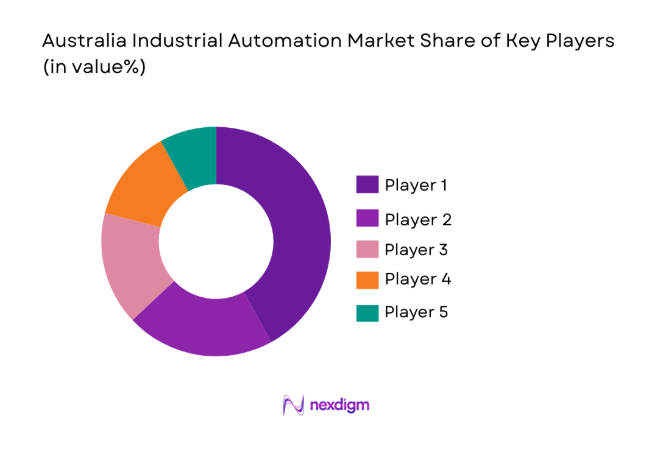
The industrial automation market is highly competitive, with several global players driving technological innovation and consolidation. Major players dominate the market, providing cutting-edge automation solutions across various sectors. The presence of large multinational corporations and their investments in R&D continue to shape the landscape, fostering competitive dynamics and enhancing market growth. Additionally, regional players have also carved out a strong presence by focusing on specific industrial verticals, creating a diversified competitive environment.
| Company Name | Establishment Year | Headquarters | Technology Focus | Market Reach | Key Products | Revenue (USD) | Automation Technologies |
| Siemens AG | 1847 | Germany | ~ | ~ | ~ | ~ | ~ |
| Rockwell Automation | 1903 | USA | ~ | ~ | ~ | ~ | ~ |
| ABB Ltd | 1988 | Switzerland | ~ | ~ | ~ | ~ | ~ |
| Mitsubishi Electric | 1921 | Japan | ~ | ~ | ~ | ~ | ~ |
| Honeywell International | 1906 | USA | ~ | ~ | ~ | ~ | ~ |
Australia Industrial Automation Market Analysis
Growth Drivers
Technological Advancements in Robotics
The growth of industrial automation is significantly driven by advancements in robotics, with artificial intelligence (AI) and machine learning playing a crucial role. These technologies have enabled robots to perform a broader array of tasks with greater precision, flexibility, and efficiency. This has made robotics an essential component in manufacturing sectors, including automotive, electronics, and consumer goods. Industries are increasingly leveraging robots for repetitive, hazardous, and complex tasks, leading to higher productivity and safety standards. As robots become more cost-effective, with ongoing improvements in performance, industries are increasingly adopting these solutions, further fueling the growth of the industrial automation market. In addition, robots’ integration into broader systems for seamless operations enhances efficiency in production lines, boosting the market’s momentum. As the market for automation continues to expand, new robot models offering enhanced performance and greater adaptability are expected to drive sustained growth.
Government Support for Industry 4.0
Another key growth driver for industrial automation is the increasing government support for the transition to Industry 4.0. Governments across Australia are offering financial incentives, grants, and funding to encourage businesses to adopt automation technologies to improve productivity, sustainability, and energy efficiency. These initiatives are driving manufacturers to integrate advanced automation systems into their operations, particularly those focused on smart manufacturing technologies. Australian government efforts are also aligning with broader national goals aimed at improving the global competitiveness of the country’s manufacturing sector. These initiatives include programs designed to help businesses modernize their facilities and implement cutting-edge solutions like AI, robotics, and the Internet of Things (IoT). The push for automation not only facilitates the modernization of manufacturing operations but also contributes to Australia’s goal of becoming a global leader in smart manufacturing, further driving market growth.
Market Challenges
High Initial Capital Investment
One of the most significant challenges in adopting industrial automation is the high initial capital investment required to implement advanced systems, particularly in industries with tight budgets. Automation technologies, such as robotics and AI-driven solutions, often involve substantial upfront costs for equipment, installation, and training, making it difficult for small and medium enterprises (SMEs) to integrate these technologies. Although the long-term benefits of automation, such as increased efficiency, reduced labor costs, and higher productivity, are well-established, the financial burden of initial investments can deter many businesses from adopting automation solutions. Overcoming this financial barrier is essential to unlocking broader adoption, especially in industries that operate on narrow profit margins. Governments and industry leaders must explore innovative financing models and incentives that will allow smaller businesses to benefit from industrial automation without compromising their financial health.
Integration Complexity and Workforce Skills Gap
The complexity of integrating new automation technologies with existing infrastructure is another major challenge for industries looking to implement industrial automation. Many businesses, particularly those with outdated or legacy systems, face difficulties in ensuring seamless integration between traditional and modern technologies. The customization of automation solutions to fit specific production processes can also be a time-consuming and resource-intensive task. Furthermore, there is an increasing gap in the availability of skilled workers capable of managing and operating these advanced systems. As industrial automation technologies become more sophisticated, the demand for highly skilled professionals, such as automation engineers and robotics specialists, continues to outpace supply. This skills gap hinders the speed at which automation technologies are adopted across industries, especially in regions where educational programs and training centers are not adequately preparing the workforce for the demands of an automated manufacturing environment. Bridging this gap will be critical to accelerating the transition to a fully automated industrial landscape.
Opportunities
Emerging Demand for Autonomous Mobile Robots (AMRs)
Autonomous mobile robots (AMRs) are becoming increasingly popular within the industrial automation market, particularly in warehouses and distribution centers. These robots are designed to perform material handling tasks autonomously, without the need for human intervention, and they are proving to be highly effective in optimizing logistics operations. AMRs are highly flexible, able to navigate dynamic environments and avoid obstacles, making them suitable for a variety of applications in industries like logistics, manufacturing, and e-commerce. Their efficiency in streamlining warehouse operations, reducing human labor, and enhancing safety is driving a surge in demand for these robots. As the global e-commerce market continues to grow, so does the need for efficient supply chain management and rapid product delivery, positioning AMRs as a key solution for businesses aiming to meet this demand. The widespread adoption of AMRs is expected to continue to expand, making them a pivotal growth opportunity for the industrial automation market in Australia.
Expansion of Smart Manufacturing Initiatives
The increasing adoption of smart manufacturing technologies presents a significant opportunity for the industrial automation market. Smart manufacturing, which integrates the Internet of Things (IoT), big data analytics, AI, and automation systems, allows manufacturers to enhance operational efficiency, reduce downtime, and optimize production processes in real-time. By leveraging data from interconnected devices, manufacturers can monitor their operations continuously, predict maintenance needs, and prevent equipment failures before they occur. This technology not only increases production output but also reduces operational costs, making it an attractive solution for industries such as automotive, consumer goods, and pharmaceuticals. The demand for smart manufacturing solutions is growing rapidly, driven by the need for more flexible and efficient production systems. As more manufacturers seek to integrate advanced technologies into their operations, the market for industrial automation is expected to see continued expansion, with companies looking for innovative solutions that can help them remain competitive in an increasingly complex global marketplace.
Future Outlook
The future of the industrial automation market appears promising, with expected advancements in robotics, AI, and IoT playing pivotal roles in driving the next phase of growth. Technological developments, such as the increased integration of AI for process optimization, are anticipated to create new avenues for automation adoption across industries. Additionally, regulatory support for sustainable manufacturing practices and the growing demand for smarter, more efficient manufacturing operations will fuel further growth. Over the next five years, these factors, combined with continued innovation in automation technologies, are expected to lead to increased market penetration and growth in both established and emerging markets.
Major Players
- Siemens AG
- Rockwell Automation
- ABB Ltd
- Mitsubishi Electric
- Honeywell International
- Emerson Electric
- Yokogawa Electric Corporation
- Omron Corporation
- Fanuc Corporation
- Panasonic Corporation
- KUKA AG
- Harman International
- Bosch Rexroth
- Keyence Corporation
- Schneider Electric
Key Target Audience
- Investments and venture capitalist firms
- Government and regulatory bodies
- OEMs (Original Equipment Manufacturers)
- Industrial product manufacturers
- Automation solution providers
- System integrators
- Large-scale manufacturers
Research Methodology
Step 1: Identification of Key Variables
Identifying critical factors affecting the industrial automation market, including technological advancements, government policies, and market trends.
Step 2: Market Analysis and Construction
Conducting a comprehensive market analysis using both primary and secondary data sources, focusing on market size, growth drivers, and segmentation.
Step 3: Hypothesis Validation and Expert Consultation
Validating hypotheses through expert interviews and consultations with industry leaders to ensure accuracy and relevance of findings.
Step 4: Research Synthesis and Final Output
Synthesizing data from various sources and formulating the final research report, ensuring all relevant factors are accurately represented.

- Executive Summary
- Research Methodology (Definitions, Scope, Industry Assumptions, Market Sizing Approach, Primary & Secondary Research Framework, Data Collection & Verification Protocol, Analytic Models & Forecast Methodology, Limitations & Research Validity Checks)

- Market Definition and Scope
- Value Chain & Stakeholder Ecosystem
- Regulatory / Certification Landscape
- Sector Dynamics Affecting Demand
- Strategic Initiatives & Infrastructure Growth

- Growth Drivers
Increasing Demand for Productivity and Efficiency
Rising Adoption of IoT and AI in Automation
Government Support for Manufacturing Innovation - Market Challenges
High Initial Capital Investment
Complexity of Integrating New Technologies
Skilled Workforce Shortage - Market Opportunities
Expansion of Smart Factories
Adoption of Advanced Robotics in Manufacturing
Growth in Automation Demand from SMEs - Trends
Integration of AI and Machine Learning in Automation
Rise in Demand for Autonomous Mobile Robots - Government Regulations
- SWOT Analysis
- Porter’s Five Forces

- By Market Value, 2020-2025
- By Installed Units, 2020-2025
- By Average System Price, 2020-2025
- By System Complexity Tier, 2020-2025

- By System Type (In Value%)
Programmable Logic Controllers (PLCs)
Industrial Robots
Human-Machine Interfaces (HMIs)
Variable Frequency Drives (VFDs)
Supervisory Control and Data Acquisition (SCADA) Systems - By Platform Type (In Value%)
Fixed Automation Systems
Programmable Automation Systems
Flexible Automation Systems
Cloud-Based Automation Platforms
Hybrid Automation Platforms - By Fitment Type (In Value%)
On-premise Solutions
Cloud-based Solutions
Hybrid Solutions
Integrated Solutions - By End User Segment (In Value%)
Automotive Manufacturing
Food & Beverage Processing
Oil & Gas Industry
Pharmaceutical Manufacturing

- Market Share Analysis
- Cross Comparison Parameters (System Type, Platform Type, Procurement Channel, End User Segment, Fitment Type, Technology Adoption, Manufacturing Complexity)
- SWOT Analysis of Key Competitors
- Pricing & Procurement Analysis
- Key Players
Siemens AG
Rockwell Automation
ABB Ltd
Schneider Electric
Mitsubishi Electric
Honeywell International
Emerson Electric
Yokogawa Electric Corporation
Omron Corporation
Fanuc Corporation
Panasonic Corporation
KUKA AG
Harman International
Bosch Rexroth
Keyence Corporation

- Increasing Automation in Automotive Manufacturing
- Pharmaceutical Industry’s Shift Towards Automation
- Rising Demand for Automation in Food & Beverage
- Adoption of Automation Technologies by SMEs

- Forecast Market Value, 2026-2035
- Forecast Installed Units, 2026-2035
- Price Forecast by System Tier, 2026-2035
- Future Demand by Platform, 2026-2035


 Request a Sample
 Ask for Customization
 Get a Quote
 Enquire Now