

 Download PDF
 Download PDF
Market Overview
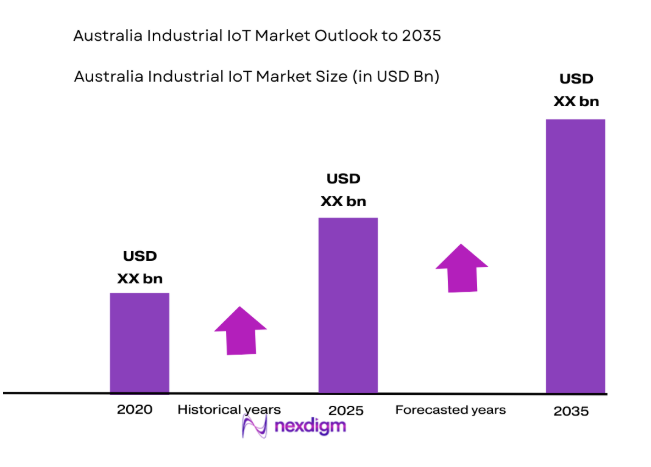
The Australia Industrial IoT market is valued at USD ~ billion, driven primarily by the increasing adoption of automation and smart technologies in manufacturing, energy, and infrastructure sectors. Technological advancements in connectivity, AI, and machine learning have been critical in shaping the market. Demand for more efficient, data-driven operations continues to surge, with enterprises embracing the Internet of Things (IoT) to improve productivity, reduce costs, and optimize their operations across multiple industries. The government’s push for smart infrastructure and digital transformation further accelerates market growth.
Australia’s industrial hubs, such as Sydney, Melbourne, and Brisbane, lead the market due to their robust infrastructure, high-tech manufacturing facilities, and governmental support for digital innovation. These cities are major centers for smart manufacturing, energy management, and automation projects. The presence of leading tech firms and research institutions in these areas fosters innovation, while significant investments in the local economy and a supportive regulatory environment make Australia an attractive destination for industrial IoT technologies. These factors, along with the increasing focus on sustainability, contribute to their dominance in the market.
Market Segmentation
By Product Type
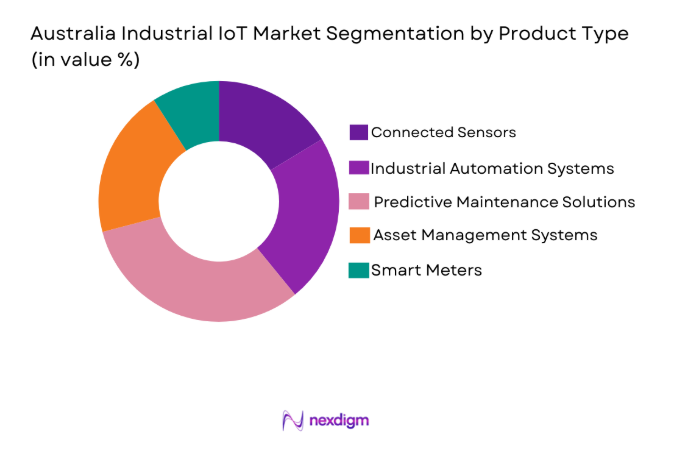
Australia Industrial IoT market is segmented by product type into connected sensors, industrial automation systems, predictive maintenance solutions, asset management systems, and smart meters. Recently, predictive maintenance solutions have gained a dominant market share due to the growing demand for proactive equipment monitoring and failure prevention. These solutions help industries reduce unplanned downtime and improve operational efficiency by leveraging real-time data and analytics. The need for reliable performance across industries such as manufacturing, energy, and transportation has driven the significant adoption of predictive maintenance technologies.
By Platform Type
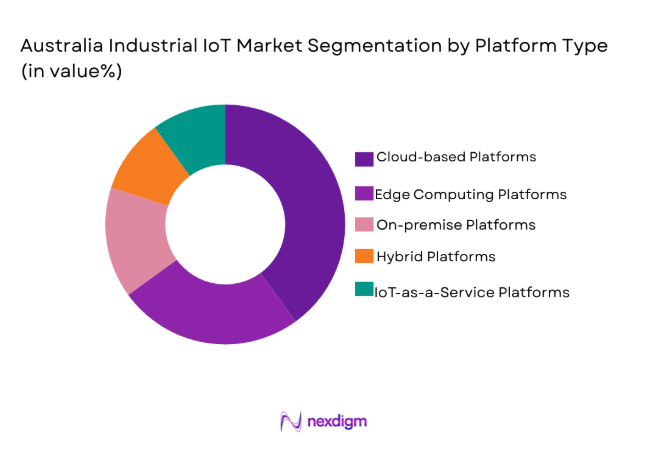
Australia Industrial IoT market is segmented by platform type into cloud-based platforms, edge computing platforms, on-premise platforms, hybrid platforms, and IoT-as-a-Service platforms. Recently, cloud-based platforms have gained a dominant market share due to their scalability, ease of integration, and cost-effectiveness. Cloud platforms enable businesses to store, manage, and analyze large volumes of data, making them ideal for industries looking to implement IoT solutions without the need for significant on-site infrastructure. The flexibility and accessibility of cloud platforms have driven their adoption, particularly in sectors like manufacturing and energy, where real-time data analysis and monitoring are crucial for operational efficiency.
Competitive Landscape
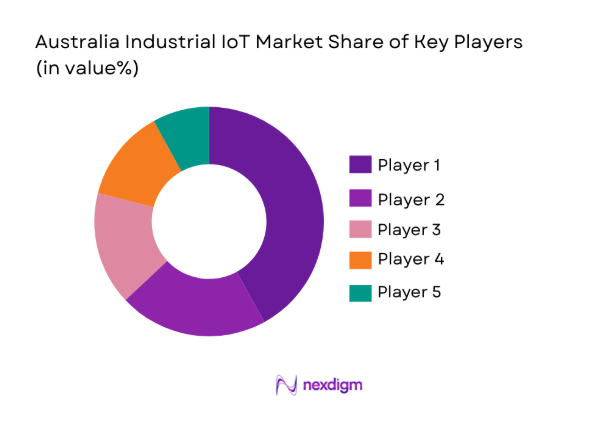
The competitive landscape in the Australia Industrial IoT market is characterized by both established players and emerging tech companies. Major players are actively investing in innovative solutions to maintain their competitive edge. Consolidation trends are evident as companies look to expand their capabilities, particularly in AI, machine learning, and edge computing, to stay ahead of the competition. Partnerships, acquisitions, and collaborations with government bodies and other industries are also shaping the market dynamics.
| Company Name | Establishment Year | Headquarters | Technology Focus | Market Reach | Key Products | Revenue (USD Billion) | Additional Market-Specific Parameter |
| Siemens | 1847 | Germany | ~ | ~ | ~ | ~ | ~ |
| Honeywell | 1906 | USA | ~ | ~ | ~ | ~ | ~ |
| Cisco Systems | 1984 | USA | ~ | ~ | ~ | ~ | ~ |
| ABB | 1883 | Switzerland | ~ | ~ | ~ | ~ | ~ |
| Schneider Electric | 1836 | France | ~ | ~ | ~ | ~ | ~ |
Australia Industrial IoT Market Analysis
Growth Drivers
Technological Advancements in Connectivity
The rapid advancement of connectivity technologies, particularly 5G and low-power wide-area networks (LPWAN), has greatly improved the performance and scalability of IoT devices in industrial environments. These technologies allow businesses to achieve faster data transmission, lower latency, and improved security, making them a critical enabler of Industrial IoT applications. As connectivity continues to improve, industries are increasingly adopting IoT solutions for enhanced data collection and real-time decision-making. Enhanced connectivity supports the integration of IoT devices into existing infrastructure, fostering seamless automation and operational efficiency across sectors like manufacturing, energy, and logistics. As a result, the demand for industrial IoT solutions has surged, positioning connectivity as a primary growth driver in the Australian market. Moreover, the expanding coverage of 5G networks enables IoT applications that require real-time communication, such as autonomous vehicles and smart grids, further accelerating the adoption of industrial IoT solutions. These advancements are creating new opportunities for businesses to innovate and optimize their operations.
Government Investment in Digital Transformation
The Australian government has made significant investments in digital transformation initiatives across various industries, particularly manufacturing, energy, and infrastructure. These initiatives are aimed at enhancing competitiveness, improving sustainability, and fostering innovation through the integration of digital technologies. Government-backed programs such as the “Smart Cities Plan” and investments in smart grid technology have accelerated the adoption of Industrial IoT solutions in critical sectors. Additionally, the government has introduced various funding schemes and incentives to encourage businesses to adopt IoT technologies for improving productivity and sustainability. This strong governmental support is driving the growth of the Industrial IoT market in Australia, as industries leverage these incentives to implement IoT solutions that streamline operations, enhance efficiency, and reduce costs. The focus on smart infrastructure and digitalization of industrial processes aligns with the government’s broader vision to build a technologically advanced and sustainable economy. As a result, these initiatives are expected to continue to boost the market’s growth trajectory in the coming years.
Market Challenges
High Initial Investment Costs
One of the major challenges facing the adoption of Industrial IoT solutions in Australia is the high initial cost of implementing IoT infrastructure. For many businesses, particularly small and medium-sized enterprises (SMEs), the upfront costs associated with purchasing IoT devices, sensors, and the necessary network infrastructure can be prohibitively expensive. While IoT solutions offer long-term operational savings, the initial capital outlay required for deployment often deters companies from adopting these technologies. The complexity of integrating IoT systems into existing infrastructure, along with the need for skilled labor to manage and operate these systems, adds to the overall investment burden. As a result, businesses are often hesitant to invest in industrial IoT, particularly in industries with tight budgets or uncertain ROI. This challenge remains a significant barrier to widespread IoT adoption, as companies weigh the potential benefits against the costs of implementation. For the market to expand further, it will be necessary for businesses to see clear financial incentives and long-term value in their investment.
Data Privacy and Security Concerns
With the proliferation of IoT devices in industrial environments, ensuring the privacy and security of the data generated by these devices is becoming increasingly critical. Industrial IoT systems handle sensitive data related to operations, equipment, and personnel, making them prime targets for cyber-attacks. As more devices become connected to the internet, the attack surface for potential cyber threats increases, putting businesses at risk of data breaches, ransomware attacks, and other forms of cybercrime. Protecting these networks and ensuring that IoT systems are secure from external threats is a complex and ongoing challenge for organizations adopting these technologies. Many businesses struggle with developing comprehensive cybersecurity strategies for IoT systems, particularly in sectors with legacy infrastructure that may not be designed with modern security standards in mind. As a result, addressing data privacy and security concerns is essential for the continued growth and adoption of Industrial IoT solutions in Australia.
Opportunities
Rising Demand for Predictive Maintenance
As industries increasingly look to optimize operational efficiency and reduce downtime, predictive maintenance has emerged as one of the most significant opportunities within the Industrial IoT market. Predictive maintenance leverages IoT sensors and data analytics to monitor equipment health and predict failures before they occur, allowing businesses to schedule maintenance proactively. This reduces the risk of unexpected breakdowns and minimizes costly downtime, leading to significant cost savings. As industries like manufacturing, oil and gas, and mining seek to improve equipment reliability and extend asset life, the demand for predictive maintenance solutions is growing rapidly. By adopting IoT-enabled predictive maintenance systems, businesses can achieve more reliable and efficient operations, resulting in improved productivity and a stronger competitive position. This trend is expected to continue as more companies realize the long-term benefits of predictive maintenance, making it a key opportunity for the Australian Industrial IoT market.
Expansion of Smart Manufacturing Initiatives
The ongoing transformation of traditional manufacturing processes into smart manufacturing systems presents a major opportunity for the Industrial IoT market in Australia. Smart manufacturing involves the integration of IoT, automation, and data analytics to optimize production processes, improve quality control, and increase efficiency. With the Australian government’s emphasis on boosting the manufacturing sector’s competitiveness, businesses are increasingly adopting smart technologies to stay ahead of global competition. The adoption of IoT in manufacturing facilitates real-time monitoring of production lines, predictive maintenance, and process optimization, enabling manufacturers to reduce costs and improve product quality. As more manufacturers adopt smart manufacturing technologies, the demand for Industrial IoT solutions is expected to rise. This shift towards smarter, more automated manufacturing systems is a major opportunity for IoT providers to expand their market share and deliver solutions that drive efficiency, sustainability, and innovation within Australia’s industrial sector.
Future Outlook
The future outlook of the Australia Industrial IoT market indicates robust growth driven by ongoing technological advancements and increased government support for digital transformation. Key trends such as AI integration, automation, and predictive maintenance are expected to propel market expansion. Continued demand for smart infrastructure, coupled with increasing investment in IoT-enabled solutions, will contribute significantly to the sector’s development.
Major Players
- Siemens
- Honeywell International
- Cisco Systems
- ABB
- Schneider Electric
- Rockwell Automation
- General Electric
- Emerson Electric
- Mitsubishi Electric
- Bosch Rexroth
- PTC
- SAP
- IBM
- Microsoft
- Intel
Key Target Audience
- Investments and venture capitalist firms
- Government and regulatory bodies
- Manufacturing enterprises
- Energy sector firms
- Infrastructure developers
- Logistics companies
- Technology innovators
Research Methodology
Step 1: Identification of Key Variables
Define critical market factors and parameters influencing Industrial IoT adoption.
Step 2: Market Analysis and Construction
Analyze historical data and create a detailed market framework.
Step 3: Hypothesis Validation and Expert Consultation
Validate assumptions with expert insights and industry consultations.
Step 4: Research Synthesis and Final Output
Consolidate findings into a comprehensive market analysis report.

- Executive Summary
- Research Methodology (Definitions, Scope, Industry Assumptions, Market Sizing Approach, Primary & Secondary Research Framework, Data Collection & Verification Protocol, Analytic Models & Forecast Methodology, Limitations & Research Validity Checks)

- Market Definition and Scope
- Value Chain & Stakeholder Ecosystem
- Regulatory / Certification Landscape
- Sector Dynamics Affecting Demand
- Strategic Initiatives & Infrastructure Growth

- Growth Drivers
Technological Advancements in Connectivity
Increased Adoption of Automation Across Industries
Government Support for Smart Infrastructure Projects - Market Challenges
High Initial Investment Costs
Integration Complexities with Legacy Systems
Data Privacy and Security Concerns - Market Opportunities
Rising Demand for Predictive Maintenance
Growth of Smart Manufacturing Initiatives
Development of 5G Networks to Enhance IoT Capabilities - Trends
Integration of AI and Machine Learning in Industrial IoT
Rise in Demand for Real-time Data Analytics - Government Regulations
Data Protection and Privacy Regulations
IoT Security Standards
Government Funding for Industry 4.0 Initiatives - SWOT Analysis
- Porter’s Five Forces

- By Market Value, 2020-2025
- By Installed Units, 2020-2025
- By Average System Price, 2020-2025
- By System Complexity Tier, 2020-2025

- By System Type (In Value%)
Industrial Automation Systems
Predictive Maintenance Systems
Asset Tracking & Management Systems
Connected Worker Solutions
Industrial Security Solutions - By Platform Type (In Value%)
Cloud-based Platforms
Edge Computing Platforms
On-premise Platforms
Hybrid Platforms
Industrial IoT-as-a-Service Platforms - By Fitment Type (In Value%)
On-premise Solutions
Cloud-based Solutions
Hybrid Solutions
Integrated Solutions - By End User Segment (In Value%)
Manufacturing
Energy & Utilities
Transportation & Logistics
Oil & Gas

- Market Share Analysis
- Cross Comparison Parameters (System Type, Platform Type, Procurement Channel, End User Segment, Fitment Type, Region, Technology)
- SWOT Analysis of Key Competitors
- Pricing & Procurement Analysis
- Key Players
Siemens
Honeywell International
Cisco Systems
General Electric
Rockwell Automation
Schneider Electric
ABB
Mitsubishi Electric
Emerson Electric
Bosch Rexroth
PTC
SAP
IBM
Microsoft
Intel

- Manufacturers Increasing Investments in Automation
- Energy Sector’s Push for Smart Grid Solutions
- Transportation Sector’s Adoption of Smart Logistics Solutions
- Government’s Role in Promoting IoT in Infrastructure

- Forecast Market Value, 2026-2035
- Forecast Installed Units, 2026-2035
- Price Forecast by System Tier, 2026-2035
- Future Demand by Platform, 2026-2035


 Request a Sample
 Ask for Customization
 Get a Quote
 Enquire Now