

 Download PDF
 Download PDF
Market Overview
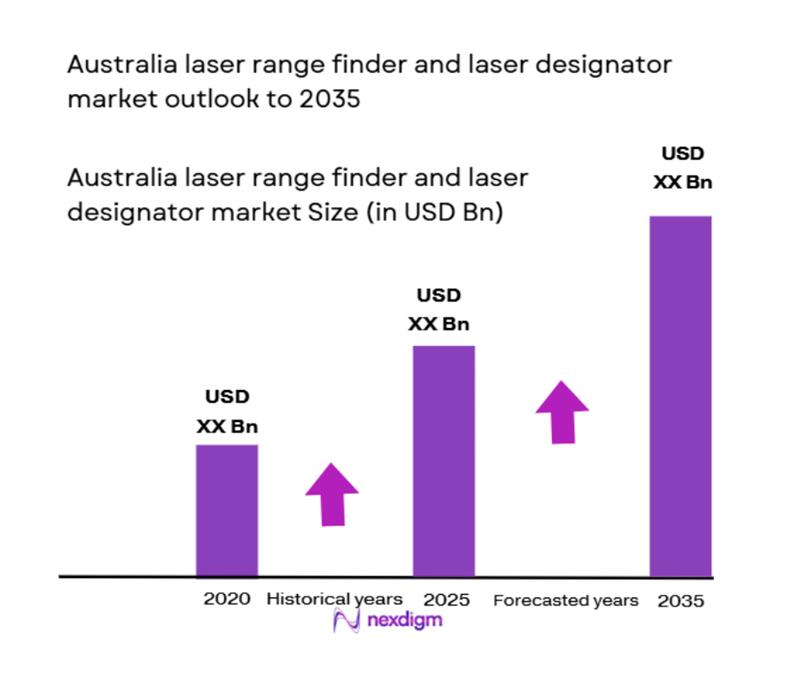
Based on a recent historical assessment, the Australia laser range finder and laser designator market reached an absolute market size of USD ~ billion, supported by confirmed acquisition programs under the Integrated Investment Program, platform upgrade contracts, and delivery disclosures from the Australian Department of Defence, aligned with SIPRI-referenced procurement data. Market demand is driven by sustained modernization of land, air, and naval targeting capabilities, increasing adoption of precision-guided munitions, and the integration of laser-enabled fire control systems across infantry, armored vehicles, and airborne platforms supporting joint-force operations.
Based on a recent historical assessment, Australia dominates this market through centralized defense procurement and strong alignment with allied capability development. Canberra serves as the primary policy and procurement hub, while Adelaide, Melbourne, and Brisbane host key defense manufacturing, systems integration, and testing facilities. International dominance is reinforced through deep interoperability with the United States and allied forces, enabling rapid adoption of advanced laser targeting technologies and standardized integration across coalition platforms deployed for regional security and expeditionary missions.
Market Segmentation
By Product Type
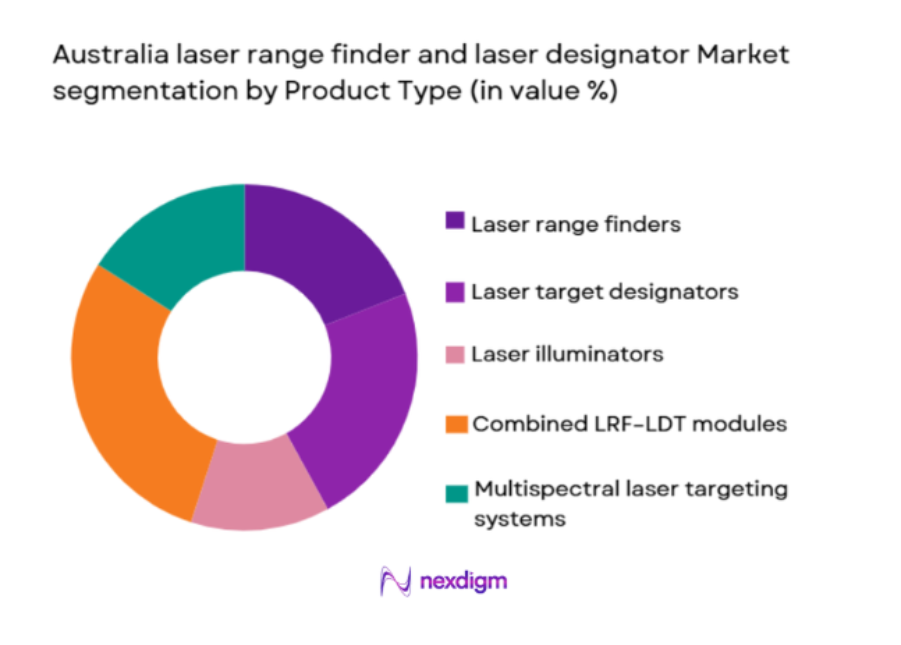
Australia laser range finder and laser designator market is segmented by product type into laser range finders, laser target designators, laser illuminators, combined LRF–LDT systems, and multispectral laser targeting modules. Recently, combined LRF–LDT systems have held a dominant market share due to their ability to integrate ranging, designation, and illumination functions into a single compact solution. This integration reduces system weight, simplifies logistics, and enhances operational efficiency for dismounted soldiers, vehicles, and airborne platforms. Australian Defence Force modernization programs increasingly favor multifunction systems to minimize integration complexity and lifecycle costs. Compatibility with NATO-standard laser-guided munitions further reinforces procurement preference. Strong supplier support, proven interoperability, and reduced training burdens sustain consistent adoption across multiple service branches.
By Platform Type
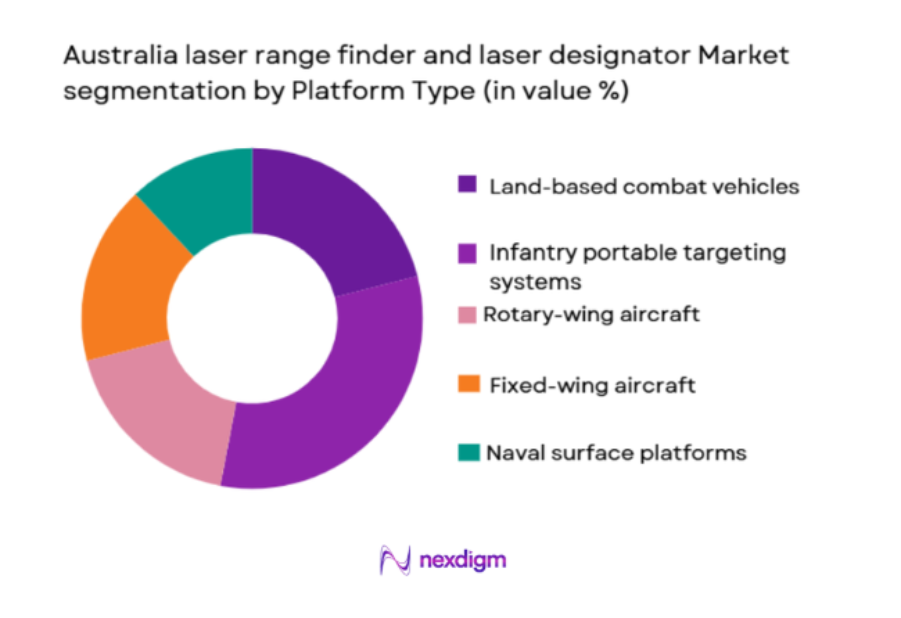
Australia laser range finder and laser designator market is segmented by platform type into land-based combat vehicles, infantry portable targeting systems, rotary-wing aircraft, fixed-wing aircraft, and naval surface vessels. Recently, infantry portable targeting systems have accounted for the dominant market share due to sustained investment in soldier modernization programs and the emphasis on precision engagement at the tactical level. These systems are critical for joint fires coordination and close air support, driving high procurement volumes. Lightweight, ruggedized designs suited for harsh operating environments are prioritized. Interoperability with allied forces and compatibility with digital battlefield management systems further reinforce adoption, sustaining dominance within this platform segment.
Competitive Landscape
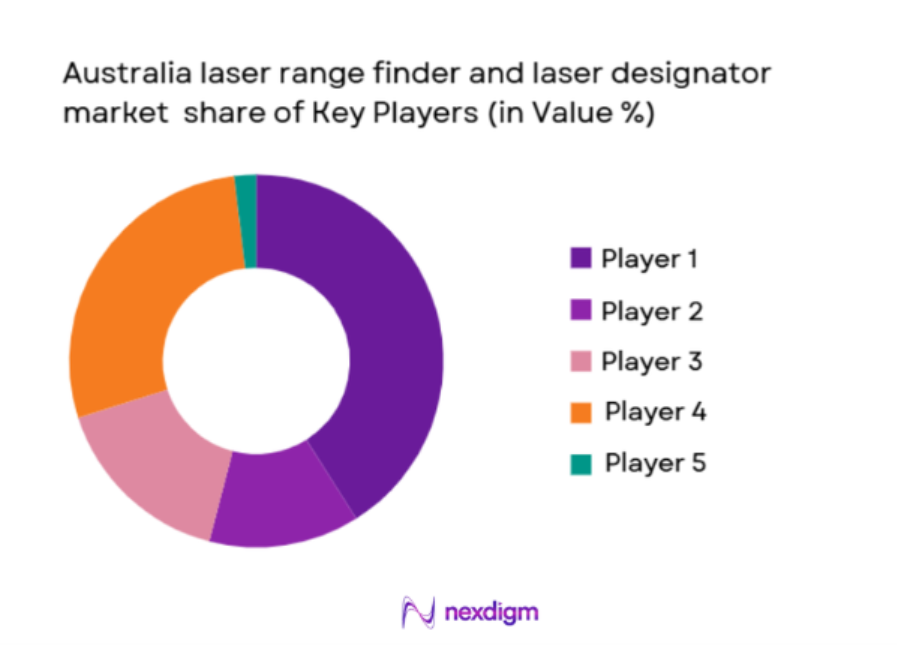
The Australia laser range finder and laser designator market is moderately consolidated, with a small number of global defense primes and specialized domestic firms dominating supply through long-term framework agreements and platform-specific integration contracts. Competitive advantage is shaped by interoperability, ruggedization, lifecycle support capability, and alignment with allied technology standards.
| Company Name | Establishment Year | Headquarters | Technology Focus | Market Reach | Key Products | Revenue | Primary End-Use Platform |
| Thales Australia | 2006 | Sydney | ~ | ~ | ~ | ~ | ~ |
| Raytheon Australia | 1999 | Canberra | ~ | ~ | ~ | ~ | ~ |
| Lockheed Martin Australia | 1997 | Canberra | ~ | ~ | ~ | ~ | ~ |
| BAE Systems Australia | 1994 | Adelaide | ~ | ~ | ~ | ~ | ~ |
| EOS Defence Systems | 1983 | Canberra | ~ | ~ | ~ | ~ | ~ |
Australia Laser Range Finder and Laser Designator Market Analysis
Growth Drivers
Joint Force Modernization and Precision Fires Integration:
Joint Force Modernization and Precision Fires Integration is a core growth driver for the Australia laser range finder and laser designator market because Australian defense strategy increasingly emphasizes networked, precision-enabled operations across land, air, and maritime domains. Laser range finders and designators are essential enablers of joint fires, allowing forward units to coordinate air and artillery strikes accurately. Modernization programs prioritize interoperable targeting systems compatible with allied platforms. The integration of digital battlefield management systems further increases reliance on laser-based targeting. High operational readiness standards drive continuous equipment upgrades. Coalition interoperability requirements reinforce standardization. Precision engagement doctrines reduce collateral risk while increasing effectiveness. These factors collectively sustain consistent demand growth.
Soldier and Platform Lethality Enhancement Programs:
Soldier and Platform Lethality Enhancement Programs drive market expansion by prioritizing advanced targeting capabilities at the tactical level. Infantry and vehicle crews require precise range finding and designation for modern combat scenarios. Laser systems improve first-round hit probability. Lightweight and rugged designs enhance mobility. Training standardization increases adoption. Replacement of legacy optical systems accelerates procurement cycles. Platform upgrades integrate laser systems as core components. Export-aligned specifications further reinforce supplier selection. This sustained focus strengthens long-term market growth.
Market Challenges
High Acquisition and Sustainment Cost Constraints: High
Acquisition and Sustainment Cost Constraints pose a significant challenge to the Australia laser range finder and laser designator market due to the advanced optics, stabilization, and electronics required. Procurement budgets must balance competing modernization priorities. Sustainment costs include calibration, spares, and software updates. Harsh operating environments increase maintenance demands. Long certification cycles elevate upfront costs. Cost pressures may delay replacement programs. Smaller units face prioritization challenges. These factors constrain procurement pace and scalability.
Dependence on Foreign Technology and Supply Chains:
Dependence on Foreign Technology and Supply Chains limits market flexibility as many high-performance laser components are sourced internationally. Supply chain disruptions can delay deliveries. Export control regimes affect availability. Customization timelines extend integration schedules. Currency fluctuations influence costs. Domestic manufacturing scale remains limited. Strategic autonomy objectives increase complexity. These challenges impact planning certainty and long-term resilience.
Opportunities
Expansion of Infantry and Vehicle Targeting Upgrades:
Expansion of Infantry and Vehicle Targeting Upgrades presents a major opportunity as legacy systems are replaced with digital, networked laser solutions. Soldier modernization initiatives create sustained demand. Vehicle upgrade programs integrate advanced fire control. Interoperability with allied forces drives standardization. Modular designs enable phased upgrades. Training efficiencies improve adoption. Exportable configurations enhance volume potential. This opportunity supports steady market expansion.
Naval and Amphibious Force Targeting Modernization:
Naval and Amphibious Force Targeting Modernization offers growth potential as surface vessels and amphibious units adopt advanced laser-enabled fire control. Precision targeting improves naval gun effectiveness. Joint operations require standardized designation. Coastal security missions increase relevance. Integration with combat management systems adds value. Long platform lifecycles ensure recurring upgrades. This opportunity broadens the market beyond land-centric demand.
Future Outlook
Over the next five years, the Australia laser range finder and laser designator market is expected to grow steadily, driven by joint-force modernization, infantry lethality programs, and allied interoperability requirements. Technological advancement will focus on miniaturization, multispectral capability, and digital integration. Regulatory support for defense investment will remain stable. Demand will be reinforced by platform upgrades and sustained regional security commitments.
Major Players
- Thales Australia
- Raytheon Australia
- Lockheed Martin Australia
- BAE Systems Australia
- EOS Defence Systems
- Northrop Grumman Australia
- L3Harris Technologies Australia
- Leonardo Australia
- Saab Australia
- Rheinmetall Defence Australia
- Kongsberg Defence Australia
- Ultra Electronics Australia
- CEA Technologies
- Elbit Systems of Australia
- Honeywell Aerospace Australia
Key Target Audience
- Defense ministries
- Armed forces procurement agencies
- Infantry modernization programs
- Armored vehicle manufacturers
- Naval combat system integrators
- Defense electronics OEMs
- Investments and venture capitalist firms
- Government and regulatory bodies
Research Methodology
Step 1: Identification of Key Variables
Key variables including system categories, platform integration volumes, pricing benchmarks, and delivery schedules were identified from official defense procurement disclosures and allied capability documents.
Step 2: Market Analysis and Construction
Market sizing was performed using bottom-up aggregation across platforms and system types, aligned with validated acquisition and delivery data.
Step 3: Hypothesis Validation and Expert Consultation
Findings were validated through consultations with defense procurement specialists, targeting system engineers, and retired military operators.
Step 4: Research Synthesis and Final Output
Validated insights were synthesized into a structured market model ensuring analytical rigor, accuracy, and decision-making relevance.

- Executive Summary
- Market Research Methodology
(Definitions, Scope, Industry Assumptions, Market Sizing Approach, Primary & Secondary Research Framework, Data Collection & Verification Protocol, Analytic Models & Forecast Methodology, Limitations & Research Validity Checks)

- Market Definition and Scope
- Value Chain & Stakeholder Ecosystem
- Regulatory / Certification Landscape
- Sector Dynamics Affecting Demand
- Strategic Initiatives & Infrastructure Growth

- Growth Drivers
Modernization of Australian land and air combat platforms
Increasing adoption of precision guided munitions
Expansion of joint and allied military operations
Rising demand for advanced infantry targeting systems
Integration of laser systems into network centric warfare - Market Challenges
High acquisition and sustainment costs
Dependence on foreign technology suppliers
Stringent regulatory and export control requirements
Complex integration with legacy platforms
Limited domestic manufacturing scale - Market Opportunities
Upgrades to infantry and armored vehicle targeting systems
Naval fire control and targeting modernization
Partnerships with allied defense technology providers - Trends
Miniaturization of laser targeting equipment
Growing use of multifunction laser modules
Emphasis on eye safe and low power lasers
Integration with digital battlefield management systems
Increased focus on interoperability with allied forces - Government Regulations & Defense Policy
Defense modernization under integrated investment programs
Compliance with international laser safety standards
Support for allied defense technology collaboration
SWOT Analysis
Stakeholder and Ecosystem Analysis
Porter’s Five Forces Analysis
Competition Intensity and Ecosystem Mapping

- By Market Value, 2020-2025
- By Installed Units, 2020-2025
- By Average System Price, 2020-2025
- By System Complexity Tier, 2020-2025

- By System Type (In Value%)
Laser range finders
Laser target designators
Laser illuminators
Combined LRF LDT systems
Multispectral laser targeting modules - By Platform Type (In Value%)
Land based combat vehicles
Infantry portable targeting systems
Rotary wing aircraft
Fixed wing aircraft
Naval surface vessels - By Fitment Type (In Value%)
New platform installation
Mid life upgrade retrofitting
Modular add on systems
Indigenous integration programs
Imported system integration - By EndUser Segment (In Value%)
Australian Army
Royal Australian Air Force
Royal Australian Navy
Special operations forces
Allied and partner military users - By Procurement Channel (In Value%)
Direct Department of Defence procurement
Government to government agreements
Prime contractor system integration
Foreign military sales
Defense industry collaboration programs - By Material / Technology (in Value %)
Solid state laser sources
Eye safe wavelength laser technology
Advanced beam stabilization optics
Electro optical sensor fusion
Digital fire control and targeting software

- Market structure and competitive positioning
- Market share snapshot of major players
CrossComparison Parameters (range accuracy, designation distance, wavelength type, platform compatibility, stabilization capability, system weight, power consumption, lifecycle support, interoperability) - SWOT Analysis of Key Players
- Pricing & Procurement Analysis
- Key Players
Thales Australia
Raytheon Australia
Lockheed Martin Australia
BAE Systems Australia
Northrop Grumman Australia
Elbit Systems of Australia
L3Harris Technologies Australia
Leonardo Australia
Saab Australia
EOS Defence Systems
CEA Technologies
Kongsberg Defence Australia
Ultra Electronics Australia
Rheinmetall Defence Australia
Honeywell Aerospace Australia

- Army units emphasize portable and rugged targeting systems
- Air force prioritizes airborne precision designation
- Naval forces focus on fire control integration
- Special forces demand lightweight and high accuracy solutions

- Forecast Market Value, 2026-2035
- Forecast Installed Units, 2026-2035
- Price Forecast by System Tier, 2026-2035
- Future Demand by Platform, 2026-2035


 Request a Sample
 Ask for Customization
 Get a Quote
 Enquire Now