
 Download PDF
 Download PDF
Market Overview
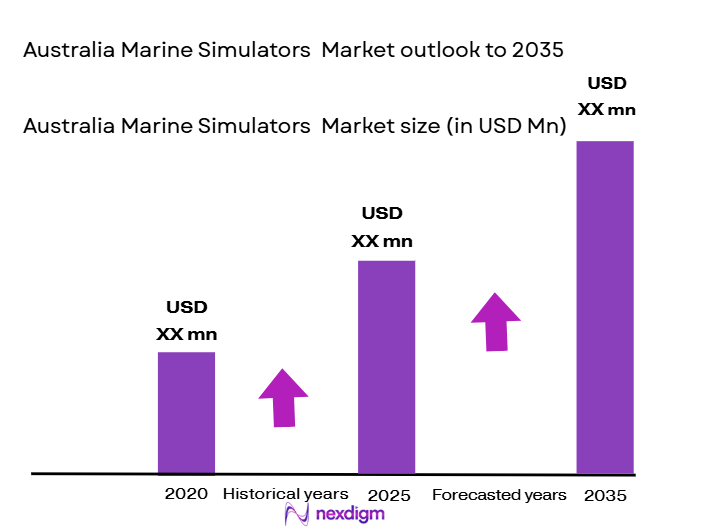
The Australian marine simulators market is valued at approximately USD ~ million in 2024, supported by the rapid digitalization and modernization of the maritime sector. The market is driven by the growing need for realistic, cost-effective training solutions in both the commercial and defense sectors. Marine simulators offer enhanced training capabilities, providing a safe environment for personnel to engage in complex maritime operations. The increasing maritime safety regulations and technological advancements are key contributors to the growth of this market, particularly with the rising adoption of full-mission simulators.
Key cities and countries contributing significantly to the market include Sydney, Brisbane, and Perth, as they are major hubs for maritime activities and have advanced maritime infrastructure. Australia’s robust defense sector, along with the increasing demand for training simulators in commercial shipping, places these cities at the forefront. The country’s stringent maritime safety regulations and focus on skilled labor development also contribute to the dominance of these regions in the marine simulators market.
Market Segmentation
By System Type
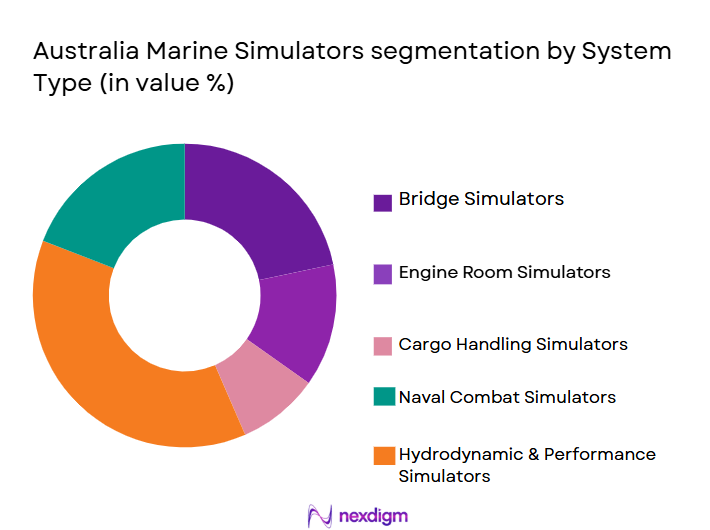
The Australian marine simulators market is segmented into various system types, with significant representation from bridge simulators, engine room simulators, and naval combat simulators. Among these, bridge simulators hold the largest market share in 2024. This is attributed to their broad application in both commercial and defense sectors for training in navigation, vessel handling, and safety protocols. These simulators provide high fidelity and realism, which are critical for preparing maritime professionals for real-world scenarios without the risks associated with traditional training.
By Platform Type
The market is also segmented by platform type, including full-mission simulators, desktop-based simulators, and networked simulators. Full-mission simulators dominate this segment, holding the largest market share in 2024. These systems offer highly immersive, realistic training experiences that simulate full-scale maritime operations. Their adoption is driven by the increasing demand for advanced, interactive training tools by naval forces and commercial shipping companies. Full-mission simulators are especially popular in the defense sector, where the need for tactical and strategic training in dynamic environments is paramount.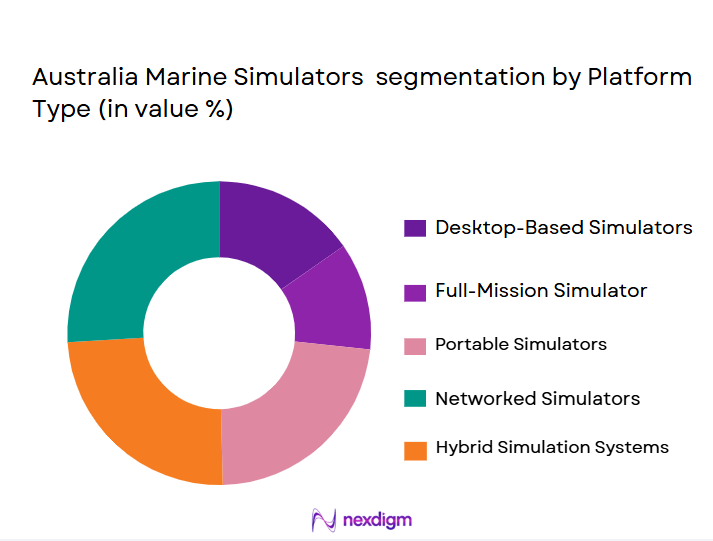
Competitive Landscape
The Australian marine simulators market is dominated by a few key players, including Kongsberg Gruppen, Wärtsilä, and Transas. These companies have a significant presence in both the commercial and defense sectors, owing to their established technologies, comprehensive service offerings, and strong global networks. The consolidation of these major players underscores their substantial influence over the market dynamics, ensuring continuous innovation and advancements in simulator technology.
| Company | Establishment Year | Headquarters | Technology Leadership | Customer Base | Product Portfolio | Global Reach | Revenue |
| Kongsberg Gruppen | 1814 | Norway | ~ | ~ | ~ | ~ | ~ |
| Wärtsilä | 1834 | Finland | ~ | ~ | ~ | ~ | ~ |
| Transas | 1984 | UK | ~ | ~ | ~ | ~ | ~ |
| VSTEP | 2001 | Netherlands | ~ | ~ | ~ | ~ | ~ |
| SimFlex | 2003 | UK | ~ | ~ | ~ | ~ | ~ |
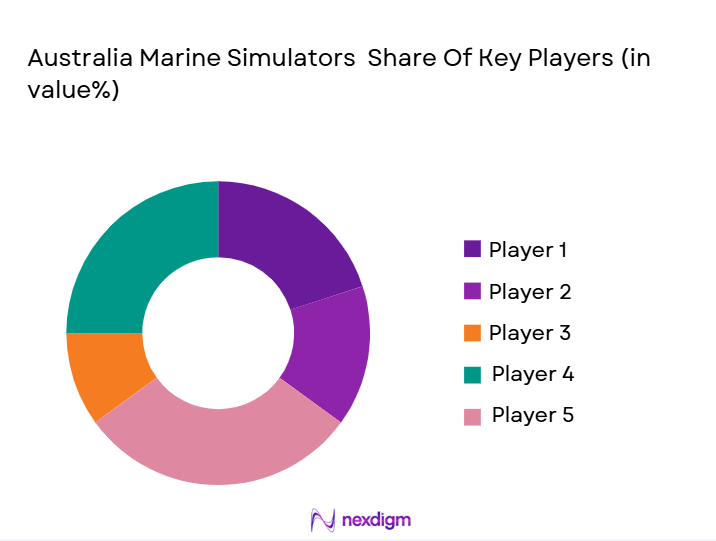
Australia marine simulators Market Dynamics
Growth Drivers
Increased maritime safety regulations leading to higher adoption of simulators
Stricter maritime safety regulations are encouraging the adoption of marine simulators, as they provide cost-effective, safe, and efficient training solutions. These simulators help meet the rigorous standards set by maritime authorities by offering realistic, hands-on training that improves safety protocols and operational preparedness.
Advances in simulation technology enabling more realistic training experiences
Advancements in simulation technologies, such as virtual reality (VR) and artificial intelligence (AI), have significantly enhanced the realism of training simulators. These technologies allow for highly interactive and immersive training environments, providing trainees with practical experience without the risks associated with live operations.
Market Challenges
High initial cost of simulators
One of the main challenges in the market is the high initial cost of marine simulators. These systems require significant investment, which can be a barrier for smaller training institutes or regional centers looking to upgrade their facilities with the latest simulation technologies.
Lack of infrastructure in remote regions affecting simulator installations
Australia’s remote regions often face challenges with installing and maintaining marine simulators due to insufficient infrastructure. These areas may lack the necessary resources or technical support, hindering the widespread adoption of simulators outside major cities and ports.
Market Opportunities
Expansion of offshore industries in Australia driving demand for specialized simulators
The expansion of offshore industries, particularly in energy and resource extraction, is driving demand for specialized simulators. These industries require highly specialized training for offshore personnel to handle complex operational tasks, which simulators can efficiently provide without the risks associated with real-world training.
Increasing government support for maritime safety initiatives
The Australian government is placing greater emphasis on maritime safety through stricter regulations and funding initiatives. This support is leading to the expansion of training programs that incorporate advanced simulators, further enhancing safety and operational effectiveness across both commercial and defense maritime sectors.
Future Outlook
Over the next ~ years, the Australian marine simulators market is expected to show robust growth driven by continuous government support, advancements in simulation technology, and increasing demand for eco-friendly and effective training solutions. The market is poised for expansion, supported by the need for enhanced maritime safety training, particularly in response to growing environmental regulations and technological advancements in virtual and augmented reality for training purposes.
Key Players in the Market
- Kongsberg Gruppen
- Wärtsilä
- Transas
- VSTEP
- SimFlex
- Furuno
- STADT
- MAREANO
- Naval Group
- Tactical Simulations
- BMT Group
- Australian Maritime Systems
- TSA Marine
- VEO
- Port of Brisbane
Key Target Audience
- Investment and venture capitalist firms
- Government and regulatory bodies (Australian Maritime Safety Authority, Department of Defence)
- Commercial shipping companies
- Naval defense agencies
- Offshore energy companies
- Marine training institutes
- Research institutions in maritime technology
- Shipbuilding and maintenance companies
Research Methodology
Step 1: Identification of Key Variables
The initial phase involves constructing an ecosystem map that includes key stakeholders within the Australian marine simulators market. This step relies on a comprehensive mix of secondary and primary research to gather data on system types, market trends, technological adoption, and user requirements.
Step 2: Market Analysis and Construction
Historical market data is compiled and analyzed, focusing on segments such as system types and platform types. We evaluate market penetration, system sales, and revenue generation based on customer demographics and regional demand.
Step 3: Hypothesis Validation and Expert Consultation
Market hypotheses are formed and validated through interviews with industry experts, including manufacturers, government representatives, and end-users. These consultations offer valuable insights into market dynamics and help refine estimates.
Step 4: Research Synthesis and Final Output
Direct engagement with marine simulator providers and key stakeholders is conducted to ensure data accuracy. Insights on consumer preferences, product performance, and technological developments are incorporated into the final report, providing a well-rounded analysis.

- Executive Summary
- Australia Marine Simulators Research Methodology
(Definitions, Scope, Industry Assumptions, Market Sizing Approach, Primary & Secondary Research Framework, Data Collection & Verification Protocol, Analytic Models & Forecast Methodology, Limitations & Research Validity Checks)

- Market Definition and Scope
- Value Chain & Stakeholder Ecosystem
- Regulatory / Certification Landscape
- Sector Dynamics Affecting Demand
- Strategic Initiatives & Infrastructure Growth

- Growth Drivers
Increased maritime safety regulations leading to higher adoption of simulators
Advances in simulation technology enabling more realistic training experiences
Growing demand for skilled workforce in maritime and naval sectors - Market Challenges
High initial cost of simulators
Lack of infrastructure in remote regions affecting simulator installations
Complexity in customizing simulators for different vessels - Market Opportunities
Expansion of offshore industries in Australia driving demand for specialized simulators
Increasing government support for maritime safety initiatives
Emergence of virtual reality and AI technologies in simulator design - Trends
Integration of AI and machine learning for adaptive training
Rise of cloud-based simulators for remote training solutions
Growth in hybrid simulation systems blending physical and virtual training
- Government Regulations & Defense Policy
FDI Rules
Offset Obligations
Export Licenses - SWOT Analysis (Capability Strengths, Cost Vulnerabilities, Competitive Pressures)
- Porter’s Five Forces (Procurement Power, Supplier Concentration, Substitutes, Barriers to Entry)

- By Market Value, 2020-2025
- By Installed Units, 2020-2025
- By Average System Price, 2020-2025
- By System Complexity Tier, 2020-2025

- By System Type (In Value%)
Bridge Simulators
Engine Room Simulators
Cargo Handling Simulators
Naval Combat Simulators
Hydrodynamic & Performance Simulators - By Platform Type (In Value%)
Desktop-Based Simulators
Full-Mission Simulators
Portable Simulators
Networked Simulators
Hybrid Simulation Systems - By Fitment Type (In Value%)
Shipyard Fitment
Educational Institution Fitment
Marine Training Centers Fitment
Research Institution Fitment
Naval Forces Fitment - By EndUser Segment (In Value%)
Commercial Shipping Companies
Naval Defense
Offshore Energy Companies
Marine Training Institutes
Regulatory Authorities - By Procurement Channel (In Value%)
Direct Sales
Channel Partners
Online Platforms
Distributors
Government Contracts

- Market Share Analysis
- Cross Comparison Parameters
(Market Share, Technology Adoption Rate, Product Customization, Price Sensitivity, Government Regulation) - SWOT Analysis of Key Competitors
- Pricing & Procurement Analysis
- Key Players
Kongsberg Gruppen
Wärtsilä
Transas
STADT
Furuno
MAREANO
VSTEP
Naval Group
SimFlex
VEO
Tactical Simulations
Port of Brisbane
BMT Group
Australian Maritime Systems
TSA Marine

- Commercial shipping companies increasingly investing in simulators for crew training
- Naval forces expanding simulator use for tactical training and strategic exercises
- Offshore energy companies adopting simulators for safety drills and crisis management
- Marine training institutes incorporating high-fidelity simulators into their curricula

- Forecast Market Value, 2026-2035
- Forecast Installed Units, 2026-2035
- Price Forecast by System Tier, 2026-2035
- Future Demand by Platform, 2026-2035


 Request a Sample
 Ask for Customization
 Get a Quote
 Enquire Now