

 Download PDF
 Download PDF
Market Overview
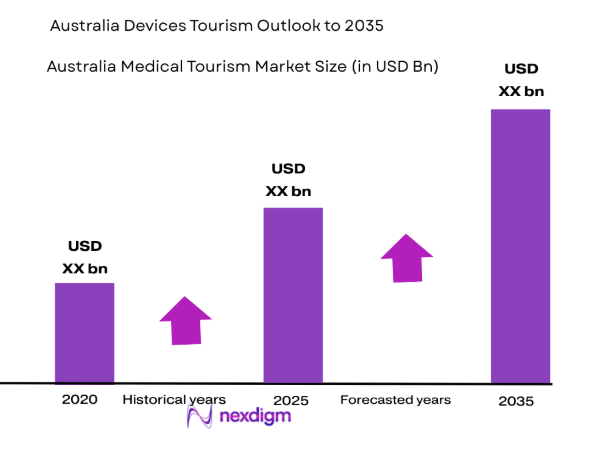
Australia’s medical tourism market was valued at approximately USD ~ billion based on a recent historical assessment, according to Tourism Research Australia and the Australian Trade and Investment Commission. Growth is driven by internationally accredited hospitals, advanced surgical capabilities, and strong healthcare infrastructure. Increasing cross-border demand for specialized procedures, including oncology, orthopedics, fertility, and cosmetic treatments, continues to attract international patients. Government initiatives promoting health services exports and integrated healthcare tourism programs further strengthen inbound patient flows and expand private hospital participation.
Sydney, Melbourne, and Brisbane dominate Australia’s medical tourism ecosystem due to their concentration of internationally accredited hospitals, advanced diagnostic infrastructure, and highly specialized clinicians. These cities also provide seamless connectivity through major international airports and integrated hospitality networks that support medical travelers. Hospitals in these metropolitan regions collaborate closely with tourism operators, rehabilitation centers, and international insurance providers, enabling streamlined patient experiences. Their strong reputations for quality healthcare outcomes, regulatory transparency, and patient safety continue to attract travelers seeking complex procedures and high-quality post-treatment care.
Market Segmentation
By Product Type
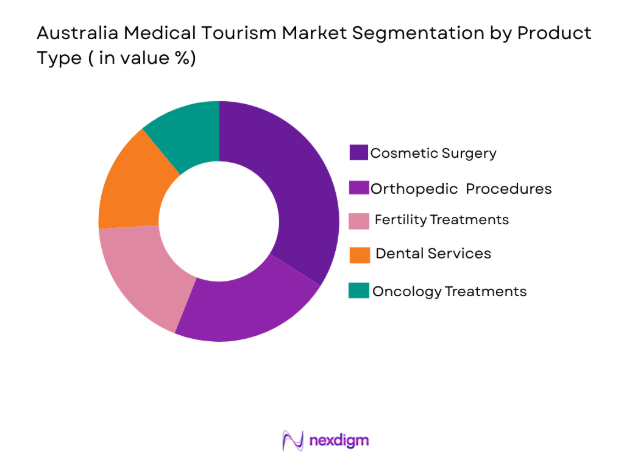
Australia Medical Tourism market is segmented by product type into Cosmetic Surgery, Orthopedic Procedures, Fertility Treatments, Dental Treatments, and Oncology Treatments. Recently, Cosmetic Surgery has a dominant market share due to strong international demand for aesthetic procedures, advanced surgical facilities, and experienced specialists available in Australia. The country’s strict healthcare standards, internationally accredited clinics, and reputation for safe cosmetic treatments attract patients from Asia-Pacific and the Middle East. Competitive treatment packages that combine medical procedures with post-treatment wellness and recovery tourism further strengthen demand. Additionally, advanced minimally invasive technologies, shorter recovery timelines, and the presence of highly specialized plastic surgeons continue to support the dominance of cosmetic procedures within Australia’s medical tourism ecosystem.
By Platform Type
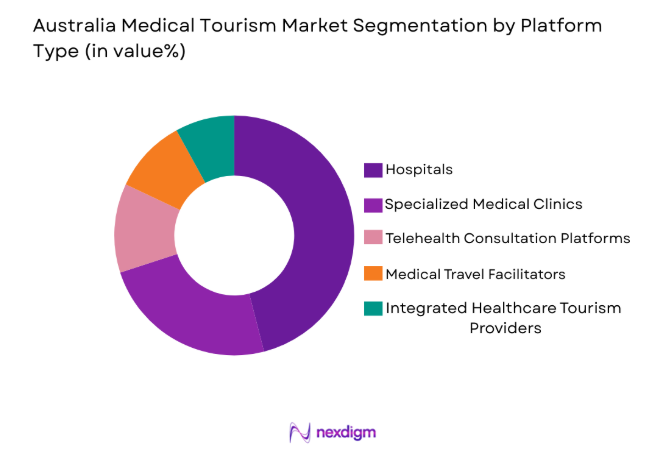
Australia Medical Tourism market is segmented by platform type into Hospitals, Specialized Medical Clinics, Telehealth Consultation Platforms, Medical Travel Facilitators, and Integrated Healthcare Tourism Providers. Recently, Hospitals have a dominant market share due to the presence of highly advanced infrastructure, multidisciplinary specialists, and internationally accredited treatment centers across major Australian cities. Large hospital networks offer complex surgical procedures, post-operative care, rehabilitation services, and diagnostic capabilities in one integrated environment, which increases international patient confidence. In addition, partnerships between hospitals and global insurance providers simplify treatment financing and international patient processing. Strong regulatory compliance, quality accreditation standards, and highly trained medical staff further reinforce hospitals as the preferred platform for complex medical tourism treatments.
Competitive Landscape
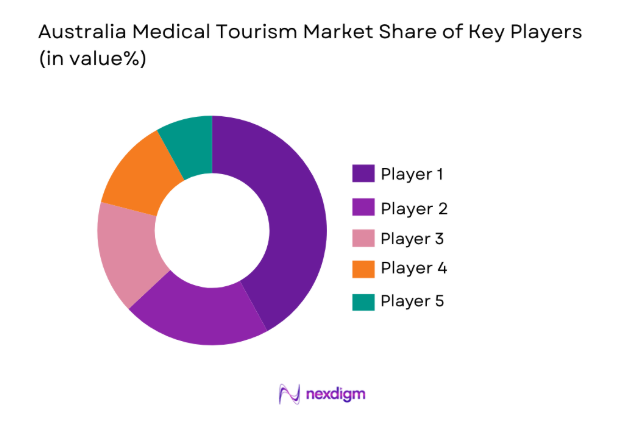
Australia’s medical tourism market demonstrates moderate consolidation, with major private hospital networks, specialized treatment centers, and international healthcare facilitators shaping industry competition. Leading healthcare providers leverage advanced infrastructure, internationally accredited medical facilities, and specialized physicians to attract global patients seeking high-quality treatment. Strategic partnerships between hospitals, travel agencies, and international insurance networks further strengthen patient inflow. Competitive differentiation is increasingly driven by advanced surgical technologies, comprehensive treatment packages, and post-treatment wellness services designed specifically for international medical travelers.
| Company Name | Establishment Year | Headquarters | Technology Focus | Market Reach | Key Products | Revenue | Accredited International Patient Services |
| Ramsay Health Care | 1964 | Sydney | ~ | ~ | ~ | ~ | ~~ |
| Healthscope | 1985 | Melbourne | ~ | ~ | ~ | ~ | ~ |
| St Vincent’s Health Australia | 1857 | Sydney | ~ | ~ | ~ | ~ | ~ |
| Epworth HealthCare | 1920 | Melbourne | ~ | ~ | ~ | ~ | ~ |
| Melbourne IVF | 1971 | Melbourne | ~ | ~ | ~ | ~ | ~ |
Australia Medical Tourism Market Analysis
Growth Drivers
Expansion of Internationally Accredited Healthcare Infrastructure
Australia’s expanding network of internationally accredited hospitals and specialized treatment centers significantly strengthens the country’s position as a destination for medical tourism. Healthcare institutions across Sydney, Melbourne, and Brisbane continue to invest heavily in advanced surgical technologies, robotic surgery platforms, and high-precision diagnostic capabilities. These investments enable hospitals to deliver complex procedures with high success rates and minimal recovery time. International accreditation from organizations such as the Joint Commission International enhances global patient trust and ensures adherence to strict clinical standards. The presence of highly trained specialists across oncology, orthopedics, fertility treatment, and cosmetic surgery further improves Australia’s attractiveness as a healthcare destination. In addition, hospitals increasingly provide integrated medical tourism packages combining consultation, treatment, recovery accommodation, and follow-up care. Collaboration between hospitals and tourism agencies strengthens logistical support for foreign patients traveling for treatment. Advanced hospital infrastructure combined with transparent regulatory oversight continues to position Australia as a safe and reliable healthcare destination.
Growing Demand for High-Quality Specialized Treatments from Asia-Pacific Patients
Rising healthcare demand across Asia-Pacific countries is significantly contributing to Australia’s medical tourism growth. Patients from neighboring countries increasingly seek treatment abroad for specialized medical procedures that require advanced expertise or cutting-edge equipment. Australia’s proximity to Southeast Asia, strong aviation connectivity, and stable healthcare regulations make it an attractive option for cross-border healthcare travel. Patients frequently travel for treatments including oncology therapies, fertility procedures, complex orthopedic surgeries, and cosmetic treatments. Australia’s reputation for high clinical safety standards and experienced physicians provides reassurance to international patients pursuing advanced procedures. Additionally, many healthcare providers offer multilingual support services and dedicated international patient coordinators who assist with travel, consultation scheduling, and post-treatment recovery planning. These services improve accessibility and reduce logistical barriers for foreign patients seeking treatment. The growing regional middle class with higher healthcare spending capacity continues to accelerate inbound medical travel demand.
Market Challenges
High Treatment Costs Compared with Emerging Medical Tourism Destinations
One of the primary challenges facing Australia’s medical tourism industry is the comparatively high cost of medical procedures. Countries such as Thailand, India, and Malaysia offer significantly lower treatment costs for similar procedures while maintaining internationally accredited healthcare facilities. Many medical travelers seeking affordability prioritize these destinations despite Australia’s reputation for clinical excellence. Higher operational costs, labor expenses, and regulatory compliance requirements contribute to elevated treatment prices in Australia. International patients evaluating healthcare travel options frequently compare overall treatment expenses including surgery, accommodation, and post-treatment recovery services. These cost differences can discourage price-sensitive patients from choosing Australia as a medical tourism destination. Hospitals must therefore emphasize value-based care, advanced technologies, and specialized expertise to justify higher treatment costs. Additionally, currency fluctuations and travel expenses can further increase the overall cost burden for international patients seeking treatment. Addressing affordability concerns while maintaining premium healthcare quality remains a significant challenge.
Complex Visa and Travel Logistics for International Patients
International medical tourists traveling to Australia may encounter administrative and logistical barriers related to visa processing, travel arrangements, and treatment scheduling. Medical travel requires coordination between healthcare providers, immigration authorities, insurance companies, and tourism operators. Visa approval processes can sometimes extend travel timelines, particularly when patients require urgent procedures or extended treatment stays. In addition, complex medical cases often require family accompaniment and long recovery periods, increasing logistical planning requirements. Travel restrictions, documentation requirements, and insurance approvals may also create delays that discourage potential medical travelers. Hospitals must therefore establish dedicated international patient management departments that assist with travel documentation and treatment planning. Streamlined medical visa programs and improved collaboration between healthcare providers and government authorities could reduce travel barriers. Ensuring smooth logistical support for foreign patients remains critical for sustaining Australia’s competitiveness in the global medical tourism market.
Opportunities
Expansion of Integrated Healthcare and Wellness Tourism Packages
Australia has strong potential to combine advanced medical treatments with wellness tourism experiences, creating comprehensive healthcare travel packages. Many international patients seek destinations where they can combine medical procedures with recovery in comfortable environments. Australia’s natural landscapes, rehabilitation resorts, and wellness retreats provide an ideal environment for post-treatment recovery programs. Hospitals increasingly collaborate with hospitality providers, physiotherapy centers, and wellness facilities to offer integrated recovery programs for international patients. These packages may include physiotherapy, nutritional therapy, mental health support, and recreational wellness activities that enhance recovery outcomes. Combining healthcare services with wellness tourism experiences allows hospitals to differentiate their offerings from purely clinical medical destinations. This integrated approach also improves patient satisfaction by providing holistic recovery environments. As global demand for wellness-oriented healthcare travel grows, Australia can leverage its tourism strengths to expand the medical tourism market.
Development of Digital Pre-Consultation and Telehealth Medical Tourism Platforms
Telehealth technology provides significant opportunities for Australia’s medical tourism ecosystem by enabling remote patient consultations before international travel. Hospitals can conduct initial medical assessments, treatment planning discussions, and diagnostic reviews through secure digital consultation platforms. This approach reduces uncertainty for international patients and allows healthcare providers to confirm treatment suitability before travel arrangements are finalized. Telehealth consultations also allow physicians to monitor patient recovery remotely after procedures, improving long-term treatment outcomes. Digital health platforms can streamline medical documentation sharing, insurance coordination, and treatment scheduling for international patients. Hospitals that integrate telemedicine capabilities into their medical tourism programs gain competitive advantages by improving accessibility and patient engagement. Additionally, telehealth services reduce logistical barriers for foreign patients evaluating treatment options abroad. The expansion of digital healthcare infrastructure therefore creates a valuable opportunity to strengthen Australia’s global medical tourism reach.
Future Outlook
Australia’s medical tourism market is expected to experience steady expansion driven by increasing international healthcare demand and continued investment in advanced medical infrastructure. Hospitals are likely to expand specialized treatment capabilities and integrate digital consultation platforms to attract global patients. Regulatory support for healthcare exports and improved medical travel coordination will further strengthen patient inflow. Growth in wellness tourism, rehabilitation services, and personalized treatment programs will also contribute to the sector’s long-term development.
Major Players
- Ramsay Health Care
- Healthscope
- St Vincent’s Health Australia
- Epworth HealthCare
- Melbourne IVF
- Calvary Health Care
- Mater Health Services
- Peter MacCallum Cancer Centre
- Monash Health
- Sydney Adventist Hospital
- Chris O’Brien Lifehouse
- Brisbane Private Hospital
- Royal Melbourne Hospital
- Australian Medical Travel
- Global Health Clinics
Key Target Audience
- Investments and venture capitalist firms
- Government and regulatory bodies
- International healthcare investors
- Private hospital networks
- Medical tourism facilitators
- International insurance providers
- Healthcare infrastructure developers
Research Methodology
Step 1: Identification of Key Variables
Key variables influencing the Australia Medical Tourism market were identified through industry reports, healthcare export statistics, hospital infrastructure data, and tourism analytics. Variables included international patient inflow, treatment demand patterns, hospital capacity, and regulatory frameworks supporting cross-border healthcare services.
Step 2: Market Analysis and Construction
Market construction involved combining healthcare industry data, tourism statistics, and hospital revenue insights to estimate the size and structure of the medical tourism sector. Demand patterns across treatments, patient origin regions, and healthcare platforms were analyzed to determine market segmentation.
Step 3: Hypothesis Validation and Expert Consultation
Initial findings were validated through consultation with healthcare administrators, tourism analysts, and hospital executives involved in international patient programs. These expert discussions helped verify demand trends, infrastructure developments, and treatment preferences among global medical travelers.
Step 4: Research Synthesis and Final Output
Validated datasets were synthesized to generate market insights, segmentation analysis, and competitive landscape evaluation. Findings were structured into a comprehensive market report highlighting growth drivers, challenges, and strategic opportunities within Australia’s evolving medical tourism ecosystem.

- Executive Summary
- Research Methodology (Definitions, Scope, Industry Assumptions, Market Sizing Approach, Primary & Secondary Research Framework, Data Collection & Verification Protocol, Analytic Models & Forecast Methodology, Limitations & Research Validity Checks)

- Market Definition and Scope
- Value Chain & Stakeholder Ecosystem
- Regulatory / Certification Landscape
- Sector Dynamics Affecting Demand
- Strategic Initiatives & Infrastructure Growth

- Growth Drivers
Advancement in Medical Technologies
Cost-Effective Healthcare Services
Rising Affordability and Accessibility of Healthcare
Government Support and Tourism Promotion
Improved Healthcare Infrastructure - Market Challenges
High Competition from International Markets
Perception of Healthcare Quality
Regulatory and Compliance Barriers
Travel and Accommodation Constraints
Cultural and Language Differences - Market Opportunities
Partnerships with Global Healthcare Networks
Expanding Medical Tourism Packages
Increasing Focus on Wellness and Preventative Care - Trends
Rise in Cosmetic and Aesthetic Treatments
Growth in Wellness Tourism - Government Regulations
Health Tourism Regulations
Patient Privacy and Security Laws
Medical Tourism Certification Standards - SWOT Analysis
- Porter’s Five Forces

- By Market Value, 2020-2025
- By Installed Units, 2020-2025
- By Average System Price, 2020-2025
- By System Complexity Tier, 2020-2025

- By System Type (In Value%)
Surgical Procedures
Dental Tourism
Cosmetic Treatments
Fertility Treatments
Alternative Medicine - By Platform Type (In Value%)
Inpatient Services
Outpatient Services
Telemedicine Platforms
Medical Consultation Platforms
Travel & Accommodation Services - By Fitment Type (In Value%)
Hospital-Based Solutions
Private Clinic-Based Solutions
Integrated Health Packages
Virtual Health Solutions - By End User Segment (In Value%)
International Patients
Domestic Patients
Healthcare Providers

- Market Share Analysis
- Cross Comparison Parameters (Service Type, End User Segment, Fitment Type, Region, Healthcare Infrastructure, Government Regulations, Pricing)
- SWOT Analysis of Key Competitors
- Pricing & Procurement Analysis
- Key Players
Healthscope
St Vincent’s Health Australia
Medibank Private
Australian Medical Travel
Tourism Australia
Health Tourism Australia
Royal Melbourne Hospital
Sydney Adventist Hospital
Flinders Medical Centre
Australian Health Associates
Melbourne IVF
The Aesthetic Institute
Global Health Clinics
Q-Health Group
Australian Health Industry Group

- International Patients Seeking Affordable Treatments
- Medical Tourists Looking for Specialized Treatments
- Domestic Patients Utilizing Medical Tourism Services
- Healthcare Providers’ Role in Expanding Medical Tourism

- Forecast Market Value, 2026-2035
- Forecast Installed Units, 2026-2035
- Price Forecast by System Tier, 2026-2035
- Future Demand by Platform, 2026-2035


 Request a Sample
 Ask for Customization
 Get a Quote
 Enquire Now