

 Download PDF
 Download PDF
Market Overview
The Australia Robotics Market is experiencing significant growth driven by increased demand across various industries, such as manufacturing, healthcare, and logistics. The market is projected to reach USD ~ billion, fueled by advancements in automation technologies, AI integration, and the rising need for operational efficiency. Robotics systems are playing a critical role in reducing human error, enhancing productivity, and ensuring safety in hazardous environments. This shift is supported by government initiatives and corporate investments aiming to modernize industrial sectors.
Australia, particularly cities like Sydney and Melbourne, is at the forefront of adopting robotics technologies due to its robust infrastructure and advanced manufacturing capabilities. The country’s commitment to smart manufacturing and technological innovation has positioned it as a leader in automation in the Asia-Pacific region. Furthermore, government policies and incentives for research and development in robotics ensure that Australia remains a competitive hub for robotic system deployment and innovation in the global market.

Market Segmentation
By Product Type
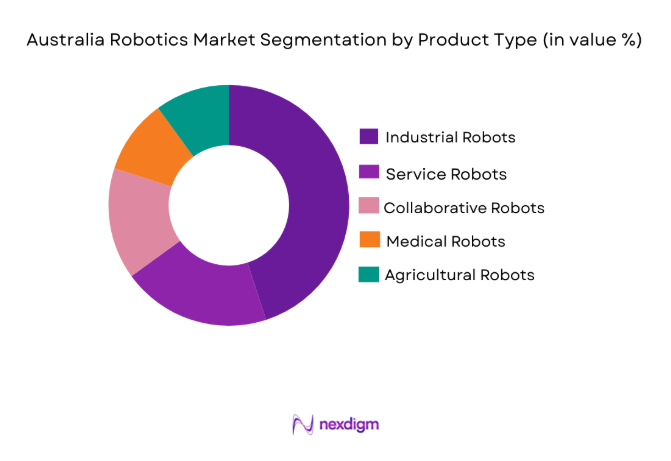
The Australia Robotics Market is segmented by product type into industrial robots, service robots, collaborative robots, medical robots, and agricultural robots. The industrial robots sub-segment dominates the market, driven by rising demand for automation in sectors like manufacturing and logistics. This dominance is supported by the need for precision, efficiency, and safety in operations such as assembly lines, packaging, and welding. The increasing affordability of robotic systems and the significant cost savings from automation continue to drive its widespread adoption in Australian manufacturing industries.
By Platform Type
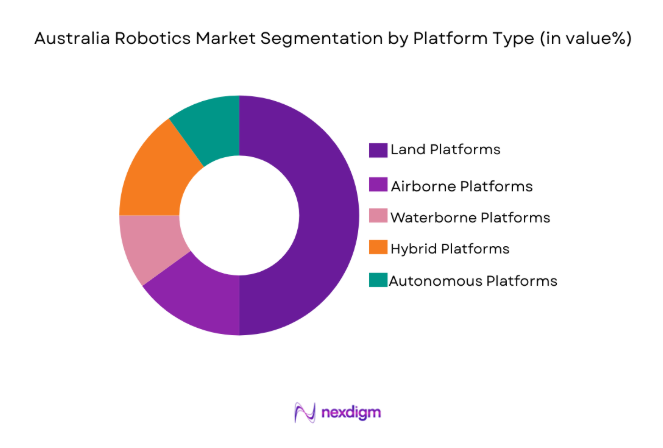
The Australia Robotics Market is segmented by platform type into land platforms, airborne platforms, waterborne platforms, hybrid platforms, and autonomous platforms. The land platforms sub-segment is the dominant player in the market due to its widespread application in industries such as manufacturing, agriculture, and logistics. These platforms, which include robotic arms, autonomous mobile robots, and automated guided vehicles (AGVs), are heavily utilized for tasks like material handling, assembly, and inspection. The growing need for automation in warehouse and factory environments further drives the dominance of land platforms, as they help streamline operations, increase efficiency, and reduce labor costs.
Competitive Landscape
The competitive landscape in the Australia Robotics Market is highly dynamic, with major players consolidating their positions by leveraging technological advancements and strategic partnerships. Companies such as ABB, FANUC, and KUKA dominate the market, each focusing on innovation, cost reduction, and expanding product offerings. These players are collaborating with industry leaders to provide integrated robotic systems that cater to a wide range of applications.
| Company Name | Establishment Year | Headquarters | Technology Focus | Market Reach | Key Products | Revenue (USD) | R&D Investments |
| ABB | 1988 | Zurich, Switzerland | ~ | ~ | ~ | ~ | ~ |
| FANUC | 1956 | Oshino, Japan | ~ | ~ | ~ | ~ | ~ |
| KUKA | 1898 | Augsburg, Germany | ~ | ~ | ~ | ~ | ~ |
| Universal Robots | 2005 | Odense, Denmark | ~ | ~ | ~ | ~ | ~ |
| Yaskawa Electric | 1915 | Kitakyushu, Japan | ~ | ~ | ~ | ~ | ~ |

Australia Robotics Market Analysis
Growth Drivers
Technological Advancements in AI and Robotics
Technological advancements in artificial intelligence (AI) and robotics are significantly driving the growth of the Australia Robotics Market. The integration of AI into robotic systems enables robots to make better, data-driven decisions, improve their adaptability, and perform increasingly complex tasks with higher precision. These advancements have enhanced the efficiency of robots in performing intricate functions such as assembly, inspection, sorting, and material handling. These robots are now capable of taking on tasks that were previously impossible or highly inefficient for manual labor, which drives the widespread adoption of robotics across industries like manufacturing, logistics, and healthcare. Moreover, the continuous evolution of AI opens new possibilities for robots to take on even more advanced roles such as predictive maintenance, real-time decision-making, and autonomous problem-solving. This has led to a shift from robotic systems used primarily for repetitive tasks to more intelligent systems that enhance flexibility, improve safety, and optimize production. As AI continues to evolve, the demand for robotics is expected to grow exponentially, especially as industries push for smarter automation solutions and leaner operations. This is particularly evident in sectors like automotive, electronics, and consumer goods, where efficiency and precision are crucial to maintaining competitiveness. The ability of robots to interact with humans and the surrounding environment is also expected to revolutionize industries by improving collaboration and creating new business models that were not previously viable.
Government Support and Industry Collaboration
The Australian government’s proactive stance on supporting robotics innovation plays a pivotal role in the growth of the market. With the introduction of various funding programs, grants, and subsidies, businesses are incentivized to adopt advanced robotics technologies. Government efforts are also focused on enhancing public-private partnerships, fostering innovation hubs, and improving the overall infrastructure to facilitate the growth of the robotics industry. This support has led to greater adoption of robotic solutions across multiple sectors, including manufacturing, healthcare, agriculture, and logistics. Moreover, the Australian government has recognized the importance of robotics in future-proofing industries and creating new job opportunities, especially as automation technologies evolve. In addition to government funding, industry collaboration is vital in driving innovation. Academic institutions, research organizations, and technology developers collaborate with businesses to create next-generation robotic solutions that address specific challenges within industries. These partnerships ensure the continuous improvement of robotic systems, offering customized solutions that are not only cost-effective but also suited to the unique requirements of Australian industries. With efforts aimed at addressing issues such as labor shortages, improving operational efficiency, and increasing the competitiveness of local businesses, the synergy between government support and industry collaboration is playing a significant role in accelerating the adoption and development of robotics.
Market Challenges
High Initial Investment Costs
One of the most significant challenges facing the Australian robotics market is the high initial investment required for deploying robotic systems. The cost of acquiring, installing, and maintaining robotics technology can be prohibitively expensive for many businesses, particularly small and medium enterprises (SMEs). While the long-term benefits of automation, such as cost savings, increased efficiency, and reduced labor costs, are well recognized, the upfront capital required to implement robotic systems remains a barrier to adoption. This challenge is particularly acute in industries with tight profit margins, where the ROI from automation may take several years to materialize. Additionally, many companies find it difficult to justify the high costs associated with robotic systems, especially when they are used to traditional manufacturing or manual labor-intensive processes. As a result, despite the increasing demand for robotics, the high investment costs are causing slower adoption rates in some sectors. Even though advancements in robotics are helping to reduce the cost of systems over time, the cost of supporting infrastructure such as training, installation, and maintenance continues to deter many businesses from making the leap into automation. To overcome this barrier, industry stakeholders need to find innovative ways to reduce costs and offer flexible financing solutions that will make robotics accessible to a broader range of businesses, particularly SMEs.
Lack of Skilled Workforce
Another significant challenge in the Australian robotics market is the shortage of skilled workers capable of designing, operating, and maintaining complex robotic systems. As robotics and automation become more prevalent in industries across Australia, the demand for a highly trained workforce capable of understanding and working with these technologies has skyrocketed. However, the current educational and training infrastructure is not adequately addressing this skills gap. This shortage of skilled workers, particularly those with expertise in AI, machine learning, and robotics engineering, has hindered the rate of adoption of advanced robotics in some industries. As robots become more integrated into daily operations, the need for workers who can program, maintain, and troubleshoot robotic systems has become critical. Moreover, many businesses in the robotics sector face difficulties in retaining talent, as the demand for skilled labor in robotics often exceeds supply. To address this challenge, Australia must invest in education and training programs that focus on developing the necessary skills to operate and innovate in robotics technologies. This will help businesses in Australia remain competitive and enable the widespread adoption of robotics solutions, ultimately boosting productivity and creating new employment opportunities.
Opportunities
Expansion of Robotics in Healthcare Applications
The increasing demand for precision, efficiency, and cost-effectiveness in healthcare presents a significant opportunity for the expansion of robotics in Australia. With advancements in medical robotics, including surgical robots, rehabilitation devices, and robotic diagnostic tools, the healthcare industry is experiencing a significant shift toward automation. Robotic-assisted surgeries, in particular, have shown to significantly improve precision, reduce the risk of human error, and shorten recovery times for patients. These advantages have made robotic-assisted surgeries more attractive to healthcare providers who seek to provide better outcomes while reducing costs. Furthermore, robots are being increasingly used in rehabilitation settings to help patients recover from surgeries or injuries with greater speed and efficiency. Robotic systems in healthcare can also be used for remote surgery, allowing specialists to operate on patients in rural or underserved areas, improving access to high-quality care. As healthcare providers increasingly rely on robotics to deliver services, the demand for advanced medical robots is expected to rise significantly. The aging population in Australia and the growing prevalence of chronic diseases create additional demand for healthcare robotics to improve patient care and operational efficiency in hospitals and clinics. This presents a substantial growth opportunity for robotics companies that are developing innovative healthcare solutions.
Adoption of Robotics in Agriculture
The Australian agriculture sector presents a substantial opportunity for the growth of robotics, driven by the need to increase productivity, reduce labor costs, and enhance the sustainability of farming practices. Agricultural robots, such as autonomous tractors, harvesters, drones, and robotic planters, are gaining traction in Australian farms as they help to automate repetitive tasks and improve the efficiency of crop production. The rise of precision farming, which uses data and technology to optimize planting, irrigation, and harvesting, is also driving the demand for agricultural robotics. These robots are able to perform tasks that were previously manual, such as weeding, spraying pesticides, and monitoring crop health, all of which contribute to reducing labor costs and increasing farm output. Additionally, robots can operate in harsh weather conditions, which makes them particularly valuable in the agricultural sector, where labor shortages are often an issue during peak seasons. As the need for sustainable farming practices grows, the adoption of robotics is expected to play a crucial role in improving resource management, reducing environmental impacts, and enhancing the overall efficiency of Australian agriculture. With continued technological advancements and the increasing demand for automation in farming, robotics will continue to revolutionize the agricultural industry, providing significant opportunities for innovation and investment in this space.
Future Outlook
The future outlook for the Australian robotics market is positive, with expected growth driven by advancements in AI, automation technologies, and industry-specific applications. As industries like manufacturing, healthcare, and agriculture continue to adopt robotics to enhance productivity and efficiency, the demand for robots is anticipated to rise. Government support, along with the increasing availability of cost-effective robotics solutions, will further accelerate adoption. Over the next five years, Australia is expected to see significant developments in robotics capabilities, particularly in autonomous systems and AI-driven robotics, ensuring its position as a leader in the global market.
Major Players
- ABB
- FANUC
- KUKA
- Universal Robots
- Yaskawa Electric
- Mitsubishi Electric
- Omron
- Intuitive Surgical
- iRobot
- Rethink Robotics
- Teradyne
- AUBO Robotics
- F&P Robotics
- Denso Robotics
- Stäubli Robotics
Key Target Audience
- Investments and venture capitalist firms
- Government and regulatory bodies
- Robotics manufacturers
- Industrial automation companies
- Healthcare providers
- Agricultural technology firms
- Logistics and warehouse operators
Research Methodology
Step 1: Identification of Key Variables
The key variables such as market size, product type, and regional demand drivers are identified through extensive market research and expert consultations.
Step 2: Market Analysis and Construction
A comprehensive analysis of the market, including segmentation, growth drivers, and trends, is performed based on both primary and secondary data.
Step 3: Hypothesis Validation and Expert Consultation
The hypotheses regarding market trends, growth opportunities, and challenges are validated with industry experts and stakeholders to ensure accuracy.
Step 4: Research Synthesis and Final Output
The data collected is synthesized into a final report, providing a comprehensive overview of the market with actionable insights for stakeholders.

- Executive Summary
- Research Methodology (Definitions, Scope, Industry Assumptions, Market Sizing Approach, Primary & Secondary Research Framework, Data Collection & Verification Protocol, Analytic Models & Forecast Methodology, Limitations & Research Validity Checks)

- Market Definition and Scope
- Value Chain & Stakeholder Ecosystem
- Regulatory / Certification Landscape
- Sector Dynamics Affecting Demand
- Strategic Initiatives & Infrastructure Growth

- Growth Drivers
Rising Demand for Automation in Manufacturing
Advancements in AI and Robotics Technologies
Government Support for Robotics Innovations - Market Challenges
High Initial Investment Costs
Integration Complexity in Traditional Industries
Lack of Skilled Workforce - Market Opportunities
Growth in Autonomous Vehicles
Integration of Robotics in Healthcare
Robotics for Smart Agriculture - Trends
Increased Use of AI and Machine Learning in Robotics
Growing Adoption of Collaborative Robots - Government Regulations
Standards for Robotics Safety
Government Grants for Robotics Innovations
Import/Export Regulations for Robotics - SWOT Analysis
- Porter’s Five Forces

- By Market Value, 2020-2025
- By Installed Units, 2020-2025
- By Average System Price, 2020-2025
- By System Complexity Tier, 2020-2025

- By System Type (In Value%)
Industrial Robots
Service Robots
Collaborative Robots
Medical Robots
Agricultural Robots - By Platform Type (In Value%)
Land Platforms
Airborne Platforms
Waterborne Platforms
Hybrid Platforms
Autonomous Platforms - By Fitment Type (In Value%)
On-premise Solutions
Cloud-based Solutions
Hybrid Solutions
Integrated Solutions - By End User Segment (In Value%)
Manufacturing
Healthcare
Agriculture
Logistics

- Market Share Analysis
- Cross Comparison Parameters (System Type, Platform Type, End User Segment, Fitment Type, Market Share, Price Point, Growth Rate)
- SWOT Analysis of Key Competitors
- Pricing & Procurement Analysis
- Key Players
ABB
KUKA Robotics
FANUC Corporation
Universal Robots
Yaskawa Electric Corporation
Autonomous Solutions
Teradyne
Rethink Robotics
AUBO Robotics
Intuitive Surgical
F&P Robotics
Omron Adept
Mitsubishi Electric
Honda Robotics
iRobot

- Increased Demand for Automation in Australian Manufacturing
- Healthcare Sector Driving Robotic Adoption for Surgery and Rehabilitation
- Robotics Innovations to Enhance Agricultural Productivity
- Growth in E-commerce Driving Robotics in Logistics

- Forecast Market Value, 2026-2035
- Forecast Installed Units, 2026-2035
- Price Forecast by System Tier, 2026-2035
- Future Demand by Platform, 2026-2035


 Request a Sample
 Ask for Customization
 Get a Quote
 Enquire Now