
 Download PDF
 Download PDF
Market Overview
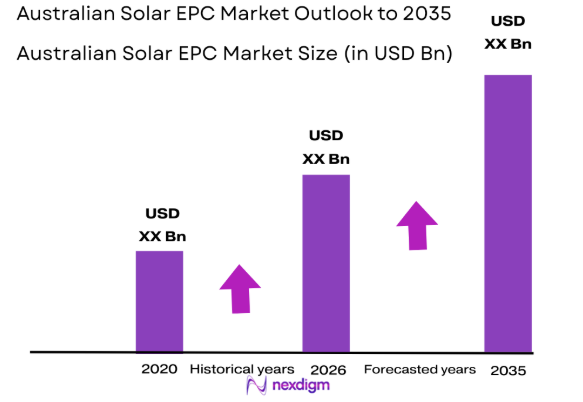
The Australian Solar EPC market has experienced substantial growth, driven by strong government support, technological advancements, and rising demand for sustainable energy solutions. Based on a recent historical assessment, the market size is valued at approximately USD ~ billion, with increasing investments in both residential and commercial solar energy projects. A growing number of players are entering the sector, contributing to higher competition and lowering costs, making solar power more accessible to a wider audience.
The dominance of cities like Sydney, Melbourne, and Brisbane is attributed to their high levels of solar radiation, extensive infrastructure, and strong state-backed renewable energy initiatives. These urban centers also benefit from favorable climate conditions, driving higher solar adoption rates. Additionally, the proactive role of local governments in supporting the transition to clean energy and their alignment with national renewable energy targets has positioned these regions as leaders in the market.
Market Segmentation
By System Type
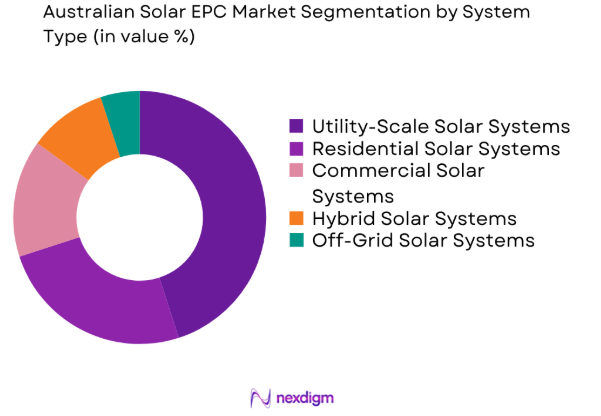
The Australian Solar EPC market is segmented by system type into utility-scale solar systems, residential solar systems, commercial solar systems, hybrid solar systems, and off-grid solar systems. Recently, utility-scale solar systems have captured a dominant market share due to increased demand for large-scale renewable energy projects and the efficiency of mass production. Government incentives and improved grid integration further support the adoption of utility-scale solutions.
By Platform Type
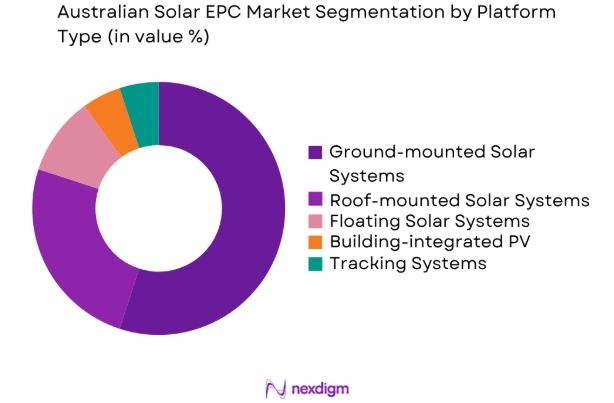
The Australian Solar EPC market is also segmented by platform type, which includes ground-mounted solar systems, roof-mounted solar systems, floating solar systems, building-integrated photovoltaics (BIPV), and tracking systems. Ground-mounted solar systems dominate the market share, as they are typically more cost-effective and scalable for large installations compared to other platforms. The widespread availability of land and state subsidies in various regions make ground-mounted solutions the preferred choice.
Competitive Landscape
The competitive landscape of the Australian Solar EPC market is shaped by the presence of both established players and emerging companies. Major players dominate the market with significant infrastructure investments, technological expertise, and strong relationships with government bodies. These companies are well-positioned to capitalize on the growing demand for solar energy projects, which are supported by favorable policy frameworks and incentives. Market consolidation is evident, with key players forming strategic alliances to enhance market reach and offer integrated solutions.
| Company Name | Establishment Year | Headquarters | Technology Focus | Market Reach | Key Products | Revenue | Additional Parameter |
| First Solar | 1999 | USA | ~ | ~ | ~ | ~ | ~ |
| Trina Solar | 1997 | China | ~ | ~ | ~ | ~ | ~ |
| LONGi Green Energy | 2000 | China | ~ | ~ | ~ | ~ | ~ |
| Canadian Solar | 2001 | Canada | ~ | ~ | ~ | ~ | ~ |
| SunPower | 1985 | USA | ~ | ~ | ~ | ~ | ~ |
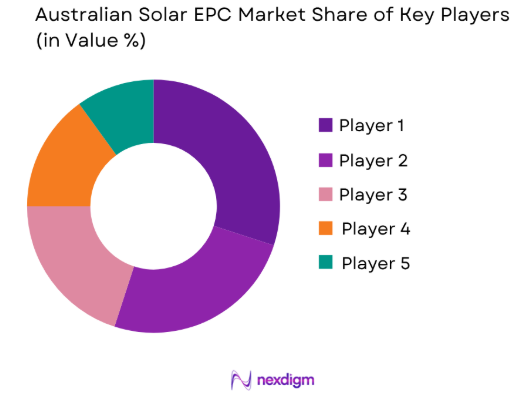
Australian Solar EPC Market Analysis
Growth Drivers
Government Policy Support
Government policies play a crucial role in driving the growth of the Australian Solar EPC market. Incentives such as feed-in tariffs, tax rebates, and renewable energy targets encourage the adoption of solar technologies across residential, commercial, and industrial sectors. Policies promoting clean energy infrastructure have led to an increase in solar energy installations, making solar power more accessible and affordable for consumers. The push towards meeting national renewable energy goals further fuels market growth, providing an attractive environment for solar projects. Additionally, the government’s proactive approach to tackling climate change and reducing carbon emissions strengthens the role of solar energy in the national grid.
Technological Advancements in Solar Technology
Advancements in solar panel efficiency and energy storage technologies are key drivers for market growth. Innovations in photovoltaic cells, such as bifacial panels, have enhanced energy generation while lowering system costs. The decreasing cost of energy storage solutions makes it easier to integrate solar power with battery systems, enabling users to access solar energy consistently, even when sunlight is not available. These improvements increase the reliability of solar power, making it a more viable alternative to traditional grid energy. As a result, these technological advancements are accelerating the growth of the solar EPC sector, fostering greater adoption of renewable energy solutions.
Market Challenges
High Initial Capital Investment
A major challenge for the Australian Solar EPC market is the high initial investment required for solar installations, particularly in large-scale projects. While solar energy offers long-term cost savings, the significant upfront capital needed for equipment, installation, and infrastructure presents a barrier for both consumers and businesses. This is especially difficult for small and medium-sized enterprises (SMEs) and households, which may struggle to afford the initial investment. Even though government subsidies and financing options are available to mitigate these costs, the capital-intensive nature of solar energy adoption continues to limit its widespread adoption. As a result, many potential users may delay or avoid solar adoption despite the long-term financial and environmental benefits.
Technological Barriers to Integration
Although solar technology has made significant strides, integrating solar power systems with existing grid infrastructure remains a complex challenge. The intermittent nature of solar energy complicates supply and demand management for grid operators, particularly during periods of low sunlight or peak demand. To address this, substantial investments in energy storage solutions and grid upgrades are required, which adds complexity and cost to the market. Furthermore, integrating solar power with older infrastructure, especially in remote areas, presents technical difficulties that hinder the widespread adoption of solar energy. These challenges make it more difficult to fully harness the potential of solar power, particularly in regions with outdated grid systems or limited infrastructure support.
Opportunities
Expansion in Residential Solar Energy Solutions
As electricity prices rise, more residential consumers are turning to solar energy to lower utility costs and achieve energy independence. The growing demand for energy-efficient homes and sustainable living practices has driven an increase in residential solar installations. Additionally, the decreasing cost of solar panels, coupled with favorable financing options and government incentives, makes solar power a more accessible and affordable choice for homeowners. This trend creates significant opportunities for EPC companies to expand their offerings and capture a larger share of the residential market. As the appeal of solar energy grows, these companies can benefit from increased demand for residential solar systems and related services.
Emerging Solar-Powered Electric Vehicle Infrastructure
The rise of electric vehicles (EVs) offers a unique opportunity for the solar EPC market. As adoption of EVs increases among consumers and businesses, the demand for solar-powered charging stations is expected to grow. Solar-powered EV charging infrastructure reduces dependence on traditional power grids and lowers the carbon footprint of transportation. EPC companies that can provide integrated solar energy and EV charging solutions are well-positioned to benefit from this emerging trend. The expansion of such infrastructure is further supported by government incentives aimed at promoting green energy solutions, which enhances the market potential. As the transition to cleaner energy continues, solar-powered EV charging stations will become a crucial part of the energy ecosystem.
Future Outlook
The Australian Solar EPC market is poised for continued growth over the next five years, driven by favorable regulatory frameworks, technological advancements, and a shift toward clean energy solutions. The growing demand for solar power in residential, commercial, and industrial sectors will continue to fuel market expansion. Innovations in solar technology, such as energy storage and improved efficiency, will further enhance the attractiveness of solar installations. With increasing investments in renewable energy infrastructure, the Australian Solar EPC market is expected to witness strong growth and increasing market penetration in the coming years.
Major Players
- First Solar
- Trina Solar
- LONGiGreen Energy
- Canadian Solar
- SunPower
- JinkoSolar
- Enphase Energy
- Vestas Wind Systems
- Siemens Gamesa Renewable Energy
- SolgenEnergy Group
- Risen Energy
- JA Solar Technology
- LONGiSolar
- Hyundai Energy Solutions
- Suntech Power
Key Target Audience
- Investments and venture capitalist firms
- Government and regulatory bodies
- Utility companies
- Solar panel manufacturers
- Commercial developers
- Residential building contractors
- Renewable energy consultants
- Technology integrators
Research Methodology
Step 1: Identification of Key Variables
The research process begins with the identification of key variables that impact the Australian Solar EPC market. This includes factors such as government regulations, technological innovations, consumer demand, and financial models available for solar projects.
Step 2: Market Analysis and Construction
After identifying the variables, comprehensive market analysis is conducted. This involves segmenting the market based on system types, platform types, end-users, and procurement channels, along with assessing market trends and dynamics.
Step 3: Hypothesis Validation and Expert Consultation
To ensure the validity of the research, hypotheses are tested through expert consultations, involving interviews and discussions with industry professionals, market leaders, and stakeholders within the solar EPC market.
Step 4: Research Synthesis and Final Output
Finally, the data gathered through primary and secondary research is synthesized, and the final market report is produced. The report provides actionable insights, market forecasts, and strategic recommendations for stakeholders.

- Executive Summary
- Research Methodology (Definitions, Scope, Industry Assumptions, Market Sizing Approach, Primary & Secondary Research Framework, Data Collection & Verification Protocol, Analytic Models & Forecast Methodology, Limitations & Research Validity Checks)

- Market Definition and Scope
- Value Chain & Stakeholder Ecosystem
- Regulatory / Certification Landscape
- Sector Dynamics Affecting Demand
- Strategic Initiatives & Infrastructure Growth

- Growth Drivers
Increase in Government Support for Renewable Energy
Technological Advancements in Solar Energy Systems
Rising Demand for Sustainable and Clean Energy
Cost Reductions in Solar Panel Manufacturing
Increasing Awareness of Environmental Issues - Market Challenges
High Initial Investment in Solar Installations
Intermittency and Reliability of Solar Energy
Regulatory and Compliance Barriers
Limited Grid Infrastructure in Remote Areas
Technological Barriers in Solar Storage Systems - Market Opportunities
Rising Adoption of Solar Energy in Residential Sector
Growth of Solar-Powered Electric Vehicle Charging Infrastructure
Integration of Solar Systems with Smart Grids - Trends
Emergence of Solar Energy Storage Solutions
Growth of Community Solar Programs
Use of Artificial Intelligence for Solar Energy Management - Government Regulations
- SWOT Analysis of Key Competitors
- Porter’s Five Forces

- By Market Value, 2020-2025
- By Installed Units, 2020-2025
- By Average System Price, 2020-2025
- By System Complexity Tier, 2020-2025

- By System Type (In Value%)
Utility-Scale Solar Systems
Residential Solar Systems
Commercial Solar Systems
Hybrid Solar Systems
Off-Grid Solar Systems - By Platform Type (In Value%)
Ground-mounted Solar Systems
Roof-mounted Solar Systems
Floating Solar Systems
Building-integrated Photovoltaics (BIPV)
Tracking Systems - By Fitment Type (In Value%)
On-premise Solutions
Off-grid Solutions
Hybrid Systems
Standalone Systems
Integrated Solutions - By End User Segment (In Value%)
Residential Users
Commercial Users
Industrial Users
Government Organizations
Utility Providers - By Procurement Channel (In Value%)
Direct Procurement
Private Sector Procurement
Government Tenders
Online Bidding Platforms
Third-party Distributors

- Market Share Analysis
- Cross Comparison Parameters (System Type, Platform Type, Procurement Channel, End User Segment, Fitment Type, Technology Type, Installation Type, Energy Storage Solutions, Regional Growth, Financing Models)
- SWOT Analysis of Key Competitors
- Pricing & Procurement Analysis
- Key Players
Sungrow Power Supply Co., Ltd.
First Solar
Trina Solar Limited
LONGi Green Energy
JA Solar Technology Co., Ltd.
Canadian Solar
REC Group
JinkoSolar
Hanwha Q CELLS
Enphase Energy
Vestas Wind Systems
Siemens Gamesa Renewable Energy
Solgen Energy Group
Pinnacle Solar
SunPower Corporation
Risen Energy Co., Ltd.

- Residential Sector Driving Market Expansion
- Commercial and Industrial Applications Gaining Traction
- Government’s Role in Solar Energy Projects
- Utility Providers Leading in Large-Scale Installations

- Forecast Market Value, 2026-2035
- Forecast Installed Units, 2026-2035
- Price Forecast by System Tier, 2026-2035
- Future Demand by Platform, 2026-2035


 Request a Sample
 Ask for Customization
 Get a Quote
 Enquire Now