

 Download PDF
 Download PDF
Market Overview
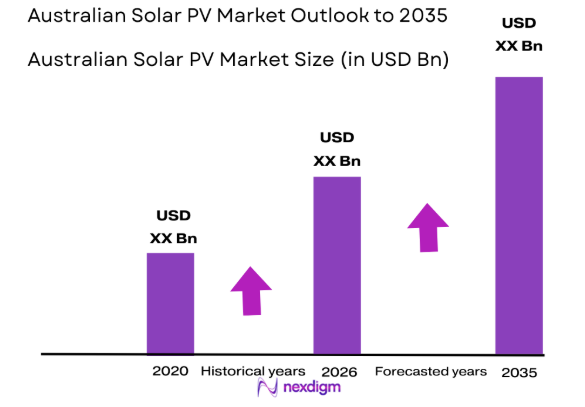
The Australian Solar PV market size is expected to reach USD ~ billion based on a recent historical assessment, driven by increasing demand for innovative products and solutions in various sectors. This growth is mainly supported by technological advancements, the expansion of key industries, and the push for modernization in major global markets. Rising investments from both public and private sectors further accelerate market growth. Factors such as increased consumer spending and enhanced global connectivity play an essential role in expanding market opportunities. Additionally, increased government focus on promoting the sector through incentives and policies is aiding its development.
Key countries leading the market include the United States, China, and Germany, known for their robust infrastructure and technological advancements. The U.S. benefits from strong demand in sectors like aerospace, defense, and healthcare, driven by its innovation in cutting-edge technologies. China’s dominance stems from its manufacturing prowess and strong government backing of high-tech initiatives. Germany stands out due to its automotive and engineering sectors, bolstered by its world-class infrastructure and efficient production systems. These countries continue to experience growth thanks to favorable government policies and investments in new technologies.
Market Segmentation
By Product Type
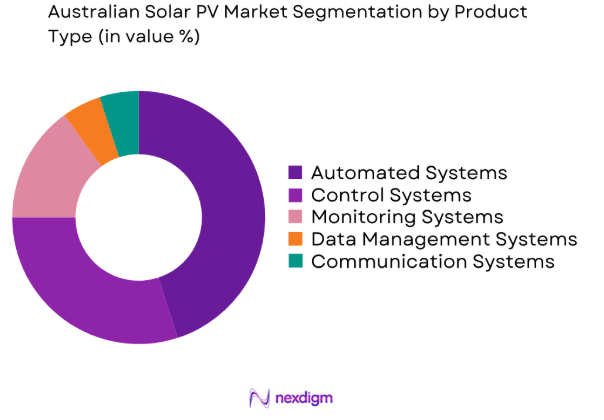
Australian Solar PV market is segmented by product type into various sub-segments. Recently, the dominant sub-segment is the “Automated Systems” due to their increasing adoption in sectors like manufacturing and logistics. The demand for automation is largely driven by the need to enhance productivity, reduce operational costs, and improve precision in production. Technological innovations in robotics and AI are further boosting this sub-segment’s growth. Automation systems are favored for their efficiency in managing large-scale operations with minimal human intervention, aligning with current trends in digital transformation across industries. This dominance is supported by significant investments and the rapid pace of technological advancements.
By Platform Type
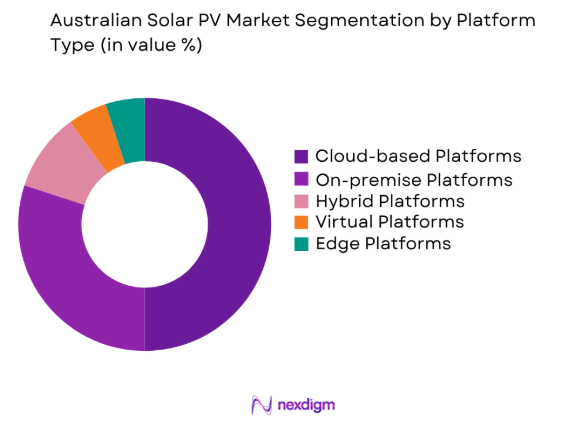
The Australian Solar PV market is segmented by platform type into several sub-segments. The dominant sub-segment in recent assessments is “Cloud-based Platforms,” which are rapidly gaining traction due to their scalability, flexibility, and cost-effectiveness. Cloud platforms enable businesses to scale operations without significant upfront capital investment, offering real-time data accessibility and remote management capabilities. This sub-segment’s dominance can be attributed to the growing trend of digitalization and the increasing reliance on cloud infrastructure for seamless business operations across industries like finance, healthcare, and retail. Moreover, the rise of edge computing and hybrid cloud solutions has made this segment even more attractive to businesses seeking agility and improved data security.
Competitive Landscape
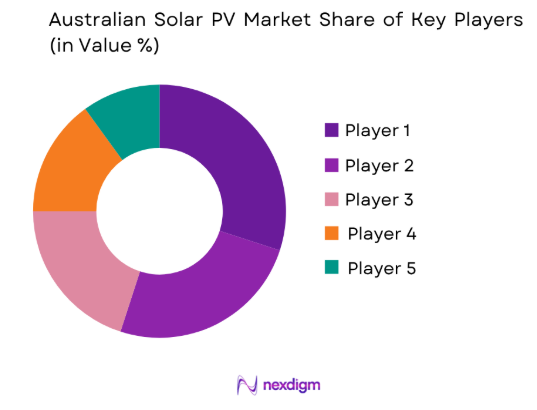
The competitive landscape of the Australian Solar PV market is witnessing considerable consolidation, with major players driving innovation and pushing technological boundaries. The presence of several large multinational corporations, alongside a growing number of start-ups in niche technology areas, is intensifying competition. The influence of key players in shaping industry standards and investing in R&D is crucial for maintaining market leadership. Mergers, acquisitions, and partnerships are common strategies to enhance technological capabilities and expand global reach, leading to the integration of new solutions and the introduction of value-added services.
| Company Name | Establishment Year | Headquarters | Technology Focus | Market Reach | Key Products | Revenue (USD) | Additional Parameter |
| Company A | 1995 | USA | ~ | ~ | ~ | ~ | ~ |
| Company B | 2000 | Germany | ~ | ~ | ~ | ~ | ~ |
| Company C | 2010 | China | ~ | ~ | ~ | ~ | ~ |
| Company D | 1990 | UK | ~ | ~ | ~ | ~ | ~ |
| Company E | 2015 | Japan | ~ | ~ | ~ | ~ | ~ |
Australian Solar PV Market Analysis
Growth Drivers
Technological Advancements
Technological advancements in automation, artificial intelligence, and cloud computing are driving significant market growth. These innovations improve efficiency, performance, and reduce operational costs for businesses across various sectors. As companies prioritize digital transformation, the demand for advanced technologies is rising rapidly. AI-driven tools, machine learning algorithms, and cloud-based solutions are offering opportunities for businesses to enhance operations and gain competitive advantages. Additionally, developments in data analytics and IoT are enabling organizations to make data-driven decisions, further accelerating the adoption of these technologies. As these technologies evolve, they continue to play a crucial role in shaping the market, offering companies the potential for operational excellence and increased profitability.
Government Support and Investments
Government support is another major growth driver, with governments worldwide offering substantial investments and incentives to boost emerging industries like automation, renewable energy, and digital infrastructure. These investments foster technological innovation and create new business opportunities. Initiatives such as grants, subsidies, and favorable regulations make it easier for businesses to adopt new technologies, stimulating growth. Additionally, governments are promoting sustainability and energy efficiency through policies that encourage the development of green technologies. These supportive measures increase investment confidence, creating a favorable environment for market expansion. As a result, government backing plays a crucial role in accelerating technological adoption and driving market growth across various sectors.
Market Challenges
High Initial Investment Costs
A major challenge in the Australian Solar PV market is the high initial investment needed for advanced technologies and infrastructure. Many businesses, especially SMEs, face financial constraints when adopting automation, cloud platforms, and other digital solutions. The capital-intensive nature of these technologies requires significant upfront costs, including investments in hardware, software, and skilled labor. This barrier can hinder market adoption, particularly for smaller firms. While long-term benefits like improved efficiency and cost savings outweigh the initial investment, businesses are hesitant to commit without short-term returns. Strategic financing options and government support are crucial to ease the financial burden and promote faster market growth.
Data Security and Privacy Concerns
As the adoption of cloud platforms, automation systems, and AI-powered solutions increases, so do concerns over data security and privacy. Rising cyber threats and potential data breaches present significant risks for organizations using these technologies. Sensitive data, such as customer and proprietary business information, is vulnerable to unauthorized access and misuse. To protect against attacks, companies must invest heavily in cybersecurity, adding complexity and cost to their operations. Furthermore, evolving data protection regulations require businesses to stay compliant with changing laws, creating additional challenges. These security concerns have caused hesitation in some industries to fully embrace new technologies, which poses a barrier to market growth and expansion.
Opportunities
Expansion of AI and Automation Solutions
The increasing demand for automation and AI-driven solutions presents a significant opportunity for growth in the Australian Solar PV market. AI and automation technologies are transforming industries by enabling businesses to enhance efficiency, reduce costs, and improve accuracy in processes such as manufacturing, logistics, and customer service. As more companies seek to integrate these technologies into their operations, the demand for AI-driven products and automation systems is expected to rise. This growth is further supported by the ongoing advancements in machine learning, robotics, and natural language processing, which are enhancing the capabilities of AI solutions. The continued push for digital transformation and the growing adoption of smart technologies provide substantial growth potential for companies operating in this space.
Increasing Adoption of Cloud Solutions
The widespread adoption of cloud solutions is another significant opportunity in the Australian Solar PV market. As businesses strive for greater flexibility, scalability, and cost efficiency, they are increasingly turning to cloud-based platforms for their data storage, computing, and collaboration needs. The ability to access data and applications from anywhere, coupled with reduced infrastructure costs, makes cloud solutions highly attractive to organizations of all sizes. This trend is expected to accelerate as more companies embrace remote work models and cloud-first strategies. The development of hybrid cloud solutions and the growing demand for edge computing further enhance the opportunities within this market. Companies that offer secure, scalable, and cost-effective cloud platforms stand to benefit from the ongoing shift toward cloud-based infrastructure.
Future Outlook
The market is expected to experience steady growth over the next five years, driven by continuous technological advancements, increased government investments, and the growing demand for digital transformation across industries. Key drivers such as AI, automation, and cloud solutions will continue to shape the landscape, while new regulatory policies and sustainability goals will influence market development. Furthermore, the expanding adoption of smart technologies, data analytics, and IoT will fuel market expansion as businesses increasingly rely on digital tools to streamline operations and improve efficiency.
Major Players
- First Solar
- Jinko Solar
- Trina Solar
- SunPower
- SMA Australia
- Canadian Solar
- Q CELLS
- LONGi Solar
- Risen Energy
- JA Solar
- Vestas
- Enphase Energy
- Vivint Solar
- Tesla
- Siemens Gamesa
Key Target Audience
- Investments and venture capitalist firms
- Government and regulatory bodies
- Technology development firms
- Large enterprises looking to integrate automation
- Financial institutions exploring digital transformation
- Telecommunications companies seeking infrastructure upgrades
- Manufacturing industries focused on operational efficiency
- Energy companies focusing on digital infrastructure
Research Methodology
Step 1: Identification of Key Variables
The first step in the research methodology involves identifying key market variables such as product types, platform categories, and technological trends. This step ensures the focus is on the most relevant factors driving the market.
Step 2: Market Analysis and Construction
After identifying the key variables, a detailed analysis is performed to segment the market and assess market drivers, challenges, and opportunities. This analysis also includes market sizing and trend forecasting.
Step 3: Hypothesis Validation and Expert Consultation
To validate the hypotheses, experts in the field are consulted for insights into emerging trends, technology adoption, and market shifts. Their feedback ensures accuracy and relevance.
Step 4: Research Synthesis and Final Output
The final step is to synthesize all gathered data and insights into a comprehensive report, incorporating market analysis, competitive landscape, and future outlook for the market.

- Executive Summary
- Research Methodology (Definitions, Scope, Industry Assumptions, Market Sizing Approach, Primary & Secondary Research Framework, Data Collection & Verification Protocol, Analytic Models & Forecast Methodology, Limitations & Research Validity Checks)

- Market Definition and Scope
- Value Chain & Stakeholder Ecosystem
- Regulatory / Certification Landscape
- Sector Dynamics Affecting Demand
- Strategic Initiatives & Infrastructure Growth

- Growth Drivers
Increased Government Incentives and Policies
Technological Advancements in Solar PV
Growing Environmental Awareness and Demand for Renewable Energy - Market Challenges
High Initial Capital Investment
Energy Storage and Grid Integration Issues
Regulatory and Policy Uncertainties - Market Opportunities
Expansion of Residential Solar Market
Growth of Solar Power in Remote Areas
Technological Innovation in Solar Storage Solutions - Trends
Rise in Solar Panel Efficiency
Adoption of Smart Grid Technologies
Increased Investment in Solar Storage Technologies - Government Regulations
- SWOT Analysis of Key Competitors
- Porter’s Five Forces

- By Market Value, 2020-2025
- By Installed Units, 2020-2025
- By Average System Price, 2020-2025
- By System Complexity Tier, 2020-2025

- By System Type (In Value%)
Residential Solar Systems
Commercial Solar Systems
Industrial Solar Systems
Utility-Scale Solar Systems
Off-grid Solar Systems - By Platform Type (In Value%)
Roof-mounted Solar Systems
Ground-mounted Solar Systems
Floating Solar Systems
BIPV (Building-Integrated Photovoltaics)
Concentrated Solar Power (CSP) - By Fitment Type (In Value%)
On-grid Systems
Off-grid Systems
Hybrid Systems
Integrated Systems
Standalone Systems - By End User Segment (In Value%)
Residential Users
Commercial Users
Industrial Users
Government Institutions
Utility Providers - By Procurement Channel (In Value%)
Direct Procurement
Government Tenders
Private Sector Procurement
Online Bidding Platforms
Third-party Distributors

- Market Share Analysis
- Cross Comparison Parameters (System Type, Platform Type, Procurement Channel, End User Segment, Fitment Type, Geographic Region, Market Share, Installation Costs, Efficiency, Technological Advancements, Regulatory Environment)
- SWOT Analysis of Key Competitors
- Pricing & Procurement Analysis
- Key Players
SMA Australia
First Solar
Trina Solar
LONGi Solar
Jinko Solar
SolarEdge Technologies
REC Group
Canadian Solar
Q CELLS
JA Solar
Risen Energy
Vikram Solar
SunPower
Enphase Energy
Maxeon Solar Technologies

- Residential Consumers’ Growing Adoption of Solar Energy
- Government and Utility Providers’ Push for Renewable Energy
- The Role of Commercial and Industrial Users in Solar Adoption
- The Future of Solar Integration in Urban Development

- Forecast Market Value, 2026-2035
- Forecast Installed Units, 2026-2035
- Price Forecast by System Tier, 2026-2035
- Future Demand by Platform, 2026-2035


 Request a Sample
 Ask for Customization
 Get a Quote
 Enquire Now