
 Download PDF
 Download PDF
Market Overview
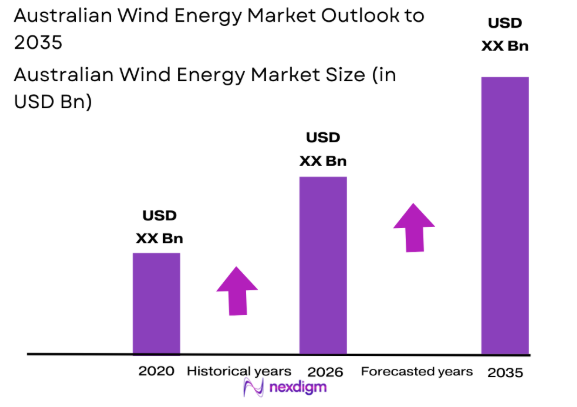
The Australian Wind Energy market is currently valued at USD ~ billion, driven by growing governmental support for renewable energy projects and advancements in turbine technology. The market is primarily fueled by long-term investment from both private and public sectors, with significant subsidies and incentives aimed at reducing carbon emissions. Wind energy in Australia is also benefiting from increased demand for clean energy, enhancing its role in the country’s energy transition. As renewable energy sources like wind power become more competitive, they are expected to continue growing rapidly in the coming years.
Several regions in Australia dominate the wind energy market, including South Australia, Victoria, and New South Wales. These areas possess ideal geographic conditions such as high wind speeds, making them optimal for wind farm installations. Government initiatives and local policies that promote the expansion of renewable energy projects have played a crucial role in driving demand in these regions. Additionally, these areas have seen increasing infrastructure development, which further supports the wind energy market’s growth trajectory.
Market Segmentation
By Product Type
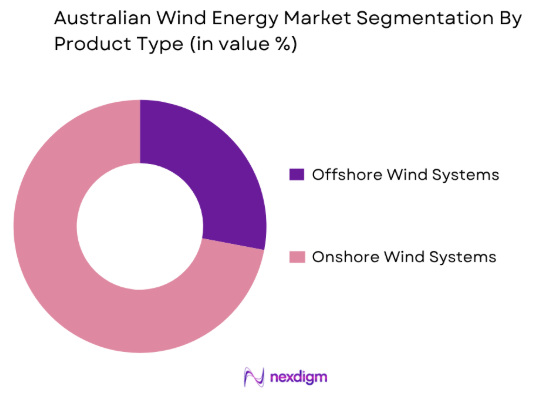
The Australian wind energy market is segmented by product type into offshore and onshore wind systems. Recently, onshore wind systems have dominated the market share due to factors such as infrastructure availability, lower installation costs, and faster project turnaround times compared to offshore wind systems. The cost-effectiveness of onshore wind systems, along with the expansion of wind farms in key states like South Australia, has led to increased installations. Offshore wind projects, while gaining momentum, still face challenges like higher investment and longer development timelines.
By Platform Type
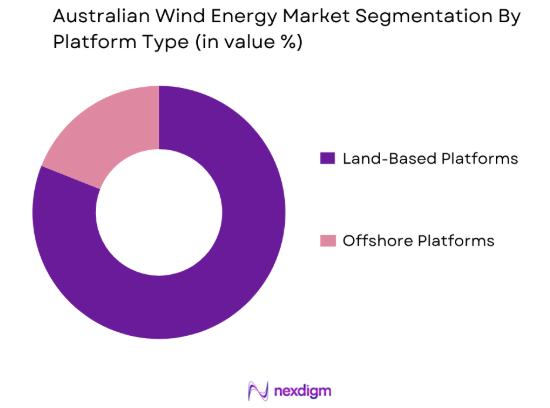
The Australian wind energy market is also segmented by platform type, with land-based platforms and offshore platforms being the key categories. Land-based platforms have recently captured a dominant market share due to their established infrastructure, cost-effectiveness, and government incentives promoting land-based energy generation. Offshore platforms are gaining traction but face delays due to regulatory hurdles and higher initial capital costs. The trend toward land-based solutions is expected to remain strong in the short term, although offshore platforms will play a significant role in the long-term market landscape.
Competitive Landscape
The Australian wind energy market is highly competitive, with a mix of established global players and local developers shaping the industry’s growth. The market has witnessed consolidation, with several large players collaborating with local governments to meet renewable energy targets. This has led to an increased presence of foreign players, who bring advanced technology and experience to Australia’s expanding renewable sector. Additionally, local players are ramping up their capabilities to cater to the rising demand for wind energy, especially in areas like offshore wind energy development. The competitive landscape is dynamic, as new players enter the market and global partnerships continue to evolve.
| Company Name | Establishment Year | Headquarters | Technology Focus | Market Reach | Key Products | Revenue (USD) | Additional Parameter |
| Vestas | 1945 | Denmark | ~ | ~ | ~ | ~ | ~ |
| Siemens Gamesa | 1976 | Spain | ~ | ~ | ~ | ~ | ~ |
| GE Renewable Energy | 1892 | USA | ~ | ~ | ~ | ~ | ~ |
| Acciona | 1862 | Spain | ~ | ~ | ~ | ~ | ~ |
| Suzlon Energy | 1995 | India | ~ | ~ | ~ | ~ | ~ |
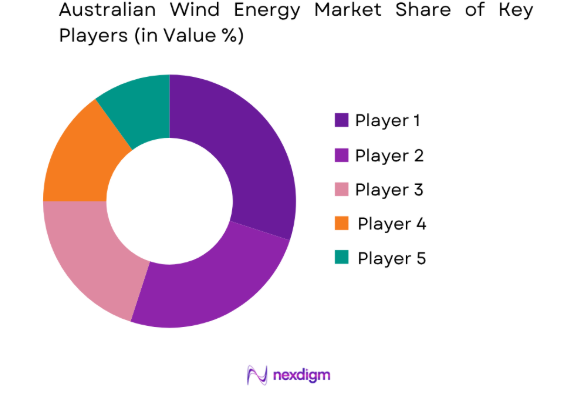
Australian Wind Energy Market Analysis
Growth Drivers
Government Investments in Renewable Energy
Governmental support is the primary growth driver in the Australian wind energy market. This support includes tax incentives, subsidies, and long-term renewable energy targets, which are crucial in fostering the sector’s development. As Australia commits to net-zero emissions, significant investments have been made toward wind energy projects, particularly in regions like South Australia and Victoria, known for their ideal wind conditions. These investments are part of a broader government strategy to transition to cleaner energy sources. By prioritizing renewable energy, the government is ensuring that wind energy plays a pivotal role in Australia’s efforts to reduce carbon emissions and enhance energy sustainability.
Technological Advancements in Wind Turbine Design
Technological advancements in wind turbine design are another key growth driver in the Australian wind energy market. Innovations have significantly improved turbine efficiency and reduced operational costs, making wind energy more competitive with other energy sources. Advancements in materials science have led to the production of larger, more efficient turbines capable of harnessing higher wind speeds. These improvements not only boost energy output but also lower maintenance costs, making wind energy projects more economically viable. As turbine technology continues to evolve, it encourages further investments in wind energy infrastructure, contributing to the continued growth and expansion of the industry across Australia.
Market Challenges
High Capital Investment
A significant barrier to the growth of wind energy in Australia, despite favorable government policies, is the high initial capital investment required for wind turbine installations and infrastructure. The upfront costs for wind farms, particularly offshore projects, remain a major challenge. Although costs have decreased over time, they are still substantial, making it difficult for both local and international developers to secure financing for large-scale projects. Additionally, the long payback periods associated with these projects can deter potential investors, as the return on investment is often slow. This financial challenge continues to be a key obstacle for the expansion of wind energy in the country.
Grid Integration and Storage Issues
A major challenge for the Australian wind energy market is integrating wind power into the existing grid. Since wind energy is intermittent, it can cause stability issues within the grid. Although advancements in energy storage technology have partially addressed this problem, the cost of implementing large-scale storage systems remains high. Additionally, the current grid infrastructure is often not equipped to manage the large influx of renewable energy, leading to inefficiencies in energy distribution and utilization. As wind energy adoption increases, overcoming these grid integration challenges will be crucial for maximizing the potential of renewable energy and ensuring a reliable power supply.
Opportunities
Expansion of Offshore Wind Energy Projects
Australia has significant untapped potential in offshore wind energy, particularly off the coasts of South Australia and Victoria, where wind speeds are optimal for power generation. With the global shift toward renewable energy and advancements in floating wind turbine technology, offshore wind farms are expected to become a crucial part of Australia’s renewable energy mix. The Australian government is already exploring offshore wind projects, and private developers are also increasingly looking to capitalize on this opportunity. The development of offshore wind farms will not only boost renewable energy generation but also create new jobs and infrastructure development, further driving the economy.
Partnerships with International Firms
A significant growth opportunity for the Australian wind energy market lies in international collaborations. Partnerships with global wind energy players can bring advanced technology, expertise, and capital to Australian projects. These collaborations are especially crucial for offshore wind ventures, which require substantial investment and specialized knowledge. By partnering with international firms, Australia can expedite the development of large-scale wind energy projects. This would not only enhance the country’s renewable energy infrastructure but also strengthen its position as a regional leader in the Asia Pacific renewable energy sector. International collaborations will play a vital role in unlocking the full potential of Australia’s wind energy market.
Future Outlook
The future outlook for Australia’s wind energy market remains promising, with strong growth anticipated over the next five years. The country’s commitment to renewable energy and reducing carbon emissions ensures continued investments in wind energy. Technological advancements, along with improved grid integration capabilities, will drive further adoption of wind power. Additionally, as Australia focuses on offshore wind energy, new opportunities are expected to emerge, particularly in regions with ideal wind conditions. Government policies and incentives will continue to play a crucial role in shaping the market’s future, making wind energy an integral part of Australia’s sustainable energy mix.
Major Players
- Vestas
- Siemens Gamesa
- GE Renewable Energy
- Acciona
- Suzlon Energy
- Nordex
- Siemens Energy
- Envision Energy
- Goldwind
- Iberdrola
- RES Group
- Ørsted
- Senvion
- InfigenEnergy
- Pattern Energy
Key Target Audience
- Investments and venture capitalist firms
- Government and regulatory bodies
- Wind energy developers
- Renewable energy infrastructure providers
- Utility companies
- Environmental agencies
- Corporate sustainability teams
- Energy trading firms
Research Methodology
Step 1: Identification of Key Variables
In this step, we identify critical market variables, including technological advancements, governmental policies, and market demands. These variables are essential for understanding market trends and defining the scope of the research.
Step 2: Market Analysis and Construction
In this step, we analyze the current state of the market, including historical data, industry trends, and competitor analysis. This helps in constructing a comprehensive market framework.
Step 3: Hypothesis Validation and Expert Consultation
We validate market hypotheses by consulting with industry experts and stakeholders, including government officials, private companies, and regulatory bodies. This helps ensure the accuracy of our market analysis.
Step 4: Research Synthesis and Final Output
This final step involves synthesizing the gathered data and insights into a cohesive report. The final output provides a detailed market analysis, covering all critical aspects of the market, including growth drivers, challenges, and opportunities.

- Executive Summary
- Research Methodology (Definitions, Scope, Industry Assumptions, Market Sizing Approach, Primary & Secondary Research Framework, Data Collection & Verification Protocol, Analytic Models & Forecast Methodology, Limitations & Research Validity Checks)

- Market Definition and Scope
- Value Chain & Stakeholder Ecosystem
- Regulatory / Certification Landscape
- Sector Dynamics Affecting Demand
- Strategic Initiatives & Infrastructure Growth

- Growth Drivers
Increased Government Investments in Renewable Energy
Technological Advancements in Wind Turbine Efficiency
Growing Demand for Clean Energy
Reduction in Wind Energy Production Costs
Government Incentives and Subsidies - Market Challenges
High Initial Capital Investment
Geographical and Environmental Limitations
Intermittency and Grid Integration Issues
Complex Regulatory Requirements
Competition from Alternative Renewable Energy Sources - Market Opportunities
Expansion of Offshore Wind Energy Capacity
Advancements in Floating Wind Turbines
Partnerships with Private Sector for Enhanced Efficiency - Trends
Rise in Offshore Wind Energy Projects
Increasing Investment in Wind Energy Storage Solutions
Emerging Hybrid Wind-Solar Energy Systems - Government Regulations
- SWOT Analysis of Key Competitors
- Porter’s Five Forces

- By Market Value, 2020-2025
- By Installed Units, 2020-2025
- By Average System Price, 2020-2025
- By System Complexity Tier, 2020-2025

- By System Type (In Value%)
Offshore Wind Systems
Onshore Wind Systems
Hybrid Systems
Floating Wind Turbines
Small-Scale Wind Systems - By Platform Type (In Value%)
Land-Based Platforms
Offshore Platforms
Floating Platforms
Hybrid Platforms
Distributed Platforms - By Fitment Type (In Value%)
Onshore Solutions
Offshore Solutions
Integrated Solutions
Modular Systems
Cloud-Based Solutions - By End User Segment (In Value%)
Utility Companies
Government & Regulatory Agencies
Private Developers
Energy Producers
Commercial Users - By Procurement Channel (In Value%)
Direct Procurement
Government Tenders
Private Sector Procurement
Online Bidding Platforms
Third-Party Distributors

- Market Share Analysis
- Cross Comparison Parameters (System Type, Platform Type, Procurement Channel, End User Segment, Fitment Type, Market Value, Installed Units, Price per Unit, Growth Rate, Regulatory Support)
- SWOT Analysis of Key Competitors
- Pricing & Procurement Analysis
- Key Players
Vestas
Siemens Gamesa
GE Renewable Energy
Suzlon Energy
Nordex
Acciona
MHI Vestas Offshore Wind
Goldwind
Enercon
Brookfield Renewable Partners
Orsted
The Renewables Infrastructure Group
Senvion
Pattern Energy
Infigen Energy

- Growth in Utility-Scale Wind Energy Projects
- Government Involvement in Renewable Energy Initiatives
- Private Developers’ Investment in Wind Energy
- Rising Adoption of Green Energy by Commercial Entities

- Forecast Market Value, 2026-2035
- Forecast Installed Units, 2026-2035
- Price Forecast by System Tier, 2026-2035
- Future Demand by Platform, 2026-2035


 Request a Sample
 Ask for Customization
 Get a Quote
 Enquire Now