

 Download PDF
Market Overview
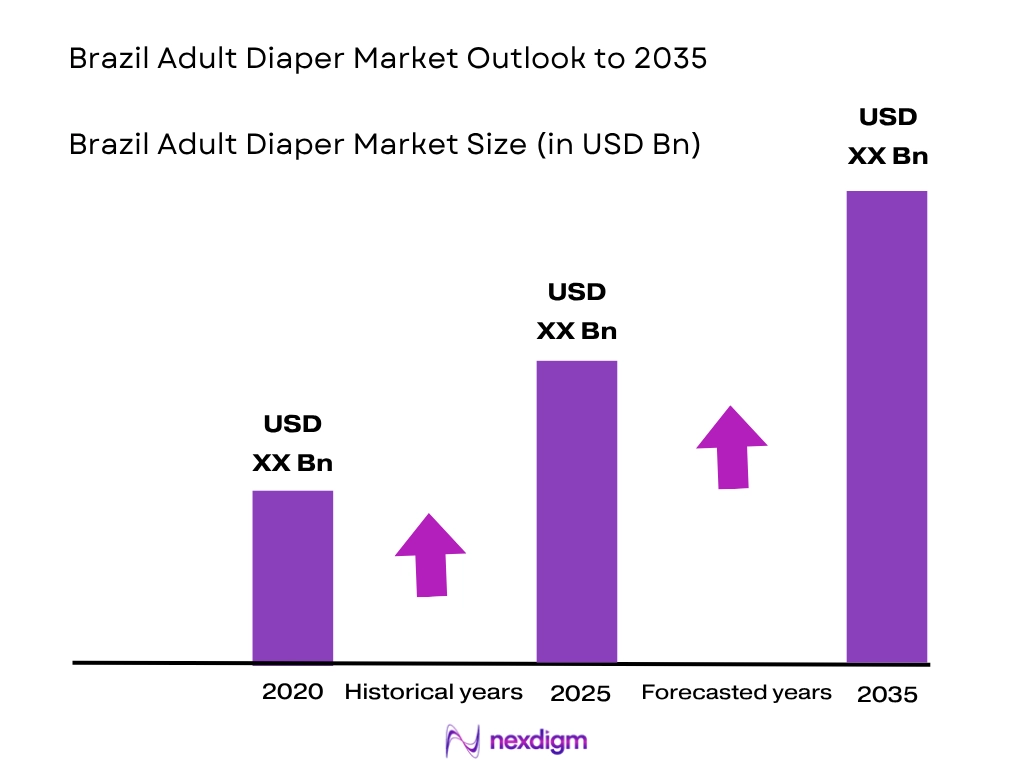
The Brazil adult diaper market is valued at USD ~ billion, driven by a rapidly aging population, increasing incontinence cases, and higher healthcare expenditures. As the country witnesses a growing elderly population and more awareness around incontinence, demand for adult diapers is set to rise. The market’s expansion is also attributed to government healthcare policies supporting elderly care, and the increasing acceptance of incontinence products in healthcare institutions. With the rise of e-commerce and retail accessibility, this market is expected to maintain steady growth.
Brazil’s adult diaper market is primarily dominated by the Southeast region, particularly São Paulo, the country’s largest metropolitan area. This region leads in both demand and supply due to its dense population, high-income demographics, and greater access to healthcare services. Additionally, cities like Rio de Janeiro and Belo Horizonte also play pivotal roles in the market’s development, as they house a significant number of elderly individuals and health-conscious consumers. Regional variations in healthcare quality and consumer behavior contribute to the dominance of these regions.
Market Segmentation
By Product Type
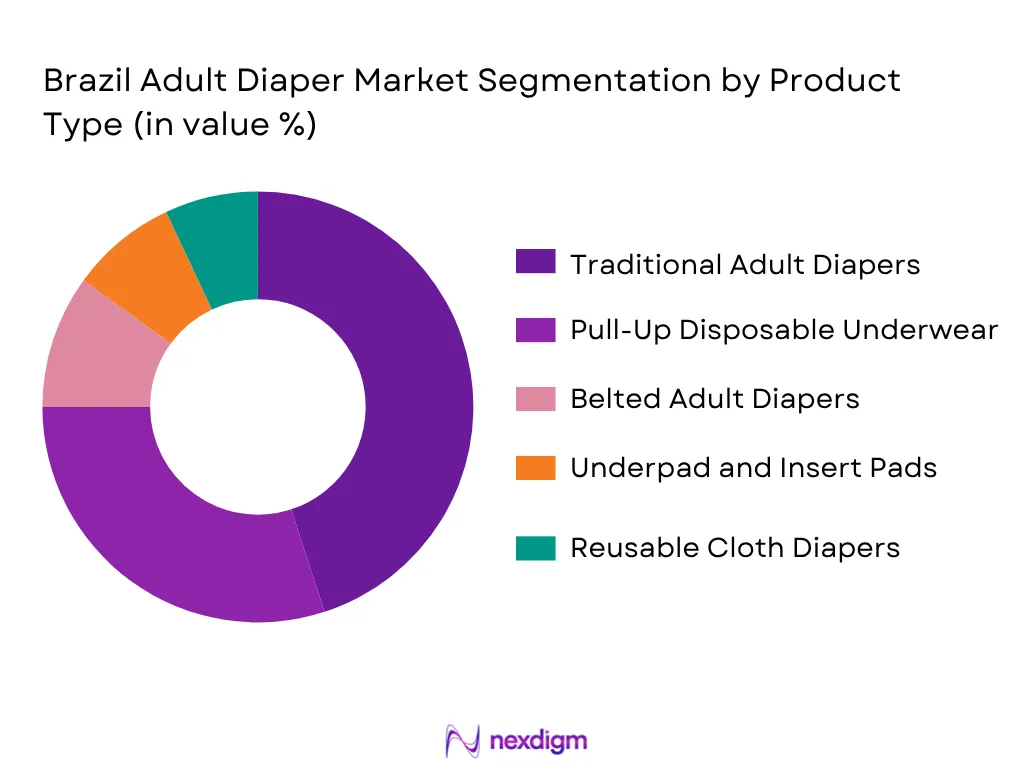
The Brazil adult diaper market is segmented by product type into traditional adult diapers, pull-up disposable underwear, belt-style diapers, underpads, and reusable cloth diapers. Among these, traditional adult diapers dominate the market due to their cost-effectiveness and broad acceptance. These diapers, including both standard tab and pant style, are especially popular in healthcare settings and long-term care facilities, where comfort and functionality are prioritized. Brands like Kimberly-Clark and Procter & Gamble have established strong market leadership with these product types, offering reliability and wide availability.
By End-User/Application
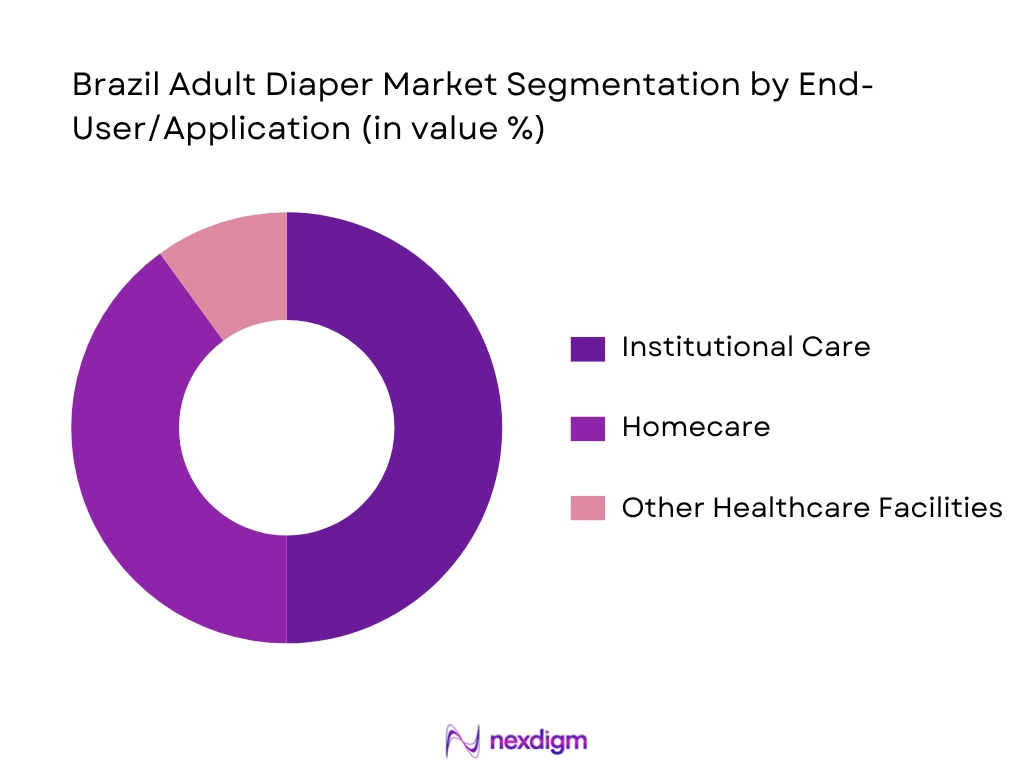
The market is also segmented by end-user, including institutional care, homecare, and other healthcare facilities. Institutional care, particularly in hospitals, nursing homes, and assisted living facilities, holds the largest market share. This dominance is attributed to the rising elderly population and the increasing institutionalization of elderly care. Furthermore, the focus on hygiene and health safety within these facilities makes adult diapers a necessary product. Hospitals and nursing homes continue to rely heavily on these products for elderly patients, leading to a steady demand in institutional settings.
Competitive Landscape
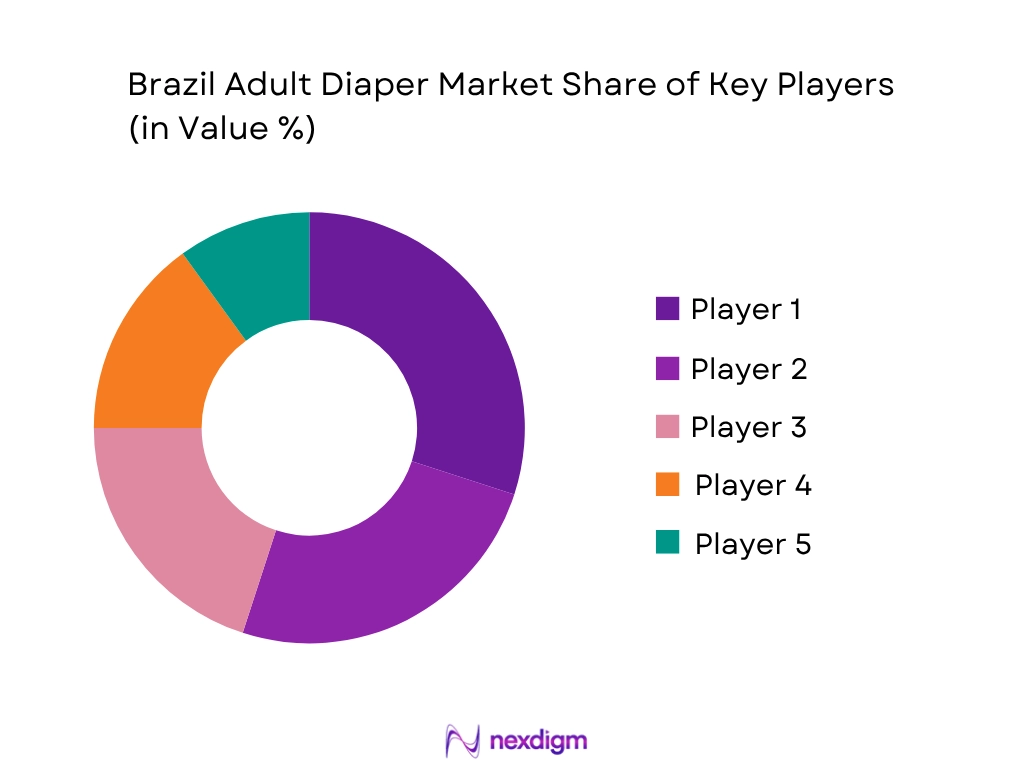
The Brazil adult diaper market is dominated by a few global players who control the majority of market share. Companies such as Kimberly-Clark, Procter & Gamble, and Unicharm lead the market, with a strong presence across retail and e-commerce platforms. Their dominance is due to well-established brand recognition, robust distribution networks, and a wide product portfolio addressing various consumer needs, from institutional care to homecare.
| Company | Establishment Year | Headquarters | Revenue (USD) | Key Products | Market Presence | R&D Focus |
| Kimberly-Clark | 1872 | USA | ~ | ~ | ~ | ~ |
| Procter & Gamble | 1837 | USA | ~ | ~ | ~ | ~ |
| Unicharm | 1961 | Japan | ~ | ~ | ~ | ~ |
| Essity | 1929 | Sweden | ~ | ~ | ~ | ~ |
| Ontex Group NV | 1979 | Belgium | ~ | ~ | ~ | ~ |
Brazil Adult Diaper Market Analysis
Growth Drivers
Aging Demographics
Brazil’s aging population is one of the primary drivers of the adult diaper market. As per the World Bank, the median age of Brazil’s population has been steadily increasing, with over 15.4% of the population aged 60 years and older in 2024, and this proportion is expected to rise in the coming years. According to the Brazilian Institute of Geography and Statistics (IBGE), the population of people aged 60 and over is projected to exceed 37 million by 2026. This growing elderly demographic will significantly drive demand for incontinence care products such as adult diapers, as older individuals are more likely to experience incontinence issues. Additionally, Brazil’s life expectancy reached 77 years in 2024, further contributing to the growing number of elderly people requiring adult diapers. The rise in the elderly population coupled with increased healthcare access and the improved quality of life for the elderly is poised to sustain and expand market growth in the adult diaper sector.
Chronic Disease Prevalence
Brazil is experiencing a rise in chronic diseases, which significantly contribute to the demand for adult diapers. The World Health Organization (WHO) reports that over 60% of adults aged 65 and above in Brazil are affected by chronic conditions such as diabetes, cardiovascular diseases, and neurological disorders, which often lead to incontinence. Furthermore, the National Health Survey (PNS) of Brazil highlights that approximately 3.4 million people are living with some form of incontinence due to chronic diseases as of 2024. These medical conditions not only reduce mobility but also increase the necessity for adult diapers, as individuals with chronic diseases often face limited bladder control. As Brazil continues to focus on healthcare reform and chronic disease prevention, the demand for adult incontinence products is projected to remain strong. Moreover, the growing elderly population with chronic diseases further reinforces the growth of the adult diaper market.
Market Challenges
Raw Material Costs
The rising costs of raw materials used in manufacturing adult diapers pose a challenge for the market. In 2024, the price of key materials such as fluff pulp, nonwoven fabric, and super absorbent polymers has surged due to global supply chain disruptions, which started in the aftermath of the COVID-19 pandemic. The Brazilian government, through the Ministry of Industry, Commerce, and Services, reports that Brazil imports over 70% of its raw materials for manufacturing hygiene products, including adult diapers. The fluctuating exchange rate between the Brazilian Real and the US Dollar has further increased the costs of these imported materials, directly impacting manufacturers’ production costs. As raw material prices continue to rise, companies in the adult diaper market must either absorb the increased costs or pass them on to consumers, potentially affecting sales and market competition.
Import Dependence
Brazil’s dependency on imports for adult diaper manufacturing remains a significant challenge in the market. Over 60% of the raw materials and finished goods used in the Brazilian adult diaper sector are imported, particularly from the United States and Europe. This high level of import dependence exposes the market to risks, such as tariffs, international trade disputes, and currency fluctuations. As a result, even though Brazil produces a significant volume of adult diapers locally, the prices of these products are influenced by global supply chain issues and international shipping costs. The government of Brazil has recognized this issue and is attempting to bolster domestic production capabilities, but the current reliance on imports still restricts the market’s stability. In 2024, the Brazilian government is focusing on providing incentives to local manufacturers through tax breaks, which may gradually reduce import dependence, but for now, this challenge continues to hinder price competitiveness and market growth.
Market Opportunities
Product Innovation
In 2024, product innovation remains a key opportunity for Brazil’s adult diaper market. Companies are increasingly focusing on product differentiation, including advanced absorbency, skin-friendly materials, and eco-friendly options. For example, the rise in demand for biodegradable adult diapers in Brazil has led manufacturers to explore sustainable alternatives to traditional materials. In addition, there has been a noticeable shift toward premium products that focus on better comfort, fit, and odor control, catering to the growing health-conscious consumer base. With Brazil’s aging population and the increasing incidence of incontinence, there is room for companies to capitalize on the demand for specialized products, such as diapers for individuals with specific medical needs, including those with mobility issues or sensitive skin. Moreover, local brands are innovating with price-sensitive product lines to target middle-income consumers, expanding the market’s reach. This focus on product innovation is poised to drive further market growth as companies strive to meet the diverse needs of their customers.
E-commerce Expansion
The ongoing expansion of e-commerce in Brazil presents a significant opportunity for the adult diaper market. As per a report from the Brazilian E-commerce Association (ABComm), the online retail market in Brazil has grown by 20% annually, reaching USD 45 billion in 2024. This surge in online shopping is largely driven by the increased use of smartphones and internet access in urban and rural areas, which has made shopping more accessible. The convenience of home delivery and the growing preference for online purchases are factors that are reshaping the adult diaper market in Brazil. E-commerce platforms allow consumers to buy products discreetly, especially for sensitive items like adult diapers, which are often viewed with stigma. With an expanding digital infrastructure and increasing internet penetration, online retailers are now better equipped to serve a wider demographic, particularly elderly individuals and caregivers. As a result, e-commerce is expected to remain a key channel for distributing adult diapers, offering growth prospects for both domestic and international players in the market.
Future Outlook
Over the next decade, the Brazil adult diaper market is expected to grow significantly, driven by the continuing rise in the elderly population, increasing awareness of incontinence, and the growing demand for healthcare products. Government initiatives aimed at improving elderly care facilities, along with the expansion of e-commerce, will further boost the adoption of adult diapers. Technological advancements, such as improvements in absorbency and comfort, will also enhance the product offering and appeal to consumers.
Major Players
- Kimberly-Clark Corporation
- Procter & Gamble
- Unicharm Corporation
- Essity AB
- Ontex Group NV
- Softys (CMPC Tissue)
- Hypera Pharma
- Santher
- Evergreen Indústria e Comércio
- Parentex S.A.
- Kifral Indústria
- Hartmann
- ABENA A/S
- Telefraldas Ltda.
- Natura &Co
Key Target Audience
- Investments and Venture Capitalist Firms
- Government and Regulatory Bodies (ANVISA, Ministry of Health, Brazil)
- Healthcare Providers and Institutions
- Distributors and Retail Chains
- E-commerce Platforms
- Private Label Manufacturers
- Health Insurance Providers
- Elderly Care Centers and Assisted Living Facilities
Research Methodology
Step 1: Identification of Key Variables
The research begins with defining all crucial market variables such as product types, distribution channels, and end-user segments. This phase involves a combination of desk research, public databases, and proprietary industry data to map the entire adult diaper ecosystem in Brazil.
Step 2: Market Analysis and Construction
This step involves analyzing historical market data to understand market trends, growth rates, and competitive dynamics. Key indicators like price per unit, distribution reach, and consumer demand are used to estimate market size and segment growth.
Step 3: Hypothesis Validation and Expert Consultation
Market assumptions are tested through consultations with experts in the field, including senior executives from top companies and industry analysts. These discussions help in refining the market outlook and ensuring accurate data.
Step 4: Research Synthesis and Final Output
The final phase involves synthesizing all the gathered data into a comprehensive market report. Insights are gathered from both bottom-up and top-down approaches, ensuring a balanced and validated perspective of the Brazil adult diaper market.

- Executive Summary
- Research Methodology (Adult Diaper Market Definitions, Urinary/Fecal/Mixed Incontinence Assumptions, TAM/SAM/SOM Framework, Top-Down Sizing, Bottom-Up SKU Mapping, Retail Scanner Inputs, Institutional Procurement Inputs, DME Supplier Checks, E-Commerce Listing Analysis, Primary Interviews, Limitations)

- Definition and Scope of Adult Diapers in Brazil
- Market Genesis and Evolution
- Timeline of Key Developments
- Supply Chain and Value Chain Analysis
- Market Structure and Business Environment
- Demand Ecosystem Across Retail, Homecare, and Institutional Care

- Growth Drivers (Aging Demographics, Chronic Disease Prevalence, Healthcare Spend, DTC Access, Stigma Reduction)
- Market Challenges (Raw Material Costs, Import Dependence, Stigma of Incontinence, , Price Sensitivity, Reimbursement Gaps, Product Fit Issues)
- Opportunities (Product Innovation, E-commerce Expansion, Underserved Regions, Bariatric Products, Sustainable Absorbents)
- Key Trends Pull-Up Preference, Discreet Packaging, Gendered Products, Odor Neutralization, Caregiver Convenience, Premiumization, Sustainability, Private-Label Growth)
- Government & Regulation (ANVISA Quality Standards, Public Health Programs, Medicaid Coverage)
- SWOT Analysis (Brand Trust, Aging Demand, Stigma, Reimbursement, Premiumization, Private Label Threat)
- Stakeholder Ecosystem (Manufacturers, Retailers, DME Suppliers, Hospitals, Caregivers, NGOs, Government Initiatives)
- Porter’s Five Forces (Competitive Rivalry, Supplier Bargaining, Buyer Power, New Entrants, Substitution Risk)

- By Value (2020–2025)
- By Volume (2020–2025)
- By Average Selling Price (2020-2025)

- By Product Type (In Value%)
Traditional Adult Diapers
Pull-Up Disposable Underwear
Belted/Anatomic Adult Diapers
Underpad and Insert Pads
Reusable Cloth/Pant-Style Diapers - By End-User/Application (In Value %)
Hospitals
Nursing Homes
Assisted Living
Homecare
Rehabilitation Centers - By Distribution Channel (In Value %)
Pharmacies and Drugstores
Supermarkets/Hypermarkets and Retail
Online Retail/E-commerce
Medical/Specialty Stores
Direct Tender/B2B - By Region (In Value %)
North Region
Northeast Region
Central-West Region
Southeast Region
South Region - By Price Tier (In Value %)
Economy Private Label
Mid-Tier Branded Products
Premium Retail Products
Clinical/Institutional Grade Products
Subscription-Based Specialty Products

- Market Share of Major Players (Value Share, Volume Share, Retail Share, Institutional Share, Online Visibility, Product Format, Channel)
- Cross-Company Comparison Parameters (Product Portfolio, Capacity, Distribution Reach, Pricing Strategy, R&D Focus, Market Share)
- SWOT Analysis of Major Players (Dependence on Retail Channels, Institutional Strength, Brand Recall, Premium Innovation, Private Label Risk)
- SKU-Level Pricing Analysis (Briefs, Pull-Ups, Guards, Pads, Underpads, Overnight Products, Bariatric Products)
- Recent Strategic Developments (Product Launches, Packaging Redesigns, DTC Expansion, Retail Partnerships, Institutional Contracts, Sustainability Initiatives)
- Detailed Profiles of Major Companies
Kimberly-Clark Corporation
Unicharm Corporation
Essity AB (TENA, Liberdade)
Ontex Group NV
Softys
Hypera Pharma
Santher
Procter & Gamble
Geriamax
Natural Master
Telefraldas Ltd.
Parentex S.A.
Kifral Indústria
Hartmann
ABENA A/S

- Market Demand and Utilization (Institutional vs Homecare, Daily Unit Usage, Nighttime Usage, Change Frequency, Absorbency Need, Care Setting)
- Purchasing Power and Reimbursement (Out-of-Pocket Spend, Insurance Support, Medicaid Coverage, Bulk Buying, Subscription Savings, SUS Subsidies, Private Insurance Coverage)
- Consumer Needs, Preferences and Pain Points (Absorbency, Comfort, Skin Health, Discreet Fit, Odor Control, Caregiver Convenience)
- End-User Decision-Making Process (Self-Purchase, Caregiver Influence, Brand Trust, Nurse Recommendation, Physician Referral, Facility Procurement, Authorization)

- By Value (2026–2035)
- By Volume (2026–2035)
- By Average Price (2026–2035)


 Request a Sample
 Ask for Customization
 Get a Quote
 Enquire Now