
 Download PDF
Market Overview
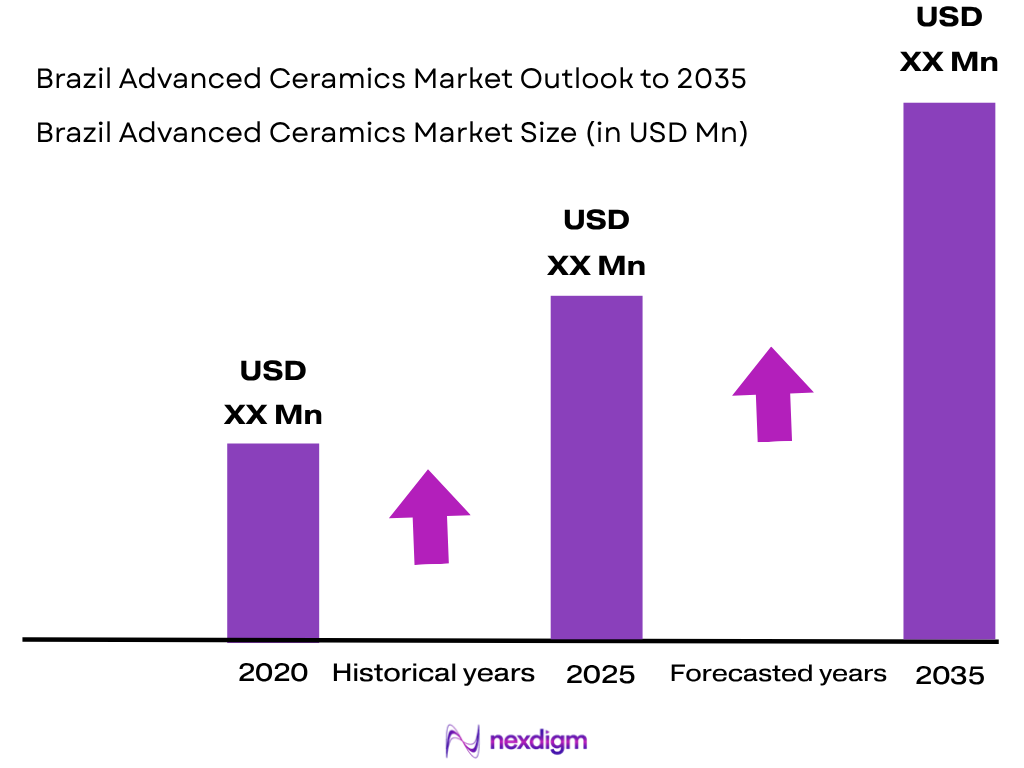
The Brazil Advanced Ceramics Market is valued at ~USD XX million in 2024, compared with ~USD XX million in 2023, supported by increasing requirements for high-performance materials across electronics, automotive, industrial machinery, medical devices, energy, and aerospace applications. Demand is driven by the superior thermal resistance, electrical insulation, wear resistance, corrosion resistance, hardness, and dimensional stability of advanced ceramics. Increasing industrial automation, electronics manufacturing, electric mobility, and high-performance component requirements are further expanding the addressable application base.
São Paulo, Campinas, Manaus, Curitiba, Belo Horizonte, and Rio de Janeiro represent important demand and manufacturing centers for the Brazil Advanced Ceramics Market because of their concentration of electronics, automotive, industrial equipment, aerospace, healthcare, and research activities. São Paulo provides the country’s broadest industrial and technology ecosystem, while Campinas has strong electronics and advanced-materials capabilities. Manaus is important because of its electronics manufacturing base, whereas Curitiba and Belo Horizonte support automotive and industrial applications. Rio de Janeiro contributes through energy, aerospace, and industrial engineering activities.
Market Segmentation
By Material Type
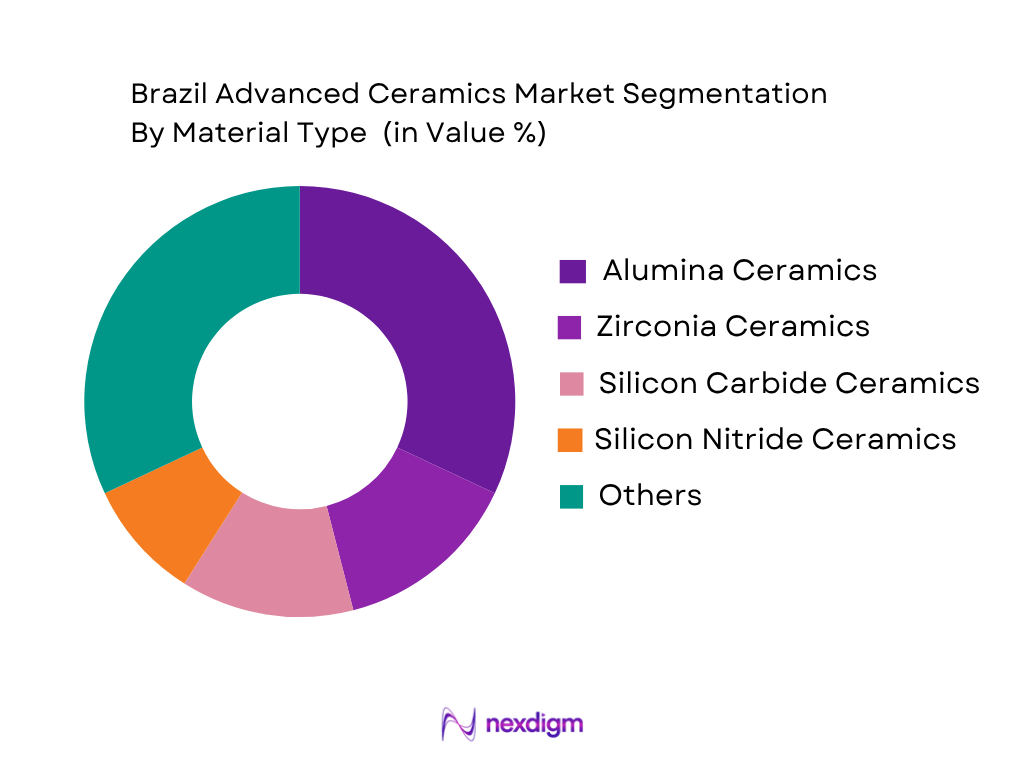
The Brazil Advanced Ceramics Market is segmented by material type into alumina, zirconia, silicon carbide, silicon nitride, aluminum nitride, titanate, ferrite, zirconate, cordierite, mullite, and other advanced ceramic materials. Alumina is estimated to hold the dominant share of ~XX% in 2024, supported by its broad combination of hardness, electrical insulation, chemical stability, wear resistance, and comparatively versatile processing characteristics. Alumina is used across electrical insulators, substrates, industrial wear components, medical applications, sensor assemblies, and high-temperature components. Its suitability for both standard and engineered ceramic components makes it relevant to multiple Brazilian industries rather than being dependent on a single end-use sector. Zirconia follows as an important material for applications requiring higher fracture toughness and wear resistance, particularly dental and medical components and selected industrial parts. Silicon carbide and silicon nitride are increasingly relevant for demanding thermal, mechanical, and wear applications. Aluminum nitride also provides opportunities in electronics because of its combination of electrical insulation and thermal conductivity. The broad application base of alumina therefore supports its leading position within Brazil’s advanced ceramics material mix.
By Application
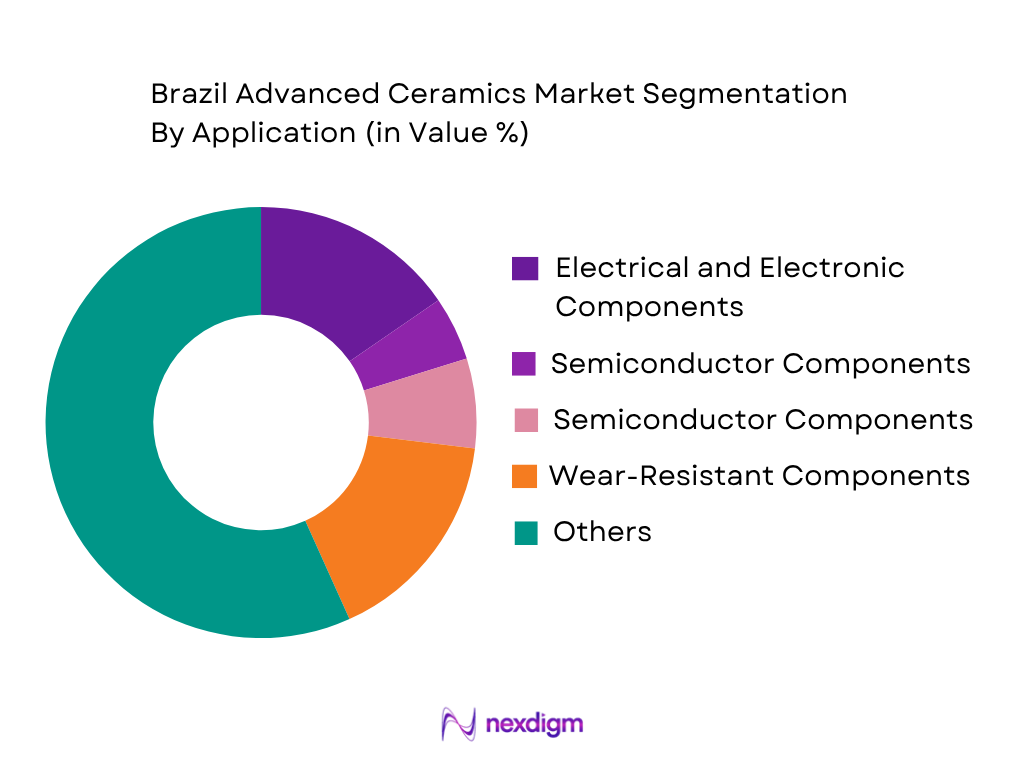
The Brazil Advanced Ceramics Market is segmented by application into electrical and electronic components, semiconductor components, thermal management components, wear-resistant components, ceramic insulators, ceramic seals and bearings, medical and bioceramic components, automotive components, aerospace components, industrial components, and energy components. Electrical and electronic components are estimated to represent the largest application share of ~XX% in 2024, supported by the requirement for electrically insulating, thermally stable, dimensionally precise, and miniaturized components. Ceramic substrates, insulating parts, dielectric components, ferrites, electronic packages, and thermal management materials are increasingly important as electronic systems become more compact and performance-intensive. Brazil’s established electronics manufacturing base, particularly in Manaus and other industrial clusters, provides an important demand platform. Automotive applications represent another significant area because sensors, insulation systems, sealing components, and high-temperature parts require materials capable of maintaining performance under demanding operating conditions. Medical and dental ceramics benefit from zirconia and alumina’s biocompatibility and wear resistance, while industrial applications use advanced ceramics for bearings, seals, cutting components, nozzles, and wear-resistant parts. The breadth of electronic and electrical applications gives this segment a comparatively strong position in the Brazilian market.
Competitive Landscape
The Brazil Advanced Ceramics Market includes global advanced-material manufacturers alongside specialized ceramic component producers serving electronics, automotive, medical, industrial, energy, and aerospace customers. Competition is shaped by material formulation expertise, precision manufacturing capabilities, application engineering, qualification credentials, product customization, and the ability to supply technically demanding components. Leading international companies benefit from broad material portfolios and established technology platforms, while specialized manufacturers compete through customized components, technical support, and proximity to industrial customers.
| Company | Establishment Year | Headquarters | Key Material Portfolio | Core Applications | Manufacturing Capabilities | Customization Capability | Brazil Market Position |
| CeramTec GmbH | ~1903 | Germany | ~ | ~ | ~ | ~ | ~ |
| Morgan Advanced Materials | ~1856 | United Kingdom | ~ | ~ | ~ | ~ | ~ |
| CoorsTek | ~1910 | United States | ~ | ~ | ~ | ~ | ~ |
| KYOCERA Corporation | ~1959 | Japan | ~ | ~ | ~ | ~ | ~ |
| Saint-Gobain | ~1665 | France | ~ | ~ | ~ | ~ | ~ |
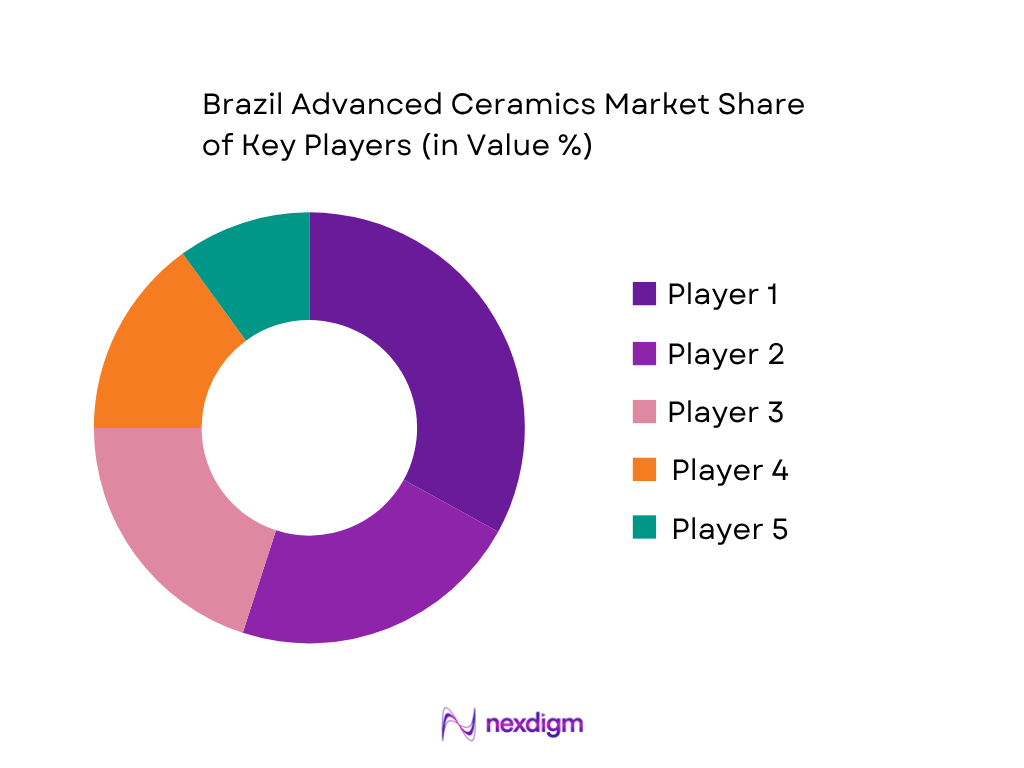
Brazil Advanced Ceramics Market Analysis
Growth Drivers
Electronics Manufacturing Expansion
Brazil’s expanding electronics and electrical-equipment production is strengthening the addressable demand for advanced ceramics used in substrates, insulators, dielectric components, heat-management parts and wear-resistant components. IBGE reported that industrial production increased by 3.1% in 2024, compared with 0.1% in 2023, while production of computer equipment, electronic and optical products increased 14.7% and electrical machinery, apparatus and materials increased 12.2%. The same IBGE dataset recorded 9.1% growth in capital-goods production, indicating stronger investment-related industrial activity. This environment supports greater use of alumina, aluminum nitride, silicon carbide, ferrites and other engineered ceramics where electrical insulation, dimensional stability and thermal resistance are required. The World Bank recorded Brazil’s real GDP growth at 3.4% in 2024, providing an additional macroeconomic foundation for industrial demand. The country’s semiconductor policy framework is also becoming more supportive: Law 14,968 of September 2024 established the Brasil Semicon program to strengthen semiconductor research, development, design, production and application. Together, stronger electronics output, capital-goods production and semiconductor-industry policy create a more favorable environment for domestic demand for advanced ceramic components and materials.
Automotive Electronics Integration
Brazil’s large vehicle manufacturing base creates demand for advanced ceramics in electronic control systems, sensors, ignition components, electrical insulation, wear-resistant parts and thermal-management applications. ANFAVEA reported 2.550 million vehicles produced in 2024, compared with the corresponding 2023 level, representing 9.7% growth, while vehicle registrations reached 2.635 million units. IBGE separately recorded 12.5% growth in motor vehicles, trailers and bodies within industrial production during 2024 and 5.3% growth in automobile production among durable consumer goods. The increasing electronic content of vehicles creates additional requirements for ceramic substrates, dielectric materials, insulating components and high-temperature parts, particularly as Brazil develops electrified and electronically intensive vehicle platforms. ANFAVEA also reported 463,000 imported vehicles during 2024, demonstrating the scale of vehicle activity and competitive technology exposure in the domestic market. The broader industrial environment reinforces this demand: Brazil’s overall industrial production expanded 3.1% in 2024, while capital-goods output increased 9.1% according to IBGE. These indicators support continued investment in automotive production and associated component manufacturing, creating opportunities for advanced ceramics that provide electrical isolation, thermal stability, dimensional precision and resistance to harsh operating environments.
Market Challenges
High Manufacturing Complexity
Advanced ceramic manufacturing remains technically demanding because products must achieve tightly controlled composition, particle size, purity, forming characteristics, sintering behavior, density and dimensional tolerances. Brazil’s industrial environment is expanding, but the domestic production base for specialized high-performance materials remains more limited than the downstream manufacturing base. IBGE reported 3.1% industrial-production growth in 2024, with particularly strong increases in computer, electronic and optical products of 14.7%, electrical machinery of 12.2%, and capital goods of 9.1%. These figures demonstrate growing potential demand while also highlighting the need for technically capable local suppliers. Ceramic processing often requires specialized powder preparation, precision forming, controlled-atmosphere sintering, machining and advanced inspection, creating barriers for companies attempting to localize production. The World Bank reported 3.4% real GDP growth in Brazil in 2024, indicating a supportive macroeconomic environment but not eliminating the technical barriers associated with high-value materials manufacturing. Brazil’s Brasil Semicon framework, established under Law 14,968 in 2024, specifically emphasizes technological development, production capabilities and human-resource specialization in semiconductor supply chains. This reinforces the importance of developing advanced processing capabilities, engineering expertise and qualified domestic suppliers capable of meeting increasingly stringent requirements from electronics, semiconductor, medical and industrial customers.
Dependence on Imported High-Purity Materials
Brazil’s advanced ceramics industry faces supply-chain exposure where specialized ceramic powders, additives, precursor materials, semiconductor-grade inputs and other high-purity materials are not readily available from domestic suppliers at the required technical specifications. This constraint becomes more significant as domestic electronics and high-technology manufacturing expands. IBGE recorded 14.7% growth in computer, electronic and optical-product production and 12.2% growth in electrical machinery, apparatus and materials during 2024, increasing the potential requirement for precisely engineered ceramic inputs. Brazil also recorded 3.1% overall industrial-production growth, while capital-goods production increased 9.1%, indicating broader industrial demand for technically advanced components. The World Bank reported 3.4% real GDP growth in 2024, supporting continued industrial investment and consumption. At the policy level, the Brasil Semicon program created through Law 14,968 of 2024 seeks to strengthen domestic semiconductor research, design, production and application, illustrating the strategic importance of reducing technology and supply-chain vulnerabilities. For advanced ceramics, imported high-purity feedstocks can therefore create longer procurement cycles, exposure to international logistics and foreign-exchange movements, and qualification requirements when suppliers change. Expanding domestic powder-processing and material-purification capabilities would improve supply resilience for ceramic substrates, semiconductor equipment parts, thermal-management ceramics and other high-specification applications.
Market Opportunities
Ceramic Substrate Manufacturing
The expansion of Brazil’s electronics and semiconductor ecosystem creates an opportunity to develop domestic ceramic substrates for power electronics, sensors, LED systems, communication equipment and other electronic assemblies. IBGE recorded 14.7% growth in computer, electronic and optical-product production in 2024, alongside 12.2% growth in electrical machinery, apparatus and materials. Capital-goods production also increased 9.1%, indicating stronger industrial activity that can support demand for reliable electronic interconnection and insulation technologies. Brazil’s semiconductor policy provides an additional structural basis for this opportunity. Law 14,968 of 2024 established Brasil Semicon to strengthen the country’s semiconductor ecosystem across research, development, design, production and application, while the subsequent regulatory framework emphasizes investment, infrastructure and workforce specialization. Advanced ceramic substrates based on alumina, aluminum nitride and related materials can address requirements for electrical insulation and thermal dissipation in increasingly compact electronic systems. The opportunity is therefore tied to an existing industrial expansion rather than a speculative future statistic: electronics production, electrical-equipment production and semiconductor policy are already strengthening the domestic technology ecosystem. Local ceramic substrate manufacturing could also reduce reliance on imported specialized components and create opportunities for higher-value domestic processing, particularly where customers require customized geometries, thermal-management performance and qualification support.
EV Ceramic Components
The increasing electrification and electronic complexity of Brazil’s automotive sector creates an opportunity for advanced ceramic components used in power electronics, insulation, sensors, thermal management and high-temperature systems. ANFAVEA reported 2.550 million vehicles produced in 2024 and 2.635 million vehicle registrations, while IBGE recorded 12.5% growth in motor vehicles, trailers and bodies during the year. The broader industrial data also show 12.2% growth in electrical machinery, apparatus and materials, directly supporting the industrial ecosystem required for increasingly electrified vehicle architectures. Brazil’s energy system provides an additional structural advantage for electrification-related manufacturing: EPE reported 39.7 TWh of additional electricity supply in 2024, while renewable sources accounted for 88.2% of Brazil’s electricity matrix. Advanced ceramics can serve applications where conventional polymers or metals face limitations in electrical insulation, thermal stability, wear resistance or dimensional performance. The opportunity extends beyond vehicle production itself into charging infrastructure, power-conversion equipment and associated electrical components. Brazil’s strong automotive manufacturing base, expanding electrical-equipment production and renewable-heavy electricity system provide an existing industrial foundation for ceramic suppliers to develop qualified components for electrified mobility rather than relying exclusively on conventional automotive applications.
Future Outlook
The Brazil Advanced Ceramics Market is expected to expand steadily through increasing adoption of materials capable of operating under high thermal, electrical, mechanical, and chemical stresses. Electronics miniaturization, automotive electrification, industrial automation, medical-device development, and energy-system modernization are expected to create additional application opportunities.
Future demand is expected to increasingly shift toward higher-performance grades, engineered ceramic components, ceramic substrates, thermal management materials, precision-machined components, and specialized medical ceramics. Domestic application engineering and component localization can further support market development by reducing dependence on imported specialized components and improving customer-specific product development.
Major Players
- CeramTec GmbH
- Morgan Advanced Materials
- CoorsTek
- KYOCERA Corporation
- Saint-Gobain
- 3M
- Murata Manufacturing Co., Ltd.
- Niterra Co., Ltd.
- NGK Insulators, Ltd.
- Tosoh Corporation
- Rauschert Group
- CUMI International Limited
- Engecer
- Teccer
- CETARCH
Key Target Audience
- Advanced ceramics manufacturers and component producers
- Electronics and semiconductor component manufacturers
- Automotive and electric vehicle component manufacturers
- Medical device and dental component manufacturers
- Industrial machinery and precision equipment manufacturers
- Aerospace, defense, energy and power equipment companies
- Investments and venture capitalist firms (advanced materials, electronics, EV components, medical devices, energy technologies)
- Government and regulatory bodies (Ministry of Development, Industry, Foreign Trade and Services; Ministry of Science, Technology and Innovation; National Institute of Metrology, Quality and Technology)
Research Methodology
Step 1: Identification of Key Variables
The initial phase involves defining the Brazil Advanced Ceramics Market ecosystem and mapping raw-material suppliers, ceramic manufacturers, component producers, distributors, OEMs, and end-use industries. Secondary research is used to identify material categories, manufacturing technologies, applications, import dependencies, industrial demand indicators, and major market participants.
Step 2: Market Analysis and Construction
Historical market information is compiled across material types, product forms, applications, manufacturing processes, and end-use industries. Bottom-up analysis assesses manufacturer-level product offerings and application revenues, while top-down analysis evaluates industrial consumption patterns and advanced-material requirements to construct the overall market framework.
Step 3: Hypothesis Validation and Expert Consultation
Market hypotheses are developed around material adoption, application penetration, domestic manufacturing, import dependence, and technology requirements. These hypotheses are validated through discussions with manufacturers, component suppliers, distributors, OEM procurement professionals, and technical specialists to improve the reliability of market segmentation and competitive assessments.
Step 4: Research Synthesis and Final Output
The final research stage triangulates supply-side, demand-side, trade, industrial, and company-level information. Manufacturer capabilities, application demand, product portfolios, and market developments are reconciled to produce a structured assessment of the Brazil Advanced Ceramics Market, including current market positioning, future opportunities, competitive dynamics, and strategic recommendations.

- Executive Summary
- Research Methodology (Market Definition and Scope, Advanced Ceramics Classification, Market Boundary Conditions, Data Sources, Top-Down Market Sizing, Bottom-Up Market Sizing, Production-Side Assessment, Consumption-Side Assessment, Import–Export Reconciliation, Manufacturer Mapping, Application-Level Demand Assessment, Primary Industry Interviews, Expert Validation, Data Triangulation, Forecasting Model, Scenario Analysis, Assumptions, Limitations)

- Definition and Scope
- Advanced Ceramics Industry Evolution and Development
- Brazil Advanced Ceramics Industry Ecosystem
- Advanced Ceramics Value Chain Analysis
- Raw Material to Finished Component Value Chain
- Advanced Ceramics Supply Chain Structure
- Domestic Manufacturing and Processing Footprint

- Growth Drivers (Electronics Manufacturing Expansion, Automotive Electronics Integration, Industrial Automation, Medical Device Manufacturing, Aerospace Development, Power Electronics Adoption, EV Component Localization, High-Performance Material Substitution)
- Market Challenges (High Manufacturing Complexity, Specialized Raw Material Requirements, Energy-Intensive Sintering, Limited Domestic Processing Capability, Dependence on Imported High-Purity Materials, Skilled Workforce Constraints, Qualification Requirements, Technology Access Constraints)
- Market Opportunities (Ceramic Substrate Manufacturing, Piezoelectric Ceramics, EV Ceramic Components, Medical and Dental Ceramics, Semiconductor Equipment Components, Thermal Management Ceramics, Ceramic Matrix Composites, High-Purity Alumina, Silicon Carbide Components, Advanced Ceramic Coatings)
- Market Trends (Electronics Miniaturization, EV Electrification, High-Thermal-Conductivity Ceramics, Ceramic Substrate Localization, Advanced Sintering, Precision Ceramic Machining, Piezoelectric Component Adoption, Medical Ceramic Innovation, Ceramic Matrix Composite Development)
- SWOT Analysis
- Porter’s Five Forces Analysis
- PESTLE Analysis

- By Market Value (2020-2025)
- By Consumption Volume (2020-2025)
- By Domestic Production Volume (2020-2025)
- By Import Volume (2020-2025)
- By Export Volume (2020-2025)

- By Material Type (In Value %)
Alumina
Zirconia
Silicon Carbide
Silicon Nitride
Aluminum Nitride
Titanate
Ferrite
Zirconate
Cordierite
Mullite
Other Advanced Ceramic Materials - By Product Type (In Value %)
Monolithic Ceramics
Ceramic Coatings
Ceramic Matrix Composites
Ceramic Substrates
Ceramic Packages
Ceramic Powders
Ceramic Fibers
Ceramic Tubes and Rods
Ceramic Plates and Discs - By Application (In Value %)
Electrical and Electronic Components
Semiconductor Components
Thermal Management Components
Wear-Resistant Components
Ceramic Insulators
Ceramic Seals and Bearings
Medical and Bioceramic Components
Automotive Components
Aerospace Components - By Manufacturing Process (In Value %)
Dry Pressing
Cold Isostatic Pressing
Hot Isostatic Pressing
Injection Molding
Tape Casting
Extrusion
Slip Casting
Hot Pressing - By End-Use Industry (In Value %)
Electrical and Electronics
Automotive and Mobility
Medical and Healthcare
Industrial Machinery
Energy and Power
Aerospace and Defense
Telecommunications
Semiconductor and Electronics Manufacturing - By Performance Requirement (In Value %)
High-Temperature Resistance
Wear and Abrasion Resistance
Corrosion and Chemical Resistance
Electrical Insulation
Thermal Conductivity
High Hardness
Fracture Toughness
Low Density and Lightweight Performance
Biocompatibility
Dimensional Stability

- Market Share of Major Players (By Value, Volume, Material Type, Product Type, Application, End-Use Industry)
- Cross Comparison Parameters (Advanced Ceramic Material Portfolio, Product Portfolio Breadth, Manufacturing Process Capability, Precision Machining Capability, Material Purity Grades, Thermal and Electrical Performance Range, Customization and Application Engineering Capability, Brazil Manufacturing and Technical Support Footprint)
- SWOT Analysis of Major Players
- Detailed Profiles of Major Companies
CeramTec GmbH
Morgan Advanced Materials
CoorsTek Inc.
KYOCERA Corporation
Saint-Gobain
3M
Murata Manufacturing Co., Ltd.
Niterra Co., Ltd.
NGK Insulators, Ltd.
Tosoh Corporation
Rauschert Group
CUMI International Limited
Engecer
Teccer
CETARCH

- End-User Application Mapping
- Purchase Decision Drivers
- Technical Specification Preferences
- Application-Specific Material Selection
- OEM Versus Aftermarket Demand
- Local Manufacturing Versus Import Procurement
- Supplier Switching Considerations

- By Market Value (2026-2035)
- By Consumption Volume (2026-2035)
- By Domestic Production Volume (2026-2035)
- By Import Volume (2026-2035)
- By Export Volume (2026-2035)


 Request a Sample
 Ask for Customization
 Get a Quote
 Enquire Now