
 Download PDF
 Download PDF
Market Overview
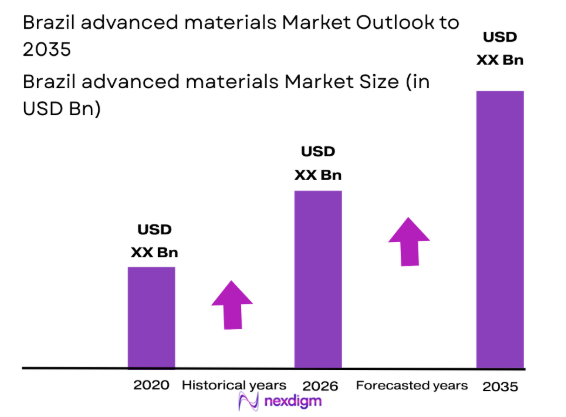
The Brazil advanced materials market has witnessed significant growth, driven by increasing demand across various sectors such as automotive, construction, and electronics. Based on recent historical assessments, the market size is valued at approximately USD ~ billion, with the automotive and aerospace industries being primary contributors. Factors such as government support, innovation in material science, and advancements in production technologies have been critical in driving this market’s expansion. The market is expected to continue its upward trajectory, supported by technological advancements and industry-specific needs for high-performance materials.
The dominance of Brazil in this market can be attributed to its robust industrial sectors, especially in automotive, aerospace, and electronics. Cities like São Paulo and Rio de Janeiro play a pivotal role due to their well-established industrial infrastructure and proximity to key manufacturing facilities. Additionally, Brazil’s strategic position in the South American market allows for easy access to other Latin American regions. Government initiatives aimed at promoting industrial growth and sustainable practices have further cemented Brazil’s position as a leader in advanced materials.
Market Segmentation
By Product Type
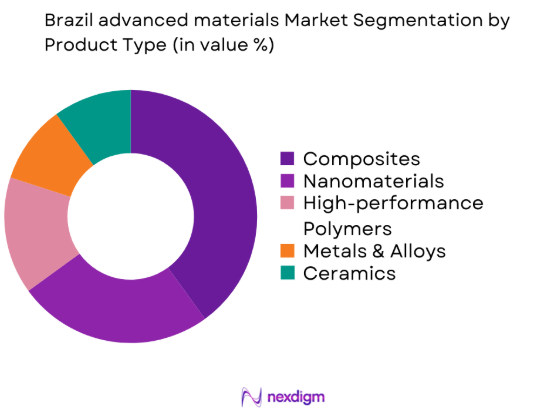
The Brazil Advanced Materials market is segmented by product type into composites, nanomaterials, high-performance polymers, metals & alloys, and ceramics. Recently, composites have gained a dominant market share due to their lightweight and durable properties, making them particularly suitable for industries such as automotive and aerospace. With growing demand for fuel-efficient and sustainable vehicles, composites are favored for their ability to reduce weight without compromising strength. This trend is further supported by advancements in composite manufacturing processes, which have made these materials more cost-effective and accessible.
By End-User Industry
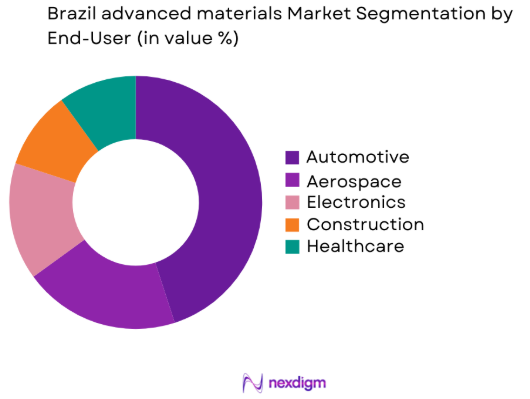
The Brazil Advanced Materials market is segmented by end-user industry into automotive, aerospace, electronics, construction, and healthcare. The automotive industry currently holds the dominant market share due to Brazil’s strong presence in vehicle manufacturing and assembly, especially for electric vehicles (EVs). The shift towards EVs and the growing emphasis on lightweight materials for improved fuel efficiency and sustainability have driven the demand for advanced materials in this sector. As Brazil’s automotive industry continues to adopt innovative technologies, materials like composites and high-performance polymers are seeing increased usage.
Competitive Landscape
The competitive landscape in the Brazil advanced materials market is highly dynamic, with key players leading innovation and market expansion. The market is witnessing consolidation, with larger companies acquiring smaller firms to expand their product offerings and strengthen their market positions. Major players are focusing on technological advancements, improving production efficiency, and establishing strong distribution networks to meet growing demand. Innovation in materials such as composites and nanomaterials is also a significant competitive factor, with companies leveraging research and development to create more sustainable and high-performance products.
| Company Name | Establishment Year | Headquarters | Technology Focus | Market Reach | Key Products | Revenue (USD Billion) | Additional Parameter |
| BASF | 1865 | Ludwigshafen, Germany | ~ | ~ | ~ | ~ | ~ |
| DuPont | 1802 | Wilmington, USA | ~ | ~ | ~ | ~ | ~ |
| 3M | 1902 | Saint Paul, USA | ~ | ~ | ~ | ~ | ~ |
| ArcelorMittal | 2006 | Luxembourg | ~ | ~ | ~ | ~ | ~ |
| Evonik Industries | 2007 | Essen, Germany | ~ | ~ | ~ | ~ | ~ |
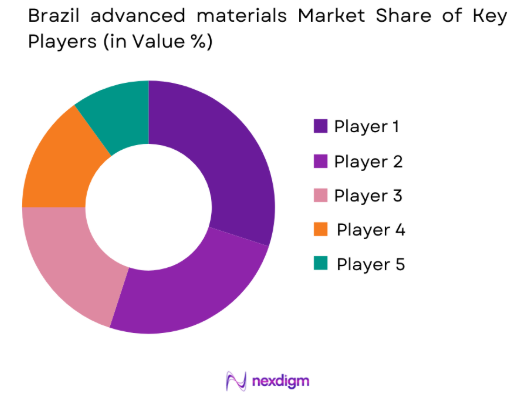
Brazil advanced materials Market Analysis
Growth Drivers
Technological Advancements in Materials Science
Technological advancements in materials science are driving the growth of Brazil’s advanced materials market. Innovations like nanotechnology, composites, and smart materials are transforming product development in sectors such as automotive, aerospace, and electronics. These technologies enable the production of high-performance materials with improved properties, including enhanced strength, reduced weight, and better energy efficiency. As Brazilian industries increasingly adopt these materials, demand for advanced materials is projected to grow significantly. Ongoing research and development efforts, supported by both public and private sectors, continue to accelerate material innovations, further opening new avenues for market expansion and enabling companies to meet the rising demand for sustainable, high-performance materials.
Government Support and Policy Initiatives
Government support is crucial for the growth of Brazil’s advanced materials market. Policies that promote sustainable manufacturing, reduce carbon footprints, and encourage the use of high-performance materials across key sectors have created a conducive environment for market expansion. Brazil’s government has launched programs to incentivize industries like automotive and construction to adopt sustainable materials, directly increasing the demand for advanced materials. Additionally, Brazil’s commitment to aligning with global sustainability trends is driving the growth of eco-friendly materials, such as recycled polymers and composites. This support not only stimulates innovation but also strengthens the market’s long-term potential by fostering the transition toward more sustainable and high-performance material solutions.
Market Challenges
High Production Costs
A key challenge for Brazil’s advanced materials market is the high production cost of specialized materials. Manufacturing advanced materials like composites and nanomaterials requires complex technologies and processes, which are costly to implement. Additionally, the costs of raw materials, energy, and labor in Brazil are higher compared to other emerging markets. This creates a significant challenge for manufacturers, who must balance maintaining competitive pricing with ensuring product quality and innovation. The high production costs associated with advanced materials increase the financial burden on companies, making it more difficult for them to compete effectively in the global market. As a result, manufacturers are under pressure to find ways to reduce costs while meeting the growing demand for high-performance materials.
Integration of Advanced Materials in Traditional Industries
Another major challenge in Brazil’s advanced materials market is the difficulty of integrating these materials into traditional industries like automotive and construction. Many companies continue to rely on conventional materials due to existing infrastructure, manufacturing processes, and cost constraints. Transitioning to advanced materials requires substantial investment in research, development, production facilities, and training. Additionally, industries must modify their design and production processes to accommodate the distinct properties of advanced materials, which can be complex and time-consuming. These integration challenges make widespread adoption of advanced materials more difficult, hindering market growth. Companies must navigate these hurdles to fully realize the potential benefits of advanced materials, which can slow down the transition from traditional to cutting-edge materials in various sectors.
Opportunities
Adoption of Advanced Materials in Electric Vehicles
The increasing adoption of electric vehicles (EVs) presents a major opportunity for Brazil’s advanced materials market. As the country’s automotive industry shifts toward EVs, there is growing demand for lightweight and high-performance materials like composites and advanced polymers. These materials play a crucial role in enhancing energy efficiency, improving performance, and maintaining structural integrity in EVs. The expansion of Brazil’s electric vehicle market, supported by government incentives and rising consumer demand, is expected to significantly drive the growth of advanced materials in the automotive sector. As EV production scales up, the need for innovative materials to meet performance and sustainability requirements will continue to increase, creating substantial opportunities for manufacturers in Brazil’s advanced materials market.
Development of Sustainable Infrastructure
The development of sustainable infrastructure in Brazil presents a significant opportunity for the advanced materials market. As urbanization increases and there is a greater emphasis on energy-efficient buildings, the demand for eco-friendly composites and high-performance polymers is growing. These materials provide superior performance and sustainability compared to traditional construction materials, making them ideal for green building projects. As Brazil’s construction sector shifts toward more sustainable practices, the demand for advanced materials is expected to rise, offering substantial opportunities for market players. This trend toward sustainable construction aligns with global efforts to reduce environmental impact, positioning advanced materials as essential components in Brazil’s future infrastructure development and driving long-term market growth.
Future Outlook
Over the next five years, the Brazil advanced materials market is expected to experience steady growth, driven by the increasing adoption of lightweight and sustainable materials across various industries. Technological advancements in material science will continue to provide new opportunities for product development and innovation. Additionally, government policies promoting sustainability and environmental consciousness will further support the market’s growth. As industries like automotive, aerospace, and construction increasingly adopt advanced materials, Brazil is poised to remain a key player in the global market.
Major Players
- BASF
- DuPont
- 3M
- ArcelorMittal
- Evonik Industries
- Solvay
- Huntsman Corporation
- PPG Industries
- Toray Industries
- Mitsubishi Chemical
- LG Chem
- Dow Chemical
- SABIC
- AkzoNobel
- Bayer
Key Target Audience
- Investments and venture capitalist firms
- Government and regulatory bodies
- Automotive manufacturers
- Aerospace companies
- Electronics manufacturers
- Construction firms
- Renewable energy providers
- Industrial equipment manufacturers
Research Methodology
Step 1: Identification of Key Variables
The first step involves identifying the key variables that drive the market. This includes understanding the types of advanced materials, key industries driving demand, and technological trends.
Step 2: Market Analysis and Construction
In this step, data is gathered from secondary sources to construct a comprehensive market model. This includes historical data, current market trends, and future projections.
Step 3: Hypothesis Validation and Expert Consultation
We validate our hypotheses by consulting with industry experts and stakeholders to gain insights into market dynamics and verify findings from the secondary research phase.
Step 4: Research Synthesis and Final Output
The final step involves synthesizing all collected data and producing the market report, ensuring it is comprehensive, accurate, and relevant to stakeholders.

- Executive Summary
- Research Methodology (Definitions, Scope, Industry Assumptions, Market Sizing Approach, Primary & Secondary Research Framework, Data Collection & Verification Protocol, Analytic Models & Forecast Methodology, Limitations & Research Validity Checks)

- Market Definition and Scope
- Value Chain & Stakeholder Ecosystem
- Regulatory / Certification Landscape
- Sector Dynamics Affecting Demand
- Strategic Initiatives & Infrastructure Growth

- Growth Drivers
Increasing demand for lightweight and durable materials in automotive and aerospace industries
Government initiatives supporting sustainable building materials for infrastructure projects
Technological advancements in nanotechnology driving innovation in advanced materials - Market Challenges
High production costs and raw material prices limiting market growth
Complexity in integrating advanced materials into traditional manufacturing processes
Regulatory hurdles in obtaining certifications for advanced materials - Market Opportunities
Expansion in emerging economies driving demand for advanced materials
Rising investments in renewable energy projects requiring advanced materials
Growing focus on the development of smart materials for diverse industries - Trends
Adoption of 3D printing technology in the production of advanced materials
Rise in demand for eco-friendly and recyclable advanced materials
Integration of advanced materials in the Internet of Things (IoT) and smart technologies - Government Regulations
- SWOT Analysis of Key Competitors
- Porter’s Five Forces

- By Market Value, 2020-2025
- By Installed Units, 2020-2025
- By Average System Price, 2020-2025
- By System Complexity Tier, 2020-2025

- By System Type (In Value%)
Composite Materials
Nanomaterials
High-performance Polymers
Metals & Alloys
Ceramics - By Platform Type (In Value%)
Construction
Electronics & Electrical
Automotive
Aerospace
Medical Devices - By Fitment Type (In Value%)
OEM Fitment
Aftermarket Fitment
Integrated Systems
Modular Solutions
Custom-fit Solutions - By End User Segment (In Value%)
Construction & Infrastructure
Automotive & Transport
Consumer Electronics
Aerospace & Defense
Medical & Healthcare - By Procurement Channel (In Value%)
Direct Procurement
Government Contracts
Third-party Distributors
Online Platforms
Private Sector Procurement

- Market Share Analysis
- Cross Comparison Parameters(System Type, Platform Type, Procurement Channel, End User Segment, Fitment Type, Material Type, Geographic Region, Application, Supply Chain Model, Technology Adoption)
- SWOT Analysis of Key Competitors
- Pricing & Procurement Analysis
- Key Players
BASF
DuPont
3M
Saint-Gobain
ArcelorMittal
Alcoa
Evonik Industries
PPG Industries
Huntsman Corporation
Solvay
ExxonMobil Chemical
Toray Industries
Mitsubishi Chemical
LG Chem
SABIC

- Increasing demand for advanced materials in sustainable construction
- Adoption of advanced materials in electric vehicles
- Expansion of aerospace and defense sectors requiring lightweight materials
- Growing need for advanced materials in medical device manufacturing

- Forecast Market Value, 2026-2035
- Forecast Installed Units, 2026-2035
- Price Forecast by System Tier, 2026-2035
- Future Demand by Platform, 2026-2035


 Request a Sample
 Ask for Customization
 Get a Quote
 Enquire Now