
 Download PDF
 Download PDF
Market Overview
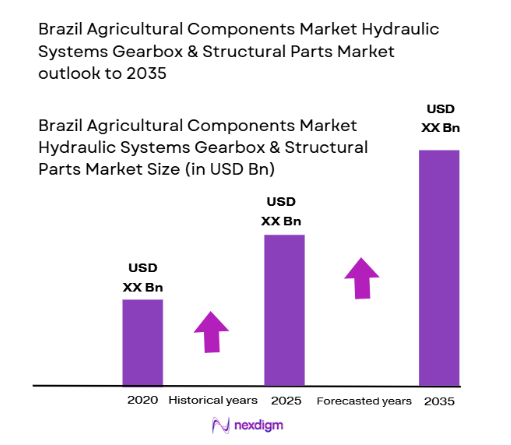
Based on a recent historical assessment, the Brazil Agricultural Components Market Hydraulic Systems Gearbox & Structural Parts Market was valued at USD ~ billion, driven by sustained mechanization across large-scale soybean, corn, and sugarcane farming operations. Demand is supported by high-capacity tractors, harvesters, and sprayers requiring durable hydraulic pumps, transmission gearboxes, and reinforced structural frames. Federal rural credit programs and agricultural equipment financing have further stimulated procurement of advanced components and replacement systems.
Dominance is concentrated in São Paulo, Rio Grande do Sul, and Paraná, where extensive agribusiness clusters and machinery manufacturing hubs are located. São Paulo leads due to its industrial base and proximity to component suppliers and OEM assembly plants, while Rio Grande do Sul benefits from strong grain cultivation and cooperative farming systems. Paraná’s diversified crop base and integrated logistics infrastructure reinforce consistent demand for hydraulic and gearbox systems.
Market Segmentation
By Product Type
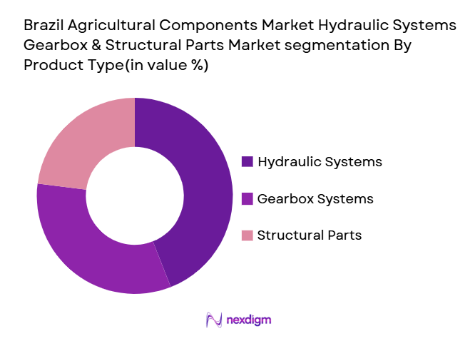
Brazil Agricultural Components Market Hydraulic Systems Gearbox & Structural Parts Market market is segmented by product type into hydraulic systems, gearbox systems, and structural parts. Recently, hydraulic systems have a dominant market share due to factors such as rising demand for high-pressure lifting applications, advanced steering mechanisms, and precision-controlled implements in modern tractors and harvesters. The shift toward larger farm holdings has increased the need for robust hydraulic cylinders and electro-hydraulic control valves capable of operating under continuous load. Additionally, OEM manufacturers prioritize integrated hydraulic assemblies to enhance equipment efficiency and operator comfort. Availability of localized hydraulic component manufacturing and established service networks further strengthens this segment’s position in replacement and retrofit demand.
By Application Platform
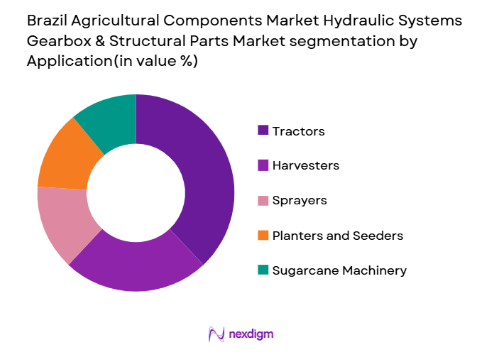
Brazil Agricultural Components Market Hydraulic Systems Gearbox & Structural Parts Market market is segmented by application platform into tractors, harvesters, sprayers, planters and seeders, and sugarcane machinery. Recently, tractors have a dominant market share due to factors such as widespread mechanization, multi-functional field use, and consistent replacement cycles. Tractors require complex gearbox assemblies, hydraulic pumps, and reinforced chassis systems, driving recurring component demand. The expansion of row-crop farming and increasing horsepower categories further intensify reliance on advanced drivetrain systems. Strong dealer networks and financing accessibility for tractor purchases also contribute to higher installation and aftermarket volumes compared to specialized harvesting or spraying equipment.
Competitive Landscape
The Brazil Agricultural Components Market Hydraulic Systems Gearbox & Structural Parts Market is moderately consolidated, with multinational drivetrain and hydraulic technology providers competing alongside domestic component manufacturers. Leading firms benefit from OEM integration, advanced engineering capabilities, and established distribution networks. Consolidation is driven by technology partnerships, localization strategies, and aftermarket service expansion. Major players influence pricing structures, innovation cycles, and supply chain integration through strategic investments in manufacturing and research facilities within Brazil.
| Company Name | Establishment Year | Headquarters | Technology Focus | Market Reach | Key Products | Revenue (USD Billion) | Manufacturing Presence in Brazil |
| Bosch Rexroth | 1795 | Germany | ~ | ~ | ~ | ~ | ~ |
| ZF Friedrichshafen | 1915 | Germany | ~ | ~ | ~ | ~ | ~ |
| Parker Hannifin | 1917 | USA | ~ | ~ | ~ | ~ | ~ |
| Dana Incorporated | 1904 | USA | ~ | ~ | ~ | ~ | ~ |
| CNH Industrial | 2013 | UK | ~ | ~ | ~ | ~ | ~ |
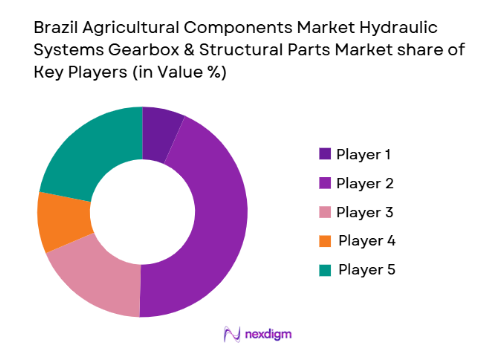
Brazil Agricultural Components Market Hydraulic Systems Gearbox & Structural Parts Market Market Analysis
Growth Drivers
Expansion of Mechanized Large-Scale Farming Operations:
Brazil’s vast soybean, corn, and sugarcane plantations increasingly rely on high-horsepower tractors and advanced harvesters, intensifying demand for durable hydraulic pumps, reinforced structural frames, and high-torque gearbox assemblies. Large commercial farms are consolidating land holdings, which necessitates efficient machinery capable of operating across extended acreage with minimal downtime. This operational scale drives higher installation rates of precision hydraulic systems for steering, lifting, and implement control. Continuous cultivation cycles require components engineered for endurance and heat resistance. Agricultural exports generate sustained capital reinvestment into machinery upgrades. Equipment financing programs enhance affordability for technologically advanced systems. OEMs respond by integrating complex drivetrains and electro-hydraulic modules into next-generation tractors. Replacement demand also rises as machinery operates under heavy field stress. These structural shifts collectively sustain long-term growth in agricultural component procurement.
Government-Supported Rural Credit and Equipment Financing Programs:
Federal rural development initiatives and subsidized agricultural credit lines significantly influence capital investment in machinery procurement. Farmers gain improved access to medium and long-term financing, encouraging upgrades from mechanical systems to advanced hydraulic and transmission technologies. Such programs stimulate OEM production volumes and strengthen domestic component manufacturing. Predictable financing cycles stabilize seasonal demand for gearboxes and structural assemblies. Incentives for local manufacturing reduce dependency on imports of high-precision components. Public policy alignment with export competitiveness fosters technology adoption. Equipment modernization improves productivity and operational efficiency across agribusiness clusters. Institutional support also enhances creditworthiness for mid-sized farming enterprises. As financing penetration expands, consistent replacement and retrofit activity strengthens revenue streams for component suppliers.
Market Challenges
Volatility in Steel and Alloy Raw Material Pricing:
Hydraulic cylinders, structural frames, and gearbox housings rely heavily on high-strength steel and specialized alloys, exposing manufacturers to input cost fluctuations. Global commodity cycles and domestic supply constraints directly influence production margins. Sudden price increases reduce profitability for component suppliers operating under fixed OEM contracts. Currency depreciation further amplifies imported material expenses. Small and mid-sized manufacturers experience difficulty hedging against volatility. Cost pressures may delay capital investment in advanced machining equipment. Procurement uncertainties disrupt long-term pricing strategies. Competitive pressures limit the ability to transfer higher costs to end users. These dynamics collectively constrain stable expansion within the agricultural components ecosystem.
Dependence on Imported Precision Transmission Technologies:
Advanced gearbox assemblies and electronically controlled hydraulic modules often incorporate imported high-precision parts and specialized bearings. Limited domestic production of certain micro-machined components creates reliance on international suppliers. Exchange rate instability raises procurement expenses and complicates budgeting. Supply chain disruptions may extend lead times for OEM assembly. Technology transfer barriers slow localization efforts. Smaller suppliers struggle to meet stringent quality certification requirements. Compliance with global manufacturing standards requires significant capital expenditure. Import procedures and logistics bottlenecks add operational complexity. These structural dependencies present strategic constraints for sustainable domestic capability development.
Opportunities
Localization of Advanced Electro-Hydraulic Manufacturing Capabilities:
Establishing domestic production facilities for electro-hydraulic control systems and integrated pump modules presents a significant growth avenue. Local manufacturing reduces exposure to exchange rate fluctuations and shortens supply chains. Proximity to OEM assembly plants enhances collaboration and customization. Investment in advanced machining and testing infrastructure improves quality standards. Skilled workforce development strengthens technical expertise in hydraulic engineering. Government incentives for industrial development support capital deployment. Domestic production can address tropical operating conditions more effectively. Increased local sourcing improves aftermarket service responsiveness. Such localization strategies can elevate Brazil’s position within the global agricultural machinery supply chain.
Expansion of Remanufacturing and Aftermarket Refurbishment Services:
High utilization rates of tractors and harvesters create strong demand for gearbox rebuilding and hydraulic system refurbishment. Remanufacturing extends equipment life while reducing acquisition costs for farmers. Environmental sustainability considerations favor component reuse and recycling. Established dealer networks provide channels for certified refurbishment programs. Technological diagnostics enable predictive maintenance and component recovery. Smaller farming operations benefit from cost-effective alternatives to new installations. Regulatory emphasis on circular economy practices supports structured remanufacturing initiatives. Aftermarket growth diversifies revenue streams beyond OEM contracts. This opportunity enhances resilience within the agricultural components value chain.
Future Outlook
Over the next five years, the market is expected to experience sustained expansion driven by precision agriculture integration and increased horsepower equipment adoption. Technological advancements in electro-hydraulic control and sensor-based monitoring will redefine operational efficiency standards. Regulatory alignment with industrial localization policies will strengthen domestic production. Demand-side momentum from export-oriented agribusiness and large farm consolidation will further reinforce component procurement stability.
Major Players
- Bosch Rexroth
- ZF Friedrichshafen
- Parker Hannifin
- Dana Incorporated
- CNH Industrial
- AGCO Corporation
- John Deere
- Eaton Corporation
- Sauer Danfoss
- Tatu Marchesan
- Valtra
- Stara
- Jacto
- Romi
- Cummins
Key Target Audience
- Agricultural machinery manufacturers
- Hydraulic system suppliers
- Transmission and gearbox manufacturers
- Large commercial farming enterprises
- Agribusiness cooperatives
- Investments and venture capitalist firms
- Government and regulatory bodies
- Agricultural equipment distributors
Research Methodology
Step 1: Identification of Key Variables
Key demand drivers, component categories, pricing trends, and regional manufacturing clusters were identified through secondary data review and industry databases.
Step 2: Market Analysis and Construction
Data triangulation was applied to evaluate revenue streams, installed base volumes, and supply chain integration across OEM and aftermarket channels.
Step 3: Hypothesis Validation and Expert Consultation
Industry experts, equipment manufacturers, and component distributors were consulted to validate assumptions regarding technology penetration and procurement behavior.
Step 4: Research Synthesis and Final Output
Validated findings were synthesized into structured analytical frameworks, integrating quantitative metrics and qualitative insights for comprehensive market interpretation.

- Executive Summary
- Research Methodology (Definitions, Scope, Industry Assumptions, Market Sizing Approach, Primary & Secondary Research Framework, Data Collection & Verification Protocol, Analytic Models & Forecast Methodology, Limitations & Research Validity Checks)

- Market Definition and Scope
- Value Chain & Stakeholder Ecosystem
- Regulatory / Certification Landscape
- Sector Dynamics Affecting Demand
- Strategic Initiatives & Infrastructure Growth

- Growth Drivers
Expansion of mechanized farming across Brazil’s soybean and corn belts
Rising demand for high horsepower tractors requiring advanced gearbox systems
Growth in sugarcane harvesting equipment modernization
Increasing export competitiveness of Brazilian agricultural machinery
Integration of precision agriculture systems with electro-hydraulic components - Market Challenges
Volatility in raw material prices impacting steel-intensive components
Dependence on imported high-precision gearbox technologies
Currency fluctuations affecting component procurement costs
Fragmented aftermarket service infrastructure in rural regions
Compliance requirements related to equipment safety and emissions - Market Opportunities
Localization of advanced hydraulic system manufacturing
Adoption of smart electro-hydraulic controls in large farms
Expansion of remanufacturing and refurbishment services - Trends
Shift toward higher capacity hydraulic pumps for large-scale farming
Growing use of modular gearbox assemblies
Digital integration of hydraulic monitoring sensors
Lightweight structural materials for fuel efficiency
Increased focus on durability for tropical operating conditions - Government Regulations & Defense Policy
Agricultural machinery financing under federal rural credit programs
Local manufacturing incentives under industrial development policies
Technical standards compliance under Brazilian machinery safety regulations - SWOT Analysis
- Stakeholder and Ecosystem Analysis
- Porter’s Five Forces Analysis
- Competition Intensity and Ecosystem Mapping

- By Market Value, 2020-2025
- By Installed Units, 2020-2025
- By Average System Price, 2020-2025
- By System Complexity Tier, 2020-2025

- By System Type (In Value%)
Hydraulic Pumps and Motors
Power Take-Off Gearboxes
Axle and Transmission Assemblies
Structural Frames and Chassis Components
Hydraulic Cylinders and Control Valves - By Platform Type (In Value%)
Tractors
Harvesters
Planters and Seeders
Sprayers
Sugarcane Loaders - By Fitment Type (In Value%)
OEM Factory Fitment
Aftermarket Replacement
Retrofit Hydraulic Upgrades
Remanufactured Component Fitment
Custom Engineered Installations - By EndUser Segment (In Value%)
Large Commercial Farms
Mid-Sized Agribusiness Operators
Agricultural Cooperatives
Contract Farming Service Providers
Government-Backed Rural Development Projects - By Procurement Channel (In Value%)
Direct OEM Supply Contracts
Authorized Agricultural Equipment Dealers
Regional Component Distributors
Online B2B Marketplaces
Import-Based Procurement Networks - By Material / Technology (in Value %)
High-Strength Alloy Steel Structures
Cast Iron Gear Systems
Aluminum Hydraulic Housings
Electro-Hydraulic Control Systems
Precision Machined Transmission Components

- Market structure and competitive positioning
- Market share snapshot of major players
- CrossComparison Parameters (Product Portfolio Breadth, Hydraulic Pressure Capacity, Gearbox Torque Rating, Material Engineering Capability, OEM Partnerships, Aftermarket Network Strength, Localization Level, R&D Investment, Pricing Strategy, Production Capacity)
- SWOT Analysis of Key Players
- Pricing & Procurement Analysis
- Key Players
Jacto Componentes Agricolas
Stara Industrial Components
AGCO Brazil Powertrain Systems
CNH Industrial Brasil Components
John Deere Brazil Drivetrain Division
ZF do Brasil Transmissoes Agricolas
Bosch Rexroth Brasil Hidraulica
Parker Hannifin Brasil Agricultural Systems
Eaton Brasil Power Solutions
Dana Brasil Off Highway Systems
Sauer Danfoss Brazil Operations
Tatu Marchesan Componentes Estruturais
Valtra Brasil Transmission Systems
Marcopolo Agricultural Structures Division
Romi Industrial Machined Components

- Large farms prioritizing high durability hydraulic assemblies
- Agricultural cooperatives seeking cost-efficient gearbox replacements
- Contract service providers demanding rapid aftermarket support
- OEMs collaborating with local suppliers for structural component sourcing

- Forecast Market Value, 2026-2035
- Forecast Installed Units, 2026-2035
- Price Forecast by System Tier, 2026-2035
- Future Demand by Platform, 2026-2035


 Request a Sample
 Ask for Customization
 Get a Quote
 Enquire Now