
 Download PDF
 Download PDF
Market Overview
The Brazil Agricultural Harvester market reached USD ~ billion based on a recent historical assessment supported by agricultural machinery production statistics and national farm mechanization data. Demand is driven by extensive soybean, corn, and sugarcane cultivation across large commercial farms requiring high-capacity combines and specialized harvesters. Strong domestic manufacturing, government-backed rural credit financing, and increasing adoption of precision harvesting technologies further sustained equipment procurement across mechanized agricultural regions.
The Brazil Agricultural Harvester market is geographically concentrated in major agribusiness states including Mato Grosso, São Paulo, Paraná, and Rio Grande do Sul due to vast cultivated acreage and advanced mechanization infrastructure. Mato Grosso leads grain harvesting operations through large soybean and corn farms, while São Paulo dominates sugarcane harvesting linked to the ethanol industry. Southern states maintain strong equipment demand supported by cooperative farming systems, export logistics networks, and technologically advanced agricultural production ecosystems.
Market Segmentation
By Product Type:
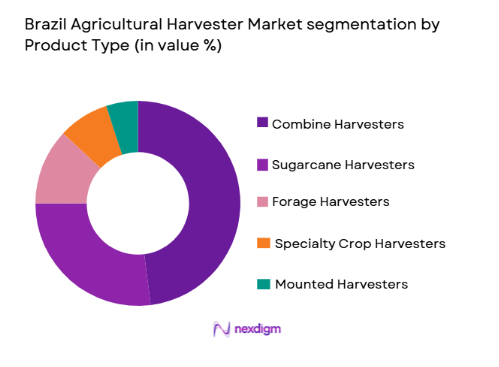
Brazil Agricultural Harvester market is segmented by product type into combine harvesters, sugarcane harvesters, forage harvesters, specialty crop harvesters, and mounted harvesters. Recently, combine harvesters has a dominant market share due to factors such as widespread mechanized soybean and corn production, extensive commercial farm sizes, and compatibility with precision agriculture systems. Brazil’s grain sector accounts for the largest harvested area and requires high-throughput machines capable of handling diverse crop conditions efficiently. Domestic manufacturing presence, established dealer networks, and continuous technological upgrades including automation and telematics reinforced combine harvester adoption among large farm operators and harvesting contractors nationwide.
By End User:
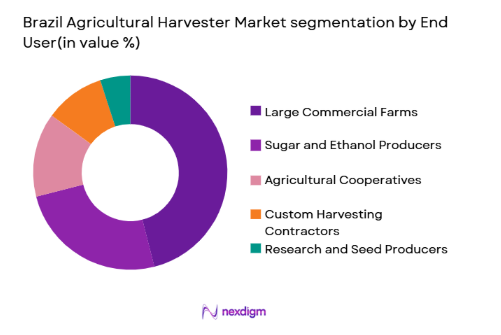
Brazil Agricultural Harvester market is segmented by end user into large commercial farms, sugar and ethanol producers, agricultural cooperatives, custom harvesting contractors, and research and seed producers. Recently, large commercial farms has a dominant market share due to factors such as extensive land ownership, high mechanization intensity, and continuous machinery replacement cycles. Brazil’s agribusiness structure includes farms operating thousands of hectares requiring multiple harvesters per season to meet narrow harvesting windows. Access to financing programs, export-oriented production systems, and adoption of advanced harvesting technologies strengthened equipment ownership among large-scale farm enterprises across major agricultural regions.
Competitive Landscape
The Brazil Agricultural Harvester market is moderately consolidated with global agricultural machinery manufacturers holding significant influence supported by advanced harvesting technologies, financing solutions, and nationwide dealer networks. Domestic implement producers compete through localized manufacturing, crop-specific customization, and cost competitiveness. Strategic investments in automation, telematics integration, and regional production facilities strengthen competitive positioning. Market leaders benefit from strong brand recognition and extensive service infrastructure across Brazil’s mechanized farming regions.
| Company Name | Establishment Year | Headquarters | Technology Focus | Market Reach | Key Products | Revenue | Harvesting Specialization |
| John Deere Brasil | 1837 | USA | ~ | ~ | ~ | ~ | ~ |
| CNH Industrial Brasil | 2013 | UK | ~ | ~ | ~ | ~ | ~ |
| AGCO do Brasil | 1990 | USA | ~ | ~ | ~ | ~ | ~ |
| Claas América Latina | 1913 | Germany | ~ | ~ | ~ | ~ | ~ |
| Kubota Brasil | 1890 | Japan | ~ | ~ | ~ | ~ | ~ |
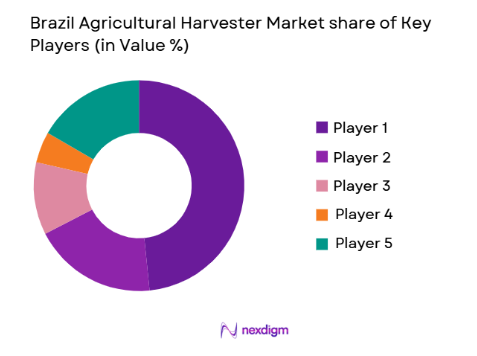
Brazil Agricultural Harvester Market Analysis
Growth Drivers
Expansion of Mechanized Grain Farming Acreage:
Brazil’s rapid expansion of soybean and corn cultivation across central-western agricultural frontiers has significantly increased the need for high-capacity combine harvesters capable of operating across extensive farm areas efficiently. Large commercial farms in states such as Mato Grosso and Goiás manage thousands of hectares and rely on mechanized harvesting fleets to meet narrow crop maturity windows influenced by seasonal rainfall patterns. Export-oriented grain production incentivizes farmers to invest in advanced harvesting machinery that reduces crop losses and improves throughput efficiency. Continuous yield improvements from biotechnology seeds and improved agronomy increase harvested volumes per hectare, requiring larger and more technologically capable combines. Farm consolidation trends amplify machinery demand intensity because large operations require multiple harvesters simultaneously. Labor shortages in remote farming regions further accelerate mechanization adoption. Precision agriculture integration connects harvesters with yield mapping and digital farm management platforms. Rural credit programs facilitate capital financing for machinery acquisition among commercial producers. Replacement cycles shorten as farmers upgrade to telematics-enabled and automation-capable harvesters to maintain operational competitiveness.
Government-Backed Agricultural Financing and Mechanization Programs:
Public rural credit and subsidized agricultural machinery financing frameworks have substantially strengthened harvester procurement across Brazil’s commercial farming sector by improving equipment affordability and access to capital. National agricultural development programs prioritize mechanization to enhance productivity and export competitiveness, encouraging farmers to replace aging equipment with modern harvesters. Low-interest financing options reduce upfront acquisition barriers for high-value combines and sugarcane harvesters. Equipment manufacturers align product offerings with financing eligibility requirements to stimulate demand. Cooperative purchasing models supported by government policies enable smaller producers to access harvesting equipment collectively. Financing also supports contractor harvesting businesses that provide mechanized services to multiple farms. Policy continuity creates predictable investment conditions for machinery purchases. Mechanization programs encourage adoption of precision harvesting technologies and telematics systems. Domestic manufacturing incentives linked to financing schemes strengthen local production and distribution networks. Sustained public financing availability stabilizes machinery demand across fluctuating commodity price cycles.
Market Challenges
High Capital Intensity and Ownership Cost Structure:
Agricultural harvesters represent one of the most expensive asset categories in Brazil’s farm machinery ecosystem, creating substantial financial barriers for ownership among many producers and contractors. Advanced combines and sugarcane harvesters incorporate complex powertrains, hydraulics, electronics, and automation technologies that significantly elevate purchase prices. Dependence on financing exposes buyers to interest rate volatility and policy shifts affecting rural credit availability. Currency fluctuations increase import costs of high-technology components, raising domestic equipment prices. Seasonal harvesting periods result in limited annual utilization hours, reducing asset productivity and return on investment. Maintenance, spare parts, and specialized service requirements add to lifecycle ownership costs. Smaller and mid-scale farms face affordability constraints that limit market penetration beyond large commercial operators. Economic downturns or commodity price declines directly suppress machinery purchasing. Financing constraints delay equipment replacement cycles. High ownership costs also constrain contractor fleet expansion in less developed agricultural regions.
Dependence on Commodity Cycles and Agricultural Profitability:
Demand for agricultural harvesters in Brazil is closely tied to profitability conditions in major crop sectors such as soybean, corn, and sugarcane, creating cyclical purchasing patterns influenced by commodity prices and farm incomes. Periods of high crop prices encourage machinery investment and fleet expansion, while price downturns lead to deferred purchases and extended equipment usage. Weather variability affecting yields and production volumes alters harvesting demand intensity across seasons. Input cost inflation including fertilizers and fuel reduces farm margins and capital investment capacity. Exchange rate movements influence export revenues and equipment import costs simultaneously. Agricultural policy changes affecting biofuel or export incentives also impact crop profitability and harvesting demand. Regional production shifts between crops alter equipment requirements. Financing institutions adjust lending risk during commodity downturns, further constraining purchases. Market uncertainty leads farmers to prioritize maintenance over replacement. Cyclical profitability therefore introduces volatility into harvester sales and utilization levels.
Opportunities
Adoption of Autonomous and Precision Harvesting Technologies:
Integration of automation, artificial intelligence, and sensor-based crop detection into agricultural harvesters presents a major opportunity to enhance efficiency and productivity across Brazil’s large mechanized farms. Autonomous guidance systems enable continuous harvesting operations with reduced operator fatigue during peak seasons. Precision yield mapping and crop sensing technologies improve harvesting accuracy and data-driven agronomic decisions. Large Brazilian farms possess the scale and technical capacity required to deploy advanced digital harvesting platforms. Equipment manufacturers are introducing semi-autonomous combines tailored to high-acreage grain operations common in Brazil. Telematics-enabled fleet management supports contractor harvesting business models by optimizing utilization and maintenance scheduling. Digital integration with farm management software enhances resource allocation and crop planning. Automation reduces dependence on scarce skilled labor in remote agricultural regions. Continuous innovation in machine vision and AI improves crop recognition and harvesting efficiency. Future fully autonomous harvester fleets could significantly transform Brazil’s large-scale agriculture.
Expansion of Sugarcane Mechanized Harvesting in Biofuel Production:
Brazil’s global leadership in sugarcane ethanol production creates substantial opportunity for mechanized sugarcane harvesting expansion as plantations modernize and increase production efficiency. Environmental regulations encouraging mechanized harvesting over manual burning practices accelerate equipment adoption across cane-growing regions. Large sugar and ethanol producers require specialized harvesters capable of operating continuously across extensive plantations. Biofuel demand growth stimulates sugarcane cultivation expansion and harvesting equipment procurement. Mechanized harvesting improves biomass recovery and reduces operational costs for processors. Technological advances in cane harvester design enhance productivity in varying field conditions. Plantation consolidation increases fleet sizes and replacement cycles. Financing support for bioenergy agriculture encourages machinery investment. Integration of telematics and automation into sugarcane harvesters improves operational monitoring. Continued ethanol industry growth therefore supports long-term demand for specialized harvesting equipment.
Future Outlook
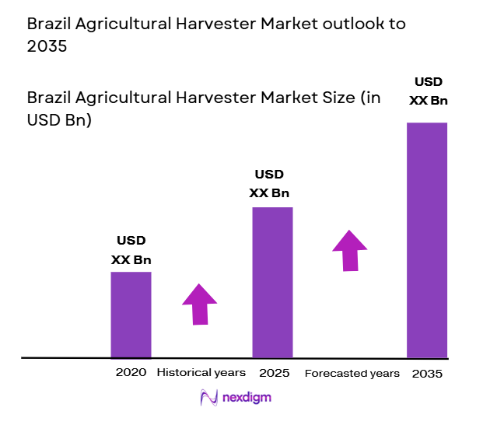
Brazil Agricultural Harvester market is expected to expand steadily supported by continued mechanization of grain and sugarcane production across large farms. Adoption of precision and autonomous harvesting technologies will improve efficiency and drive equipment replacement. Government financing and domestic manufacturing incentives are likely to sustain procurement. Expansion of contractor harvesting services and digital agriculture integration will further strengthen demand across Brazil’s agribusiness regions.
Major Players
- John DeereBrasil
- CNH Industrial Brasil
- AGCO do Brasil
- Claas América Latina
- Kubota Brasil
- Yanmar South America
- Mahindra Brasil
- Stara S.A.
- Jacto S.A.
- Valtra Brasil
- Massey Ferguson Brasil
- New Holland Agriculture Brasil
- Case IH Brasil
- Baldan Implementos Agrícolas
- Marchesan Implementos
Key Target Audience
- Agricultural equipment manufacturers
- Farm machinery distributors
- Agribusiness corporations
- Agricultural cooperatives
- Contract harvesting service providers
- Agricultural financing institutions
- Government and regulatory bodies
- Investments and venture capitalist firms
Research Methodology
Step 1: Identification of Key Variables
Agricultural acreage, mechanization levels, harvester fleet size, crop mix, financing penetration, and regional harvesting intensity were identified as primary variables shaping Brazil Agricultural Harvester market demand structure.
Step 2: Market Analysis and Construction
Manufacturing output statistics, agricultural machinery sales data, farm mechanization indicators, and crop production volumes were synthesized to construct market size, segmentation, and competitive structure aligned with Brazil’s agricultural ecosystem.
Step 3: Hypothesis Validation and Expert Consultation
Assumptions regarding mechanization trends, procurement behavior, and technology adoption were validated through consultation with farm operators, equipment distributors, and agricultural machinery specialists across major Brazilian farming regions.
Step 4: Research Synthesis and Final Output
Validated quantitative and qualitative insights were integrated into an analytical framework generating market segmentation, competitive landscape, growth drivers, challenges, opportunities, and future outlook for Brazil Agricultural Harvester market.

- Executive Summary
- Research Methodology (Definitions, Scope, Industry Assumptions, Market Sizing Approach, Primary & Secondary Research Framework, Data Collection & Verification Protocol, Analytic Models & Forecast Methodology, Limitations & Research Validity Checks)

- Market Definition and Scope
- Value Chain & Stakeholder Ecosystem
- Regulatory / Certification Landscape
- Sector Dynamics Affecting Demand
- Strategic Initiatives & Infrastructure Growth

- Growth Drivers
Expansion of mechanized soybean and corn cultivation areas
Rising demand for mechanized sugarcane harvesting
Labor shortages accelerating harvester adoption
Government credit programs for farm machinery modernization
Integration of precision agriculture technologies - Market Challenges
High capital cost of advanced harvesters
Seasonal utilization leading to low asset turnover
Limited technical service coverage in remote regions
Exchange rate volatility impacting equipment pricing
Dependence on imported high-tech components - Market Opportunities
Adoption of autonomous and semi-autonomous harvesters
Growth of contractor-based harvesting services
Localization of advanced harvester manufacturing - Trends
Shift toward high-capacity combines for large farms
Integration of digital farm management platforms
Expansion of telematics-enabled fleet monitoring
Adoption of low-soil-compaction track systems
Growth of multi-crop adaptable harvester designs - Government Regulations & Defense Policy
Agricultural machinery financing under rural credit policies
Emissions and engine efficiency standards for off-road equipment
Local manufacturing incentives for farm machinery - SWOT Analysis
- Stakeholder and Ecosystem Analysis
- Porter’s Five Forces Analysis
- Competition Intensity and Ecosystem Mapping

- By Market Value, 2020-2025
- By Installed Units, 2020-2025
- By Average System Price, 2020-2025
- By System Complexity Tier, 2020-2025

- By System Type (In Value%)
Self-Propelled Combine Harvesters
Sugarcane Harvesters
Forage Harvesters
Mounted Grain Harvesters
Specialty Crop Harvesters - By Platform Type (In Value%)
Wheeled Harvesting Platforms
Tracked Harvesting Platforms
Articulated Harvester Platforms
High-Clearance Harvester Platforms
Autonomous Harvester Platforms - By Fitment Type (In Value%)
OEM Factory-Integrated Harvesters
Aftermarket Header Attachments
Retrofit Automation Kits
Modular Harvester Units
Contractor-Owned Fleet Systems - By EndUser Segment (In Value%)
Large Commercial Farms
Sugar and Ethanol Producers
Agricultural Cooperatives
Custom Harvesting Contractors
Research and Seed Producers - By Procurement Channel (In Value%)
Direct OEM Sales
Dealer and Distributor Networks
Cooperative Purchasing Programs
Leasing and Financing Providers
Government-Subsidized Procurement - By Material / Technology (in Value %)
Precision GPS Guidance Systems
Telematics and Fleet Monitoring
AI-Based Yield Mapping
Lightweight Composite Headers
Hybrid Electric Drivetrains

- Market structure and competitive positioning
- Market share snapshot of major players
- CrossComparison Parameters (Harvester Capacity, Crop Compatibility, Automation Level, Header Technology, Fuel Efficiency, Telematics Integration, Service Network Strength, Localization Level, Total Cost of Ownership, Financing Support)
- SWOT Analysis of Key Players
- Pricing & Procurement Analysis
- Key Players
John Deere Brasil
CNH Industrial Brasil
AGCO do Brasil
Claas América Latina
Kubota Brasil
Yanmar South America
Mahindra Brasil
Stara S.A.
Jacto S.A.
Valtra Brasil
Massey Ferguson Brasil
New Holland Agriculture Brasil
Case IH Brasil
Marchesan Implementos
Baldan Implementos Agrícolas

- Large-scale soybean and corn farms driving high-capacity combine demand
- Sugarcane processors requiring specialized harvesting fleets
- Contract harvesting firms expanding service-based models
- Cooperatives enabling shared machinery ownership

- Forecast Market Value, 2026-2035
- Forecast Installed Units, 2026-2035
- Price Forecast by System Tier, 2026-2035
- Future Demand by Platform, 2026-2035


 Request a Sample
 Ask for Customization
 Get a Quote
 Enquire Now