

 Download PDF
Market Overview
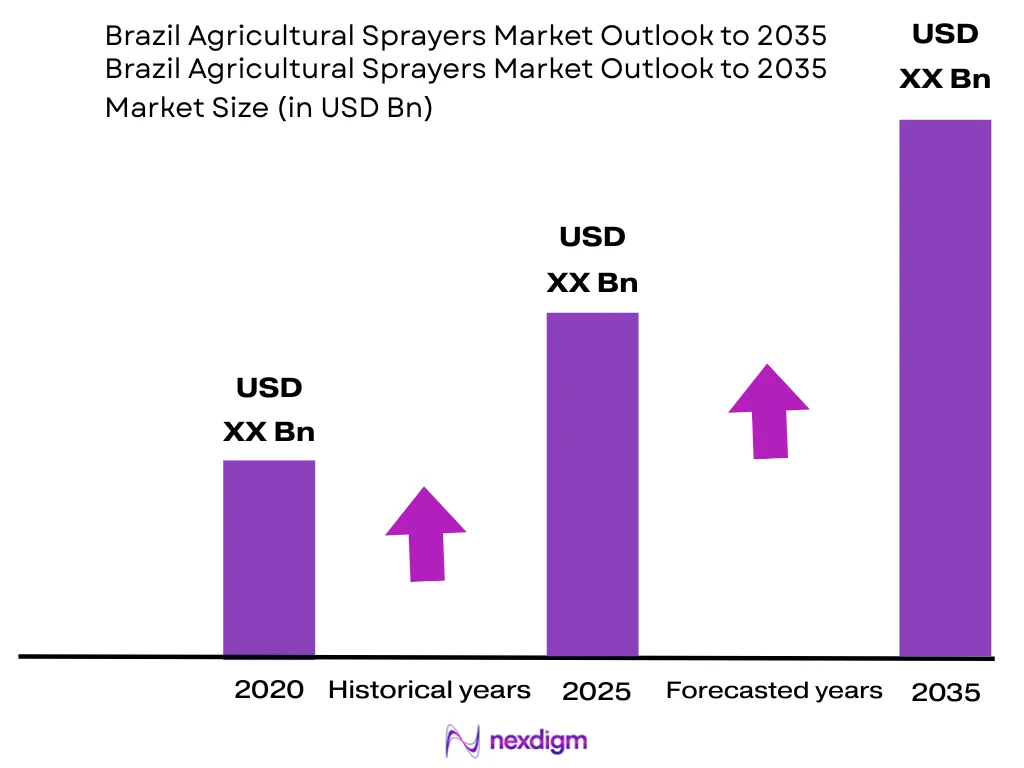
The Brazil Agricultural Sprayers Market was valued at approximately USD ~ billion in 2024 based on a comprehensive assessment of agricultural machinery sales, crop protection equipment demand, and mechanization trends across major farming regions. The market is primarily driven by Brazil’s position as one of the world’s largest producers of soybeans, corn, sugarcane, and cotton. According to data published by the Brazilian Institute of Geography and Statistics (IBGE) and CONAB, national grain production exceeded 300 million metric tons, while planted acreage continued expanding across commercial farming belts. Rising adoption of precision agriculture technologies, increasing crop protection chemical usage, and greater emphasis on operational efficiency have accelerated demand for advanced spraying equipment among large-scale agribusiness operators.
Market Segmentation
By Sprayer Type
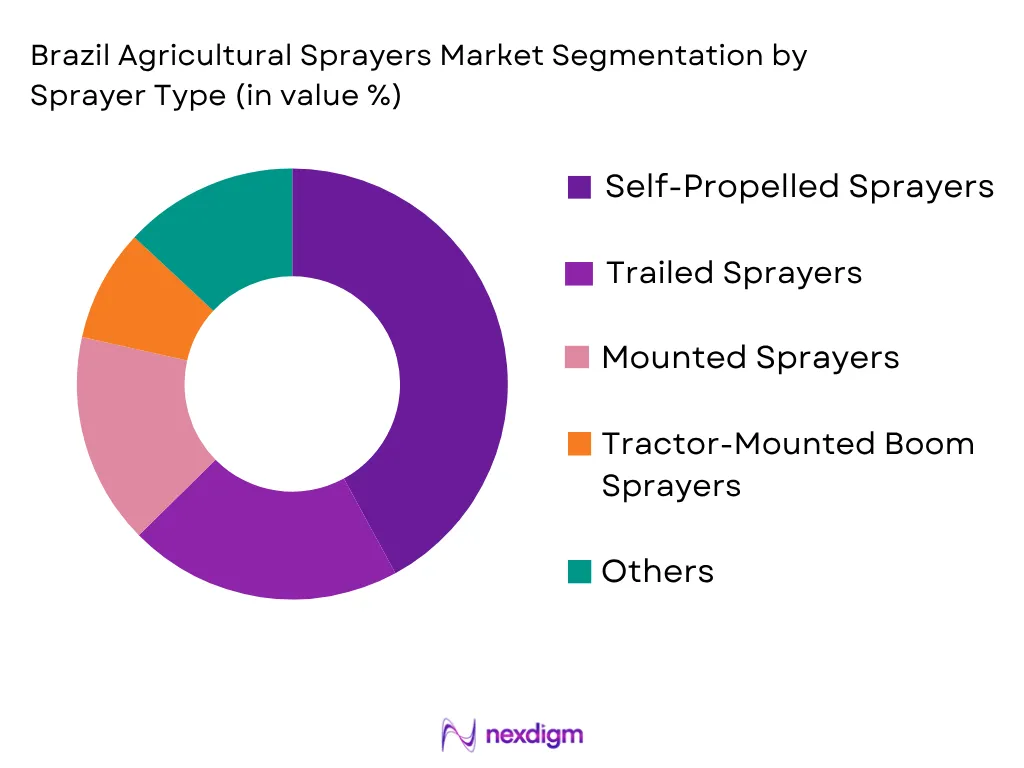
Brazil Agricultural Sprayers Market is segmented by sprayer type into self-propelled sprayers, trailed sprayers, mounted sprayers, tractor-mounted boom sprayers, air-assisted sprayers, orchard and vineyard sprayers, UAV/drone sprayers, and backpack sprayers. Self-propelled sprayers dominate the market due to their superior operational efficiency, large tank capacities, wider boom widths, and ability to cover extensive agricultural fields within shorter timeframes. Brazil’s large-scale soybean, corn, cotton, and sugarcane farms require equipment capable of handling thousands of hectares efficiently, making self-propelled models the preferred choice among commercial producers. These machines offer enhanced ground clearance, precision spraying capabilities, GPS guidance systems, and reduced labor requirements. Furthermore, increasing adoption of precision agriculture practices and technological innovations such as automatic section control and telematics integration continue strengthening demand for self-propelled sprayers across major agricultural regions.
By Crop Type
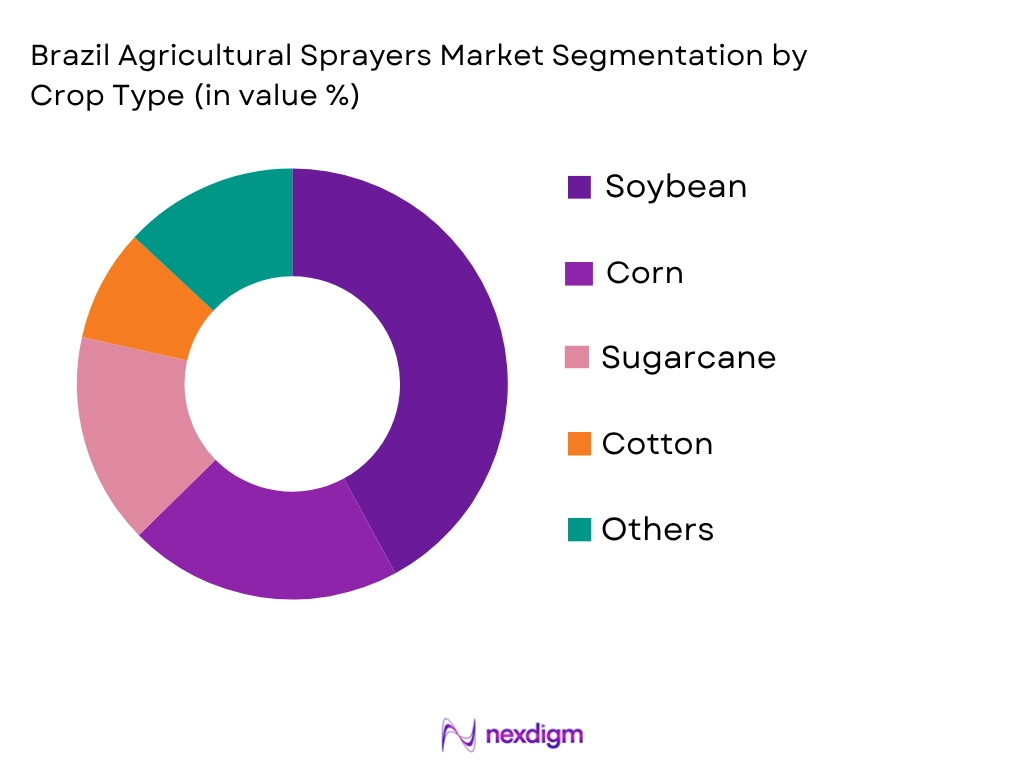
Brazil Agricultural Sprayers Market is segmented by crop type into soybean, corn, sugarcane, cotton, coffee, fruits & vegetables, wheat, and other crops. Soybean cultivation accounts for the largest market share owing to Brazil’s status as the world’s largest soybean producer and exporter. Soybean cultivation requires multiple spray applications throughout the growing season for weed management, disease control, and insect protection. The extensive acreage dedicated to soybean production creates substantial demand for high-capacity spraying equipment capable of ensuring timely field operations. Additionally, rising adoption of advanced crop protection chemicals and biological products has increased the frequency and precision requirements of spraying activities. Large commercial soybean farms particularly favor technologically advanced sprayers equipped with variable-rate application systems, contributing significantly to the dominance of this segment within the overall market.
Competitive Landscape
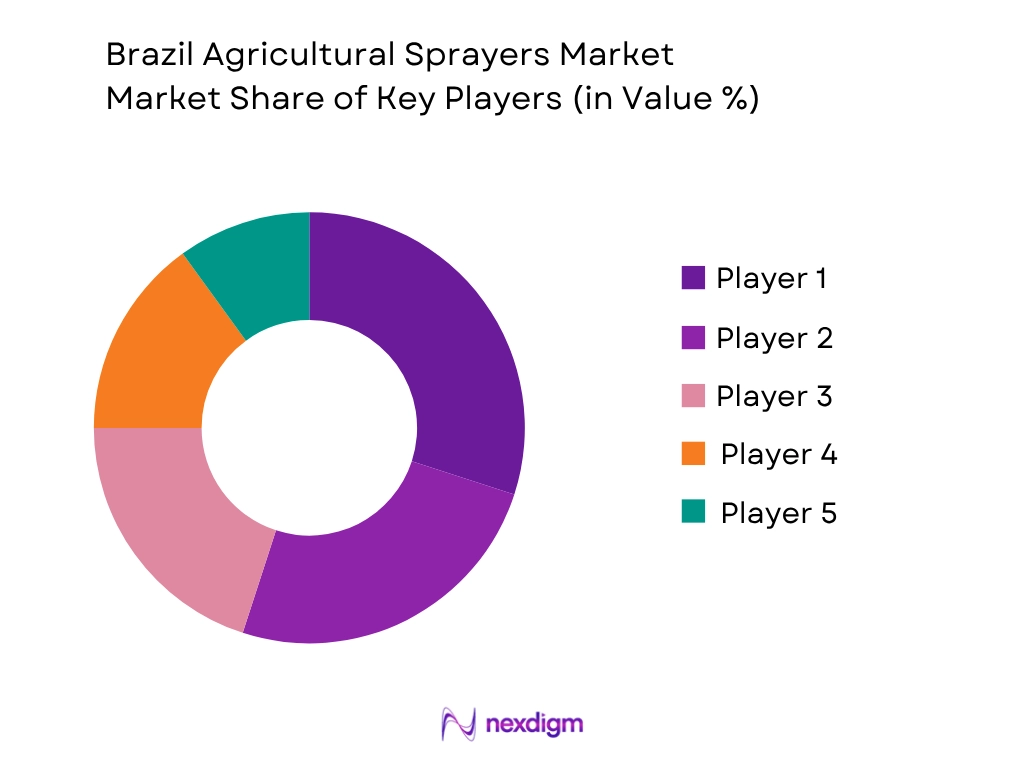
The Brazil Agricultural Sprayers Market is characterized by the presence of both domestic and international agricultural equipment manufacturers. The competitive environment is relatively consolidated, with established companies benefiting from extensive dealer networks, strong after-sales service capabilities, advanced precision agriculture technologies, and long-standing relationships with commercial farming enterprises. Local manufacturers maintain a strong position through market-specific product offerings, while global players leverage technological expertise and broad product portfolios to strengthen their competitive presence.
| Company | Establishment Year | Headquarters | Product Portfolio | Precision Agriculture Integration
|
Tank Capacity Range | Dealer Network Strength | After-Sales Support | Innovation Capability |
| Jacto | 1948 | ~ | ~ | ~ | ~ | ~ | ~ | ~ |
| John Deere | 1837 | ~ | ~ | ~ | ~ | ~ | ~ | ~ |
| AGCO (Massey Ferguson & Valtra) | 1990 | ~ | ~ | ~ | ~ | ~ | ~ | ~ |
| CNH Industrial (Case IH) | 2013 | ~ | ~ | ~ | ~ | ~ | ~ | ~ |
| Stara | 1960 | ~ | ~ | ~ | ~ | ~ | ~ | ~ |
Brazil Agricultural Sprayers Market Analysis
Growth Drivers
Expansion of Large-Scale Grain Production
Brazil’s agricultural sprayers market is strongly supported by the country’s expanding grain and oilseed production, which requires extensive crop protection activities throughout the cultivation cycle. According to the Brazilian Institute of Geography and Statistics (IBGE), Brazil harvested approximately 292.7 million tons of cereals, legumes, and oilseeds from 79 million hectares of cultivated land. Soybeans alone accounted for 144.9 million tons, while corn production reached 114.7 million tons, making them the two largest crops requiring repeated herbicide, fungicide, and insecticide applications. The Central-West region produced 144.6 million tons of agricultural output, representing the largest concentration of commercial farming operations in the country. Furthermore, CONAB reported that grain production is recovering toward record levels exceeding 336 million tons, supported by increasing cultivated acreage and improved productivity. Large farming enterprises operating thousands of hectares require self-propelled and precision-guided sprayers to optimize field operations and ensure timely chemical applications. The scale of Brazilian agriculture creates continuous demand for high-capacity spraying equipment capable of covering extensive areas efficiently, making agricultural production growth one of the most significant demand drivers for the Brazil Agricultural Sprayers Market.
Increasing Availability of Agricultural Equipment Financing
Access to agricultural credit continues to accelerate the adoption of modern sprayers across Brazil. The Brazilian Development Bank (BNDES) approved R$52.3 billion in financing for the agricultural sector through 191,231 operations, supporting investments in machinery acquisition, farm modernization, storage infrastructure, and innovation. Of this total, R$38.2 billion was approved under federal agricultural programs aimed at improving farm productivity and equipment adoption. Programs such as Moderfrota specifically support financing for tractors, harvesters, self-propelled sprayers, planters, and precision agriculture equipment. BNDES financing programs allow producers and cooperatives with annual revenues of up to R$45 million to obtain funding for agricultural machinery purchases, including sprayers. Additionally, the government continues to prioritize mechanization through rural credit initiatives that facilitate equipment modernization among commercial producers. The substantial increase in agricultural financing availability has strengthened purchasing power among farmers and agribusinesses, enabling investment in technologically advanced spraying systems equipped with GPS guidance, automatic section control, and variable-rate application technologies.
Market Challenges
High Dependence on Agricultural Cycles and Weather Variability
The agricultural sprayers market remains highly dependent on crop production cycles, which are increasingly influenced by weather-related disruptions. According to IBGE, Brazil’s grain harvest declined to 292.7 million tons, down from 315.4 million tons in the previous harvest cycle due to adverse climatic conditions. Excessive rainfall and flooding affected agricultural production in southern states, while drought conditions impacted several grain-producing regions in the Central-West. Despite an increase of 1.2 million hectares in harvested area, productivity declined due to unfavorable weather patterns. Such fluctuations directly influence farm profitability, capital expenditure decisions, and machinery replacement cycles. When crop yields fall or production uncertainty rises, farmers often postpone investments in new agricultural equipment, including advanced sprayers. Since spraying operations are directly tied to crop acreage and expected returns, climate-related volatility creates uncertainty in equipment demand and can temporarily reduce purchasing activity among growers and cooperatives. These environmental risks remain a structural challenge for long-term market stability.
High Capital Requirements for Advanced Spraying Equipment
Modern agricultural sprayers increasingly incorporate precision agriculture technologies such as GPS guidance, variable-rate application, telematics, automatic boom control, and autonomous operation capabilities. While these technologies improve efficiency, they also increase equipment complexity and capital requirements. According to BNDES financing guidelines, agricultural producers frequently require dedicated financing programs such as Moderfrota to support machinery acquisition. Financing participation can reach 85% of equipment value for eligible producers and cooperatives, highlighting the substantial investment required for modern machinery purchases. Commercial farms often acquire self-propelled sprayers with large tank capacities and advanced application systems to maximize operational efficiency across extensive land areas. However, smaller and medium-sized producers frequently face challenges accessing sufficient capital despite available credit programs. Additionally, rising interest rates and financing approval requirements can limit purchasing flexibility for certain farm operators. The significant upfront investment associated with technologically advanced sprayers continues to create a barrier to broader market penetration among smaller agricultural enterprises.
Market Opportunities
Growing Adoption of Precision Agriculture Technologies
Precision agriculture presents one of the strongest opportunities for the Brazil Agricultural Sprayers Market. Brazil continues to expand its position as a global agricultural leader, with CONAB projecting grain production exceeding 345 million tons supported by productivity improvements and technological adoption. Large-scale soybean cultivation reached approximately 47.35 million hectares, while soybean production surpassed 169 million tons in the latest harvest projections. Such large operational scales require highly efficient crop management systems capable of minimizing input waste and maximizing field productivity. Precision sprayers equipped with GPS guidance, section control, variable-rate application systems, and telematics help producers optimize pesticide and fertilizer applications while reducing operational inefficiencies. The increasing availability of agricultural financing programs supporting machinery modernization further encourages adoption of precision equipment. As producers seek greater productivity per hectare and improved sustainability outcomes, demand for advanced sprayers integrated with digital farming platforms is expected to strengthen across major agricultural regions.
Expansion of Sustainable and Biological Crop Protection Practices
Brazil’s agricultural sector is increasingly emphasizing sustainability, efficiency, and responsible resource utilization, creating opportunities for specialized spraying technologies. BNDES approved R$52.3 billion in agricultural financing to support production expansion, innovation, and modernization initiatives, including investments aligned with low-carbon agriculture objectives. Government-backed financing programs increasingly encourage technology adoption that improves input efficiency and environmental performance. Biological crop protection products and precision application techniques require greater spraying accuracy compared with conventional methods, increasing demand for advanced nozzle systems, drift-reduction technologies, automated rate control systems, and data-driven application equipment. Additionally, large-scale grain production exceeding 292 million tons annually requires producers to improve resource efficiency while maintaining productivity. Modern sprayers capable of precise product placement and reduced chemical wastage are becoming increasingly valuable as sustainability requirements evolve. The combination of environmental priorities, technological innovation, and strong agricultural production fundamentals creates significant opportunities for manufacturers offering advanced and environmentally optimized spraying solutions.
Future Outlook
The Brazil Agricultural Sprayers Market is expected to experience substantial growth over the forecast period supported by rising agricultural productivity requirements, expansion of cultivated land, and increasing investments in precision farming technologies. Demand for advanced spraying systems is anticipated to accelerate as farmers seek greater operational efficiency, reduced chemical wastage, and improved crop yields. Technological developments such as autonomous sprayers, AI-enabled application systems, drone-based spraying solutions, and telematics integration are expected to reshape the industry landscape. Continued government support for agricultural modernization and favorable farm economics are likely to further strengthen equipment adoption across major agricultural regions.
Major Players
- John Deere
- Jacto
- AGCO Corporation (Massey Ferguson & Valtra)
- CNH Industrial (Case IH & New Holland)
- Stara
- Kuhn Group
- Hardi International
- Montana Indústria de Máquinas
- Maqtron
- PLA
- Herbicat
- DJI Agriculture
- Yamaho do Brasil
- FMCopling
- Buhler Industries
Key Target Audience
- Agricultural Equipment Manufacturers
- Agricultural Machinery Distributors and Dealers
- Large Commercial Farming Enterprises
- Precision Agriculture Technology Providers
- Crop Protection Chemical Manufacturers
- Investments and Venture Capitalist Firms
- Government and Regulatory Bodies (MAPA – Ministry of Agriculture and Livestock, EMBRAPA, BNDES, IBAMA)
- Agricultural Equipment Rental and Leasing Companies
Research Methodology
Step 1: Identification of Key Variables
The initial phase involves constructing an ecosystem map encompassing all major stakeholders within the Brazil Agricultural Sprayers Market. This process includes extensive secondary research through industry publications, government agricultural databases, manufacturer reports, trade associations, and agricultural machinery statistics. The objective is to identify critical market variables including equipment demand, crop acreage, mechanization rates, technology adoption, and purchasing behavior.
Step 2: Market Analysis and Construction
Historical market data relating to agricultural machinery sales, crop production trends, farm equipment penetration, and spraying technology adoption are collected and analyzed. Demand-side assessment focuses on farm-level purchasing patterns and crop protection requirements, while supply-side analysis evaluates manufacturer revenues, dealer sales, production capacities, and distribution networks. Both approaches contribute to market size estimation and forecasting.
Step 3: Hypothesis Validation and Expert Consultation
Preliminary market findings and assumptions are validated through structured interviews with industry participants including agricultural equipment manufacturers, distributors, farm operators, agronomists, precision agriculture specialists, and industry associations. These consultations provide practical insights regarding market trends, technological developments, operational challenges, and future demand outlook, thereby strengthening the reliability of the research findings.
Step 4: Research Synthesis and Final Output
The final stage involves triangulating information collected from primary interviews, secondary research sources, and proprietary databases. Market estimates are refined through cross-verification across multiple data points and stakeholder perspectives. Forecast models are developed using agricultural production outlooks, mechanization trends, technology adoption rates, and investment patterns to generate comprehensive and reliable market intelligence.

- Executive Summary
- Research Methodology (Market Definitions and Assumptions, Abbreviations, Market Sizing Approach, Top-Down Analysis, Bottom-Up Analysis, Demand-Side Assessment, Supply-Side Assessment, Primary Industry Interviews, Distributor and Dealer Validation, Farm-Level Survey Assessment, Data Triangulation, Forecasting Framework, Limitations and Future Conclusions)

- Definition and Scope
- Industry Evolution and Market Genesis
- Timeline of Technological Advancements in Agricultural Spraying
- Agricultural Equipment Value Chain Analysis
- Agricultural Sprayer Supply Chain Analysis

- Growth Drivers (Expansion of Soybean Acreage, Growth in Crop Protection Chemical Usage, Rising Mechanization Rate, Precision Agriculture Adoption, Increasing Farm Consolidation)
- Market Challenges (High Equipment Acquisition Costs, Credit Accessibility Constraints, Skilled Operator Shortages, Equipment Maintenance Costs, Climatic Variability Impacting Utilization)
- Market Opportunities (Drone Sprayer Penetration, Biological Crop Input Application, Precision Farming Investments, Smart Sprayer Retrofits, Sustainable Farming Practices)
- Market Trends (Pulse Width Modulation Systems, Automatic Boom Height Control, Telematics Integration, AI-Based Spray Optimization, Low-Drift Nozzle Adoption)
- Government Regulations (MAPA Machinery Standards, Environmental Spray Drift Regulations, NR-31 Farm Safety Requirements, Emission Compliance Standards, Rural Credit Programs for Mechanization)
- SWOT Analysis
- PESTLE Analysis
- Stakeholder Ecosystem
- Porter’s Five Forces Analysis
- Competition Ecosystem

- By Market Value (2020-2025)
- By Units Sold (2020-2025)
- By Average Selling Price (2020-2025)

- By Sprayer Type (In Value %)
Self-Propelled Sprayers
Trailed Sprayers
Mounted Sprayers
Tractor-Mounted Boom Sprayers
Air-Assisted Sprayers
Orchard and Vineyard Sprayers
Backpack and Portable Sprayers
UAV/Drone Sprayers - By Application (In Value %)
Herbicide Application
Fungicide Application
Insecticide Application
Foliar Fertilizer Application
Biological Inputs Application - By Crop Type (In Value %)
Soybean
Corn
Sugarcane
Cotton
Coffee
Fruits and Vegetables
Wheat
Other Row Crops
- By Distribution Channel (In Value %)
OEM Direct Sales
Agricultural Equipment Dealers
Agri-Input Retail Networks
Equipment Rental and Leasing Providers
Online Agricultural Equipment Platforms - By Region (In Value %)
Midwest (Mato Grosso, Goiás, Mato Grosso do Sul)
South (Paraná, Rio Grande do Sul, Santa Catarina)
Southeast (São Paulo, Minas Gerais, Espírito Santo)
Northeast
North

- Market Share of Major Players (By Value, Units Sold, Sprayer Type, Crop Segment, Region)
- Cross Comparison Parameters (Boom Width Portfolio, Tank Capacity Range, Field Coverage Efficiency (ha/hr), Precision Spraying Capability, Variable Rate Application Integration, Dealer Network Strength, After-Sales Service Reach, Spray Drift Reduction Technology)
- Competitive Positioning Matrix (Technology Leadership, Pricing Competitiveness, Brand Recognition, Regional Presence)
- SWOT Analysis of Major Players
- Pricing Analysis by Sprayer Category and Capacity
- Detailed Profiles of Major Companies
John Deere
Jacto
CNH Industrial (Case IH & New Holland Agriculture)
AGCO Corporation (Massey Ferguson & Valtra)
Stara
Kuhn Group
Hardi International
Buhler Industries
PLA
Montana Indústria de Máquinas
Maqtron
Herbicat
FMCopling
Yamaho do Brasil
DJI Agriculture

- Farm Equipment Ownership and Utilization Analysis (Hours of Operation, Spraying Frequency, Fleet Age, Seasonal Utilization Rate)
- Farm Mechanization Assessment (Mechanization Index, Equipment Density per Hectare, Technology Adoption Rate)
- Purchasing Power and Investment Capacity Analysis (Farm Income, Access to Rural Credit, ROI Expectations, Capital Expenditure Trends)
- Crop Protection Spending Analysis (Chemical Input Spend, Application Cost per Hectare, Spray Frequency by Crop)
- Farmer Needs and Pain Point Assessment (Labor Availability, Input Efficiency, Downtime Reduction, Coverage Accuracy, Fuel Consumption)

- By Market Value (2026-2035)
- By Units Sold (2026-2035)
- By Average Selling Price (2026-2035)


 Request a Sample
 Ask for Customization
 Get a Quote
 Enquire Now