
 Download PDF
Market Overview
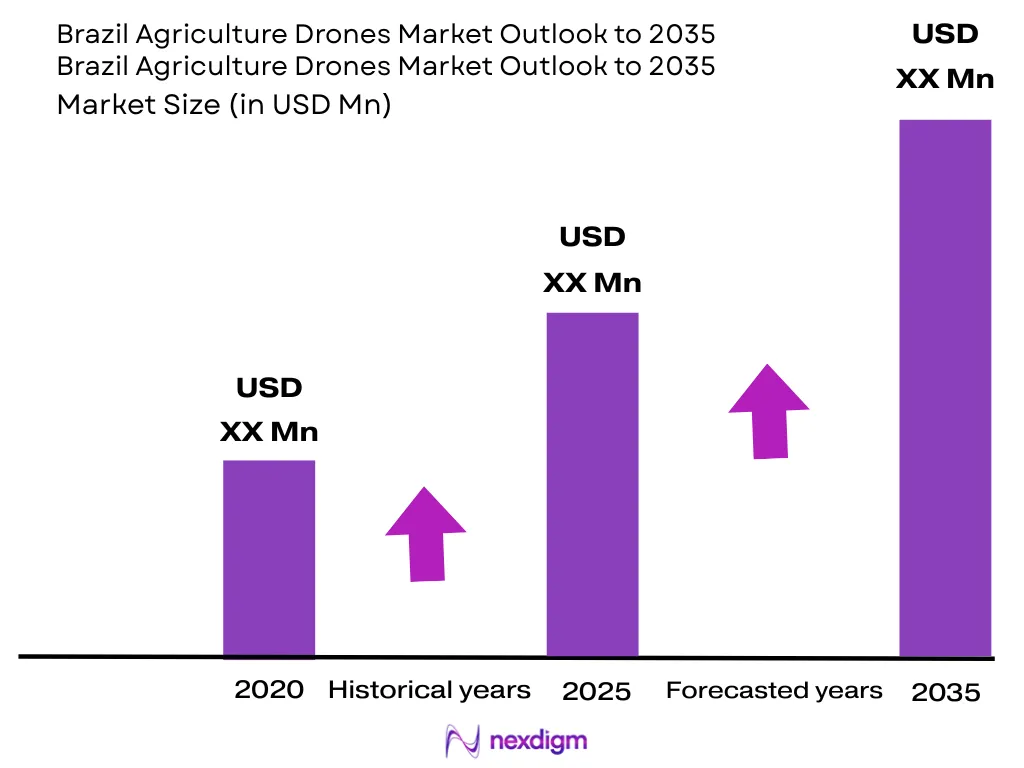
The Brazil Agriculture Drones Market was valued at approximately USD ~ Million in 2024, supported by the rapid adoption of precision agriculture technologies across the country’s large-scale farming operations. According to data published by the Brazilian Institute of Geography and Statistics (IBGE), Brazil cultivated more than 96 million hectares of grain-producing land, while the Ministry of Agriculture reported agricultural exports exceeding USD 160 billion. The growing need for efficient crop monitoring, precision spraying, labor optimization, and agrochemical cost reduction has accelerated the deployment of agricultural drones across soybean, sugarcane, corn, and cotton plantations. Increasing integration of AI-enabled analytics, multispectral imaging, and drone-as-a-service models has further strengthened market expansion.
Market Segmentation
By Drone Type
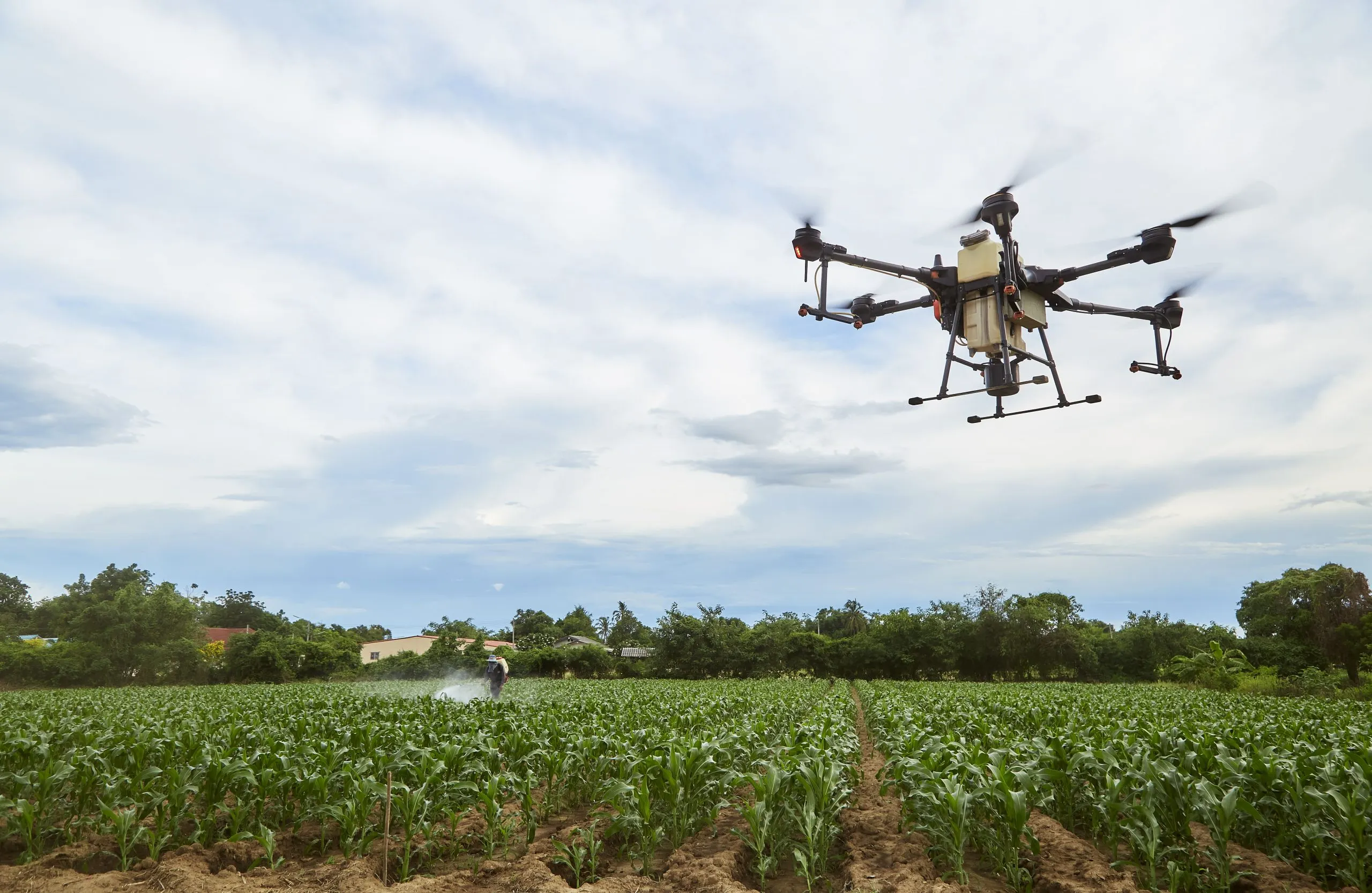
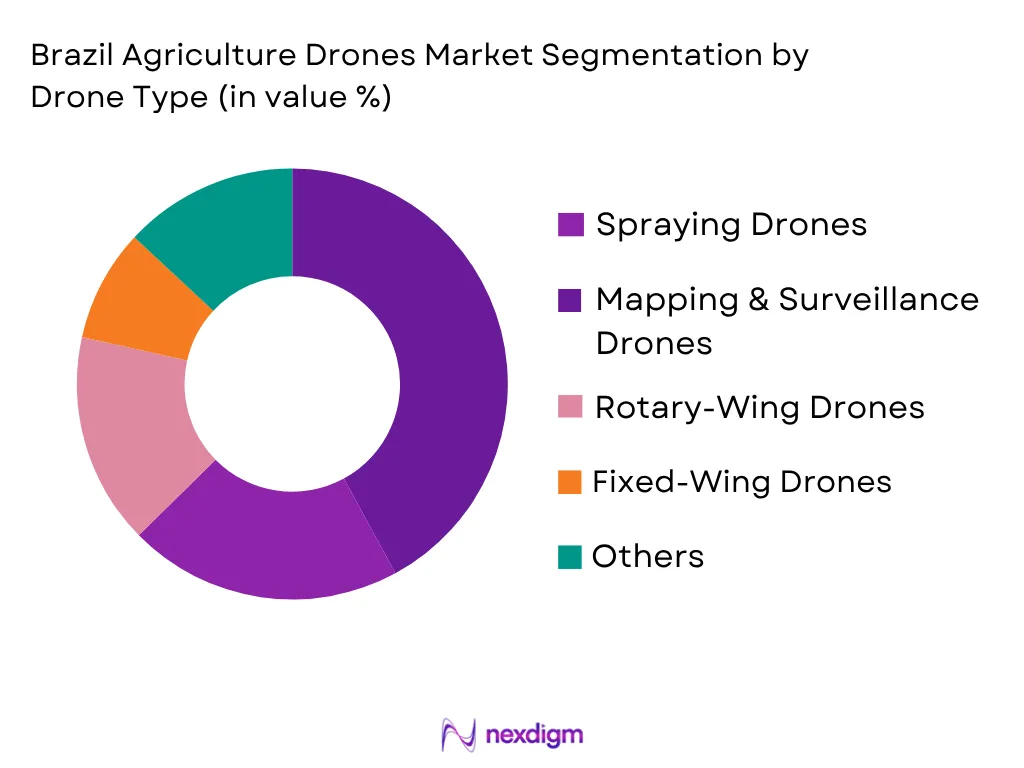
Recently, Spraying Drones have emerged as the dominant segment within the Brazil Agriculture Drones Market. Their leadership is primarily attributed to Brazil’s extensive cultivation of soybean, sugarcane, corn, and cotton crops, all of which require regular pesticide, herbicide, and fertilizer application. Agricultural producers increasingly utilize spraying drones to reduce chemical wastage, improve application precision, and lower operational costs compared to conventional aerial spraying methods. Large farms in Mato Grosso and Goiás particularly favor high-payload spraying drones capable of covering substantial acreage in a short time. Furthermore, the rising shortage of skilled agricultural labor and increasing restrictions surrounding agrochemical application have accelerated demand for automated spraying solutions. Advances in payload capacity, battery performance, and autonomous flight planning continue to strengthen the position of spraying drones across Brazilian agribusiness operations.
By Application
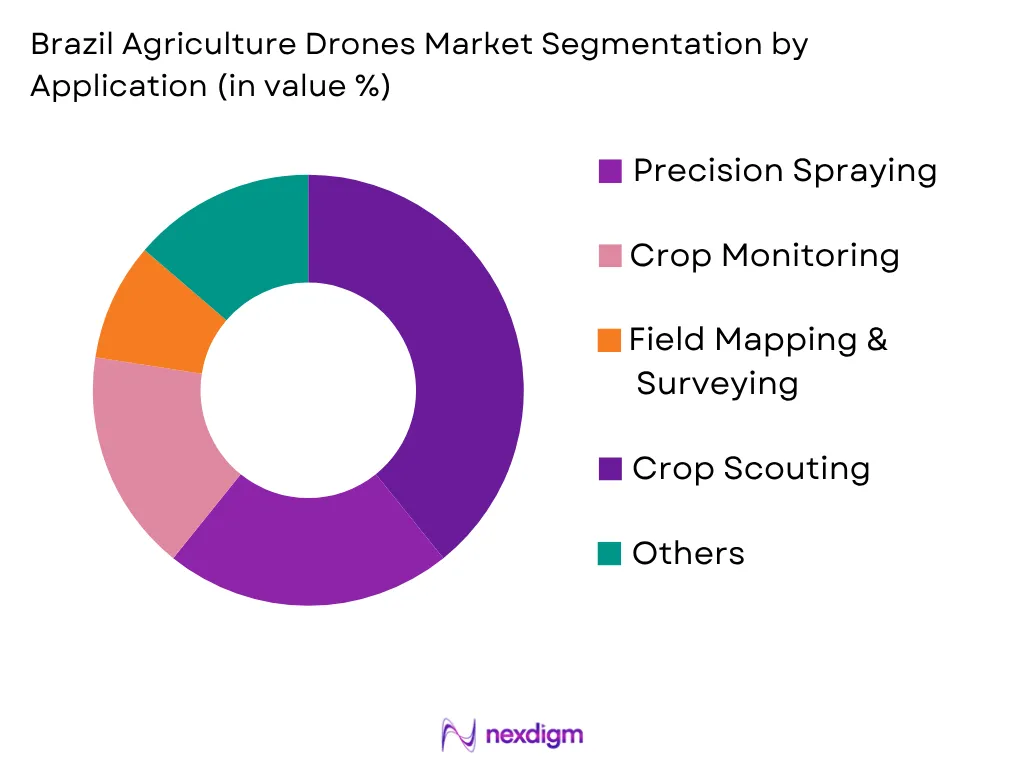
Among all application categories, Precision Spraying accounts for the largest share of the Brazil Agriculture Drones Market. The segment’s dominance is closely linked to the country’s extensive row-crop farming operations where efficient pesticide and fertilizer management is essential for maintaining crop productivity. Precision spraying drones enable targeted chemical application, reducing environmental impact while improving input utilization efficiency. Agricultural enterprises increasingly favor drone-based spraying due to its ability to operate in difficult terrain, minimize crop damage, and access areas where traditional machinery faces operational constraints. The technology also supports variable-rate application based on real-time crop health data generated through multispectral imaging. As Brazilian farmers continue focusing on yield optimization and cost reduction, precision spraying remains the most commercially attractive and operationally valuable drone application within the agricultural sector.
Competitive Landscape
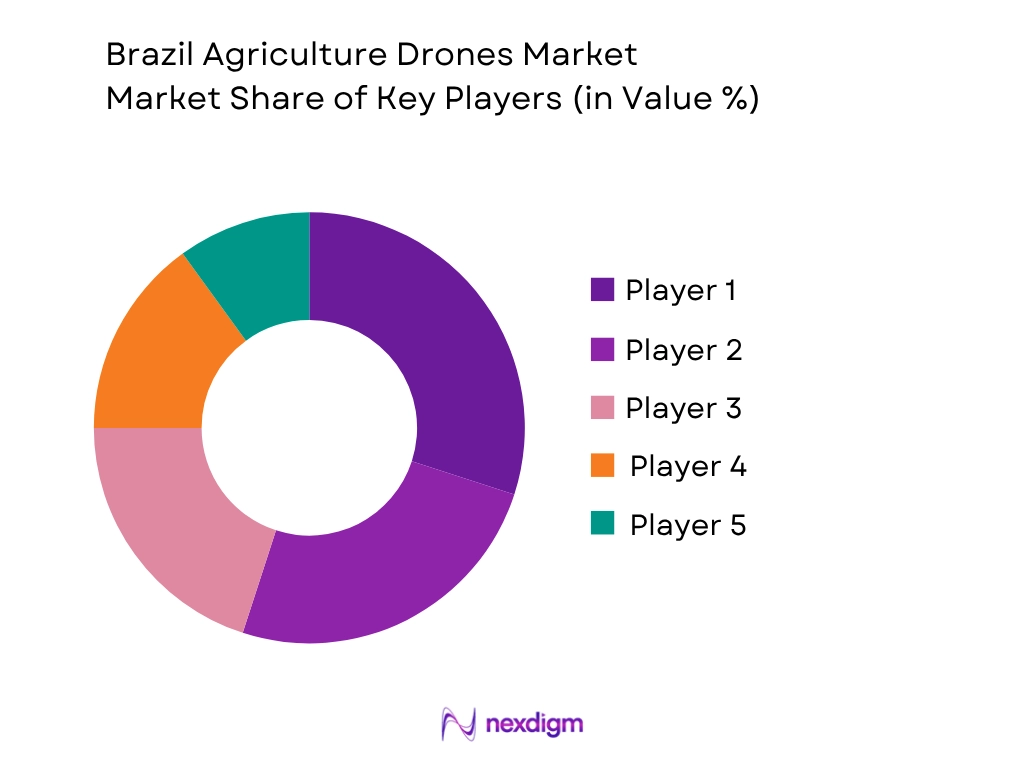
The Brazil Agriculture Drones Market is characterized by the presence of both international drone manufacturers and specialized precision agriculture technology providers. The market is moderately consolidated, with leading companies focusing on advanced spraying technologies, AI-powered analytics platforms, multispectral imaging solutions, and localized service networks. Strategic partnerships with agribusiness firms, agricultural cooperatives, and drone service providers have become key competitive differentiators. Market leaders continue investing in payload enhancements, autonomous navigation systems, and precision application technologies to strengthen their market position.
| Company | Establishment Year | Headquarters | Agriculture Drone Portfolio | Max Payload Capacity | Precision Spraying Capability | AI Analytics Integration | Brazil Distribution Network | Precision Agriculture Solutions |
| DJI Agriculture | 2006 | ~ | ~ | ~ | ~ | ~ | ~ | ~ |
| XAG | 2007 | ~ | ~ | ~ | ~ | ~ | ~ | ~ |
| Jacto Next | 1948 | ~ | ~ | ~ | ~ | ~ | ~ | ~ |
| AgEagle Aerial Systems | 2010 | ~ | ~ | ~ | ~ | ~ | ~ | ~ |
| Terra Drone | 2016 | ~ | ~ | ~ | ~ | ~ | ~ | ~ |
Brazil Agriculture Drones Market Analysis
Growth Drivers
Expansion of Large-Scale Commercial Agriculture
Brazil’s position as one of the world’s largest agricultural producers continues to create strong demand for agriculture drones. According to the Brazilian Institute of Geography and Statistics (IBGE), the country recorded 97.3 million hectares of planted agricultural area and 96.5 million hectares of harvested area across major crops. Soybean production reached 144.9 million tonnes, while corn production totaled 114.7 million tonnes, making Brazil one of the largest producers of both crops globally. Mato Grosso alone remains the largest grain-producing state, accounting for more than 31 million tonnes of national grain output. The large geographic scale of farming operations creates significant operational challenges related to crop monitoring, spraying efficiency, and field mapping. Agriculture drones provide farmers with the ability to monitor thousands of hectares within a short period while improving resource utilization. Furthermore, Brazil’s agricultural exports exceeded USD 160 billion, according to the Ministry of Agriculture and Foreign Trade Secretariat data, highlighting the strategic importance of productivity enhancement technologies. As commercial farms continue expanding acreage and operational complexity, drones are increasingly adopted for precision spraying, crop scouting, and yield monitoring applications. The combination of extensive cultivated land, large farm sizes, and export-oriented agribusiness operations makes large-scale agriculture one of the strongest drivers supporting the adoption of agriculture drones across Brazil.
Increasing Adoption of Precision Agriculture Technologies
The adoption of precision agriculture technologies across Brazil has accelerated demand for agricultural drones capable of generating real-time agronomic intelligence. According to IBGE agricultural production statistics, soybean generated production value exceeding BRL 260.2 billion, sugarcane generated BRL 105.0 billion, corn generated BRL 88.1 billion, and coffee generated BRL 69.2 billion. Such high-value crops require continuous monitoring to optimize productivity and minimize losses. The harvested area for cereals, legumes, and oilseeds reached 79 million hectares, while national grain production totaled 292.7 million tonnes. Precision agriculture tools, including drones equipped with multispectral sensors and AI-enabled imaging systems, allow producers to identify crop stress, pest infestations, nutrient deficiencies, and irrigation issues before they significantly affect yields. The increasing value generated by major crops encourages producers to invest in technologies that improve operational efficiency and input optimization. Additionally, the concentration of agricultural activity in regions such as Mato Grosso, Goiás, Paraná, and Rio Grande do Sul creates ideal conditions for drone deployment across large farming landscapes. The growing integration of remote sensing, geospatial analytics, and precision input management with drone platforms is strengthening adoption among commercial farmers seeking higher productivity and better farm management outcomes.
Market Challenges
Shortage of Skilled Drone Operators and Technical Workforce
One of the primary challenges facing the Brazil Agriculture Drones Market is the limited availability of qualified drone operators and technical specialists capable of managing advanced agricultural drone systems. According to Brazil’s Ministry of Agriculture, the registered agricultural drone fleet exceeded 8,300 units, compared with just over 1,100 units a few years earlier, indicating rapid technology adoption. However, the pace of workforce development has not matched equipment deployment. Agricultural drone operations require knowledge of flight planning, data analytics, precision spraying techniques, agronomy, and regulatory compliance under ANAC requirements. Brazil’s agricultural production system spans more than 96 million hectares of cultivated land, creating a significant demand for trained operators across remote farming regions. Many large farms located in Mato Grosso, Goiás, and western Bahia face difficulties accessing specialized drone service providers. The shortage becomes particularly critical for advanced applications such as multispectral imaging, AI-assisted crop diagnostics, and autonomous mission planning. Furthermore, as agricultural producers increasingly integrate drone-generated data with precision agriculture platforms, demand for professionals skilled in GIS mapping, agronomic interpretation, and digital farm management continues to rise. Workforce constraints therefore remain a major operational challenge limiting broader deployment and utilization of agricultural drone technologies throughout Brazil’s farming sector.
Climatic Variability and Operational Constraints
Agricultural drone operations in Brazil are highly dependent on weather conditions, creating challenges associated with climatic variability and environmental uncertainty. According to IBGE, Brazil’s grain harvest totaled 292.7 million tonnes, representing a decline of 22.7 million tonnes compared to the previous harvest due to adverse climatic conditions. Excessive rainfall in southern regions, flooding in Rio Grande do Sul, delayed soybean planting in the Center-West, and drought conditions affecting corn and wheat production all impacted agricultural productivity. Such weather events directly influence drone deployment schedules for crop monitoring, spraying, and field surveying activities. Strong winds, heavy precipitation, and extreme temperatures can limit flight windows and reduce operational efficiency. Additionally, Brazil’s agricultural landscape spans diverse climatic zones, ranging from tropical regions in the North to temperate areas in the South, requiring operators to adapt drone usage according to local environmental conditions. Large-scale farms often depend on timely drone missions during critical crop growth stages, making weather-related disruptions particularly impactful. As climate variability continues affecting agricultural production cycles, drone operators and service providers must invest in more resilient operational planning, advanced forecasting tools, and equipment capable of functioning under challenging environmental conditions.
Market Opportunities
Expansion of Drone-as-a-Service (DaaS) Models
The increasing scale of Brazilian agriculture creates substantial opportunities for Drone-as-a-Service (DaaS) providers. Brazil maintains more than 96 million hectares of harvested agricultural area and remains one of the largest global producers of soybeans, corn, sugarcane, coffee, and cotton. Many medium-sized producers seek access to precision agriculture technologies without committing to significant capital investments in equipment ownership. According to Ministry of Agriculture data, agricultural drone adoption continues expanding rapidly, with registered drone fleets surpassing 8,300 units. DaaS providers enable producers to access precision spraying, crop monitoring, mapping, and data analytics services on a project basis, significantly reducing operational barriers. The opportunity is particularly strong in regions where agricultural activity is expanding but technical expertise remains limited. As producers increasingly prioritize efficiency, sustainability, and input optimization, service-based drone models offer scalable solutions that can be deployed across large agricultural areas. Furthermore, Brazil’s extensive agricultural production value, including BRL 260.2 billion from soybeans and BRL 105 billion from sugarcane, creates strong incentives for producers to adopt precision technologies capable of improving operational performance. The combination of large cultivated areas and growing digital agriculture adoption supports long-term opportunities for DaaS expansion throughout Brazil.
Integration of AI, Remote Sensing, and Advanced Analytics
The growing digital transformation of Brazilian agriculture presents significant opportunities for integrating drones with artificial intelligence, remote sensing technologies, and advanced farm analytics platforms. Brazil harvested approximately 79 million hectares of cereals, legumes, and oilseeds, while total planted agricultural area exceeded 97 million hectares. Managing production at this scale requires sophisticated monitoring and decision-support tools capable of generating actionable agronomic insights. Drone platforms equipped with multispectral, hyperspectral, thermal, and RGB sensors can collect high-resolution field data that is increasingly analyzed using AI algorithms. These technologies support disease detection, nutrient management, irrigation optimization, and yield forecasting. The economic significance of major crops such as soybean, corn, coffee, and sugarcane encourages producers to adopt technologies that improve productivity and reduce input wastage. Furthermore, the concentration of agricultural production in large farming states creates ideal conditions for integrating drone-generated datasets into broader precision agriculture ecosystems. As farm management platforms become increasingly data-driven, drones are evolving from simple aerial monitoring tools into critical components of digital agriculture infrastructure. This ongoing shift toward data-centric farming creates substantial opportunities for technology providers, software developers, and drone manufacturers operating within Brazil’s agricultural sector.
Future Outlook
The Brazil Agriculture Drones Market is expected to experience substantial growth over the forecast period due to the continued expansion of precision agriculture practices and increasing digitalization of farming operations. Rising pressure to optimize agrochemical usage, improve crop productivity, and address labor shortages will accelerate drone adoption across major crop-producing regions. Technological advancements in artificial intelligence, multispectral imaging, autonomous navigation, and high-capacity spraying systems are expected to improve operational efficiency and expand application areas. Furthermore, supportive regulatory developments and growing acceptance of Drone-as-a-Service business models are anticipated to create new growth opportunities throughout the agricultural value chain.
Major Players
- DJI Agriculture
- XAG
- Jacto Next
- Yamaha Motor
- AgEagle Aerial Systems
- AeroVironment
- Trimble Agriculture
- Sentera
- Delair
- Parrot
- Eavision
- DroneDeploy
- Terra Drone
- Quantum Systems
- Synerjet
Key Target Audience
- Agricultural Drone Manufacturers
- Precision Agriculture Technology Providers
- Agribusiness Corporations
- Agricultural Cooperatives
- Drone-as-a-Service Providers
- Investments and Venture Capitalist Firms
- Government and Regulatory Bodies (ANAC, MAPA, ANATEL)
- Agrochemical and Crop Protection Companies
Research Methodology
Step 1: Identification of Key Variables
The initial phase involves constructing an ecosystem map encompassing all major stakeholders within the Brazil Agriculture Drones Market. Extensive secondary research is conducted through industry databases, company reports, government publications, drone associations, and agricultural technology sources. The objective is to identify critical variables influencing market demand, adoption patterns, technological advancements, and regulatory developments.
Step 2: Market Analysis and Construction
This phase focuses on collecting and analyzing historical market data associated with agricultural drone deployments, precision farming adoption, drone sales, service revenues, and operational acreage coverage. Market sizing is developed using both top-down and bottom-up approaches while assessing demand generated across major crop categories, farm sizes, and regional agricultural clusters.
Step 3: Hypothesis Validation and Expert Consultation
Market hypotheses are formulated and validated through primary interviews conducted with drone manufacturers, precision agriculture service providers, agribusiness operators, distributors, regulatory experts, and industry consultants. These consultations provide operational insights regarding pricing trends, technology adoption rates, purchasing behavior, and future growth prospects, enabling refinement of market estimates.
Step 4: Research Synthesis and Final Output
The final phase involves consolidating primary and secondary research findings into a comprehensive market framework. Data triangulation techniques are applied to validate revenue estimates, segmentation analysis, competitive positioning, and future forecasts. Insights derived from industry participants are integrated to ensure a robust, accurate, and decision-ready assessment of the Brazil Agriculture Drones Market.

- Executive Summary
- Research Methodology (Market Definitions and Assumptions, Abbreviations, Market Sizing Approach, Top-Down Analysis, Bottom-Up Analysis, Demand-Side Assessment, Supply-Side Assessment, Drone Fleet Assessment, Precision Agriculture Adoption Analysis, Primary Industry Interviews, Data Triangulation, Forecasting Framework, Limitations and Future Conclusions)

- Definition and Scope
- Market Evolution and Industry Genesis
- Timeline of Major Industry Developments
- Precision Agriculture Drone Value Chain Analysis
- Agriculture Drone Supply Chain Analysis

- Growth Drivers (Precision Agriculture Adoption Rate, Expansion of Commercial Farming, Agrochemical Optimization Requirements, Farm Labor Shortages, Rising Digital Farming Investments)
- Market Challenges (Regulatory Compliance Requirements, High Initial Capital Cost, Skilled Operator Shortage, Connectivity Limitations, Battery Endurance Constraints)
- Opportunities (Autonomous Drone Operations, AI-Based Agronomic Analytics, Carbon Farming Applications, Drone Swarm Technology, Drone-as-a-Service Expansion)
- Trends (High-Payload Spraying Drones, RTK Navigation Integration, AI Crop Diagnostics, Real-Time Farm Intelligence Platforms, Precision Input Application Technologies)
- Government Regulations (ANAC Drone Regulations, MAPA Agricultural Application Standards, ANATEL Communication Compliance, Pilot Certification Requirements, Agrochemical Application Guidelines)
- SWOT Analysis
- Porter’s Five Forces Analysis
- PESTLE Analysis
- Competition Ecosystem

- By Market Value (2020-2025)
- By Volume (2020-2025)
- By Average Selling Price (2020-2025)

- By Drone Type (In Value %)
Fixed-Wing Drones
Rotary-Wing Drones
Hybrid VTOL Drones
Spraying Drones
Mapping & Surveillance Drones - By Application (In Value %)
Crop Monitoring
Precision Spraying
Field Mapping & Surveying
Crop Scouting
Soil & Field Analysis
Irrigation Management
Crop Health Assessment
Livestock Monitoring
Yield Estimation
Seeding Operations - By Crop Type (In Value %)
Soybean
Sugarcane
Corn
Cotton
Coffee
Citrus
Rice
Wheat
Fruits & Vegetables
Forestry Plantations - By Region (In Value %)
Midwest (Centro-Oeste)
South
Southeast
Northeast
North - By End User (In Value %)
Commercial Farmers
Agricultural Cooperatives
Agribusiness Corporations
Precision Agriculture Service Providers
Agricultural Research Institutions
Government & Public Agricultural Agencies

- Market Share of Major Players (By Value, Volume, Installed Base, Hectares Covered Through Operations)
- Cross Comparison Parameters (Agriculture Drone Portfolio Breadth, Payload Capacity Range, Hectares Covered per Hour, Precision Spraying Efficiency, Sensor & Imaging Capability, AI Analytics Integration Level, Distribution & Service Network Coverage, Drone-as-a-Service Capability)
- SWOT Analysis of Major Players
- Pricing Analysis by Payload Capacity, Flight Endurance and Application Type
- Detailed Profiles of Major Companies
DJI Agriculture
XAG
Jacto Next
Yamaha Motor
AgEagle Aerial Systems
AeroVironment
Trimble Agriculture
Sentera
Delair
Parrot
Eavision
DroneDeploy
Terra Drone
Quantum Systems
Synerjet

- Drone Adoption and Utilization Analysis (Flights per Season, Hectares per Mission, Payload Utilization Rate, Technology Adoption Rate)
- Farm Digitalization Assessment (Farm Management Software Usage, Connectivity Readiness, Precision Agriculture Integration)
- Purchasing Power and Budget Allocation Analysis (CAPEX Allocation, OPEX Allocation, Technology Spending Share)
- Needs, Desires and Pain Point Analysis (Input Cost Reduction, Yield Optimization, Labor Efficiency, Monitoring Accuracy)
- Product Attribute Preference Analysis (Payload Capacity, Flight Endurance, Automation Features, Sensor Capability, Service Support)

- By Market Value (2026-2035)
- By Volume (2026-2035)
- By Average Selling Price (2026-2035)


 Request a Sample
 Ask for Customization
 Get a Quote
 Enquire Now