
 Download PDF
Market Overview
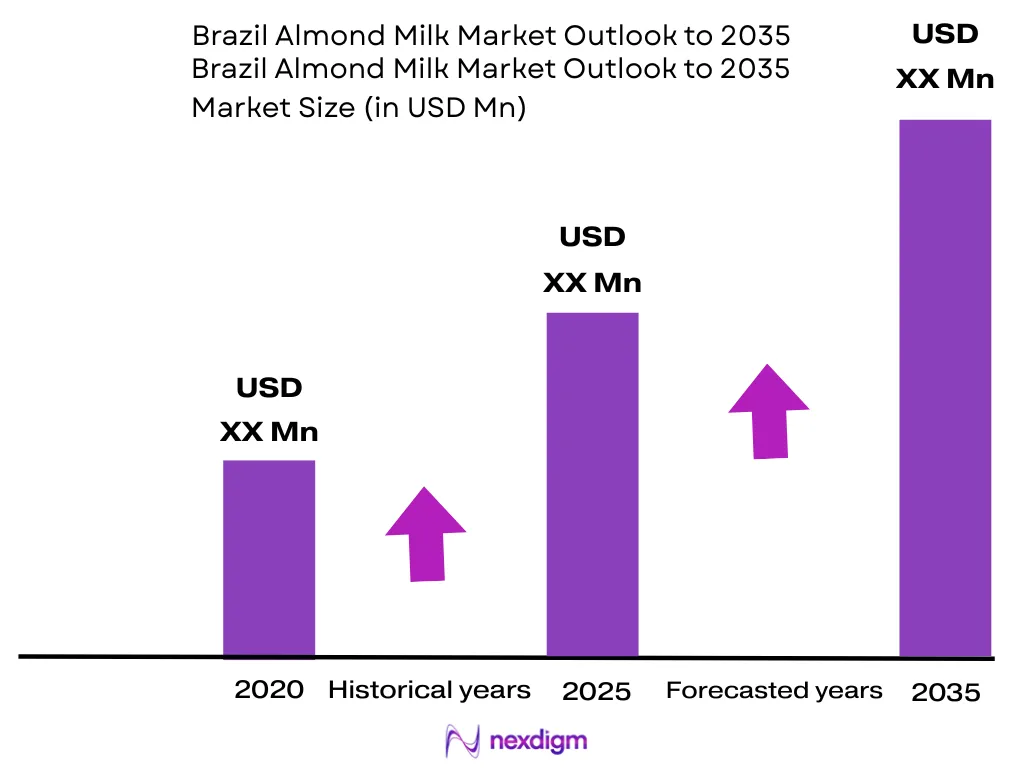
The Brazil Almond Milk Market was valued at approximately USD ~ Million in 2024. The market growth is primarily supported by increasing consumer preference for plant-based beverages, growing lactose intolerance awareness, rising vegan and flexitarian populations, and increasing demand for clean-label food products. Brazil’s food and beverage industry generated more than USD ~ Billion in economic activity, while retail food sales continued to expand across metropolitan regions. Growing health consciousness, demand for cholesterol-free alternatives, and the expansion of premium beverage portfolios by leading manufacturers have accelerated almond milk adoption. The increasing availability of almond milk through supermarkets, specialty stores, e-commerce channels, and foodservice outlets has further strengthened market penetration across urban consumer segments.
Market Segmentation
By Product Type
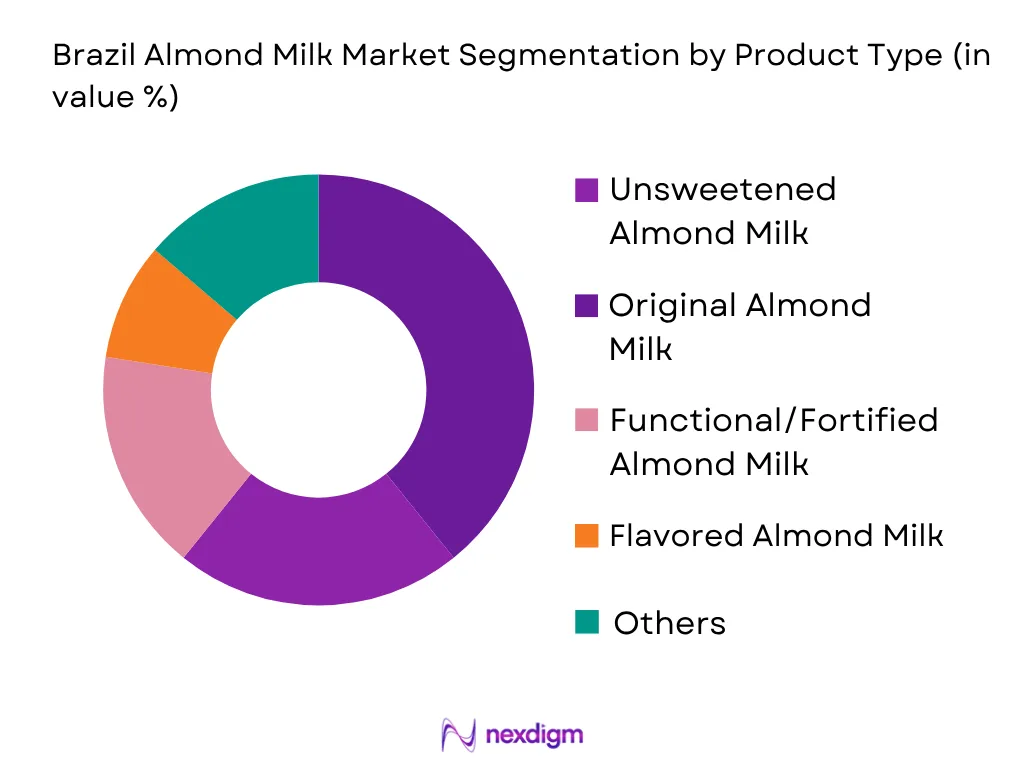
Unsweetened almond milk dominates the Brazil Almond Milk Market due to increasing health-conscious consumption patterns and growing concerns regarding sugar intake. Consumers are actively seeking beverages that align with weight management, cardiovascular health, and diabetes-conscious dietary preferences. Unsweetened variants are particularly popular among fitness enthusiasts, vegan consumers, and urban professionals who prioritize nutritional value over flavor enhancements. Major manufacturers have expanded unsweetened product portfolios while retailers increasingly allocate shelf space to healthier beverage alternatives. Furthermore, healthcare professionals and nutritionists frequently recommend unsweetened plant-based beverages due to their lower calorie content compared to sweetened alternatives. The segment also benefits from growing adoption among lactose-intolerant consumers and individuals seeking clean-label products free from artificial ingredients. These factors collectively contribute to the segment’s leading position within the market.
By Distribution Channel
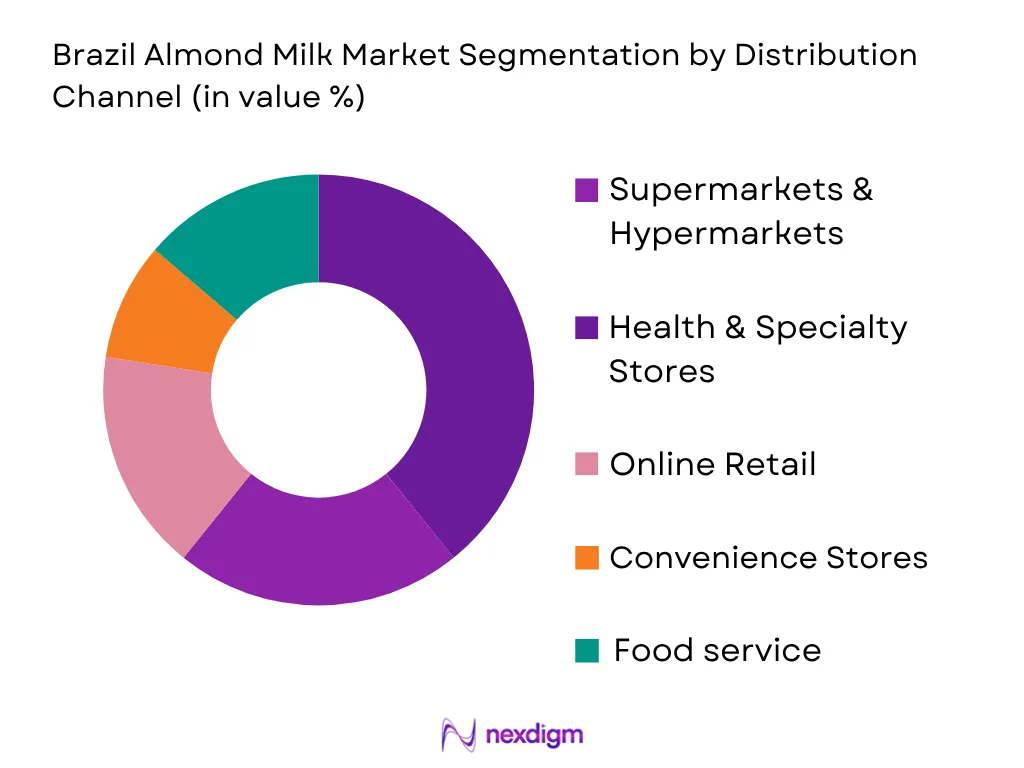
Supermarkets and hypermarkets dominate the Brazil Almond Milk Market due to extensive consumer reach, broad product assortments, and established distribution infrastructure. Major retail chains provide consumers with convenient access to multiple almond milk brands, pack sizes, and formulations under one location. The ability to compare products, benefit from promotional discounts, and access premium imported brands has strengthened consumer preference for these retail channels. Furthermore, supermarkets maintain strong relationships with both domestic and international suppliers, ensuring consistent product availability. Urban consumers frequently purchase almond milk alongside other grocery products, increasing basket size and encouraging repeat purchases. Retailers have also expanded dedicated health and wellness sections, making almond milk more visible to consumers seeking dairy alternatives. Consequently, supermarkets and hypermarkets continue to serve as the primary sales channel for almond milk products across Brazil.
Competitive Landscape
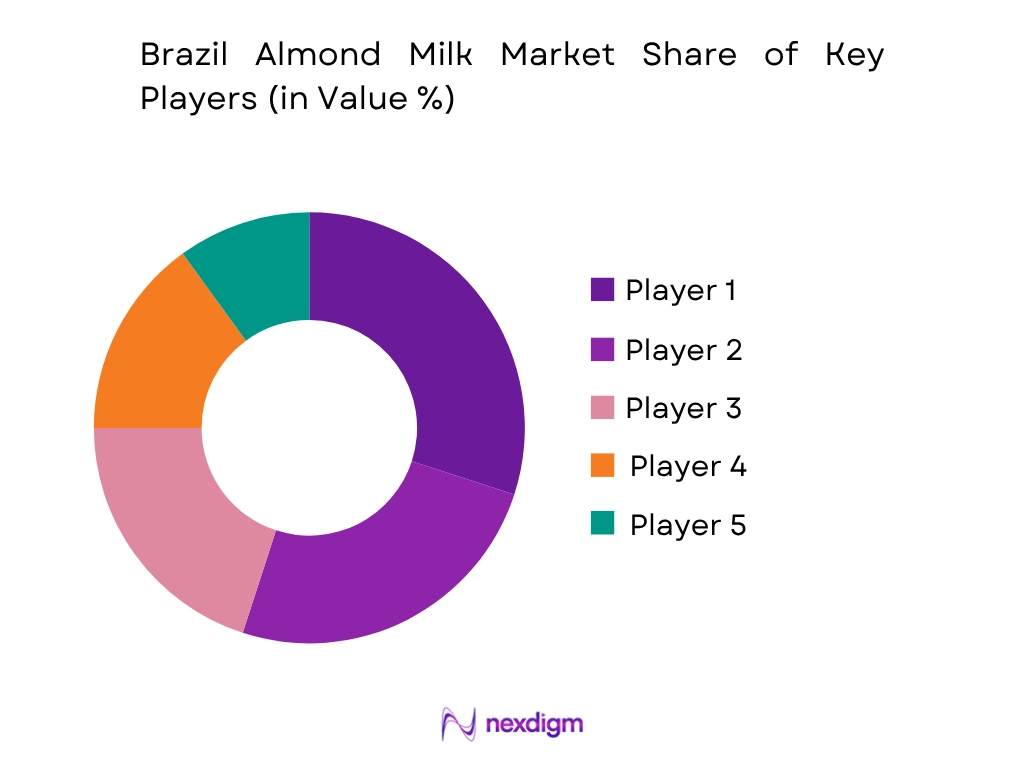
The Brazil Almond Milk Market remains moderately consolidated, with competition driven by product innovation, distribution reach, brand positioning, nutritional fortification, and pricing strategies. Both international and domestic manufacturers compete for shelf space across modern retail and online channels. Market participants continue to introduce sugar-free, organic, barista, and functional almond milk products to differentiate themselves within the increasingly competitive plant-based beverage sector.
| Company | Establishment Year | Headquarters | Product Portfolio | Distribution Reach | Organic Range | E-Commerce Presence | Fortified Products | Foodservice Presence |
| A Tal da Castanha | 2015 | ~ | ~ | ~ | ~ | ~ | ~ | ~ |
| Danone (Silk) | 1919 | ~ | ~ | ~ | ~ | ~ | ~ | ~ |
| Blue Diamond Almond Breeze | 1910 | ~ | ~ | ~ | ~ | ~ | ~ | ~ |
| Nude | 2020 | ~ | ~ | ~ | ~ | ~ | ~ | ~ |
| NotCo | 2015 | ~ | ~ | ~ | ~ | ~ | ~ | ~ |
Brazil Almond Milk Market Analysis
Growth Drivers
Rising Health and Wellness Consciousness
The growing focus on health, wellness, and preventive nutrition among Brazilian consumers is a major growth driver for the Brazil Almond Milk Market. Brazil has a population exceeding 212 million people, making it the largest consumer market in Latin America. Rising concerns regarding obesity, cardiovascular diseases, lactose intolerance, and dietary wellness are encouraging consumers to shift toward plant-based alternatives such as almond milk. Brazil’s GDP exceeded USD 2.1 trillion, while GDP per capita crossed USD 10,000, indicating stronger purchasing power for premium health-oriented food products. Urban centers such as São Paulo, Rio de Janeiro, and Brasília have witnessed increased adoption of vegan, vegetarian, and flexitarian diets, supporting demand for almond milk products. The country’s health and wellness food and beverage industry exceeded USD 26 billion in consumer spending, creating a favorable ecosystem for plant-based beverages. Furthermore, Brazil’s urban population exceeds 185 million people, enabling easier penetration of modern retail channels and health-focused product offerings. The expansion of premium supermarkets, specialty stores, and e-commerce platforms has improved accessibility to almond milk across major metropolitan regions. As consumers increasingly seek low-cholesterol, lactose-free, and nutrient-enriched beverages, almond milk continues to benefit from the broader transformation of Brazil’s food consumption patterns toward healthier and functional alternatives.
Expansion of Plant-Based Food Consumption
The rapid expansion of plant-based food consumption in Brazil is significantly supporting almond milk demand. Brazil remains one of the largest food and beverage markets globally, with household expenditure on food products continuing to rise alongside increasing urbanization and income levels. The country’s population exceeds 212 million, providing a vast consumer base for dairy alternatives. Major food manufacturers and retailers have expanded plant-based product portfolios in response to changing dietary preferences, while international brands have strengthened their presence through supermarkets, convenience stores, and online channels. Brazil’s retail sector continues to expand, supported by large metropolitan areas such as São Paulo, Rio de Janeiro, Curitiba, Porto Alegre, and Belo Horizonte. Increased awareness regarding environmental sustainability and animal welfare has also contributed to the popularity of plant-based beverages. Global plant-based milk trends indicate almond milk remains among the leading categories within dairy alternatives due to its taste profile and nutritional benefits. The growing number of vegan and flexitarian consumers, combined with the rise of health-focused foodservice outlets and café chains offering dairy-free beverages, has accelerated almond milk adoption. These factors collectively create a strong foundation for continued growth in Brazil’s almond milk consumption across retail and foodservice channels.
Market Challenges
Dependence on Imported Almond Raw Materials
A major challenge facing the Brazil Almond Milk Market is the dependence on imported almonds and almond-based ingredients. Brazil is not a significant producer of almonds, resulting in substantial reliance on international suppliers, particularly from North America and Europe. This dependence exposes manufacturers to fluctuations in global agricultural production, logistics disruptions, exchange rate volatility, and supply chain constraints. Brazil’s merchandise imports exceeded USD 260 billion, highlighting the country’s reliance on imported inputs across several industries. Currency fluctuations between the Brazilian Real and the US Dollar directly impact procurement costs for almond-based products. Transportation costs associated with importing almonds from major producing countries further increase operational complexity for local manufacturers. The geographic distance between Brazil and major almond-producing regions can extend lead times and inventory management requirements. Additionally, adverse weather conditions affecting almond-producing countries can reduce raw material availability, creating supply uncertainty for Brazilian processors. These challenges can influence product availability and profitability for almond milk producers. Consequently, companies operating in the Brazilian almond milk sector must develop resilient sourcing strategies, diversify suppliers, and optimize logistics operations to mitigate risks associated with imported raw materials.
Increasing Competition from Alternative Plant-Based Beverages
The Brazil Almond Milk Market faces intense competition from other plant-based beverage categories, including soy milk, oat milk, coconut milk, rice milk, and blended dairy alternatives. Brazil is one of the world’s largest agricultural producers, with substantial production of soybeans, coconuts, and other plant-based raw materials used in alternative beverage manufacturing. Soybean production exceeds 160 million metric tons annually, providing local manufacturers with abundant access to a relatively established raw material base. This availability often enables competing plant-based beverages to achieve broader market penetration and stronger price competitiveness compared to almond milk. Brazilian consumers are also familiar with soy-based products due to the country’s long-standing agricultural and food processing infrastructure. The increasing introduction of oat-based and coconut-based beverages by domestic and international brands further intensifies competition. Retail shelf space within supermarkets and hypermarkets remains highly competitive, requiring almond milk brands to continuously invest in product differentiation, innovation, and marketing. Furthermore, some consumers perceive almond milk as a premium product, potentially limiting adoption among price-sensitive households. These competitive pressures require manufacturers to focus on nutritional positioning, flavor innovation, and value-added formulations to maintain growth within Brazil’s expanding plant-based beverage industry.
Market Opportunities
Growth of Premium and Functional Beverage Categories
The increasing consumer preference for premium and functional beverages presents a substantial opportunity for the Brazil Almond Milk Market. Brazil’s food and beverage sector remains one of the largest in Latin America, supported by a population exceeding 212 million and expanding middle-income consumer segments. Demand for products offering additional health benefits, including vitamins, minerals, protein fortification, and digestive wellness support, continues to grow. Almond milk is naturally positioned within this trend due to its association with wellness, lactose-free nutrition, and plant-based consumption. Major urban centers such as São Paulo, Rio de Janeiro, Campinas, Curitiba, and Brasília have witnessed increased availability of fortified and specialty beverage products. The growth of fitness culture, preventive healthcare awareness, and personalized nutrition trends further supports demand for value-added almond milk formulations. Manufacturers have opportunities to introduce products enriched with calcium, vitamin D, vitamin B12, protein, probiotics, and functional ingredients targeting specific consumer needs. Brazil’s modern retail network and expanding e-commerce infrastructure provide effective distribution channels for premium products. As consumers increasingly prioritize nutritional quality and convenience, functional almond milk products are well positioned to capture higher-value demand within the country’s evolving beverage landscape.
Expansion of E-Commerce and Modern Retail Channels
The rapid expansion of e-commerce and organized retail channels offers significant growth opportunities for the Brazil Almond Milk Market. Brazil has one of the largest digital consumer bases globally, with internet users exceeding 180 million and smartphone adoption continuing to rise across urban and semi-urban regions. The country’s e-commerce ecosystem has expanded substantially, enabling broader accessibility to specialized health and wellness products, including plant-based beverages. Large supermarket chains, hypermarkets, online grocery platforms, and direct-to-consumer channels have enhanced product availability beyond major metropolitan areas. São Paulo, Rio de Janeiro, Belo Horizonte, Porto Alegre, and Recife remain key consumption hubs where premium food products experience strong demand. Improved logistics networks and digital payment adoption have further strengthened online retail capabilities. Consumers increasingly rely on online channels for product comparison, subscription purchasing, and access to niche dietary products. Almond milk manufacturers can leverage these trends by expanding digital marketing strategies, partnering with online retailers, and introducing direct-to-consumer sales models. The growing penetration of organized retail and e-commerce not only improves product visibility but also enables brands to reach health-conscious consumers across a wider geographic footprint, supporting long-term market development and category expansion.
Future Outlook
The Brazil Almond Milk Market is expected to demonstrate robust growth during the forecast period, supported by increasing plant-based food consumption, rising awareness regarding lactose intolerance, and growing consumer preference for functional beverages. Product innovation in sugar-free, fortified, and organic categories is expected to attract health-conscious consumers. Expansion of e-commerce platforms, increasing retail penetration, and broader availability through foodservice channels will further support market development. Continued investment in plant-based nutrition and sustainability initiatives is anticipated to create favorable growth opportunities across the market.
Major Players
- A Tal da Castanha
- Nude
- NotCo
- Silk
- Blue Diamond Almond Breeze
- Danone
- Nature’s Heart
- Ades
- Califia Farms
- Alpro
- Isola Bio
- Earth’s Own
- Vida Veg
- Nestlé
- Nature’s Finest Foods
Key Target Audience
- Almond Milk Manufacturers
- Plant-Based Beverage Producers
- Food & Beverage Processing Companies
- Supermarket and Hypermarket Chains
- Health & Wellness Retailers
- Foodservice Operators and Café Chains
- Investment and Venture Capitalist Firms
- Government and Regulatory Bodies
Research Methodology
Step 1: Identification of Key Variables
The research process begins with identification of critical market variables influencing the Brazil Almond Milk Market. This includes consumer demand patterns, plant-based beverage penetration, distribution channel dynamics, import dependency, retail expansion, and product innovation trends. Secondary research sources are utilized to establish a comprehensive industry ecosystem.
Step 2: Market Analysis and Construction
Historical market performance is analyzed using a combination of demand-side and supply-side indicators. Product consumption trends, retail penetration, distribution coverage, import volumes, and manufacturer performance are assessed to construct market estimates and identify growth patterns across segments.
Step 3: Hypothesis Validation and Expert Consultation
Market assumptions are validated through interactions with industry participants including manufacturers, distributors, retailers, and category experts. These consultations provide insights regarding purchasing behavior, competitive dynamics, pricing structures, and product innovation strategies.
Step 4: Research Synthesis and Final Output
The final stage involves integrating primary and secondary findings to develop market estimates, competitive assessments, segmental analyses, and future projections. Multiple validation techniques are employed to ensure consistency, accuracy, and reliability of the final market intelligence output.

- Executive Summary
- Research Methodology (Market Definitions and Assumptions, Abbreviations, Market Sizing Approach, Bottom-Up Analysis, Top-Down Validation, Primary Interviews with Industry Stakeholders, Demand-Supply Gap Assessment, Limitations and Forecasting Framework)

- Definition and Scope
- Market Evolution and Industry Genesis
- Timeline of Plant-Based Beverage Development in Brazil
- Almond Milk Value Chain Analysis
- Raw Material Sourcing Ecosystem

- Growth Drivers (Plant-Based Diet Adoption, Lactose Intolerance Awareness, Premium Beverage Consumption, Health & Wellness Trends, Vegan Population Expansion)
- Market Challenges (High Import Dependency, Premium Pricing, Limited Domestic Almond Production, Consumer Awareness Gaps, Competition from Other Plant-Based Milks)
- Market Opportunities (Functional Nutrition Products, Organic Almond Milk Expansion, Foodservice Penetration, E-Commerce Growth, Product Innovation)
- Market Trends (Barista Almond Milk, Clean Label Formulations, Sugar-Free Variants, Sustainable Packaging, Fortified Dairy Alternatives)
- Government Regulations (ANVISA Labeling Standards, Food Safety Compliance, Import Regulations, Organic Certification Requirements, Nutritional Claim Guidelines)
- SWOT Analysis
- Stakeholder Ecosystem
- PESTLE Analysis
- Porter’s Five Forces Analysis
- Competition Ecosystem

- By Market Value (2020-2025)
- By Volume Consumption (2020-2025)
- By Average Retail Price (2020-2025)

- By Product Type (In Value %)
Original Almond Milk
Unsweetened Almond Milk
Sweetened Almond Milk
Flavored Almond Milk
Functional/Fortified Almond Milk
Others - By Formulation Type (In Value %)
Conventional Almond Milk
Organic Almond Milk
Fortified Almond Milk
High-Protein Almond Milk
Clean Label Almond Milk - By Distribution Channel (In Value %)
Supermarkets & Hypermarkets
Convenience Stores
Health & Specialty Stores
Online Retail & E-Commerce
Direct-to-Consumer Platforms
Foodservice Distribution - By End User (In Value %)
Household Consumers
Cafes & Coffee Chains
Hotels & Restaurants
Bakeries & Confectionery
Beverage Manufacturers
Institutional Buyers - By Region (In Value %)
Southeast Brazil
South Brazil
Northeast Brazil
Central-West Brazil
North Brazil

- Market Share of Major Players (Value, Volume, By Product Category )
- Cross Comparison Parameters (Product Portfolio Breadth, Almond Milk SKU Count, Organic Product Availability, Fortification Portfolio, Retail Distribution Reach, E-Commerce Presence, Packaging Formats and Sustainability Initiatives, Foodservice and Barista Product Penetration)
- SWOT Analysis of Major Players
- Pricing Analysis by SKU and Pack Size
- Detailed Profiles of Major Companies
A Tal da Castanha
Nude
Vida Veg
NotCo
Silk (Danone)
Blue Diamond Almond Breeze
Nestlé
Ades
Nature’s Heart
Califia Farms
Alpro
Vly Foods
Isola Bio
Nature’s Finest Foods
Earth’s Own

- Consumer Demographics and Consumption Patterns
- Urban vs Rural Consumption Trends
- Health and Wellness Purchasing Behavior
- Dietary Preference Analysis (Vegan, Flexitarian, Lactose-Free Consumers)
- Brand Awareness and Loyalty Assessment
- Consumer Pain Points and Preference Mapping
- Average Basket Value Analysis
- Purchase Decision-Making Framework

- By Market Value (2026-2035)
- By Volume Consumption (2026-2035)
- By Average Retail Price (2026-2035)


 Request a Sample
 Ask for Customization
 Get a Quote
 Enquire Now