
 Download PDF
Market Overview
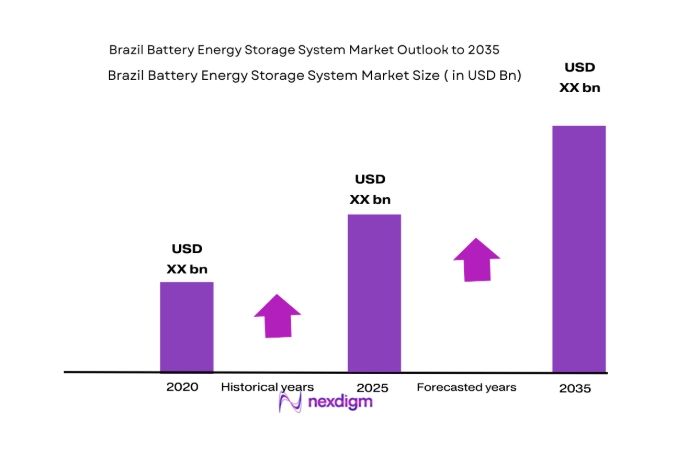
The Brazil Battery Energy Storage System market has witnessed significant growth, driven by an increasing demand for renewable energy sources and the need for grid stability. The market is projected to reach USD ~ billion, supported by the government’s focus on clean energy initiatives and technological advancements in energy storage solutions. This growth is further fueled by the rising penetration of electric vehicles, the adoption of solar power systems, and ongoing infrastructure development to enhance energy resilience across the country.
In Brazil, the dominance of urban centers such as São Paulo, Rio de Janeiro, and Brasília plays a critical role in the development of the Battery Energy Storage System market. These cities benefit from favorable regulatory policies, a high concentration of energy-intensive industries, and government incentives promoting sustainable energy practices. Furthermore, Brazil’s vast geographical landscape, including areas with significant solar and wind energy potential, has created a robust environment for the integration of energy storage systems, driving the market’s adoption.
Market Segmentation
By Product Type
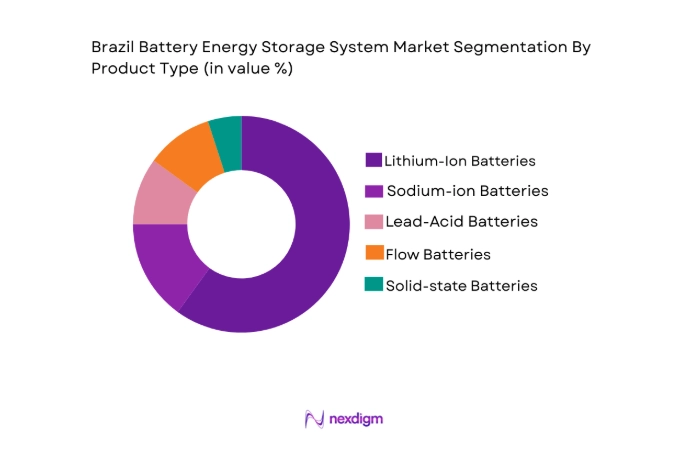
Brazil Battery Energy Storage System market is segmented by product type into lithium-ion, sodium-ion, lead-acid, flow batteries, and solid-state batteries. Recently, lithium-ion batteries have dominated the market due to their high energy density, longer lifespan, and widespread commercial adoption. The growing demand for electric vehicles and renewable energy integration has further boosted the popularity of lithium-ion batteries. Flow batteries are gaining traction for large-scale storage solutions due to their longer cycle life and scalability, while solid-state batteries, though still emerging, offer promising advantages in terms of safety and energy efficiency.
By Platform Type
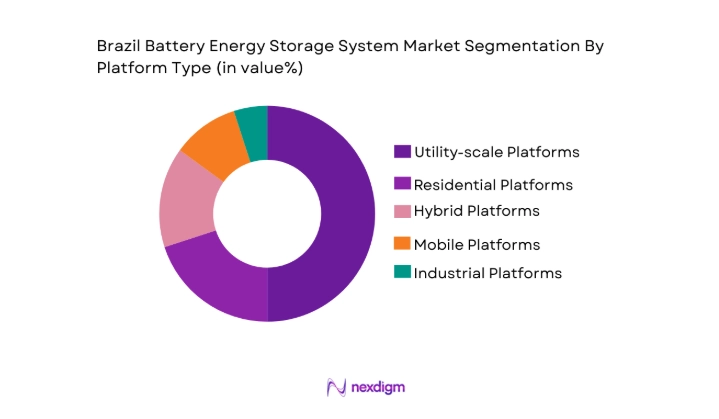
Brazil Battery Energy Storage System market is segmented by platform type into residential, commercial, utility-scale, mobile, and industrial platforms. Recently, utility-scale platforms have dominated the market due to the increasing demand for large-scale energy storage solutions that support grid stability and renewable energy integration. The growth of smart grids and the push for energy independence have also contributed to the rise in utility-scale storage. Residential platforms are experiencing growth as more homeowners adopt solar power and seek reliable storage for off-grid and backup energy solutions.
Competitive Landscape
The competitive landscape of the Brazil Battery Energy Storage System market reflects a high level of consolidation, with leading companies dominating the technology space. These players are focusing on technological innovations and strategic partnerships to enhance their product offerings. The influence of major players such as Tesla, Siemens, and BYD is evident in the continuous advancements in battery technology, particularly in lithium-ion and sodium-ion solutions, which are pushing the market towards higher performance and efficiency.
| Company Name | Establishment Year | Headquarters | Technology Focus | Market Reach | Key Products | Revenue | Additional Parameter |
| Tesla | 2003 | Palo Alto, USA | ~ | ~ | ~ | ~ | ~ |
| Siemens | 1847 | Munich, Germany | ~ | ~ | ~ | ~ | ~ |
| BYD | 1995 | Shenzhen, China | ~ | ~ | ~ | ~ | ~ |
| LG Chem | 1947 | Seoul, South Korea | ~ | ~ | ~ | ~ | ~ |
| AES Energy Storage | 1981 | Arlington, USA | ~ | ~ | ~ | ~ | ~ |
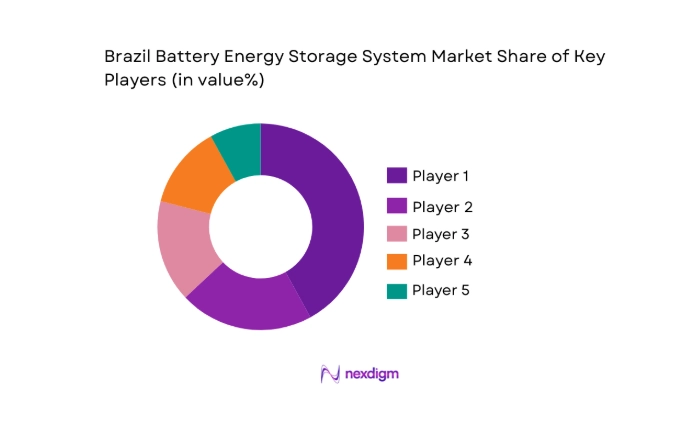
Brazil Battery Energy Storage Market Analysis
Growth Drivers
Government Incentives
Government incentives have been a significant growth driver in the Brazil Battery Energy Storage System market. Policies aimed at reducing carbon emissions and increasing the adoption of renewable energy sources, such as tax exemptions and financial support for energy storage projects, have been crucial in fostering the market’s growth. These incentives help to offset the initial high cost of battery systems and make energy storage solutions more affordable for consumers and businesses alike. Additionally, the expansion of electric mobility has led to a growing demand for energy storage solutions to support the integration of electric vehicles with the national grid. As Brazil strives to meet its sustainability targets, the government’s support for energy storage solutions will continue to be a pivotal factor in driving the market forward. The commitment to renewable energy integration, along with the establishment of regional initiatives to promote energy independence, will further bolster the adoption of battery storage systems, driving long-term growth. The market will also benefit from government policies that facilitate the implementation of smart grids, which require energy storage to balance fluctuations in renewable energy generation.
Technological Advancements
Technological advancements in battery technology have been a major driver of growth in the Brazil Battery Energy Storage System market. Innovations such as improved energy density, longer battery life, and enhanced charge/discharge cycles have made battery storage systems more efficient and cost-effective. Lithium-ion and sodium-ion batteries, in particular, have witnessed significant improvements in terms of performance, which has contributed to their increasing popularity in energy storage applications. Moreover, advancements in manufacturing processes have led to a reduction in production costs, making these systems more accessible to both commercial and residential customers. As the cost of energy storage continues to decrease, the adoption of these systems across Brazil’s energy infrastructure, including integration with renewable energy sources, will accelerate. In addition, the development of more efficient energy management systems that allow for better control and optimization of energy usage will further support the demand for battery storage solutions. The innovation of wireless charging technologies and faster charging times is also expected to provide new avenues for market growth, making energy storage systems even more attractive to end-users.
Market Challenges
Regulatory and Compliance Issues
Regulatory and compliance issues present a significant challenge for the Brazil Battery Energy Storage System market. While government incentives have supported market growth, navigating the complex regulatory landscape remains a hurdle for many companies. The requirements for certifications, safety standards, and grid integration protocols can be cumbersome, especially for smaller players in the market. Furthermore, delays in regulatory approvals and the lack of uniformity in standards across regions can hinder the timely deployment of battery energy storage systems. The Brazilian government is working to streamline regulations, but challenges persist, especially in rural areas where energy infrastructure is less developed. In addition, ensuring compliance with international standards while maintaining cost-efficiency remains a balancing act for manufacturers. The regulatory burden, if not addressed effectively, may slow the adoption of energy storage solutions in both residential and commercial sectors, limiting the overall market growth. Additionally, the lack of a cohesive policy for large-scale energy storage integration with the grid continues to pose challenges to market players looking to capitalize on this technology.
Supply Chain and Manufacturing Constraints
Supply chain and manufacturing constraints are another challenge faced by the Brazil Battery Energy Storage System market. While the demand for battery storage systems is on the rise, the limited availability of raw materials such as lithium, cobalt, and nickel required for battery production poses a serious concern. These materials are critical for the manufacturing of lithium-ion batteries, which dominate the energy storage market. As demand for electric vehicles and renewable energy technologies continues to grow globally, the competition for these essential raw materials intensifies, leading to price fluctuations and potential shortages. Furthermore, the complex global supply chain for these materials makes it difficult to guarantee consistent supply and stable prices, which can affect the production schedules of energy storage manufacturers. Additionally, Brazil’s domestic manufacturing capacity for energy storage systems remains underdeveloped, leading to dependency on imports from global markets. These supply chain issues could impact the timely availability of storage systems, slowing market expansion and creating potential bottlenecks in the adoption of energy storage solutions.
Opportunities
Emerging Demand for Renewable Energy Integration
One of the key opportunities for the Brazil Battery Energy Storage System market is the growing demand for renewable energy integration. Brazil has abundant renewable energy resources, particularly solar and wind power, which are increasingly being harnessed to meet the country’s energy needs. As renewable energy sources are intermittent, energy storage systems play a crucial role in ensuring a consistent power supply by storing excess energy generated during peak periods and releasing it during low-generation times. The push for cleaner energy sources, combined with the Brazilian government’s commitment to reducing carbon emissions, is creating a favorable environment for the deployment of energy storage solutions. Additionally, as the cost of solar power continues to decline and more households and businesses adopt solar energy systems, the demand for residential energy storage solutions is expected to rise. This creates an opportunity for energy storage manufacturers to expand their product offerings to cater to both residential and commercial applications. By enhancing the flexibility and efficiency of energy storage systems, market players can capitalize on the growing demand for renewable energy solutions and contribute to Brazil’s renewable energy transition. The increasing demand for off-grid energy solutions in rural areas further amplifies this opportunity, as energy storage systems provide an affordable and reliable means of powering remote locations.
Partnerships with Electric Mobility Providers
Another significant opportunity in the Brazil Battery Energy Storage System market lies in forming partnerships with electric mobility providers. With the rise in electric vehicle (EV) adoption, there is a growing need for charging infrastructure that is integrated with energy storage systems. By partnering with EV manufacturers, infrastructure developers, and fleet operators, battery storage providers can create integrated solutions that enable efficient energy management and grid support. These partnerships can help accelerate the deployment of fast-charging stations that rely on energy storage to balance load fluctuations. Additionally, integrating energy storage systems with EV charging stations can help reduce grid dependency, mitigate power outages, and optimize energy usage. As Brazil’s EV market continues to expand, this synergy between battery storage systems and electric mobility presents a lucrative opportunity for energy storage providers. By collaborating with key players in the EV ecosystem, energy storage companies can tap into a growing market and expand their reach in the fast-evolving transportation sector. Moreover, these partnerships can enable the development of innovative solutions that improve the overall performance and cost-effectiveness of energy storage systems in electric vehicle charging infrastructure.
Future Outlook
The Brazil Battery Energy Storage System market is expected to witness substantial growth over the next five years, driven by increasing renewable energy adoption, government incentives, and advancements in battery technologies. Key factors such as regulatory support, the growing demand for energy resilience, and the integration of electric mobility with energy storage solutions will further fuel this growth. Technological innovations, including longer-lasting batteries, cost reductions, and more efficient energy management systems, will play a crucial role in shaping the market. Furthermore, the expansion of smart grids and large-scale renewable energy projects will offer new opportunities for energy storage system providers to integrate their solutions into Brazil’s evolving energy landscape.
Major Players
- Tesla
- Siemens
- BYD
- LG Chem
- AES Energy Storage
- Fluence Energy
- Vestas
- ABB
- Samsung SDI
- Wärtsilä
- GE Renewable Energy
- Eaton
- Schneider Electric
- Hitachi ABB Power Grids
- Johnson Controls
Key Target Audience
- Investments and venture capitalist firms
- Government and regulatory bodies
- Electric vehicle manufacturers
- Renewable energy providers
- Energy utilities
- Solar power companies
- Industrial energy consumers
- Commercial building developers
Research Methodology
Step 1: Identification of Key Variables
Identifying critical factors such as market drivers, technological trends, and regional policies affecting the Battery Energy Storage System market.
Step 2: Market Analysis and Construction
Analyzing market segments and developing models to assess the adoption rates, demand forecasts, and competitive dynamics.
Step 3: Hypothesis Validation and Expert Consultation
Validating hypotheses with industry experts and conducting interviews with key stakeholders to ensure accurate data representation.
Step 4: Research Synthesis and Final Output
Synthesizing the collected data into a final report, integrating expert insights, and ensuring that conclusions are supported by reliable sources.

- Executive Summary
- Research Methodology (Definitions, Scope, Industry Assumptions, Market Sizing Approach, Primary & Secondary Research Framework, Data Collection & Verification Protocol, Analytic Models & Forecast Methodology, Limitations & Research Validity Checks)

- Market Definition and Scope
- Value Chain & Stakeholder Ecosystem
- Regulatory / Certification Landscape
- Sector Dynamics Affecting Demand
- Strategic Initiatives & Infrastructure Growth

- Growth Drivers
Increasing adoption of renewable energy sources
Government incentives and policy support
Rising electricity demand and grid stability concerns
Technological advancements in battery efficiency
Declining cost of energy storage systems - Market Challenges
High initial capital investment for storage systems
Limited grid infrastructure for storage integration
Environmental concerns around battery disposal
Storage technology maturity and scalability issues
Regulatory and policy barriers for large-scale deployment - Market Opportunities
Partnerships with renewable energy providers
Development of next-gen battery technologies
Expanding energy storage systems in rural and off-grid areas - Trends
Integration of energy storage systems with smart grids
Growth in utility-scale energy storage projects
Increased focus on energy resilience and independence
Advancements in energy management software
Rising demand for electric vehicles and EV-related storage - Government Regulations & Defense Policy
Government incentives for energy storage adoption
National energy security strategies and policies
Regulations promoting renewable energy integration - SWOT Analysis
- Stakeholder and Ecosystem Analysis
- Porter’s Five Forces Analysis
- Competition Intensity and Ecosystem Mapping

- By Market Value, 2020-2025
- By Installed Units, 2020-2025
- By Average System Price, 2020-2025
- By System Complexity Tier, 2020-2025

- By System Type (In Value%)
Grid-Scale Storage
Residential Storage
Commercial Storage
Off-Grid Storage
Hybrid Storage Systems - By Platform Type (In Value%)
Solar Integrated Storage
Wind Integrated Storage
Grid-Connected Storage
Microgrid Storage
Standalone Storage - By Fitment Type (In Value%)
On-premise Systems
Modular Systems
Integrated Solutions
Portable Storage Systems
Hybrid Storage Systems - By End User Segment (In Value%)
Utilities
Residential Consumers
Commercial and Industrial Users
Government and Defense
Renewable Energy Producers - By Procurement Channel (In Value%)
Direct Procurement
Government Tenders
Private Sector Procurement
Third-party Distributors
Online Marketplaces - By Material / Technology (In Value%)
Lithium-Ion Batteries
Flow Batteries
Sodium-Sulfur Batteries
Lead-Acid Batteries
Solid-State Batteries

- Market structure and competitive positioning
Market share snapshot of major players - Cross Comparison Parameters (System Type, Fitment Type, Material/Technology, Procurement Channel, Platform Type)
- SWOT Analysis of Key Competitors
- Pricing & Procurement Analysis
- Key Players
AES Clean Energy
Siemens
GE Renewable Energy
Schneider Electric
Eaton
Sungrow Power Supply
BYD Company
VARTA Storage
Tesla
Enel Green Power
Fluence
LG Chem
Saft
Samsung SDI
Panasonic

- Government focus on energy security
- Increased energy storage adoption in commercial sectors
- Residential consumers seeking energy independence
- Growing demand for EV and electric mobility storage

- Forecast Market Value, 2026-2035
- Forecast Installed Units, 2026-2035
- Price Forecast by System Tier, 2026-2035
- Future Demand by Platform, 2026-2035


 Request a Sample
 Ask for Customization
 Get a Quote
 Enquire Now