
 Download PDF
Market Overview
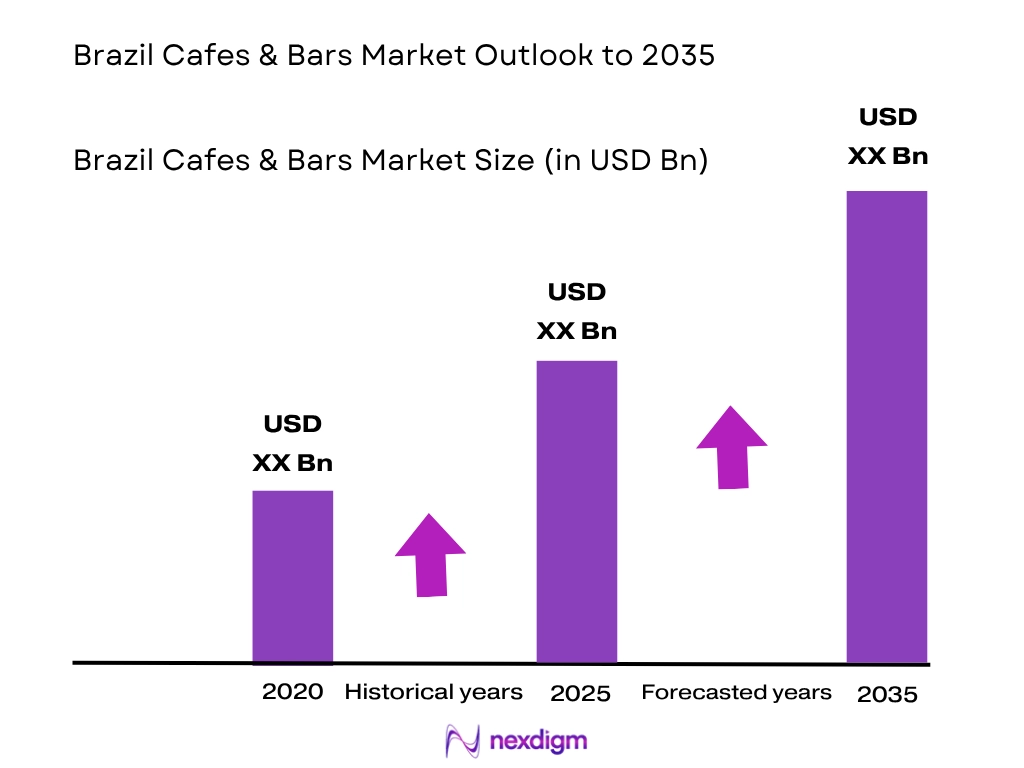
The Brazil Cafes & Bars Market is valued at USD ~ billion on a back-casted basis from the latest disclosed category-specific value of USD ~ billion and the published CAGR of 3.92%. The broader foodservice-HRI channel generated USD ~ billion, while the prior comparable foodservice revenue benchmark stood at USD ~ billion, reflecting exchange-rate effects, price sensitivity and operator mix. Demand is driven by coffee culture, chopp consumption, boteco occasions, premium beverages, digital discovery and urban eating-out frequency.
São Paulo, Rio de Janeiro, Belo Horizonte, Brasília, Fortaleza, Salvador, Curitiba and Porto Alegre dominate Brazil Cafes & Bars Market demand because they concentrate population, office clusters, nightlife corridors, shopping malls, tourist flows and premium beverage consumers. São Paulo municipality has 11.9 million residents, Rio de Janeiro has 6.7 million and Brasília has 3.0 million; metropolitan São Paulo reaches 21.5 million, followed by Rio de Janeiro at 12.9 million and Belo Horizonte at 6.0 million, supporting higher café-bar density and stronger weekday and leisure daypart utilization.
Market Segmentation
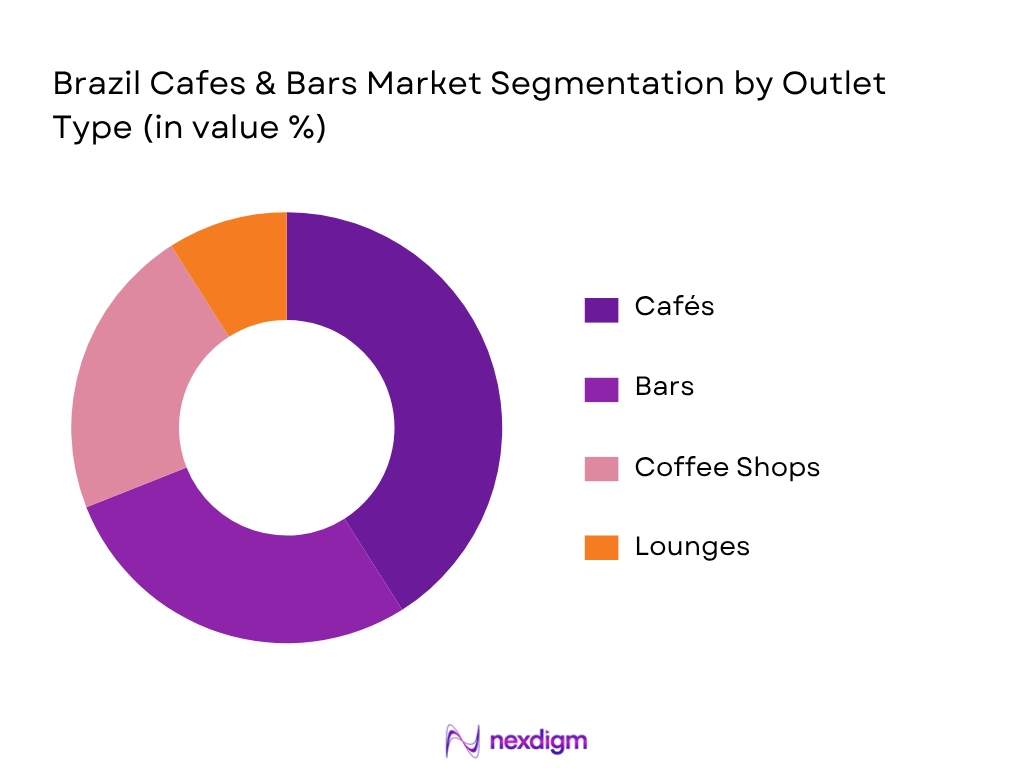
By Outlet Type
Brazil Cafes & Bars Market is segmented by outlet type into cafés, bars, coffee shops and lounges. Cafés hold the dominant market share because they address multiple dayparts, from morning coffee and pão de queijo to afternoon snacks, meetings and takeaway beverages. The format also benefits from Brazil’s established coffee consumption habits and the rise of premiumized coffee experiences, including iced coffee, flavored coffee and espresso-based beverages. Cafés are more scalable than full-service bars because they require lower alcohol licensing complexity, smaller store footprints and easier franchising. Mall kiosks, high-street compact stores and café-bakery hybrids further strengthen the segment. Operators such as The Coffee, Fran’s Café, Rei do Mate, Casa Bauducco, Kopenhagen and Grão Espresso have widened café usage occasions beyond traditional breakfast into gifting, dessert, office break and delivery occasions, helping cafés lead the outlet-type mix.
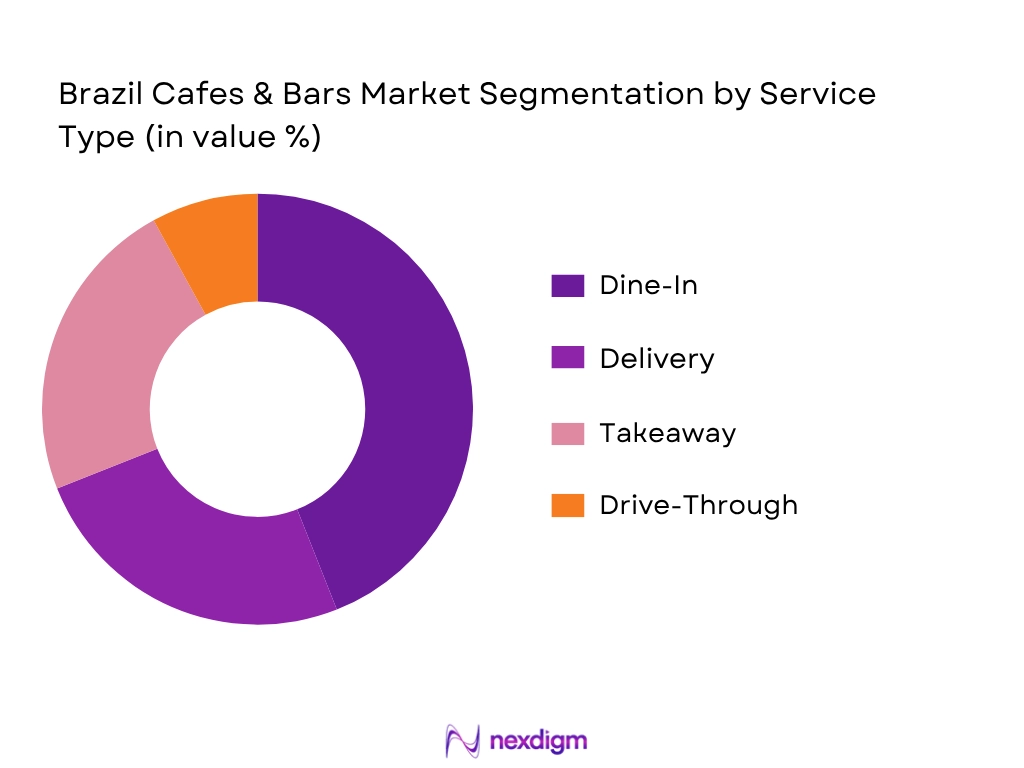
By Service Type
Brazil Cafes & Bars Market is segmented by service type into dine-in, takeaway, delivery and drive-through. Dine-in dominates the market because cafés and bars are fundamentally social spaces in Brazil, with botecos, chopp bars, specialty cafés and café-bakery outlets relying on seating, ambience, meetings, work breaks, happy hours and weekend leisure. Dine-in also delivers higher basket value through beverage-plus-food combinations, alcohol rounds, petiscos and table service. Delivery and takeaway have grown, especially through app-based ordering and WhatsApp commerce, but many core consumption occasions remain location-led, including football viewing, after-work gatherings, tourist dining and brunch. Bars are especially dependent on on-premise experiences because draught beer, cocktails, music, ambience and group consumption are difficult to replicate in delivery economics.
Competitive Landscape
The Brazil Cafes & Bars Market is fragmented, with thousands of independent botecos, cafés and neighborhood bars competing against scalable chains and franchise-led brands. Organized players are gaining visibility through mall stores, compact urban cafés, premium coffee formats, dessert-led cafés and brand-owned loyalty ecosystems. Starbucks Brazil’s transition to Zamp, Nestlé’s out-of-home coffee-machine expansion and the continued growth of local café chains show that the market is shifting from informal store-led demand to branded, standardized and digitally visible formats.
| Company | Establishment Year | Headquarters | Core Format | Ownership Model | Beverage Focus | Food Pairing Strength | Expansion Channel | Market Positioning |
| Starbucks Brazil / Zamp | 1971 / Brazil operator 2024 | Seattle / São Paulo | ~ | ~ | ~ | ~ | ~ | ~ |
| The Coffee | 2018 | Curitiba | ~ | ~ | ~ | ~ | ~ | ~ |
| Fran’s Café | 1972 | São Paulo | ~ | ~ | ~ | ~ | ~ | ~ |
| Rei do Mate | 1978 | São Paulo | ~ | ~ | ~ | ~ | ~ | ~ |
| Casa Bauducco | 2012 | São Paulo | ~ | ~ | ~ | ~ | ~ | ~ |
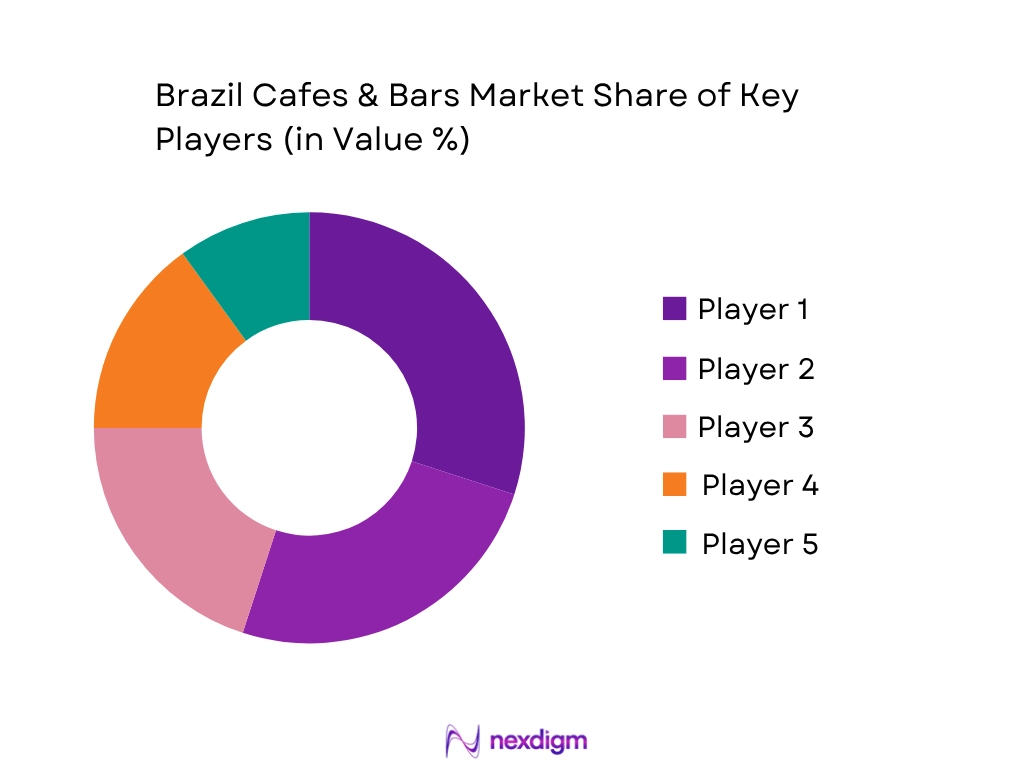
Brazil Cafes & Bars Market Analysis
Growth Drivers
Urban Foodservice Demand
Brazil Cafes & Bars Market is strongly supported by dense urban demand pools, a large employed consumer base and high household consumption capacity. Brazil recorded GDP of USD 2.19 trillion and GDP per capita of USD 10,310.5, giving cafés, coffee shops, botecos and bars a large macroeconomic base for daily foodservice consumption. Household final consumption expenditure stood at USD 1.389 trillion, while the average employed population reached 103.3 million persons, creating a sizeable weekday audience for breakfast coffee, work-break snacks, lunch-adjacent café visits and after-work bar occasions. Brazil’s estimated population reached 212.6 million persons, and 15 municipalities had more than 1 million residents, together housing 42.7 million people. São Paulo alone had 11.9 million residents, Rio de Janeiro 6.7 million, Brasília 3.0 million, Fortaleza 2.6 million and Salvador 2.6 million, making these cities natural café-bar demand centers because of office clusters, malls, tourism corridors, transport hubs and nightlife districts.
Coffee Premiumization
Coffee premiumization in Brazil Cafes & Bars Market is supported by the country’s unusually deep coffee supply base and its role as a global coffee producer, allowing cafés to build menus around espresso, filtered coffee, specialty beans, cold coffee and bean-origin storytelling. CONAB reported Brazil’s coffee crop at 54.2 million 60-kg bags for the 2024 cycle, while the 2025 estimate stood at 55.7 million 60-kg bags. This scale gives café chains, independent specialty cafés and roasters a strong domestic sourcing foundation for differentiated blends, Brazilian origin claims and premium beverage formats. Coffee also connects directly with Brazil’s macro consumer base: 103.3 million employed persons create recurring weekday occasions for espresso, cappuccino, latte, pão de queijo pairings and takeaway coffee near offices and transit nodes. The population concentration in cities such as São Paulo, Rio de Janeiro, Brasília, Fortaleza and Salvador supports premium café formats because these cities combine higher footfall, retail density, mall penetration and working-professional demand. Premiumization is therefore not only product-led but also location-led, menu-led and occasion-led.
Market Challenges
Coffee Price Inflation
Coffee price inflation is a direct operating challenge for Brazil Cafes & Bars Market because coffee is both a core menu item and a high-frequency purchase driver for cafés, bakery cafés and coffee kiosks. IBGE reported that Brazil’s IPCA closed with a cumulative increase of 4.83 in 2024, while the Food and Beverages group recorded 7.69 and contributed 1.63 percentage points to the annual index, showing that foodservice operators faced pressure from the same basket that shapes café menus. Ground coffee and beverage inputs affect not only espresso and filtered coffee sales but also desserts, breakfast bundles, milk-based beverages and iced coffee formats. CONAB’s coffee crop estimate of 54.2 million 60-kg bags for the 2024 cycle and 55.7 million 60-kg bags for 2025 indicates that even with large domestic production, cafés remain exposed to weather, harvest cycles, export competition and stock availability. For operators, the challenge is especially acute because Brazil’s 103.3 million employed persons support frequent out-of-home demand, but consumers can shift between specialty cafés, bakeries, convenience stores, home coffee and workplace coffee machines when menu prices move beyond acceptable daily-spend levels.
Alcohol Regulation
Alcohol regulation remains a structural challenge for Brazil Cafes & Bars Market because bars, botecos, lounges and hybrid café-bars must comply with age restrictions, municipal licensing, tax documentation, operating-hour rules and health-related controls. Brazil’s Federal Law No. 13,106 prohibits selling, supplying or delivering alcoholic beverages to persons under 18 years of age, making staff training, ID checks and service controls critical for alcohol-led operators. The Ministry of Health also defined the standard drink in Brazil at 10 grams of pure alcohol through Joint Technical Note No. 263/2024, creating a clearer technical basis for alcohol surveillance and policy discussion. Complementary Law No. 214, enacted on January 16, 2025, established selective taxation on goods and services harmful to health or the environment, including alcoholic beverages, increasing the policy scrutiny around alcohol-led consumption. For bar operators, these measures interact with Brazil’s large urban market of 212.6 million residents and 15 cities above 1 million residents, where nightlife volume is high but compliance failures can trigger penalties, reputational risk and operational disruption.
Market Opportunities
Non-Alcoholic Mixology
Non-alcoholic mixology represents a future growth opportunity for Brazil Cafes & Bars Market because operators can serve evening and social occasions without relying only on alcoholic beverages. The opportunity is supported by Brazil’s large urban consumer base: 212.6 million residents, 15 municipalities above 1 million residents and 42.7 million people living in those large municipalities create a sizeable audience for cafés, lounges, botecos and hybrid café-bars to offer mocktails, zero-alcohol beer, functional drinks, iced tea, mate, açaí beverages and coffee-based evening drinks. Global public-health pressure also supports moderation-led menus: WHO reported 2.6 million annual deaths attributable to alcohol and 0.6 million deaths attributable to psychoactive drug use in its 2024 alcohol and health reporting, strengthening the relevance of lower-risk beverage alternatives for hospitality operators. Brazil’s Ministry of Health position that there is no safe level of alcohol consumption for health, combined with the 10-gram standard drink definition, creates a regulatory and communication environment where non-alcoholic mixology can be positioned as inclusive, compliant and occasion-expanding. This is particularly relevant for women consumers, designated drivers, office groups, wellness-focused consumers and younger urban cohorts seeking social experiences without alcohol-led menus.
Franchise White Spaces
Franchise white spaces in Brazil Cafes & Bars Market are supported by the scale and dispersion of Brazil’s urban population, which gives café chains, coffee kiosks, café-bakery concepts and standardized bar formats room to expand beyond saturated premium streets. Brazil has 5,570 municipalities, and IBGE identified 15 municipalities with more than 1 million residents, together accounting for 42.7 million people. São Paulo, Rio de Janeiro, Brasília, Fortaleza and Salvador alone form a concentrated high-footfall base with 11.9 million, 6.7 million, 3.0 million, 2.6 million and 2.6 million residents respectively. The opportunity is reinforced by labor-market depth: Brazil’s average employed population reached 103.3 million persons, providing a recurring consumer base for office cafés, mall cafés, transit kiosks, neighborhood botecos and after-work beverage formats. Services activity also remained above its pre-pandemic level, with IBGE reporting the services sector 17.8 above February 2020 in October 2024 and 20.0 above February 2020 in November 2025, indicating that service-sector locations are structurally more active than pre-pandemic levels. Franchise models can use this demand base to replicate menus, procurement standards, POS systems, loyalty tools and compact store formats across secondary city centers, transport hubs, malls, universities and business corridors.
Future Outlook
The Brazil Cafes & Bars Market is expected to expand at a CAGR of 3.92% during the forecast period. Growth will be supported by premium coffee, urban socializing, café-bakery convergence, delivery-led discovery and franchise expansion. Bars will benefit from chopp, cocktails, football viewing and tourism-led nightlife. Cafés will remain the most scalable segment because they can operate across malls, offices, transport hubs and compact high-street formats with comparatively lower compliance complexity than alcohol-led venues. Specialty coffee, iced beverages, branded snacks, loyalty programs and daypart-based pricing will define the next phase of competition. The market will also see stronger segmentation by city cluster: São Paulo for premium and corporate café demand, Rio de Janeiro for tourist and nightlife-led bars, Belo Horizonte for boteco culture, Brasília for office-led cafés, and Salvador/Fortaleza/Recife for tourism and leisure formats.
Major Players
- Starbucks Brazil / Zamp
- The Coffee
- Fran’s Café
- Grão Espresso
- Rei do Mate
- Havanna Brazil
- Casa Bauducco
- Kopenhagen
- We Coffee
- Suplicy Cafés Especiais
- Octavio Café
- Café Cultura
- Outback Steakhouse Brazil
- Boteco Belmonte
- Bar Brahma
Key Target Audience
- Café chain operators
- Bar and boteco operators
- Foodservice franchise owners
- Beverage distributors and alcohol suppliers
- Coffee roasters and specialty coffee brands
- Real estate developers and shopping mall operators
- Investments and venture capitalist firms
- Government and regulatory bodies (ANVISA, Ministry of Agriculture and Livestock, Ministry of Tourism, Receita Federal do Brasil, Municipal Licensing Authorities)
Research Methodology
Step 1: Identification of Key Variables
The initial phase involves building an ecosystem map for the Brazil Cafes & Bars Market, including cafés, coffee shops, botecos, lounges, bar chains, roasters, breweries, distributors, franchise operators, delivery platforms and landlords. The key variables identified include outlet count, average ticket, service type, revenue mix, beverage category, food pairing, location cluster, franchise penetration and digital ordering contribution.
Step 2: Market Analysis and Construction
Historical market analysis is developed through a top-down and bottom-up approach. The top-down model uses foodservice-HRI revenue benchmarks, consumer foodservice indicators and category-specific published market values. The bottom-up model validates revenue through outlet formats, estimated transactions, average ticket, seating turnover, delivery contribution and café/bar beverage mix across major Brazilian cities.
Step 3: Hypothesis Validation and Expert Consultation
Market hypotheses are validated through interviews with café chain managers, independent bar owners, coffee roasters, beverage distributors, franchise consultants, mall leasing teams and POS/delivery platform stakeholders. These consultations help test assumptions on ticket size, channel mix, beverage profitability, labor cost, outlet economics, franchise economics and city-level demand density.
Step 4: Research Synthesis and Final Output
The final phase synthesizes secondary research, primary interviews, company benchmarking and market triangulation into a validated report structure. Competitive profiling, segmentation splits, pricing ladders and future outlook are reviewed against operator-level signals, menu structures, store formats and demand occasions. The final output provides a business-facing view of market size, competition, segmentation and opportunity areas.

- Executive Summary
- Research Methodology (Market definitions and assumptions, cafés and bars classification, HORECA coverage, boteco and lanchonete inclusion logic, on-premise vs off-premise revenue treatment, market sizing approach, primary interviews with café chains/bar owners/distributors, bottom-up outlet count and average ticket estimation, top-down foodservice spend allocation, beverage SKU pricing checks, delivery platform validation, limitations and future conclusions)

- Definition and Scope
- Overview Genesis
- Timeline of Major Players
- Business Cycle
- Supply Chain and Value Chain Analysis
- Brazil Café and Bar Culture Mapping
- Organized vs Independent Outlet Structure
- Role of Franchising in Café and Bar Expansion
- Role of Tourism, Business Districts, Shopping Malls and High-Street Clusters

- Growth Drivers (Urban foodservice demand, coffee premiumization, young consumer beverage experimentation, mall and high-street expansion, tourism and nightlife recovery, digital delivery penetration, franchising scalability, corporate coffee consumption)
- Market Challenges (Coffee price inflation, alcohol regulation, labor costs, rent pressure, delivery commissions, high independent outlet churn, informality, quality consistency)
- Market Opportunities (Menu Engineering, Daypart Expansion, Non-Alcoholic Mixology, Franchise White Spaces)
- Market Trends (Specialty coffee, cold beverages, craft beer, experiential bars, non-alcoholic drinks, loyalty apps, sustainability, regional ingredients)
- Brazil Cafes & Bars Market Government Regulations (Food safety, alcohol licensing, municipal operating permits, tax compliance, labor law, franchise disclosure, consumer protection, delivery hygiene)
- Brazil Cafes & Bars Market Ecosystem Analysis (Coffee growers, roasters, beverage distributors, breweries, spirits suppliers, food suppliers, franchise operators, delivery platforms, POS vendors, landlords)
- Stakeholder Ecosystem (Growers, roasters, importers, wholesalers, operators, landlords, platforms, customers)
- SWOT Analysis (Brand Loyalty, High Fixed Costs, Beverage Margins, Regulatory Fragmentation)
- PESTLE Analysis (Consumer Spending, Alcohol Policy, Technology Adoption, Labor Law, Sustainability)

- By Value (2020-2025)
- By Transaction Volume (2020-2025)
- By Outlet Count (2020-2025)
- By Average Ticket Size (2020-2025)
- By Average Revenue per Outlet (2020-2025)
- By Dine-In, Takeaway and Delivery Revenue (2020-2025)
- By Beverage-Led and Food-Led Revenue Mix (2020-2025)

- By Outlet Type (In Value%)
Chain Cafés
Independent Specialty Coffee Houses
Café-Bakery Formats
Botecos and Neighborhood Bars
Casual Dining Bars
Craft Beer and Microbrewery Bars
Cocktail, Rooftop and Lounge Bars
Sports Bars and Event-Led Bars
Juice, Açaí and Functional Beverage Cafés
Hybrid Day Café/Night Bar Formats - By Revenue Stream (In Value%)
Dine-In Revenue
Takeaway Revenue
Delivery Platform Revenue
Coffee and Hot Beverage Revenue
Alcoholic Beverage Revenue
Food, Snacks and Bakery Revenue
Retail Packaged Coffee, Beans and Merchandise Revenue
Events, Corporate Orders and Catering Revenue - By Beverage Type (In Value%)
Espresso, Cappuccino and Latte
Filtered Coffee and Brewed Coffee
Cold Brew, Iced Coffee and Coffee Mixes
Mate, Tea and Infusions
Fresh Juices, Smoothies and Açaí Beverages
Beer and Chopp
Cachaça and Caipirinha
Cocktails, Premium Spirits and Aperitifs
Wine and Sparkling Beverages
Non-Alcoholic Beer, Mocktails and Functional Drinks - By Food Menu Type (In Value%)
Pão de Queijo, Coxinha and Salgados
Sandwiches, Toasts and Light Meals
Pastries, Cakes and Desserts
Breakfast and Brunch Menu
Petiscos and Bar Snacks
Burgers, Grilled Items and Casual Plates
Regional Brazilian Food Pairings
Vegan, Healthy and Functional Food - By Ownership Model (In Value%)
Company-Owned Stores
Franchise-Owned Stores
Independent Single-Unit Operators
Local Multi-Unit Operators
Mall and Transport Kiosk Operators
Master Franchise and Licensed Brand Operators - By Location Cluster (In Value%)
Shopping Malls
High-Street Commercial Areas
Office and Financial Districts
Airports, Metro Stations and Transport Hubs
Tourist, Beachfront and Hotel Districts
Universities and Student Catchments
Residential Neighborhoods
Entertainment, Stadium and Nightlife Corridors - By Consumer Occasion (In Value%)
Breakfast and Morning Coffee
Work Break and Remote Working
Business Meetings
Afternoon Snack and Dessert Occasion
Happy Hour
Football Match and Event Viewing
Late-Night Social Drinking
Weekend Brunch and Leisure Visits
Tourist and Experience-Led Visits - By Ordering Channel (In Value%)
Walk-In and Counter Ordering
Table Service and QR Code Ordering
Delivery Aggregators
Brand-Owned App and Website Orders
WhatsApp and Social Commerce Orders
Corporate and Bulk Ordering
Loyalty-Linked Repeat Ordering - By Price Tier (In Value%)
Value and Neighborhood Outlets
Mass-Market Café and Bar Chains
Mid-Market Casual Formats
Premium Specialty Coffee Formats
Premium Craft Beer and Cocktail Bars
Luxury Lounge and Destination Bars - By Region (In Value%)
Southeast Brazil
South Brazil
Northeast Brazil
Center-West Brazil
North Brazil
São Paulo Metropolitan Cluster
Rio de Janeiro Metropolitan Cluster
Belo Horizonte and Minas Gerais Cluster
Curitiba, Porto Alegre and South Urban Cluster
Salvador, Recife and Fortaleza Leisure Cluster

- Market Share of Major Players (Revenue share, outlet share, transaction share, organized chain share)
- Market Share by Outlet Type (Chain cafés, specialty cafés, botecos, casual bars, craft bars, hybrid formats)
- Cross Comparison Parameters (Outlet count and city coverage, average ticket size, beverage revenue mix, alcohol vs non-alcohol sales ratio, delivery platform dependence, seating capacity and table turnover, franchise vs company-owned model, sourcing strategy for coffee/beer/spirits)
- Competitive Benchmarking Matrix (Menu breadth, price ladder, location strategy, daypart strength, loyalty program maturity, social media traction, delivery availability, brand experience)
- SWOT Analysis of Major Players (Brand strength, operating scale, franchise control, menu differentiation, margin risk, expansion headroom)
- Pricing Analysis by Key SKUs (Espresso, cappuccino, iced coffee, pão de queijo, sandwich, chopp, caipirinha, petiscos, brunch combo)
- Location Density Analysis (Mall penetration, high-street presence, office district presence, tourist corridor presence, airport/transport hub presence)
- Delivery and Digital Visibility Analysis (App presence, rating, delivery radius, discounting, packaging quality, repeat order tools)
- Market Porter’s Five Forces (Supplier power, buyer power, threat of substitutes, threat of new entrants, competitive rivalry)
- Detailed Profiles of Major Companies
Starbucks Brazil / Zamp
The Coffee
Fran’s Café
Grão Espresso
Rei do Mate
Havanna Brazil
Casa Bauducco
Kopenhagen
We Coffee
Suplicy Cafés Especiais
Octavio Café
Café Cultura
Outback Steakhouse Brazil
Boteco Belmonte
Bar Brahma

- Customer Cohort Analysis (Gen Z, millennials, office workers, students, tourists, high-income urban consumers)
- Demand and Utilization Analysis (Visit frequency, daypart usage, peak hours, weekday/weekend split)
- Purchase Decision Factors (Location convenience, beverage quality, price, ambience, Wi-Fi, service speed, brand trust)
- Needs, Desires and Pain Points (Affordable coffee, safe nightlife, fast service, seating comfort, premium experience)
- Average Ticket and Basket Composition (Beverage-only order, beverage-plus-snack, alcohol-plus-petiscos, brunch basket)
- Loyalty and Repeat Purchase Behaviour (App rewards, stamp cards, subscription coffee, happy-hour offers, membership clubs)
- Consumer Journey Mapping (Discovery, menu evaluation, ordering, payment, service, delivery, review and retention)

- By Value (2026-2035)
- By Transaction Volume (2026-2035)
- By Outlet Count (2026-2035)
- By Average Ticket Size (2026-2035)
- By Average Revenue per Outlet (2026-2035)
- By Dine-In, Takeaway and Delivery Revenue (2026-2035)
- By Beverage-Led and Food-Led Revenue Mix (2026-2035)


 Request a Sample
 Ask for Customization
 Get a Quote
 Enquire Now