
 Download PDF
Market Overview
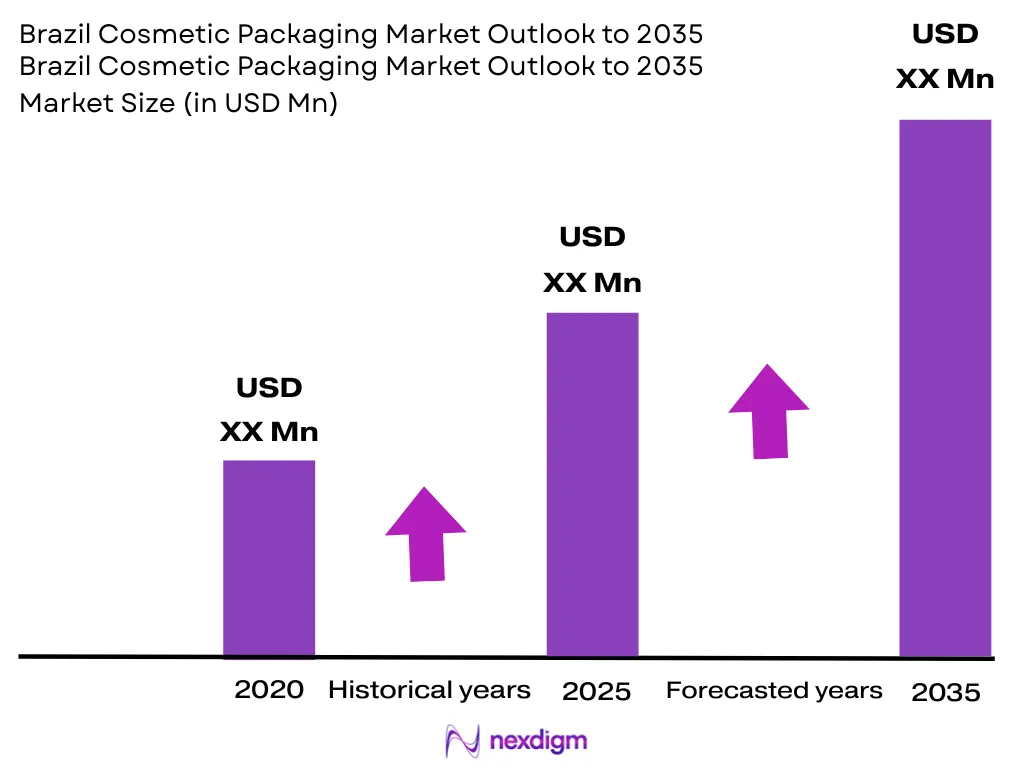
The Brazil Cosmetic Packaging Market was valued at USD ~ Million in 2024 and is anticipated to expand at a CAGR of ~ % during 2026–2035. The market is primarily driven by rising middle-class spending on beauty and personal care, continued growth of e-commerce and direct sales channels, and increasing foreign investment in domestic cosmetics manufacturing. According to IMARC Group, the Brazil cosmetics products market was valued at USD 7,545.9 million in 2025 and is projected to reach USD 11,917.2 million by 2034, growing at a CAGR of 5.02 percent, with Brazil’s beauty sector recording 12.7 percent value sales growth in 2024. According to ABIHPEC, Brazilian cosmetics, toiletries, and fragrances exports reached USD 927.3 million in 2024, attracting manufacturing investment domestically and sustaining consistent demand for functional and aesthetic packaging across skincare, makeup, haircare, and fragrance applications.
Market Segmentation
By Material
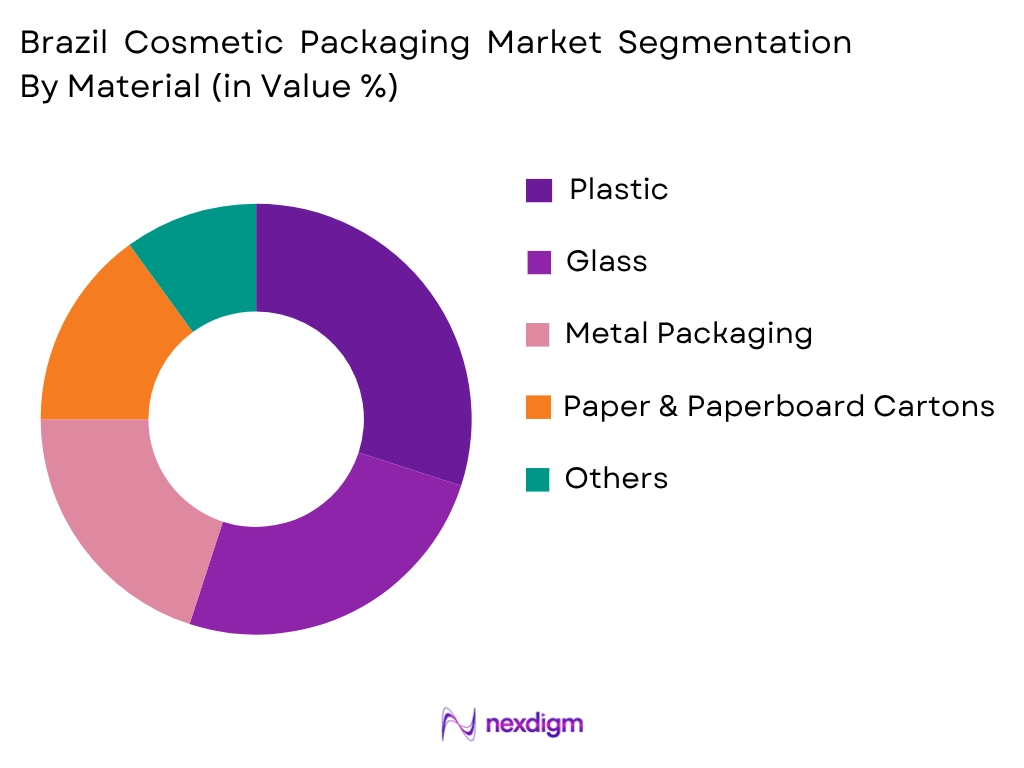
Among these, Plastic Packaging holds the largest share of the Brazil Cosmetic Packaging Market, supported by extensive use of bottles, jars, tubes, and compacts across skincare, haircare, and makeup applications. Braskem, Brazil’s leading petrochemical producer, integrates ethanol-to-polyethylene production, supplying captive film lines and third-party converters with bio-based polyethylene derived from sugarcore ethanol, positioning Brazil as a global leader in renewable plastic feedstocks. Domestic converter Klabin has broadened its packaging board legacy into bio-PE coatings, blurring the boundaries between traditional paperboard and sustainable plastic materials. At the same time, Bio-Based & Sustainable Packaging is gaining momentum as cosmetics brands increasingly emphasize refillable packaging initiatives and eco-friendly formulations, with consumers expressing a growing preference for brands that align with personal ethics, including cruelty-free practices and corporate transparency.
By Application
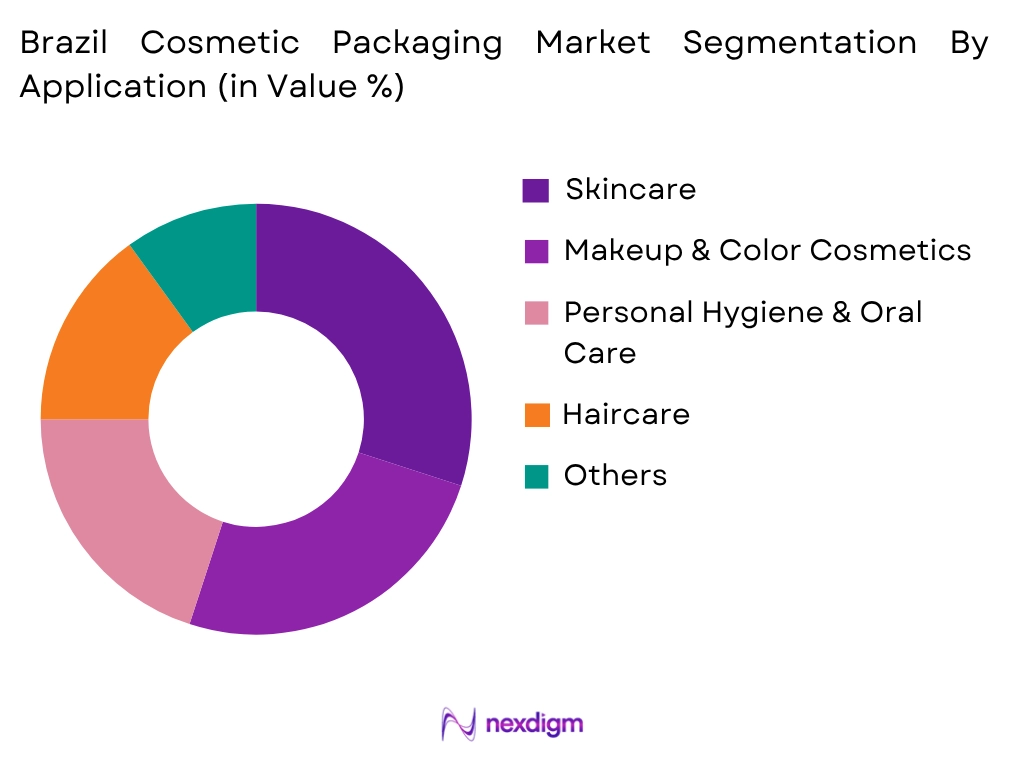
The Skincare segment holds the largest share, accounting for approximately 42.56 percent of Brazil’s cosmetics market revenue according to Grand View Research, driven by increasing consumer awareness regarding preventive beauty, anti-aging products, and natural ingredient-based formulations. Rising air pollution levels in cities such as Brasilia, Rio Claro, Osasco, and Sao Jose do Rio Preto continue to drive demand for protective skincare packaging solutions that preserve product efficacy and barrier performance. Meanwhile, Makeup & Color Cosmetics packaging is experiencing broad-based acceleration, with facial makeup products leading at 34.6 percent share by product type in 2025, anchored by foundation, blush, and bronzer formulations that reflect Brazil’s culturally ingrained face-focused beauty rituals. L’Oréal’s January 2024 announcement of a EUR 100 million production facility in Campinas, increasing local production capacity by 50 percent and establishing the largest cosmetics manufacturing site in Latin America, illustrates the scale of investment flowing into Brazil’s cosmetics manufacturing and packaging ecosystem.
Competitive Landscape
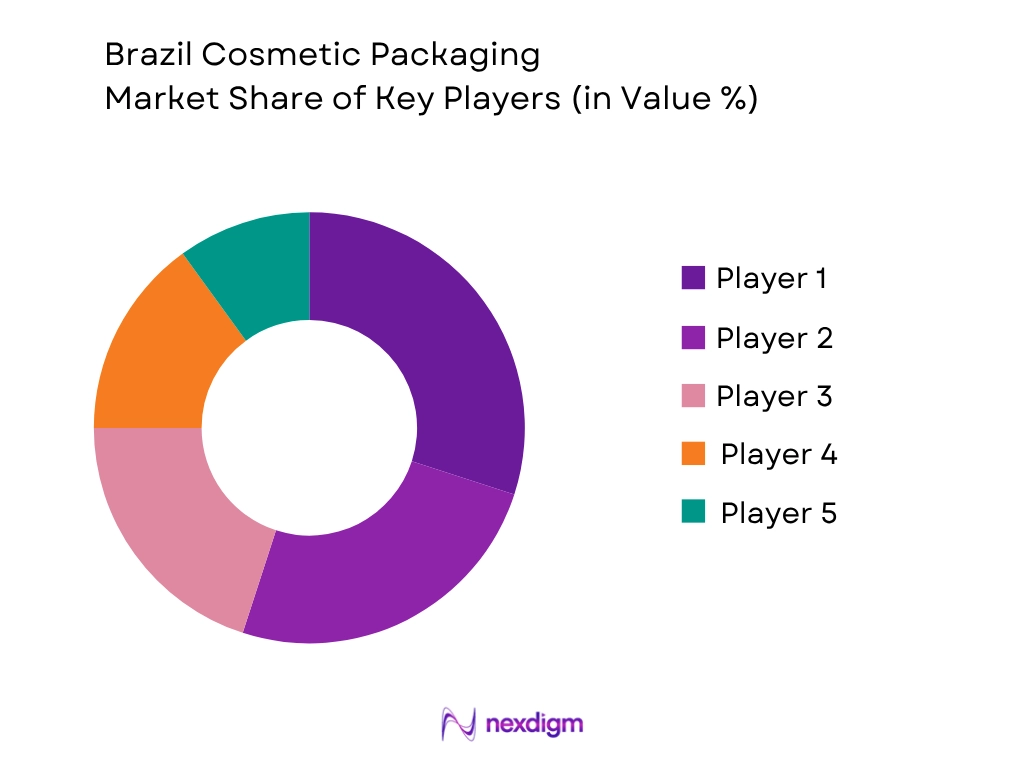
The Brazil Cosmetic Packaging Market is moderately consolidated, balancing global packaging majors with domestic specialists. The top five suppliers control approximately 48 percent of the total converted value within Brazil’s broader plastic packaging market, according to Mordor Intelligence, pointing to moderate market concentration. Domestic mid-sizer C-Pack invests in digital waterless printing technology to shorten cosmetic product launch cycles, while Mondi trials AI-guided defect inspection on its Recife production lines to cut waste by 9 percent. Strategic moves within the industry center on vertical integration and technology upgrading, with Amcor and Mondi localizing high-barrier laminate production to sidestep tariffs and currency volatility. Natura & Co’s March 2024 strategic partnership with Avon Products and Estee Lauder’s February 2025 acquisition of Brazilian beauty brand Caramelo for approximately USD 120 million further illustrate the pace of consolidation and investment reshaping Brazil’s cosmetics and packaging supply chain.
| Company | Establishment Year | Headquarters | Primary Product Portfolio | Cosmetic Packaging Portfolio
|
Manufacturing Presence | Major End-Use Industries | Key Strategic Focus | Certifications & Compliance |
| Klabin SA | 1899 | ~ | ~ | ~ | ~ | ~ | ~ | ~ |
| Braskem | 2002 | ~ | ~ | ~ | ~ | ~ | ~ | ~ |
| C-Pack | 1998 | ~ | ~ | ~ | ~ | ~ | ~ | ~ |
| Amcor PLC | 1860 | ~ | ~ | ~ | ~ | ~ | ~ | ~ |
| Sonoco Products Company | 1899 | ~ | ~ | ~ | ~ | ~ | ~ | ~ |
Brazil Cosmetic Packaging Market Analysis
Growth Drivers
Rising Middle-Class Spending and Inclusive Beauty Demand
Brazil’s cosmetic packaging market is experiencing sustained growth due to rising middle-class spending on beauty and personal care products and growing demand for inclusive beauty formulations. According to IMARC Group, the Brazil cosmetics products market recorded 12.7 percent value sales growth in 2024, underpinned by robust consumer commitment despite broader economic pressures. With over 55 percent of Brazil’s population identifying as Black or mixed-race, demand for inclusive shade ranges structurally privileges mass-market brands over premium alternatives, with the mass category commanding 72.1 percent share by category in 2025. This demographic reality sustains high-volume demand for cost-efficient, visually differentiated packaging formats capable of supporting extensive shade and product-line diversification across Brazil’s beauty retail channels.
Expansion of Domestic Manufacturing and Foreign Investment
The steady expansion of domestic cosmetics manufacturing capacity, supported by growing foreign direct investment, remains a major driver for cosmetic packaging consumption in Brazil. L’Oréal’s January 2024 announcement of a EUR 100 million production facility investment in Campinas, increasing local production capacity by 50 percent and establishing the largest cosmetics manufacturing site in Latin America, illustrates the scale of capital flowing into Brazil’s beauty manufacturing ecosystem. According to ABIHPEC, Brazilian cosmetics, toiletries, and fragrances exports reached USD 927.3 million in 2024, this export momentum attracting further manufacturing investment domestically and reinforcing packaging demand across both export-oriented and domestic-focused production lines. Natura & Co’s March 2024 strategic partnership with Avon Products, aimed at expanding Natura’s reach in the direct sales segment, further illustrates continued investment and consolidation supporting long-term packaging demand across Brazil’s beauty industry.
Market Challenges
Import Dependency for Active Ingredients and Specialty Materials
Despite steady demand growth, the Brazil cosmetic packaging market remains constrained by import dependency for active ingredients and specialty packaging materials. Most active ingredients and packaging materials in Brazil’s cosmetics industry are sourced from other countries, rendering local producers vulnerable to changes in global prices and logistics, according to IMARC Group. This affects not only cost structures but also production timeframes, as brands are often compelled to revisit sourcing strategies or reformulate products in response to supply chain disruptions. Packaging manufacturers must also navigate currency exchange rate volatility given Brazil’s reliance on imported resins, specialty glass, and high-barrier laminate materials, creating cost unpredictability that complicates long-term procurement planning for both domestic and multinational cosmetics brands operating in the country.
Counterfeit Products and Regulatory Compliance Complexity
The prevalence of counterfeit and grey market cosmetics poses a significant challenge for Brazil’s cosmetic packaging market. Counterfeit products, often sold at lower prices, not only undermine the revenue of legitimate brands but also compromise consumer safety due to the use of unregulated and potentially harmful ingredients, according to Mordor Intelligence. These counterfeit items often mimic the packaging and branding of genuine products, making it difficult for consumers to differentiate between authentic and fake goods, creating pressure on legitimate manufacturers to invest in advanced anti-counterfeiting and tamper-evident packaging features. In addition, packaging manufacturers must comply with the Agência Nacional de Vigilância Sanitária’s (ANVISA) cosmetic packaging and labelling requirements alongside Brazil’s National Solid Waste Policy (PNRS), which imposes reverse logistics obligations on packaging producers and brand owners, requiring continuous investment in compliance infrastructure and take-back program participation.
Market Opportunities
Rising Investment in Bio-Based and Refillable Packaging
Brazil’s position as a global leader in sugarcane-derived bio-based polyethylene creates significant opportunities for investment in sustainable cosmetic packaging solutions. Braskem’s integration of ethanol-to-polyethylene production provides Brazilian cosmetics packaging manufacturers with a distinctive competitive advantage in renewable plastic feedstocks unavailable at similar scale in most other markets. Consumers are increasingly expressing preference for brands that align with personal ethics, emphasizing cruelty-free practices, eco-friendly packaging, and corporate transparency, according to IMARC Group’s analysis of Brazil’s cosmetics market challenges and opportunities. Refillable packaging initiatives continue to reshape consumer engagement and product development, creating opportunities for manufacturers offering durable, reusable primary packaging systems paired with lower-cost refill formats across skincare, haircare, and color cosmetics categories.
Expansion of Digital Printing and AI-Enabled Manufacturing Technologies
Brazil’s cosmetics packaging industry is increasingly adopting digital and AI-enabled manufacturing technologies that create substantial opportunities for differentiated, faster-to-market packaging solutions. Domestic mid-sizer C-Pack’s investment in digital waterless printing technology to shorten cosmetic product launch cycles illustrates the commercial viability of combining sustainability with operational speed, an increasingly important capability given Brazil’s fast-moving social media-driven beauty trends and K-beauty influence. Mondi’s trials of AI-guided defect inspection on its Recife production lines, achieving a 9 percent reduction in waste, further demonstrate the potential for advanced quality control technologies to improve both sustainability outcomes and production efficiency. As Brazil’s beauty sector continues its rapid growth trajectory, packaging manufacturers investing in agile, technology-enabled production capabilities are well positioned to capture demand from brands pursuing shorter product development and launch cycles.
Future Outlook
The Brazil Cosmetic Packaging Market is expected to witness sustained expansion over the forecast period, supported by continued growth in middle-class beauty spending, expanding e-commerce and direct sales channels, and increasing consumer and regulatory pressure to adopt sustainable and refillable packaging materials. Continued investment in bio-based polyethylene, digital printing technologies, and domestic cosmetics manufacturing capacity will further accelerate innovation across the industry. The market is also likely to benefit from Brazil’s position as the fastest-growing regional beauty market in Latin America, enabling greater investment in advanced, sustainable, and aesthetically differentiated packaging technologies capable of serving both domestic and export-oriented cosmetics manufacturers.
Major Players
- Klabin SA
- Braskem
- C-Pack
- Amcor plc
- Sonoco Products Company
- Mondi plc
- Huhtamäki Oyj
- Sealed Air Corporation
- WestRock Company
- Tetra Pak International SA
- Smurfit Kappa Group
- Trivium Packaging
- NEFAB Embalagens LTDA
- Graphic Packaging International LLC
- Owens-Illinois Brasil
Key Target Audience
- Cosmetic Packaging Manufacturers
- Cosmetics, Toiletries and Fragrance Companies
- Contract Manufacturing Organizations
- Mass Retail and Pharmacy Chains
- E-Commerce and Direct Sales Companies
- Investment and Venture Capitalist Firms
- Government and Regulatory Bodies (Agência Nacional de Vigilância Sanitária (ANVISA), Associação Brasileira da Indústria de Higiene Pessoal, Perfumaria e Cosméticos (ABIHPEC), Instituto Nacional de Metrologia, Qualidade e Tecnologia (INMETRO))
- Packaging Material Suppliers and Industrial Raw Material Distributors
Research Methodology
Step 1: Identification of Key Variables
The research process begins with identifying the complete ecosystem of the Brazil Cosmetic Packaging Market, including raw material and resin suppliers, packaging converters and manufacturers, cosmetics and personal care companies, contract manufacturing organizations, distributors, and regulatory authorities. Extensive secondary research is conducted using company annual reports, government publications, trade associations, customs statistics, industry journals, and proprietary databases to determine the variables influencing market demand, pricing, production, consumption, and technological developments.
Step 2: Market Analysis and Construction
Historical market information is collected and analyzed to estimate market size, production volumes, import-export activity, application-wise demand, and pricing trends. A combination of top-down and bottom-up approaches is used to estimate market revenues and validate segment-level performance. Consumption patterns across skincare, makeup, haircare, and fragrances are evaluated to establish an accurate representation of the industry.
Step 3: Hypothesis Validation and Expert Consultation
The preliminary findings are validated through Computer-Assisted Telephone Interviews (CATIs) and structured discussions with cosmetic packaging manufacturers, procurement managers, converters, formulation scientists, regulatory experts, and senior executives operating within the Brazilian beauty and personal care industry. These interviews help verify market assumptions, competitive developments, technology adoption trends, pricing dynamics, and future investment opportunities while refining the overall market estimates.
Step 4: Research Synthesis and Final Output
The final stage integrates insights obtained from primary interviews with quantitative information collected through secondary sources. Data triangulation techniques are applied to reconcile differences between supply-side and demand-side estimates, ensuring robust market forecasting. The report is then reviewed through multiple quality assurance checkpoints to deliver a comprehensive analysis covering market size, segmentation, competitive landscape, future outlook, and strategic recommendations for industry stakeholders.

- Executive Summary
- Research Methodology (Market Definitions and Assumptions, Abbreviations, Market Sizing Approach, Top-Down Analysis, Bottom-Up Analysis, Demand-Side Assessment, Supply-Side Assessment, Primary Industry Interviews, Secondary Research Validation, Data Triangulation, Forecasting Framework, Limitations and Future Conclusions)

- Definition and Scope
- Market Evolution and Industry Genesis
- Timeline of Major Industry Developments
- Cosmetic Packaging Industry Value Chain Analysis
- Supply Chain Analysis

- Growth Drivers (Rising Middle-Class Spending on Beauty and Personal Care, Growth of E-Commerce and Direct Sales Channels, Expansion of Inclusive and Diversified Beauty Product Lines, Increasing Foreign Investment in Domestic Cosmetics Manufacturing, Rising Demand for Refillable and Sustainable Packaging, Growth of Premium and Male Grooming Segments)
- Market Challenges (Import Dependency for Active Ingredients and Specialty Packaging Materials, Volatility in Resin and Glass Raw Material Prices, Prevalence of Counterfeit and Grey Market Products, Regulatory Compliance Complexity Under ANVISA Requirements, Extended Producer Responsibility and Reverse Logistics Obligations, Logistics and Currency Exchange Rate Risks)
- Market Opportunities (Investment in Bio-Based Polyethylene and Sustainable Materials, Growth in Refillable and Reusable Packaging Formats, Expansion of Domestic Cosmetics Manufacturing Capacity, Digital and Waterless Printing for Faster Product Launch Cycles, AI-Enabled Quality Inspection Technologies, Export-Oriented Packaging Manufacturing for Latin America)
- Market Trends (Shift Toward Bio-Based Polyethylene from Sugarcane Ethanol, Rising Adoption of Refillable Packaging Initiatives, Growth in Digital and Waterless Printing Technologies, AI-Guided Defect Inspection Adoption, K-Beauty Influenced Packaging Design, Industry Consolidation Through Acquisitions)
- Government Regulations (Agência Nacional de Vigilância Sanitária (ANVISA) Cosmetic Packaging Requirements, National Solid Waste Policy (PNRS) Reverse Logistics Obligations, INMETRO Labelling and Metrology Compliance, ABIHPEC Industry Standards, Extended Producer Responsibility Requirements, Import Compliance and Customs Regulations)
- Import and Export Analysis (Trade Volume, Major Import Sources, Export Destinations, HS Code Analysis, Trade Balance)
- Raw Material Availability Analysis (Petrochemical and Bio-Based Resins, Glass, Aluminium, Virgin and Recycled Paperboard, Sugarcane-Derived Bio-Polyethylene)
- Technology Landscape (Bio-Based Polyethylene Production, Digital and Waterless Printing, AI-Guided Defect Inspection, Refillable Packaging Systems, Airless Pump and Dispenser Technology)
- Sustainability Assessment (Recyclability and Post-Consumer Recycled Content, Bio-Based Material Adoption, Carbon Footprint Reduction, Refillable Packaging Initiatives, Circular Economy Integration)
- PESTLE Analysis
- SWOT Analysis
- Porter’s Five Forces Analysis
- Stakeholder Ecosystem
- Competition Ecosystem

- By Market Value (2020-2025)
- By Volume Consumption (2020-2025)
- By Average Selling Price (2020-2025)

- By Material (In Value %)
Plastic Packaging
Glass Packaging
Paper & Paperboard Packaging
Metal Packaging
Bio-Based & Sustainable Packaging - By Product Type (In Value %)
Bottles & Jars
Tubes
Compacts & Cases
Pumps & Dispensers
Sachets & Sample Packs
Caps & Closures - By Application (In Value %)
Skincare
Makeup & Color Cosmetics
Haircare
Fragrances
Personal Hygiene & Oral Care - By End Use (In Value %)
Cosmetic Manufacturers
Contract Manufacturing Organizations
Mass Retail & Pharmacy Chains
E-Commerce & Direct Sales - By Region (In Value %)
Southeast Brazil
South Brazil
Northeast Brazil
Central-West & North Brazil

- Market Share of Major Players (By Value, Volume, Material Type, Application Industry, Product Category)
- Cross Comparison Parameters (Material Portfolio Breadth, Sustainable Packaging Portfolio, Aesthetic Design Capability, Application Technical Support Capability, Manufacturing Capacity, Regulatory Compliance & Certifications, Cosmetics Customer Base, Innovation & New Product Launch Frequency)
- SWOT Analysis of Major Players
- Pricing Analysis by Product Category and SKU
- Production Capacity Analysis
- Manufacturing Footprint Analysis
- Distribution Network Analysis
- Innovation Benchmarking
- Detailed Profiles of Major Companies
Klabin SA
Braskem
C-Pack
Amcor plc
Sonoco Products Company
Mondi plc
Huhtamäki Oyj
Sealed Air Corporation
WestRock Company
Tetra Pak International SA
Smurfit Kappa Group
Trivium Packaging
NEFAB Embalagens LTDA
Graphic Packaging International LLC
Owens-Illinois Brasil

- Consumption Pattern Analysis (Industrial Usage, Batch Size, Product Category Penetration, Seasonal Demand, Reformulation Activity)
- Purchasing Criteria (Barrier Performance, Aesthetic Appeal, Cost Efficiency, Recyclability, Regulatory Compliance, Brand Differentiation)
- Procurement and Supplier Selection Analysis
- Sustainable Packaging Adoption Assessment
- Premium vs Mass Packaging Demand
- Product Attribute Preference Analysis (Aesthetic Design, Dispensing Functionality, Recyclability, Tamper-Evidence, Print Quality, Shelf Appeal)
- Consumer Inclusivity and Sustainability Influence on Packaging Design
- Pain Point Analysis
- Decision-Making Process

- By Market Value (2026-2035)
- By Volume Consumption (2026-2035)
- By Average Selling Price (2026-2035)


 Request a Sample
 Ask for Customization
 Get a Quote
 Enquire Now