
 Download PDF
Market Overview
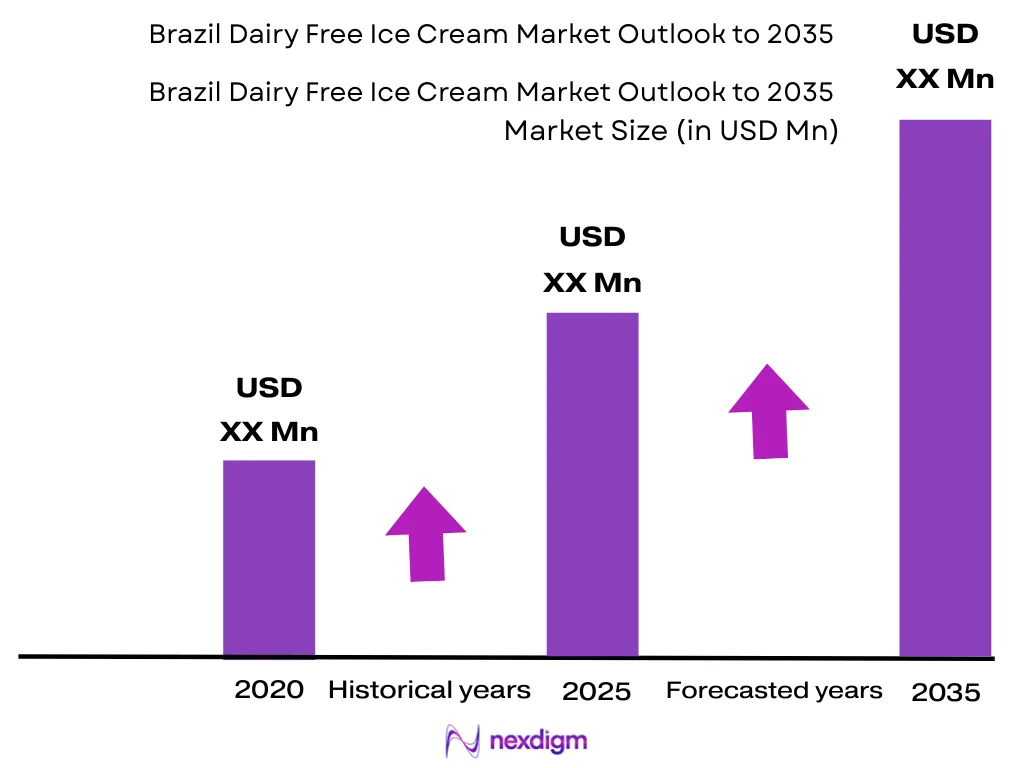
The Brazil Dairy Free Ice Cream Market was valued at approximately USD ~ million in 2024, supported by the broader expansion of Brazil’s plant-based food industry and increasing demand for lactose-free alternatives. According to the Brazilian Institute of Geography and Statistics (IBGE), Brazil had a population exceeding 212 million people in 2024, while lactose intolerance affects a substantial portion of the adult population. Furthermore, data from the Brazilian Vegetarian Society (SVB) indicates that plant-based dietary adoption continued to expand, encouraging manufacturers to launch dairy-free frozen desserts based on coconut, oat, soy, and almond ingredients. The market is additionally driven by premiumization trends, innovation in flavor profiles, and wider availability across modern retail and e-commerce channels.
Market Segmentation
By Base Ingredient Type
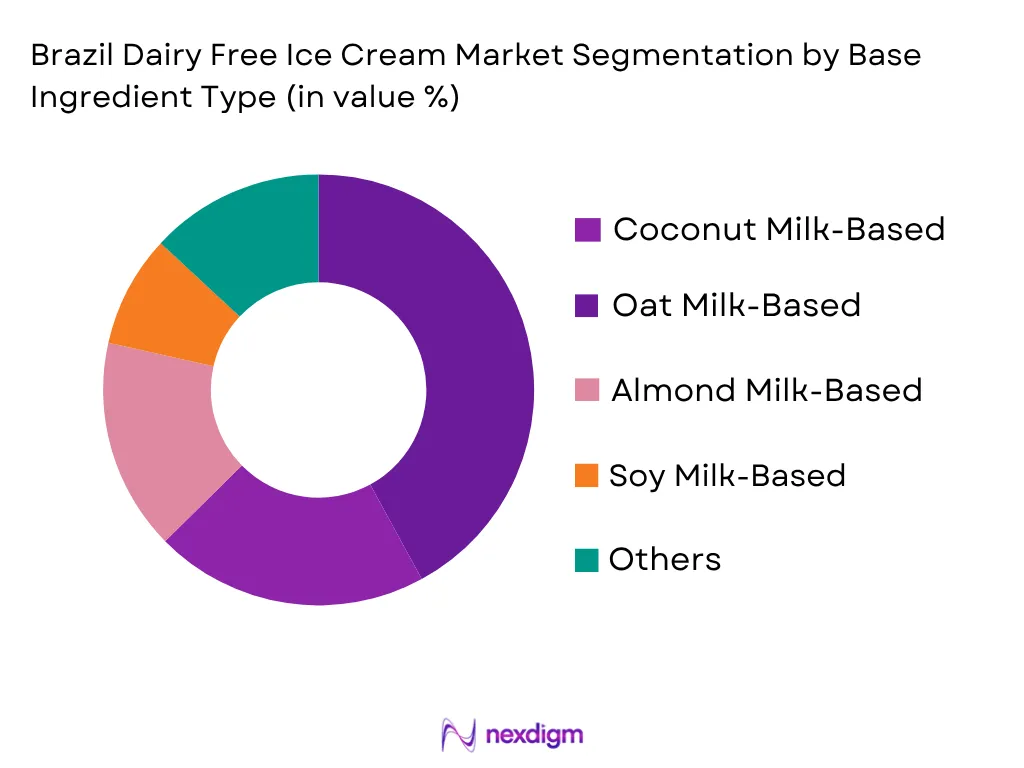
Coconut milk-based ice cream holds the dominant position in the Brazil Dairy Free Ice Cream Market due to its superior texture, creaminess, and compatibility with frozen dessert applications. Coconut provides a mouthfeel similar to conventional dairy ice cream, making it highly attractive to both vegan consumers and lactose-intolerant individuals seeking familiar sensory experiences. Manufacturers also benefit from coconut’s natural fat content, which reduces the need for extensive stabilizers and emulsifiers. Additionally, coconut-based formulations align well with clean-label trends and consumer preferences for minimally processed ingredients. The availability of tropical flavor combinations, such as coconut with açaí, mango, and passion fruit, further enhances consumer acceptance. Several domestic brands have successfully positioned coconut-based offerings within premium and artisanal product categories, strengthening the segment’s leadership across supermarkets, specialty stores, and foodservice outlets.
By Distribution Channel
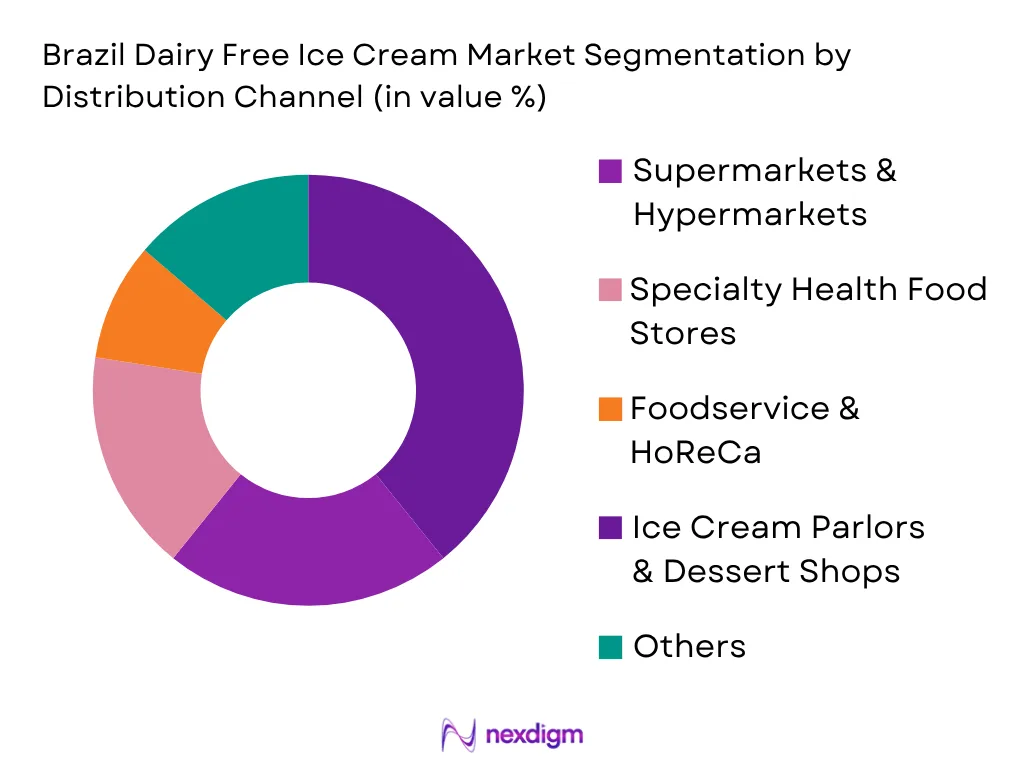
Supermarkets and hypermarkets dominate the distribution landscape due to their extensive geographic reach, advanced cold-storage capabilities, and ability to offer a wide variety of dairy-free ice cream products under one roof. Large retail chains provide consumers with access to both international and domestic brands, enabling easier product comparison and trial purchases. The growth of dedicated health-food aisles and premium frozen dessert sections has further enhanced visibility for dairy-free offerings. Consumers frequently purchase frozen desserts during routine grocery shopping, making supermarkets a highly convenient channel. Retailers have also expanded private-label plant-based product portfolios, increasing affordability and accessibility. Promotional campaigns, product sampling activities, and growing shelf space allocation for vegan and lactose-free categories continue to strengthen the dominance of supermarkets and hypermarkets within the Brazilian dairy-free ice cream ecosystem.
Competitive Landscape
The Brazil Dairy Free Ice Cream Market is moderately consolidated, with competition driven by specialized plant-based brands, premium ice cream manufacturers, and multinational food companies expanding their dairy-free portfolios. Market participants compete through ingredient innovation, premium flavor development, vegan certifications, sustainable packaging initiatives, and expansion into modern retail channels. Domestic brands benefit from local ingredient sourcing and understanding of Brazilian consumer preferences, while international companies leverage established brand recognition and advanced product development capabilities.
| Company | Establishment Year | Headquarters | Plant-Based Base Portfolio | Dairy-Free SKU Count | Distribution Reach | Premium Product Portfolio | Vegan Certification | Packaging Sustainability |
| Nestlé Brasil | 1866 | ~ | ~ | ~ | ~ | ~ | ~ | ~ |
| Vida Veg | 2015 | ~ | ~ | ~ | ~ | ~ | ~ | ~ |
| NotCo | 2015 | ~ | ~ | ~ | ~ | ~ | ~ | ~ |
| Unilever Brasil | 1929 | ~ | ~ | ~ | ~ | ~ | ~ | ~ |
| Bacio di Latte | 2011 | ~ | ~ | ~ | ~ | ~ | ~ | ~ |
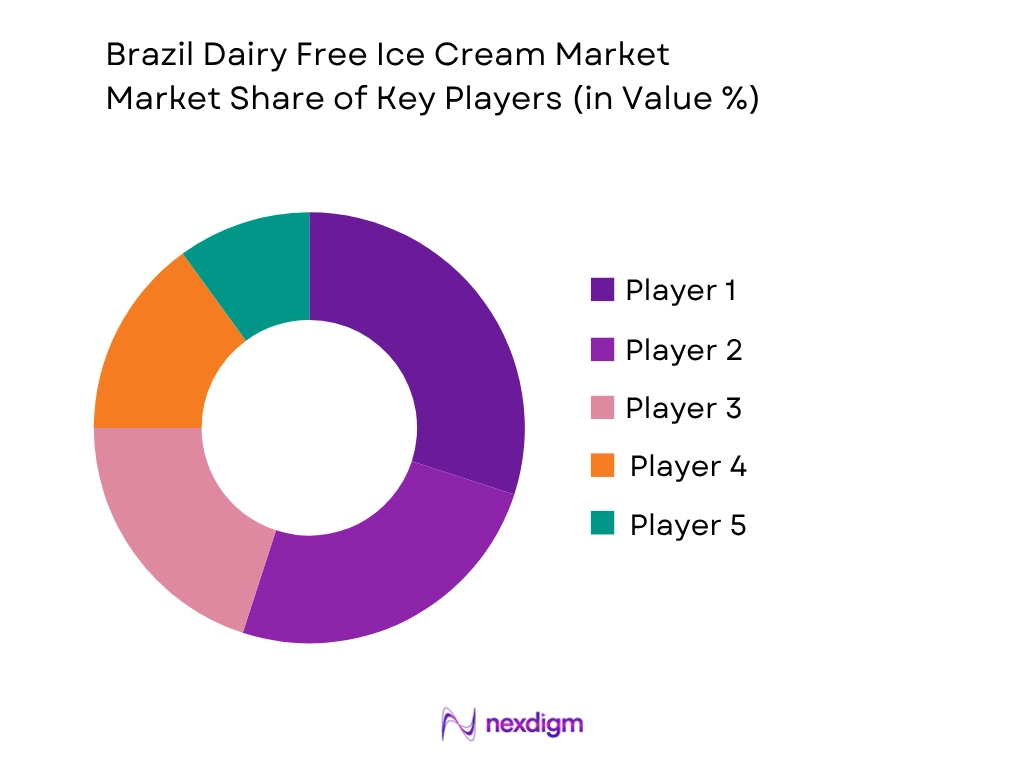
Brazil Dairy Free Ice Cream Market Analysis
Growth Drivers
Rising Urbanization and Growth in Packaged Food Consumption
Brazil’s expanding urban population continues to support demand for convenient dairy dessert products. According to World Bank data, Brazil’s urban population exceeded 180 million people in 2024, representing one of the largest urban consumer bases globally. IMF data indicates Brazil’s GDP remained above USD 2 trillion during 2024, reflecting substantial consumer spending capacity. Major metropolitan regions such as São Paulo, Rio de Janeiro, and Belo Horizonte concentrate large populations with access to organized retail networks and refrigerated food distribution. The Brazilian Institute of Geography and Statistics (IBGE) reported household expenditure on food and beverages remains a significant component of consumer spending, supporting the adoption of ready-to-eat dairy products. Growing participation of working professionals and smaller household sizes have increased demand for convenient refrigerated snacks, including puddings, mousses, and yogurt-based Free Ice Cream. The expansion of supermarket chains and convenience retail outlets across urban areas further improves product accessibility. These demographic and economic conditions continue to strengthen consumption patterns for dairy Free Ice Cream and encourage manufacturers to expand product portfolios across multiple consumer segments.
Expansion of Domestic Dairy Production and Processing Industry
Brazil possesses one of the world’s largest dairy industries, creating a strong foundation for dairy dessert manufacturing. Data from the Brazilian Institute of Geography and Statistics shows national milk acquisition exceeded 25 billion liters during recent reporting periods, ensuring consistent raw material availability for processors. The Ministry of Agriculture continues to support modernization of dairy farming and processing activities across major producing states such as Minas Gerais, Paraná, Goiás, and Rio Grande do Sul. Brazil’s agricultural sector generated more than USD 160 billion in economic output, according to government statistics, highlighting the strength of the food-processing ecosystem. Large dairy processors operate extensive production facilities and cold-chain networks capable of supporting diversified dairy dessert portfolios. Investments in automation, packaging technology, and product innovation have enabled manufacturers to introduce premium and value-added dessert categories. Strong domestic milk production reduces dependency on imported dairy ingredients and supports stable manufacturing operations. The presence of integrated dairy supply chains and large-scale processing capacity continues to drive innovation and product availability within the Brazil Dairy Free Ice Cream Market.
Market Challenges
Volatility in Raw Milk Supply and Agricultural Conditions
One of the primary challenges affecting the Brazil Dairy Free Ice Cream Market is the fluctuation in milk production caused by climatic variations and agricultural pressures. Brazil experienced periods of drought and irregular rainfall across several dairy-producing regions, impacting pasture conditions and livestock productivity. The National Supply Company reported fluctuations in agricultural output affecting feed availability for dairy cattle. Brazil’s dairy industry relies on millions of cattle distributed across geographically diverse regions, making production vulnerable to weather-related disruptions. Changes in feed availability, transportation requirements, and farm productivity can affect raw milk supply consistency. Since dairy Free Ice Cream depend heavily on fresh dairy inputs, any instability in milk availability creates operational challenges for manufacturers. Large processors often maintain extensive procurement networks, but smaller producers face greater exposure to supply disruptions. Maintaining consistent production schedules, inventory levels, and product quality becomes increasingly complex when agricultural conditions fluctuate, creating ongoing challenges for dairy dessert manufacturers operating within the Brazilian market.
Refrigerated Logistics and Cold Chain Infrastructure Requirements
Dairy Free Ice Cream require strict temperature-controlled storage and transportation throughout the supply chain. Brazil’s large geographic size, spanning more than 8.5 million square kilometers, creates logistical complexities for refrigerated food distribution. The transportation of chilled products from manufacturing facilities to retailers requires specialized infrastructure and continuous temperature monitoring. According to government transport statistics, a substantial share of domestic freight movement occurs through road networks, increasing dependence on refrigerated trucking systems. Dairy Free Ice Cream generally possess shorter shelf lives than many packaged food categories, making cold-chain reliability essential. Distribution into remote regions and smaller cities often requires additional handling and storage capacity, increasing operational complexity. Manufacturers must maintain quality standards across extensive distribution networks while ensuring product freshness and regulatory compliance. The need for refrigerated warehouses, temperature-controlled vehicles, and advanced inventory management systems presents an ongoing operational challenge for companies seeking nationwide market coverage within Brazil’s dairy dessert sector.
Market Opportunities
Innovation in Functional and Protein-Enriched Dairy Free Ice Cream
The increasing consumer focus on nutrition and wellness creates significant opportunities for functional dairy Free Ice Cream. Brazil’s population exceeds 210 million people, providing a large consumer base for health-oriented food products. Rising participation in fitness activities and growing awareness of protein consumption have encouraged demand for nutrient-rich snacks. Manufacturers are introducing dairy Free Ice Cream fortified with protein, probiotics, vitamins, and digestive-health ingredients to address evolving consumer preferences. Brazil’s well-developed dairy processing industry enables large-scale production of value-added products incorporating functional ingredients. Yogurt-based Free Ice Cream, protein puddings, and probiotic dairy snacks are gaining visibility across modern retail channels. Product innovation focused on wellness benefits allows companies to differentiate offerings within a competitive market environment. The growing preference for healthier indulgence and convenient nutrition supports continued investment in premium functional dairy Free Ice Cream. As consumers increasingly seek products combining taste with nutritional value, opportunities continue to expand for manufacturers capable of delivering innovative formulations and specialized product positioning.
Growth of Premium Dairy Free Ice Cream Through Modern Retail Expansion
The continued expansion of supermarkets, hypermarkets, convenience stores, and e-commerce grocery platforms creates favorable conditions for premium dairy dessert products. Brazil hosts thousands of modern retail outlets across major urban centers, improving consumer access to refrigerated packaged foods. Government economic data shows household consumption remains a major contributor to national economic activity, supporting demand for premium food categories. Retailers increasingly dedicate shelf space to indulgent Free Ice Cream featuring premium ingredients, innovative flavors, and attractive packaging. Consumers with rising disposable incomes are demonstrating greater willingness to purchase higher-value dairy products that offer superior quality and differentiated experiences. Premium mousses, layered Free Ice Cream, gourmet puddings, and specialty dairy snacks continue to gain visibility across organized retail channels. The growth of digital grocery platforms further expands product reach beyond traditional retail environments. These developments create substantial opportunities for manufacturers to introduce premium product lines, strengthen brand positioning, and capture higher-value consumer segments within the Brazil Dairy Free Ice Cream Market.
Future Outlook
The Brazil Dairy Free Ice Cream Market is expected to witness substantial growth during the forecast period, supported by increasing adoption of plant-based diets, rising prevalence of lactose intolerance, and continued innovation in dairy-free formulations. Growing investments in alternative protein technologies and plant-based ingredients are expected to improve product quality and affordability. Expansion of premium retail formats, e-commerce channels, and foodservice partnerships will further strengthen market penetration. Additionally, sustainability concerns and consumer demand for clean-label products are anticipated to encourage manufacturers to introduce new dairy-free frozen dessert offerings.
Major Players
- Vida Veg
- Super Vegan
- NotCo
- Ben & Jerry’s
- Häagen-Dazs
- Bacio di Latte
- Nude
- A Tal da Castanha
- Namu
- Alpro
- Oatly
- Jundiá Sorvetes
- Sorvetes Rochinha
- Unilever Brasil
- Nestlé Brasil
Key Target Audience
- Dairy-Free Ice Cream Manufacturers
- Plant-Based Food & Beverage Companies
- Frozen Dessert Brands
- Supermarket & Hypermarket Chains
- Foodservice & HoReCa Operators
- Investments and Venture Capitalist Firms
- Government and Regulatory Bodies (ANVISA, Ministry of Agriculture and Livestock (MAPA), Ministry of Development, Industry, Trade and Services (MDIC))
- Alternative Protein Ingredient Suppliers
Research Methodology
Step 1: Identification of Key Variables
The initial phase involves constructing a comprehensive ecosystem map of stakeholders participating in the Brazil Dairy Free Ice Cream Market. Extensive secondary research is conducted through government publications, industry associations, company reports, trade statistics, and proprietary databases. This process identifies critical variables influencing demand, supply, pricing, innovation, and distribution patterns within the market.
Step 2: Market Analysis and Construction
Historical market performance is analyzed using revenue trends, consumption patterns, retail sales data, and product launch activity. Demand-side assessments are combined with supply-side evaluations to estimate market size and segment shares. Multiple data sources are triangulated to establish a reliable understanding of market structure and growth potential.
Step 3: Hypothesis Validation and Expert Consultation
Preliminary market assumptions are validated through structured interviews with manufacturers, distributors, retailers, plant-based ingredient suppliers, and industry specialists. These consultations provide operational insights regarding production capacity, consumer preferences, pricing strategies, distribution trends, and emerging opportunities within the dairy-free frozen dessert segment.
Step 4: Research Synthesis and Final Output
The final phase integrates findings from primary and secondary research to generate a comprehensive market assessment. Bottom-up and top-down estimation techniques are reconciled through data triangulation. Final outputs include validated market sizing, segmentation analysis, competitive benchmarking, future forecasts, and strategic recommendations for stakeholders operating within the Brazil Dairy Free Ice Cream Market.

- Executive Summary
- Research Methodology (Market Definitions and Assumptions, Abbreviations, Market Sizing Approach, Top-Down Analysis, Bottom-Up Analysis, Demand-Side Assessment, Supply-Side Assessment, Retail Audit Analysis, Consumption Modeling, Primary Industry Interviews, Data Triangulation, Forecasting Framework, Limitations and Future Conclusions)

- Definition and Scope
- Market Evolution and Industry Genesis
- Timeline of Major Industry Developments
- Dairy-Free Frozen Dessert Industry Ecosystem
- Supply Chain Analysis

- Growth Drivers (Increasing Lactose Intolerance Awareness, Rising Vegan and Flexitarian Population, Growth in Plant-Based Food Consumption, Premium Frozen Dessert Expansion, Modern Retail Penetration, Increasing Health & Wellness Spending)
- Market Challenges (Higher Plant-Based Ingredient Costs, Premium Pricing Barriers, Limited Cold Chain Reach, Texture Replication Challenges, Shelf-Life Stability Constraints, Raw Material Price Volatility)
- Market Opportunities (Brazilian Native Fruit Innovations, Functional Dairy-Free Ice Cream Development, Organic Product Expansion, Foodservice Penetration, E-Commerce Growth, Private Label Development)
- Market Trends (Oat-Based Product Adoption, Clean Label Formulations, Sugar Reduction Technologies, Sustainable Packaging Adoption, Premium Indulgent Flavors, Fortified Plant-Based Desserts, Coconut-Based Product Innovation)
- Government Regulations (ANVISA Food Safety Standards, Plant-Based Labeling Regulations, Allergen Disclosure Requirements, Nutritional Information Compliance, Packaging Sustainability Standards)
- Raw Material Analysis (Coconut Milk Availability, Oat Ingredient Procurement, Almond Import Dependency, Soy Protein Utilization, Cocoa Price Trends, Natural Sweetener Adoption)
- SWOT Analysis
- Porter’s Five Forces Analysis
- PESTLE Analysis
- Stakeholder Ecosystem
- Competition Ecosystem

- By Market Value (2020-2025)
- By Volume Consumption (2020-2025)
- By Average Selling Price (2020-2025)

- By Base Ingredient Type (In Value %)
Coconut Milk-Based Ice Cream
Oat Milk-Based Ice Cream
Almond Milk-Based Ice Cream
Soy Milk-Based Ice Cream
Cashew Milk-Based Ice Cream
Rice Milk-Based Ice Cream
Mixed Plant-Based Formulations
Other Alternative Bases - By Flavor Type (In Value %)
Chocolate
Vanilla
Fruit-Based Flavors
Brazilian Tropical Fruit Flavors
Nuts and Caramel
Coffee Flavors
Premium Gourmet Flavors
Seasonal and Limited-Edition Flavors - By Distribution Channel (In Value %)
Supermarkets and Hypermarkets
Specialty Health Food Stores
Convenience Stores
Pharmacies and Wellness Retailers
E-Commerce Platforms
Direct-to-Consumer Sales
Foodservice and HoReCa
Ice Cream Parlors and Specialty Dessert Shops - By Region (In Value %)
Southeast Brazil
South Brazil
Northeast Brazil
Central-West Brazil
North Brazil - By Packaging Type (In Value %)
Cups
Tubs
Sticks and Bars Packaging
Multi-Pack Formats
Sustainable and Recyclable Packaging

- Market Share of Major Players (By Value, Volume, Product Format, Distribution Channel, Plant-Based Base Type)
- Cross Comparison Parameters (Plant-Based Base Portfolio, Dairy-Free SKU Count, Manufacturing Capacity, Distribution Reach Across Brazil, Vegan Certification Portfolio, Premium Product Penetration, New Product Launch Frequency, Sustainable Packaging Adoption)
- SWOT Analysis of Major Players
- Pricing Analysis by SKU, Pack Size and Product Format
- Detailed Profiles of Major Companies
Vida Veg
Super Vegan
NotCo
Ben & Jerry’s
Häagen-Dazs
Bacio di Latte
Nude
A Tal da Castanha
Namu
Alpro
Oatly
Jundiá Sorvetes
Sorvetes Rochinha
Unilever Brasil
Nestlé Brasil

- Consumption Behavior Assessment (Purchase Frequency, Household Penetration, Seasonal Consumption Patterns, Consumption Occasions, Trial vs Repeat Purchases)
- Demographic Consumption Trends (Age Group, Income Level, Urban-Rural Distribution, Family Structure, Education Level)
- Consumer Preference Analysis (Base Ingredient Preference, Flavor Preference, Sweetness Preference, Texture Expectations, Packaging Preference)
- Health and Wellness Impact Assessment (Lactose Intolerance Influence, Vegan Lifestyle Adoption, Sugar Reduction Preference, Functional Nutrition Demand, Clean Label Preference)
- Premiumization Analysis

- By Market Value (2026-2035)
- By Volume Consumption (2026-2035)
- By Average Selling Price (2026-2035)


 Request a Sample
 Ask for Customization
 Get a Quote
 Enquire Now