

 Download PDF
 Download PDF
Market Overview
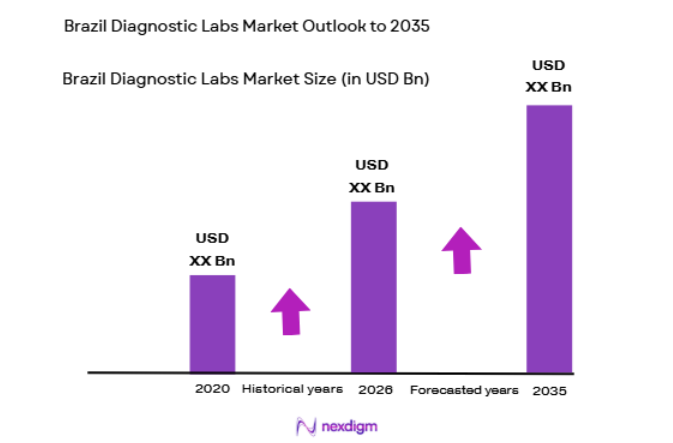
The Brazil diagnostic labs market is valued at approximately USD ~ billion based on a recent historical assessment. The growth of the market is primarily driven by the increasing demand for diagnostic testing, the rising prevalence of chronic diseases, and advancements in diagnostic technologies. The demand for more accurate and faster diagnostic solutions has encouraged the adoption of advanced technologies such as molecular diagnostics, genetic testing, and imaging systems. Additionally, increased investments in healthcare infrastructure and government initiatives to improve healthcare accessibility are supporting the growth of this market.
São Paulo, Rio de Janeiro, and Brasília dominate the diagnostic labs market due to their advanced healthcare infrastructure and large populations. These cities are home to the highest number of medical facilities, hospitals, and private diagnostic centers that cater to the growing demand for diagnostic services. São Paulo, as the economic and healthcare hub, leads in terms of innovation and adoption of advanced diagnostic technologies. Rio de Janeiro and Brasília further bolster the market due to their strong healthcare systems and access to both public and private diagnostic services.
Market Segmentation
By Diagnostic Type
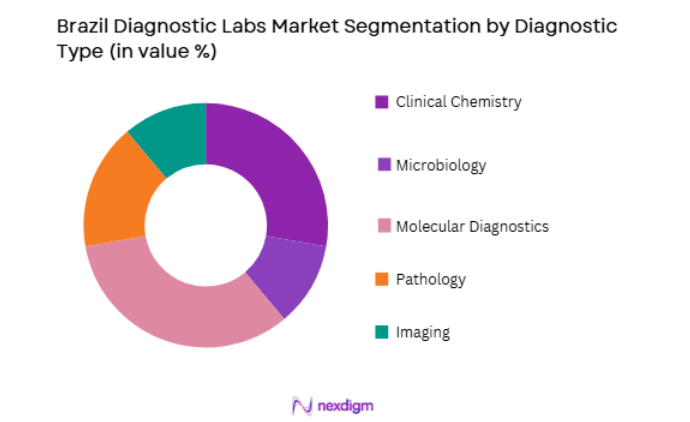
Brazil’s diagnostic labs market is segmented by diagnostic type into clinical chemistry, microbiology, molecular diagnostics, pathology, and imaging. Recently, molecular diagnostics has dominated the market share due to the growing demand for accurate, early detection of diseases such as cancer, genetic disorders, and infections. The increasing availability of molecular diagnostic platforms, combined with advancements in technology such as PCR (polymerase chain reaction) and next-generation sequencing, has significantly improved diagnostic capabilities. As precision medicine becomes more prevalent and personalized treatments are in high demand, molecular diagnostics continues to drive the growth of the diagnostic labs market in Brazil.
By End-User
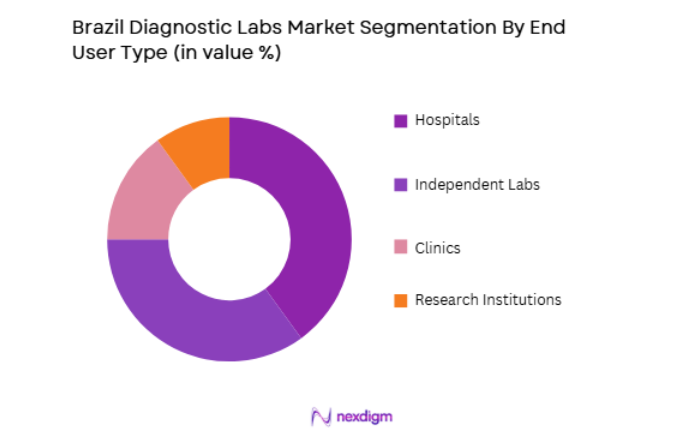
Brazil’s diagnostic labs market is segmented by end-user into hospitals, independent labs, clinics, and research institutions. Recently, independent labs have dominated the market share due to their accessibility, cost-effectiveness, and the growing preference for specialized diagnostic services. These labs are able to offer a wide range of diagnostic tests, including genetic, imaging, and microbiological tests, at competitive prices, attracting both patients and healthcare providers. Additionally, independent diagnostic labs are often able to deliver faster turnaround times for results, further driving their popularity in Brazil’s healthcare system.
Competitive Landscape
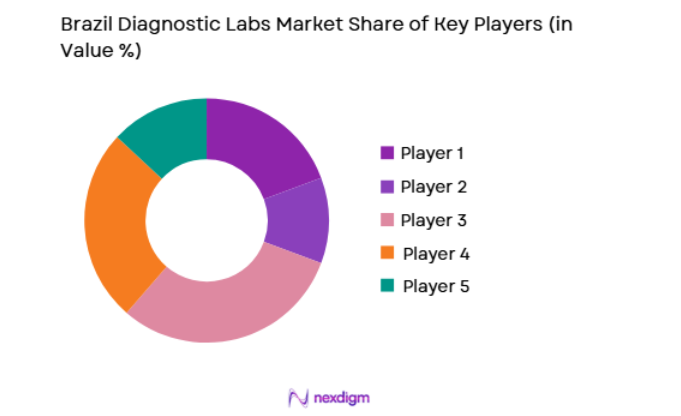
The competitive landscape of Brazil’s diagnostic labs market is characterized by a mix of well-established international players and growing local competitors. Consolidation is occurring as larger multinational companies acquire regional diagnostic service providers to expand their market presence. Key players are focusing on technological advancements, increasing service offerings, and improving operational efficiency to stay competitive. Furthermore, as healthcare providers adopt more advanced diagnostic solutions, local companies are also emerging with innovative, cost-effective alternatives tailored to the Brazilian market. Collaboration between diagnostic labs and hospitals is expected to increase, fostering a more integrated healthcare system.
| Company Name | Establishment Year | Headquarters | Technology Focus | Market Reach | Key Products | Revenue | Additional Parameter |
| DASA | 1961 | São Paulo, Brazil | ~ | ~ | ~ | ~ | ~ |
| Fleury Group | 1926 | São Paulo, Brazil | ~ | ~ | ~ | ~ | ~ |
| Sabin | 1984 | Brasília, Brazil | ~ | ~ | ~ | ~ | ~ |
| Grupo Laboratório São Marcos | 1971 | São Paulo, Brazil | ~ | ~ | ~ | ~ | ~ |
| Hermes Pardini | 1955 | Belo Horizonte, Brazil | ~ | ~ | ~ | ~ | ~ |
Brazil Diagnostic Labs Market Analysis
Growth Drivers
Increase in Chronic Diseases
The increase in chronic diseases is a significant growth driver for Brazil’s diagnostic labs market. Brazil has seen a rise in the incidence of chronic diseases such as diabetes, hypertension, cancer, and cardiovascular diseases. These conditions require regular diagnostic tests to monitor disease progression and ensure appropriate treatment. As the Brazilian population ages, the demand for diagnostic services, including blood tests, imaging, and molecular diagnostics, continues to grow. The increasing burden of chronic diseases also highlights the need for improved healthcare infrastructure, which in turn supports the expansion of diagnostic labs. Furthermore, the growing awareness of preventive healthcare and early diagnosis drives patients to seek out diagnostic tests regularly, fueling market growth. With advancements in medical technologies, such as molecular diagnostics and imaging, Brazil’s diagnostic labs are becoming better equipped to detect and treat chronic diseases early, improving patient outcomes.
Government Healthcare Initiatives
Government healthcare initiatives are playing a critical role in driving the growth of Brazil’s diagnostic labs market. The Brazilian government has made significant investments in improving healthcare accessibility and infrastructure, particularly in underserved regions. Through public-private partnerships, the government is working to expand the reach of diagnostic services and ensure equitable access to high-quality healthcare. Additionally, initiatives such as the expansion of the Unified Health System (SUS) and the introduction of telemedicine programs have increased the demand for diagnostic tests across the country. As the government continues to prioritize healthcare access, the need for advanced diagnostic labs will rise. Moreover, government regulations that support the adoption of electronic health records (EHR) and digital diagnostic tools are encouraging the integration of technology in Brazil’s diagnostic labs, further boosting the market.
Market Challenges
Regulatory and Compliance Barriers
One of the significant challenges facing Brazil’s diagnostic labs market is navigating the complex regulatory environment. The Brazilian Health Regulatory Agency (ANVISA) governs the approval and monitoring of medical devices, diagnostics, and laboratory practices. The regulatory framework for diagnostic labs in Brazil can be difficult to navigate, especially for new entrants to the market. Compliance with standards related to quality control, safety, and accuracy of test results is a significant concern for diagnostic lab providers. Additionally, as the market continues to evolve, diagnostic labs must ensure they meet regulatory requirements for new technologies, including molecular diagnostics and AI-powered diagnostic tools. Failure to comply with regulatory standards can lead to costly fines, delays in product launches, and potential reputational damage, hindering market growth.
Infrastructure and Technological Barriers
While Brazil’s diagnostic labs market is growing, the country still faces challenges in terms of infrastructure and technology adoption, particularly in rural and underserved regions. Many areas lack the necessary facilities and trained professionals to carry out advanced diagnostic procedures. Furthermore, the cost of advanced diagnostic equipment can be prohibitive for smaller labs, limiting their ability to provide high-quality services. Even in more developed urban centers, the adoption of cutting-edge diagnostic technologies, such as molecular diagnostics and digital imaging, is still somewhat limited due to high initial investment costs. To address these infrastructure challenges, there will need to be greater investment in both technology and workforce development to ensure that diagnostic labs can meet the growing demand for healthcare services across Brazil.
Opportunities
Expansion of Diagnostic Services in Rural Areas
One of the key opportunities for growth in Brazil’s diagnostic labs market is the expansion of services in rural and underserved areas. Despite the increasing adoption of diagnostic technologies in urban centers like São Paulo and Rio de Janeiro, rural areas still face significant barriers to accessing healthcare services, including diagnostic tests. Telemedicine and mobile diagnostic units are emerging as viable solutions to provide medical testing and consultations in these regions. The Brazilian government’s initiatives to expand healthcare infrastructure in rural areas, along with partnerships between private diagnostic labs and healthcare providers, present significant growth opportunities. By investing in remote diagnostic services, diagnostic labs can improve healthcare access, particularly in remote areas where the need for medical care is critical. This expansion into underserved regions will contribute to the overall growth of the diagnostic labs market in Brazil.
Integration of Advanced Technologies in Diagnostic Labs
The integration of advanced technologies, such as molecular diagnostics, artificial intelligence (AI), and digital imaging systems, presents a significant opportunity for Brazil’s diagnostic labs market. As Brazil continues to modernize its healthcare system, the demand for more accurate and efficient diagnostic tools is increasing. Technologies like AI-powered diagnostic platforms and molecular diagnostics enable faster, more precise disease detection, particularly for conditions such as cancer, cardiovascular diseases, and genetic disorders. Additionally, the integration of digital health solutions, such as electronic health records and telemedicine, is enhancing the efficiency of diagnostic labs and improving patient outcomes. As healthcare providers increasingly adopt these advanced technologies, there will be substantial opportunities for diagnostic labs to offer state-of-the-art testing services. Investing in these innovations will allow diagnostic labs to stay competitive and meet the growing demand for high-quality healthcare in Brazil.
Future Outlook
The future outlook for Brazil’s diagnostic labs market is promising, with continued growth expected due to advancements in medical technology and increased government support for healthcare infrastructure. The growing demand for diagnostic services, particularly for chronic diseases, will continue to drive market expansion. The integration of AI, molecular diagnostics, and digital health technologies will further enhance the capabilities of diagnostic labs, making them more efficient and accessible. The Brazilian government’s focus on improving healthcare access in rural and underserved regions will present new growth opportunities, especially for mobile diagnostic services and telemedicine. Overall, Brazil’s diagnostic labs market is poised for continued expansion and innovation in the coming years.
Major Players
- DASA
- Fleury Group
- Sabin
- Grupo Laboratório São Marcos
- Hermes Pardini
- Grupo Sabin
- A+ Medicina Diagnóstica
- Laboratório Bronstein
- Laboratório Pasteur
- Laboratório São Paulo
- Laboratório Pasteur
- Laboratório São Camilo
- Laboratório São Marcos
- Laboratório A+
- Laboratório Bronstein
Key Target Audience
- Investments and venture capitalist firms
- Government and regulatory bodies
- Healthcare providers
- Hospitals and clinics
- Pharmaceutical companies
- Medical device manufacturers
- Insurance providers
- Medical research organizations
Research Methodology
Step 1: Identification of Key Variables
Key variables such as market size, growth drivers, segmentation factors, and key trends are identified through both primary and secondary research.
Step 2: Market Analysis and Construction
Comprehensive market data is gathered and analyzed using statistical models to build a detailed market forecast.
Step 3: Hypothesis Validation and Expert Consultation
Insights and assumptions are validated through consultations with industry experts to ensure the reliability of the findings.
Step 4: Research Synthesis and Final Output
The final report synthesizes all collected data, providing a comprehensive analysis of Brazil’s diagnostic labs market.

- Executive Summary
- Research Methodology (Definitions, Scope, Industry Assumptions, Market Sizing Approach, Primary & Secondary Research Framework, Data Collection & Verification Protocol, Analytic Models & Forecast Methodology, Limitations & Research Validity Checks)

- Market Definition and Scope
- Value Chain & Stakeholder Ecosystem
- Regulatory / Certification Landscape
- Sector Dynamics Affecting Demand

- Growth Drivers
Increase in Chronic Disease Incidences
Government Healthcare Investments
Technological Advancements in Diagnostic Tools - Market Challenges
High Equipment and Maintenance Costs
Regulatory Compliance Challenges
Limited Access to Remote Areas - Market Opportunities
Growth in Point-of-Care Diagnostics
Expansion of Genetic Testing Services
Rising Demand for Personalized Medicine - Trends
Integration of AI in Diagnostic Labs
Increasing Demand for Remote Diagnostics - Government Regulations
- SWOT Analysis
- Porter’s Five Forces

- By Market Value, 2020-2025
- By Installed Units, 2020-2025
- By Average System Price, 2020-2025
- By System Complexity Tier, 2020-2025

- By System Type (In Value%)
Clinical Diagnostic Labs
Pathology Diagnostic Labs
Immunoassay Labs
Microbiology Labs
Genetic Testing Labs - By Platform Type (In Value%)
Automated Diagnostic Platforms
Manual Diagnostic Platforms
Hybrid Diagnostic Platforms
Cloud-based Diagnostic Platforms
Point-of-Care Diagnostic Platforms - By Fitment Type (In Value%)
On-premise Solutions
Cloud-based Solutions
Integrated Solutions
Modular Solutions - By End User Segment (In Value%)
Hospitals
Private Diagnostic Centers
Public Healthcare Facilities
Research Institutions

- Market Share Analysis
- Cross Comparison Parameters (System Type, Platform Type, Procurement Channel, End User Segment, Fitment Type, Technology Integration, Diagnostic Accuracy, Market Reach, Cost Efficiency, Compliance with Local Standards)
- SWOT Analysis of Key Competitors
- Pricing & Procurement Analysis
- Key Players
Laboratório Bronstein
DGLAB
Grupo Sabin
Laboratório Pasteur
Grupo São João
Laboratório São Marcos
Laboratório São Paulo
Fleury Group
Laboratório Bronstein
Laboratório São Luiz
Hospital Alemão Oswaldo Cruz
Lavoisier
Laboratório Bronstein
Laboratório São Marcos
Laboratório Pasteur

- Hospitals Expanding Diagnostic Services
- Private Diagnostic Centers Focusing on Advanced Testing
- Research Institutions Advancing Diagnostic Innovations
- Public Healthcare Fostering Affordable Diagnostic Access

- Forecast Market Value, 2026-2035
- Forecast Installed Units, 2026-2035
- Price Forecast by System Tier, 2026-2035
- Future Demand by Platform, 2026-2035


 Request a Sample
 Ask for Customization
 Get a Quote
 Enquire Now