

 Download PDF
 Download PDF
Market Overview
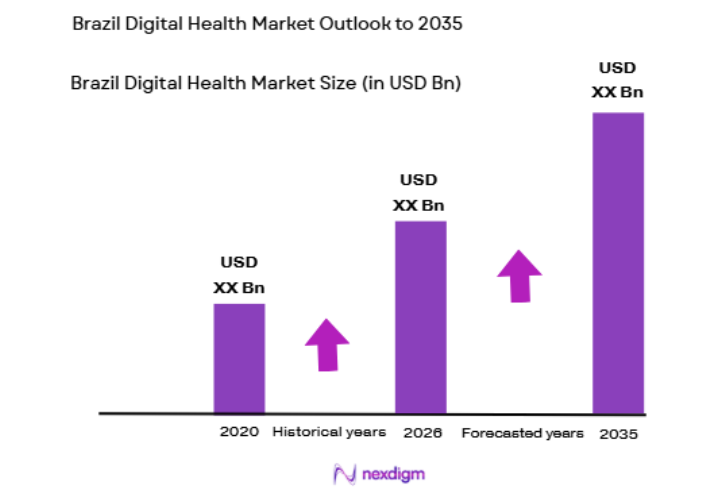
The Brazil digital health market is valued at approximately USD ~ billion based on a recent historical assessment. This growth is primarily driven by increasing healthcare demands, advancements in technology, and the adoption of digital health solutions across the country. The growing prevalence of chronic diseases, coupled with a rising healthcare burden, has spurred the need for digital solutions such as telemedicine, mobile health applications, and electronic health records. Furthermore, government initiatives to promote digital healthcare integration are boosting the market.
São Paulo, Rio de Janeiro, and Brasília are dominant cities in Brazil’s digital health market, primarily due to their advanced healthcare infrastructure, economic importance, and significant investments in technology. These cities are home to numerous healthcare institutions that are increasingly adopting digital health solutions to improve patient care and optimize medical services. São Paulo, being the economic hub, leads in the development and integration of digital health technologies, while Rio de Janeiro and Brasília play vital roles in supporting regional healthcare digitization.
Market Segmentation
By Product Type
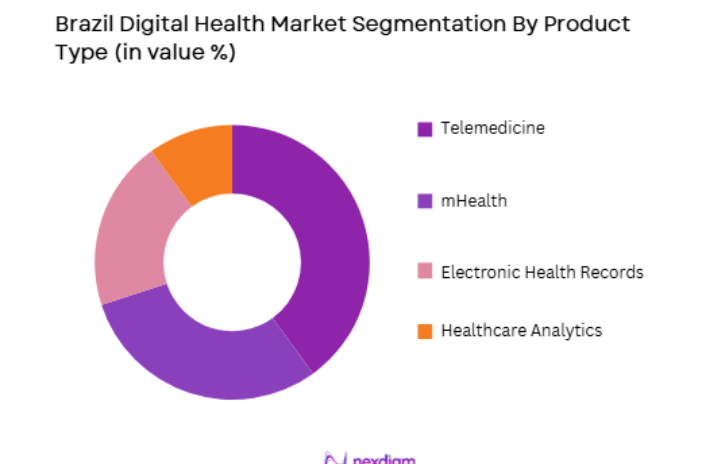
Brazil’s digital health market is segmented by product type into telemedicine, mHealth (mobile health applications), electronic health records (EHR), and healthcare analytics. Recently, telemedicine has dominated the market share due to factors such as the need for remote consultations, especially in underserved areas, and the growing adoption of digital healthcare solutions by both patients and healthcare providers. The COVID-19 pandemic significantly accelerated the adoption of telemedicine, leading to a surge in demand for teleconsultations, remote patient monitoring, and digital prescriptions. With the Brazilian government’s increasing focus on expanding telemedicine services across rural regions, telemedicine has established itself as the leading segment in Brazil’s digital health market.
By End-User
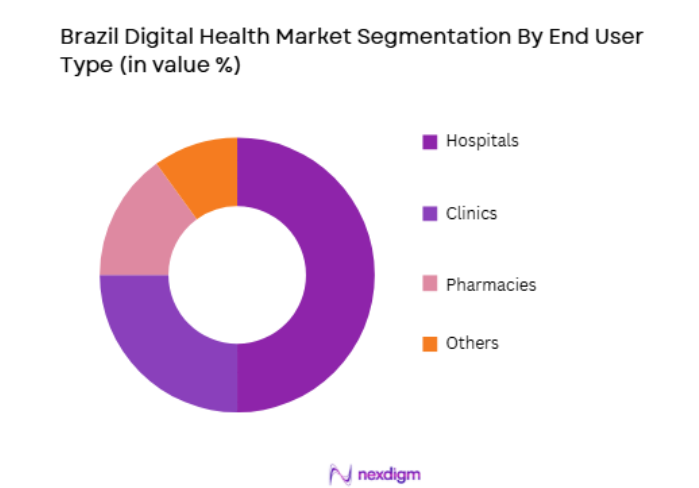
Brazil’s digital health market is segmented by end-user into hospitals, clinics, pharmacies, and others. Recently, hospitals have dominated the market share, as they are the primary centers for adopting advanced digital health technologies. The demand for telemedicine, electronic health records, and healthcare analytics has been highest in hospitals, where the need for efficient patient care and streamlined operations is critical. Hospitals in major cities like São Paulo and Rio de Janeiro are leading the digital health transformation, integrating technology into patient management, diagnostics, and treatment procedures to improve patient outcomes and operational efficiency. This trend has solidified hospitals as the largest end-users of digital health solutions in Brazil.
Competitive Landscape
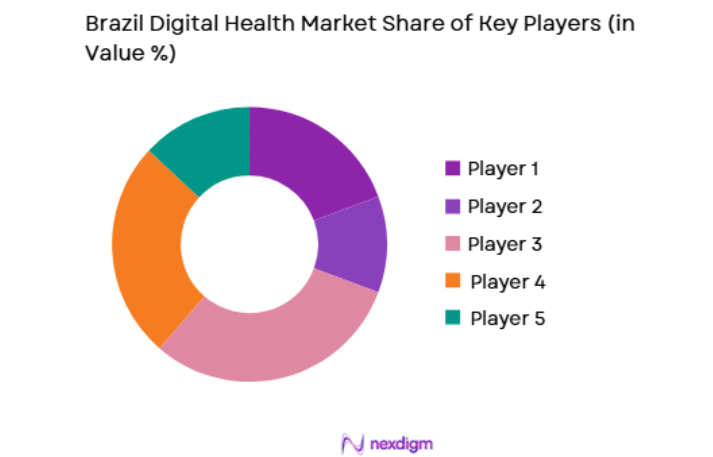
The competitive landscape of Brazil’s digital health market is increasingly concentrated, with both global and local players striving for market leadership. The market sees continuous innovation and investments from major players, who focus on providing advanced telemedicine platforms, mobile health applications, and healthcare analytics solutions. Brazilian healthcare institutions are increasingly partnering with tech companies to enhance their digital health capabilities. While large multinational companies like Philips and GE Healthcare have a strong presence, local startups are also gaining traction by offering region-specific solutions tailored to Brazil’s unique healthcare challenges. As a result, consolidation is expected to increase as these companies seek to expand their market share.
| Company Name | Establishment Year | Headquarters | Technology Focus | Market Reach | Key Products | Revenue | Additional Parameter |
| Philips Healthcare | 1891 | Amsterdam, Netherlands | ~ | ~ | ~ | ~ | ~ |
| GE Healthcare | 1892 | Chicago, USA | ~ | ~ | ~ | ~ | ~ |
| DASA | 1961 | São Paulo, Brazil | ~ | ~ | ~ | ~ | ~ |
| iClinic | 2012 | São Paulo, Brazil | ~ | ~ | ~ | ~ | ~ |
| Telesaúde Brasil |
2009 | São Paulo, Brazil | ~ | ~ | ~ | ~ | ~ |
Brazil Digital Health Market Analysis
Growth Drivers
Government Initiatives for Digital Healthcare Expansion
Government initiatives to promote digital healthcare are one of the primary growth drivers for Brazil’s digital health market. With the rising healthcare demands and an overburdened healthcare system, the Brazilian government has actively supported the integration of digital health solutions such as telemedicine and electronic health records (EHR) into the national healthcare system. These efforts aim to provide better access to healthcare, especially in rural and underserved regions, and improve the efficiency of healthcare delivery. Policies such as the National Telemedicine Program and public-private partnerships are incentivizing healthcare providers to adopt digital solutions, thereby driving market growth. Additionally, regulatory changes to allow remote consultations and digital prescriptions have fostered wider acceptance of telemedicine, creating further opportunities for digital health technologies in Brazil. This policy-driven shift has resulted in significant investments in the healthcare sector, further accelerating the adoption of digital health solutions.
Increasing Adoption of Telemedicine and mHealth
The increasing adoption of telemedicine and mobile health applications (mHealth) is a key growth driver for Brazil’s digital health market. As the healthcare landscape shifts toward remote care and virtual consultations, telemedicine has emerged as a critical solution to meet the rising demand for healthcare services in Brazil. The COVID-19 pandemic played a pivotal role in catalyzing this shift, as it accelerated the need for contactless healthcare solutions. mHealth applications also continue to grow in popularity, offering Brazilians convenient access to health monitoring tools, virtual consultations, and wellness programs via smartphones. The rise of smartphone penetration and internet connectivity, particularly in urban areas, has further facilitated the growth of these digital health solutions. As more Brazilians embrace technology for healthcare, the demand for telemedicine platforms and mHealth applications will continue to drive the digital health market forward.
Market Challenges
Technological and Infrastructure Limitations
While the demand for digital health solutions is increasing in Brazil, technological and infrastructure limitations present significant challenges to widespread adoption. Brazil’s diverse geographic landscape, with its vast rural and remote areas, presents challenges in terms of reliable internet connectivity and access to modern healthcare technologies. Although urban centers like São Paulo and Rio de Janeiro are well-equipped with advanced digital health infrastructure, rural areas often lack the necessary resources for effective implementation of telemedicine and mHealth services. Additionally, many healthcare providers in these regions still rely on outdated systems that are not compatible with digital health platforms, hindering the adoption of these solutions. Addressing these infrastructural challenges is critical to ensuring the success of digital health in Brazil, particularly in providing equitable access to healthcare for all residents.
Regulatory and Data Privacy Concerns
Another challenge facing Brazil’s digital health market is the evolving regulatory environment and concerns related to data privacy. While the Brazilian government has introduced policies to support the adoption of digital health solutions, there are still gaps in the regulatory framework regarding the security and privacy of patient data. Brazil’s General Data Protection Law (LGPD) has introduced strict data privacy regulations, which healthcare providers and digital health companies must adhere to when handling patient information. These regulations can create barriers to the integration of digital health technologies, as companies must invest heavily in compliance measures and cybersecurity to protect sensitive health data. Moreover, the lack of standardized protocols for digital health services across different regions further complicates the regulatory landscape, creating uncertainty for businesses operating in the sector.
Opportunities
Expansion of Telemedicine and Remote Patient Monitoring
The expansion of telemedicine and remote patient monitoring presents a significant opportunity for Brazil’s digital health market. As the demand for accessible healthcare continues to rise, telemedicine offers a cost-effective and efficient solution for providing medical consultations and follow-up care, especially in remote areas. Brazil’s large rural population, which often struggles with access to healthcare services, is increasingly benefiting from telemedicine platforms that connect patients with healthcare providers via video calls, reducing the need for travel. Similarly, remote patient monitoring, which involves using digital tools to track patients’ health metrics and send data to healthcare providers, is becoming increasingly popular. This technology is particularly valuable for managing chronic diseases such as diabetes and hypertension, which are prevalent in Brazil. As Brazil continues to invest in expanding digital health infrastructure, the growth of telemedicine and remote monitoring technologies will provide significant opportunities for market players.
Integration of AI and Big Data in Healthcare
The integration of artificial intelligence (AI) and big data analytics in healthcare is another significant opportunity for Brazil’s digital health market. AI-powered tools can assist healthcare providers in making more accurate diagnoses, personalizing treatment plans, and improving patient outcomes. Big data analytics can also help hospitals and clinics optimize operations, reduce costs, and enhance patient care by analyzing vast amounts of health data to identify trends and patterns. The Brazilian healthcare sector is increasingly embracing AI and big data technologies to improve decision-making and healthcare delivery. With the growing adoption of electronic health records and mHealth applications, the volume of data generated in Brazil’s healthcare system is set to increase, creating a fertile ground for AI and big data solutions. Companies that can leverage these technologies to improve healthcare efficiency and quality will find ample opportunities for growth in Brazil’s digital health market.
Future Outlook
The future outlook for Brazil’s digital health market is promising, with continued growth expected as technological advancements and government initiatives drive the adoption of digital health solutions. The increasing demand for telemedicine, mHealth, and electronic health records, combined with growing support from healthcare providers and patients, will fuel market expansion. Moreover, the integration of AI, big data, and remote patient monitoring technologies is expected to improve healthcare outcomes, reduce costs, and enhance the overall healthcare experience in Brazil. As the regulatory environment continues to evolve, companies that can navigate these challenges and offer innovative solutions will be well-positioned to capitalize on the opportunities in Brazil’s digital health market.
Major Players
- Philips Healthcare
- GE Healthcare
- DASA
- iClinic
- Telesaúde Brasil
- Medtronic
- Cerner Corporation
- IBM Watson Health
- Allscripts Healthcare Solutions
- Google Health
- Amazon Web Services (AWS)
- Optum
- Siemens Healthineers
- Qualcomm Life
- Samsung Medison
Key Target Audience
- Investments and venture capitalist firms
- Government and regulatory bodies
- Healthcare providers
- Hospitals and clinics
- Pharmaceutical companies
- Medical device manufacturers
- Insurance providers
- Medical research organizations
Research Methodology
Step 1: Identification of Key Variables
Key variables such as market size, growth drivers, segmentation factors, and key trends are identified through primary and secondary research.
Step 2: Market Analysis and Construction
Comprehensive market data is gathered and analyzed using statistical models to build a detailed market forecast.
Step 3: Hypothesis Validation and Expert Consultation
Insights and assumptions are validated through consultations with industry experts to ensure the reliability of the findings.
Step 4: Research Synthesis and Final Output
The final report synthesizes all collected data, providing a comprehensive analysis of Brazil’s digital health market.

- Executive Summary
- Research Methodology (Definitions, Scope, Industry Assumptions, Market Sizing Approach, Primary & Secondary Research Framework, Data Collection & Verification Protocol, Analytic Models & Forecast Methodology, Limitations & Research Validity Checks)

- Market Definition and Scope
- Value Chain & Stakeholder Ecosystem
- Regulatory / Certification Landscape
- Sector Dynamics Affecting Demand

- Growth Drivers
Government Support for Healthcare Digitalization
Increasing Healthcare Access in Rural Areas
Technological Advancements in Mobile Health - Market Challenges
High Initial Investment Costs
Data Privacy and Security Concerns
Regulatory Compliance Challenges - Market Opportunities
Expansion of Telemedicine Services
Integration of AI and Machine Learning in Health Management
Emerging Health and Wellness Apps - Trends
Increased Adoption of Remote Patient Monitoring
Integration of Wearable Health Technology - Government Regulations
- SWOT Analysis
- Porter’s Five Forces

- By Market Value, 2020-2025
- By Installed Units, 2020-2025
- By Average System Price, 2020-2025
- By System Complexity Tier, 2020-2025

- By System Type (In Value%)
Telemedicine
Electronic Health Records (EHR)
Wearable Health Devices
Healthcare Analytics
Mobile Health Apps - By Platform Type (In Value%)
Cloud-Based Platforms
On-Premise Platforms
Mobile Platforms
Web-Based Platforms
Hybrid Platforms - By Fitment Type (In Value%)
Standalone Solutions
Integrated Solutions
Modular Solutions
Cloud Solutions - By End User Segment (In Value%)
Healthcare Providers
Patients
Insurance Providers
Government Agencies

- Market Share Analysis
- Cross Comparison Parameters (System Type, Platform Type, Procurement Channel, End User Segment, Fitment Type, Technological Integration, Service Availability, Market Penetration, Regulatory Compliance, Data Securit)
- SWOT Analysis of Key Competitors
- Pricing & Procurement Analysis
- Key Players
Teladoc Health
Doximity
Amwell
Cerner Corporation
GE Healthcare
Philips Healthcare
Allscripts
IBM Watson Health
Medtronic
HealthTap
Stryker Corporation
Siemens Healthineers
Zebra Medical Vision
Fitbit
Apple Health

- Growing Adoption of Telemedicine by Healthcare Providers
- Patients Increasingly Using Health Apps
- Insurance Providers Expanding Digital Solutions
- Government Initiatives to Promote Digital Health

- Forecast Market Value, 2026-2035
- Forecast Installed Units, 2026-2035
- Price Forecast by System Tier, 2026-2035
- Future Demand by Platform, 2026-2035


 Request a Sample
 Ask for Customization
 Get a Quote
 Enquire Now