
 Download PDF
Market Overview
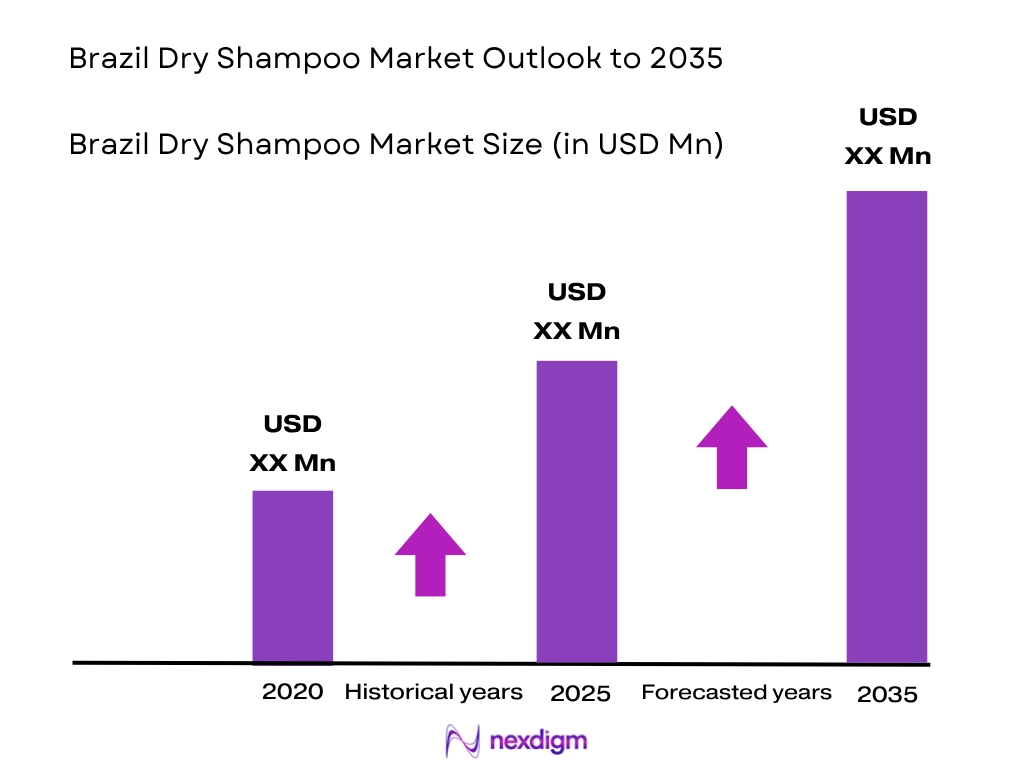
The Brazil Dry Shampoo Market is valued at approximately USD ~ million in 2025, reflecting increased consumer adoption driven by busy lifestyles, widespread urbanization, and growing awareness of waterless hair care benefits.The market is projected to grow at a CAGR of 6.66% over the 2026‑2035 period, driven by rising e‑commerce penetration, premiumization, and expanding product portfolio diversity. Dry shampoo products have gained traction among working professionals and youth as convenient solutions to maintain hair appearance without frequent washing. The popularity of premium and multifunctional formulations, including oil control and scalp care benefits, has further expanded market demand.
Key urban centers such as São Paulo, Rio de Janeiro, and Brasília dominate the Brazil dry shampoo market due to larger populations, higher disposable incomes, strong retail infrastructure, and greater exposure to global beauty trends. These cities serve as trend leaders where consumers are more inclined toward premium personal care products and adopt beauty innovations earlier. Export activity from European and U.S. brands also concentrates in these hubs, enhancing their market prominence.
Market Segmentation
By Form Type
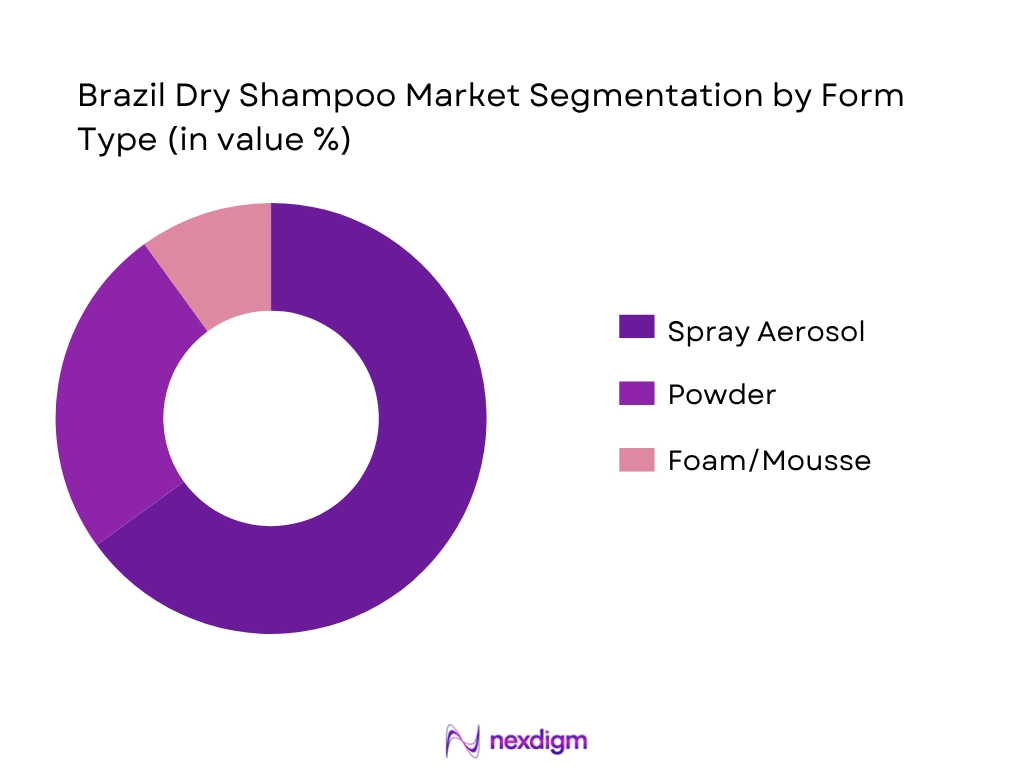
The Brazil dry shampoo market is segmented into spray, powder, and foam/mousse formats. The spray segment commands the largest share, primarily due to its ease of use and familiarity among Brazilian consumers. Spray dry shampoos deliver fine, evenly dispersed product that efficiently absorbs excess scalp oil without water, suiting busy lifestyles and frequent hair refresh routines. Consumer preference for on‑the‑go convenience and minimal effort application has supported spray dominance, particularly in urban retail environments and e‑commerce channels. Additionally, international brands have heavily promoted spray variants, reinforcing their market position over powder and foam formats.
By Consumer Demographic
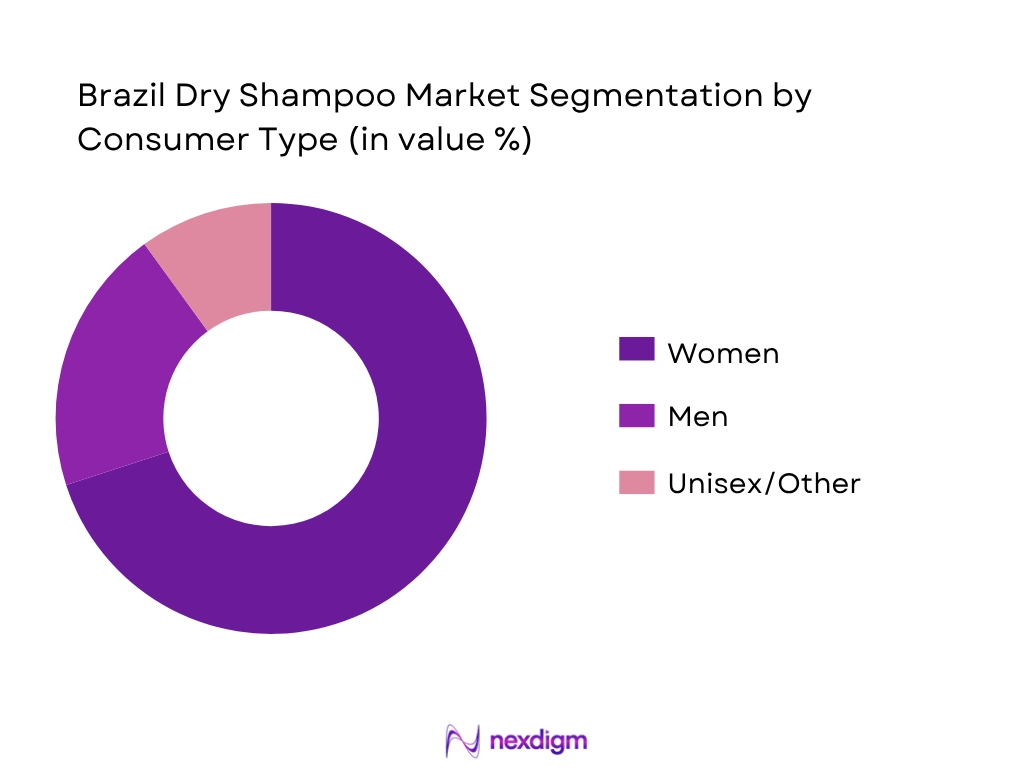
Under demographic segmentation, the Brazil dry shampoo market is divided into women, men, and unisex/other categories. The women segment holds the largest share, reflecting higher adoption of hair care and styling solutions among female consumers who often prioritize convenience, appearance, and product performance. Brazilian women typically integrate personal grooming tools into daily routines, and dry shampoo serves both aesthetic and functional roles refreshing hair between washes and supporting styling volume. The strong cultural focus on hair beauty and diversity of hairstyles further drives consumption within this group. Male usage is rising but remains lower due to historically lower grooming category penetration.
Competitive Landscape
The Brazil dry shampoo market features a mix of global personal care giants and niche beauty brands. Competition is influenced by product innovation, distribution breadth, price tier offerings, and marketing reach. The competitive landscape is shaped by a few major players that have established strong network presence through omnichannel distribution, substantial promotional activities, and diversified product portfolios tailored for Brazilian consumers. International companies benefit from global R&D capabilities while regional niche brands leverage local trends and ingredient preferences to capture segments of the market.
| Company | Est. Year | Headquarters | Product Portfolio Breadth | Retail Channel Coverage | E‑Commerce Penetration | Brand Loyalty Metrics | Distribution Network Strength |
| Unilever | 1930 | UK/Netherlands | High | ~ | ~ | ~ | ~ |
| Procter & Gamble | 1837 | USA | High | ~ | ~ | ~ | ~ |
| L’Oréal | 1909 | France | Very High | ~ | ~ | ~ | ~ |
| Henkel | 1876 | Germany | High | ~ | ~ | ~ | ~ |
| Church & Dwight | 1846 | USA | Medium | ~ | ~ | ~ | ~ |
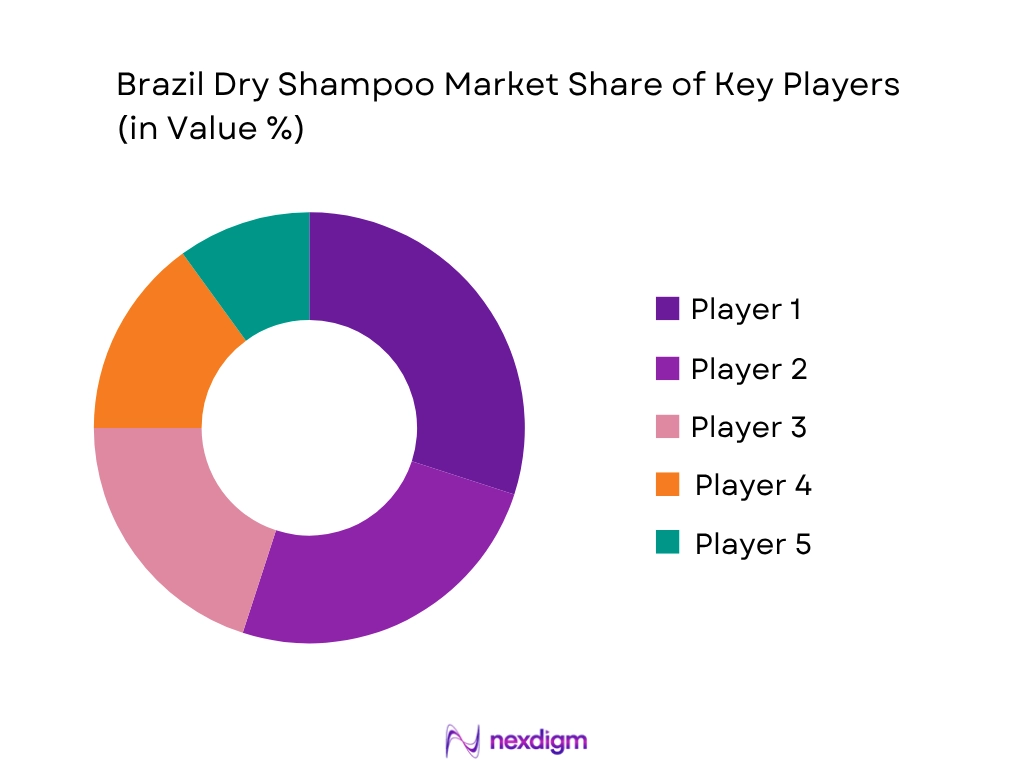
Brazil Dry Shampoo Market Analysis
Growth Drivers
Increasing Hair Grooming Awareness
Brazil’s strong cultural emphasis on beauty and personal grooming continues to support hair care product adoption, including dry shampoos. The cosmetics and personal care market in Brazil reached USD 32.5 billion, reflecting high consumer engagement with beauty products and broad product prioritisation, including hair care, among shoppers. This reflects increasing consumer exposure to self‑care routines that include waterless grooming solutions. The country’s population of approximately 211,998,573 people provides a substantial base of potential consumers who integrate grooming into daily life. Additionally, Brazil’s internet usage penetration at 84% facilitates digital exposure to beauty trends and influencer‑led content that raises awareness of innovative hair products. These macro indicators large market scale, extensive digital connectivity, and high population underlie stronger hair grooming awareness that translates into demand for convenient hair maintenance products like dry shampoos. This growth driver is supported by the broad cosmetics consumption context rather than isolated estimates.
Climate‑Driven Oil Control Demand
The environmental and climatic conditions in Brazil characterized by high humidity in coastal and central urban regions intensify scalp oil production and hair greasiness, making products that absorb excess oil without water use increasingly relevant. With a national annual GDP of USD 2.19 trillion, strong urban economic activity supports discretionary spending on personal care categories, including solutions for oil control in hair, which is a key performance attribute for dry shampoos. Brazil’s large urban population share of approximately 87.9% living in cities with high humidity and heat—further amplifies consumer need for products that manage oil and scalp freshness between washes. High employment and household spending capacity tied to labor market strength (unemployment estimated near 6.0%) reinforce discretionary spending on hair care convenience products. In essence, Brazil’s climatic profiles coupled with urbanized consumer habits create an environment where dry shampoos with oil‑control claims resonate with large segments of the population, supporting sustained category uptake.
Market Restraints
Regulatory & VOC Restrictions
Regulation plays a significant role in Brazil’s cosmetics and hair care markets, directly impacting how dry shampoo products are approved, labeled, and marketed. ANVISA’s Resolution RDC 907/2024 defines technical requirements for personal hygiene and cosmetic products, including hair care formulations. Products not explicitly listed for pre‑marketing approval can be commercialized with notifications, but threshold limits and ingredient restrictions apply for safety and compliance. Foreign companies must partner with Brazilian entities to market regulated products, adding complexity to market entry for international dry shampoo brands. This regulatory environment influences formulation decisions (e.g., VOC limits in aerosol products) and extends compliance timelines, thus restraining rapid innovation or new product launches. For example, RDC 814 (2023) included hair styling products in approval requirements, indicating a tightening of regulatory scrutiny over hair care categories beyond traditional classifications. Such regulatory processes can slow product introductions and affect overall category momentum if compliance costs rise or if specific chemical restrictions impact formulation choices.
Price Sensitivity in Consumer Segments
Despite Brazil’s large population and consumption base, significant segments of consumers exhibit price‑sensitive purchasing behavior in personal care categories. Brazil’s GDP per capita of approximately USD 10,310 reflects moderate individual income levels relative to developed markets, which can constrain discretionary spending on higher‑priced hair care innovations. With broader personal consumption forming a large share of economic activity, consumers often balance beauty and grooming expenditures against everyday essentials. Retail purchasing power is also influenced by macro factors such as inflation (consumer prices around 4.4%) affecting household budgets. In contexts where average income growth is modest and cost of living pressures persist, premium dry shampoo offerings may see slower uptake among cost‑conscious shoppers, especially in mass channels. Lower‑priced substitutes—such as traditional shampoos or DIY oil‑absorption alternatives—become competitive options. Price sensitivity therefore restrains category expansion in premium tiers, requiring strategic pricing and localized value propositions to convert broader consumer groups.
Opportunities
Private Label Growth Across Retail Channels
Brazil’s retail landscape shows expanding adoption of private label beauty and personal care products, driven by large supermarket chains and budget‑oriented retailers seeking differentiated offerings. With a population exceeding 211 million and broad retail penetration in urban centers, private labels can leverage localized pricing advantages to capture share in value‑oriented segments traditionally dominated by international brands. The high percentage of internet users (84%) also enables private label products to reach consumers via e‑commerce channels quickly, bypassing traditional retail constraints. Retailers such as major supermarket groups have been progressively introducing private label hair and beauty products that appeal to cost‑sensitive shoppers who still seek performance attributes. This trend reflects broader changes in consumer purchase behavior, where value and accessibility play major roles in product selection. For dry shampoos specifically, private labels can introduce formulations emphasizing essential oil control and convenience at competitive price points, tapping into the base of urban consumers with limited discretionary expenditure. Thus, the current retail structure and consumer digital engagement provide a clear opportunity for private label expansion in this market.
Sustainable & Refillable Aerosol Packaging
Consumer awareness for sustainability and eco‑friendly products continues to rise in Brazil, mirroring global trends. While market‑specific purchase statistics are limited, broader cosmetics and personal care categories increasingly reflect interest in sustainable packaging formats. With Brazil’s consumer base nearing 212 million people, a substantial segment is reachable with products that minimize environmental impact. Sustainable and refillable aerosol or waterless packaging options can serve dual benefits: reducing waste and appealing to environmentally informed shoppers who consider product lifecycle in purchase decisions. Brazil’s urban consumers increasingly prioritize brands with environmental credentials, as evidenced by data showing that significant proportions of beauty consumers globally seek natural or eco‑friendly products within the cosmetics space. Capitalizing on this consumer mindset by offering innovative, low‑waste dry shampoo packaging aligns with broader environmental priorities and can catalyze differentiation in a crowded category. As infrastructure for recycling and sustainability education improves across Brazilian municipalities, products aligned with these values have greater potential to attract both conscious consumers and retail partners seeking greener assortments.
Future Outlook
Over the next decade, the Brazil Dry Shampoo Market is expected to grow steadily, underscored by evolving consumer preferences, rising e‑commerce adoption, and an expanding hair care category. Continuous innovation in formulations such as natural ingredient blends, scalp health claims, and multifunctional benefits will stimulate deeper market penetration beyond traditional spray offerings. Premiumization is anticipated to shift consumption toward higher‑value products, balancing overall revenue growth. The influence of social media beauty trends, subscription models, and urban lifestyle convenience will further support expansion. Consumer demand for sustainable packaging and lower‑VOC formulations may also influence product portfolios, creating opportunities for brands adopting eco‑friendly strategies. Enhanced distribution networks leveraging omnichannel retail will increase accessibility across urban and secondary cities, contributing to broader category adoption and overall market growth.
Major Players
- Unilever
- Procter & Gamble
- L’Oréal
- Henkel
- Church & Dwight
- Batiste (Coty)
- Klorane (Pierre Fabre)
- Sol de Janeiro
- Living Proof (Beautycounter)
- Drybar (Henkel)
- Widi Care
- Lola Cosmetics
- Simple Organic
- OGX (Johnson & Johnson subsidiary)
- Schwarzkopf (Henkel brand)
Key Target Audience
- Consumer Packaged Goods Investors
- Retail & E‑Commerce Purchasing Leaders
- Private Equity & Investments and Venture Capitalist Firms
- Supply Chain & Distribution Heads in FMCG
- Brand & Category Managers in Hair Care Products
- Government and Regulatory Bodies (ANVISA – Agência Nacional de Vigilância Sanitária)
- Product Development & R&D Directors
- Procurement & Sourcing Executives
Research Methodology
Step 1: Market Scoping & Variable Definition
The process began with defining the category scope for dry shampoo within Brazil’s hair care market. This included identifying product types (form types, demographics), distribution channels, and core performance variables. Secondary data sources such as industry reports and retail data sets were collected to establish baseline size metrics and segmentation definitions.
Step 2: Data Collection & Analysis
Historical and current sales data were aggregated from retail scanner databases, industry publications, and e‑commerce analytics. Key performance indicators including volume sales, revenue, average selling price, and channel performance were analyzed. Triangulation with multiple sources ensured accuracy and consistency in baseline market figures.
Step 3: Expert Consultations & Validation
Market assumptions and hypotheses were validated through interviews with industry practitioners, including category managers, distributors, and regional sales leads. These interviews provided insight into operational factors, consumer behavior patterns, and competitive dynamics that quantitative data alone could not capture.
Step 4: Forecast Synthesis & Final Output
Forecast modeling used a combination of bottom‑up volume projections and top‑down revenue trends, incorporating macroeconomic variables, consumer adoption rates, and expected changes in distribution patterns. Final outputs were cross‑checked against global industry benchmarks to ensure coherence.

- Executive Summary
- Research Methodology (Market Definitions and Cosmetic Category Scoping, Brazil Dry Shampoo Form & Function Taxonomy, Assumptions (Climate Impact, Consumer Behaviour), Data Sources: Retail Scanner, E‑commerce Analytics, Industry Surveys, Market Sizing Approach, Top‑Down Portfolio & Bottom‑Up Consumption, Data Triangulation and Validation, Limitations and Future Considerations)

- Market Genesis and Category Evolution in Brazil
- Market Definition and Key Terms
- Value Chain: Raw Materials (Propellants, Rice Starch, Clays), Packaging Inputs, Distribution
- Supply Chain Dynamics and Import Dependencies (Aerosol Canisters, Actives)
Brazil Market Drivers (Urbanization, Hair Grooming Trends) - Brazil Market Restraints (Regulatory Fragmentation, Price Sensitivity)
- Market Enablers (Digital Marketing, Influencer Adoption)
- Regulatory & VOC Compliance Landscape

- Growth Drivers (Increasing Hair Grooming Awareness, Urbanization & Disposable Income, Climate-Driven Oil Control, E‑commerce & Subscription Models, Premiumization & Salon Adoption, Influencer Campaigns, Shift to Natural/Organic, Multi-Functional Benefits)
- Market Restraints (Regulatory & VOC Restrictions, Price Sensitivity, Raw Material Costs – Starch/Clays/Propellants, Limited Local Aerosol Supply, Wet Shampoo Cannibalization, Shelf-Life Challenges)
- Opportunities (Private Label Growth, Sustainable & Refillable Aerosols, Salon Partnerships, E‑commerce Exclusives, Secondary City Distribution)
- Emerging Trends (Digital & Influencer Marketing, Personalized Packaging, Sustainability Certifications, Form Innovation – Powder/Foam/Color Sprays)
- Regulatory Environment (ANVISA Cosmetic Guidelines, Aerosol Safety, Ingredient & Preservative Limits, Labeling & Claims, Packaging/Environmental Rules, Import Duties)
- Porter’s Five Forces Analysis (Threat of New Entrants, Supplier Power, Buyer Power, Substitutes, Rivalry)
- SWOT Analysis (Market Level – Strengths, Weaknesses, Opportunities, Threats)
- Value Chain and Supply Chain Analysis (Raw Materials – Rice/Starch/Clays, Domestic vs Imported Actives, Aerosol Supply, Manufacturing Nodes, Logistics, Wholesale & Retail, QA & Testing)
- Pricing Dynamics and Margin Stack (ASP by Segment – Value/Mid/Premium/Luxury; Channel Pricing; Promotions & Bundles; Gross/Contribution Margins; Cost Pass-Through; Online vs Offline Economics)
- Consumer Purchase Behavior & Retail Analytics (Purchase Frequency, Basket Affinity, Cross-Sell with Shampoo/Conditioner, Brand Loyalty, Channel Preference, Regional Usage Patterns)

- By Market Value (2020-2025)
- By Market Volume (2020-2025)
- By Average Selling Price (2020-2025)
- By CAGR and Growth Momentum (2020-2025)

- By Form (In Value%)
Aerosol/Spray (Oil Absorption Efficiency)
Powder/Loose (Clay & Starch Base)
Foam/Mousse Formats - By Function/Benefit (In Value%)
Clarifying & Sebum Control
Color Protection & Tint Match
Anti‑Dandruff / Scalp Health
Volume & Texture Enhancement
Natural/Organic Benefit Claims - By Demographic End User (In Value%)
Women
Men
Kids & Teen
Professional Salon Use - By Distribution Channel (In Value%)
Mass Retail/Hypermarkets
Drugstore & Specialty Beauty Retail
E‑commerce & DTC Platforms
Salons & Professional Channels
Modern Trade vs Traditional Trade - By Price Tier (In Value%)
Value/Private Label
Mass‑Market Core
Premium & Specialty
Luxury & Professional

- Market Share by Value & Volume (Top Players)
- Competitive Benchmarking on Core Parameters(Cross‑Comparison Parameters: Price Tier Positioning, Product Assortment Depth, Distribution Reach, Advertising Spend, Form Innovation Index, Sustainability Credentials, E‑commerce Penetration, Consumer Sentiment Ratings)
- SWOT Analysis of Key Players (Strengths, Weaknesses, Opportunities, Threats for Each Major Brand, Including Market Position & Innovation Capability)
- Pricing Strategy & SKU Mapping (ASP by Segment – Value, Mid, Premium, Luxury; Online vs Offline Price Differentiation; Promotional Campaigns; Bundling & Multi-Pack Strategies)
- Distribution & Channel Strategy (Mass Retail, Drugstore, Specialty Beauty, E-Commerce, DTC Subscription; Shelf Space & Visibility, Retailer Partnerships, Marketplace & Platform Penetration)
- Company Profiles
Unilever
Procter & Gamble
L’Oréal
Henkel
Coty
Church & Dwight
Batiste
Klorane
Sol de Janeiro
Living Proof
Drybar
Schauma
Widi Care
Lola Cosmetics
Simple Organic

- Usage Patterns & Occasions(Daily vs Occasional Use, Morning vs Evening Styling, Pre/Post Workout, Travel & Commute Convenience, Climate-Driven Sebum Control)
- Pain Points (Residue/White Cast, Scent Longevity, Hair Texture Impact, Scalp Sensitivity, Packaging Usability)
- Purchase Drivers (Performance – Oil Absorption, Volume & Texture, Brand Reputation, Price vs Value, Ingredient Transparency, Multi-Functional Benefits)
- Decision Journey (Research & Reviews, Social Media Influence, Sampling & Trial, Retail vs E‑commerce Comparison, Professional Recommendations)
- Price Sensitivity & Elasticity (Affordability vs Premium Perception, Segment-Based Willingness to Pay, Promotional Impact, Subscription Adoption)
- Brand Loyalty & Switching Behavior (Repeat Purchase Rate, Channel-Specific Loyalty, Influence of New Entrants, Impact of Product Innovations)
- Regional & Demographic Preferences (Urban vs Secondary Cities, Gender-Based Form & Fragrance Choice, Age Group – Teen, Millennial, Adult, Professional Salon Segments)
- Retail Analytics & Basket Affinity (Cross-Sell with Shampoo/Conditioner, Hair Styling Products, Impulse vs Planned Purchase, Online vs Offline Basket Composition)

- By Market Value (2026-2035)
- By Market Volume (2026-2035)
- By Average Selling Price (2026-2035)
- By CAGR and Growth Momentum (2026-2035)


 Request a Sample
 Ask for Customization
 Get a Quote
 Enquire Now