
 Download PDF
 Download PDF
Market Overview
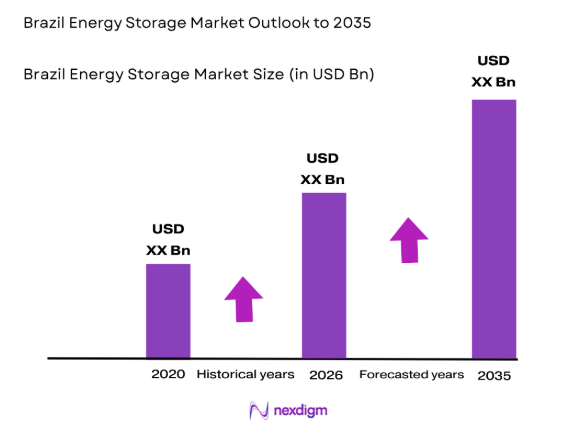
The Brazil Energy Storage market is projected to reach USD ~ billion, driven by the country’s growing demand for renewable energy integration and the need for grid stability. The market is supported by increasing investments in renewable energy sources such as solar and wind, alongside the requirement for advanced energy storage solutions to optimize power generation. Brazil’s focus on transitioning to clean energy fuels the market’s growth, with energy storage technologies enhancing the stability and reliability of the power grid.
Brazil’s regional focus on expanding energy infrastructure, especially in areas like São Paulo, Bahia, and Rio Grande do Sul, positions the country as a leader in energy storage development. The presence of abundant renewable resources such as wind and solar energy in these regions supports the need for storage technologies that can store excess energy generated during peak periods. The national commitment to reducing carbon emissions further strengthens Brazil’s position as a key player in the Latin American energy storage market.
Market Segmentation
By Product Type
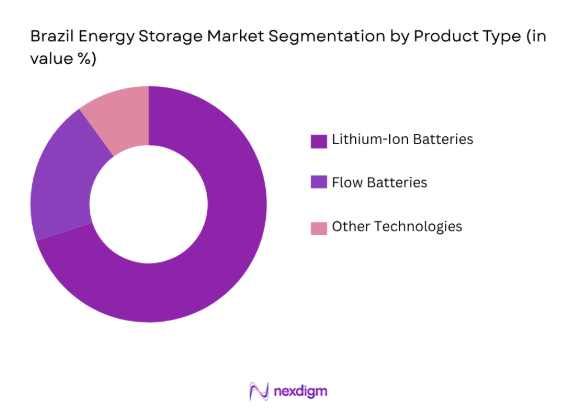
The Brazil Energy Storage market is segmented by product type into lithium-ion batteries, flow batteries, and others. Lithium-ion batteries dominate the market due to their higher efficiency, longer life cycle, and decreasing costs. These batteries are increasingly used in both residential and commercial energy storage systems. Their widespread adoption is driven by technological advancements, energy demand patterns, and their ability to support Brazil’s renewable energy transition, making them the preferred choice for energy storage solutions.
By End-User Sector
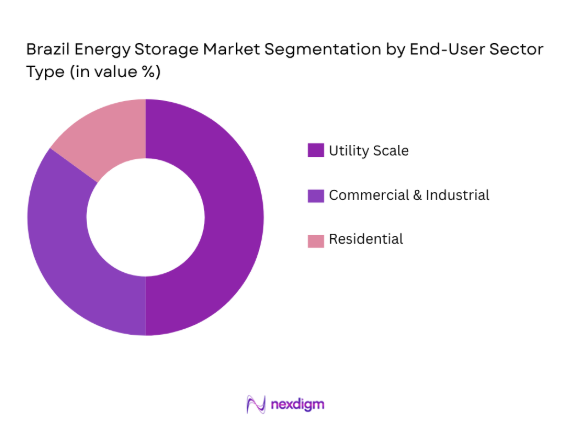
The Brazil Energy Storage market is segmented by end-user sector into Utility Scale, Commercial & Industrial, and Residential. The industrial sector holds a dominant market share due to the growing need for large-scale energy storage solutions to support critical infrastructure and operations. Industrial sectors, including manufacturing, mining, and oil & gas, benefit from energy storage systems that enhance energy efficiency and lower operational costs. The Brazilian government’s push for industrial sustainability and energy efficiency continues to drive the adoption of energy storage solutions in these sectors.
Competitive Landscape
The Brazil Energy Storage market is competitive and expanding, driven by both local and international players. The market has seen consolidation as established energy companies partner with storage technology providers to develop integrated solutions. The influence of major players such as energy utilities and storage technology developers is growing, as they look to scale their operations and offer advanced storage solutions. Brazil’s focus on energy transition and government incentives play a key role in creating a favorable environment for energy storage adoption.
| Company Name | Establishment Year | Headquarters | Technology Focus | Market Reach | Key Products | Revenue (USD Billion) | Market-Specific Parameter |
| ENGIE Brasil Energia | 2000 | Rio de Janeiro, BR | ~ | ~ | ~ | ~ | ~ |
| EDP Renováveis | 2007 | São Paulo, BR | ~ | ~ | ~ | ~ | ~ |
| AES Tietê Energia | 1999 | São Paulo, BR | ~ | ~ | ~ | ~ | ~ |
| Siemens Energy | 2020 | Munich, Germany | ~ | ~ | ~ | ~ | ~ |
| SunEdison | 2003 | São Paulo, BR | ~ | ~ | ~ | ~ | ~ |
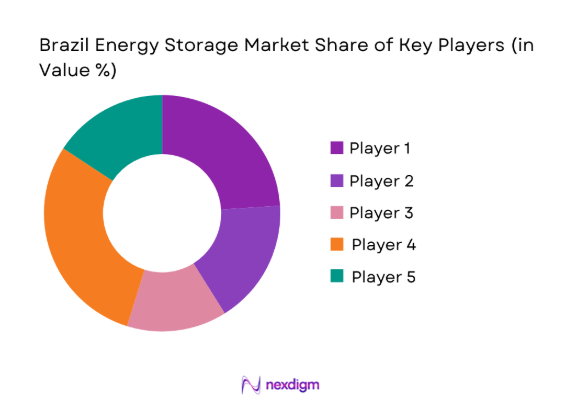
Brazil Energy Storage Market Analysis
Growth Drivers
Renewable Energy Expansion
The shift towards renewable energy is a key driver of the energy storage market in Brazil. The country’s growing reliance on wind and solar energy necessitates efficient energy storage solutions to stabilize the grid. Renewable energy production in Brazil has increased significantly in recent years, and energy storage technologies such as lithium-ion batteries are becoming essential for managing variable energy generation. These storage systems allow excess energy to be stored during peak production times and used when demand exceeds generation, thereby enhancing grid reliability. As Brazil’s renewable energy capacity grows, the demand for energy storage will continue to rise, further supporting market expansion.
Government Support
Brazil’s government policies and incentives promote energy storage adoption. Brazil has set ambitious renewable energy targets and committed to reducing greenhouse gas emissions as part of its international climate commitments. The government is actively supporting the energy transition by providing financial incentives for renewable energy projects and energy storage installations. Policies such as tax incentives, subsidies, and grants are designed to accelerate the development and deployment of energy storage technologies. As a result, energy storage adoption has become an attractive option for both residential and industrial sectors, fueling market growth.
Market Challenges
High Initial Investment
The high upfront cost of energy storage systems remains a significant barrier to market growth in Brazil. Despite the falling costs of energy storage technologies, the initial capital investment required for large-scale installations is still a challenge, particularly for residential and small commercial applications. Many consumers and businesses are hesitant to invest in energy storage systems due to the high cost of batteries, inverters, and other infrastructure. Although the long-term savings from energy efficiency and reduced energy bills can offset these costs, the initial financial burden remains a key challenge for widespread adoption.
Grid Integration
Integrating energy storage systems with Brazil’s aging grid infrastructure poses a significant challenge. While energy storage technologies offer a solution to manage renewable energy generation, Brazil’s existing electricity grid is not fully optimized for the large-scale deployment of these systems. The integration of distributed energy resources, including solar and wind power, with energy storage systems requires grid modernization and new technologies. This process is complicated and costly, as it involves upgrading transmission lines, substations, and control systems. Overcoming these infrastructure challenges is crucial for the successful integration of energy storage into Brazil’s energy system.
Opportunities
Industrial Decarbonization
Brazil’s industrial sector represents a significant opportunity for energy storage adoption. The industrial sector in Brazil is a major consumer of energy, and companies are under increasing pressure to reduce their carbon footprint. Energy storage systems can help industries meet sustainability targets by storing energy generated from renewable sources, which can then be used to power operations. As Brazil’s industrial sector moves toward decarbonization, the demand for energy storage solutions is expected to grow significantly. Energy storage can also help industries manage energy costs, improve operational efficiency, and provide backup power during grid outages.
Export Potential
Brazil has the potential to become a key player in the global energy storage market. Brazil’s renewable energy resources, particularly wind and solar, provide a solid foundation for producing green hydrogen and energy storage solutions. As the global demand for clean energy solutions grows, Brazil has the opportunity to export energy storage systems and technologies to other Latin American countries and beyond. This export potential is supported by Brazil’s strategic location, favorable climate, and the government’s proactive energy policies. By establishing itself as a leader in energy storage technology, Brazil can tap into a growing global market for clean energy solutions.
Future Outlook
The Brazil Energy Storage market is expected to grow significantly over the next five years as renewable energy production continues to rise and energy storage solutions become more integrated into Brazil’s energy grid. Technological advancements, government incentives, and the increasing adoption of energy storage in industrial applications will drive market growth. Additionally, Brazil’s export potential for energy storage solutions will position the country as a regional leader in the global energy transition. As energy storage systems become more affordable and efficient, their role in supporting Brazil’s renewable energy infrastructure will become even more crucial.
Major Players
- ENGIEBrasilEnergia
- EDP Renováveis
- AES Tietê Energia
- Siemens Energy
- SunEdison
- Brookfield Renewable Partners
- Iberdrola
- TransAlta
- Plug Power
- Linde
- Air Products and Chemicals
- Nexans
- TotalEnergies
- Enel Green Power
- Ørsted
Key Target Audience
- Investments and venture capitalist firms
- Government and regulatory bodies
- Energy storage technology providers
- Renewable energy project developers
- Industrial energy consumers
- Environmental and sustainability consultants
- Energy utilities and grid operators
Research Methodology
Step 1: Identification of Key Variables
Identify key variables such as government policies, renewable energy trends, technological innovations, and grid integration challenges affecting the Brazil Energy Storage market.
Step 2: Market Analysis and Construction
Analyze the market structure by segmenting the market into product types, end-users, and geographic regions to understand key trends and growth drivers.
Step 3: Hypothesis Validation and Expert Consultation
Consult with industry experts, including technology providers, energy consultants, and market stakeholders, to validate assumptions and projections for the energy storage market in Brazil.
Step 4: Research Synthesis and Final Output
Synthesize findings into a comprehensive report that provides insights into the Brazil Energy Storage market’s current status, challenges, growth drivers, and future outlook.

- Executive Summary
- Research Methodology (Definitions, Scope, Industry Assumptions, Market Sizing Approach, Primary & Secondary Research Framework, Data Collection & Verification Protocol, Analytic Models & Forecast Methodology, Limitations & Research Validity Checks)

- Market Definition and Scope
- Value Chain & Stakeholder Ecosystem
- Regulatory / Certification Landscape
- Sector Dynamics Affecting Demand

- Growth Drivers
Increasing Demand for Renewable Energy Integration
Government Incentives and Subsidies for Energy Storage
Advancements in Battery Technologies - Market Challenges
High Initial Capital Investment for Energy Storage Systems
Regulatory Hurdles and Delays in Approvals
Challenges in Energy Storage Efficiency and Duration - Market Opportunities
Expanding Role of Energy Storage in Electric Vehicle Charging Infrastructure
Integration of Energy Storage in Smart Grids
Development of Large-Scale Energy Storage Projects - Trends
Shift Towards Decentralized Energy Systems
Integration of AI and IoT with Energy Storage Solutions - Government Regulations
- SWOT Analysis
- Porter’s Five Forces

- By Market Value, 2020-2025
- By Installed Units, 2020-2025
- By Average System Price, 2020-2025
- By System Complexity Tier, 2020-2025

- By System Type (In Value%)
Lithium-ion Batteries
Flow Batteries
Lead-Acid Batteries
Sodium-based Batteries
Compressed Air Energy Storage - By Platform Type (In Value%)
Residential Platforms
Commercial Platforms
Industrial Platforms
Utility-scale Platforms - By Fitment Type (In Value%)
On-grid Solutions
Off-grid Solutions
Hybrid Solutions
Modular Solutions - By End User Segment (In Value%)
Utilities
Commercial Sector
Residential Sector

- Market structure and competitive positioning
- Market share snapshot of major players
- Cross Comparison Parameters (System Type, Platform Type, Procurement Channel, End User Segment, Fitment Type, Energy Density, Installation Scale, market size, growth, technology mix, regulatory context, demand drivers)
- SWOT Analysis of Key Competitors
- Pricing & Procurement Analysis
- Key Players
Siemens Energy
ABB
Vestas
Tesla
LG Chem
Sonnen
Fluence
BYD
General Electric
Schneider Electric
Samsung SDI
Hitachi
E.ON
Enel X
Saft

- Growing Demand from the Residential Sector
- Expanding Adoption in the Commercial Sector
- Energy Storage Role in Grid Stabilization
- Utilities Increasing Investment in Storage Solutions

- Forecast Market Value, 2026-2035
- Forecast Installed Units, 2026-2035
- Price Forecast by System Tier, 2026-2035
- Future Demand by Platform, 2026-2035


 Request a Sample
 Ask for Customization
 Get a Quote
 Enquire Now