
 Download PDF
 Download PDF
Market Overview
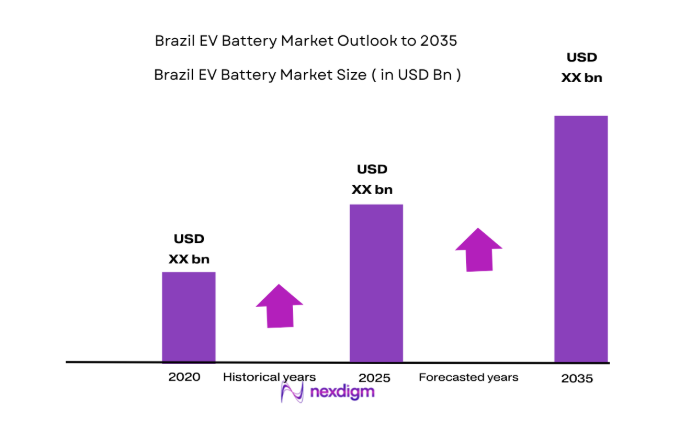
The Brazil EV Battery market is growing rapidly, driven by increased demand for electric vehicles and government incentives supporting the transition to cleaner energy solutions. The market size in 2024, based on recent historical assessments, is expected to surpass USD ~ billion, reflecting the ongoing investments in infrastructure, technological advancements in battery technology, and a growing fleet of electric vehicles. The availability of tax credits, rebates, and incentives for consumers and manufacturers plays a critical role in fostering market growth by making electric vehicle ownership more affordable. Additionally, rising environmental concerns and commitments to reducing carbon emissions continue to drive the push towards electric mobility, with the automotive and public transport sectors showing increasing adoption of electric powertrains.
Key regions such as São Paulo, Rio de Janeiro, and Curitiba are leading the market in Brazil, due to their high vehicle density, urbanization levels, and well-developed infrastructure. These areas are receiving substantial investments in EV infrastructure, including charging stations and service networks, to meet the growing demand for electric vehicles. These cities are also home to major manufacturing facilities for electric vehicles and their associated components, making them critical hubs for the market. In addition, strong governmental support in these regions has accelerated the development of EV ecosystems, enhancing market growth across Brazil.
Market Segmentation
By Product Type
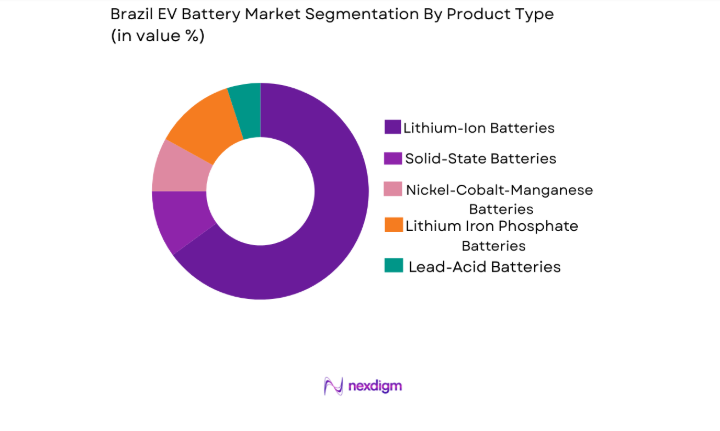
The Brazil EV Battery market is segmented by product type into lithium-ion, solid-state, nickel-cobalt-manganese, lithium iron phosphate, and lead-acid batteries. Recently, the lithium-ion battery sub-segment has dominated the market due to its higher energy density, lower weight, and better performance at high temperatures compared to other types. The growing adoption of electric vehicles and energy storage systems has driven the demand for lithium-ion batteries, as they offer extended driving ranges, faster charging times, and a higher overall lifespan. Furthermore, advancements in lithium-ion battery technology, including improvements in cost efficiency and recycling methods, continue to drive its dominance in the market. The availability of these batteries in mass production, along with decreasing prices due to economies of scale, has also contributed to their leading position in the market.
By Platform Type
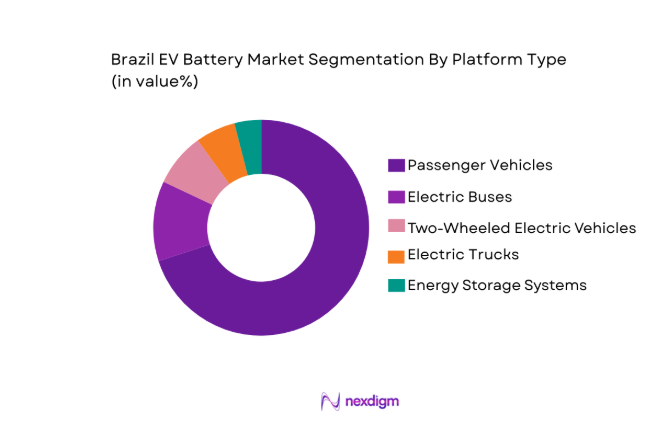
The Brazil EV Battery market is segmented by platform type into passenger vehicles, electric buses, electric two-wheelers, electric trucks, and energy storage systems. Among these, passenger vehicles dominate the market share, owing to their large consumer base, government incentives for EV adoption, and increasing awareness about environmental sustainability. The demand for electric passenger vehicles is being driven by improvements in battery technology that offer longer ranges, reduced charging times, and more competitive pricing. As Brazil’s electric vehicle infrastructure continues to develop, more consumers are choosing EVs over conventional internal combustion engine vehicles, further contributing to the segment’s growth.
Competitive Landscape
The Brazil EV Battery market is highly competitive, with key players focused on consolidating their market share through technological advancements and strategic partnerships. Major companies are investing in local production to reduce costs and ensure a reliable supply of batteries. Additionally, collaboration with vehicle manufacturers and energy companies is vital in ensuring the growth of the market. The influence of global players like Tesla and BYD, along with local firms, is shaping the competitive landscape, pushing innovation in battery technology and scaling up production to meet the growing demand.
| Company Name | Establishment Year | Headquarters | Technology Focus | Market Reach | Key Products | Revenue (USD) | Battery Efficiency (Wh/kg) |
| BYD Auto Co. Ltd. | 1995 | China | ~ | ~ | ~ | ~ | ~ |
| Tesla Inc. | 2003 | USA | ~ | ~ | ~ | ~ | ~ |
| LG Chem Ltd. | 1947 | South Korea | ~ | ~ | ~ | ~ | ~ |
| Panasonic Corporation | 1918 | Japan | ~ | ~ | ~ | ~ | ~ |
| CATL | 2011 | China | ~ | ~ | ~ | ~ | ~ |
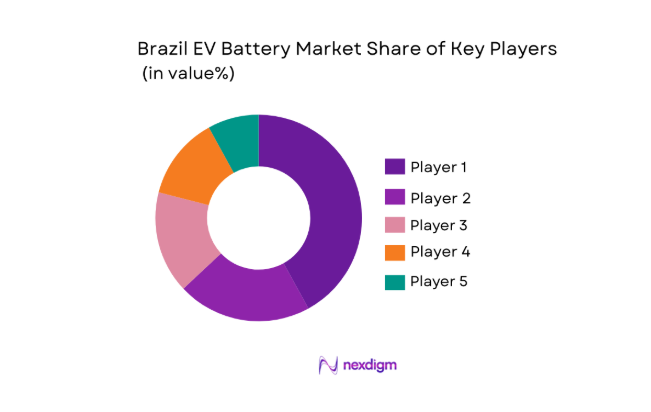
Brazil EV Battery Market Analysis
Growth Drivers
Government Incentives
The Brazil EV Battery market is heavily influenced by government incentives, which have created an enabling environment for electric vehicle adoption. These incentives include tax credits, rebates, and grants that make electric vehicles and their charging infrastructure more affordable for both consumers and manufacturers. This financial support reduces the upfront cost of EVs, encouraging more consumers to make the switch from traditional vehicles. Furthermore, the Brazilian government has set ambitious environmental targets, including reducing greenhouse gas emissions, which align with the global push toward clean energy solutions. These regulatory efforts have motivated both local and international companies to increase their investments in electric vehicle production and battery technology. Additionally, local governments are also providing funding for the installation of charging stations, further increasing the accessibility of electric vehicles. This comprehensive policy support is expected to continue driving market growth over the next few years.
Technological Advancements
Advancements in battery technology are one of the key drivers of the Brazil EV Battery market. Lithium-ion batteries, which are the primary power source for electric vehicles, continue to see improvements in efficiency, energy density, and cost reduction. As battery life improves, the range of electric vehicles increases, making them more practical for everyday use. Furthermore, innovations such as fast-charging technologies and wireless charging systems have enhanced the convenience of using electric vehicles. The ongoing development of solid-state batteries is expected to take EV technology to the next level, providing even higher energy densities, faster charging, and better safety compared to traditional lithium-ion batteries. These advancements, combined with lower manufacturing costs due to economies of scale, are helping to make electric vehicles more affordable and accessible to a broader consumer base in Brazil. As these technologies continue to evolve, the adoption of electric vehicles will become even more widespread, driving the demand for EV batteries in the country.
Market Challenges
High Initial Cost of EV Batteries
One of the primary challenges facing the Brazil EV Battery market is the high initial cost of electric vehicle batteries. Although the prices of EV batteries have dropped significantly in recent years, they still account for a substantial portion of the overall cost of an electric vehicle. This high initial investment is a barrier for many consumers who might be considering the switch to an electric vehicle but are unable to afford the upfront cost. Additionally, while government incentives can help offset some of these costs, they may not be sufficient to make EVs affordable for all segments of the population, particularly in lower-income regions of Brazil. The high cost of batteries also impacts the commercial adoption of electric vehicles, particularly in sectors like public transport and logistics, where fleets of vehicles are needed. To address this challenge, battery manufacturers need to continue improving the efficiency of their production processes and exploring new materials that could lower the cost of batteries without compromising performance.
Limited Charging Infrastructure
Another significant challenge for the Brazil EV Battery market is the limited availability of EV charging stations, particularly in rural and remote areas. Although major urban centers like São Paulo and Rio de Janeiro have seen a rise in the number of charging stations, the overall infrastructure remains inadequate to support widespread EV adoption across the country. This lack of charging infrastructure creates range anxiety for potential electric vehicle owners, limiting the growth of the market. Consumers and businesses are hesitant to invest in electric vehicles if they are unsure of where they can charge them, particularly for long trips outside major cities. To address this challenge, there is a need for substantial investment in the development of a nationwide EV charging network that can provide convenient and accessible charging points in both urban and rural areas. This expansion of infrastructure will be critical to unlocking the full potential of the Brazil EV Battery market.
Opportunities
Battery Recycling
One of the key opportunities in the Brazil EV Battery market is the growing focus on battery recycling and second-life applications for EV batteries. As the number of electric vehicles on the road continues to increase, so does the demand for efficient and sustainable methods of handling used batteries. Battery recycling not only helps reduce environmental impact but also provides a source of valuable materials, such as lithium, cobalt, and nickel, which are used in battery production. The Brazilian government has already shown interest in promoting recycling initiatives, and private companies are also exploring ways to repurpose used batteries for energy storage solutions. As more companies invest in battery recycling technologies and infrastructure, the market for recycled materials is expected to grow. This presents a significant opportunity for companies in the EV battery supply chain to tap into a new revenue stream while contributing to sustainability efforts in the electric vehicle ecosystem.
Partnerships with Local Manufacturers
Another opportunity in the Brazil EV Battery market is the potential for partnerships with local manufacturers to increase the production of EV batteries domestically. Currently, much of the raw material and battery manufacturing is imported, which increases the cost and time required to bring EV batteries to market. However, as demand for electric vehicles grows, there is an opportunity for global players to partner with local manufacturers in Brazil to establish a more localized supply chain for EV batteries. These partnerships could lead to reduced production costs, greater supply chain security, and the ability to more quickly respond to the growing demand for electric vehicles. Additionally, these partnerships could help Brazil strengthen its position in the global electric vehicle market, as the country’s automotive and battery industries develop a reputation for innovation and sustainability.
Future Outlook
The Brazil EV Battery market is expected to continue its upward trajectory over the next five years, driven by ongoing technological advancements, favorable government policies, and the increasing adoption of electric vehicles. As the cost of EV batteries continues to decrease and charging infrastructure expands, the market will become more accessible to a wider consumer base. The Brazilian government’s support for sustainable energy solutions and its push for electric mobility will further accelerate market growth. Furthermore, partnerships between battery manufacturers and local industries will play a key role in ensuring a reliable supply of batteries to meet the growing demand.
Major Players
- BYD Auto Co. Ltd.
- Tesla Inc.
- LG Chem Ltd.
- Samsung SDI Co. Ltd.
- Contemporary Amperex Technology Co. Ltd. (CATL)
- Panasonic Corporation
- SK Innovation Co. Ltd.
- Northvolt AB
- EVE Energy Co. Ltd.
- Guoxuan Hi-Tech Power Energy Co. Ltd.
- A123 Systems LLC
- Envision AESC
- Saft Groupe S.A.
- Porsche AG
- General Motors
Key Target Audience
- Investments and venture capitalist firms
- Government and regulatory bodies
- Electric vehicle manufacturers
- Public transport agencies
- Automotive component suppliers
- Energy storage system providers
- Battery technology developers
- Logistics and fleet operators
Research Methodology
Step 1: Identification of Key Variables
Identify key variables affecting market growth, such as government policies, technology trends, and consumer behavior.
Step 2: Market Analysis and Construction
Analyze market data from various sources to construct a comprehensive view of market trends, size, and segmentation.
Step 3: Hypothesis Validation and Expert Consultation
Validate market hypotheses through consultations with industry experts, stakeholders, and market leaders.
Step 4: Research Synthesis and Final Output
Synthesize findings to produce the final market report, ensuring accuracy, relevance, and clarity.

- Executive Summary
- Research Methodology (Definitions, Scope, Industry Assumptions, Market Sizing Approach, Primary & Secondary Research Framework, Data Collection & Verification Protocol, Analytic Models & Forecast Methodology, Limitations & Research Validity Checks)

- Market Definition and Scope
- Value Chain & Stakeholder Ecosystem
- Regulatory / Certification Landscape
- Sector Dynamics Affecting Demand
- Strategic Initiatives & Infrastructure Growth

- Growth Drivers
Government Subsidies and Incentives for EV Adoption
Increasing Demand for Sustainable Transportation
Technological Advancements in Battery Efficiency
Rising Fuel Prices and Operational Cost of Traditional Vehicles
Improved Charging Infrastructure and Accessibility - Market Challenges
High Initial Cost of EV Batteries
Limited Raw Material Availability for Battery Manufacturing
Dependency on Import of Raw Materials and Components
Slow Adoption in Rural and Remote Areas
Battery Recycling and Disposal Challenges - Market Opportunities
Expansion of Battery Leasing Models
Partnerships for Localized Battery Production
Investment in Battery Recycling Technologies - Trends
Shift Toward Sustainable and Clean Energy Solutions
Growing Investments in EV Charging Infrastructure
Rising Popularity of Energy Storage Solutions
Advancements in Battery Reuse and Recycling Technologies
Emergence of Wireless EV Charging Systems - Government Regulations & Defense Policy
Environmental Regulations Supporting EV Adoption
Tax Rebate Policies and Incentives for EV Purchases
EV-Related Infrastructure Development Programs - SWOT Analysis
- Stakeholder and Ecosystem Analysis
- Porter’s Five Forces Analysis
- Competition Intensity and Ecosystem Mapping

- By Market Value, 2020-2025
- By Installed Units, 2020-2025
- By Average System Price, 2020-2025
- By System Complexity Tier, 2020-2025

- By System Type (In Value%)
Lithium-Ion Batteries
Solid-State Batteries
Nickel-Cobalt-Manganese Batteries
Lithium Iron Phosphate Batteries
Lead-Acid Batteries - By Platform Type (In Value%)
Passenger Vehicles
Electric Buses
Electric Two-Wheelers
Electric Trucks
Energy Storage Systems - By Fitment Type (In Value%)
OEM Batteries
Aftermarket Batteries
Integrated Batteries
Battery Leasing Systems
Modular Batteries - By End User Segment (In Value%)
Automotive Manufacturers
Electric Vehicle Owners
Public Transport Operators
Energy Storage Providers
Battery Manufacturers - By Procurement Channel (In Value%)
Direct Procurement from Manufacturers
Third-Party Distributors
Online Bidding Platforms
Government Tenders
Private Sector Procurement - By Material / Technology (in Value%)
Lithium Materials
Nickel Materials
Cobalt Materials
Battery Management Systems (BMS)
Charging Infrastructure Technology

- Market structure and competitive positioning
Market share snapshot of major players - Cross Comparison Parameters (System Type, Platform Type, Procurement Channel, End User Segment, Fitment Type)
- SWOT Analysis of Key Competitors
- Pricing & Procurement Analysis
- Key Players
BYD Auto Co. Ltd.
Tesla Inc.
LG Chem Ltd.
Samsung SDI Co. Ltd.
Contemporary Amperex Technology Co. Ltd. (CATL)
Panasonic Corporation
SK Innovation Co. Ltd.
Northvolt AB
EVE Energy Co. Ltd.
Guoxuan Hi-Tech Power Energy Co. Ltd.
A123 Systems LLC
Envision AESC
Saft Groupe S.A.
Porsche AG
General Motors

- Increased EV Production Demand from Automotive Manufacturers
- Rising Consumer Demand for Eco-friendly Vehicles
- Public Transport Operators Switching to EV Fleets
- Growth of Energy Storage Systems for Renewable Energy Integration

- Forecast Market Value, 2026-2035
- Forecast Installed Units, 2026-2035
- Price Forecast by System Tier, 2026-2035
- Future Demand by Platform, 2026-2035


 Request a Sample
 Ask for Customization
 Get a Quote
 Enquire Now