

 Download PDF
Market Overview
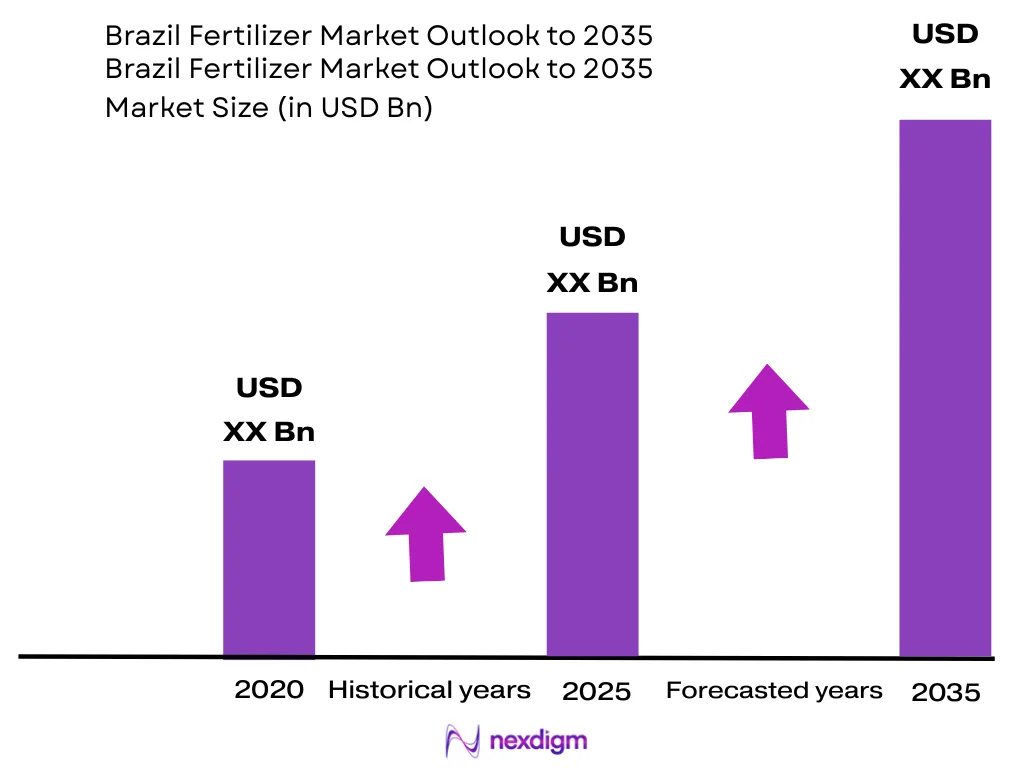
The Brazil fertilizer market is one of the largest agricultural input markets globally, supported by the country’s position as a leading producer of soybeans, corn, sugarcane, cotton, and coffee. Brazil cultivated more than 96 million hectares of grain crops and produced over 320 million metric tons of grains, creating substantial demand for nutrient replenishment and soil fertility management. Fertilizer consumption exceeded 45 million metric tons, driven by expanding agricultural acreage, rising crop productivity requirements, increasing adoption of precision farming technologies, and government initiatives aimed at strengthening domestic fertilizer production and reducing import dependency.
Market Segmentation
By Nutrient Type
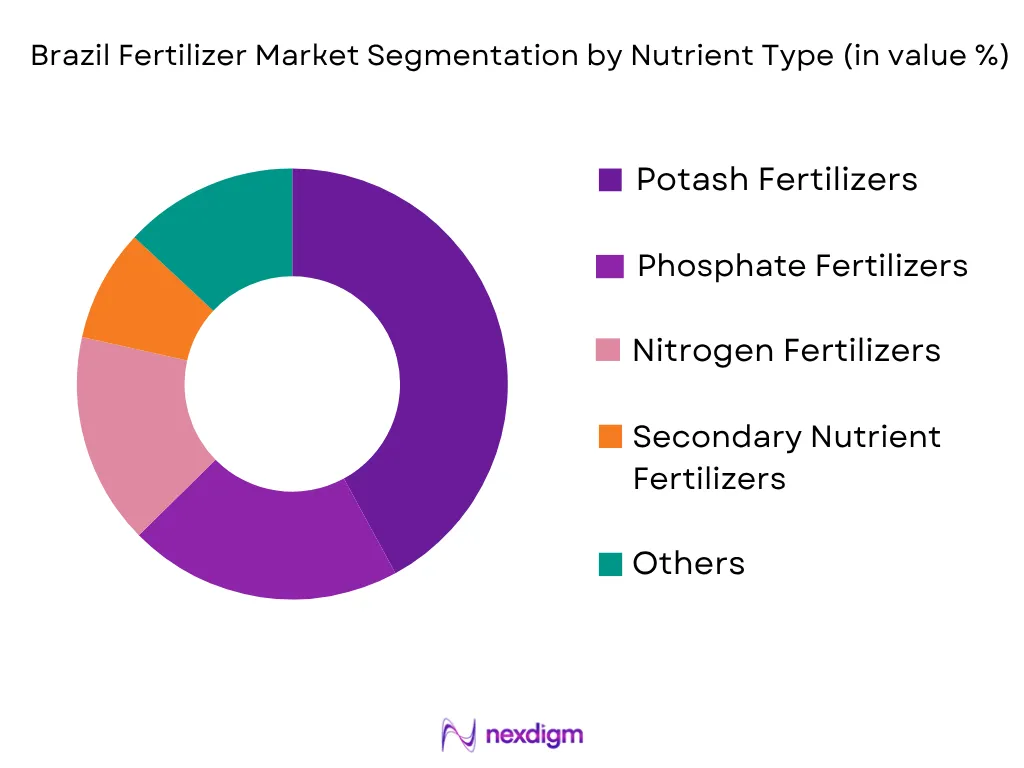
Potash fertilizers dominate the Brazil fertilizer market due to the country’s extensive cultivation of potassium-intensive crops such as soybeans, corn, sugarcane, and coffee. Brazilian soils are naturally deficient in potassium, making regular application essential for achieving high crop yields and maintaining soil productivity. The widespread adoption of intensive farming systems and multiple-cropping practices further increases potassium demand. Additionally, Brazil’s agricultural export orientation encourages producers to maximize productivity, leading to consistent consumption of potash-based fertilizers across large-scale farming operations. Strong agronomic recommendations and the need to improve nutrient-use efficiency continue to support the dominance of the potash fertilizer segment.
By Crop Type
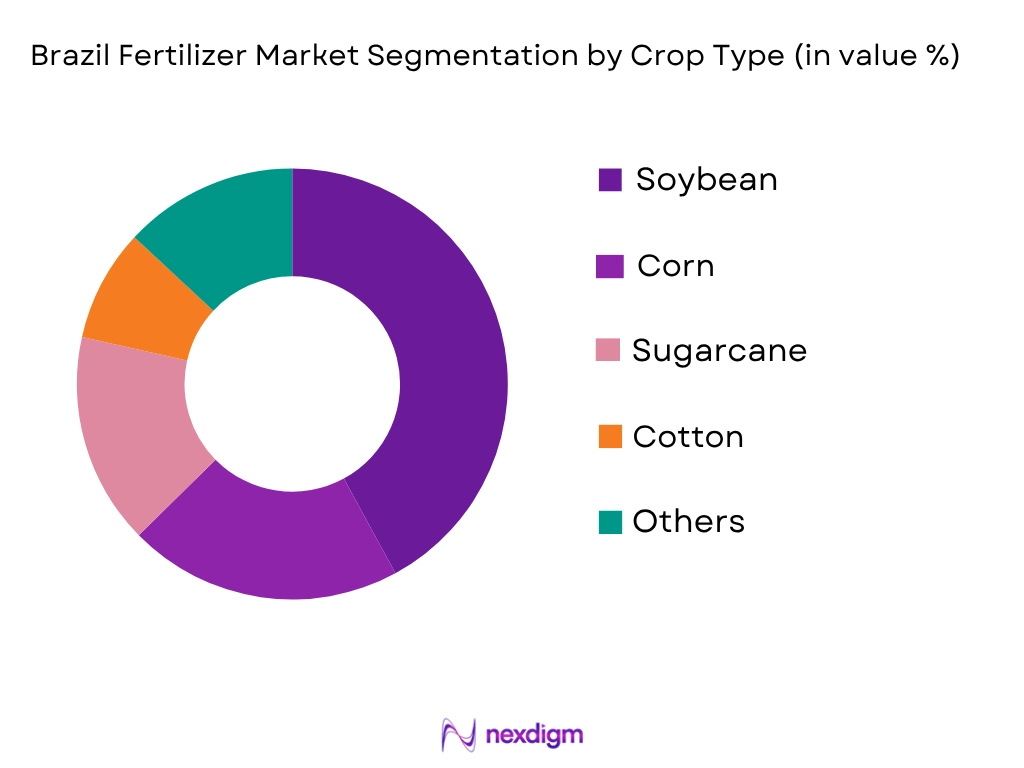
Soybean represents the dominant crop segment within the Brazil fertilizer market because Brazil is the world’s largest soybean producer and exporter. The crop occupies the largest share of cultivated agricultural land and requires significant nutrient application to sustain productivity across multiple growing seasons. Large-scale commercial farms in Mato Grosso, Goiás, Paraná, and Rio Grande do Sul heavily depend on balanced fertilization programs involving potassium, phosphorus, and micronutrients. Rising global demand for soybean meal and soybean oil has encouraged producers to expand cultivation areas and improve yields through advanced nutrient management practices. Consequently, soybean farming remains the largest contributor to fertilizer consumption throughout the country.
Competitive Landscape
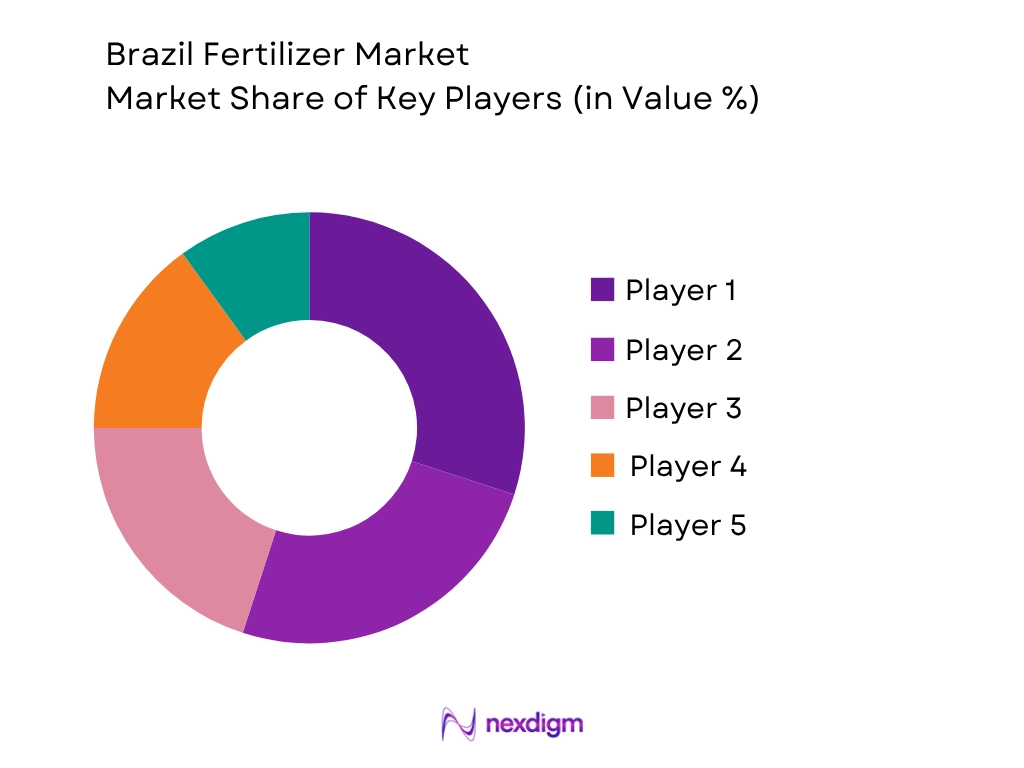
The Brazil fertilizer market is relatively concentrated, with major multinational fertilizer producers and domestic blending companies controlling a substantial portion of production, imports, distribution, and agricultural service activities. Companies compete through extensive distribution networks, agronomic consulting services, blending capabilities, import infrastructure, and crop-specific nutrient solutions. Strategic investments in domestic production, specialty fertilizers, and precision agriculture solutions continue to shape competitive dynamics across the market.
| Company | Establishment Year | Headquarters | Product Portfolio | Production & Blending Facilities
|
Import Infrastructure | Distribution Reach | Specialty Fertilizer Portfolio | Agronomic Support Network |
| Yara Brasil | 1905 | ~ | ~ | ~ | ~ | ~ | ~ | ~ |
| Mosaic Fertilizantes | 2004 | ~ | ~ | ~ | ~ | ~ | ~ | ~ |
| Nutrien Brasil | 2018 | ~ | ~ | ~ | ~ | ~ | ~ | ~ |
| EuroChem Brasil | 2001 | ~ | ~ | ~ | ~ | ~ | ~ | ~ |
| Cibra Fertilizantes | 1994 | ~ | ~ | ~ | ~ | ~ | ~ | ~ |
Brazil Fertilizer Market Analysis
Growth Drivers
Expansion of Soybean and Corn Cultivation
Brazil’s fertilizer market continues to be driven by the expansion of large-scale commercial agriculture, particularly soybean and corn cultivation. According to the Brazilian National Supply Company (CONAB), Brazil’s grain production reached more than 322 million metric tons in the 2024/25 crop cycle, while planted grain area exceeded 81 million hectares. Soybean production alone surpassed 167 million metric tons, maintaining Brazil’s position as the world’s largest soybean producer. These crops require intensive applications of nitrogen, phosphate, and potash fertilizers to sustain productivity and soil nutrient balance. The National Association for Fertilizer Diffusion (ANDA) reported fertilizer deliveries of 45.6 million metric tons in 2024, reflecting the substantial nutrient demand generated by Brazil’s agricultural sector. Mato Grosso, Paraná, Goiás, and Rio Grande do Sul remain among the largest fertilizer-consuming states due to their extensive cultivation areas. Additionally, Brazil’s GDP exceeded USD 2.18 trillion in 2024 according to the World Bank, supported partly by agribusiness exports. The combination of expanding cultivated land, increasing crop output, and the need to maintain global competitiveness in agricultural exports continues to create strong demand for fertilizer products across the country.
Rising Agricultural Export Demand and Food Production Requirements
Brazil’s position as one of the world’s largest agricultural exporters is significantly supporting fertilizer demand. According to the Ministry of Agriculture and Foreign Trade Secretariat, agribusiness exports exceeded USD 164 billion in 2024, with soybeans, corn, sugar, coffee, cotton, and meat products accounting for a substantial portion of export revenues. Brazil exported over 100 million metric tons of soybeans and more than 38 million metric tons of corn, requiring continuous nutrient replenishment to sustain productivity. The country’s population exceeded 212 million people, while global food demand continues to increase, encouraging producers to maximize yields from existing farmland. The International Monetary Fund reported stable economic activity and agricultural resilience despite climatic challenges, supporting continued investments in crop production. Fertilizer consumption remains closely linked to export-oriented farming systems because nutrient-intensive crops dominate Brazilian agriculture. Furthermore, the country’s grain storage capacity, transportation infrastructure, and export corridors have continued expanding, allowing producers to cultivate larger areas and intensify production. These developments reinforce the need for phosphate, potash, and nitrogen fertilizers, making agricultural export growth a key structural driver for the Brazil fertilizer market.
Market Challenges
Dependence on Imported Fertilizer Raw Materials
A major challenge facing the Brazil fertilizer market is its heavy reliance on imported fertilizer products and raw materials. According to ANDA, Brazil imported 41.35 million metric tons of fertilizer intermediates and finished products in 2024, while domestic production totaled only 7.22 million metric tons. This dependence exposes the market to global supply chain disruptions, geopolitical tensions, currency fluctuations, and international commodity price volatility. Data from Embrapa indicates that approximately 85% of the fertilizers used in Brazil originate from foreign suppliers, particularly for potash and nitrogen products. Potassium chloride imports remain especially critical because domestic reserves and production capacities are insufficient to meet agricultural demand. Since Brazil is one of the world’s largest agricultural producers, any disruption in fertilizer imports directly impacts planting decisions, nutrient application rates, and crop productivity. The country’s fertilizer logistics also rely heavily on port infrastructure and inland transportation systems. As fertilizer consumption exceeds 45 million metric tons annually, ensuring stable access to imported products remains a persistent challenge for manufacturers, distributors, and farmers operating throughout Brazil’s agricultural regions.
Logistics and Infrastructure Bottlenecks
Brazil’s fertilizer market faces ongoing logistical constraints due to the geographic concentration of agricultural production far from major import terminals and ports. According to the Ministry of Transport, Brazil maintains more than 1.7 million kilometers of roads, but a significant share of agricultural freight still depends on long-distance trucking routes. Major fertilizer-consuming states such as Mato Grosso and Goiás are located thousands of kilometers from coastal import hubs, increasing transportation complexity and delivery times. Fertilizer imports exceeded 41 million metric tons in 2024 according to ANDA, placing substantial pressure on ports, storage facilities, railways, and road networks. Seasonal demand peaks during planting periods frequently create congestion at key logistics corridors, particularly in the ports of Santos, Paranaguá, and Itaqui. Additionally, climate-related disruptions such as flooding in southern Brazil have highlighted vulnerabilities within transportation infrastructure. The International Monetary Fund noted that weather-related events affected agricultural operations and economic activity in several regions. As fertilizer demand continues to rise alongside agricultural production, investments in transportation networks, storage infrastructure, and multimodal logistics systems remain essential to address supply chain inefficiencies and ensure timely product availability.
Market Opportunities
Expansion of Domestic Fertilizer Production Capacity
The growing emphasis on reducing import dependence presents a significant opportunity for the Brazil fertilizer market. According to ANDA, domestic production of fertilizer intermediates reached approximately 7.22 million metric tons in 2024, while total fertilizer demand exceeded 45 million metric tons. This production gap has encouraged both public and private sector investments in local manufacturing facilities, phosphate mining projects, nitrogen production units, and potash development initiatives. The National Fertilizer Plan seeks to strengthen domestic supply security and improve self-sufficiency in critical nutrients. Brazil possesses substantial phosphate reserves and significant agricultural biomass resources that can support alternative fertilizer production. Recent investments in organomineral and biological fertilizers also demonstrate efforts to diversify nutrient sources. The country’s large agricultural base, extensive crop acreage, and stable demand provide favorable conditions for capacity expansion. Increasing domestic production would not only reduce exposure to international supply shocks but also improve supply chain resilience and create additional industrial development opportunities. These factors position local manufacturing expansion as one of the most important long-term opportunities within the Brazilian fertilizer industry.
Growth of Specialty, Biological, and Sustainable Fertilizers
The transition toward sustainable agriculture and improved nutrient-use efficiency is creating strong opportunities for specialty fertilizer products in Brazil. The country cultivates more than 80 million hectares of grain crops, creating substantial demand for advanced nutrient solutions that enhance productivity while reducing environmental impact. Biological fertilizers, micronutrients, controlled-release fertilizers, and organomineral products are gaining attention as farmers seek higher efficiency and improved soil health. Brazil is also one of the world’s largest producers of sugarcane, generating significant volumes of agricultural residues that can be utilized in sustainable fertilizer production. Emerging projects focused on converting sugarcane waste into fertilizer products highlight the growing interest in circular economy solutions within the agricultural sector. Additionally, precision agriculture technologies are expanding across large commercial farms, enabling more targeted fertilizer applications and increasing demand for customized nutrient blends. Supported by strong agricultural production, rising environmental awareness, and ongoing innovation in crop nutrition, specialty and sustainable fertilizer categories are positioned for substantial expansion within Brazil’s broader fertilizer market ecosystem.
Future Outlook
The Brazil fertilizer market is expected to witness sustained growth over the forecast period due to expanding agricultural production, increasing adoption of precision farming technologies, and growing demand for higher crop yields. Government initiatives under the National Fertilizer Plan are expected to encourage domestic production and reduce import dependence. Rising demand for specialty fertilizers, micronutrients, biological solutions, and controlled-release products will further support market expansion. Additionally, technological advancements in nutrient management and increasing investments in agricultural sustainability are likely to strengthen long-term market prospects.
Major Players
- Yara Brasil
- Mosaic Fertilizantes
- Nutrien Brasil
- EuroChem Brasil
- Cibra Fertilizantes
- Fertipar
- Heringer
- ICL América do Sul
- Compass Minerals Brasil
- ADM Fertilizantes
- Ubyfol Agroquímica
- Casa do Adubo
- AgroGalaxy Fertilizantes
- Petrobras Fertilizantes
- Ourofino Agronegócio
Key Target Audience
- Fertilizer Manufacturers
- Agricultural Input Distributors and Retailers
- Commercial Farming Enterprises
- Agribusiness Cooperatives
- Investments and Venture Capitalist Firms
- Government and Regulatory Bodies (Ministry of Agriculture and Livestock – MAPA, National Fertilizer Council, Ministry of Development, Industry, Trade and Services)
- Fertilizer Importers and Exporters
- Precision Agriculture Technology Providers
Research Methodology
Step 1: Identification of Key Variables
The initial phase involves constructing an ecosystem map encompassing all major stakeholders within the Brazil Fertilizer Market. Extensive secondary research is conducted through industry publications, government databases, company annual reports, trade associations, and agricultural statistics. The objective is to identify critical variables influencing fertilizer demand, supply, pricing, imports, and crop production.
Step 2: Market Analysis and Construction
This phase focuses on gathering and analyzing historical information regarding fertilizer production, imports, nutrient consumption, crop acreage, and agricultural output. Market revenues are estimated through analysis of fertilizer volumes, average selling prices, and nutrient demand trends. Both supply-side and demand-side assessments are incorporated to develop comprehensive market estimates.
Step 3: Hypothesis Validation and Expert Consultation
Preliminary findings and market assumptions are validated through structured interviews with fertilizer manufacturers, distributors, agricultural cooperatives, agronomists, and industry specialists. These consultations provide valuable insights into purchasing patterns, nutrient application trends, production economics, and future market developments.
Step 4: Research Synthesis and Final Output
The final stage integrates findings obtained from primary and secondary research. Data triangulation techniques are applied to ensure consistency and reliability across all market estimates. The resulting report provides a comprehensive assessment of market structure, competitive dynamics, growth opportunities, and long-term industry outlook for the Brazil Fertilizer Market.

- Executive Summary
- Research Methodology (Market Definitions and Assumptions, Abbreviations, Market Sizing Approach, Top-Down Analysis, Bottom-Up Analysis, Fertilizer Demand Assessment by Crop Area, Nutrient Consumption Analysis, Import-Export Assessment, Primary Industry Interviews, Data Triangulation, Forecasting Framework, Limitations and Future Conclusions)

- Definition and Scope
- Market Evolution and Industry Genesis
- Timeline of Major Industry Developments
- Brazil Agricultural Production Ecosystem
- Fertilizer Industry Value Chain Analysis

- Growth Drivers (Growth in Soybean Cultivation Area, Expansion of Corn Production, Rising Yield Optimization Requirements, Increasing Adoption of Precision Agriculture, Government Support for Domestic Fertilizer Production, Growth in Export-Oriented Agriculture)
- Market Challenges (Dependence on Imported Potash, Volatility in Global Fertilizer Prices, Currency Exchange Rate Fluctuations, Logistics Bottlenecks, Environmental Compliance Costs)
- Market Opportunities (Domestic Potash Mining Projects, Specialty Fertilizer Expansion, Biofertilizer Adoption, Organomineral Fertilizer Development, Precision Nutrient Management Solutions)
- Market Trends (Increased Use of Enhanced Efficiency Fertilizers, Digital Agriculture Integration, Customized Nutrient Blends, Carbon-Efficient Crop Nutrition, Expansion of Biological Inputs)
- Government Regulations (National Fertilizer Plan, MAPA Registration Requirements, Environmental Licensing Standards, Nutrient Quality Regulations, Import and Trade Policies)
- Import Dependency Assessment (Potash Import Ratio, Phosphate Import Ratio, Nitrogen Import Ratio, Supplier Country Concentration)
- Raw Material Analysis (Natural Gas Availability, Phosphate Rock Supply, Potash Reserves, Sulfur Availability)
- Fertilizer Consumption Intensity Analysis (Kg per Hectare, Nutrient Use Efficiency, Crop-Wise Consumption, Regional Application Rates)
- Price Trend Analysis (Urea Prices, MAP Prices, DAP Prices, Potash Prices, NPK Prices)
- Supply-Demand Gap Analysis (Domestic Production Capacity, Installed Capacity Utilization, Import Requirements, Inventory Levels)
- SWOT Analysis
- Porter’s Five Forces Analysis
- PESTLE Analysis
- Stakeholder Ecosystem
- Competition Ecosystem

- By Market Value (2020-2025)
- By Production Volume (2020-2025)
- By Average Selling Price (2020-2025)

- By Nutrient Type (In Value %)
Nitrogen Fertilizers
Phosphate Fertilizers
Potash Fertilizers
Secondary Nutrient Fertilizers
Micronutrient Fertilizers
Specialty and Customized Fertilizers - By Application Method (In Value %)
Soil Application
Fertigation
Foliar Application
Seed Treatment
Precision Agriculture Application - By Crop Type (In Value %)
Soybean
Corn
Sugarcane
Coffee
Cotton
Wheat
Fruits and Vegetables
Pasture and Forage Crops
Others - By Region (In Value %)
Midwest (Centro-Oeste)
South
Southeast
Northeast
North - By Distribution Channel (In Value %)
Cooperatives
Agricultural Retailers
Direct Sales by Manufacturers
Distributors and Wholesalers
Digital Agricultural Platforms

- Market Share Analysis of Major Players (By Value, By Volume, Nutrient Segment, Crop Segment, By Region)
- Market Concentration Analysis
- Cross Comparison Parameters (Product Portfolio Diversity, Annual Fertilizer Production Capacity, Blending Capacity, Import Terminal Infrastructure, Distribution Network Reach, Agronomic Technical Service Coverage, Specialty Fertilizer Portfolio Strength, Crop-Specific Nutrient Solution Capability)
- SWOT Analysis of Major Players
- Pricing Analysis by Product Type and Nutrient Grade
- Detailed Profiles of Major Companies
Yara Brasil
Mosaic Fertilizantes
Nutrien Brasil
EuroChem Brasil
Fertipar
Heringer
Ourofino Agronegócio
ICL América do Sul
Compass Minerals Brasil
ADM Fertilizantes
Ubyfol Agroquímica
Casa do Adubo
Cibra Fertilizantes
AgroGalaxy Fertilizantes
Petrobras Fertilizantes (Araucária Nitrogenados)

- Crop Nutrient Consumption Assessment (Crop Area, Yield Targets, Nutrient Removal Rates, Fertilizer Intensity)
- Farm Size Analysis (Small Farms, Medium Farms, Large Commercial Farms)
- Purchasing Power Analysis (Farm Income Levels, Credit Availability, Fertilizer Budget Allocation)
- Seasonal Demand Assessment (Planting Cycles, Crop Calendar, Procurement Patterns)
- Farmer Purchasing Behavior (Brand Preference, Nutrient Preference, Price Sensitivity)
- Precision Agriculture Adoption Analysis (GPS-Based Application, Variable Rate Technology, Digital Farm Management)
- Sustainability Adoption Analysis (Carbon Reduction Practices, Soil Health Management, Regenerative Agriculture)
- Pain Point Analysis (Input Costs, Nutrient Availability, Logistics Challenges, Agronomic Support)
- Purchase Decision-Making Process

- By Market Value (2026-2035)
- By Production Volume (2026-2035)
- By Average Selling Price (2026-2035)


 Request a Sample
 Ask for Customization
 Get a Quote
 Enquire Now