
 Download PDF
Market Overview
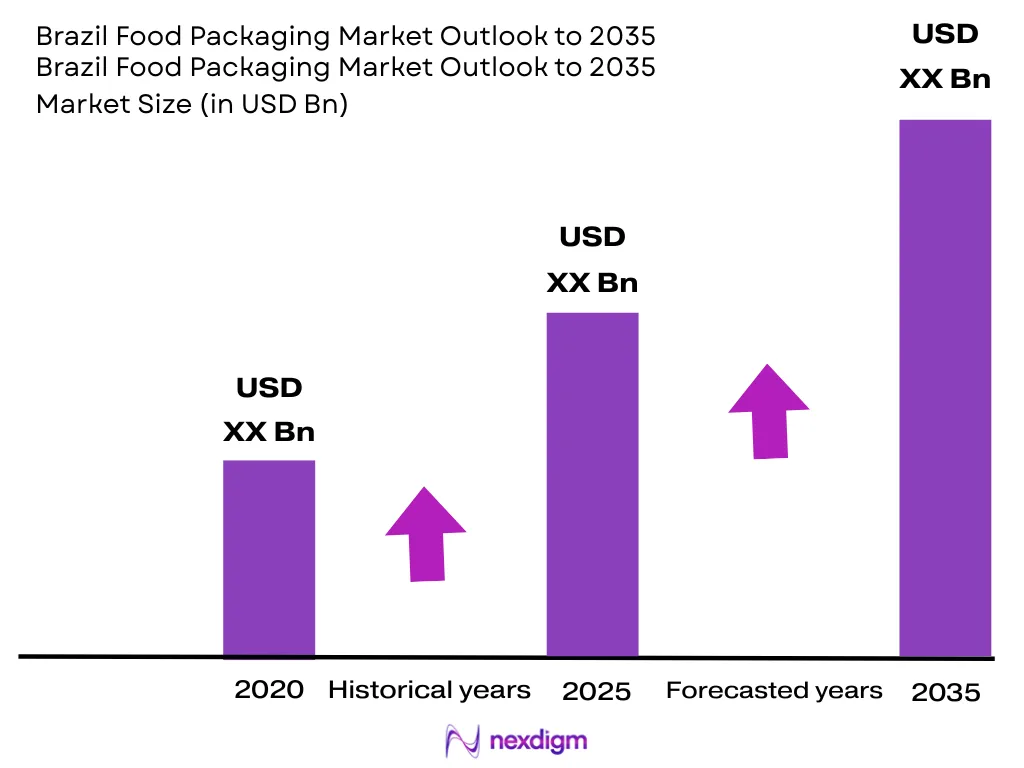
The Brazil Food Packaging Market is valued at approximately USD ~ Billion in 2024 and is expected to grow at a CAGR of ~% during 2026–2035. The market size is primarily driven by the country’s expanding packaged food industry, rising processed food production, and increasing consumption of convenience foods. According to the Brazilian Food Industry Association (ABIA), Brazil’s food and beverage industry generated BRL 1.277 trillion in revenue in 2024, compared with approximately BRL 1.21 trillion in 2023, accounting for one of the country’s largest manufacturing industries. Additionally, the Brazilian Institute of Geography and Statistics (IBGE) reported continued growth in industrial food production, while ANVISA regulations have encouraged greater adoption of high-performance food packaging solutions, supporting sustained demand across flexible, rigid, and sustainable packaging formats.
Market Segmentation
By Packaging Material
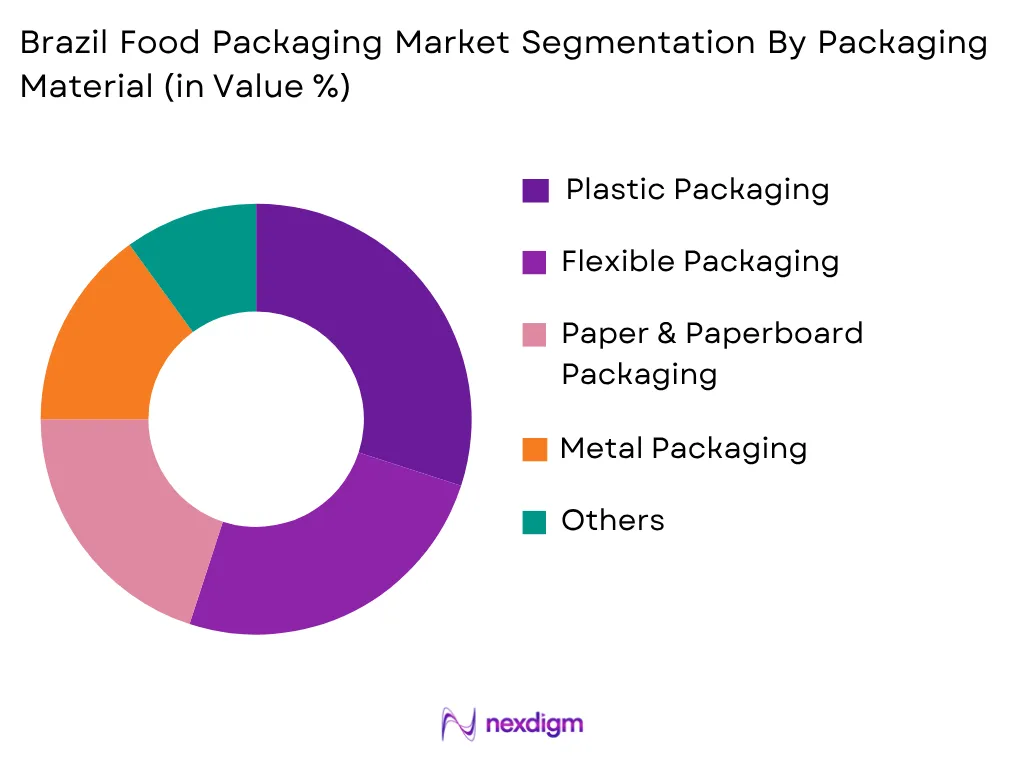
The Brazil Food Packaging Market is segmented by packaging material into plastic packaging, flexible packaging, paper & paperboard packaging, metal packaging, glass packaging, and bio-based & compostable packaging. Plastic packaging dominates the market due to its versatility, lightweight characteristics, superior moisture resistance, and cost-effectiveness across multiple food applications. Polyethylene (PE), polypropylene (PP), and polyethylene terephthalate (PET) remain the preferred materials for dairy products, meat, beverages, frozen foods, and snacks because they provide extended shelf life while minimizing transportation costs. Brazil’s well-developed polymer manufacturing ecosystem and strong domestic resin production support the widespread availability of plastic packaging. Furthermore, continuous innovations in recyclable mono-material plastics and post-consumer recycled (PCR) content have enabled manufacturers to balance sustainability goals with functional performance, reinforcing the segment’s leading position in the market.
By Food Application
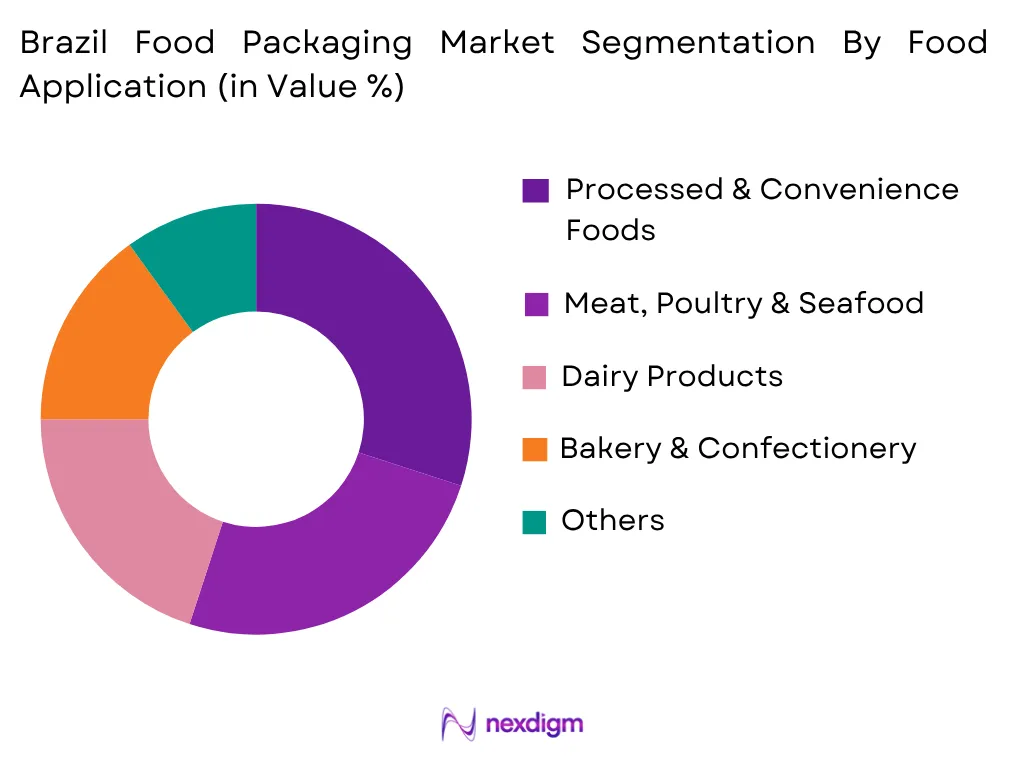
The Brazil Food Packaging Market is segmented by food application into processed & convenience foods, meat, poultry & seafood, dairy products, bakery & confectionery, snacks & savory foods, fruits & vegetables, frozen foods, dry grocery products, and baby food. The processed & convenience foods segment holds the dominant market share owing to changing consumer lifestyles, rapid urbanization, and growing demand for ready-to-eat and ready-to-cook food products. Manufacturers increasingly require high-barrier, lightweight, and microwave-compatible packaging solutions that improve shelf life and maintain food quality throughout distribution. The rapid expansion of organized retail chains, e-commerce grocery platforms, and food delivery services has further increased the adoption of innovative packaging formats such as stand-up pouches, trays, and modified atmosphere packaging (MAP). Continuous product launches within the convenience food category continue to generate significant demand for advanced food packaging technologies across Brazil.
Competitive Landscape
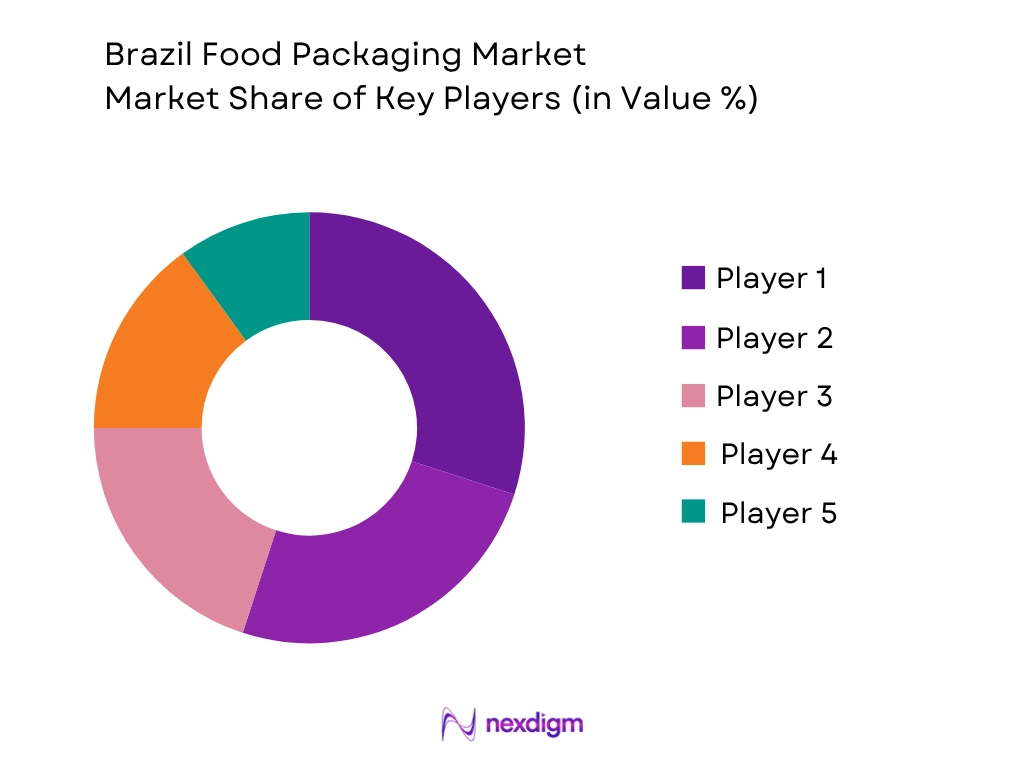
The Brazil Food Packaging Market is moderately consolidated, with multinational packaging manufacturers competing alongside well-established domestic producers. Leading companies leverage extensive manufacturing footprints, diversified packaging portfolios, sustainable packaging innovations, and long-term partnerships with major food processing companies. Competitive differentiation is increasingly centered on recyclable packaging materials, lightweight designs, smart packaging technologies, and investments in circular economy initiatives. Companies are also expanding production capacities and incorporating post-consumer recycled materials to comply with evolving environmental regulations while meeting the growing sustainability requirements of food manufacturers.
| Company | Establishment Year | Headquarters | Primary Product Portfolio | Food Packaging Portfolio
|
Manufacturing Presence | Major End-Use Industries | Key Strategic Focus | Certifications & Compliance |
| Amcor plc | 1860 | ~ | ~ | ~ | ~ | ~ | ~ | ~ |
| Tetra Pak | 1951 | ~ | ~ | ~ | ~ | ~ | ~ | ~ |
| SIG Group | 1853 | ~ | ~ | ~ | ~ | ~ | ~ | ~ |
| Klabin S.A. | 1899 | ~ | ~ | ~ | ~ | ~ | ~ | ~ |
| Valgroup | 1976 | ~ | ~ | ~ | ~ | ~ | ~ | ~ |
Brazil Food Packaging Market Analysis
Growth Drivers
Expansion of Processed Food Industry
Brazil’s expanding food processing industry continues to be the strongest demand generator for food packaging, as every additional unit of processed food requires primary, secondary, or tertiary packaging for preservation, transportation, and regulatory compliance. According to the Brazilian Food Industry Association (ABIA), the country’s food and beverage industry generated BRL 1.277 trillion in revenue during 2024, making it the largest manufacturing industry in Brazil. The sector also accounted for approximately 10.8% of Brazil’s GDP and employed around 2.08 million direct workers, demonstrating the scale of food manufacturing activities requiring packaging materials. Brazil maintained its position as one of the world’s largest food exporters, with agricultural and food exports remaining a major contributor to international trade. According to the World Bank, Brazil’s GDP reached approximately USD 2.33 trillion in 2024, supported by resilient agricultural and industrial production that increased demand for packaged food products across domestic and export markets. Furthermore, the Brazilian Institute of Geography and Statistics (IBGE) reported continued expansion in food manufacturing output during 2024, particularly in meat processing, dairy products, bakery products, and beverages, all of which rely heavily on high-barrier plastic films, paperboard cartons, metal cans, glass containers, and flexible packaging. As food processors continue investing in automation, product diversification, and export-ready production facilities, packaging demand grows proportionally because food safety regulations require improved shelf-life, traceability, and transportation durability for packaged products. These structural developments continue to create sustained demand for food packaging manufacturers across Brazil.
Rising Demand for Sustainable Food Packaging
Sustainability initiatives are becoming a major growth driver for Brazil’s food packaging market as manufacturers increasingly transition toward recyclable, reusable, and lower-carbon packaging materials. Brazil operates one of the world’s most established recycling ecosystems for beverage containers, particularly aluminum. According to the Brazilian Aluminum Association (ABAL), the country recycled more than 390,000 tonnes of aluminum beverage cans during 2024, maintaining one of the highest aluminum can recycling volumes globally. At the same time, the National Solid Waste Policy (PNRS) continues to encourage reverse logistics and circular economy practices across packaging industries. According to the World Bank, Brazil’s urban population exceeded 186 million people in 2024, creating growing demand for packaged food while simultaneously increasing pressure on municipalities to improve waste management systems. The country’s expanding urban middle class increasingly purchases packaged food products from supermarkets, convenience stores, and e-commerce channels, encouraging food manufacturers to adopt recyclable paperboard, mono-material flexible packaging, post-consumer recycled (PCR) plastics, and bio-based alternatives. Additionally, ANVISA continues updating food-contact material regulations to ensure packaging safety alongside environmental compliance. Major packaging manufacturers operating in Brazil have accelerated investments in recyclable flexible packaging, lightweight packaging structures, and circular material recovery systems to meet evolving sustainability requirements from multinational food companies. These regulatory developments and infrastructure improvements continue to stimulate innovation throughout Brazil’s food packaging value chain while supporting long-term demand for environmentally responsible packaging solutions.
Market Challenges
Volatility in Raw Material Prices
The Brazil Food Packaging Market is significantly affected by volatility in the prices of key raw materials such as polyethylene (PE), polypropylene (PP), polyethylene terephthalate (PET), aluminum, paperboard, and glass, as these materials constitute a substantial share of packaging production inputs. Although Brazil has a well-established petrochemical and paper industry, manufacturers remain exposed to fluctuations in global crude oil prices, exchange rate movements, and imported specialty materials. According to the World Bank, the Brazilian Real depreciated to approximately R$6.19 per US dollar by the end of 2024, while the country’s current account deficit reached 2.8% of GDP, increasing the cost of imported machinery, additives, specialty resins, inks, adhesives, and barrier coating materials used in food packaging production. Additionally, the Brazilian Institute of Geography and Statistics (IBGE) continues to monitor rising producer prices across manufacturing industries through its Producer Price Index, reflecting input cost pressures experienced by industrial manufacturers. These cost fluctuations create procurement uncertainty for packaging converters, particularly those supplying long-term contracts to food manufacturers where pricing adjustments cannot always be passed on immediately. The volatility also affects investment planning, inventory management, and production scheduling, encouraging manufacturers to diversify raw material sourcing and improve operational efficiency to maintain profitability while meeting food industry quality requirements.
Recycling Infrastructure Limitations
Despite increasing regulatory emphasis on circular economy practices, limitations in Brazil’s recycling and waste management infrastructure continue to challenge the food packaging industry, particularly for flexible plastics and multilayer packaging materials. While Brazil has achieved notable success in recycling certain materials such as aluminum beverage cans, collection and processing capacity for plastic films, laminated packaging, and food-contaminated packaging remains uneven across municipalities. Recognizing these constraints, the Ministry of Development, Industry, Trade and Services (MDIC) extended the 18% import duty on paper, plastic, and glass waste in 2024 to strengthen the domestic recycling chain and reduce dependence on imported recyclable materials. The Ministry also reported that, following the implementation of the measure, imports of paper waste declined by 48.3% and plastic waste imports decreased by 33% between August 2023 and May 2024, highlighting ongoing efforts to support Brazil’s domestic recycling ecosystem. However, regional disparities in waste collection, sorting infrastructure, and recycling capacity continue to limit the availability of high-quality recycled feedstock required for food-grade packaging applications. These infrastructure gaps increase manufacturers’ dependence on virgin raw materials and slow the broader adoption of post-consumer recycled (PCR) content in food packaging, particularly for flexible packaging formats that require advanced recycling technologies.
Market Opportunities
Smart Packaging and Advanced Barrier Technologies
The increasing modernization of Brazil’s food industry is creating substantial opportunities for smart packaging and advanced barrier technologies that improve food safety, traceability, and shelf-life. Brazil’s food manufacturers are investing heavily in production modernization, directly increasing the demand for intelligent food packaging solutions. According to the Brazilian Food Industry Association (ABIA), the Brazilian food and beverage industry announced BRL 120 billion in investments through 2026, of which approximately BRL 75 billion is allocated toward expanding and modernizing manufacturing plants and BRL 45 billion toward innovation, research, and development. These investments encourage the adoption of high-barrier films, modified atmosphere packaging (MAP), intelligent labels, QR-code traceability, and digital printing technologies that require advanced packaging materials. Furthermore, the World Bank’s Country Partnership Framework (2024-2028) identifies industrial productivity, digital transformation, and sustainable manufacturing among Brazil’s strategic priorities, creating a favorable environment for packaging technology providers. As food exporters increasingly comply with international food safety and traceability standards, packaging companies capable of supplying intelligent, high-performance packaging solutions are well positioned to benefit from rising industrial investment and modernization across Brazil’s food manufacturing ecosystem.
Circular Economy and Bio-based Packaging Development
Brazil’s transition toward a low-carbon and circular economy presents significant long-term opportunities for manufacturers producing recyclable, renewable, and bio-based food packaging materials. In 2024, the Federal Government launched the National Bioeconomy Strategy under Decree No. 12,044, establishing a national framework to promote sustainable industrial production, bio-industrialization, renewable biological resources, and environmentally responsible manufacturing. The strategy encourages cooperation between government agencies, private industries, and research institutions to accelerate innovation in bio-based products, including sustainable packaging materials derived from renewable feedstocks. Additionally, the World Bank has strengthened its partnership with Brazil through its 2024–2028 Country Partnership Framework, prioritizing green industrial development, climate resilience, sustainable production, and private-sector competitiveness. Simultaneously, the World Bank approved a USD 1.602 billion program to strengthen Brazil’s agrifood system across 12 states, improving agricultural productivity, market access, and sustainable value chains that support the increasing production of renewable packaging feedstocks. These policy initiatives create favorable conditions for investments in compostable packaging, fiber-based packaging, sugarcane-derived bioplastics, and post-consumer recycled materials, positioning sustainable food packaging as one of the strongest future growth opportunities within Brazil’s packaging industry.
Future Outlook
The Brazil Food Packaging Market is expected to witness robust expansion over the forecast period, supported by rising packaged food consumption, continuous investments in food processing, and increasing adoption of sustainable packaging solutions. Growing consumer preference for convenience foods, stricter food safety regulations, and advancements in barrier packaging technologies will continue to reshape the competitive landscape. Furthermore, the transition toward circular economy practices, expansion of recycling infrastructure, and increasing use of bio-based materials are anticipated to create new growth opportunities for packaging manufacturers. Companies are also expected to invest in digital printing, smart packaging, lightweight materials, and automation to improve operational efficiency while meeting evolving sustainability and regulatory requirements.
Major Players
- Amcor plc
- Tetra Pak
- SIG Group
- Ball Corporation
- Crown Holdings
- Sonoco Products Company
- Sealed Air Corporation
- Berry Global Inc.
- Mondi plc
- Smurfit Westrock
- Klabin S.A.
- Valgroup
- Irani Papel e Embalagem S.A.
- CCL Industries Inc.
- Coveris
Key Target Audience
- Food Packaging Manufacturers
- Food Processing & FMCG Companies
- Packaging Material Suppliers (Plastic Resins, Paperboard, Metal & Glass Manufacturers)
- Food & Beverage Brand Owners
- Investments and Venture Capitalist Firms
- Government and Regulatory Bodies (ANVISA, Ministry of Development, Industry, Trade and Services (MDIC), Brazilian Institute of Environment and Renewable Natural Resources (IBAMA), Brazilian Association of Technical Standards (ABNT))
- Packaging Machinery & Automation Companies
- Retail Chains, Private Label Manufacturers & E-commerce Food Retailers
Research Methodology
Step 1: Identification of Key Variables
The initial phase involves constructing an ecosystem map encompassing all major stakeholders within the Brazil Food Packaging Market. This stage is supported through extensive secondary research using industry publications, government databases, company annual reports, trade associations, customs statistics, and proprietary databases. The objective is to identify the critical variables influencing market demand, production, trade, technological developments, sustainability initiatives, and regulatory compliance.
Step 2: Market Analysis and Construction
Historical market information is compiled and analyzed to estimate the overall market size using both top-down and bottom-up approaches. Revenue generated from food packaging manufacturers, packaging converters, and material suppliers is evaluated alongside production statistics, food industry output, import-export data, and packaging consumption across key food categories. The findings are validated through multiple independent data sources to improve estimation accuracy.
Step 3: Hypothesis Validation and Expert Consultation
Market assumptions and preliminary estimates are validated through Computer-Assisted Telephone Interviews (CATIs) and structured discussions with senior executives, packaging manufacturers, food processors, raw material suppliers, distributors, regulatory experts, and industry associations. These interactions provide practical insights regarding production capacity, procurement trends, pricing dynamics, sustainability adoption, technological developments, and future investment strategies.
Step 4: Research Synthesis and Final Output
The final stage integrates findings from primary interviews with quantitative analysis obtained through secondary research. Market estimates are refined using data triangulation, demand-supply assessment, and cross-validation techniques to ensure consistency and reliability. The final report delivers comprehensive insights into market size, segmentation, competitive landscape, growth opportunities, regulatory environment, and future outlook, enabling strategic decision-making for stakeholders operating in the Brazil Food Packaging Market.

- Executive Summary
- Research Methodology (Market Definitions and Assumptions, Abbreviations, Market Sizing Approach, Top-Down Analysis, Bottom-Up Analysis, Demand-Side Assessment, Supply-Side Assessment, Primary Industry Interviews, Secondary Research Validation, Data Triangulation, Forecasting Framework, Limitations and Future Conclusions)

- Definition and Scope
- Market Evolution and Industry Genesis
- Timeline of Major Industry Developments
- Food Packaging Industry Value Chain Analysis
- Supply Chain Analysis

- Growth Drivers (Expansion of Processed Food Industry, Rising Consumption of Packaged Foods, Growth in Organized Retail, Increasing Food Exports, Expansion of Cold Chain Infrastructure, Rising Sustainability Initiatives)
- Market Challenges (Volatility in Resin Prices, Limited Recycling Infrastructure, High Sustainable Packaging Costs, Supply Chain Disruptions, Regulatory Compliance Costs)
- Market Opportunities (Mono-material Packaging, Smart Packaging Solutions, High Barrier Films, Compostable Packaging, Digital Printing Technologies, Export-oriented Packaging Demand)
- Market Trends (Lightweight Packaging, PCR Content Integration, Paperization Trend, QR-enabled Smart Labels, High Barrier Flexible Packaging, Automation in Packaging Lines)
- Government Regulations (ANVISA Food Contact Material Regulations, National Solid Waste Policy (PNRS), Reverse Logistics Framework, ABNT Packaging Standards, Food Labeling Regulations, Environmental Compliance Requirements)
- PESTLE Analysis
- SWOT Analysis
- Porter’s Five Forces Analysis
- Stakeholder Ecosystem
- Competition Ecosystem

- By Market Value (2020-2025)
- By Volume (2020-2025)
- By Average Selling Price (2020-2025)

- By Packaging Material (In Value %)
Plastic Packaging
Paper & Paperboard Packaging
Flexible Packaging
Metal Packaging
Glass Packaging
Bio-based & Compostable Packaging - By Packaging Format (In Value %)
Rigid Packaging
Flexible Packaging
Semi-Rigid Packaging
Primary Packaging
Secondary Packaging
Tertiary Packaging - By Food Type (In Value %)
Bakery & Confectionery
Dairy Products
Meat, Poultry & Seafood
Frozen Foods
Fresh Fruits & Vegetables
Ready-to-Eat & Convenience Foods
Snacks & Savory Foods
Baby Food
Dry Grocery & Staples
Pet Food - By End User (In Value %)
Food Processing Companies
Dairy Manufacturers
Meat Processing Companies
Bakery Manufacturers
Frozen Food Manufacturers
Snack Manufacturers
Quick Service Restaurants (QSRs)
Private Label Food Manufacturers - By Region (In Value %)
Southeast Brazil
South Brazil
Northeast Brazil
Central-West Brazil
North Brazil

- Market Share of Major Players (By Value, Volume, Packaging Material, Packaging Format, Food Application)
- Cross Comparison Parameters (Packaging Material Portfolio, Food Packaging Production Capacity, Flexible Packaging Capability, Sustainable Packaging Portfolio, Manufacturing Footprint in Brazil, Recycled Content Integration, Food Industry Customer Base, Innovation & New Product Launch Frequency)
- SWOT Analysis of Major Players
- Pricing Analysis Basis Packaging Material and Packaging Format for Major Players in Brazil Food Packaging Market
- Detailed Profiles of Major Companies
Amcor plc
Tetra Pak
SIG Group
Ball Corporation
Crown Holdings
Sonoco Products Company
Sealed Air Corporation
Berry Global Inc.
Mondi plc
Smurfit Westrock
Klabin S.A.
Valgroup
Irani Papel e Embalagem S.A.
CCL Industries Inc.
Coveris

- Packaging Consumption Analysis (Packaging Consumption per Food Category, Material Preference, Packaging Intensity, Shelf-life Requirements, Sustainability Adoption)
- Procurement & Supplier Selection Analysis (Supplier Evaluation, Procurement Contracts, Cost Sensitivity, Supply Reliability, Local Sourcing Preference)
- Packaging Performance Requirements (Barrier Properties, Food Safety, Leak Resistance, Temperature Resistance, Mechanical Strength)
- Consumer Packaging Preference Analysis (Convenience, Portion Control, Resealability, Product Visibility, Premium Appeal)
- Sustainability Preference Assessment (Recyclability, Compostability, PCR Content, Carbon Footprint, Circular Economy Adoption)
- Needs, Desires and Pain Point Analysis
- Purchase Decision-Making Process

- By Market Value (2026-2035)
- By Volume Consumption (2026-2035)
- By Average Selling Price (2026-2035)


 Request a Sample
 Ask for Customization
 Get a Quote
 Enquire Now