

 Download PDF
 Download PDF
Market Overview
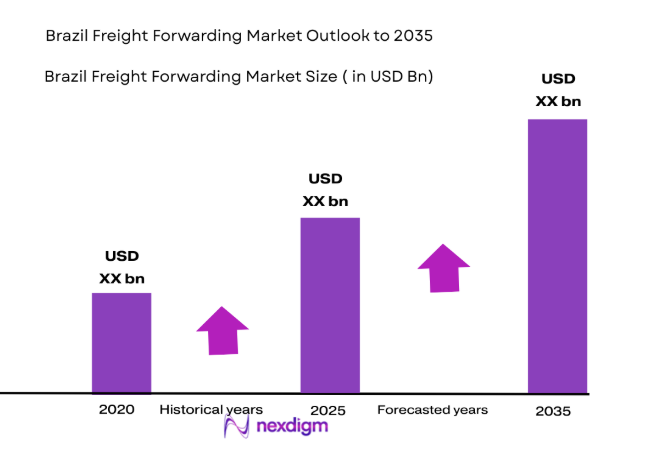
Based on a recent historical assessment, the Brazil freight forwarding market demonstrates strong operational scale within Latin America’s logistics ecosystem with market revenue reaching approximately USD ~ billion according to data published by Brazil’s National Confederation of Transport and international trade logistics assessments. Growth in the sector is primarily driven by rising international trade flows, expansion of agricultural commodity exports, increasing containerized cargo movement through national ports, and growing demand for multimodal freight coordination services supporting manufacturing, mining, and large scale retail distribution networks.
São Paulo dominates freight forwarding activity due to its role as Brazil’s largest industrial and financial center, hosting major logistics operators and integrated supply chain infrastructure supporting international cargo flows. Port regions including Santos and Rio de Janeiro play critical roles because they handle large volumes of agricultural exports, industrial machinery shipments, and containerized cargo. Curitiba and Campinas also emerge as important logistics hubs due to strong manufacturing clusters, advanced warehousing infrastructure, and strategic proximity to major highway corridors connecting inland production centers with maritime export gateways.
Market Segmentation
By Product Type
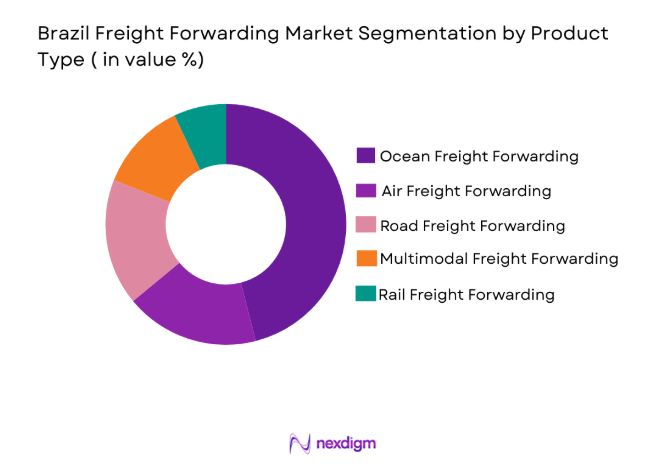
Brazil Freight Forwarding market is segmented by product type into air freight forwarding, ocean freight forwarding, road freight forwarding, rail freight forwarding, and multimodal freight forwarding services. Recently, ocean freight forwarding has a dominant market share due to factors such as Brazil’s strong dependence on maritime exports of agricultural commodities, minerals, and manufactured products. Large cargo volumes transported through international shipping routes require specialized freight coordination, container management, customs documentation, and port handling services. Major export commodities including soybeans, iron ore, and sugar rely heavily on maritime logistics infrastructure, strengthening the importance of ocean freight forwarding operations across Brazil’s export driven logistics network.
By Platform Type
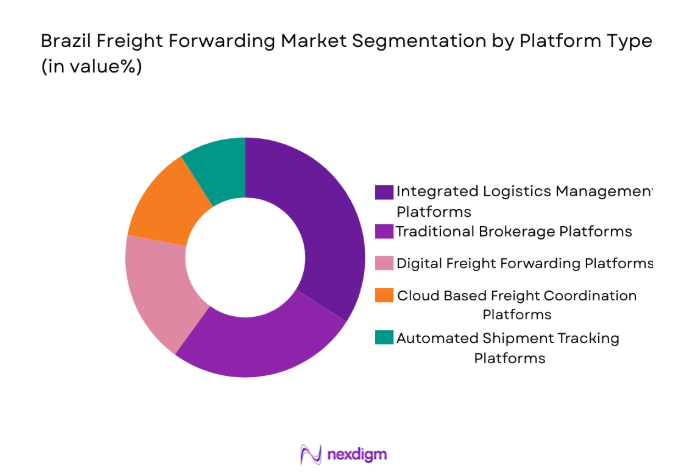
Brazil Freight Forwarding market is segmented by platform type into digital freight forwarding platforms, traditional brokerage platforms, integrated logistics management platforms, cloud based freight coordination platforms, and automated shipment tracking platforms. Recently, integrated logistics management platforms have a dominant market share due to their ability to connect cargo booking, customs documentation, shipment tracking, and transportation scheduling within a single operational ecosystem. Freight operators increasingly adopt integrated digital systems to manage large cargo volumes efficiently while improving transparency and coordination across complex multimodal supply chains linking ports, airports, warehouses, and inland transportation networks.
Competitive Landscape
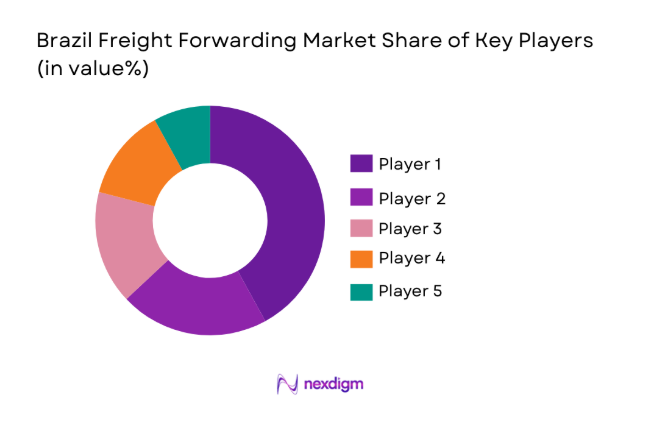
Brazil’s freight forwarding market demonstrates moderate consolidation where large global logistics companies operate alongside regional logistics providers serving domestic trade networks. International freight operators maintain strong presence due to their extensive global shipping networks, customs brokerage capabilities, and integrated supply chain solutions. Regional logistics firms remain competitive by providing localized expertise, cost efficient transportation coordination, and specialized handling of agricultural and industrial cargo shipments. Strategic partnerships with port operators, airlines, and maritime carriers further strengthen competitive positioning across Brazil’s international logistics ecosystem.
| Company Name | Establishment Year | Headquarters | Technology Focus | Market Reach | Key Products | Revenue | Logistics Infrastructure Coverage |
| DHL Global Forwarding | 1815 | Bonn, Germany | ~ | ~ | ~ | ~ | ~ |
| Kuehne + Nagel | 1890 | Schindellegi, Switzerland | ~ | ~ | ~ | ~ | ~ |
| DB Schenker | 1872 | Essen, Germany | ~ | ~ | ~ | ~ | ~ |
| DSV A/S | 1976 | Hedehusene, Denmark | ~ | ~ | ~ | ~ | ~ |
| CEVA Logistics | 2007 | Marseille, France | ~ | ~ | ~ | ~ | ~ |
Brazil Freight Forwarding Market Analysis
Growth Drivers
Expansion of Brazil’s Export Oriented Agricultural and Commodity Trade
Brazil’s freight forwarding industry expands strongly due to the country’s role as one of the largest exporters of agricultural commodities and mineral resources in global trade. Large volumes of soybeans, iron ore, coffee, sugar, and meat products are transported from inland production regions to international markets through maritime and air freight channels coordinated by freight forwarders. Agricultural production regions located across Mato Grosso, Paraná, and Goiás generate massive cargo volumes requiring professional logistics coordination connecting farms, processing facilities, storage warehouses, and port terminals. Freight forwarding companies organize container bookings, customs documentation, cargo consolidation, and multimodal transportation scheduling that ensures efficient movement of export commodities through Brazil’s extensive logistics corridors. Major maritime gateways including the Port of Santos and the Port of Paranaguá handle large cargo volumes destined for markets across Asia, Europe, and North America. Increasing global demand for agricultural commodities strengthens shipment volumes handled by logistics operators responsible for managing complex international trade documentation and shipping coordination. Freight forwarders also support mining exports from regions such as Minas Gerais where iron ore and mineral products require specialized bulk transportation logistics solutions. Continuous expansion of Brazil’s export oriented trade networks therefore significantly increases demand for professional freight forwarding services managing cross border logistics operations across global supply chains.
Rapid Expansion of E Commerce Driven International Cargo Movement
Brazil’s rapidly growing digital commerce ecosystem significantly strengthens demand for international freight forwarding services capable of managing high volumes of cross border shipments connecting global suppliers with domestic consumers and retailers. Online marketplaces and digital retail platforms increasingly import consumer electronics, fashion products, home appliances, and industrial components from international suppliers located in Asia, North America, and Europe. Freight forwarders therefore coordinate complex logistics operations involving air cargo shipments, customs clearance procedures, warehousing coordination, and last mile distribution planning that enable efficient international order fulfillment. Air freight forwarding services become particularly important for high value goods requiring rapid delivery to metropolitan consumer markets such as São Paulo, Rio de Janeiro, and Brasília. E commerce retailers increasingly rely on integrated logistics service providers capable of offering shipment visibility, automated documentation processing, and coordinated transportation networks linking airports, ports, and domestic distribution centers. Growing consumer demand for imported goods further strengthens international shipment volumes handled through Brazil’s logistics infrastructure. Freight forwarding companies also collaborate with customs authorities and logistics operators to accelerate cargo clearance and reduce international delivery times. As digital commerce participation expands across Brazil’s urban population, international cargo movements continue increasing across global trade routes coordinated by freight forwarding providers supporting cross border retail supply chains.
Market Challenges
Infrastructure Bottlenecks Across Ports and Inland Transportation Networks
Brazil’s freight forwarding industry faces operational challenges due to infrastructure limitations across ports, highways, railways, and inland logistics corridors responsible for transporting cargo between production centers and export terminals. Large cargo volumes generated by agricultural and mining industries frequently encounter congestion at major port facilities including Santos where container handling capacity and vessel scheduling delays affect shipment timelines. Inland transportation networks also experience capacity constraints due to heavy reliance on long distance trucking operations connecting interior production regions with coastal export gateways. Road congestion, inconsistent infrastructure quality, and high transportation costs reduce overall logistics efficiency across national supply chains. Rail freight networks remain underdeveloped in several regions which limits opportunities for cost efficient bulk cargo transportation supporting large scale export shipments. Freight forwarders must therefore coordinate complex multimodal logistics arrangements involving multiple transportation providers in order to ensure reliable cargo movement. Port modernization projects and infrastructure investments continue expanding logistics capacity but implementation timelines remain lengthy due to regulatory approvals and construction requirements. Logistics companies therefore face ongoing operational complexity when scheduling international shipments requiring precise coordination across congested transportation networks. These structural infrastructure limitations continue influencing freight forwarding operations across Brazil’s logistics ecosystem.
Complex Customs Procedures and Regulatory Compliance Requirements
Freight forwarding companies operating in Brazil must manage complex regulatory procedures governing international trade documentation, customs clearance processes, and cargo inspection requirements imposed by national regulatory authorities. Import and export shipments require extensive documentation including cargo manifests, customs declarations, sanitary certifications, and trade compliance documentation before shipments can move across international borders. Regulatory compliance processes often involve coordination with multiple government agencies including customs authorities, agricultural inspection agencies, and port administration entities responsible for enforcing trade regulations. Freight forwarders therefore invest heavily in specialized compliance teams capable of managing complex documentation workflows and regulatory procedures ensuring that shipments meet national and international trade requirements. Delays in documentation processing or regulatory inspections may extend cargo clearance timelines which affects delivery schedules and increases logistics costs for shippers. International trade regulations also evolve frequently due to trade agreements, security standards, and customs policy adjustments requiring logistics providers to continuously update compliance procedures. Freight forwarding companies must therefore maintain strong regulatory expertise and digital documentation systems capable of managing complex trade documentation efficiently. The administrative complexity associated with international trade regulations remains a significant operational challenge affecting freight coordination activities across Brazil’s logistics sector.
Opportunities
Digitalization of Freight Management and Logistics Visibility Platforms
The rapid adoption of digital logistics technologies across global supply chains creates significant opportunities for freight forwarding companies operating in Brazil to improve operational efficiency and service transparency. Advanced freight management platforms enable logistics operators to automate cargo booking processes, shipment documentation, container tracking, and customs clearance workflows through integrated digital systems. Freight forwarders increasingly deploy cloud based logistics software capable of providing real time cargo visibility for shippers monitoring shipment progress across international transportation networks. These digital platforms also integrate predictive analytics tools that help logistics providers forecast shipment demand patterns, optimize transportation routes, and reduce operational delays across multimodal supply chains. Automated documentation systems further streamline customs clearance procedures by enabling electronic submission of cargo manifests and trade compliance documentation directly to regulatory authorities. Logistics providers adopting advanced digital infrastructure strengthen service reliability while improving shipment coordination across complex international trade routes. As global logistics networks increasingly depend on digital supply chain management platforms, freight forwarding companies in Brazil can expand service capabilities by offering technology enabled logistics solutions supporting international trade operations.
Expansion of Multimodal Logistics Corridors and National Infrastructure Investments
Brazil’s ongoing investments in transportation infrastructure create long term opportunities for freight forwarding companies coordinating cargo movement across national and international logistics networks. Government initiatives supporting port modernization, highway expansion, railway development, and inland logistics hubs significantly improve cargo transportation capacity connecting production centers with global export markets. Development of integrated multimodal logistics corridors linking railways, highways, and port terminals enables freight forwarders to optimize cargo transportation efficiency while reducing reliance on single transportation modes. Rail freight expansion projects particularly support large scale transportation of agricultural commodities and mining resources from inland regions to maritime export gateways. Modernization of container terminals and port logistics systems further strengthens cargo handling efficiency while reducing vessel turnaround times at major maritime hubs. Freight forwarding companies benefit from these infrastructure improvements by expanding multimodal logistics services capable of coordinating complex transportation routes across Brazil’s national logistics network. As transportation infrastructure capacity expands through public and private sector investments, freight forwarders gain opportunities to enhance cargo coordination capabilities and support growing international trade volumes across Brazil’s export oriented economy.
Future Outlook
Brazil’s freight forwarding market is expected to experience sustained expansion driven by growth in international trade activity, rising digital commerce imports, and modernization of national logistics infrastructure. Increasing adoption of digital freight management platforms will improve cargo visibility and supply chain coordination across complex transportation networks. Government investment in port expansion, rail freight corridors, and highway modernization will strengthen logistics efficiency across export supply chains. Growing participation of international logistics operators and technology integration across freight operations will further enhance operational capabilities across Brazil’s evolving logistics ecosystem.
Major Players
- DHL Global Forwarding
- Kuehne + Nagel
- DB Schenker
- DSV A/S
- CEVA Logistics
- Expeditors International
- UPS Supply Chain Solutions
- Nippon Express
- Bolloré Logistics
- Agility Logistics
- C.H. Robinson
- Geodis
- Panalpina Brasil
- Sinotrans Limited
- Yusen Logistics
Key Target Audience
- Freight Forwarding Service Providers
- International Shipping Companies
- Manufacturing and Export Companies
- Logistics Technology Providers
- Investments and Venture Capitalist Firms
- Government and Regulatory Bodies
- Global Trade and Supply Chain Organizations
Research Methodology
Step 1: Identification of Key Variables
The research begins with identifying critical variables influencing the Brazil freight forwarding market including trade volumes, logistics infrastructure capacity, transportation corridors, port activity levels, and regulatory policies governing international cargo movement across global supply chains.
Step 2: Market Analysis and Construction
Comprehensive analysis is conducted using international trade data, logistics infrastructure statistics, shipping activity records, and economic indicators to construct an accurate representation of the freight forwarding market structure and operational ecosystem.
Step 3: Hypothesis Validation and Expert Consultation
Industry experts including logistics operators, port authorities, transportation specialists, and supply chain analysts validate preliminary findings to ensure accuracy and alignment with real operational conditions within Brazil’s logistics and international trade environment.
Step 4: Research Synthesis and Final Output
Validated insights are synthesized into structured market analysis combining quantitative trade data, qualitative logistics assessments, and competitive landscape evaluations to produce a comprehensive research report describing Brazil’s freight forwarding market.

- Executive Summary
- Research Methodology (Definitions, Scope, Industry Assumptions, Market Sizing Approach, Primary & Secondary Research Framework, Data Collection & Verification Protocol, Analytic Models & Forecast Methodology, Limitations & Research Validity Checks)

- Market Definition and Scope
- Value Chain & Stakeholder Ecosystem
- Regulatory / Certification Landscape
- Sector Dynamics Affecting Demand
- Strategic Initiatives & Infrastructure Growth

- Growth Drivers
Expansion of Brazil’s Export Oriented Agricultural and Mining Trade
Growth of E Commerce Driven International Logistics Demand
Increasing Industrial Production and Manufacturing Supply Chain Integration - Market Challenges
Complex Customs Procedures and Regulatory Compliance Requirements
Infrastructure Bottlenecks in Ports and Inland Transportation Networks
High Logistics Costs and Freight Rate Volatility - Market Opportunities
Digitalization of Freight Management and Shipment Visibility Platforms
Expansion of Multimodal Logistics Corridors and Port Infrastructure
Growth in Cross Border Trade with Latin American and Global Markets - Trends
Adoption of Digital Freight Booking and Real Time Cargo Tracking
Integration of Automated Documentation and Customs Clearance Systems - Government Regulations
- SWOT Analysis
- Porter’s Five Forces

- By Market Value, 2020-2025
- By Installed Units, 2020-2025
- By Average System Price, 2020-2025
- By System Complexity Tier, 2020-2025

- By System Type (In Value%)
Air Freight Forwarding Services
Ocean Freight Forwarding Services
Road Freight Forwarding Services
Rail Freight Forwarding Services
Multimodal Freight Forwarding Solutions - By Platform Type (In Value%)
Digital Freight Forwarding Platforms
Traditional Brokerage Platforms
Integrated Logistics Management Platforms
Cloud Based Freight Management Platforms
Automated Shipment Tracking Platforms - By Fitment Type (In Value%)
In House Freight Forwarding Operations
Outsourced Freight Forwarding Services
Hybrid Logistics Coordination Models
Integrated Supply Chain Forwarding Systems - By End User Segment (In Value%)
Manufacturing and Industrial Shippers
Retail and E Commerce Companies
Agriculture and Commodity Exporters

- Market Share Analysis
- Cross Comparison Parameters (Service Portfolio Diversity, International Network Coverage, Digital Freight Platform Capability, Customs Brokerage Expertise, Multimodal Transport Integration, Pricing Competitiveness, Strategic Logistics Partnerships)
- SWOT Analysis of Key Competitors
- Pricing & Procurement Analysis
- Key Players
DHL Global Forwarding
Kuehne + Nagel
DB Schenker
Expeditors International
DSV A/S
CEVA Logistics
Bolloré Logistics
Panalpina Brasil
Agility Logistics
Sinotrans Limited
Nippon Express
UPS Supply Chain Solutions
C.H. Robinson
Yusen Logistics
Geodis

- Manufacturers Increasingly Depend on Freight Forwarders for International Component Imports
- Agricultural Exporters Require Specialized Logistics Coordination for Bulk Commodity Shipments
- E Commerce Retailers Rely on Integrated Freight Networks for Cross Border Fulfillment
- Mining and Energy Companies Utilize Freight Forwarding for Heavy Equipment Transportation

- Forecast Market Value, 2026-2035
- Forecast Installed Units, 2026-2035
- Price Forecast by System Tier, 2026-2035
- Future Demand by Platform, 2026-2035


 Request a Sample
 Ask for Customization
 Get a Quote
 Enquire Now