
 Download PDF
Market Overview
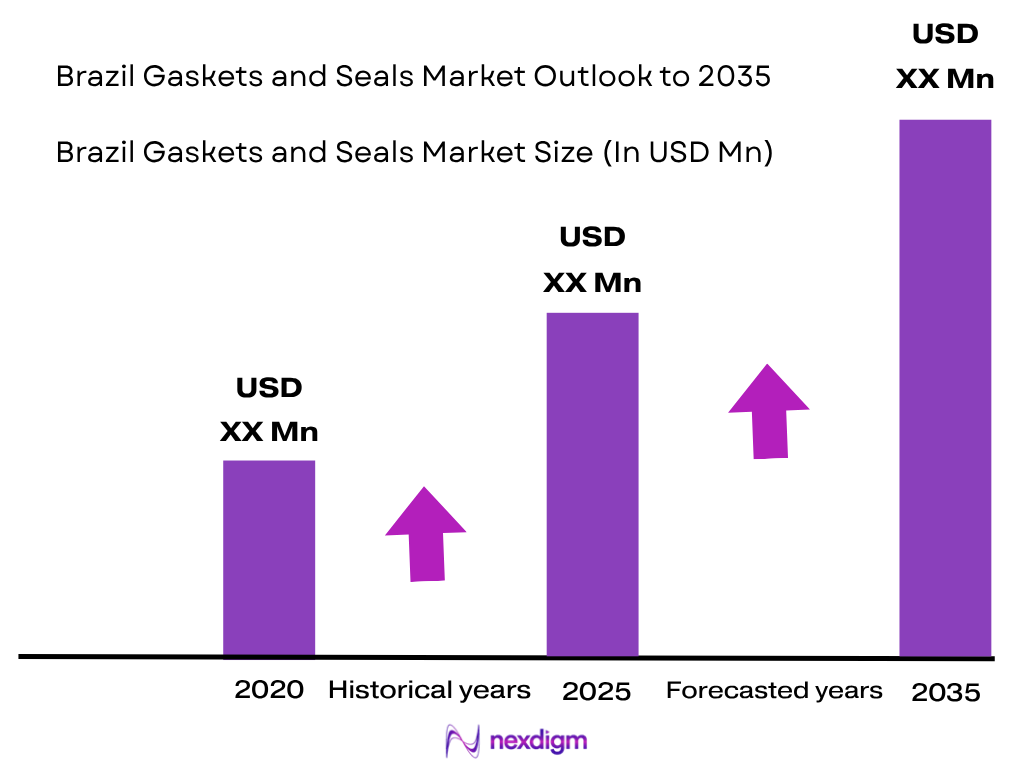
The Brazil Gaskets and Seals Market is valued at approximately USD ~XX billion, based on a five-year historical assessment of industrial sealing consumption. Demand is supported by automotive manufacturing, offshore oil and gas, refining, mining, pulp and paper, chemicals and industrial MRO. Vehicle production increased from approximately 2.36 million units in the preceding period to 2.55 million units in the latest full-year period, while Petrobras produced 2.7 million barrels of oil equivalent per day, sustaining substantial requirements for oil seals, mechanical seals, gaskets and high-performance elastomers.
São Paulo, Rio de Janeiro and the industrial areas of Minas Gerais dominate Brazilian gasket and seal consumption because their economies concentrate automotive manufacturing, offshore petroleum operations, mining, process industries and equipment maintenance networks. São Paulo benefits from Brazil’s automobile and component manufacturing ecosystem, supporting a national production base of 2.55 million vehicles. Rio de Janeiro is strategically linked with Petrobras’ offshore and pre-salt operations, while Minas Gerais’ position in metallic mineral production connects the state with a national mining industry generating R$220.5 billion from metallic minerals and graphite.
Market Segmentation
By Product Type
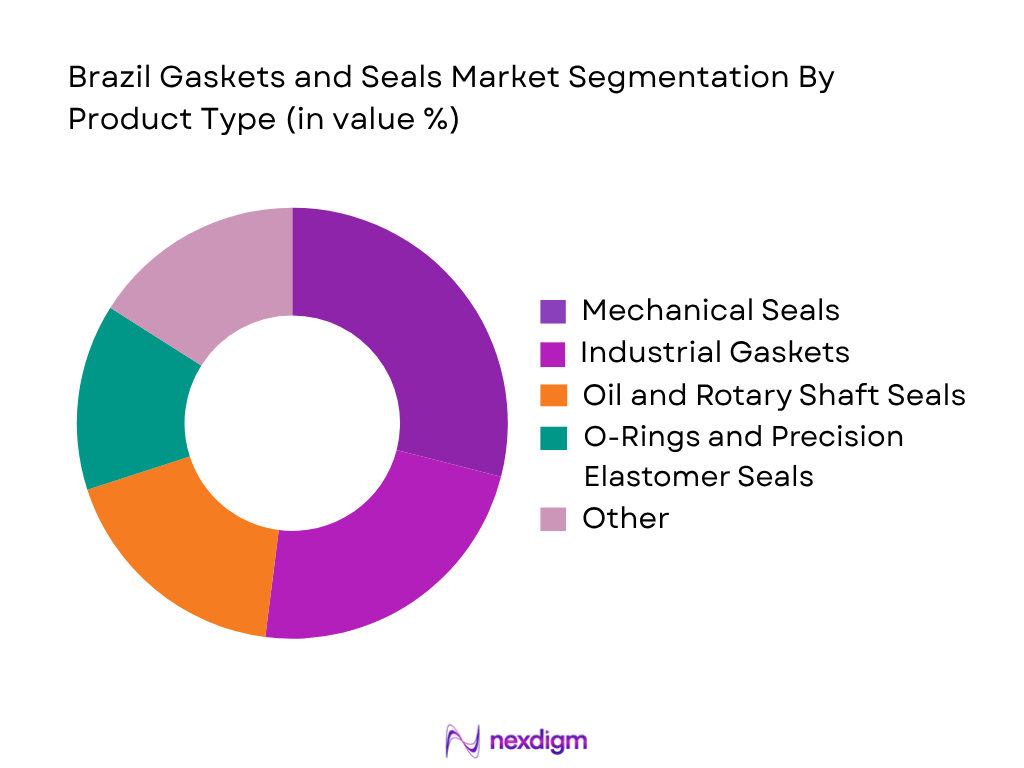
The Brazil Gaskets and Seals Market is segmented by product type into mechanical seals, industrial gaskets, oil and rotary shaft seals, O-rings and precision elastomer seals, hydraulic and pneumatic seals, and compression packing and other sealing products. Mechanical seals represent the dominant product category, reflecting Brazil’s extensive installed base of centrifugal pumps, compressors, mixers, agitators and other rotating equipment across offshore oil production, refineries, petrochemical complexes, mining operations and pulp mills. Petrobras alone operates a major upstream infrastructure base, with total oil and natural-gas production reaching 2.7 million barrels of oil equivalent per day, including record pre-salt production. Brazil’s pulp industry also produced 25.5 million tonnes of cellulose pulp, supporting substantial pump and process-equipment maintenance requirements. Mechanical seals command significant value because demanding services require cartridge systems, dual seals, dry gas seals, specialty face materials and associated seal-support systems rather than basic commodity sealing components.
By End-Use Industry
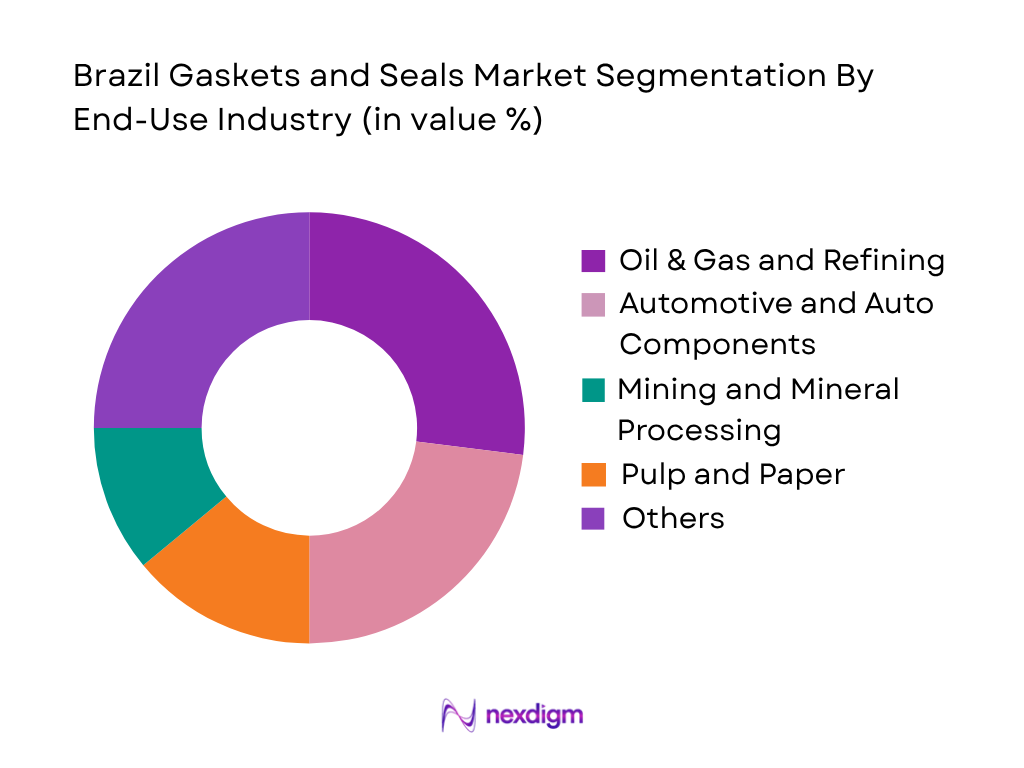
The Brazil Gaskets and Seals Market is segmented by end-use industry into automotive, oil and gas and refining, mining and mineral processing, pulp and paper, chemicals and petrochemicals, power and utilities, and other manufacturing industries. Oil and gas and refining constitute the leading value-intensive end-use segment because upstream platforms, FPSOs, pipelines, compressors, pumps, valves, refinery process units and associated maintenance operations require high-specification mechanical seals, RTJ gaskets, spiral-wound gaskets, graphite sealing products and specialty elastomers. Petrobras recorded total production of 2.7 million barrels of oil equivalent per day, commercial production of 2.4 million barrels of oil equivalent per day, and oil production of 2.2 million barrels per day. Pre-salt operations reached record output, reinforcing demand for high-pressure, chemically resistant and reliability-critical sealing systems required in offshore rotating and static equipment applications.
Competitive Landscape
The Brazil Gaskets and Seals Market combines established domestic sealing manufacturers with multinational mechanical-seal and engineered-polymer suppliers. Competition varies substantially by application: SABÓ has strong automotive sealing exposure, TEADIT is prominent in industrial gasketing and fluid sealing, while John Crane, Flowserve and Trelleborg compete in technically demanding rotating-equipment and engineered-seal applications. Competitive differentiation is increasingly based on local manufacturing, Petrobras and OEM qualification, engineering support, emergency MRO response, advanced materials and the ability to serve harsh operating conditions rather than product availability alone.
| Major Player | Establishment Year | Headquarters | Core Sealing Portfolio | Key Brazil Application Exposure | Local/Regional Capability | Material Capability | MRO & Technical Service | Strategic Strength |
| SABÓ | 1942 | São Paulo/Mogi Mirim, Brazil | ~ | ~ | ~ | ~ | ~ | ~ |
| John Crane | 1917 | Slough, United Kingdom | ~ | ~ | ~ | ~ | ~ | ~ |
| Flowserve | 1997 | Irving, Texas, United States | ~ | ~ | ~ | ~ | ~ | ~ |
| Trelleborg Sealing Solutions | 1952 | Stuttgart, Germany | ~ | ~ | ~ | ~ | ~ | ~ |
| TEADIT | 1958* | Brazil/Global Operations | ~ | ~ | ~ | ~ | ~ | ~ |
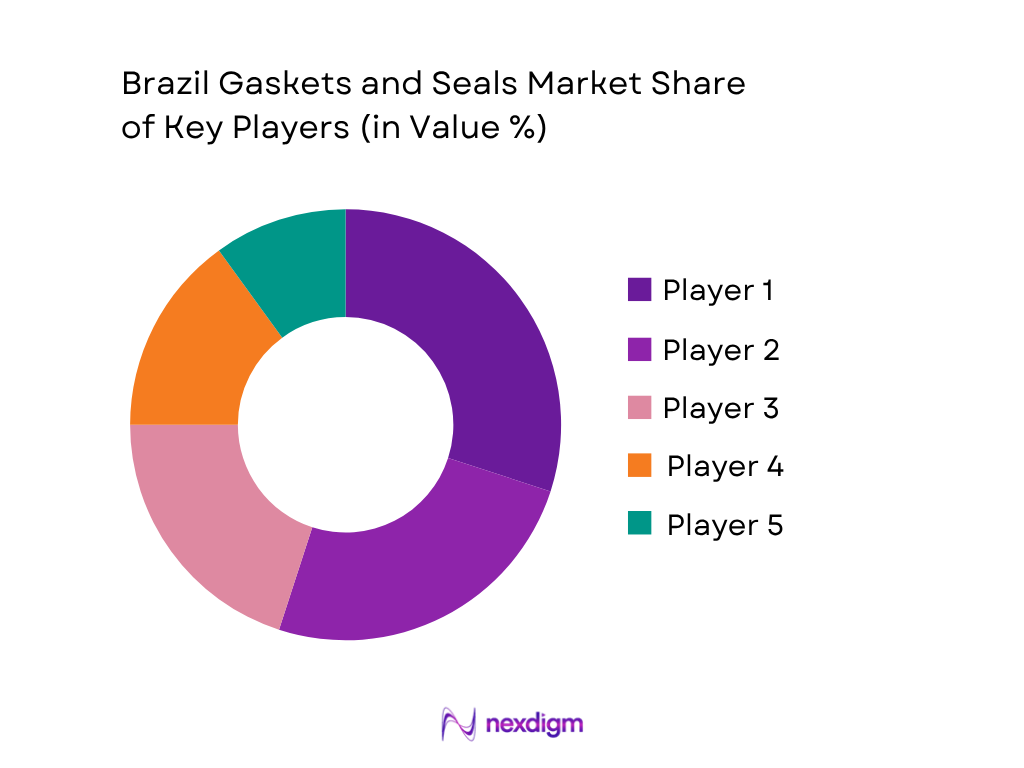
Brazil Gaskets and Seals Market Analysis
Growth Drivers
Expansion of Automotive and Auto-Component Manufacturing
Brazil’s large automotive manufacturing base is creating sustained demand for radial shaft seals, oil seals, O-rings, molded gaskets, transmission seals, hydraulic seals and increasingly specialized sealing systems for electrified powertrains. ANFAVEA reported that Brazilian factories produced 2.550 million vehicles in 2024, while domestic registrations reached 2.635 million vehicles, demonstrating the scale of equipment and component demand supported by local assembly operations. Brazil also returned to the position of the 8th-largest vehicle producer globally, reinforcing its importance as a regional automotive manufacturing hub. This production base supports sealing consumption across engines, transmissions, wheel hubs, braking systems, fuel systems, cooling circuits and auxiliary equipment, while increasing electrification adds battery-enclosure seals, coolant O-rings and electric-drive sealing applications. According to the World Bank, Brazil recorded USD 2.19 trillion in GDP in 2024 and GDP per capita of USD 10,310.5, demonstrating the economic scale supporting industrial manufacturing and vehicle demand. The combination of millions of locally manufactured vehicles, a developed Tier-1 component ecosystem and continued investment in new powertrain technologies strengthens recurring OEM and replacement demand for Brazil’s gasket and seal suppliers.
Large Pre-Salt Oil, Gas and Refining Equipment Installed Base
Brazil’s offshore oil and gas industry represents a major demand driver for mechanical seals, dry gas seals, spiral-wound gaskets, ring-type joints, graphite sealing materials, valve packing and specialty elastomers designed for aggressive hydrocarbons and high-pressure operating environments. Petrobras reported total oil and natural-gas production of 2.7 million barrels of oil equivalent per day in 2024, including commercial production of 2.4 million barrels of oil equivalent per day and oil production of 2.2 million barrels per day. Petrobras also recorded own pre-salt production of 2.2 million barrels of oil equivalent per day and operated pre-salt production of 3.2 million barrels of oil equivalent per day, illustrating the scale of offshore equipment exposed to continuous sealing requirements. FPSOs, pumps, compressors, pipelines, valves and processing modules generate substantial replacement and refurbishment requirements throughout their operating lives. The World Bank reports Brazil’s 2024 GDP at USD 2.19 trillion and GDP per capita at USD 10,310.5, supporting the country’s position as a large industrial economy capable of sustaining sophisticated energy infrastructure. This extensive installed base directly supports recurring high-performance gasket, mechanical-seal and MRO demand.
Market Challenges
Growing Imported Vehicle Competition and Changing Automotive Seal Architecture
Brazilian gasket and seal suppliers face increasing competitive pressure as the domestic automotive industry simultaneously expands production and absorbs a substantial volume of imported vehicles. ANFAVEA reported domestic vehicle production of 2.550 million units in 2024, while imported vehicle registrations reached approximately 463,000 units during the same period. Total new-vehicle registrations reached 2.635 million units, creating a large market but also increasing exposure to components incorporated in vehicles produced outside Brazil. For local seal manufacturers, this can reduce accessible OEM content where imported platforms arrive with established foreign gasket, O-ring and shaft-seal suppliers. At the same time, powertrain architecture is evolving toward hybrid and electric vehicles, shifting demand away from certain traditional engine sealing points toward battery enclosures, cooling circuits, electric-drive units and high-voltage connector sealing. Suppliers therefore need new materials, tooling, validation capability and OEM qualification while maintaining conventional vehicle programs. World Bank data show Brazil generated USD 2.19 trillion of GDP in 2024, with GDP per capita of USD 10,310.5, highlighting the scale of the market in which domestic suppliers must defend localization while adapting technologically.
Demanding Qualification and Reliability Requirements in Severe Industrial Applications
Brazil’s gasket and seal industry faces significant technical barriers because some of its largest customer industries operate equipment under abrasive, corrosive, high-pressure and continuously loaded conditions. Petrobras produced 2.7 million barrels of oil equivalent per day in 2024, with operated pre-salt output reaching 3.2 million barrels of oil equivalent per day, creating strict reliability requirements for offshore mechanical seals, dry gas seals, RTJ gaskets and specialty elastomers. Mining adds another demanding operating environment: Brazil’s metallic minerals and graphite generated R$220.5 billion in production value in 2024, while the Agência Nacional de Mineração identified more than 270 operating mines across the mineral categories assessed, including 109 iron-ore mines. These operations use slurry pumps, hydraulic cylinders, crushers and rotating equipment where abrasive particles accelerate seal-face, elastomer and bearing-protection wear. Suppliers therefore require advanced materials, application engineering, traceability, failure analysis and rapid field support rather than simple commodity manufacturing. World Bank data place Brazil’s 2024 GDP at USD 2.19 trillion and GDP per capita at USD 10,310.5, demonstrating the industrial scale behind these qualification demands and the technical burden placed on sealing suppliers.
Market Opportunities
Localization of Offshore Mechanical Seal, Dry Gas Seal and MRO Services
Brazil’s pre-salt equipment base creates a substantial future opportunity for local mechanical-seal refurbishment, dry gas seal servicing, gasket fabrication, emergency replacement inventory and application engineering. Current operating statistics demonstrate the scale already available to support future sealing demand: Petrobras recorded 2.7 million barrels of oil equivalent per day of total production in 2024, with 2.2 million barrels of oil equivalent per day of own pre-salt production and 3.2 million barrels of oil equivalent per day of operated pre-salt production. Such offshore production requires large populations of pumps, compressors, valves, pipelines and process modules operating continuously on FPSOs and offshore platforms. Local service centers capable of seal-face lapping, cartridge refurbishment, failure analysis, reverse engineering and rapid replacement can reduce dependence on long international supply chains and support equipment availability during maintenance campaigns. Petrobras also reported R$270 billion in taxes paid in 2024, illustrating the economic scale of its domestic operating footprint. The World Bank records Brazilian GDP of USD 2.19 trillion in 2024 and GDP per capita of USD 10,310.5. These current indicators provide a strong foundation for future localization of technically advanced sealing services and offshore MRO capabilities.
Mining and Pulp Industry Expansion of High-Performance Sealing Applications
Brazil’s mining and pulp industries provide a strong future opportunity for abrasion-resistant seals, slurry-pump mechanical seals, hydraulic seals, compression packing and chemical-resistant sealing products. The Agência Nacional de Mineração reported that metallic minerals and graphite generated R$220.5 billion in Brazilian production value in 2024, with iron ore alone contributing R$159 billion. The agency identified more than 270 operating mines across the assessed mineral categories, including 109 iron-ore mines, creating a broad installed base of crushers, pumps, conveyors, hydraulic equipment and beneficiation machinery requiring recurring sealing replacement. Brazil’s pulp industry provides another large equipment population: Indústria Brasileira de Árvores reported 25.5 million tonnes of cellulose pulp production in 2024, comprising 22.5 million tonnes of short-fibre pulp, 2.5 million tonnes of long-fibre pulp and 0.5 million tonnes of high-yield pulp. A major new pulp line with 2.55 million tonnes of annual capacity also began operations during 2024. World Bank data place Brazil’s GDP at USD 2.19 trillion in 2024 and GDP per capita at USD 10,310.5, supporting continued industrial investment and future demand for locally engineered sealing technologies.
Future Outlook
The Brazil Gaskets and Seals Market is expected to expand at a forecast CAGR of approximately ~XX% during 2026-2035, supported by an expanding installed base of sophisticated industrial equipment and increasing demand for higher-performance sealing technologies. Future demand will increasingly shift from conventional commodity seals toward engineered mechanical seals, high-performance elastomers, PTFE products, graphite gasketing, bearing protection systems and application-specific sealing solutions.
Offshore oil and gas will remain one of the most technically demanding growth areas. Petrobras recorded 2.2 million barrels of oil equivalent per day of own pre-salt production, alongside operated pre-salt production of 3.2 million barrels of oil equivalent per day, indicating a substantial rotating-equipment and process-sealing environment. Future FPSOs and offshore production systems will create opportunities for dry gas seals, cartridge seals, API-oriented mechanical sealing packages, RTJ gaskets and corrosion-resistant sealing materials.
Major Players
- TEADIT
- EagleBurgmann do Brasil
- John Crane
- Flowserve
- SABÓ
- Trelleborg Sealing Solutions Brazil
- Parker Hannifin Brazil
- SKF do Brasil
- Freudenberg Sealing Technologies
- AESSEAL Brasil
- A.W. Chesterton do Brasil
- Garlock
- CGL Casa das Gaxetas
- Vedatec
- Saint-Gobain High-Performance Seals
Key Target Audience
- Gasket, Mechanical Seal and Engineered Sealing Product Manufacturers
- Automotive OEMs and Tier-1 Automotive Component Manufacturers
- Oil & Gas, Refining, Petrochemical, Mining and Pulp & Paper Operators
- Industrial Equipment, Pump, Compressor and Valve Manufacturers
- Industrial Distributors, MRO Providers and EPC Contractors
- Investments and Venture Capitalist Firms
- Government and Regulatory Bodies (Agência Nacional do Petróleo, Gás Natural e Biocombustíveis – ANP; Agência Nacional de Mineração – ANM; Instituto Nacional de Metrologia, Qualidade e Tecnologia – INMETRO; Instituto Brasileiro do Meio Ambiente e dos Recursos Naturais Renováveis – IBAMA)
- Private Equity Firms, Strategic Investors and Industrial Conglomerates
Research Methodology
Step 1: Identification of Key Variables
The initial phase involves developing a comprehensive ecosystem map covering gasket manufacturers, mechanical seal suppliers, automotive sealing companies, industrial distributors, raw-material suppliers, MRO service providers and major end-users. Key demand variables include installed rotating equipment, automotive production, offshore activity, mining operations, pulp output, industrial maintenance cycles and imported specialty sealing dependence.
Step 2: Market Analysis and Construction
Historical demand is evaluated through a combination of top-down and bottom-up approaches. The top-down assessment considers industrial output, vehicle manufacturing, petroleum production, mining operations and process-industry capacity, while the bottom-up model assesses gasket consumption, mechanical-seal replacements, oil-seal demand, O-ring consumption, company revenues, installed equipment populations and average product realization.
Step 3: Hypothesis Validation and Expert Consultation
Market hypotheses are validated through computer-assisted telephone interviews with gasket manufacturers, seal OEMs, distributors, rotating-equipment specialists, maintenance contractors and procurement executives. Discussions focus on replacement cycles, product specifications, local versus imported sourcing, high-performance material demand, aftermarket dynamics, customer qualification requirements and changing requirements across offshore, automotive and mining applications.
Step 4: Research Synthesis and Final Output
Primary findings are triangulated with company disclosures, trade information, industrial statistics, government publications and application-level demand analysis. Bottom-up company and product estimates are reconciled with top-down industrial consumption indicators to establish the final market model, segmentation structure and forecast. Particular emphasis is placed on eliminating double counting between OEM installations, replacement demand and mechanical-seal refurbishment activities.

- Executive Summary
- Research Methodology (Market Definition and Scope, Brazil Gaskets and Seals Market Classification, Static and Dynamic Sealing Demand Assessment, Industrial Gasket Consumption Mapping, Mechanical Seal Replacement Assessment, Oil Seal and Rotary Shaft Seal Demand Assessment, Domestic Gasket and Seal Manufacturing Capacity Assessment, Imported Specialty Seal Dependency Analysis, Graphite-PTFE-Elastomer-Metallic Material Assessment, Automotive Sealing Demand Mapping, Offshore Oil and Gas Equipment Installed Base Assessment)

- Definition and Scope
- Brazil Gaskets and Seals Industry Evolution and Development of Automotive Seals, Industrial Gaskets, Mechanical Seals, Precision Elastomer Products and Process Sealing Ecosystem
- Gasket Manufacturing, Elastomer Moulding, Oil Seal Production, Mechanical Seal Assembly, Seal Repair and Industrial Distribution Industry Structure
- Brazil Gaskets and Seals Value Chain Analysis
- Brazil Gaskets and Seals Supply Chain Analysis
- Rubber and Elastomer Supplier, Graphite-PTFE Supplier, Gasket Manufacturer, Oil Seal Manufacturer, Mechanical Seal OEM, Automotive Tier Supplier, Industrial Distributor, EPC Contractor, MRO Provider and Industrial End-User Ecosystem Analysis
- Gaskets and Seals Integration Across Automotive and Flex-Fuel Vehicles, Offshore Oil and Gas, Refining and Petrochemicals, Mining, Pulp and Paper, Steel, Chemicals, Power Generation and General Manufacturing Applications

- Growth Drivers (Expansion of Pre-Salt Oil and Gas Production, Large Automotive and Auto-Component Manufacturing Base, Refinery and Petrochemical Equipment Maintenance, Mining and Slurry Pump Sealing Requirements, Pulp and Paper Mill Expansion, Industrial Machinery Installed Base, Biofuel and Ethanol Processing Equipment Demand, Mechanical Seal Replacement Cycles, Domestic Gasket Fabrication Capability)
- Market Challenges (Dependence on Imported High-Performance FFKM and Fluoropolymer Materials, Currency-Driven Import Exposure, Long Qualification Cycles for Petrobras and Automotive OEMs, High Reliability Requirements in Offshore Applications, Aggressive Slurry Wear in Mining Equipment, Skilled Mechanical Seal Technician Availability, Competition from Low-Cost Imported Sealing Products, Complex Logistics Environment, Legacy Equipment Variety)
- Market Opportunities (Pre-Salt Mechanical Seal and Dry Gas Seal Applications, Offshore MRO Localization, Petrobras Vendor Qualification Opportunities, EV and Hybrid Vehicle Sealing Systems, Mining Slurry Pump Seal Upgrades, Pulp Mill Mechanical Seal Refurbishment, Biofuel Process Sealing, Local High-Performance Elastomer Processing, CNC-Machined Emergency Seals, Low-Emission Flange Sealing, Latin America Export Opportunities)
- Market Trends (Cartridge Mechanical Seal Adoption, Dry Gas Seal Deployment, Low-Emission Graphite Packing, Expanded PTFE Gasket Adoption, High-Performance FKM and FFKM Seals, CNC-Machined Polymer Seals, Split Mechanical Seals, Bearing Isolators, Condition Monitoring, Seal Support System Optimization, EV-Compatible Elastomers)
- Regulatory and Standards Landscape (ABNT Technical Standards, API Mechanical Seal Requirements, ASME Gasket and Flange Standards, Petrobras Technical Specifications, Petrobras Vendor Qualification Requirements, ANP Oil and Gas Regulations, INMETRO Product Compliance, IBAMA Environmental Requirements, Fugitive Emission Control Requirements, Automotive IATF Quality Requirements)
- SWOT Analysis
- Porter’s Five Forces Analysis
- PESTLE Analysis
- Stakeholder Ecosystem
- Competition Ecosystem

- By Market Value (2020-2025)
- By Gasket Consumption Volume (2020-2025)
- By Mechanical Seal Consumption Volume (2020-2025)
- By Oil Seal and Rotary Shaft Seal Consumption Volume (2020-2025)
- By O-Ring and Precision Elastomer Consumption Volume (2020-2025)
- By Domestic Gasket and Seal Production Volume (2020-2025)
- By Imported Gaskets and Seals Volume (2020-2025)
- By Average Selling Price (2020-2025)

- By Product Type (In Value %)
Spiral Wound Gaskets
Ring Type Joint Gaskets
Kammprofile Gaskets
Compressed Non-Asbestos Fibre Gaskets
Flexible Graphite Gaskets
PTFE and Expanded PTFE Gaskets
Mechanical Seals
Dry Gas Seals
Oil and Rotary Shaft Seals
O-Rings and Precision Elastomeric Seals
Hydraulic and Pneumatic Seals
Compression Packing and Bearing Isolators - By Material Type (In Value %)
Flexible Graphite
PTFE and Expanded PTFE
Compressed Non-Asbestos Fibre
Nitrile Rubber
HNBR
EPDM
FKM Fluoroelastomer
FFKM Perfluoroelastomer
Polyurethane
Silicone Rubber
Stainless Steel and Carbon Steel
Nickel-Based and Corrosion-Resistant Alloys - By Equipment Application (In Value %)
Pumps
Compressors
Valves and Actuators
Flanges and Pipeline Connections
Heat Exchangers
Pressure Vessels and Reactors
Automotive Engines and Transmissions
EV and Hybrid Thermal Management Systems
Hydraulic Cylinders
Industrial Gearboxes and Bearings
Mining and Slurry Processing Equipment
Pulp and Paper Mill Equipment - By End-Use Industry (In Value %)
Automotive and Automotive Components
Oil and Gas Exploration and Production
Petroleum Refining and Petrochemicals
Mining and Mineral Processing
Pulp and Paper
Steel and Metallurgy
Chemicals and Fertilizers
Power Generation
Biofuels and Ethanol
Water and Wastewater Treatment
Food and Beverage Processing
Industrial Machinery and General Manufacturing - By Region (In Value %)
Southeast Brazil
South Brazil
Northeast Brazil
Central-West Brazil
North Brazil

- Market Share of Major Players (By Brazil Revenue, Gasket Consumption Volume, Mechanical Seal Consumption Volume, Automotive Seal Exposure, Oil and Gas Project Exposure, Mining and Pulp and Paper Exposure, Brazil Manufacturing and Distribution Footprint, MRO and Technical Service Capability)
- Cross Comparison Parameters (Brazil Gaskets and Seals Revenue, Static-Dynamic-Automotive Sealing Portfolio Breadth, Pre-Salt-High-Pressure-High-Temperature Sealing Capability, Brazil Manufacturing-Gasket Fabrication-Elastomer Moulding Capability, Automotive-Oil and Gas-Mining-Pulp and Paper Application Coverage, Mechanical Seal Repair and Refurbishment Footprint, Brazil Inventory-Distribution and Field-Service Network Coverage, Petrobras-OEM Qualification and Application Engineering Capability)
- SWOT Analysis of Major Players
- Competitive Positioning Matrix
- Pricing and Sealing Product Category Benchmarking
- Detailed Profiles of Major Companies
TEADIT – Spiral Wound Gaskets, Sheet Gasketing, PTFE Products, Compression Packing, Expansion Joints and Industrial Sealing Solutions
EagleBurgmann do Brasil – Mechanical Seals, Compressor Seals, Seal Supply Systems, Expansion Joints, Gaskets and Rotating Equipment Services
John Crane – Mechanical Seals, Dry Gas Seals, Seal Support Systems, Filtration and Rotating Equipment Reliability Solutions
Flowserve – Mechanical Seals, Cartridge Seals, Pump Sealing Systems, Seal Support Systems and Process Industry Service Solutions
SABÓ – Automotive Oil Seals, Gaskets, Molded Seals, Integrated Sealing Systems and Automotive Aftermarket Products
Trelleborg Sealing Solutions Brazil – O-Rings, Rotary Shaft Seals, Hydraulic Seals, Engineered Polymer Seals and Precision Sealing Solutions
Parker Hannifin Brazil – O-Rings, Oil Seals, Hydraulic and Pneumatic Seals, Engineered Polymer Seals and Motion-Control Sealing Products
SKF do Brasil – Industrial Seals, Bearing Sealing Solutions, Rotary Shaft Seals and Rotating Equipment Maintenance Solutions
Freudenberg Sealing Technologies – Simmerring Radial Shaft Seals, O-Rings, Automotive Sealing Systems, Hydraulic Seals and E-Mobility Sealing Solutions
AESSEAL Brasil – Cartridge Mechanical Seals, Bearing Protection, Seal Support Systems and Pump Reliability Solutions
A.W. Chesterton do Brasil – Mechanical Seals, Industrial Packing, Gasket Products and Equipment Reliability Solutions
Garlock – Industrial Gaskets, Compression Packing, Bearing Isolators, Oil Seals and Engineered Sealing Products
CGL Casa das Gaxetas – CNC-Machined Seals, Hydraulic and Pneumatic Seals, O-Rings, Oil Seals and Mechanical Seal Solutions
Vedatec – Hydraulic and Pneumatic Seals, O-Rings, Chevron Packing, Wipers and Industrial Sealing Products
Saint-Gobain High-Performance Seals – Custom Polymer Seals, Silicone Seals, Molded Sealing Components and High-Performance Industrial Sealing Solutions

- Oil and Gas Operator Sealing Requirement Assessment
- Refinery and Petrochemical Plant Gasket Requirement Analysis
- Automotive OEM Seal Procurement Assessment
- Automotive Tier-1 and Tier-2 Sealing Requirement Assessment
- Mining Company Slurry and Hydraulic Sealing Assessment
- Pulp and Paper Mill Mechanical Seal Requirement Analysis
- Steel and Metallurgical Plant Sealing Assessment
- Biofuel and Ethanol Plant Sealing Requirement Assessment
- Industrial Machinery OEM Seal Procurement Assessment
- EPC Contractor and MRO Provider Seal Replacement Assessment

- By Market Value (2026-2035)
- By Gasket Consumption Volume (2026-2035)
- By Mechanical Seal Consumption Volume (2026-2035)
- By Oil Seal and Rotary Shaft Seal Consumption Volume (2026-2035)
- By O-Ring and Precision Elastomer Consumption Volume (2026-2035)
- By Domestic Gasket and Seal Production Volume (2026-2035)
- By Imported Gaskets and Seals Volume (2026-2035)
- By Average Selling Price (2026-2035)


 Request a Sample
 Ask for Customization
 Get a Quote
 Enquire Now