
 Download PDF
Market Overview
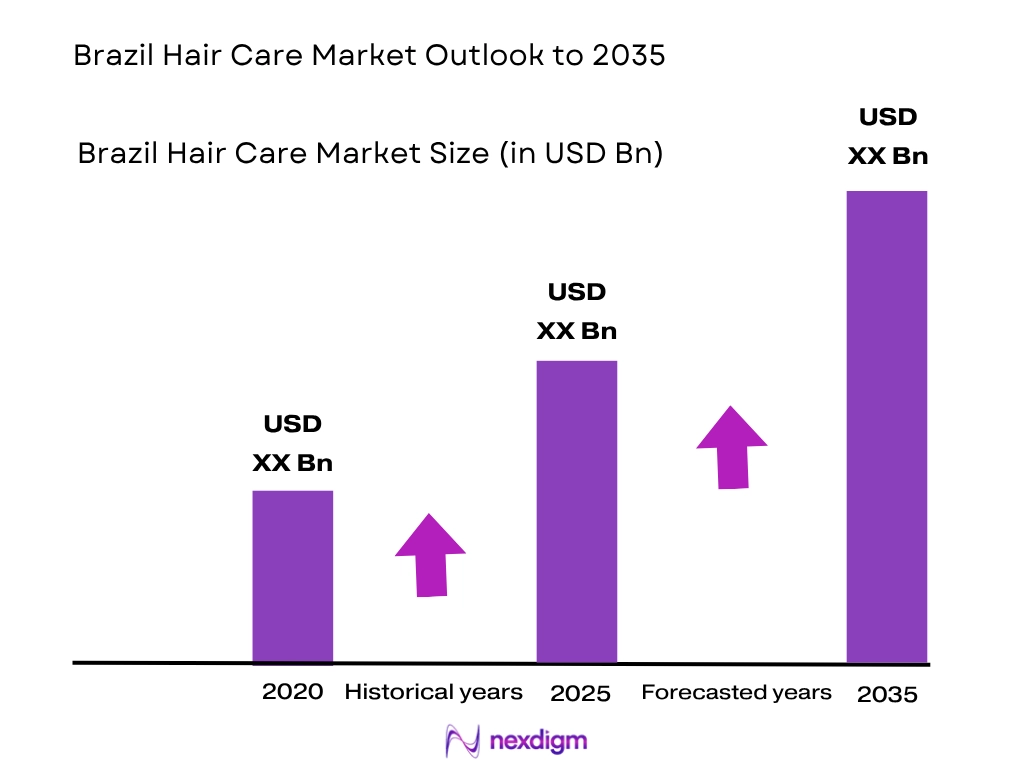
The Brazil Hair Care Market is valued at USD ~ billion, based on Nexdigm report, with the prior comparable base standing near USD ~ billion under the same directional market trajectory. Demand is driven by regular shampoo and conditioner usage, textured-hair routines, anti-frizz care, treatment masks, salon aftercare, and social-media-led product discovery. Grand View Research also places Brazil among Latin America’s leading hair care revenue pools, reinforcing the country’s scale position.
São Paulo, Rio de Janeiro, Belo Horizonte, Curitiba, Salvador, Recife, Brasília, and Porto Alegre dominate Brazil Hair Care Market demand because they combine dense urban populations, stronger pharmacy and beauty-specialty retail networks, higher salon concentration, and faster adoption of premium, vegan, curly-hair, and scalp-care products. São Paulo’s metro area has around 21.5 million residents, followed by Rio de Janeiro at 12.9 million and Belo Horizonte at 6.0 million, supporting higher product availability and faster beauty trend diffusion.
Market Segmentation
By Product Type
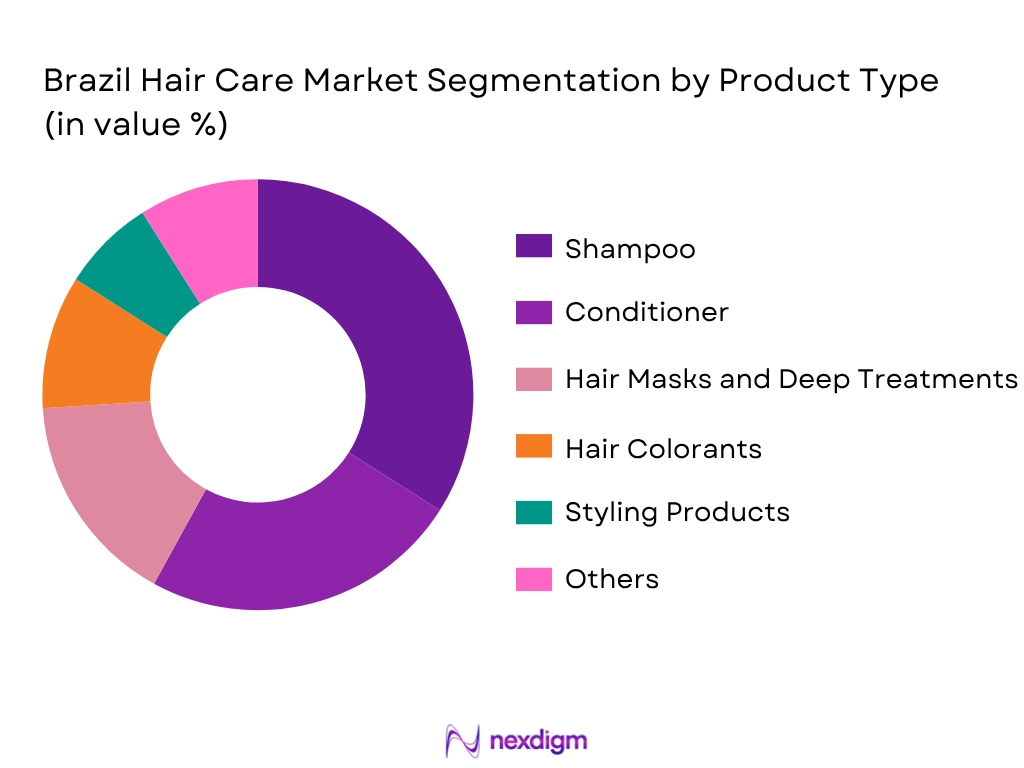
Brazil Hair Care Market is segmented by product type into shampoo, conditioner, hair masks and deep treatments, hair colorants, styling products, hair oils, serums, leave-ins, and scalp care products. Shampoo holds the dominant share because it remains the highest-frequency category across gender, age, income, and hair-texture groups. Brazilian consumers treat shampoo not only as a cleansing product but also as the first step in anti-frizz, hydration, anti-dandruff, oil-control, curl-care, and damage-repair routines. Public market sources identify shampoo as the leading product segment, while conditioners and treatments remain strong because Brazilian routines frequently involve sequential cleansing, conditioning, masking, and finishing. The dominance is also reinforced by wide supermarket, pharmacy, direct-selling, and e-commerce availability.
By Distribution Channel
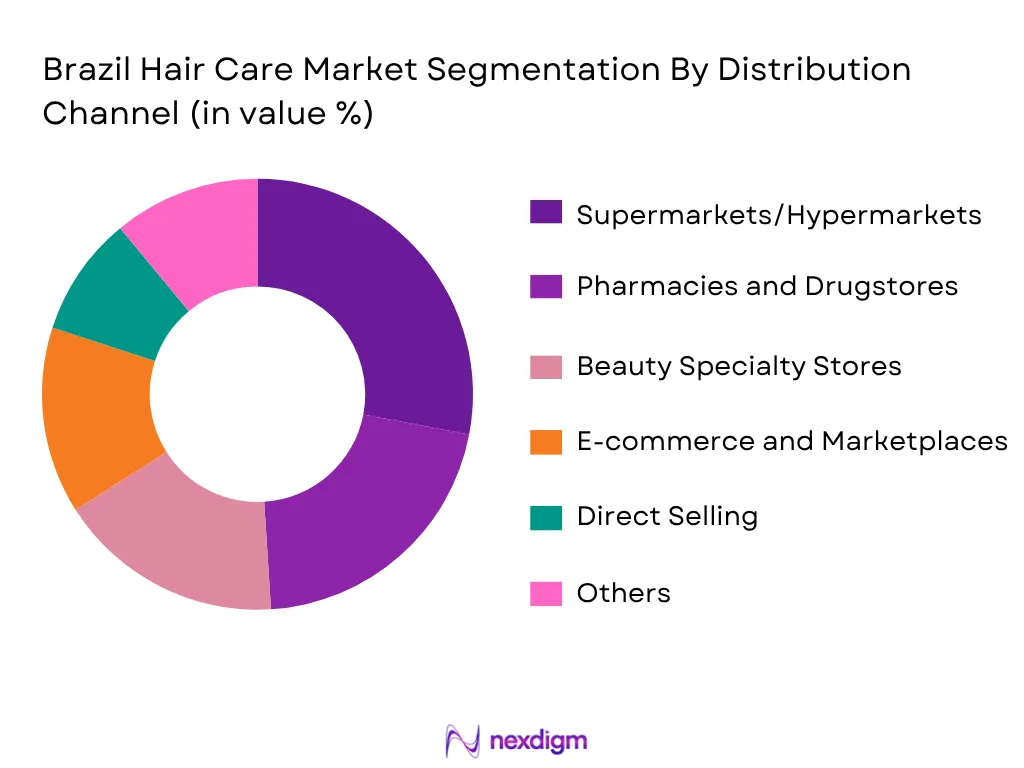
Brazil Hair Care Market is segmented by distribution channel into supermarkets and hypermarkets, pharmacies and drugstores, beauty specialty stores, e-commerce and marketplaces, direct selling, professional salons, and neighborhood retail. Supermarkets and hypermarkets dominate because mass hair care products are frequently purchased with household staples, enabling strong basket attachment for shampoo, conditioner, family packs, and promotional bundles. The channel also supports high-volume replenishment and broad national brand visibility. However, pharmacies and beauty stores are increasingly important for premium scalp care, dermatological positioning, anti-hairfall products, and salon-grade lines. E-commerce and marketplaces are expanding through reviews, influencer content, product bundles, and price comparison, while salons remain influential for professional treatments and post-chemical-service recommendations.
Competitive Landscape
The Brazil Hair Care Market is competitive and brand-fragmented, combining multinational consumer goods groups, Brazilian beauty conglomerates, professional salon brands, and fast-scaling local specialists. L’Oréal, Unilever, P&G, Natura &Co, and Grupo Boticário influence the market through broad brand portfolios, retail reach, salon partnerships, and premiumization. Local companies such as Salon Line, Embelleze, Skala, Lola From Rio, Bio Extratus, and Amend strengthen competition through textured-hair, vegan, one-kilogram treatment-pot, and value-led positioning.
| Company | Establishment Year | Headquarters | Key Hair Care Brands | Core Positioning | Distribution Strength | Brazil-Specific Focus | Professional / Salon Exposure | Digital & Influencer Strength |
| L’Oréal Brasil | 1909 | Clichy, France | ~ | ~ | ~ | ~ | ~ | ~ |
| Unilever Brasil | 1930 | London, UK | ~ | ~ | ~ | ~ | ~ | ~ |
| Procter & Gamble Brasil | 1837 | Cincinnati, USA | ~ | ~ | ~ | ~ | ~ | ~ |
| Natura &Co | 1969 | São Paulo, Brazil | ~ | ~ | ~ | ~ | ~ | ~ |
| Grupo Boticário | 1977 | Curitiba, Brazil | ~ | ~ | ~ | ~ | ~ | ~ |
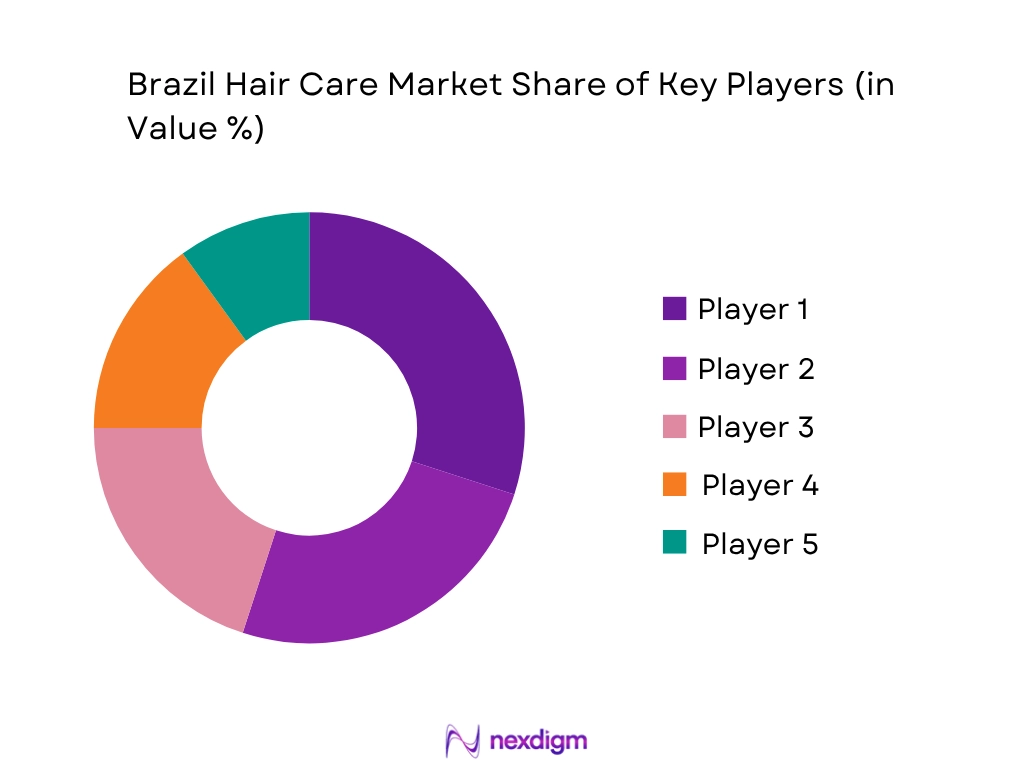
Brazil Hair Care Market Analysis
Growth Drivers
Textured Hair Inclusion
Brazil Hair Care Market is structurally supported by the country’s large, racially diverse, urban consumer base, which creates sustained demand for curly, coily, wavy, chemically treated, and mixed-texture hair products. Brazil’s estimated population reached 212.6 million people, with 15 cities having more than 1 million inhabitants and 42.7 million people living in those large cities; São Paulo alone had 11.9 million inhabitants, Rio de Janeiro had 6.7 million, Brasília had 3.0 million, Fortaleza had 2.6 million, and Salvador had 2.6 million. These dense urban clusters strengthen the route-to-market for curl creams, leave-ins, masks, anti-frizz products, low-poo shampoos, and finishing oils because consumers have easier access to pharmacies, beauty stores, supermarkets, professional salons, and marketplaces. Textured-hair inclusion is also supported by digital access: 167.5 million persons aged 10 and over had a mobile phone for personal use, while 168.0 million persons aged 10 and over used the internet. This makes tutorials, influencer-led “day-after” routines, curl-transition content, and product reviews highly scalable across Brazil’s hair care market.
Premiumization
Premiumization in Brazil Hair Care Market is supported by higher employment, stronger household consumption, and greater exposure to specialized product information. Brazil’s GDP closed at 11.7 trillion, while household consumption expenditure increased as the key demand-side contributor, supported by labor-market improvement, credit expansion, and income-transfer programs. The labor base is material for premium hair care conversion: the annual unemployment rate fell to 6.6, the lowest level in the PNAD Contínua time series, while the unemployed population totaled 7.4 million persons, down by 1.1 million persons over the prior base. Per capita household earnings reached BRL 2,069 nationally, with the Federal District at BRL 3,444, São Paulo at the center of the largest consumer cluster, and large metro markets concentrating beauty specialty stores, salons, pharmacies, and digital fulfillment. For hair care, this supports movement from basic cleansing into scalp serums, bond repair, salon-grade masks, keratin reconstruction, color protection, and dermatological anti-dandruff products. The premiumization path remains selective rather than universal, but higher formal employment and large urban incomes give brands a stronger base for masstige and professional lines.
Market Challenges
Price Sensitivity
Price sensitivity remains a key challenge for Brazil Hair Care Market because disposable income varies sharply across states, pushing many consumers toward value shampoos, large treatment pots, promotional bundles, and lower-priced local brands. IBGE reported Brazil’s per capita household earnings at BRL2,069, but the state-level spread is wide: Maranhão recorded BRL1,077, while the Federal District recorded BRL3,444. This gap affects how consumers trade between shampoo, conditioner, mask, leave-in, and scalp-treatment purchases. The market also operates in a still-unequal income environment: IBGE reported a per capita household income Gini index of 0.504, and noted that without social program benefits it would rise to 0.542. These figures matter for hair care because routine intensity can be high, but basket affordability is constrained outside higher-income urban centers. As a result, mass brands, refill formats, one-kilogram masks, and economy curl-care lines remain important, while premium brands must justify efficacy through visible claims such as anti-frizz, repair, scalp relief, and salon aftercare.
Informal Retail
Informal retail and fragmented trade channels create execution challenges for Brazil Hair Care Market, especially for brands managing authorized distribution, price discipline, product authenticity, and salon-to-consumer resale. Brazil had 103.0 million employed persons in the quarter ending December, while IBGE reported a national informality rate of 37.6 among employed persons and a self-employed population share of 25.3. In Maranhão, informality reached 57.3, in Pará 56.7, and in Amazonas 51.6, compared with São Paulo at 29.7 and the Federal District at 27.1. This matters for hair care because independent sellers, small beauty shops, informal resellers, neighborhood retail, social commerce, and unauthorized marketplace listings can influence product availability and price visibility outside controlled chains. The challenge is sharper for professional-use products, anti-hairfall claims, hair straighteners, pomades, and scalp products, where misuse or uncontrolled resale can affect brand trust and compliance exposure. Formal chains and marketplaces help scale brands, but informal channels remain influential in lower-income and high-fragmentation regions.
Market Opportunities
White Space
White space in Brazil Hair Care Market is strongest where large urban populations, high digital access, and multi-step hair routines intersect but product solutions remain under-specialized. Brazil’s estimated population reached 212.6 million people, and 42.7 million people lived in cities with more than 1 million inhabitants, creating a large addressable base for localized routines across straightened, colored, curly, coily, oily-scalp, and humidity-exposed hair. Digital infrastructure strengthens this opportunity: 168.0 million persons aged 10 and over used the internet, and mobile phones were the main access device for 167.5 million persons aged 10 and over. This supports direct education for product systems rather than single products, including hydration-nutrition-reconstruction routines, curl-transition kits, post-straightening aftercare, anti-frizz systems, and color-maintenance regimens. The opportunity is not only in launching more SKUs, but in building routine architecture by hair texture, climate exposure, scalp condition, and salon service history. Large city concentration also allows brands to test premium, masstige, and professional concepts in São Paulo, Rio de Janeiro, Brasília, Salvador, Recife, Belo Horizonte, Curitiba, and Porto Alegre before regional expansion.
Premium Scalp Care
Premium scalp care is a future-oriented opportunity in Brazil Hair Care Market because the category sits at the intersection of pharmacy credibility, dermatological claims, anti-dandruff, oil-control, anti-hairfall, and skinification trends. The opportunity is supported by stronger employment and income conditions: Brazil’s employed population reached 103.0 million persons in the quarter ending December, while real average earnings from all jobs reached BRL 3,613. The macro base also shows continued consumption relevance, with GDP at BRL11.7 trillion and household consumption expenditure identified by IBGE as a key driver of the national accounts. Regulatory complexity makes scalp care a defensible category for compliant brands: ANVISA’s RDC 907/2024 covers personal hygiene products, cosmetics, and fragrances, including classification, technical requirements for labeling and packaging, microbiological control, and regularization. Hair care products with stronger functional claims therefore require disciplined documentation, but this also creates entry barriers against weakly substantiated products. Brands that combine pharmacy distribution, dermatologist-tested positioning, scalp serums, anti-dandruff actives, oil-control shampoos, and sensitive-scalp claims can occupy a premium space beyond basic shampoo and conditioner.
Future Outlook
The Brazil Hair Care Market is expected to expand at a forecast CAGR of 6.1% for the long-term forecast window through 2035, reaching USD 5.89 billion as per Nexdigm’s research. Growth will be supported by premium scalp care, textured-hair innovation, e-commerce growth, salon-to-home aftercare, and the increasing popularity of vegan, botanical, sulfate-free, low-poo, and no-poo products. Future growth will also depend on the ability of brands to localize product architecture for Brazilian hair diversity. Curly, coily, chemically straightened, color-treated, and humidity-exposed hair require distinct product claims, which creates space for routine-based systems instead of single-SKU selling. Hair masks, leave-ins, curl creams, serums, scalp tonics, and bond-repair products are expected to gain relevance as consumers move beyond basic cleansing. The professional channel will remain a credibility engine, especially for hair color, straightening, reconstruction, keratin, and post-treatment maintenance. IndustryArc identifies Brazil’s professional hair care market at USD 558 million, with coloring, straightening, and perming among dominant salon services, supporting the link between salon behavior and take-home product demand. Regulation will continue to shape product launches. ANVISA regulates personal hygiene products, cosmetics, and fragrances, participates in international cosmetics regulatory cooperation, and governs notification or approval routes for products before commercialization. This raises the importance of claims discipline, safety files, Portuguese labeling, and local responsible-party structures for international entrants.
Major Players
- L’Oréal Brasil
- Unilever Brasil
- Procter & Gamble Brasil
- Natura &Co
- Grupo Boticário
- Coty Brasil
- Johnson & Johnson Consumer Health
- Henkel Brasil
- Wella Company
- Embelleze
- Salon Line
- Skala Cosméticos
- Lola From Rio
- Bio Extratus
- Amend Cosméticos
Key Target Audience
- Hair care product manufacturers
- Beauty and personal care brand owners
- Professional salon product companies
- Supermarket, pharmacy and beauty retail chains
- E-commerce platforms and online marketplaces
- Raw material, fragrance and packaging suppliers
- Investments and venture capitalist firms
- Government and regulatory bodies: ANVISA, Ministry of Health, Ministry of Development, Industry, Trade and Services, INMETRO, Receita Federal do Brasil
Research Methodology
Step 1: Identification of Key Variables
The initial phase involves constructing an ecosystem map covering hair care manufacturers, importers, distributors, salons, retailers, pharmacies, marketplaces, ingredient suppliers, packaging vendors, and regulators in Brazil Hair Care Market. Variables include product type, channel mix, consumer hair texture, price tier, pack size, ingredient claim, and regulatory route.
Step 2: Market Analysis and Construction
Historical market data is compiled using secondary sources, trade databases, company disclosures, retail observations, product listings, and published market research. The market is then built through top-down validation from beauty and personal care industry size and bottom-up validation from category, SKU, channel, and brand-level indicators.
Step 3: Hypothesis Validation and Expert Consultation
Market hypotheses are validated through interviews with brand managers, distributors, salon owners, hairdressers, pharmacy category heads, e-commerce sellers, and regulatory specialists. These discussions help refine assumptions on product rotation, margin structure, routine adoption, premiumization, textured-hair demand, and channel-specific pricing.
Step 4: Research Synthesis and Final Output
The final phase synthesizes secondary research, trade intelligence, expert inputs, channel checks, and competitor benchmarking into a validated Brazil Hair Care Market model. The output includes market size, segmentation, competitive positioning, growth drivers, restraints, future outlook, and strategic recommendations for stakeholders.

- Executive Summary
- Research Methodology (Market Definitions and Assumptions, Product Inclusion and Exclusion, Retail Sales and Manufacturer Sales Approach, Top-Down Market Sizing, Bottom-Up Channel Build-Up, Import and Local Production Mapping, Primary Interviews with Retailers Salons Distributors Dermatologists and Brand Managers, Consumer Panel Inputs, SKU Benchmarking, Price Ladder Analysis, Data Triangulation, Limitations and Future Conclusions)

- Definition and Scope
- Market Genesis and Evolution of Hair Beauty Culture in Brazil
- Role of Hair Care in Brazil Beauty and Personal Care Industry
- Business Cycle and Consumption Seasonality
- Consumer Hair Profile Landscape
- Local Manufacturing Versus Imported Hair Care Products
- Brazil Hair Care Supply Chain and Value Chain Analysis
- Route-to-Market Structure: Modern Trade, Pharmacies, Direct Selling, Salons,
- Beauty Stores, E-commerce and Social Commerce
- Role of Professional Salons and Hairdressers in Product Discovery
- Regulatory Overview: ANVISA Compliance, Product Risk Classification, Labeling,
- Safety and Claims
- Ecosystem of Raw Material Suppliers, Contract Manufacturers, Brand Owners, Retailers, Salons and Marketplaces

- Growth Drivers (Textured Hair Inclusion, Premiumization, E-commerce Adoption, Salon Influence, Scalp Care, Social Media, Local Botanical Claims, Urban Beauty Spend)
- Market Challenges (Price Sensitivity, Informal Retail, Import Costs, Counterfeit Risk, Regulatory Complexity, Raw Material Inflation, Claims Substantiation, Channel Margin Pressure)
- Market Opportunities (White Space, Premium Scalp Care, Men’s Hair Care, Dermatological Hair Care, Textured Hair Science, Sustainable Refill, Regional Expansion, Exportable Brazilian Brands)
- Market Trends (Cronograma Capilar, Low-Poo No-Poo, Vegan Hair Care, Skinification, Bond Repair, Anti-Frizz, Heat Protection, Influencer Commerce, Professionalization)
- Government Regulation and Compliance (ANVISA, RDC Framework, Grade I and Grade II Products, Product Notification, Registration, Labeling, Ingredient Restrictions, Cosmetovigilance, Import Authorization)
- Consumer Behavior Analysis (Hair Identity, Routine Intensity, Purchase Frequency, Brand Switching, Influencer Trust, Salon Recommendation, Price Elasticity, Trial Behavior)
- Pricing and SKU Architecture (Entry Price Points, Promotional Pricing, Pack Size Economics, Price per Milliliter, Treatment Pot Pricing, Premium Ladder, Salon Markups)
- SWOT Analysis (Local Manufacturing, Hair Diversity, Brand Fragmentation, Premiumization, Regulatory Risk, Digital Acceleration, Export Potential)
- Stakeholder Ecosystem (Raw Material Suppliers, Packaging Suppliers, Contract Manufacturers, Brand Owners, Importers, Distributors, Retail Chains, Pharmacies, Salons, Marketplaces, Influencers, Regulators)
- Porter’s Five Forces (Supplier Power, Buyer Power, New Entrants, Substitutes, Competitive Rivalry, Channel Bargaining, Brand Loyalty)
- Competition Ecosystem (Domestic Leaders, Multinationals, Salon Professional Brands, Indie Brands, Direct-Selling Brands, Marketplace-First Brands, Dermatological Brands)

- By Value (2020-2025)
- By Volume (2020-2025)
- By Average Selling Price (2020-2025)
- By Retail Sales Value (2020-2025)
- By Manufacturer Sales Value (2020-2025)
- By E-commerce Gross Merchandise Value (2020-2025)
- By Professional Salon Channel Revenue(2020-2025)
- By Mass, Masstige, Premium and Professional Price Tier (2020-2025)

- By Product Category (In Value%)
Shampoo
Conditioner
Hair Masks and Deep Treatment Creams
Leave-in Creams and Combing Creams
Hair Colorants and Toners
Styling Gels, Mousse, Pomades and Sprays
Hair Oils, Serums and Finishing Fluids
Scalp Care, Anti-dandruff and Anti-hairfall Products
Keratin, Protein, Bond Repair and Chemical Treatment Products
Professional Salon Hair Care Products - By Hair Type and Texture (In Value%)
Straight Hair
Wavy Hair
Curly Hair
Coily and Afro-Textured Hair
Chemically Straightened Hair
Color-Treated Hair
Damaged and Porous Hair
Oily Scalp and Dry Ends
Sensitive Scalp and Dandruff-Prone Hair - By Consumer Need State (In Value%)
Hydration and Moisture Replenishment
Anti-Frizz and Humidity Control
Curl Definition and Day-After Revival
Damage Repair and Reconstruction
Smoothening and Straightening Maintenance
Hair Growth, Strengthening and Anti-Breakage
Scalp Health, Anti-Dandruff and Oil Control
Color Protection and Shine Enhancement
Heat Protection and Styling Defense
Vegan, Natural, Clean and Botanical Care - By Price Positioning (In Value%)
Economy and Value Hair Care
Mass Hair Care
Masstige Hair Care
Premium Hair Care
Prestige and Luxury Hair Care
Dermatological and Pharmacy-Led Hair Care
Professional Salon Grade Hair Care - By Distribution Channel (In Value%)
Supermarkets and Hypermarkets
Pharmacies and Drugstores
Beauty Specialty Stores
Professional Salons and Hairdressers
E-commerce Platforms
Online Marketplaces
Social Commerce and Influencer-Led Selling
Convenience and Neighborhood Retail - By Consumer Group (In Value%)
Women
Men
Teenagers and Young Adults
Gen Z Digital-Native Consumers
Millennials and Working Professionals
Family and Household Buyers
Textured Hair Consumers
- By Formulation and Ingredient Claim (In Value%)
Conventional Formulations
Vegan and Cruelty-Free Formulations
Natural and Botanical Ingredient Products
Sulfate-Free and Low-Poo Products
Silicone-Free and No-Poo Products
Keratin, Protein and Amino Acid Products
Hyaluronic Acid and Skinified Hair Care Products
Oils, Butters and Brazilian Botanical Extracts
Dermatologist-Tested and Sensitive Scalp Products - By Pack Size and Format (In Value%)
Sachets and Trial Packs
Standard Bottles
Family-Size Packs
One-Kilogram Treatment Cream Pots
Refill Packs
Tubes and Squeeze Packs
Pump Bottles
Aerosol and Spray Formats - By Region (In Value%)
Southeast Brazil
South Brazil
Northeast Brazil
Central-West Brazil
North Brazil
São Paulo Metropolitan Market
Rio de Janeiro Metropolitan Market

- Market Share of Major Players (By Value, Volume, Product Category, Price Tier, Channel, Region, Professional Versus Retail)
- Cross Comparison Parameters (Hair Texture Portfolio Depth, One-Kilogram Treatment Pot Presence, Cronograma Capilar Portfolio, Vegan and Cruelty-Free Positioning, ANVISA Compliance and Claims Discipline, Salon Professional Distribution Strength, E-commerce and Marketplace Visibility, Price per Milliliter Competitiveness)
- SWOT Analysis of Major Players (Domestic Brands, Multinationals, Professional Brands, Indie Brands, Direct-Selling Brands)
- Pricing Analysis Basis SKUs for Major Players (Shampoo, Conditioner, Mask, Leave-in, Curl Cream, Hair Oil, Serum, Hair Color, Anti-Dandruff, Scalp Treatment, Professional Line)
- Product Innovation Benchmarking (Scalp Care, Bond Repair, Textured Hair Science, Botanical Actives, Vegan Claims, Refill Packs, Heat Protection, Anti-Frizz, Dermatological Claims)
- Distribution Benchmarking (Modern Trade, Pharmacy, Beauty Specialty, Direct Selling, Salons, Brand Stores, Marketplaces, Social Commerce)
- Digital and Influencer Benchmarking (Search Visibility, Marketplace Ranking, Social Engagement, Routine Education, Creator Partnerships, Review Strength, Before-After Content)
- Detailed Profiles of Major Companies
L’Oréal Brasil
Unilever Brasil
Procter & Gamble Brasil
Natura &Co
Grupo Boticário
Coty Brasil
Johnson & Johnson Consumer Health
Henkel Brasil
Wella Company
Embelleze
Salon Line
Skala Cosméticos
Lola From Rio
io Extratus
Amend Cosméticos

- Consumer Demand and Utilization (Wash Frequency, Treatment Frequency, Mask Usage, Leave-in Penetration, Styling Intensity, Hair Coloring, Straightening Maintenance)
- Purchasing Power and Budget Allocation (Monthly Hair Care Spend, Basket Size, Promotional Sensitivity, Premium Conversion, Bulk-Pack Adoption)
- Retailer and Distributor Requirements (Margins, Credit Terms, Shelf Productivity, Category Management, SKU Rotation, Trade Promotions, Sell-Out Tracking)
- Salon and Hairdresser Needs (Professional Efficacy, Training, Backbar Products, Resale Products, Aftercare Systems, Technical Education)
- Consumer Needs, Desires and Pain Points (Frizz, Dryness, Breakage, Curl Shrinkage, Hair Fall, Dandruff, Color Fading, Heat Damage, Chemical Damage)
- Decision-Making Process (Need Recognition, Ingredient Search, Influencer Validation, Salon Recommendation, Price Comparison, Trial, Repeat Purchase)
- Customer Journey Mapping (Discovery, Evaluation, Purchase, Routine Building, Result Assessment, Repurchase, Advocacy)
- Loyalty and Retention Analysis (Subscription, Bundling, Routine Kits, Loyalty Programs, Salon Recommendations, Digital Community Building)

- By Value (2026-2035)
- By Volume (2026-2035)
- By Average Selling Price
- By Retail Sales Value (2026-2035)
- By Manufacturer Sales Value (2026-2035)
- By Online Sales Value (2026-2035)


 Request a Sample
 Ask for Customization
 Get a Quote
 Enquire Now